

The Question: Is Michael Bisping on His Way to MMA Greatness?
Michael Bisping proved he was no one-hit wonder.
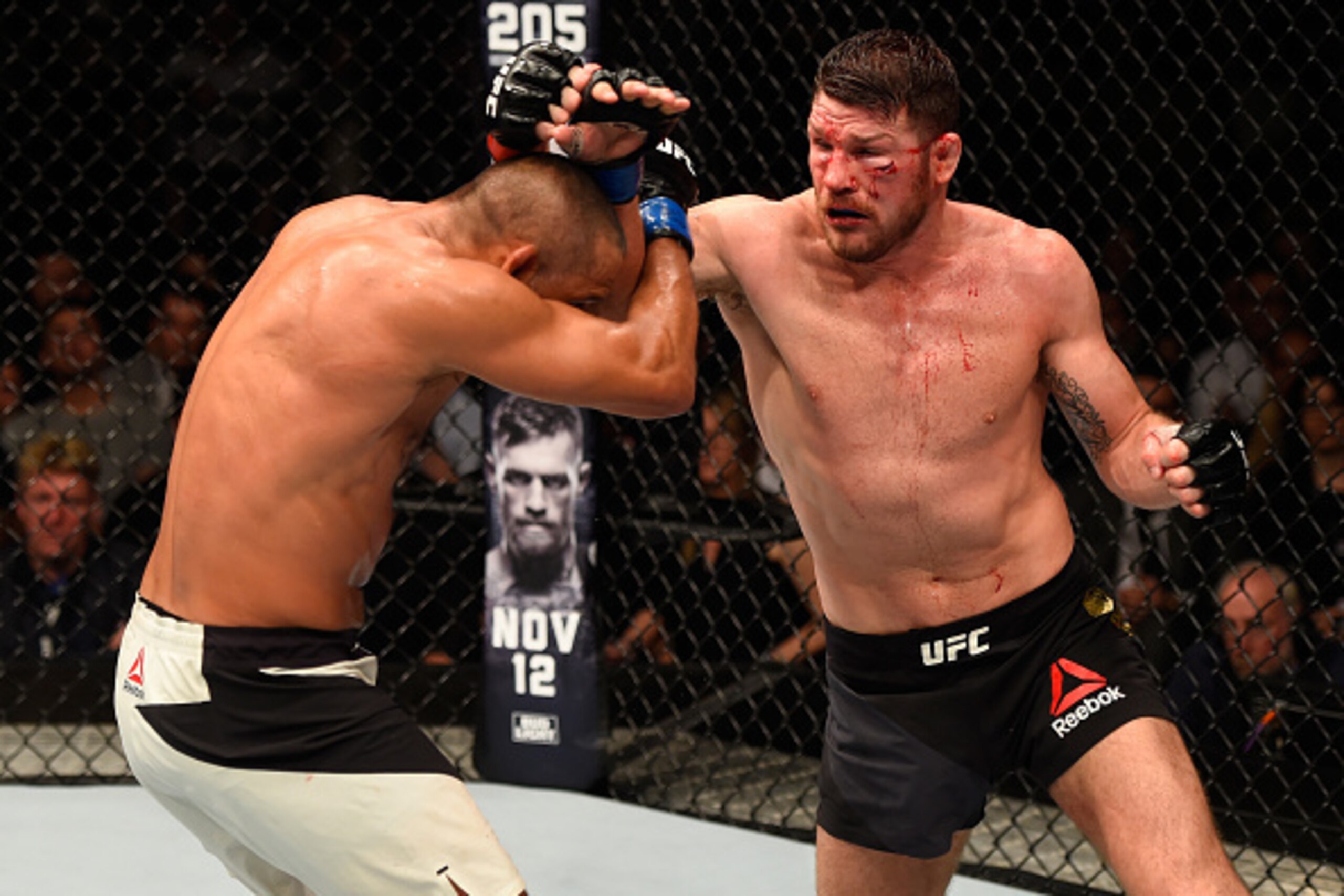
Bisping's narrow but ultimately defensible unanimous-decision victory over Dan Henderson at Saturday's UFC 204 means the title stays put around the waist of the UFC's surprising middleweight champion.
Despite the fact it didn't come over a top contender, the win made Bisping's reign feel a tad less fluky. It also gave him more UFC wins than any other athlete ever to fight in the Octagon.

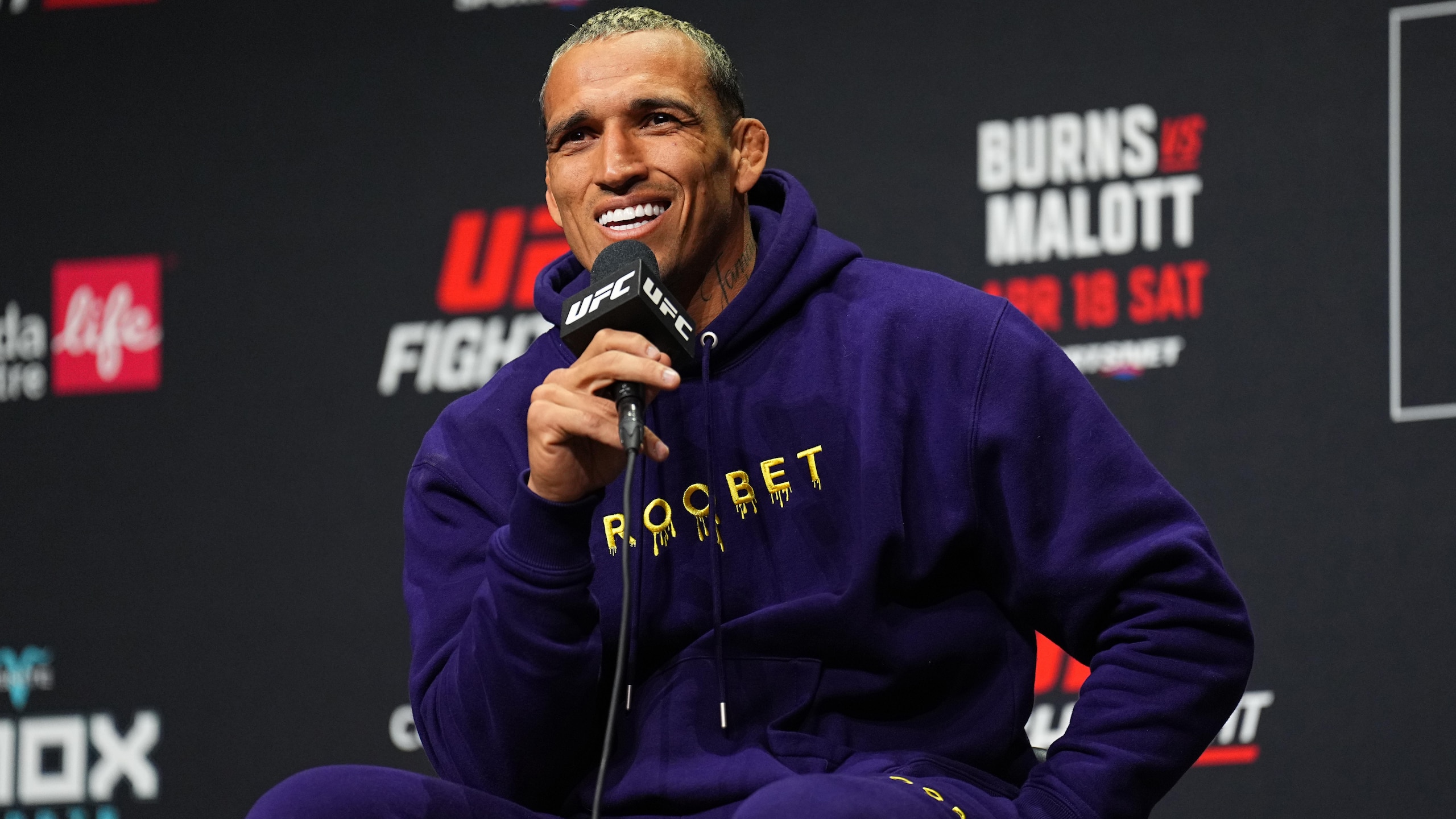

In fact, Bisping's late-career ascent to the top of the 185-pound division has Bleacher Report's Chad Dundas and Mike Chiappetta rethinking his entire career.
How should fans and analysts view the longtime veteran now that he's—gulp—the best around? Is Bisping on his way to MMA greatness? Those are the questions.
Chad Dundas: Mike, I honestly have no idea what to make of Bisping's career at this point. After nearly a decade of being considered a gatekeeper of sorts (not to mention a fairly disagreeable human being), the strutting Brit is suddenly the middleweight champion—having solidified his reign with a win over Henderson on Saturday night that was hard-fought and exciting, if not necessarily a slam dunk for him.
If all we had to go on was the written record of Bisping's career, we'd have no choice but to consider him one of the greatest of all time. His credentials, after all, are eye-popping at this point.
The victory over Henderson made him the UFC's all-time wins leader. Add to that his fledgling 185-pound title reign, his Ultimate Fighter season 3 championship and a current streak that includes consecutive defeats of Anderson Silva, Luke Rockhold and Henderson, and he's built a resume—on paper—that stacks up with anyone's.
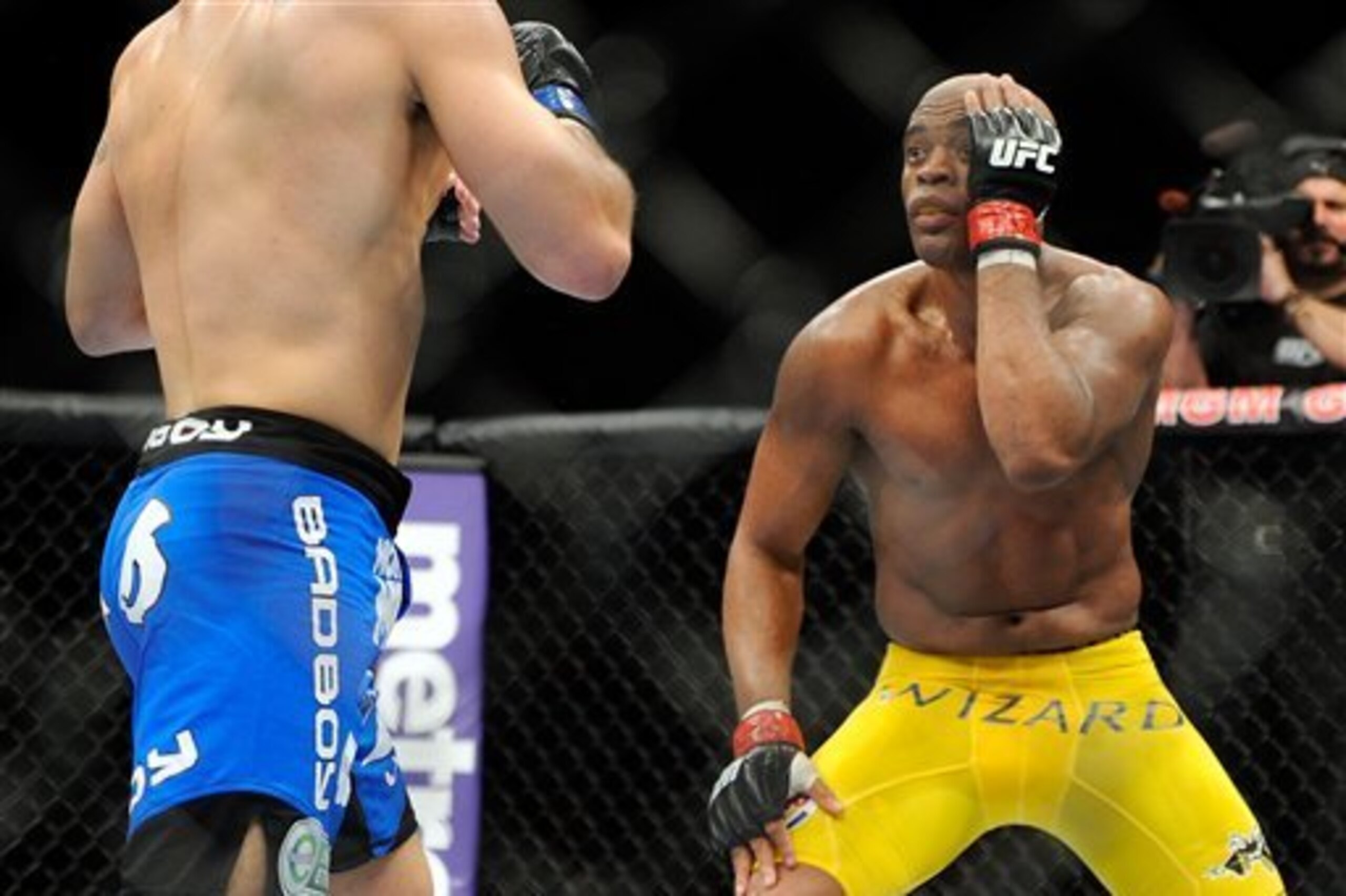
In addition, he's one of the few fighters in the company's history who has managed to have marketable, entertaining fights with almost everyone he's ever been matched against. Especially in today's profit-conscious UFC landscape, that has to be worth something too.
Yet, in real life, it seems borderline laughable to consider Bisping in the same sentence alongside Silva, Georges St-Pierre or even Randy Couture. I'm not sure many people think of him as one of the top three or four middleweights in the UFC right now, let alone one of the best ever to set foot inside the Octagon.
I'm not going to lie to you: It all adds up to make Bisping a tough figure to get my arms around.
So, Mike, I ask you: What do you consider Bisping's lasting legacy? And if he hasn't already convinced you, what, if anything, would it take for you to look at him as one of the all-time greats?

Mike Chiappetta: It's never easy to determine an athlete's legacy while that person is still active. After all, who knows how much time Bisping has left in the sport? Given his long history and the punishment he's taken over the years, it wouldn't be a shock if he fought for only another year or two. On the other hand, given how much he loves competition, it’s possible he'll fight into his early 40s.
That caveat aside, there is no denying his success. A UFC-record 20 wins and a UFC middleweight championship are excellent accomplishments atop a resume. That kind of success speaks for itself.
If anything, the argument against Bisping stems from aesthetics more than facts. When we think about the greatest ever to do it, we think about Silva's pinpoint power, St-Pierre's dominant wrestling, Fedor Emelianenko's finishing instinct. Theirs was a greatness you could see. They were all well-rounded mixed martial artists but offered at least one transcendent trait or skill.
Bisping has never had that. He has never had stunning power, blinding speed, stifling wrestling or constricting jiu-jitsu. Yet somehow, he has been better than the sum of his parts. He is the embodiment of guts, finding ways to compete against and often defeat men who outgunned him in key areas.
And in instances he lost? There is a complicating factor there too, as several of his losses came to opponents who were busted for or admitted to using testosterone or performance-enhancing drugs. How do we factor that in? Do we accept those losses at face value, or do we put asterisks aside them and consider them accordingly, as Baseball Hall of Fame voters informally do in deliberating steroid-era players?
"Michael bisping the man who overcame Fighters in a TRT era and as soon as USADA took place won the championship. What a legend. @bisping
— jiu jitsu (@Arjun571258741) October 9, 2016"
This is no easy decision, and even if you are sympathetic to his plight, it is hard to erase the images of his being crushed by Dan Henderson in 2009 and by Vitor Belfort in 2013.
It is a lot to chew on, a lot to digest, and maybe we just need more time to find the proper perspective. If I'm forced to choose, I can't say I put him among the all-time greats yet. Maybe in the next few months, he defeats Chris Weidman, Ronaldo "Jacare" Souza or Yoel Romero in the kind of win that puts him over the top. But right now, in my eyes, he's still a rung below.
Do you agree, Chad?
Chad: I do agree, but at one time I would have been more certain about it. Now I just feel conflicted.
It's a shame that we may never know how much the UFC's testosterone replacement therapy era negatively affected Bisping's career. As you point out, however, we know for certain his losses between 2009 and 2013—Hendo, Wanderlei Silva, Chael Sonnen and Belfort—include a few TRT users.
In the post-TRT UFC, he's gone 6-2, including his current five-fight win streak.
But maybe that's just coincidence.
For the purposes of this answer, I will stick as closely as possible to one thing we do know for sure about Bisping: He's about to get the chance to prove how good he can really be.
Another thing you rightly mentioned: The month of November will be a big one for the middleweight division. Weidman fights Romero at UFC 205, while Rockhold takes on Souza at Fight Night 101, so the 185-pound ranks should have a couple of legitimate candidates for No. 1 contender by the beginning of 2017.
Bisping will have to fight one—maybe both—of those guys. He almost certainly won't be the betting favorite against either man, but if he manages to beat them, it would do a lot to clear up the questions swirling around his head.
If Bisping can extend his current streak to include a few members of the current middleweight Top Five—which is as deep and talented as it has ever been—then we'll have no choice to recognize him as one of the greatest fighters we've ever seen in the UFC.
If he loses? Then we probably return to thinking about him as merely a very good fighter who crafted phenomenal longevity for himself at the sport's highest level.
Does that seem fair, Mike?
Mike: It does, and there's nothing wrong with a legacy like that. Bisping was an important piece of the promotion in its European growth. He was a TUF champ, a perennial contender and finally a UFC champion. But to say he was one of the greatest? That's a classification reserved for a minuscule percentage of athletes.
Simple wins aren't enough. Longevity isn't enough. Even a UFC belt isn't necessarily enough. Bisping pieced together an enviable career on the strength of above-average skills and indomitable spirit, but you inadvertently hit the nail on the head earlier when you mentioned the future possibility of his defeating Top Five opponents.
The missing piece of the puzzle is when you look at his resume, where are those wins? In fact, through his career, he didn't beat a Top Five foe until he defeated Anderson Silva in February a full 25 fights into his UFC career.
He added to that with his shocking knockout of Rockhold, but when we look at his record against the top opposition that would be helpful in measuring him as a great, it falls short. Even with the PED-era caveat we mentioned before, those results are impossible to ignore.
The good news for Bisping is that he still has opportunities to add to his resume. With one or two more title defenses against legitimate Top Five challengers, he'll force us to re-examine the debate.
For now, it's not quite enough. Then again, he's the champion, and whatever the critics might say about the rest of his career, that serves as a loud counterargument.
.jpg?w=2560)




.jpg?w=2560 "Viral Rams Coach Vid 🖕")