10 Great Individual Playoff Performances from the Losing Side (2000s)
Noah Syndergaard submitted the latest reminder of individual excellence not ensuring team glory.
During the 2016 National League Wild Card Game, the New York Mets ace kept his team alive with seven spectacular scoreless innings. The 24-year-old recorded 10 strikeouts while yielding two hits, but it didn't matter.
Madison Bumgarner was equally flawless for the San Francisco Giants, who pegged Mets closer Jeurys Familia for three runs in the ninth to advance.
This is the latest, but far from first example of an incredible performance getting quickly shoved aside to celebrate the winner. Individual athletes get celebrated by winning championships, the utmost team endeavor. How does that make sense?
Limiting the sample from 2000 onward, multiple stars across all team sports have shined in the playoffs. For all their personal heroics, the other team emerged victorious.
Let's give some kudos to those on the losing side.
Honorable Mentions
1 of 11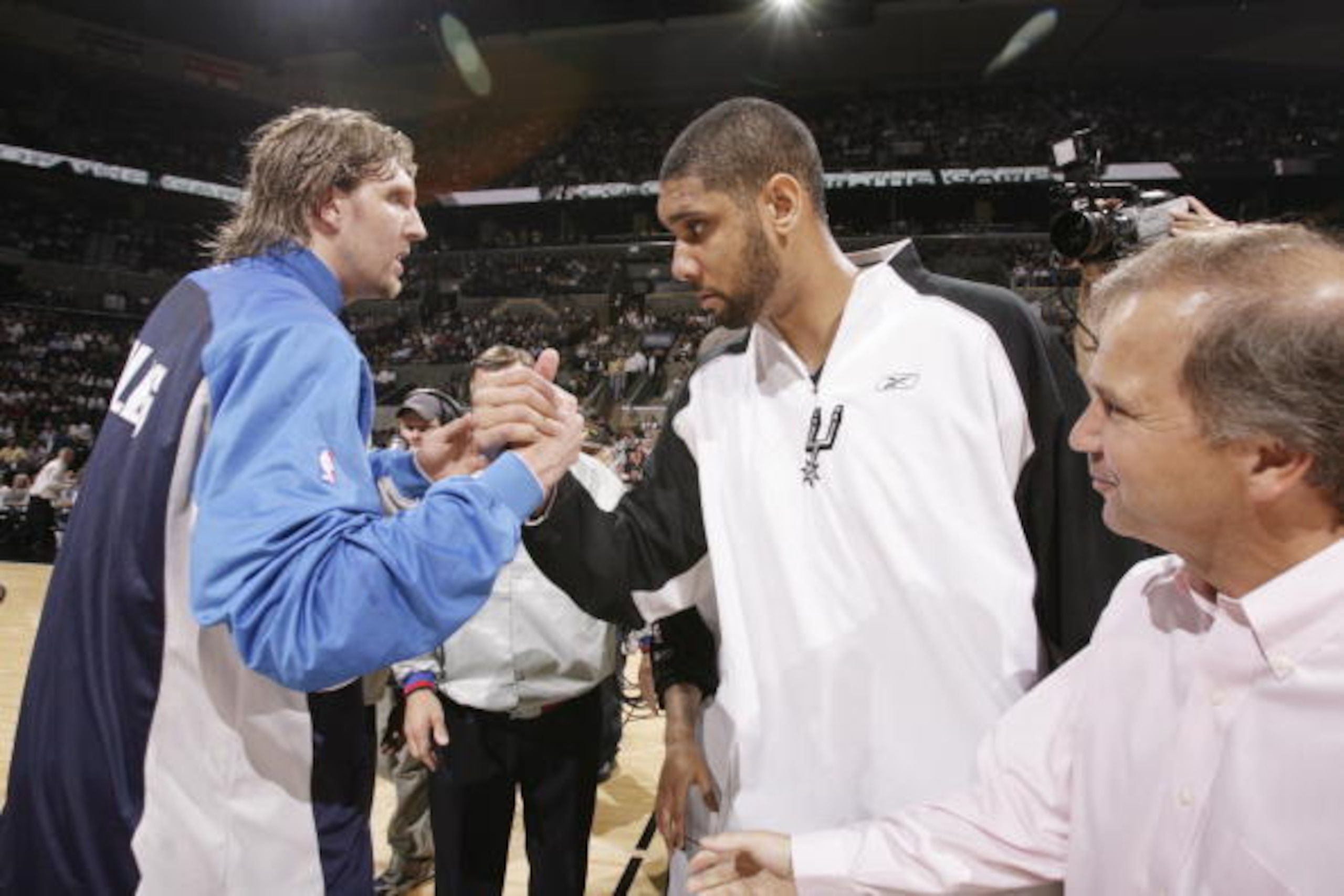
Jean-Sebastien Giguere (2003 Stanley Cup Playoffs)
The only Conn Smythe Trophy winner not from the Stanley Cup champion this millennium, Jean-Sebastien Giguere closed the 2003 playoffs with 15 wins, a .945 save percentage and five shutouts. Yet the Mighty Ducks of Anaheim (now Anaheim Ducks) goalie falls short of the final cut after allowing 14 goals in four Stanley Cup Final losses to the New Jersey Devils.
Tim Duncan (2006 Western Conference Semifinals)
Sure, Tim Duncan retired with five rings. Asking for more would be greedy, and the San Antonio Spurs legend never seemed like the greedy type.
Yet he nearly led the perennial title contender to a collision with the Miami Heat long before they squared off twice against the LeBron James version. During an enthralling Western Conference semifinals series with the Dallas Mavericks, the Big Fundamental averaged 32.3 points, 11.7 boards and 2.6 blocks per bout.
Duncan played 50 minutes in Game 7, guiding his squad with 41 points and 16 boards. This incredible outing fell short, as San Antonio ran out of gas in overtime.
Chase Utley (2009 World Series)
Chase Utley recorded three base hits during the 2008 World Series, and he left with a ring. The following year, he clubbed five home runs in a six-game series against the New York Yankees, who upended his Philadelphia Phillies.
Including Utley, every major Philadelphia franchise is represented on this list.
Calvin Johnson (2011 Wild Card Round)
Calvin Johnson only participated in two postseason games before retiring last offseason. In his playoff debut, he corralled 12 of 15 targets for 211 yards and two touchdowns against the New Orleans Saints.
It wasn't nearly enough, as Drew Brees submitted 466 passing yards and three scores in a 45-28 Wild Card Round rout.
Allen Iverson (2001 NBA Finals)
2 of 11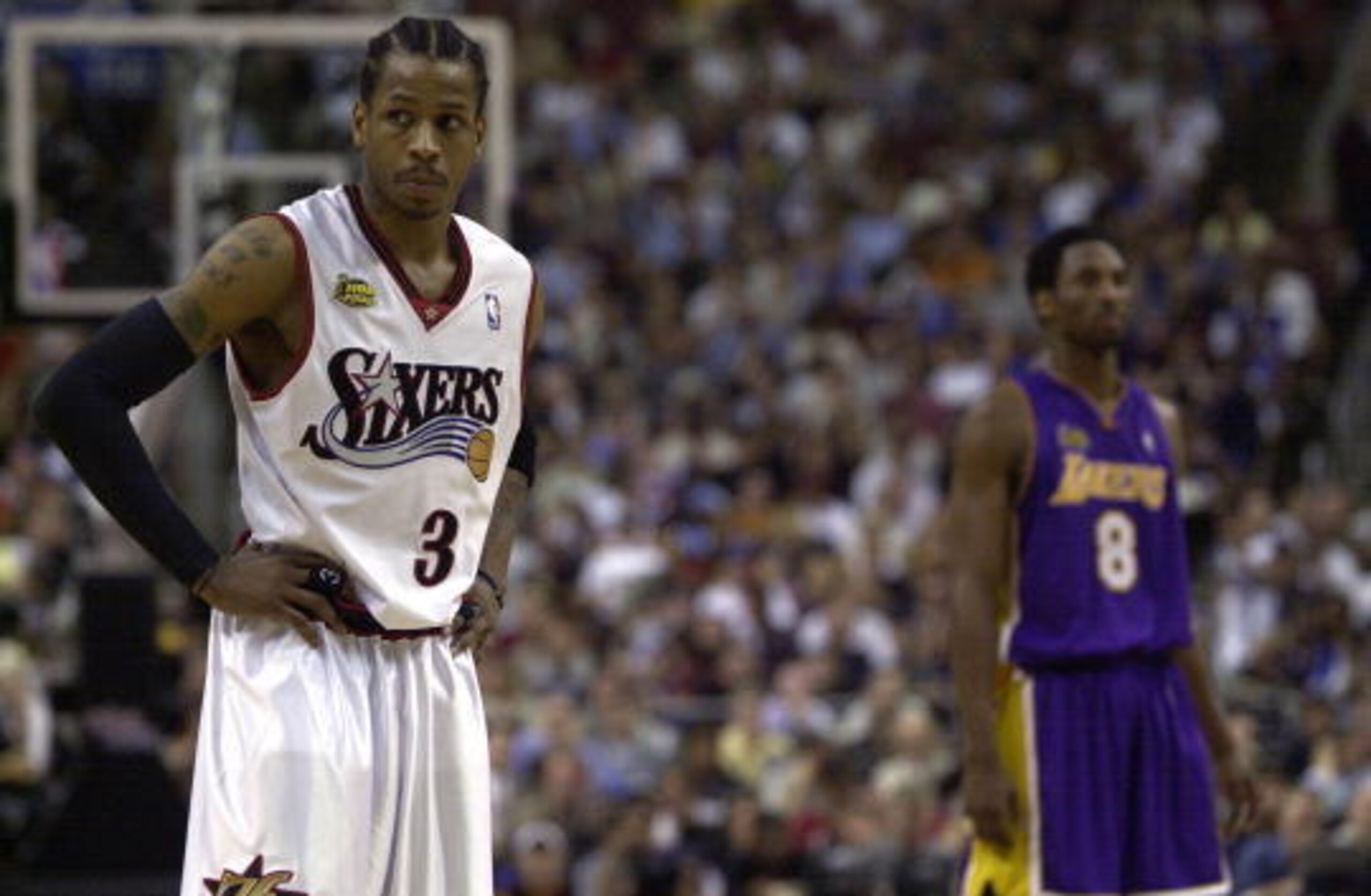
Anyone who has heard tales of the 2001 NBA Finals would be surprised to learn the Los Angeles Lakers and Philadelphia 76ers finished the season with identical 56-26 records. History tells a different tale of underdog Allen Iverson single-handedly fighting Goliath.
The Lakers proved the superior squad, capturing the Larry O'Brien Trophy behind dominant displays from Shaquille O'Neal and Kobe Bryant. While Philadelphia's supporting cast wasn't as feeble as fans may remember, it certainly lacked scoring options outside of The Answer.
As a result, Iverson took matters into his own hands. He exceeded 40 points in six games en route to the Finals, twice topping 50 in the second round against the Toronto Raptors. During the championship stage, he averaged 35.6 points per game, including 48 in Game 1's 107-101 victory.
In a time when size still reigned supreme, the 6'0" guard provided all the offense for the Eastern Conference champions during the season and playoffs. He couldn't get past O'Neal and Bryant, but that doesn't take away from the newly minted Hall of Famer's feat.
Barry Bonds (2002 World Series)
3 of 11
Any conversation of "best players without a ring" should begin with Barry Bonds, who did everything in his power to lead the San Francisco Giants to glory in 2002.
This was before they developed even-year magic behind Bumgarner's playoff brilliance. The Los Angeles Angels couldn't get Bonds out—and they often didn't try—but they still won the World Series in seven games.
Over 30 plate appearances, Bonds went 8-for-17 with two doubles, four home runs and 13 walks (seven intentional). The pitching staff, however, gave back his prolific offense by allowing 41 runs. The Giants lost Game 2, 11-10, despite MLB's all-time home run leader smashing one of their four long balls.
Instead of etching his place among the best postseason efforts ever, Bonds watched as Angels third baseman Troy Glaus snagged World Series MVP honors for his 1.313 OPS on the winning side. Rest assured, Bonds' 1.994 OPS is not a misprint.
The following year, the Florida (now Miami) Marlins intentionally walked Bonds six times during their four-game NLDS triumph. The polarizing outfielder never played another postseason game.
One baseball player, no matter how transcendent, cannot carry a team to brilliance. The Angels benefited from this 14 years ago, but they're currently reinforcing this lesson by wasting Mike Trout on losing clubs.

.jpg?w=2560)

Carlos Beltran (2004 NLCS)
4 of 11
The Houston Astros advanced into the 2004 National League Championship Series behind Carlos Beltran's bat. Then a 27-year-old outfielder reaching his prime, he crushed four homers during a five-game series against the Atlanta Braves.
He didn't stop there, going deep four more times against the St. Louis Cardinals. This is conveniently forgotten among observers who instead remember one unfortunate at-bat against them in the same round two years later.
The red-hot Beltran impacted the 2004 NLCS in every way possible, also drawing eight walks and stealing four bases. He couldn't have done anything else besides strike out Albert Pujols, which Houston's pitchers could not accomplish.
St. Louis' star slugger went 14-for-28 with four homers, including Game 6's walkoff bomb against closer Brad Lidge. That moment instead stands the test of time over Beltran's eight postseason dingers.
Don't feel too bad for Beltran. Fresh off his monster October, the New York Mets awarded him a seven-year, $119 million contract. After getting ousted by the Cardinals in his two previous playoff appearances, he joined them for two deep playoff runs in 2012 and 2013.
Terrell Owens (Super Bowl XXXIX: 2004 Season)
5 of 11
Nine catches and 122 yards in itself isn't eye-popping enough to make the list. If so, Muhsin Muhammad would wonder why his 140 receiving yards and touchdown from Super Bowl XXXVIII didn't make the cut.
The following year, another wide receiver shined in defeat to the New England Patriots. Terrell Owens didn't lead the game in receiving yards. That honor belonged to MVP Deion Branch, who collected 11 catches for 133 yards.
Owens, however, suited up for the Philadelphia Eagles despite breaking his leg and spraining his ankle seven weeks earlier.
"Nobody in this room knew I was going to play this game," Owens told reporters after the game, per ESPN.com's John Clayton. "Nobody knew but me. Dr. [Mark] Myerson, I give him all the respect in the world. You guys believed what he said that I couldn't play. A lot of people in the world didn't believe I could play."
Had quarterback Donovan McNabb not thrown three interceptions in a 24-21 loss, Owens' gutsy performance may have earned him a first-ballot Hall of Fame nod this year. The man second behind Jerry Rice in all-time receiving yards will instead have to wait.
Chris Paul (2008 Western Conference Semifinals)
6 of 11
Someone may have reported this already, but Chris Paul has never reached the conference finals. He came awfully close in his first try.
Back in 2008, his New Orleans Hornets (now Pelicans) eliminated the Mavericks in five before jumping to a 2-0 conference semifinals lead over the Spurs. Yet the series, like all of his others, ended early despite stellar individual production.
Paul, who turned 23 before Game 3, dished out 10.7 assists per game while scoring 23.7 points on a 50.4 field-goal percentage. He didn't take a single breather during a Game 7 in which he amassed 18 points, 14 assists, eight rebounds and five steals.
New Orleans still lost, 91-82, when top perimeter threats Peja Stojakovic and Morris Peterson went a combined 5-of-18. Thus started a running tradition of Paul's teammates letting him down.
There's little nuance in mainstream sports analysis, so the star point guard instead receives all the blame for his teams' shortcomings. After all, how many people remembered Peterson before reading that last line? They know Paul, and they know his elite peers have all made the Finals or at least the conference finals.
Kurt Warner (Super Bowl XLIII: 2008 Season)
7 of 11
According to Pro-Football-Reference.com, only Bart Starr has a higher postseason quarterback rating than Kurt Warner's 102.8. He demonstrated his playoff excellence throughout the 2008 postseason before decimating a dominant defense in Super Bowl XLIII.
During the regular season, the Pittsburgh Steelers relinquished an NFL-low 5.4 yards per pass attempt and 156.9 passing yards per game. They won the AFC by stifling Baltimore Ravens quarterback Joe Flacco to 141 yards and three interceptions during the conference title contest.
Down 17-7 at halftime, the Cardinals abandoned an ineffective ground game and put all their hopes on Warner's arm. Not intimated, he completed 31 of 43 pass attempts for 377 passing yards, three touchdowns and a pick.
With 2:47 left in the fourth quarter, he connected with Larry Fitzgerald for a 64-yard touchdown—his second of the game—to take a 27-23 lead. Had the defense made a stop, the elite duo would have entered immortality.
Ben Roethlisberger instead stormed back, and Santonio Holmes secured a spectacular game-winning grab to cap off one of the NFL's most thrilling Super Bowl clashes in recent memory.
Warner certainly played well enough to earn his second ring, which would probably have clinched the Hall of Fame bid the two-time MVP still deserves. In his final year, he once again impressed in the playoffs at a young star's expense.
Aaron Rodgers (2009 NFC Wild Card Round)
8 of 11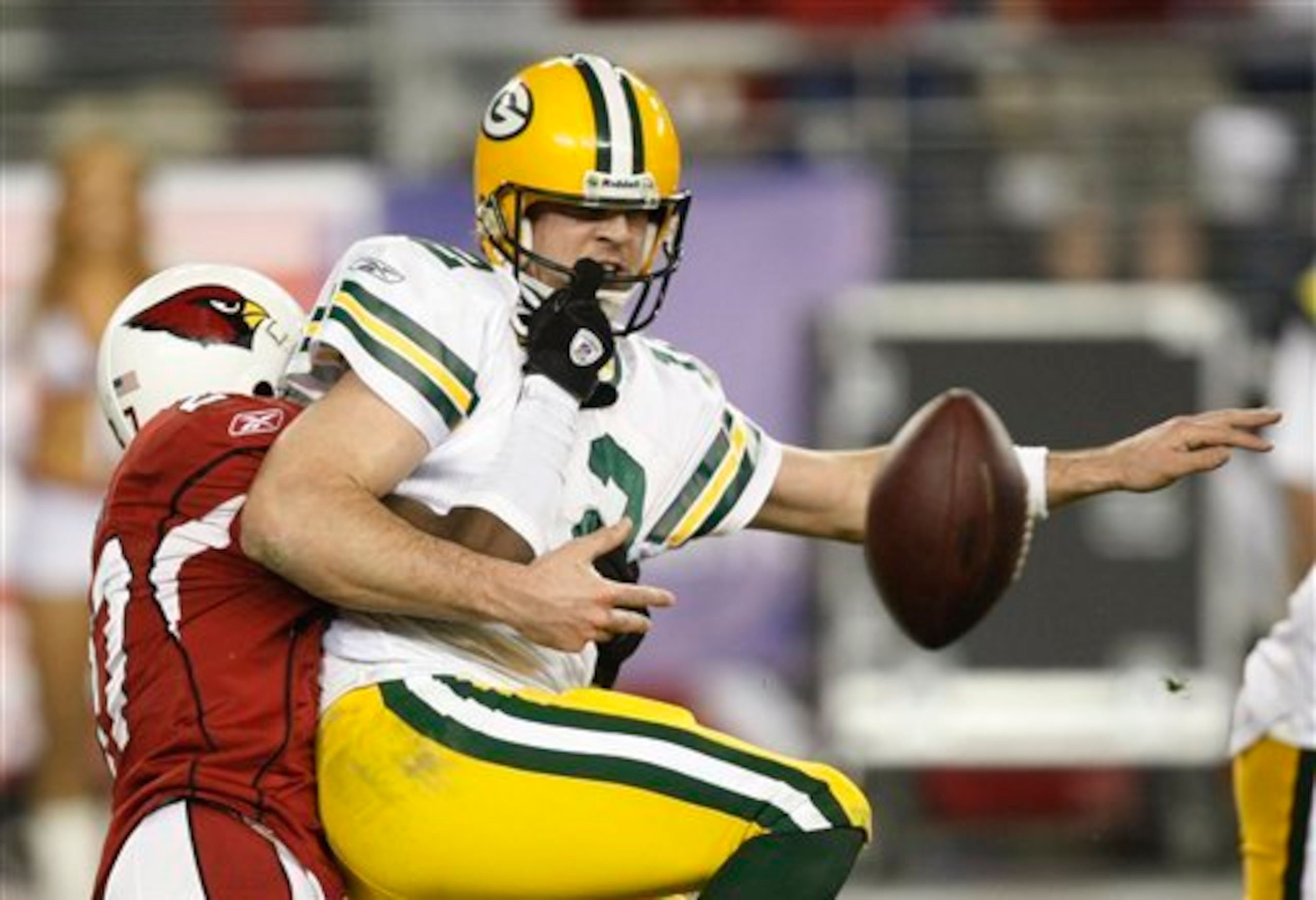
Aaron Rodgers didn't win his postseason debut, but he immediately announced his arrival as a future MVP.
In his second season replacing Brett Favre, the legendary quarterback's heir apparent took the Green Bay Packers to the playoffs after going 11-5 in 2009. His first test? A road showdown against Warner's Cardinals.
Although Arizona scooped up his fumble for the decisive overtime touchdown, Rodgers dazzled during an epic shootout. Sacked five times under heavy duress, he still compiled 423 passing yards, four passing touchdowns and a rushing score during the 51-45 defeat.
The Cardinals jumped out to a 17-0 lead after one quarter before bolstering the edge to 31-10 during the third period. Yet Rodgers stormed back with four passing touchdowns, including a game-tying touchdown to backup tight end Spencer Havner.
Before blaming the young passer for the final fumble, consider that Cardinals cornerback Michael Adams got away with a facemask grab before Rodgers lost the ball on what easily could have fallen under the "tuck rule" categorization.
Daniel Briere (2010 Stanley Cup Final)
9 of 11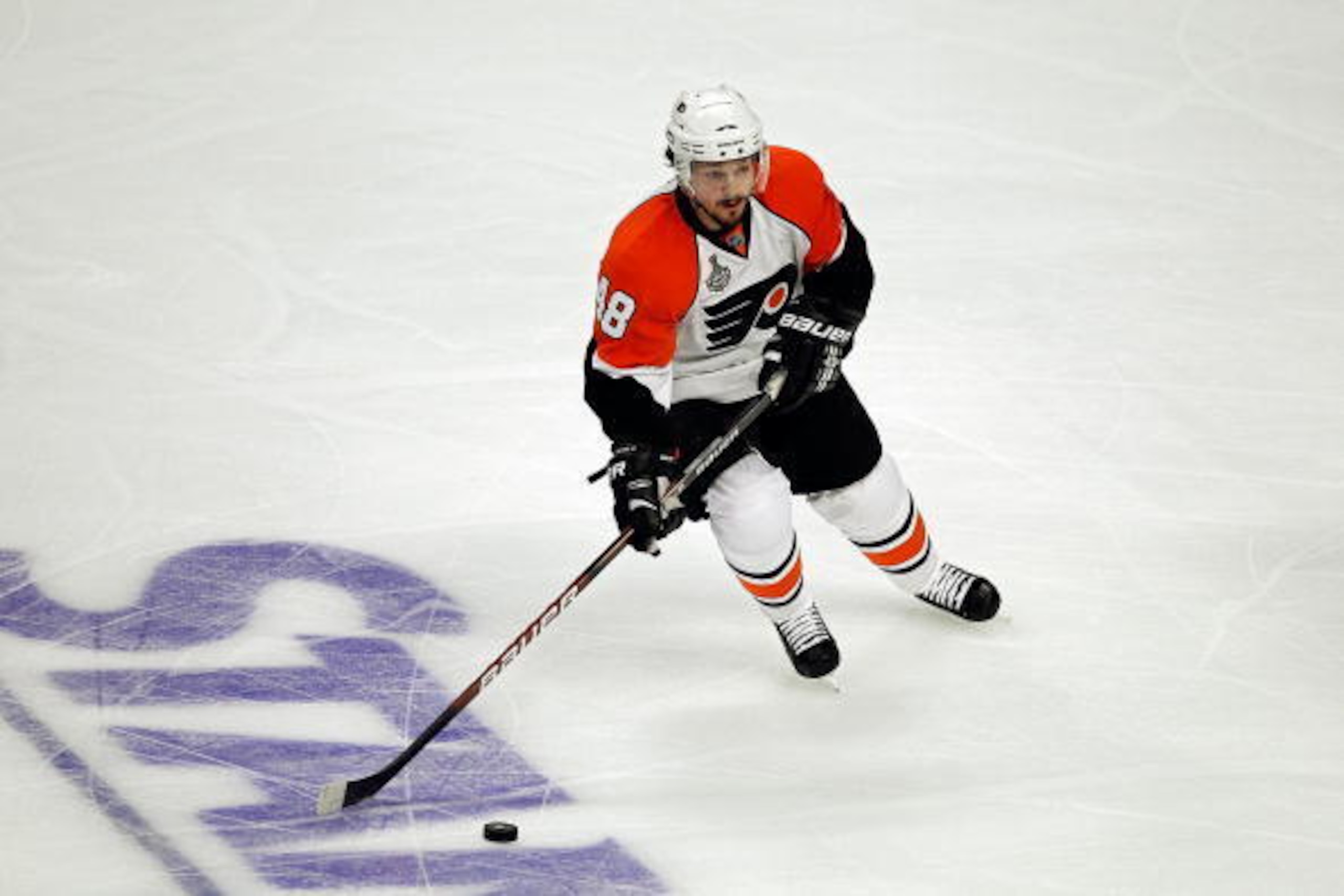
Despite Daniel Briere's best efforts, the Philadelphia Flyers still yearn for their first title since 1975.
The center generated an NHL-high 30 points during the 2010 playoffs, but he saved his best hockey for the Stanley Cup Final showdown versus the Chicago Blackhawks. Through six games, the veteran tallied three goals and nine assists. He set up a score in all but one bout.
Philadelphia, who narrowly reached the postseason with 41 wins, couldn't contain Chicago's explosive attack. The Blackhawks found the net 28 times, mitigating Briere's Game 1 goal and three assists with a 6-5 win.
"I'm proud of the guys," Briere said after Game 6's loss, per ESPN.com's Scott Burnside. "I know I'm going to remember this group of guys for a long time. But it's going to take a little bit of time to get over the sting of this loss."
Briere had only delivered over a point per game in one season (2006-07) of his career, but he almost helped pull off a monumental upset.
Justin Verlander (2013 ALDS and ALCS)
10 of 11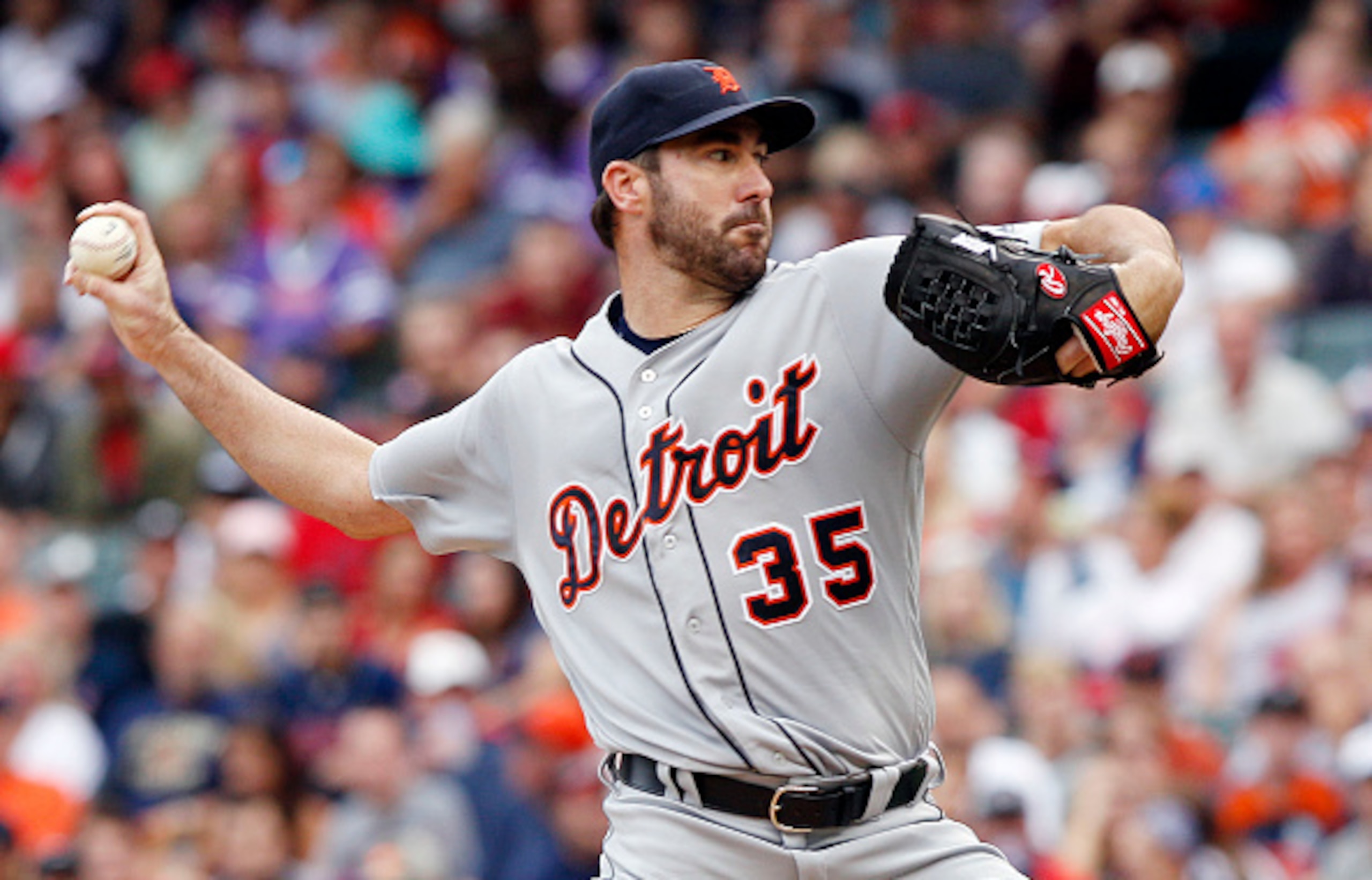
Three years ago, Justin Verlander had a postseason for the ages. Since it ended prematurely after three starts—two of which the Detroit Tigers lost—it gets lost in the shuffle.
In 2012, the ace didn't help Detroit secure its first championship since 1984. He surrendered five runs over four innings in Game 1 of a World Series sweep at the hands of San Francisco. The following year, he did his best to bring the Tigers back to the Fall Classic.
The Tigers shouldn't have needed a Game 5 gem to eliminate the Oakland Athletics in the American League Division Series. Verlander tossed seven scoreless innings in Game 2, but Sonny Gray matched him zero for zero in a 1-0 win. When he returned to hurl eight scoreless frames in the winner-take-all showdown, the Tigers scraped together three runs.
During the next round, Detroit dropped another 1-0 game with the 2011 AL Cy Young Award winner on the mound. This time, Verlander allowed the lone score over eight innings, accumulating double-digit strikeouts for the third consecutive start.
Before he could get another chance to dominate, the Boston Red Sox closed the series in six games. Verlander finished with a 0.39 ERA, 0.57 WHIP and 31 strikeouts in 23 innings.
He tried to create another opportunity this fall by notching a 1.96 second-half ERA, but the Tigers fell short of earning a wild-card spot.
LeBron James (Multiple Years)
11 of 11
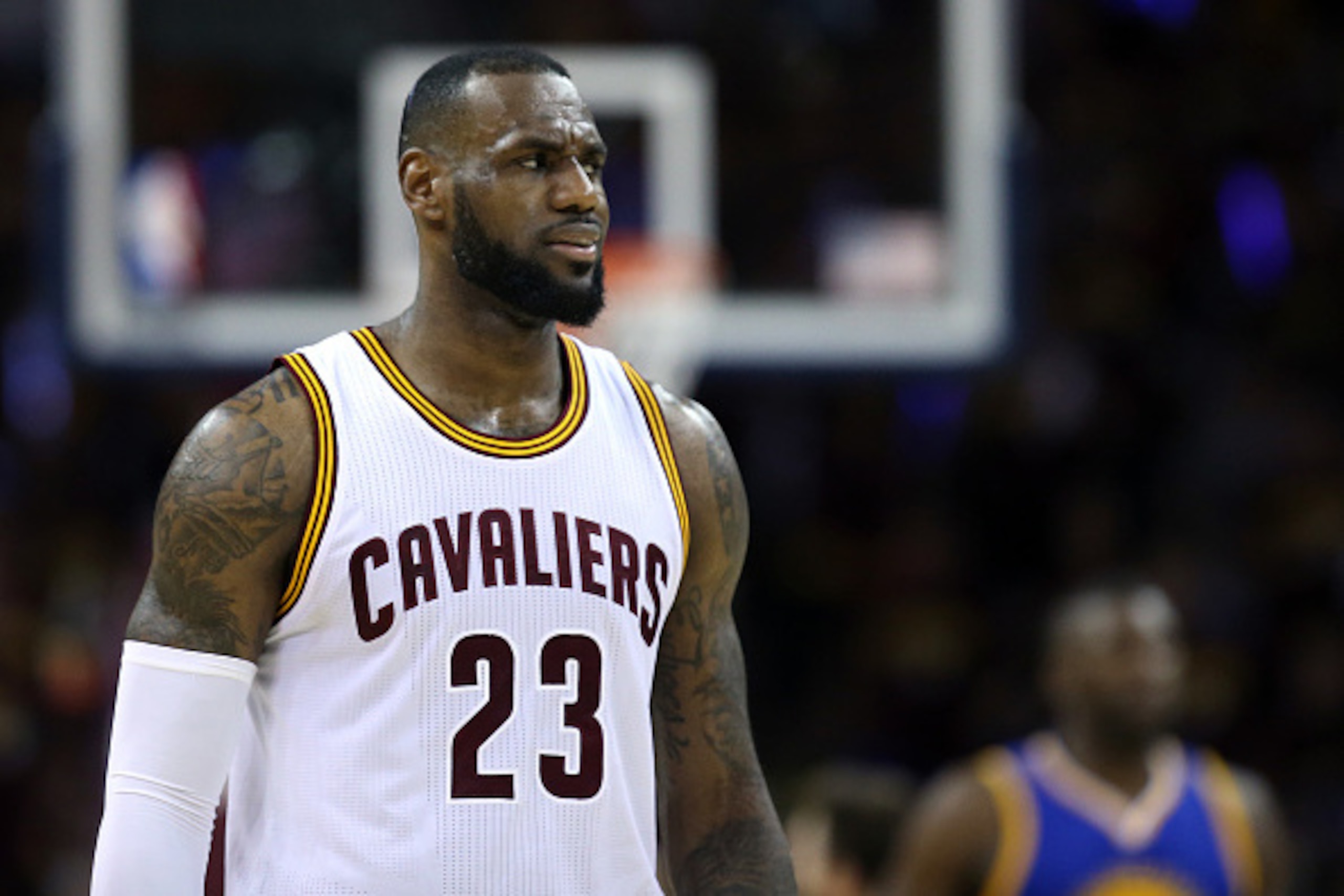
LeBron James can occupy multiple spots on this list. Fourth in all-time playoff scoring behind Michael Jordan, Kareem Abdul-Jabbar and Kobe Bryant, he has also averaged 8.8 rebounds, 6.8 assists and 1.8 steals per playoff contest.
Rather than devote half of this slideshow to King James, let's break down all of his valiant postseason losing efforts here:
2006 Eastern Conference Finals
In his first taste of playoff basketball, a 21-year-old James went toe-to-toe with the Detroit Pistons' powerful defense. He pushed them to seven games with 26.6 points, 8.6 rebounds and 6.6 assists per contest.
Despite receiving 27 points from their young star, the Cleveland Cavaliers mustered 61 points in a Game 7 loss, Per Basketball-Reference.com, that marks the third-lowest scoring tally in postseason history.
2009 Eastern Conference Finals
What more can one man do than go 20-of-30 for 49 points with eight assists, six boards, three blocks and two steals? Despite the insane stat line, James' Cavs started Game 1 of the Eastern Conference Finals with a 107-106 loss to the Orlando Magic.
He exceeded 40 points two more times in a series Orlando seized in six, averaging 38.5 points, 8.3 rebounds and 8.0 assists. This is when everyone simultaneously realized that he's the best player alive but also needed help.
2010 Eastern Conference Semifinals
The 2010 playoff meltdown that compelled him to ditch Cleveland? He finished his first Cavs stint with 27 points, 18 boards and nine assists, but it wasn't enough to stop the Boston Celtics from winning the Eastern Conference semifinals showdown.
2014 NBA Finals
After falling to James' Heat the prior year, the Spurs weren't going to fall short again. They outclassed Miami in a five-game Finals clinic, obtaining each win by double digits.
Don't blame James, who posted 28.2 points per contest with a 57.1 field-goal percentage.
2015 NBA Finals
The most impressive performance of all, James nearly carried Matthew Dellavedova, J.R. Smith and Iman Shumpert to a championship over the far superior Golden State Warriors.
With Kevin Love sidelined and Kyrie Irving hurt in Game 1, Cleveland's returning hero carried the club to Game 2 and 3 victories. Two days after recording a triple double (39 PTS, 16 REB, 11 AST) over 50 minutes, he delivered 40 points, 12 boards and eight dimes in 46.
The 30-year-old crafted a strong case to win Finals MVP on the losing side. Andre Iguodala won the honor instead, but James took what was rightfully his the following year.
.jpg?w=2560 "Falcons Saints Football")
.jpg?w=2560 "Rams Eagles Football")
.jpg?w=2560 "Injury-stricken Seahawks signing veteran RB")


.jpg?w=2560 "2 NFL Officials Suspended")
