10 Athletes Who Matched or Passed Their Predecessors
Following in the footsteps of a legend isn't easy. Few athletes are able to produce coming on the heels of stars.
Of course, there are exceptions to the rule. In this article, we're going to talk about 10 athletes who were able to match or even bypass their predecessors. In the NFL, NBA and even NHL, there have been shining examples of athletes finding solace within their own skin.
In order to properly break all of this down, we had to set boundaries. Each athlete we've named replaced another one who had put forth a solid level of production or became a future Hall of Fame candidate.
Understanding these terms, it's time to engage in our list of 10 athletes who matched or passed their predecessors.
Kevin Love
1 of 10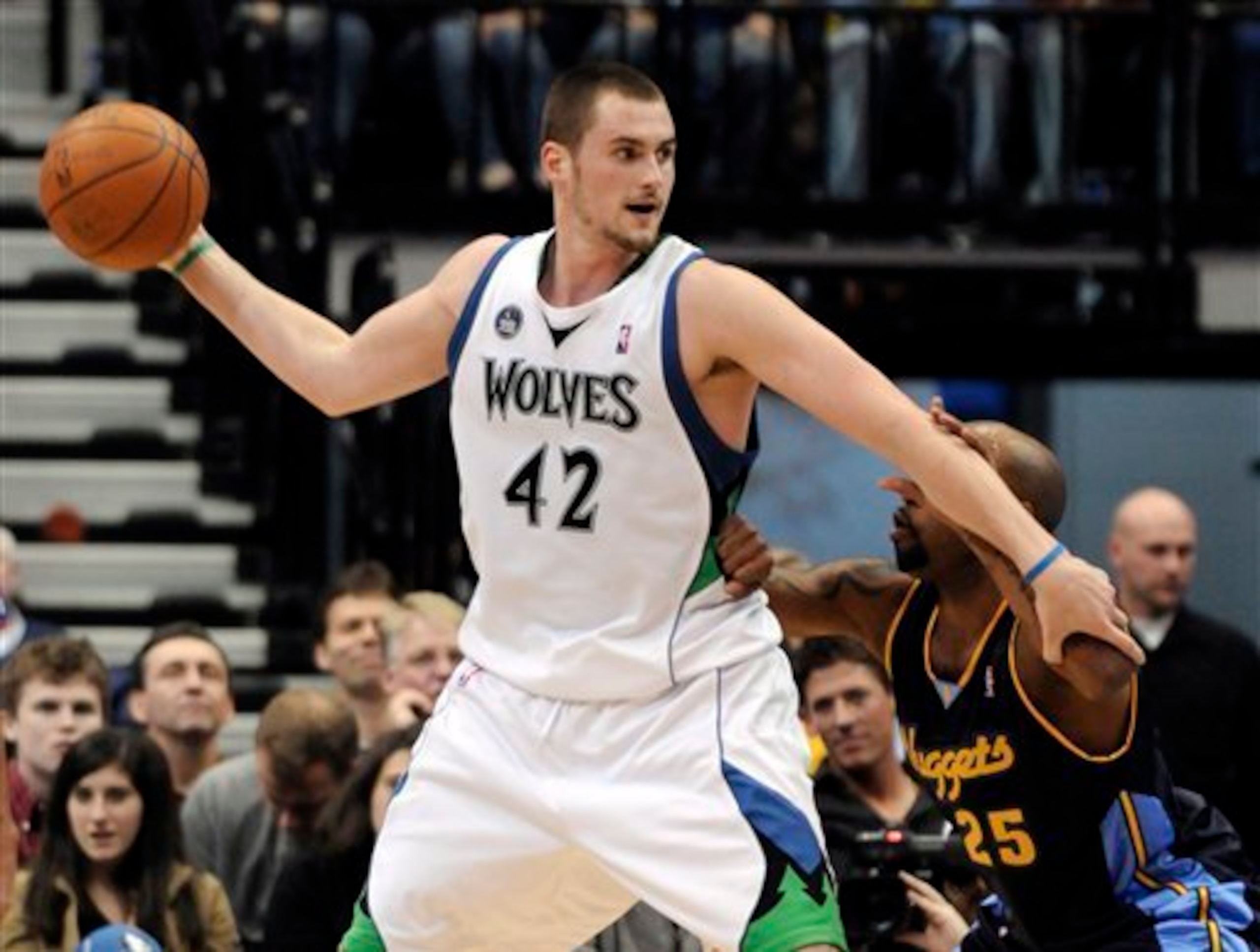
Who: Kevin Love
Replaced: Kevin Garnett
It's easy nowadays to forget the time when Kevin Love was serving as the Minnesota Timberwolves' offensive anchor.
The Memphis Grizzlies selected Love with the No. 5 pick before trading him to the T-Wolves in 2008. Minnesota immediately slotted Love in the offense to replace Kevin Garnett, who had left for Boston the season before.
The situation worked out beautifully. Love averaged 19.2 points and 12.2 rebounds per game in the six seasons he spent with the Wolves. He also played in three NBA All-Star Games for his troubles.
He was never as brilliant as a prime Garnett—who won the NBA's MVP award in 2004 and helped define a generation of power forwards—but Love more than filled the void of an excellent two-way forward.
Although Minnesota dealt him to the Cleveland Cavaliers prior to the 2014-15 season, Love's contributions to Minnesota can't be overlooked. He was able to replace the elite production Garnett had given the team and proved to be one of the NBA's best rebounding forces in the process.
Aaron Rodgers
2 of 10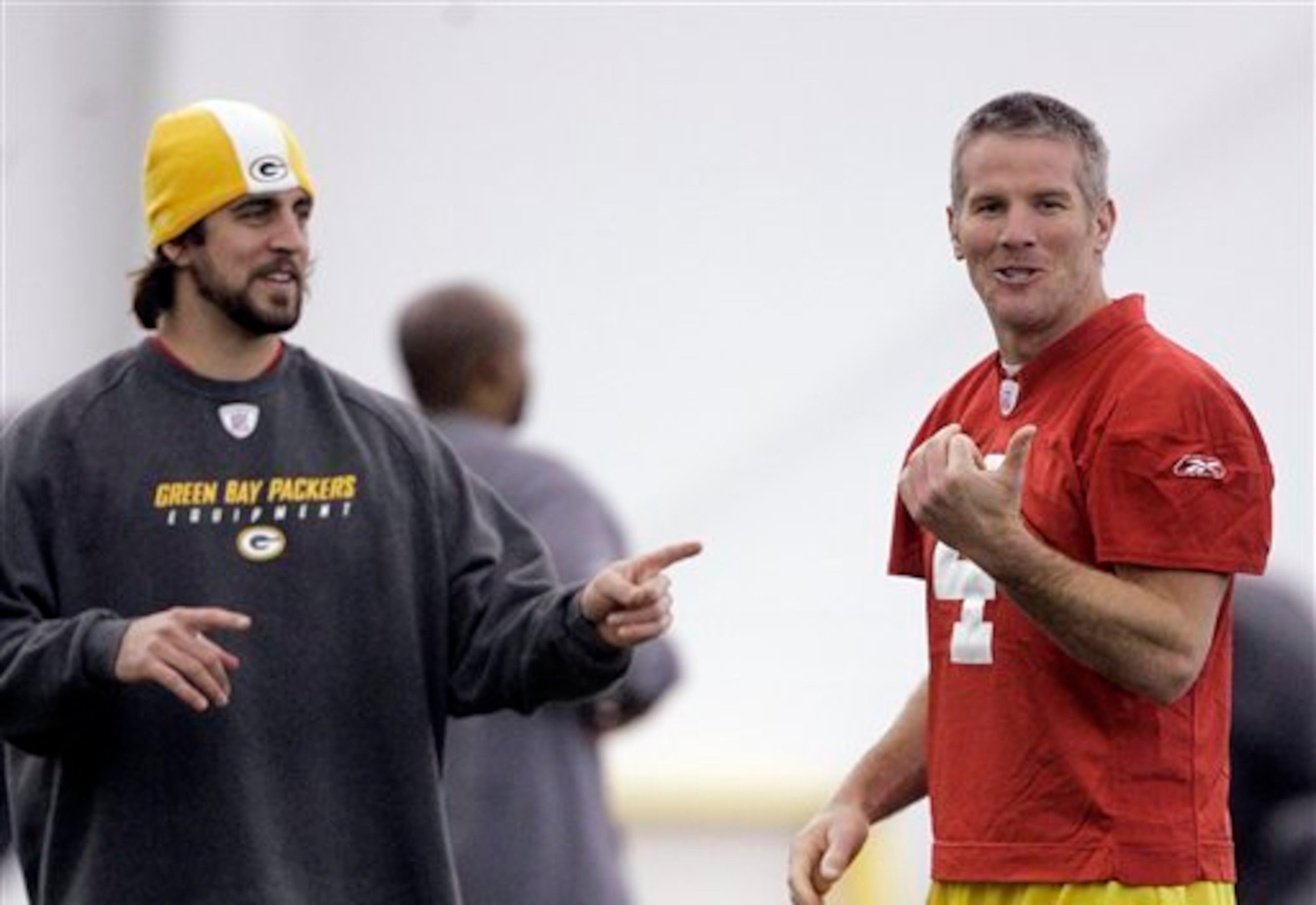
Who: Aaron Rodgers
Replaced: Brett Favre
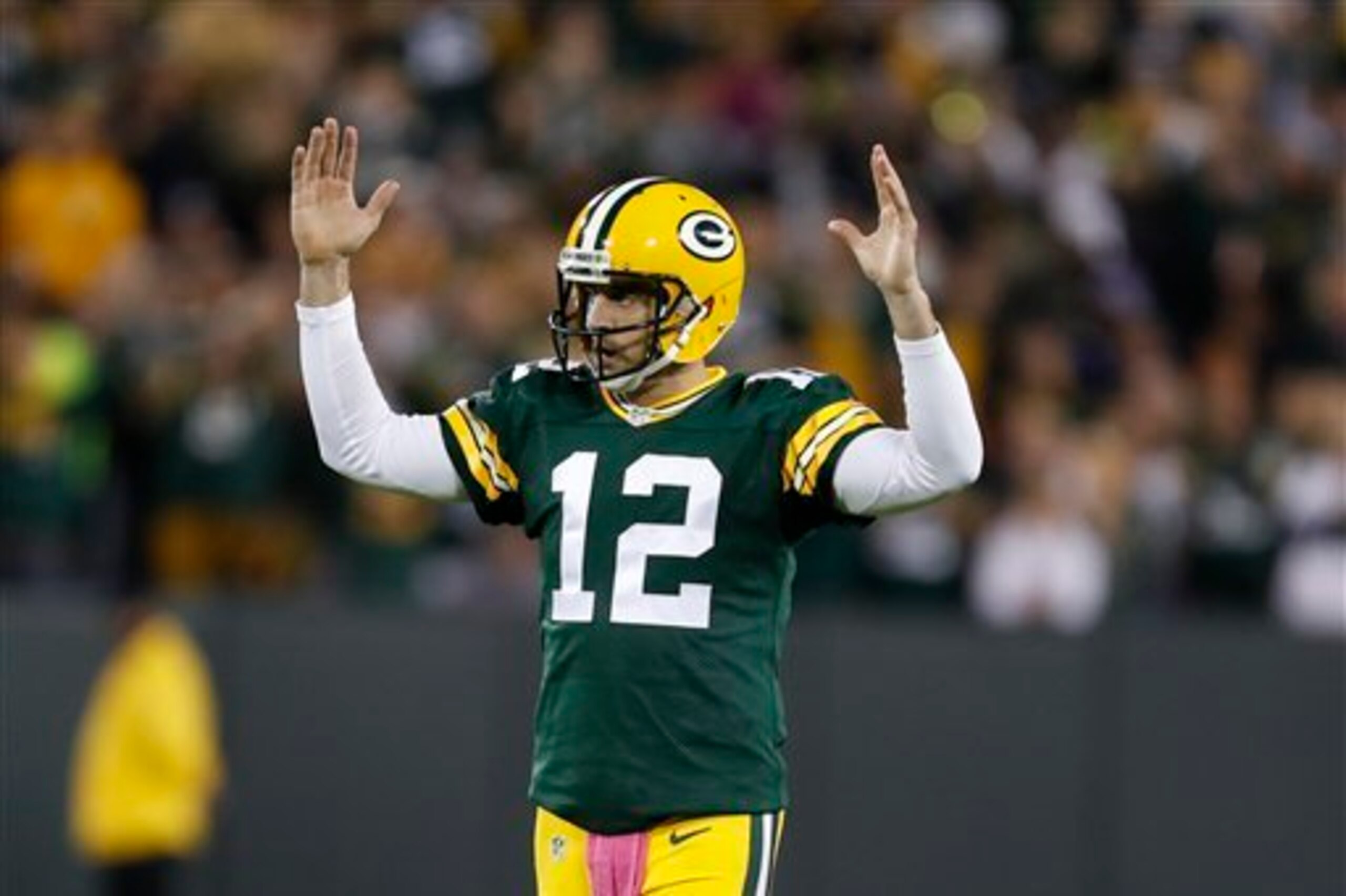
Replacing Brett Favre in Green Bay couldn't be done. He was the man who surpassed Bart Starr. The lifetime Packers legend—prior to his stints with the New York Jets and Minnesota Vikings—had toppled all of the passing records in Wisconsin and won a Super Bowl.
But then came Aaron Rodgers in 2008. The smooth, mobile operator was tasked with taking over for an icon. In nine seasons, he has won a Super Bowl crown, played in four Pro Bowls and taken over the No. 2 slot for all-time passing yards and touchdowns in a Packers uniform.
He may never conquer Favre's Hall of Fame totals, but you can make a case for Rodgers going down as the greatest Packers QB in history based on his robust completion percentage—64.8 percent—and the fact he's thrown only 68 interceptions in nine seasons of action.
Tag one more Super Bowl win onto Rodgers' belt, and his resume will be hard to topple in Green Bay. Who would have believed that when Favre stepped away following the 2007 season?
Dwyane Wade
3 of 10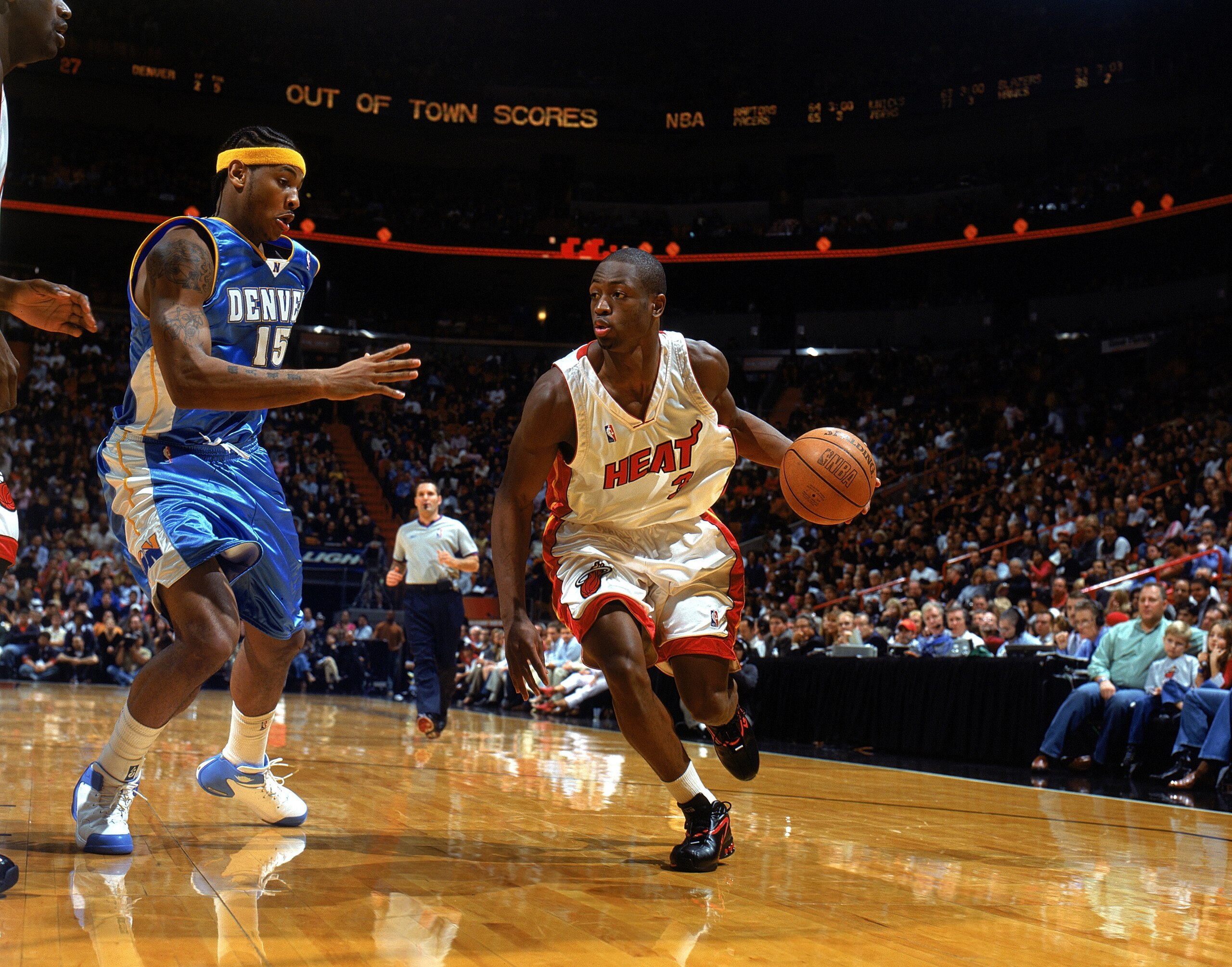
Who: Dwyane Wade
Replaced: Eddie Jones
Chicago Bulls uniform or not, Dwyane Wade will always be remembered as a Miami Heat legend. The 13 seasons he spent in South Beach turned this former Marquette star into a Hall of Fame-worthy shooting guard.
It's hard to remember who came before Wade. His three NBA titles, 12 All-Star Game appearances and countless heroic moments have forever been etched into the minds of Heat fans. However, Miami had a productive 2-guard prior to Wade's arrival: Eddie Jones.
Jones spent six seasons with the Heat, logging five of those from the shooting guard position. He averaged a solid 16 points per game, using excellent touch to load up on points.
The 6'6" guard supplied a balanced attack and became one of the go-to options for the Miami offense.
The Miami front office didn't care about any of that. It knew Wade was special and started him right away at shooting guard when the team drafted him in 2003, moving Jones to small forward. The result was worth it, as Wade dramatically surpassed his predecessor in every feasible way.

.jpg?w=2560)

Steve Young
4 of 10
Who: Steve Young
Replaced: Joe Montana
As crazy as it sounds, the San Francisco 49ers were fortunate enough to have Joe Montana and Steve Young on their roster, starting in 1987. It was a year when the Niners were comfortably sitting atop the football world, having won two Super Bowls in '82 and '85.
Montana was the Hall of Fame-caliber leader. He was the driving force behind Bill Walsh's West Coast offense. Young was sitting on the bench, consuming how to handle the franchise, waiting in the wings for his chance to take over. In 1992, that opportunity finally came around, and he never looked back.
From '92 to '99, Young produced at every turn. He left San Francisco with a career completion percentage of 65.8 as a Niner, with 29,907 passing yards, 221 touchdowns and 3,581 rushing yards. Montana's career completion percentage with San Francisco was 63.7.
As one of the first dual-threat QBs, Young even helped the 49ers capture a Super Bowl victory against the San Diego Chargers in 1995. He certainly did his best to match his predecessor.
Tim Duncan
5 of 10
Who: Tim Duncan
Replaced: David Robinson
Tim Duncan played alongside David Robinson for six seasons, winning two NBA titles, before he truly took over as the leader of Gregg Popovich's team. By the time Robinson walked away from the franchise he spent 14 seasons carrying, Duncan had already developed into a superstar.
The transition was smooth, as Duncan effortlessly became the Spurs' go-to, Hall of Fame-caliber big man. He went on to win three more NBA titles and finished his career last season averaging 19 points, 10.8 rebounds and 2.2 blocks per game.
Duncan was able to claim the scepter from Robinson and in many ways surpassed him. ESPN.com even ranked him as the best power forward in NBA history.
Andrew Luck
6 of 10
Who: Andrew Luck
Replaced: Peyton Manning
Andrew Luck being tapped to replace Peyton Manning in 2012 remains up for debate in terms of how effective he's been under center.
When the Colts selected Luck No. 1 overall, he looked every bit the part of a zenith quarterback. He threw for 4,374 yards passing and 23 touchdowns, as the Colts climbed their way to an 11-5 record. There was room for improvement, of course, considering Luck completed only 54.1 percent of his passes.
The Colts went on to win 11 games the following two seasons, as Luck grew as a passer. He even tossed a career-high 40 touchdowns in 2014. But somewhere along the line, things began to shift.
The Colts went 8-8 in '15, with Luck suiting up for only seven games. They declined in all areas of the game, including quarterback.
Blame has been shifted ever since. Colts general manager Ryan Grigson blamed some of the team's problems on Luck's $140 million contract—a deal he signed off on—per ESPN's Mike Wells.
As Luck tries to erase the Colts' deficiencies, he will also continue to live in Manning's shadow. At least for now, he has done a nice job of matching his legendary predecessor.
Larry Johnson
7 of 10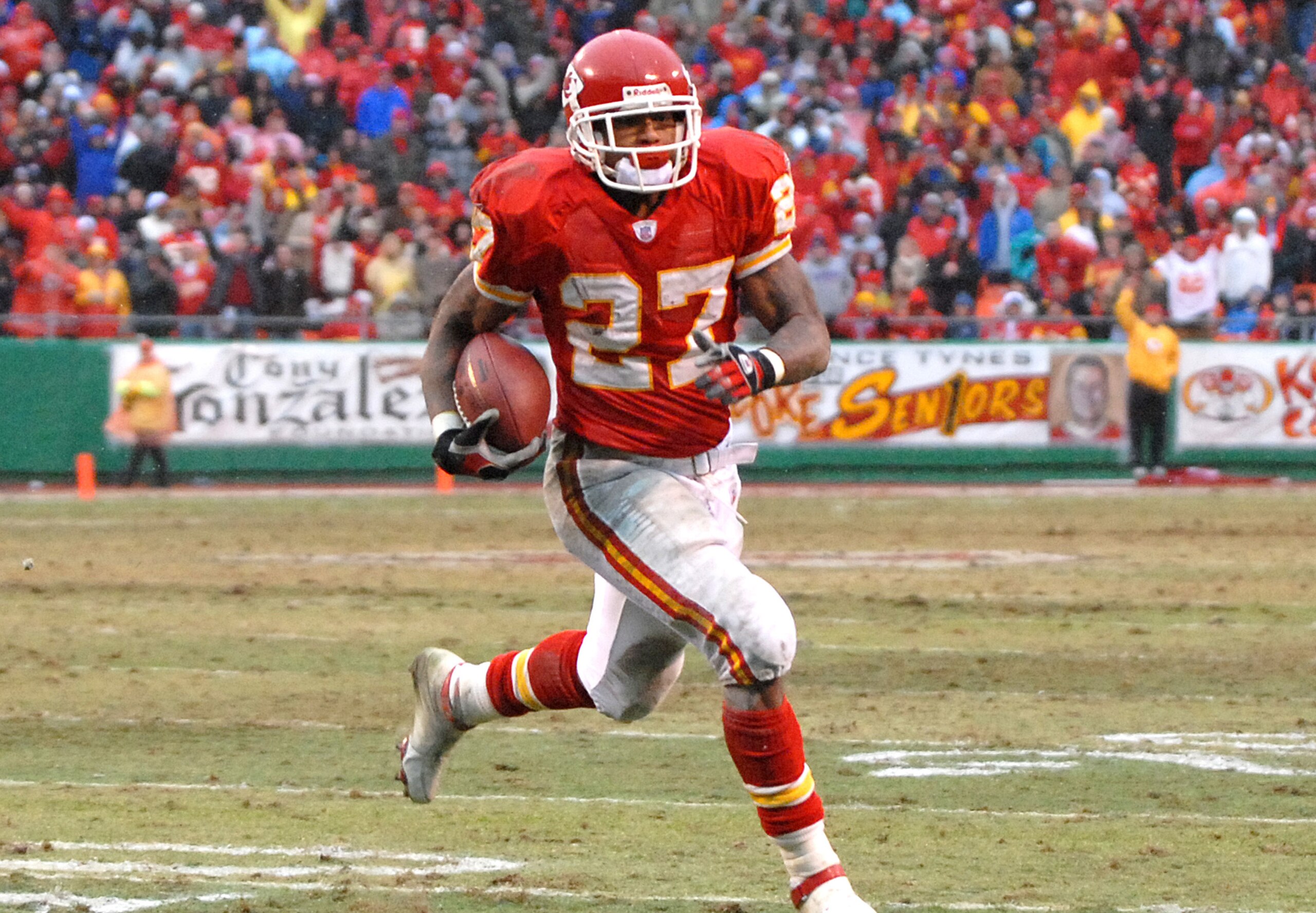
Who: Larry Johnson
Replaced: Priest Holmes
This was an odd one, but it remains an excellent example of replacing one star with another. Between 2001 and '06, the Kansas City Chiefs had produced a fierce, almost unstoppable rushing attack.
It started in '01 with Priest Holmes finding a new lease on life. Holmes came to Kansas City after serving a four-year stint with the Baltimore Ravens. He exploded in the production department, rushing for 6,070 yards and 76 touchdowns in six seasons.
Toward the tail end of his career, Larry Johnson grabbed the baton and ran away with it. Johnson took over the lead role in 2005, rushing for 1,750 yards and 20 TDs. He followed that season up with a staggering 416 carries, resulting in 1,789 yards and 17 scores.
Johnson's numbers were never the same again, bottoming out in '09 when the Chiefs released him. No matter how short-lived it was, Johnson was an ultra-productive replacement for Holmes.
Sidney Crosby
8 of 10
Who: Sidney Crosby
Replaced: Mario Lemieux
When the Pittsburgh Penguins called on Sidney Crosby to replace Mario Lemieux in 2005, Lemieux wasn't at the top of his game. He was actually closer to the bottom.
At age 40, Lemieux returned to the Penguins after playing 10 games in 2004. He suited up 26 times during Crosby's rookie year, passing the team's leadership baton on his way out.
Crosby accepted, transitioning into the NHL's best player. Now with two Stanley Cup wins, Crosby has done his best to surpass Lemieux. Whether you believe he has or not is up for debate—Lemieux is No. 8 in all-time points scored, while Crosby is currently sitting at No. 98.
Either way you slice it up, Crosby has been a wonderful replacement and has served as an endearing force for the Penguins since his rookie year in '05.
Tom Brady
9 of 10
Who: Tom Brady
Replaced: Drew Bledsoe
Tom Brady, for all intents and purposes, is the best quarterback in NFL history. He has four Super Bowl rings, is ranked No. 5 in all-time passing yards and is fourth in touchdowns thrown.
The New England Patriots offense has revolved around Brady for 16 seasons and counting, so it's hard to recall who was in charge before No. 12.
Drew Bledsoe was the guy tapped to the lead the Patriots into the future. The team believed in his ability so much, he signed a whopping 10-year, $103 million deal with the club before the 2001 season.
It wasn't a surprise New England gave him a lucrative deal. Bledsoe had been under center for the Pats since '93, playing in three Pro Bowls.
Fate changed everything. Bledsoe was injured early in the '01 season, opening the door for Brady. He never looked back, surpassing his predecessor in every way imaginable.
Andy Dalton
10 of 10
Who: Andy Dalton
Replaced: Carson Palmer
The Cincinnati Bengals brought Andy Dalton in to shore up the quarterback position in 2011. Prior to Dalton landing in Ohio, the team was structured behind the sturdy arm of Carson Palmer.
Palmer was a passer's passer. He played in two Pro Bowls over a seven-year span, throwing for 22,694 yards and 154 touchdowns. He was a franchise player, and the Bengals rewarded him with a lofty contract extension in 2005, which could have netted him $118.75 million had he fulfilled the original terms of the deal.
The year 2010 was when things changed. Cincinnati had just gone 4-12, and Palmer wanted out. He demanded a trade or told ownership he'd retire. After holding off, the Bengals finally dealt Palmer to the Oakland Raiders, turning the keys over to Dalton shortly afterward.
Dalton has remained in the driver's seat ever since. Six seasons into his career, he's thrown for 129 touchdowns and 19,511 yards, and the Bengals have yet to miss the playoffs. He's not only replaced Palmer, but the team has been better since he walked through the door.
All stats, box scores and information via Sports-Reference.com, unless noted otherwise.
.jpg?w=2560 "Falcons Saints Football")
.jpg?w=2560 "Rams Eagles Football")
.jpg?w=2560 "Injury-stricken Seahawks signing veteran RB")


.jpg?w=2560 "2 NFL Officials Suspended")
