
5 of the Most Interesting Radio Messages from 2016 Japanese Grand Prix
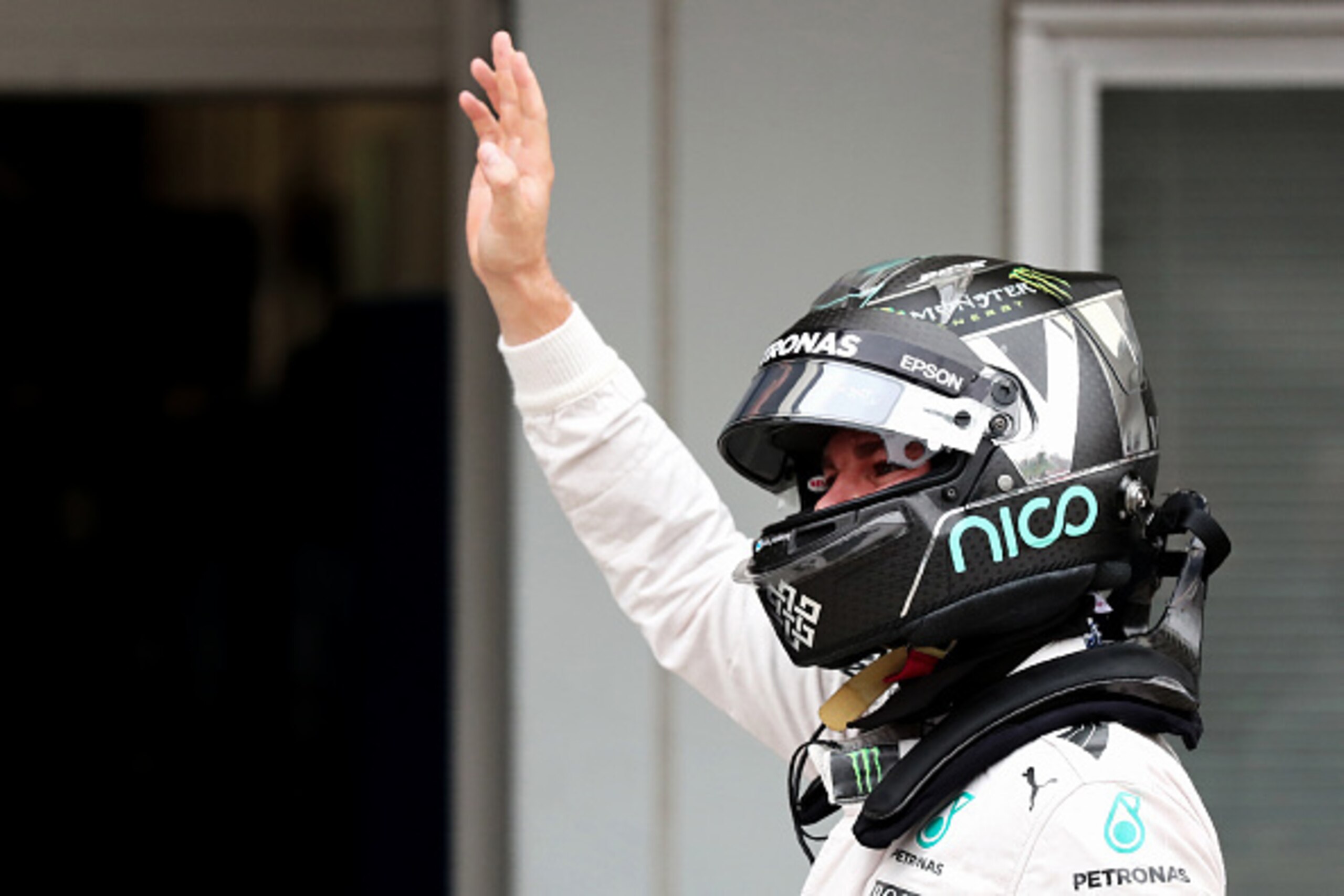
Nico Rosberg became the first Formula One driver to be interviewed over pit-to-car radio at last weekend's Japanese Grand Prix.
The German produced an almost faultless lap to claim pole position at the Suzuka circuit, moving ever closer to his maiden world championship.
But before he could celebrate the feat with his Mercedes team, Rosberg first had to answer questions posed by three-time grand prix winner and Sky Sports television pundit Johnny Herbert on his cool-down lap.
It was the first time in recent memory a driver has been interviewed during or immediately after an official session and, if F1 know what's good for it, it should be the last.
With a look at Sebastian Vettel and Lewis Hamilton feeling the blues, Nico Hulkenberg flaunting his overtaking prowess and Daniil Kvyat's encounter with a mysterious creature, here are the best radio messages from Japan.
Nico Rosberg Congratulated by Johnny Herbert After Setting Pole Position
1 of 5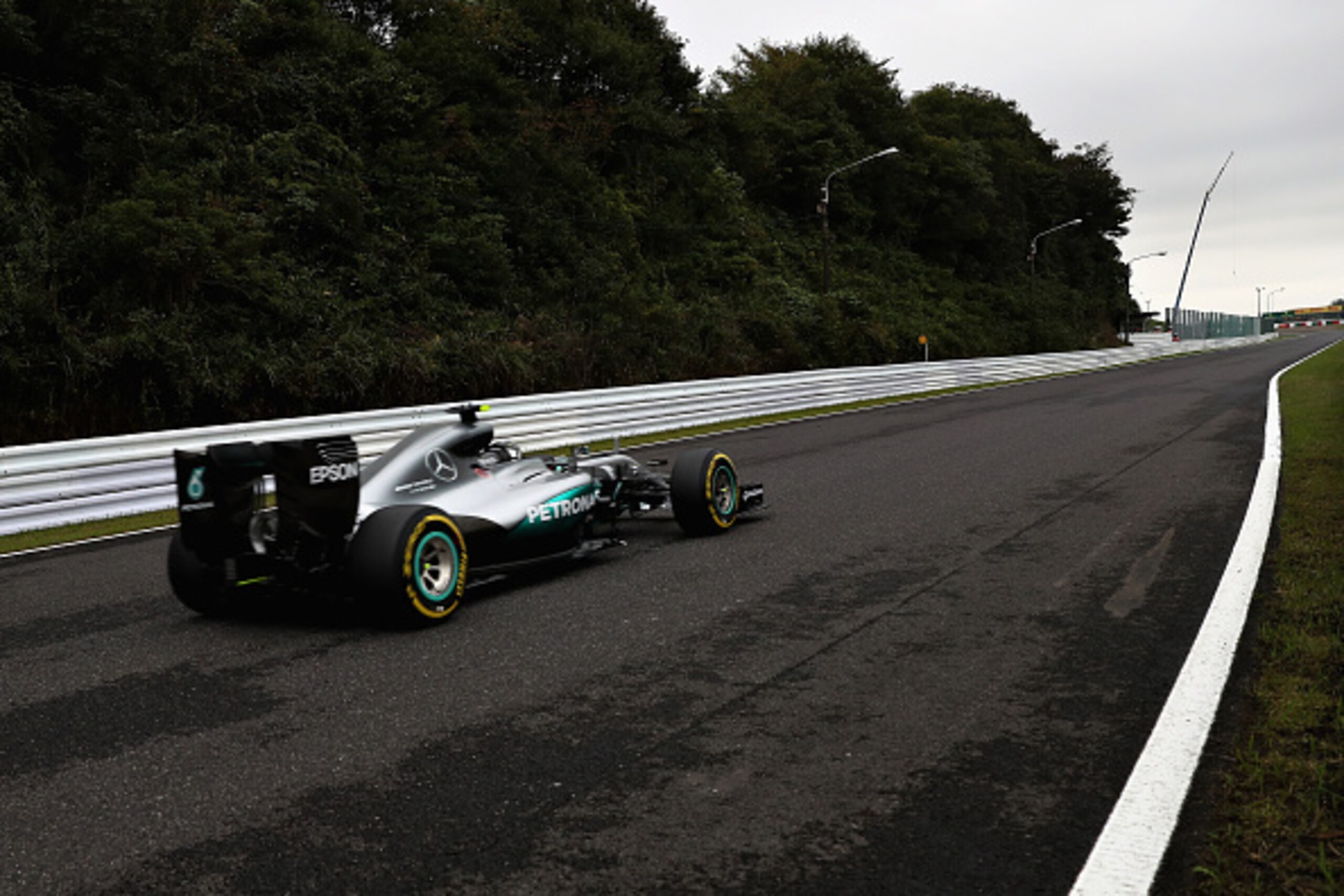
Rosberg would have been fearing the worst ahead of the final minutes of qualifying at Suzuka.
Fastest in every single session, he had dominated the entire Japanese GP weekend up until that point, but after the first runs of Q3—the only session that meant something—he was second, 0.195 seconds slower than Hamilton.
Rosberg had been there before, of course—comfortable at the front until it really mattered, until Hamilton whipped out an earth-shuddering lap and put him in his place.
But he was not prepared to accept defeat this time.
On his final lap, he was more than a match for Hamilton through the fast change-of-direction sequence we know and love as the Esses. He attacked the kerbs of the final chicane like he had never attacked them before.
And he finished the job, setting pole position by just 0.013 seconds.
Having taken another major step towards his first world championship, Rosberg would no doubt have wanted to celebrate this breakthrough moment with his race engineer, Tony Ross, and the rest of his Mercedes team.
First, however, he had to tolerate a blithering idiot who had sneaked his way on to the pit wall.
"Hi Nico Ross-berg, it's Johnny Herb-Herbert speaking, we're live on air, please do not swear," announced the bubbly Sky television pundit in true Big Brother style, stumbling over his words. "What a brilliant lap for that lap you got there. That is exactly what you needed for this championship, wasn't it?"
"Hi Johnny. Yeah, for sure, happy with that lap," replied Rosberg in a tone normally reserved for the tedious FIA press conferences his team-mate hates so much. "It's what I needed to try and win the grand prix tomorrow. That's the objective here, and I'm really happy it worked out and that was really, really cool."
"What about the car? The car is exactly what you need for tomorrow's race? 'Cause you look as if you've got a very sweet balance on that car."
"Erm, yeah, it's really good for sure. I'm confident for tomorrow's race also—we had a good practice on Friday—and, er, yeah, it should be, should be fine."
"Great, great talking to ya, matey! Well done!" Herbert signed off.
"Thank you, Johnny," said the polesitter, who no doubt recreated Kimi Raikkonen's famous "leave me alone" comment when the radio button was safely switched off.
Although this was a first for F1, interviewing drivers over the radio has long been commonplace in other categories including Formula E and the British Touring Car Championship.
But while it works perfectly in the BTCC—stocked with outspoken middle-aged men happy to fight both in and out the car—it adds no value in an environment as cosmopolitan as F1, where attempting to gain an insight from drivers as professional and squeaky-clean as Rosberg is akin to retrieving blood from a stone.
After all, team radio is a place for raw emotion to rise to the surface, not for drivers to zone out into interview mode.
Sebastian Vettel Concedes 3rd to Lewis Hamilton After Blue-Flag Frustrations
2 of 5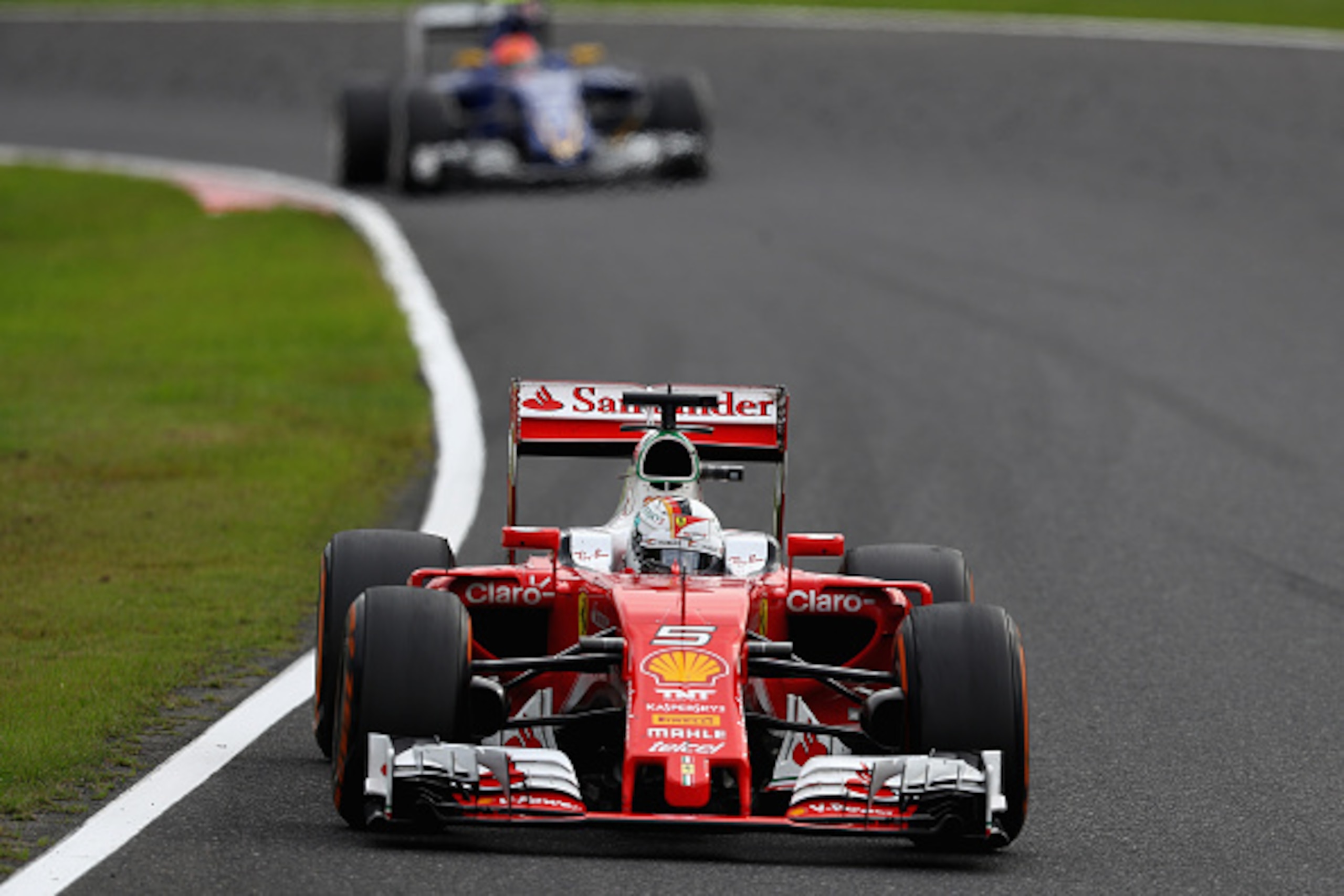
As Eddie Irvine might tell you, lapped traffic can cause serious problems at Suzuka.
With a narrow track surface, kinked straights and several fast corners that flow into each other, it is notoriously difficult for slower cars to obey blue flags and identify the right moment to let the leaders through without hurting their own races.
Max Verstappen criticised the backmarkers during the Japanese GP. Kimi Raikkonen did, too.
But by far the most vocal critic of the blue-flagged runners was Vettel, who at one stage was in contention for a second-place finish but ultimately fell to a distant fourth.
As the four-time world champion told the team's official website, Vettel and Ferrari agreed to extend his second stint on hard-compound tyres in order to finish the race on the faster soft-compound tyres and therefore apply pressure on second-placed Verstappen.
Yet his struggles in navigating the traffic instead left him vulnerable to Hamilton behind.
"It's ridiculous! I mean, it's ridiculous! Honestly! Lost a second for nothing! For f--k's sake!" Vettel shouted on Lap 30 while Manor's Pascal Wehrlein held him up, highlighting just how much time lapped cars can innocently cost the leaders.
Wehrlein eventually moved aside by taking a wide line at the hairpin—the prime location for backmarkers to let faster cars past—but that didn't stop Vettel waving his arms in frustration as he accelerated away.
Seconds later, Vettel stumbled across another lapped car—Felipe Nasr's Sauber—but was too far behind the Brazilian to pass him on the main straight and instead had to follow him all the way around Turns 1 and 2, all the way through the Esses, all the way through Dunlop Curve and all the way through the Degners.
"For pity's sake, make him go!" Vettel demanded, his advantage over Hamilton reduced to six seconds. "I mean, what do you want to know? It's a green track, it's difficult to pass, it's behind another car—I mean, it's ridiculous!"
Unlike Wehrlein, Nasr—renowned for unnecessarily frustrating his fellow competitors—rather brazenly refused to release the Ferrari at the hairpin, instead forcing Vettel to go the long way around on the kinked stretch that followed.
Perhaps the time Vettel was losing—and his increasingly flustered comments over the airwaves—made Mercedes decide it was the right time to strike, with Hamilton pitting for another set of hards at the end of Lap 33.
Vettel responded a lap later, switching to softs—making him the only driver in the top 12 to use the yellow-marked tyres beyond the opening stint—but he exited the pit lane at the exact moment the No. 44 car hurled past and swung into Turn 1.
With his tyres two steps softer than Hamilton's, Vettel had enough pace to close the gap, yet such is the nature of the circuit that he had to make his move instantly—both to protect his tyres from being stuck in Mercedes' turbulent air and to build a decent gap before his more delicate softs began to degrade.
As soon as Lap 38, though, Vettel knew it was too late; the moment had passed.
"Nah, he's pulling away," he sighed in a resigned, regretful tone of voice. "He's pulling away on the straights."
"Keep your head down. The race is not over," instructed his race engineer, Riccardo Adami.
Vettel should have finished two places ahead of Hamilton in Japan.
But the combination of lapped traffic and another questionable Ferrari strategy—a result of chairman Sergio Marchionne's obsession with his cars being on the softest possible tyres at every available opportunity, per F1 journalist Peter Windsor—saw him finish 15 seconds behind.
And his record of finishing on the podium in every grand prix he's started at Suzuka was lost.
Lewis Hamilton Apologises to Mercedes for His Latest Lacklustre Start
3 of 5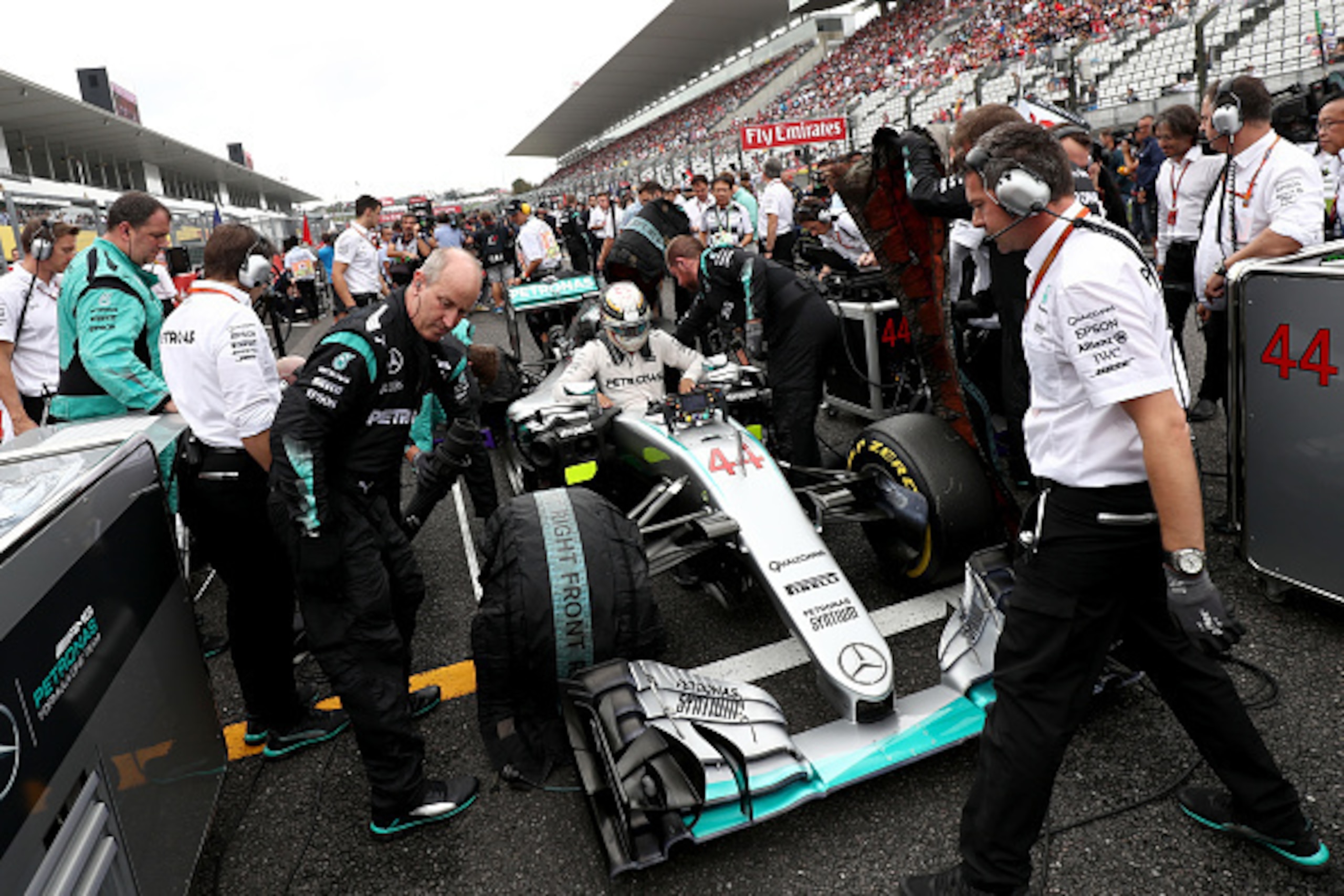
When Hamilton last made a lacklustre start in the Italian GP at Monza, where he dropped from first to sixth within a matter of metres, he was soon on the radio to tell Mercedes he was to blame.
But he wasn't, and he knew it.
As he later explained per Autosport (h/t Eurosport), Hamilton was certain it wasn't his fault, but—aware his engineers would be "worried and nervous" about another poor getaway—he took it upon himself to "to put their mind at ease."
In other words, rather than letting his team waste precious time and energy trying to analyse and understand the reasons during the race, he wanted to ensure the lot of them were focused on hauling him out of a tricky situation.
Seven days after his recovery to third from the back of the grid at Spa, Hamilton's handling of that setback was a reflection of the maturity and confidence he was operating with at that stage of the season.
Little more than a month later, however, things are different.
Hamilton's preparations for the race were defined by his declaration of war against the media, and his slender defeat to Rosberg in qualifying proved more costly than usual, forcing him to start on the damp side of the grid after overnight rain.
But as he later told the official F1 YouTube channel, the wet patches had no real effect on his start, with Hamilton openly admitting that his failure to control excess wheelspin off the line resulted in him falling from second to eighth at the first corner.
"Sorry guys..." he was heard muttering despondently on Lap 3, wondering if the curse of 2016 would ever lift.
"No stress, Lewis," replied race engineer Pete Bonnington, offering the support to his driver that Hamilton gave him at Monza, but this time it was no use.
Thanks to a near-perfect strategy, Hamilton did recover to the podium, yet the damage—the self-inflicted damage—had been done in a race he couldn't afford to lose.

.jpg?w=2560)

Nico Hulkenberg Leaves Valtteri Bottas Behind After Bold Overtaking Move
4 of 5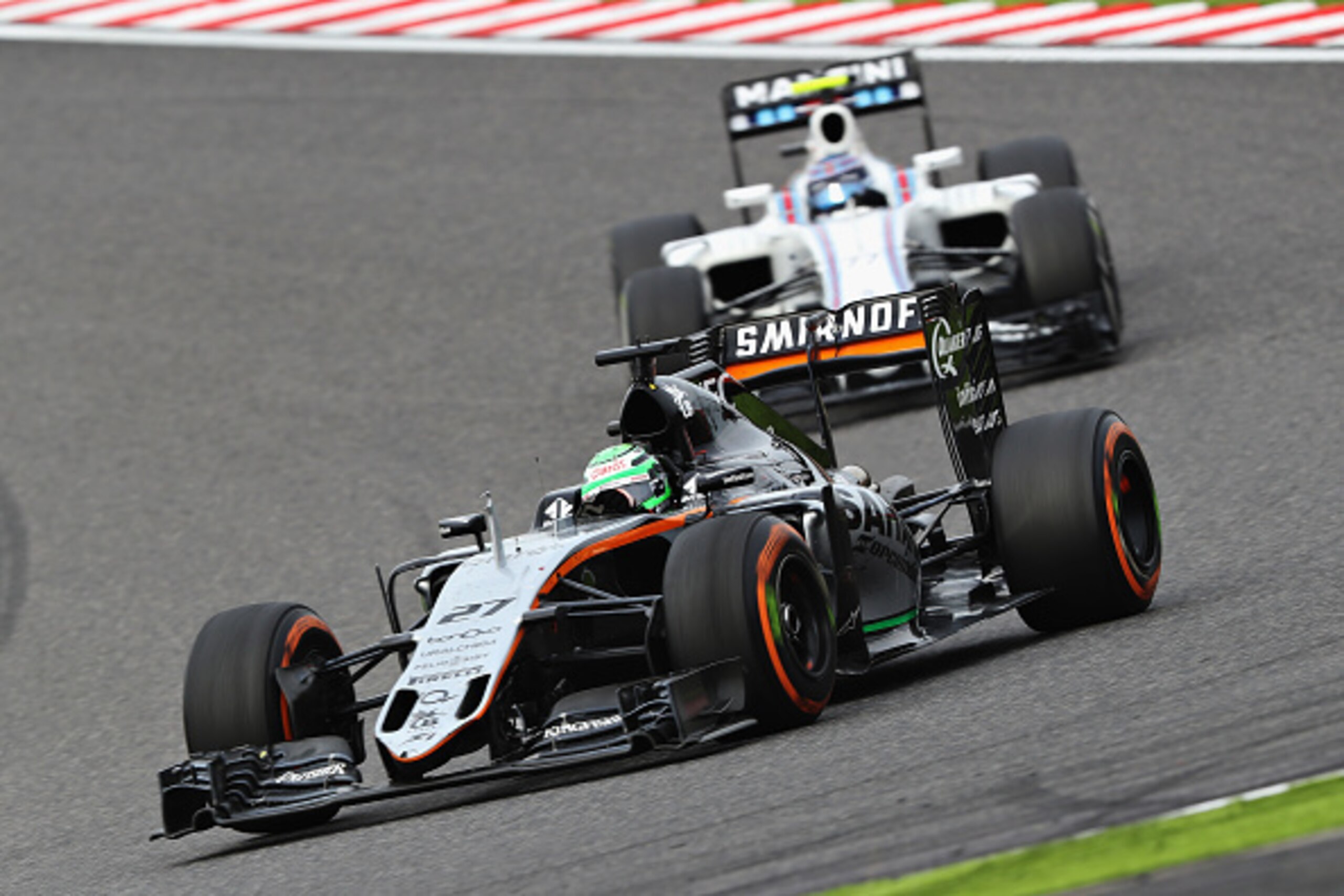
He's not exactly Verstappen, but Valtteri Bottas—as Hamilton and Vettel discovered to their cost at Germany 2014 and Bahrain 2015 respectively—is normally one of the most difficult drivers to pass on track.
Unlike many of his rivals, he remains composed when placed under pressure, perfecting his exits from corners and allowing his low-downforce, Mercedes-powered Williams to do the rest, pulling him out of touching distance on the straights.
As such, any move made on Bottas—provided it's not as reckless as Raikkonen's late lunge in last season's Russian GP—has to feature an element of surprise, and the drivers who manage to force their way past the No. 77 car know they have earned it.
Daniel Ricciardo knew it in Italy, where he celebrated in the cockpit after stealing fifth at Monza's first chicane, later telling Sky Sports F1 (h/t Motorsport.com's Charles Bradley) he was "giggling" as he sped away having completed the Overtake of the Season.
And Hulkenberg knew it at Suzuka, where he submitted another contender for the unofficial prize.
Having traded his soft-compound tyres for hards on Lap 11, the Force India driver quickly worked his way behind Bottas, who—having failed to reach Q3 on Saturday—was running a long opening stint on mediums.
As he later told the team's official website, Hulkenberg had "lined up a pass" on Lap 19, but a poor exit for the final chicane left him unable to make an impression on the Williams on the approach to Turn 1.
"If I can't get you here, I'll get you at the chicane instead!" Hulkenberg told himself in the cockpit and ensured the move, when it came, was non-negotiable.
Positioning his car on the outside of the right-left chicane, Hulkenberg beat Bottas on the brakes at a part of track where identifying a braking point is tricky, and he muscled his way around the outside, leaving his rival with no option but to concede the position.
"See ya later!" Hulkenberg purred as he left Bottas eating his dust.
As noted after the race, that move—on an afternoon the team established a 10-point lead over Williams in the fight for fourth place in the constructors' championship—was a reflection of Force India's growth in stature over the last two seasons.
Once among the more unfashionable teams on the grid, this plucky, punchy team—with capable people, an innovative car and, for now at least, the most exciting driver lineup below the front-running outfits—now operate with self-assurance and confidence.
Call it a certain swagger.
Toro Rosso's Daniil Kvyat Encounters a 'Baby Octopus' in Opening Practice
5 of 5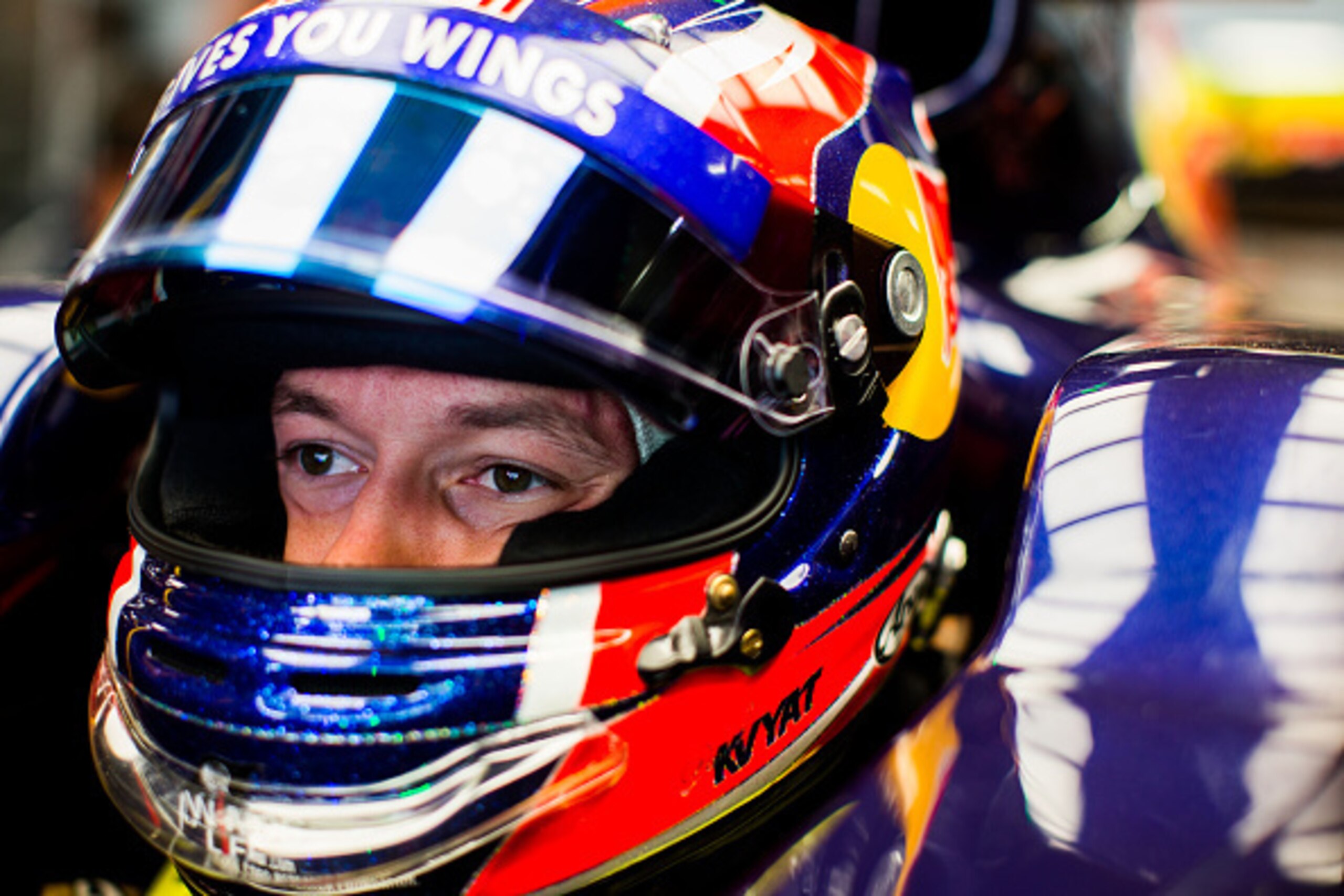
Since Red Bull announced his demotion ahead of May's Spanish GP, many people within the F1 paddock have been concerned about Kvyat's state of mind.
The Russian cut a dejected, helpless figure in the months following his return to Toro Rosso, culminating in that Sky Sports interview after qualifying at the German GP, where he was eliminated from Q1 with a lap more than 0.5 seconds slower than team-mate Carlos Sainz.
Fortunately, after the summer break, the 22-year-old has looked a little more like his old self, declaring he had fallen in love with the sport all over again following a welcome return to form in the Singapore GP.
But those worries returned around an hour into the opening practice session of the Japanese GP, when he delivered the most puzzling radio message of 2016.
"Oh, the annoying octopus is back!" he cried.
"Can you keep going?" asked his race engineer, fearing the creature could keep Kvyat stuck within the confines of the garage.
"Yeah, yeah, it's quite a small one—it's a baby octopus."
Was this merely a personal joke between colleagues—a pet name for Red Bull adviser Dr. Helmut Marko, maybe?—or something more sinister?
Had the shock of being dropped by Red Bull left Kvyat, unbeknownst to the rest of us, experiencing hallucinations? Indeed, did his desperation to get away from this octopus lead to him hitting Vettel twice on the opening lap back in Russia?
Thankfully, he later provided the answer.
Per Motorsport.com's Jonathan Noble, Kvyat explained the "octopus" was, in fact, a fragment of discarded tyre rubber that had wrapped itself around the car's antenna and appeared to grow tentacles when the car moved at speed—something that first happened to him at the 2014 Chinese GP.
"At the lunch break, the team told me [the octopus comment] went quite big! It was just a joke for my group of engineers, but apparently it went around the world," he added.
And with that, F1's amateur psychologists breathed a huge sigh of relief.
All team-radio quotes, as well as timing and tyre data, sourced from the official F1 website, the FOM television feed and Pirelli's official race report.
.jpg?w=2560 "Rams Eagles Football")
.jpg?w=2560 "Falcons Saints Football")
.jpg?w=2560 "Injury-stricken Seahawks signing veteran RB")

.jpg?w=2560 "2 NFL Officials Suspended")

