

For Whom the Bell Tolls: Why Boxers Can Find Retirement Their Toughest Challenge
For the vast majority of us, retirement cannot come too soon.
The golf clubs will become more than just a garage ornament, while you can enjoy long lunches followed by even longer afternoon naps. There's the chance to travel as well. With the knowledge that you'll never have to work another day, life suddenly becomes a blank canvas.
When a boxer retires, however, it's a different story. Floyd Mayweather Jr. summed it up perfectly when he told the Guardian's Donald McRae: "Boxing is real easy. Life is much harder."


.jpg?w=2560)
Mayweather Jr. is one of the lucky few. Not only did he get out with all his faculties in tact and his face in near-mint condition, he also stepped away from the sport knowing his financial future was safe. You only need to look at his Instagram account to see he's not short of a million or two.
Yet money doesn't necessarily make the transition into retirement a smooth one.
Ricky Hatton is an example of how a bloated bank balance doesn't guarantee long-term happiness. Having initially hung up his gloves after a chilling knockout loss to Manny Pacquiao in 2009, The Hitman discovered that time—and money—isn't always a great healer.
Having battled with depression to such a degree that he even tried to take his own life, as he confirmed to Gareth A Davies of the Telegraph, Hatton eventually decided to make a comeback.
In announcing his return, he said, per David Anderson of the Mirror: "I had problems and I’m over them now. I want to make people proud of me."
Hatton's only two career defeats at the time had come against Mayweather Jr. and Pacquiao—two modern-day legends. He had been a two-weight world champion who built up a legion of British fans willing to travel anywhere to see their fighter in action.
He should have felt nothing but pride at what he achieved. And yet, those losses rankled with him inside.
Of course, the second chapter in his career was short and not so sweet. Vyacheslav Senchenko stopped him in Round 9, but Father Time had done the real damage. Hatton quit again in the immediate aftermath.
Retirement has recently become a topic of conversation again.
Tyson Fury took to Twitter to announce the end of his career...only to confirm hours later that he planned to fight on once fully healthy again.
Without the same media scrutiny, Gary Sykes also called it a day via social media. A message on his Facebook page (h/t Michael Kelleher of Sky Sports) revealed how he'd come to a quick decision.
Unlike Fury, though, the former British super featherweight champion hasn't changed his mind—and he doesn't intend doing so at any time in the future.
"I’m not going to go back on it. Ultimately, I’m past my best. The me from five years ago would wipe the floor with the me that is around now," Sykes told Bleacher Report.
"I could have boxed on, but I didn’t want to go on past my sell-by date. I didn’t want to look back in a few months and realise I shouldn’t have bothered [carrying on].
"People have asked me why I retired four weeks before a fight. Why not take it still and just make the money? But, for me, it wasn’t about the money. It was about my legacy—I’d rather not have the money so long as I don’t have that extra loss on my record."
Sykes had been in training for a bout against Sean Dodd on October 15 when he realised enough was enough. Physically he was getting into fighting shape for a tilt at the WBC International lightweight title, yet mentally he'd hit the buffers.
"There were the days when it was cold, and I couldn’t really be bothered [to go out running], yet I’d always got up and done it every time," he said.
"But one week I just didn’t go. My heart didn’t want to get up and do the job. I’ve been in British title fights when it got tough. I wanted to stop at times, yet my heart wouldn’t let me. When my heart suddenly felt like it couldn’t be bothered, I knew it was time to call it a day."
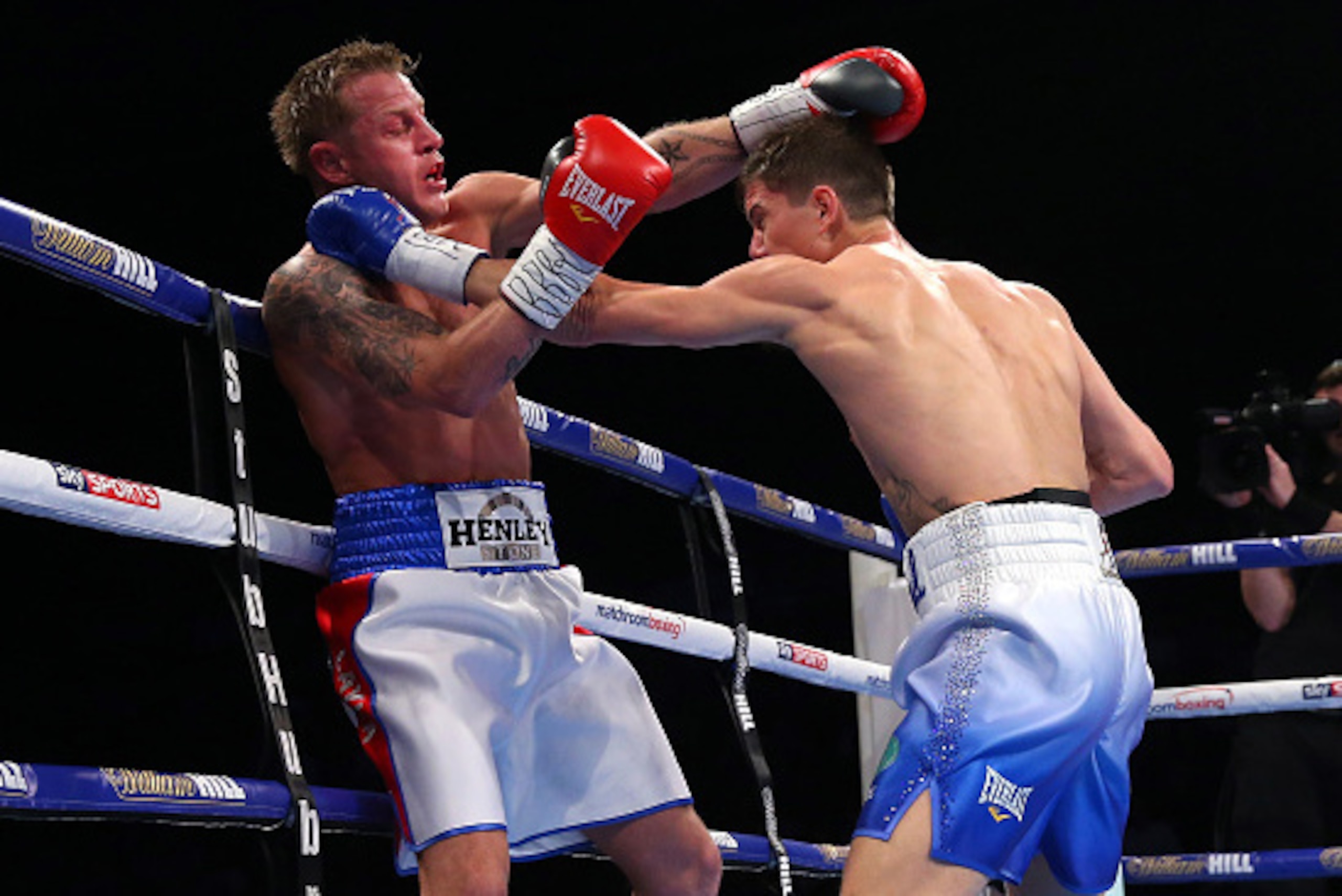
Making the decision is one thing, but Sykes was immediately faced with a situation that every fighter has to deal with at some stage in their lives: What exactly do you do after boxing?
The Yorkshireman admits to being "a bit stupid with money" while at the peak of his powers. Now, with a young family to support, there was no nest egg tucked away to fall back on. So, having boxed since the age of 15, he had to find a new career at the age of 32.
Just like in the ring, though, sometimes it's all comes down to timing.
Sykes has fallen on his feet after finding a job through a former sponsor. Now training to be a CAD designer, he's trying to adjust to a new way of life in the nine-to-five world (although he'll actually work 8:30 a.m. to 4:30 p.m. when fully trained for his role).
"It’s been the biggest shock I’ve ever had in my life. I come in on a night now and they seem to last so long," he said. "When I was boxing, I looked forward to the time when I’d get home and have nothing to do. But now I’ve got that, it’s hard.
"It's the same with food. When I was dieting as part of my training, every meal I had was gorgeous. It was forbidden fruit back then—now it’s all just boring. There’s nothing to look forward to. My life has no discipline now.
"But everything happens for a reason—if I hadn’t quit when I did, this job wouldn’t have come about."
Boxing isn't a way of life for a professional. It is life.
When you step away from that daily grind of running miles, pounding heavy bags and ticking off rounds in sparring, there is a huge void to be filled. The thing that has been at the centre of your life, dictating your daily movements, your diet, your holidays and your social life, is no longer there.
Put it like that and it is easy to understand why so many find it tough to stay away forever.
Steve Bunce wrote for ESPN.co.uk in 2013: "Boxing is like no other sport in this regard because when a fighter retires, in modern terms at least, he doesn't really retire, he just steps aside until a good offer comes in."
Comebacks are not a surprise any more. They're not a new thing either. Some, like Hatton, return for personal reasons, while others head back into the ring simply to pay the bills.
A fair number just can't help themselves but go back—boxing is an addiction they simply cannot overcome.
There are other ways to get your fix, though.
A move into television is an option, albeit one only open to a select few. Viewers want the opinions of the elite, not necessarily old domestic-level fighters who've spent their careers campaigning in small venues.
Training, in contrast, is a more accessible route for the majority of ex-pros who want to stay in the sport. Consider it a boxer's nicotine patch, helping them beat the craving without having to go completely cold turkey.
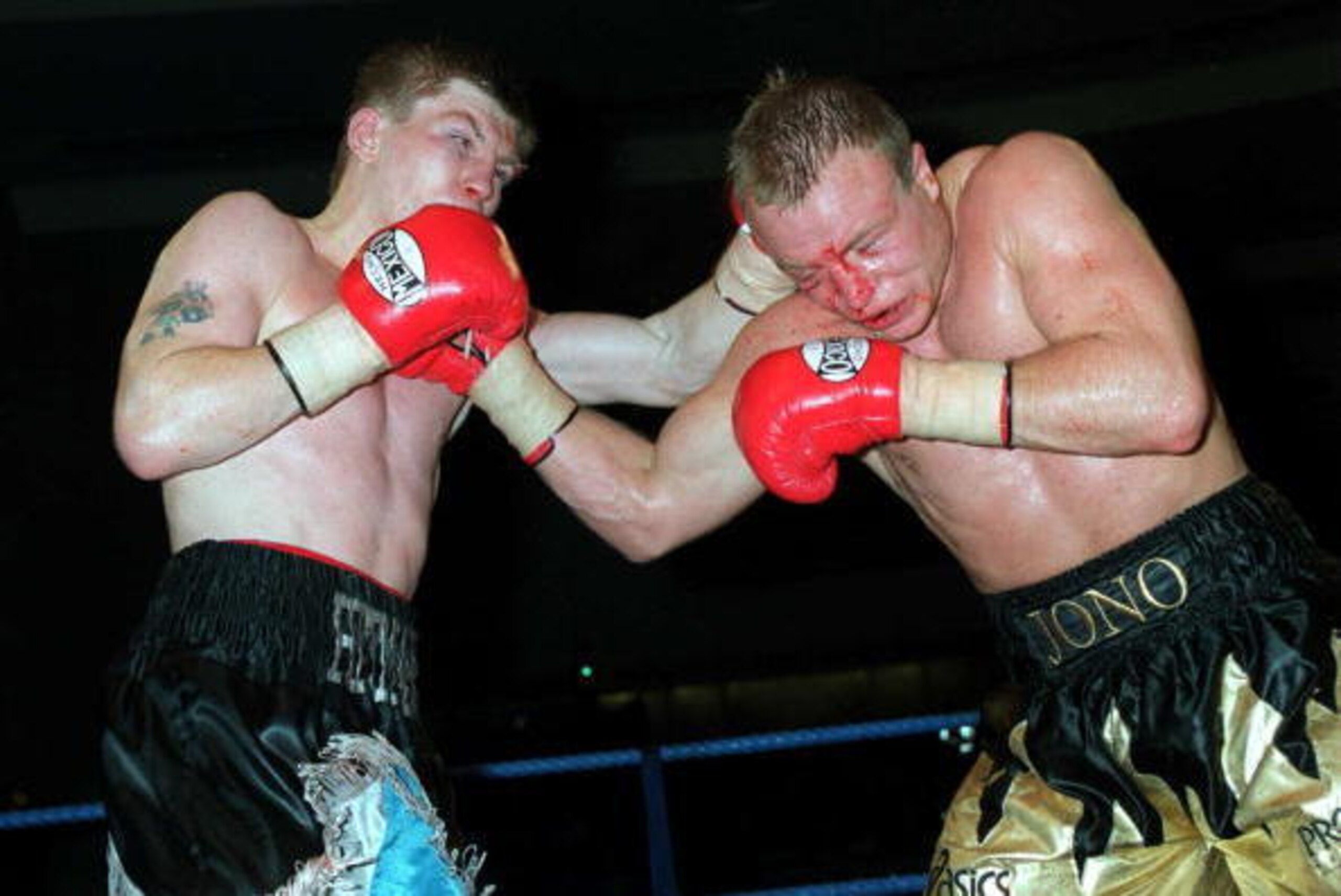
Jon Thaxton is a fighter-turned-trainer. He's a personal trainer too, as well as a motivational speaker. He also works with people with Parkinson's disease, while the latest addition to his long list of jobs sees him hold sessions with handicapped children.
In his own words, he "does everything and anything to make a few quid."
Thaxton's typical day often starts before 5 a.m. and goes right through to around 8 p.m. He's a self-confessed workaholic who cannot sit still. If he does get a break, he tends to train.
The former British and European champion ended his pro career in 2009, following a defeat to John Murray. The moment of clarity he required to realise it was all over didn't come in the aftermath, though, it came before the first bell.
"My second-from-last fight I just kept saying to myself, 'What am I doing in here?' I was fighting an old sparring partner [Tom Glover] and he beat me. I used to run rings around him, he couldn’t touch me in the gym. But his willingness was better than my know-how on the night," Thaxton said.
"Then they offered me a British title fight against John Murray, and I was all up for it. But, when I got in the ring, I was just hoping he would hit me on the chin and knock me out. That way, I could just go home.
"That’s when you know you’ve got to walk away. I’m very proud of what I achieved and I worked very hard—I wasn't the most talented fighter, but I was very exciting."
Unlike many of his counterparts in the fight game, Thaxton had already experienced what life was like away from boxing before he called it a day.
A car crash in 2002 forced him to take an extended period away from his chosen profession. He had to get what he describes as a "dead-end job," despite his only qualification being a non-stop engine and a mean left hook.
"They basically made me cut the grass, all 10 acres of it, with a lawnmower. It wasn’t a sit-on mower either," he said of his temporary job. "While I was doing it, I realised boxing was easier. I made a comeback [in 2004], but also made sure that when I would retire, I had a business to fall back into."

Like a good boy scout, Thaxton made sure he was prepared. His fingers are now in so many pies that he's barely got enough digits on two hands to count all of his roles.
Yet boxing is still very much part of his busy life. Working alongside trainer Graham Everett in his home city of Norwich, England, Thaxton works with a stable of fighters that includes talented siblings Liam and Ryan Walsh.
Although he still occasionally has a "move around with the boys" in the gym, he doesn't miss fighting one bit: "Would you miss getting punched in the face every day?"
It should not come as a surprise that a man who boxed professionally for 17 years now has a full plate.
Thaxton is fortunate. He managed his money well and now has jobs that not only pay him financially but also provide him with a great sense of pride. While winning a British title at the third attempt is his biggest achievement, his sessions with disabled kids are "on a par" with anything he achieved in the ring.
Not every former pro is lucky enough to find such fulfilling work away from boxing.
Some find the fall from grace tough to deal with, as if the spotlight had powered them. Others simply get lost in the real world, struggling to cope without the structure that boxing had always provided for them.
Boxers live in a bubble but eventually have to emerge from their cocoon into the real world. What comes after fighting can be a tougher challenge than any opponent in the ring.
Rob Lancaster is a featured columnist for Bleacher Report. All quotes were obtained firsthand unless otherwise stated.
.jpg?w=2560 "Rams Eagles Football")
.jpg?w=2560 "Falcons Saints Football")
.jpg?w=2560 "Injury-stricken Seahawks signing veteran RB")

.jpg?w=2560 "2 NFL Officials Suspended")

