Breaking Down the Difficulties of Canelo Alvarez's Weight Class Climb
Canelo Alvarez might be the best junior middleweight in the world today, but it’s not for certain. That’s a pity. With the money these guys make—well at least the money the guys behind the scenes who put together the promotions make—these days.
Alvarez has been given ample time and opportunity to do it by now. Maybe that’s just what he does. As popular a fighter as he is, Alvarez hasn’t established himself as the best fighter in the world in any weight class, from junior welterweight to middle.
TOP NEWS

New NFL contenders starting to emerge after Week 4
.jpg?w=2560 "Cardinals Giants Football")
NFL investigating 2 referees for separate viral exchanges

Deion Playbook Found at Hotel
We can reasonably assume, even in being the middleweight champion, he’s not truly the best middleweight in the world. If he were, and if his team were confident in it, he would have faced and defeated titleholder Gennady Golovkin by now.
Instead, after beating smallish 154-pounder Miguel Cotto, who ascended the throne by overwhelming the aging Sergio Martinez, Alvarez faced 154-pound fighter James Kirkland, someone many probably thought had retired before he was dug up as an opponent.
Then, of course, Alvarez chose career welterweight Amir Khan.
Alvarez is a good fighter. He may even have deserved those two gimme wins after beating a future Hall of Famer in Cotto, who had looked unbeatable since moving up to middleweight.
And Alvarez has won three alphabet titles to date, as well as the one that will matter most historically, the lineal middleweight championship. Having turned professional at the tender, but legal to fight for money in Mexico, age of 15, Alvarez grew up during his first five years as he naturally moved through the junior welterweight and welterweight divisions.
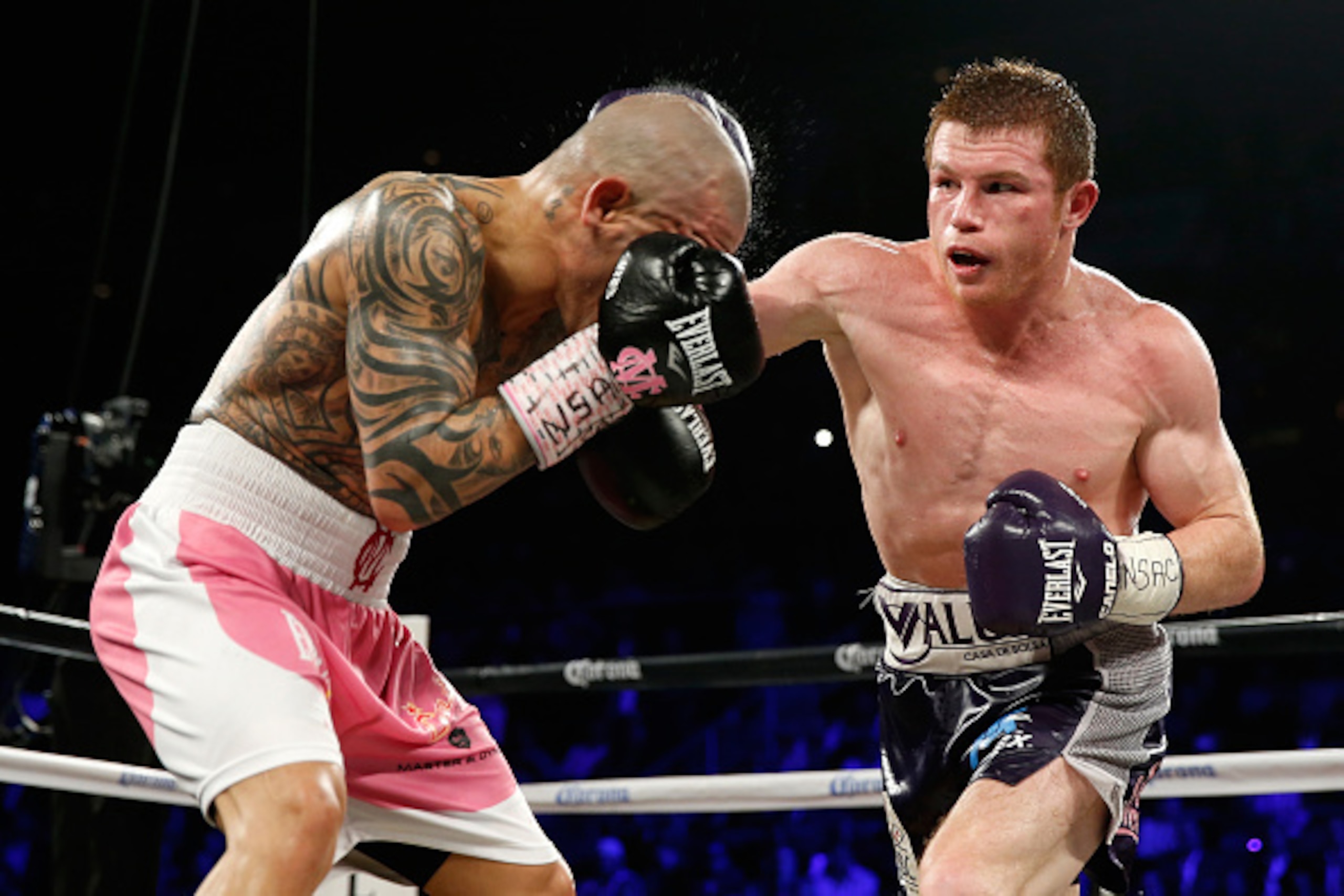
By May 2010, Alvarez had essentially become what he is still considered today: a natural junior middleweight.
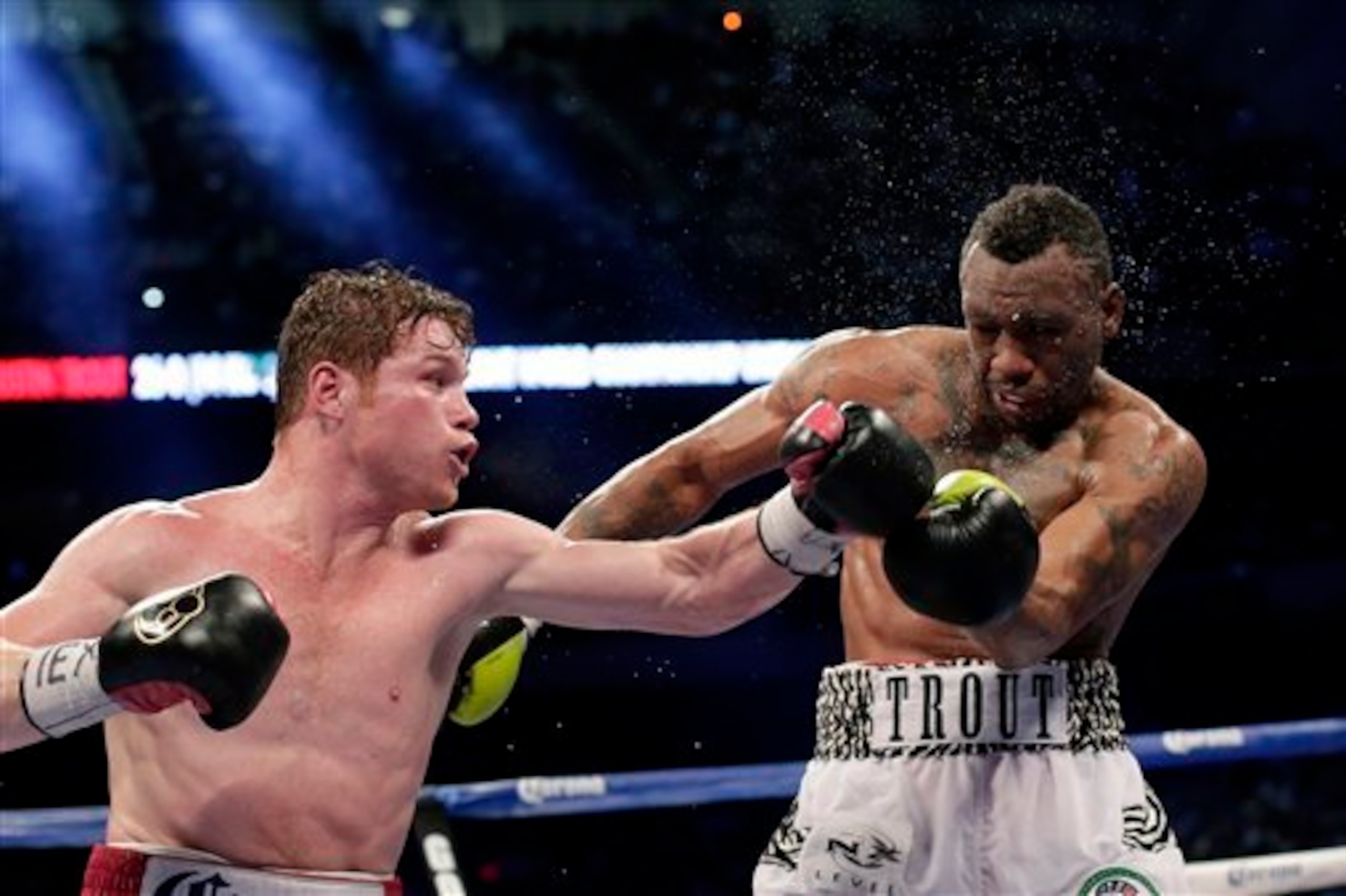
Alvarez faced and defeated increasingly dangerous opposition over the course of those next few years. His two best wins, a unanimous decision over the aging, but still decent enough Shane Mosley in 2012 and the huge showdown versus Austin Trout the next year, had the appearance of a man seizing hold of his destiny.
Though there were still some lingering questions, Alvarez looked like he might soon become the best 154-pound fighter in the world.
But after being dismantled by Floyd Mayweather in a 152-pound catchweight superfight, Alvarez has only managed to maul a mixed bag of contenders.
Perhaps that is being a bit hard on the kid. However ready he was or wasn’t when he took the Mayweather fight in 2013, Alvarez, to his credit, was only 23 years old at the time. Mayweather himself hadn’t jumped into the deepest possible waters at the same age. In fact, by the time he was 23, Mayweather, arguably the best fighter of the past few generations, hadn’t taken a bout against anyone even near as excellent a fighter as Canelo did in facing Floyd.
Canelo was probably due more protection by his handlers than Mayweather was at the time they faced each other. If anything, it might have helped matters had someone made certain Alvarez knew going into the fight he would not be able to outbox Mayweather from a distance.
Or—um—at least have a plan b ready.
But after taking the loss, Alvarez rebounded pretty strongly to solidify, in some people’s eyes, his general acceptance among fight watchers as currently being at least one of the top two or three junior middleweights in the sport.

In fact, Team Alvarez has done a great job of putting their guy in the ring with some good fighters since that Mayweather debacle, and helped him put Cotto away fairly easily.
Alfredo Angulo. Erislandy Lara. That middleweight version of Cotto. All three were great wins over solid (Angulo) to outright outstanding (Lara and Cotto) opponents.
And while Kirkland went into his bout with Alvarez last year after a year-and-a-half long layoff, without trainer Ann Wolfe, who he’d never won without having in his corner before, Alvarez can’t be held responsible for the foolishness of others. He went in the ring that night and took care of business.
The Amir Khan fight was stupid. It was dangerous, unnecessary and seems to have spawned an increasingly troubling trend. Khan was too small for Alvarez just as Kell Brook was for Gennady Golovkin last week.
In both fights, the destruction was scary to see. Khan was brutally knocked out in one of those moments in our sport we all immediately question if what we are watching is a sport at all.
And Brook found himself the victim of an orbital fracture. Will he ever fight again?
Regardless, four of Alvarez’s five wins put him in good position to be seen as the best junior middleweight in boxing today.
Well, they would have. The issue is that none of those wins were actually fought at junior middleweight. So can Alvarez really be the best junior middleweight if hasn’t fought anyone within the limit of the division since 2013?
Alvarez is the lineal middleweight champion. But he’s clearly not the best middleweight for the exact same reason he shouldn’t be considered, at least without some pause, the best junior middleweight: He hasn’t faced enough fighters at the weight to prove it.
The way the points themselves are tied together is that the only middleweight fighters Alvarez faced and defeated were themselves true junior middleweights.
So Alvarez, who did nothing but walk the path of a prospect during his time at junior welterweight and welterweight, the supposed face of boxing's current generation, one of HBO’s top superstars, still has but one truly excellent win at 154 on his resume: the 2012 victory over Trout.
That could change going forward. Alvarez's Saturday night pay-per-view fight versus Liam Smith is at least scheduled to be a junior middleweight contest. If only whatever drove Alvarez and team to ditch needless catchweight contracts this time had been there before.
Who knows? Alvarez might now be what pretty much everyone wants him to be.
.jpg?w=2560 "Hill Injury Update Football")
.jpg?w=2560 "Titans Giants Football")
.jpg?w=2560 "Tyreek makes another cryptic post amid Chiefs rumors")