Sports Stars Who Made One Comeback Too Many
Walking away is never easy. Sports figures have had trouble with the notion of leaving ever since we can remember.
When careers start to dwindle and skill sets begin to deteriorate, it's often better for pro athletes to take the high road—see, Tim Duncan. But not all stars can keep away, giving us fuel to put this article together.
Certain names return to the fold, only to look like a shell of their former selves. While the nostalgia levels are dope, the actual production and effect they have on their teams doesn't quite match up.
Looking back with a statistical microscope, here are 10 names in particular that couldn't stay away but should have.
Honorable Mentions
1 of 11
Outside of the 10 names you're about to check out, countless other sports stars also could have qualified for this category. Below this blurb of text lay a few honorable mentions.
- Martina Hingis
- Claude Lemieux
- Riddick Bowe
- Roger Clemens
- Bobby Hull
- Roy Jones Jr.
- Bo Jackson
- James J. Jeffries
- Gordie Howe
- Ricky Henderson
Muhammad Ali
2 of 11
Muhammad Ali's in-ring career probably will never be rivaled. The things he did for the sport and for culture in general were astounding.
You could rattle off countless fights involving Ali and proceed to talk about them for a week straight. But like a lot of professional fighters, Ali struggled to leave the sport he defined.
The year was 1979 when the Champ first retired. At the time, he had posted a 56-3 record, defeating Leon Spinks in his final bout for the heavyweight title in the Superdome.
It was a crowning, final bow for the greatest of all time.
Ali's return to the ring came against Larry Holmes in October 1980. It wasn't pretty. "Ali was beaten for eight rounds, even though Holmes had backed off and later cried about beating a man who had given him his start and probably never should have been in the ring. [Trainer Angelo] Dundee mercifully stopped the fight after the 10th round," Bob Velin of USA Today penned.
A year later he'd lose an unanimous decision to Trevor Berbick, officially putting an end to his storied career.
The comeback was tough to watch. Ali was not himself, and it showed. In the end, those brutal final fights should never have happened.
Bjorn Borg
3 of 11
It's often easy to forget about legends. The constant rotational wave of athletes storming the courts today makes elites of generations past easy to dismiss at times.
Bjorn Borg is a prime example of that in tennis. Few players were, and have been, as sensationally dominant as he was. During his heyday, Borg won six consecutive French Open titles and five Wimbledon crowns, before abruptly leaving the sport at the age of 26.
There was really nothing left to prove. He was the walking definition of power, speed and success.
In 1991, 10 years removed from the court, Borg decided to make a comeback. Armed with his traditional wooden racket—while majority of players on tour were using graphite, per Tim Adams of the Guardian—he stepped back into the spotlight.
His comeback was deemed a complete failure. Borg barely made a blip on the tennis radar. The lack of wins, or even being competitive for that matter, sent him packing once more and created a weird aura around his legacy, as Douglas Perry of the Oregonian explained.
Thankfully, today, people mostly remember him for his outstanding initial run.

.jpg?w=2560 "Cardinals Giants Football")

Ryne Sandberg
4 of 11
Seventeen months was all it took for Ryne Sandberg to stay retired.
The year was 1996 and the Chicago Cubs second baseman had decided to return to Wrigley Field after a year-and-a-half away from the sport. His comeback started off well, hitting 25 home runs and and 92 RBI in 150 games.
Despite sound power totals, Sandberg's average plummeted to .244. He didn't fully look like himself at the plate.
The following year, he struggled to get anything of consequence going. The Cubs' second baseman batted .264, hit 12 home runs and drove in 64 runs in 480 plate appearances.
It wasn't a total disaster in terms of comebacks, but it wasn't necessary either. Chicago wound up finishing in fourth and fifth place, respectively, within its division, in the two-year span he returned to the diamond.
Nothing was gained nor lost with the return of Sandberg.
Ricky Hatton
5 of 11
The story of Ricky Hatton was a whirlwind tale that consumed the world of professional boxing. Ever since his surprising win over Kostya Tszyu in 2005, Hatton became a household name.
After he bullied his way to a win over the technically superior Tszyu, Hatton would go on to defeat stout contenders like Jose Luis Castillo and Juan Urango.
Those victories pitted him against Floyd Mayweather in 2007.
Mayweather was far better than Hatton. He handled him with ease, dropping the British fighter for good in the 10th round of action.
Hatton would eventually get his career back on track, reeling off two straight wins before being obliterated by Manny Pacquiao in '09. Even with all the excitement he provided fans, Hatton was never a top-tier fighter. His bouts with Mayweather and Pacquiao showcased this.
The pride of Manchester would retire after the Pacman bout, only to return three years later against the heavy-handed Vyacheslav Senchenko. Hatton was sent back into retirement quickly, suffering another tough knockout loss in Round 9 of the contest.
The savage KO he suffered against Senchenko was a harsh reminder of how comebacks in boxing can be derailed by one, lingering punch.
Michael Jordan
6 of 11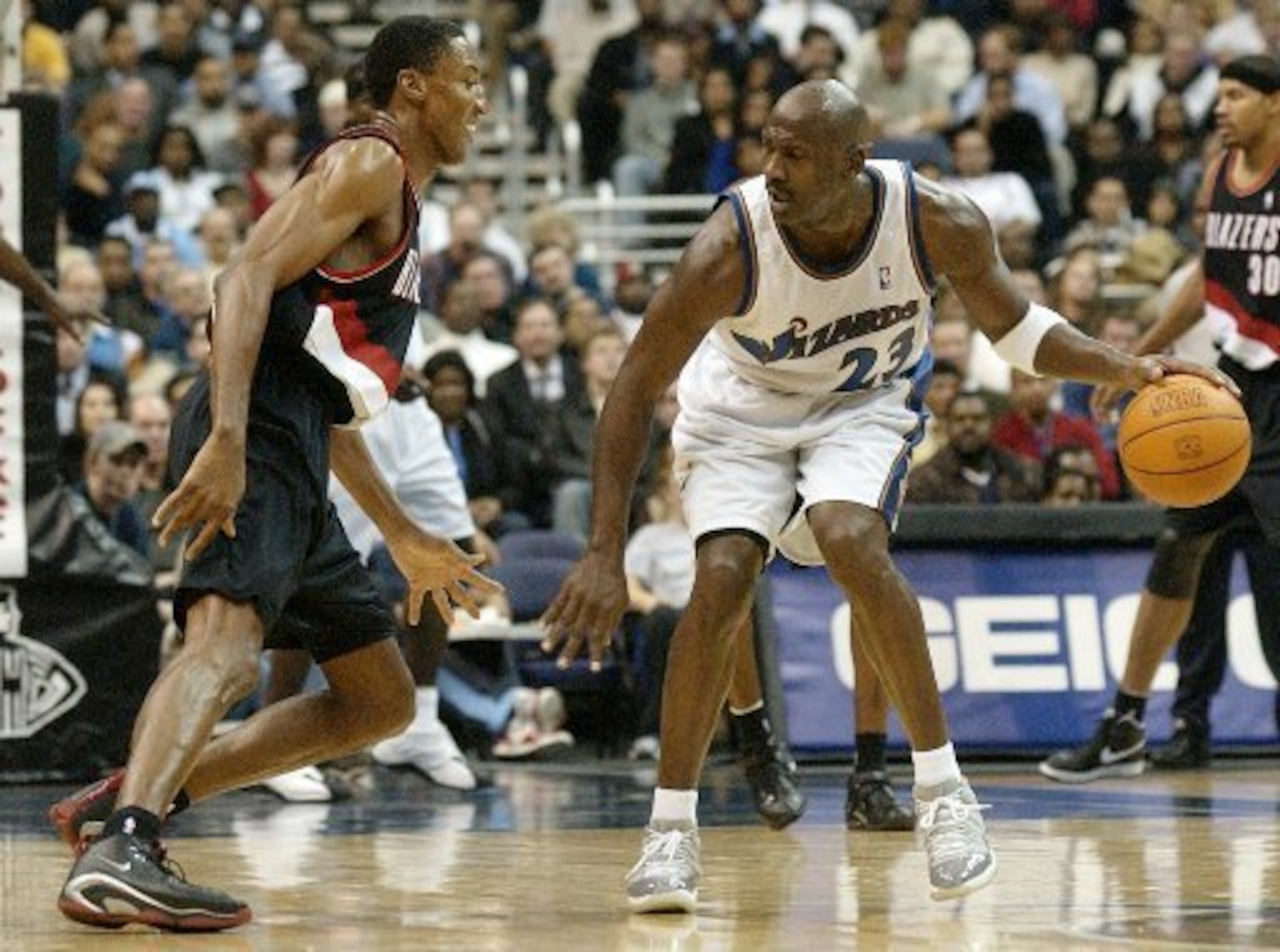
Let's not totally get the narrative mixed up and boggled around: Michael Jordan was productive during his two-season comeback stint with the Washington Wizards.
He scored 21.2 points, registered 5.9 rebounds and rattled off 4.4 assists per game. There's a reason why he's the greatest of all time.
So why is he on the list? Simply put, legacy.
It's hard to leave any job the way Jordan walked away from basketball—the second time around. Lacing another iconic, posterizing moment against the Utah Jazz in the NBA Finals was special.
Jordan's Washington comeback was a success in terms of production but was a failure when it came to turning the franchise around. For the two years he played, the Wizards remained stagnant, posting a 37-45 record both seasons.
Nothing drastically changed with MJ in the lineup, and for the first time in his career, that was tough to watch.
Sugar Ray Lenoard
7 of 11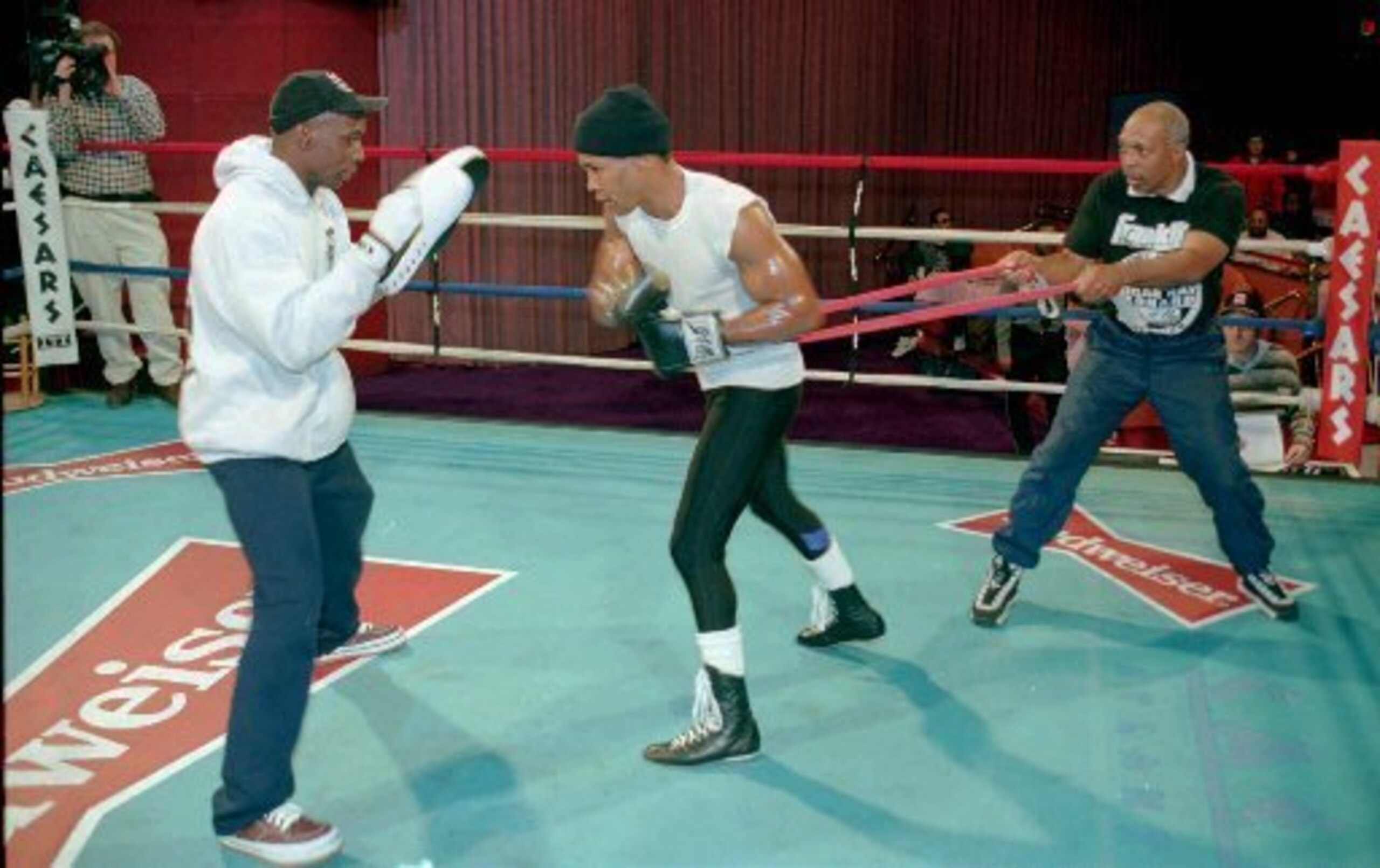
Sugar Ray Leonard's name can be directly correlated to the word "comeback." He made three distinct comeback attempts over his career, resulting in mixed results.
The first return is part of his legacy. Leonard came back to the ring, after a three-year binge, to defeat Marvelous Marvin Hagler—a man at the peak of his powers—in a split-decision.
As for the other two attempts, those weren't nearly as well received. Between the renewal of his fighting spirit in 1991, which resulted in a loss to Terry Norris, and his final bout in '97 against Hector Camacho—where Leonard suffered a TKO in Round 5—nothing was glamorous.
It was almost like Muhammad Ali's ill-fated return. Leonard wasn't nearly the speedy, crisp puncher as he was in the past. And for a fighter who relied so heavily on reflexes and poise, once his legs went, so did the rest of his arsenal.
Bob Cousy
8 of 11
Why would an NBA legend, at the age of 40, make a comeback six years after he first retired? In Bob Cousy's case, it was to sell tickets, according to Noah Davis of Men's Journal.
At the time of his decision, Cousy was not only playing for the Cincinnati Royals, he also was coaching the squad.
The move never even came close to working out. After seven games, where he averaged 0.7 points per contest, the longtime Boston Celtics point guard returned to the role of head coach.
Of all the comebacks attempts on this list, Cousy is one guy who really should have stayed away. The ploy to sell seats was a bizarre, watershed moment for his otherwise flawless NBA career.
Jim Palmer
9 of 11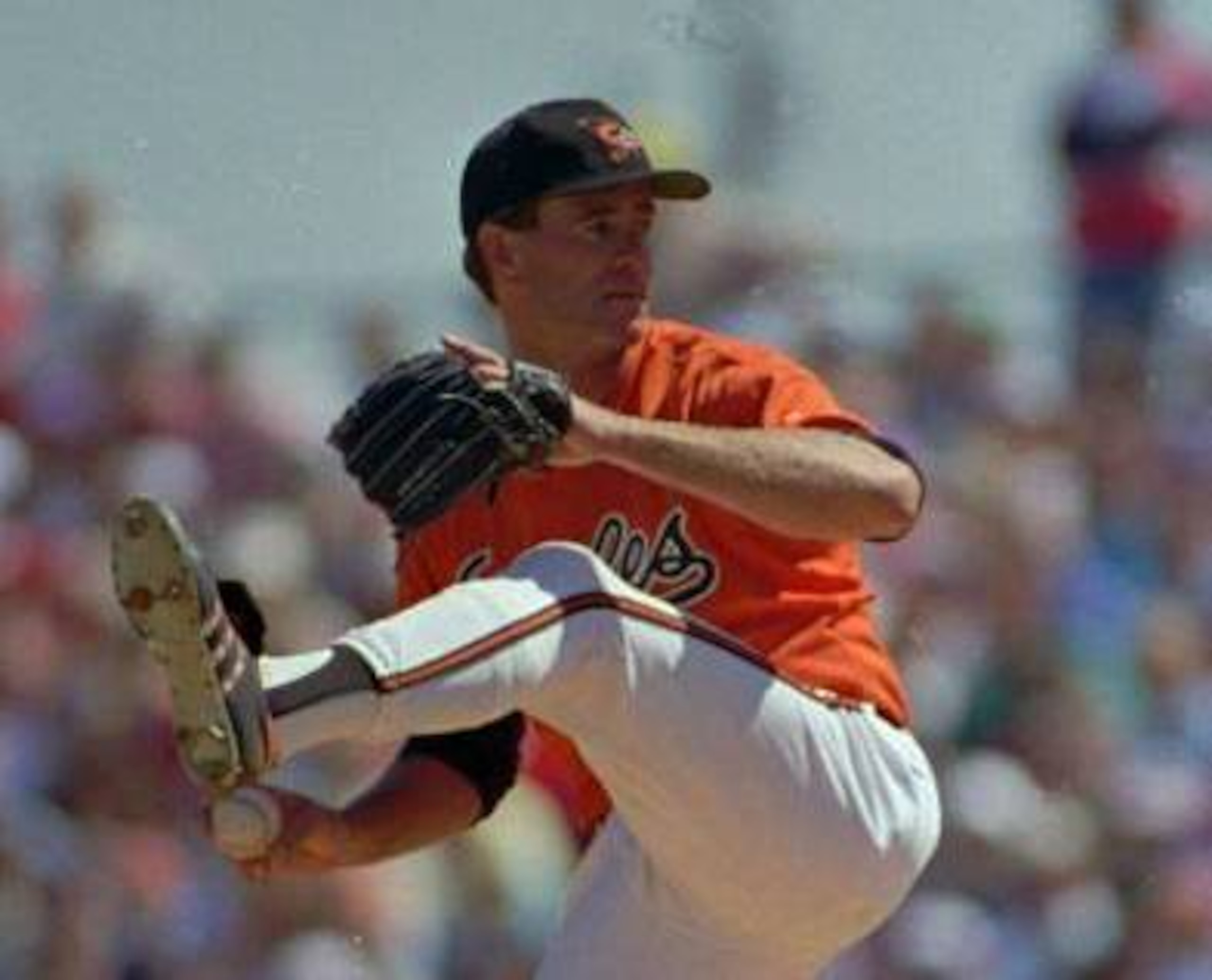
The itch to never walk away, despite achieving insurmountable amounts of success, has been a common thread here. Just ask Hall of Fame pitcher Jim Palmer.
At the age of 45, Palmer decided to make a surprise return to baseball. He went out to kick around some dirt and find solace with the Baltimore Orioles—the team he spent 19 years with.
Palmer hadn't been on the mound in seven years, retiring from the sport in 1984. When the 45-year-old gave this comeback thing a shot in 1991, it wasn't pretty. His body essentially gave up on him, throwing his hamstring and tendons into flux.
Barely a few weeks into spring training, Palmer left baseball for good, tossing any comeback into the rubbish bin.
Mark Spitz
10 of 11
Before Michael Phelps, Mark Spitz was one of the most revered and talented swimmers to ever grace an Olympic pool.
Spitz won 11 total medals, including nine golds. He appeared in two Olympic Summer Games, the 1968 and '72 affairs. Both were staging grounds for his ferocious competitiveness and world-class ability.
Years later, 1992 to be exact, he decided to forgo age and attempt a comeback. He was 42 years old and 20 years removed from the '72 Olympic Games in Munich.
The effort fell short when Spitz didn't qualify to make the Barcelona roster. His dreams of coming back and shattering conventional boundaries for age vanished into history.
Peter Forsberg
11 of 11
Peter Forsberg had a spectacular offensive career on the ice. He remains a lifetime fixture for the Colorado Avalanche, along with Joe Sakic and Patrick Roy.
A good portion of his 11 seasons with the team were stat-sheet stuffing endeavors, like his league-leading 106 points in 2003 or his 97-point affair in '99.
Injuries became prominent as time moved forward, driving Forsberg's career into an unfamiliar place. And after a tough 2007-08 season, he finally retired.
It wouldn't be the last of Forsberg. A mere three years later, at age 37, he stomped back into the spotlight and signed a one-year deal with the Avalanche midway through the 2010-11 campaign.
The comeback was short-lived. It lasted 35 minutes and 10 seconds, by Yahoo Sports columnist Greg Wyshynski's count.
Forsberg wasn't himself at any point, and it looked like the first time he stepped away from the sport was in fact, the right time.
All stats, box scores and information via Sports-Reference.com, unless noted otherwise.
.jpg?w=2560 "Hill Injury Update Football")
.jpg?w=2560 "Titans Giants Football")
.jpg?w=2560 "Tyreek makes another cryptic post amid Chiefs rumors")