
Italian Grand Prix 2016: Winners and Losers from Monza Race
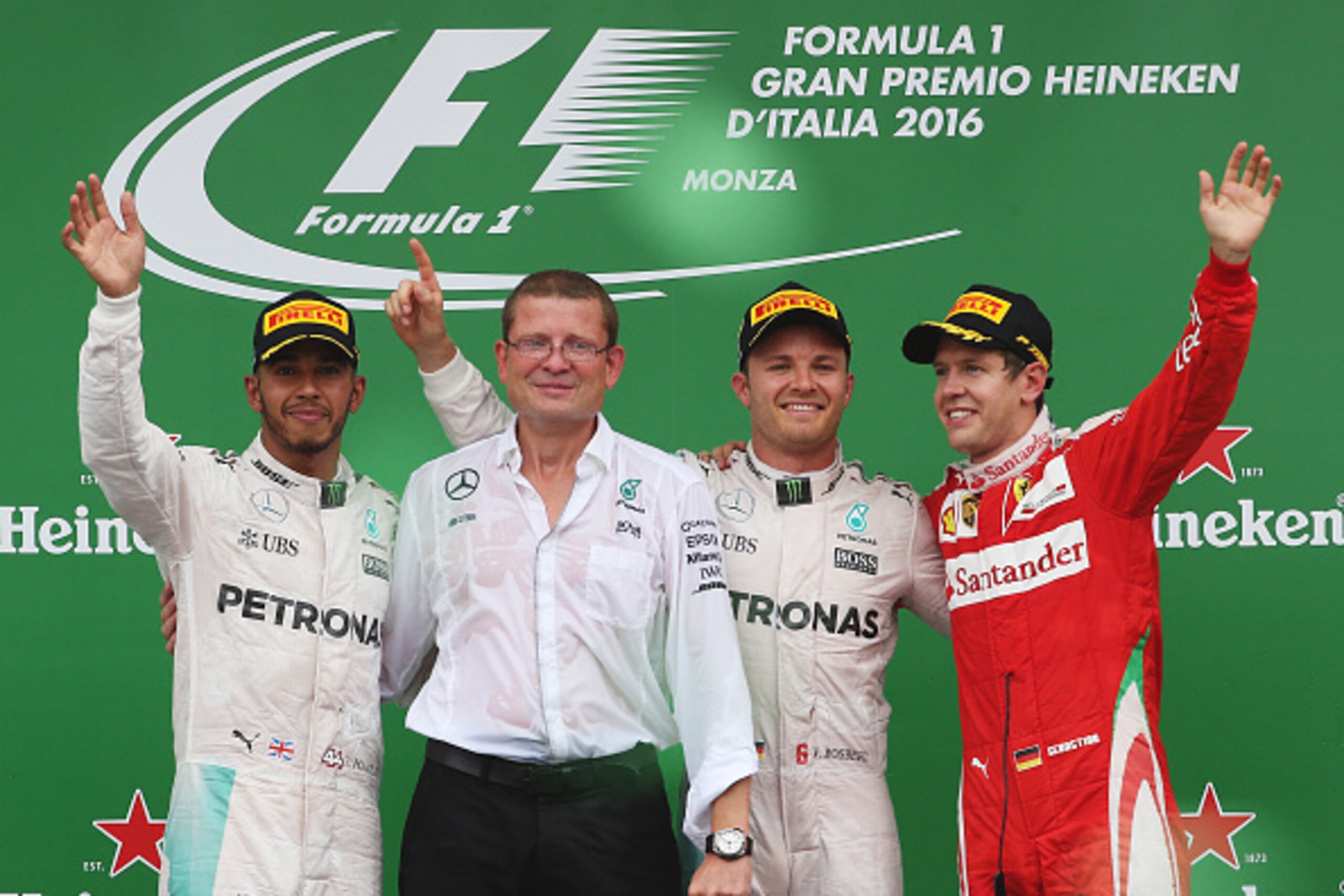
Nico Rosberg claimed his seventh victory of the 2016 Formula One season in Sunday's Italian Grand Prix at Monza.
The German was comprehensively beaten to pole position by Mercedes team-mate Lewis Hamilton on Saturday, but the three-time world champion's slow start gifted Rosberg the lead at the first corner.
Having exited Turn 1 in sixth place, Hamilton recovered well to finish second—limiting the damage to his lead in the drivers' standings. The Mercedes drivers were joined on the podium by Sebastian Vettel, who finished third despite another questionable Ferrari strategy.
With a look at an encouraging weekend for Red Bull's Daniel Ricciardo and Williams' Valtteri Bottas, and a day to forget for Manor and Sauber's Felipe Nasr, here are the main winners and losers from Monza.
Winner: Nico Rosberg
1 of 7
It's on days like this when you realise the world champion doesn't necessarily have to be the best or fastest driver.
As Hamilton fought back from his slow start to 2016—winning six of the seven races between Monaco and Germany—Rosberg seemed rather relaxed about his team-mate's recovery. Mostly because he normally had a slender points advantage or a recent pole position to fall back on.
On qualifying day at the Italian GP, however, he was unable to disguise his disappointment.
Six days after Hamilton's recovery to third from 21st on the grid left him stunned, as he explained per Autosport (h/t Eurosport), Rosberg was beaten to pole by 0.478 seconds on one of the shortest circuits on the calendar.
As he crouched down to examine the timing screens and come to terms with his defeat—and the sheer margin of it—shortly after the session, there was a feeling that Rosberg was genuinely lost for the first time in 2016.
But if Saturday was a reflection of how quickly the momentum of Rosberg's championship challenge faded away, Sunday was a reminder of how glorious his performances in the first four races of the season were.
As in Australia and Bahrain at the beginning of the year, Hamilton's slow start from pole gifted Rosberg an opportunity he was never going to throw away, with the German quickly disappearing into the distance.
With dry weather, little strategic variation and no safety cars, Rosberg—whose race pace was far superior to his speed over a single lap—simply managed the gap to those behind to secure his seventh win of 2016, cutting Hamilton's championship lead to just two points with seven races remaining.
The up-and-down nature of his weekend perfectly encapsulated Rosberg's season and offered a reminder of how quickly and dramatically things can change—for better and for worse—in this game.
Loser: Lewis Hamilton
2 of 7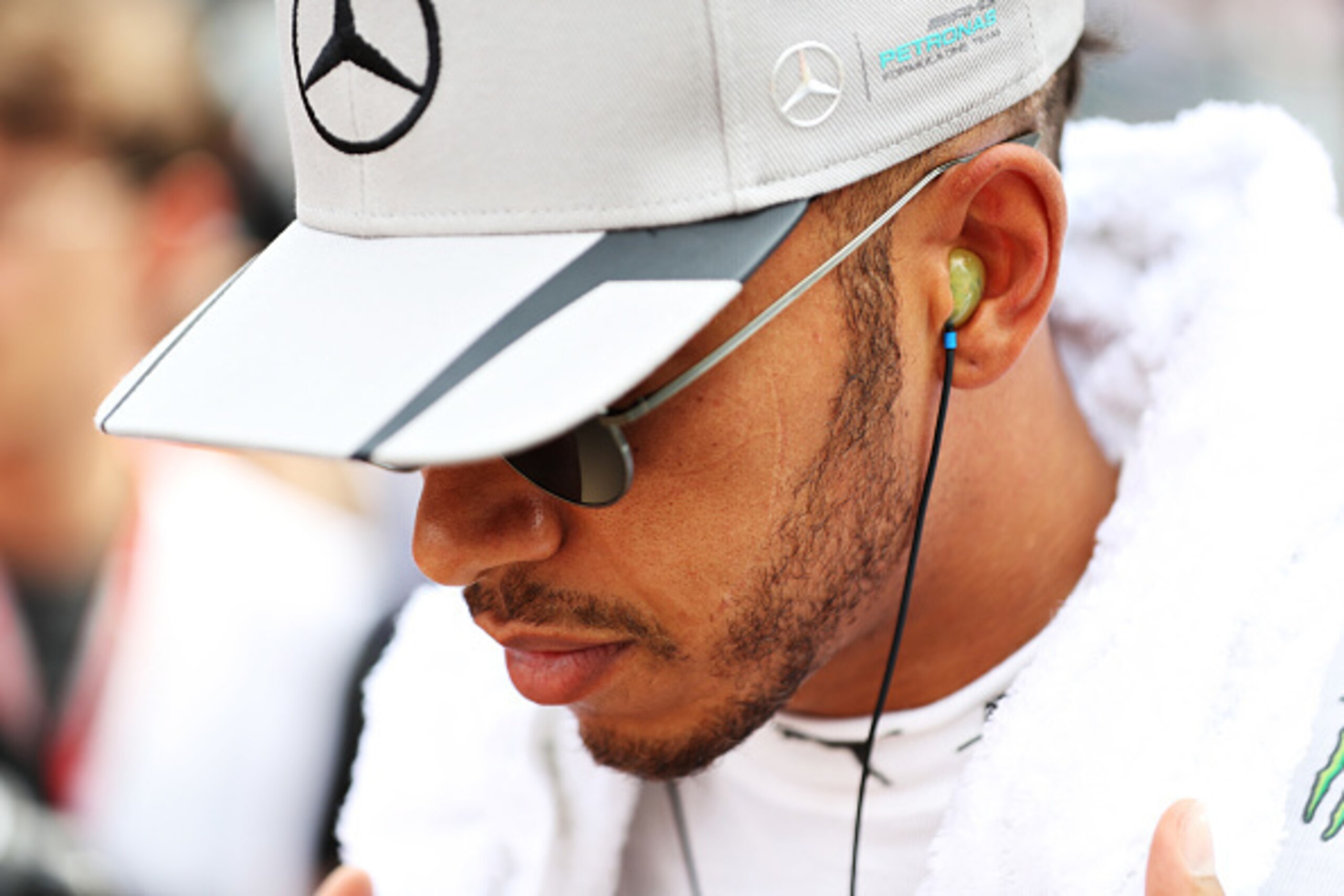
Central to Hamilton's mid-season resurgence was his understanding of the start-line issues that plagued him at the beginning of the year and saw him fail to capitalise on pole positions in Australia, Bahrain, Spain and Canada.
His response to those problems was simple.
Whenever Rosberg started from pole, Hamilton would deliberately ease his pace at the end of the formation lap and allow his team-mate to saunter alone to the grid, where Rosberg's engine, clutch, tyre and brake temperatures would all suffer in that crucial time window before the start.
Hamilton used that trick to beat Rosberg to the first corner in Hungary and Germany, and—after claiming his first pole since Silverstone—the three-time world champion had the chance to control the pace of the formation lap exactly to his liking in the Italian GP.
But what did he do?
Rather than persevering with his slow pace, Hamilton—perhaps as a result of Mercedes' strategic decision to start both cars on the harder soft-compound tyres—rushed through the formation lap and took his place at the front of the grid.
When the five red lights eventually went out, it was no surprise that he was slow off the line, falling from first to sixth by Turn 1.
His pass around the outside of Ricciardo at Curve Grande on Lap 2 was beautifully decisive, and Hamilton did well to remain close to and overtake Bottas while remaining within the window to comfortably pull off a one-stop strategy.
Ferrari's strategic error made it easier than it might otherwise have been for Hamilton to recover to second, but that was little consolation in a race he could and should have won.
Maybe it would be more beneficial if he were to start the final seven races from second on the grid.
Winner: Daniel Ricciardo
3 of 7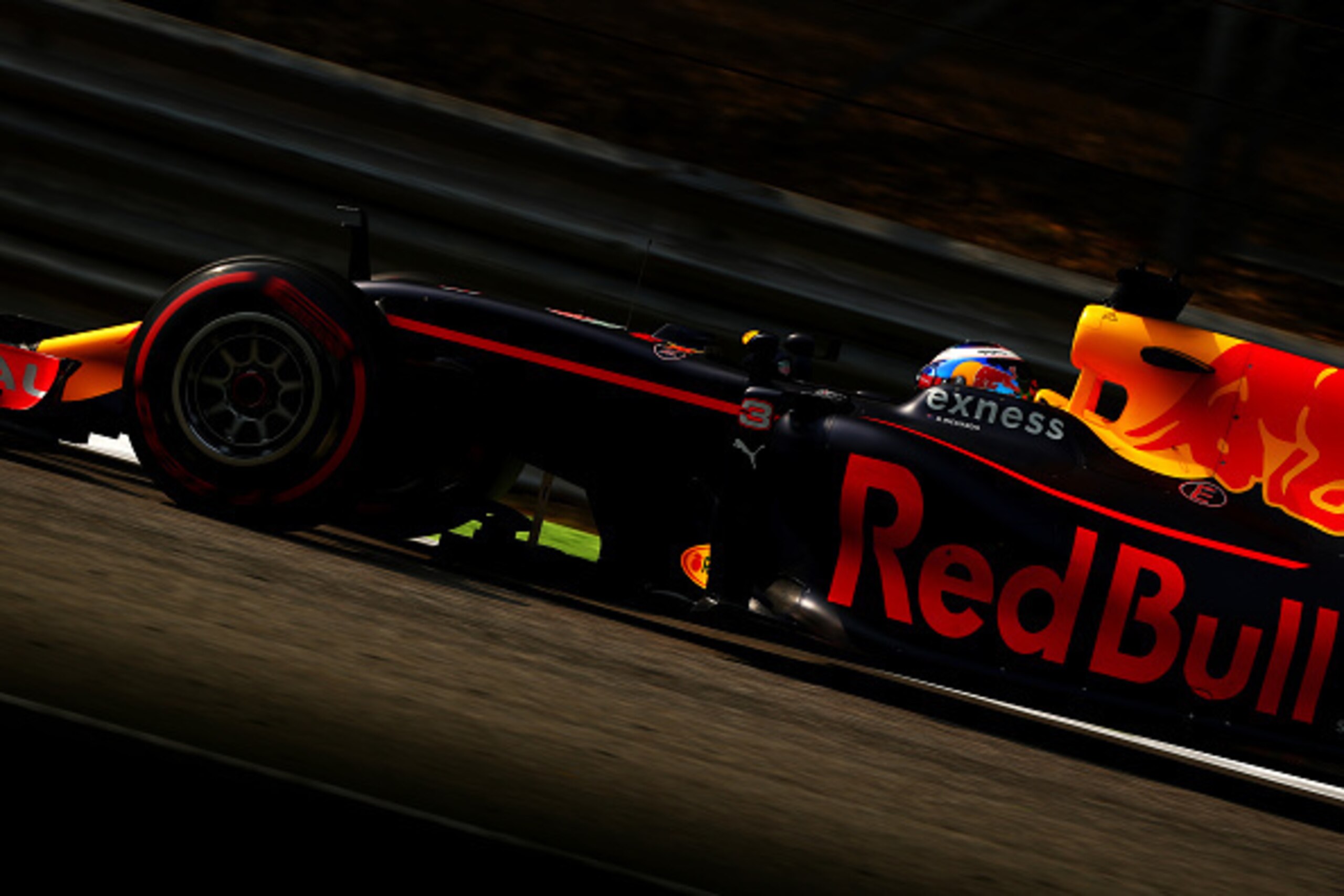
With 177 more points than they had at this stage a year ago, there is little doubt that Red Bull are the most improved team of 2016.
But given the power-dependent nature of the Monza circuit, the Italian GP was always going to be the big test of just how far the team and engine suppliers Renault have come since their miserable, winless 2015 campaign.
With Max Verstappen settling for an understated weekend following his post-Belgian GP bashing, it was left to Ricciardo to help Red Bull pass the examination with flying colours.
The Australian's lap for sixth on the grid was just 0.001 seconds slower than the time set by Bottas, driving a Williams car that—in the hands of Felipe Massa—was good enough for the podium in the last two seasons.
As Ricciardo told the team's official website, Red Bull's "good race pace" meant they were optimistic about finishing in the top five, yet he was frustrated by the Williams driver until the final stint.
After Bottas made his last stop for soft-compound tyres on Lap 30, Ricciardo stayed out for an extra seven laps to the point where it was comfortable for him to complete the race on supersofts.
With much fresher, faster rubber, Ricciardo chased the Williams driver until the time to strike arrived on Lap 46, when—with the advantage of DRS—he braked incredibly late for the first chicane, took Bottas by surprise and completed one of the finest overtaking manoeuvres of the season.
The move, reminiscent of Hamilton's brave pass on Kimi Raikkonen in the 2007 race, sealed the best result Red Bull could have hoped for on a weekend Mercedes and Ferrari were out of their reach.
You suspect that won't be the case at the next race in Singapore.

.jpg?w=2560 "Cardinals Giants Football")

Loser: Ferrari
4 of 7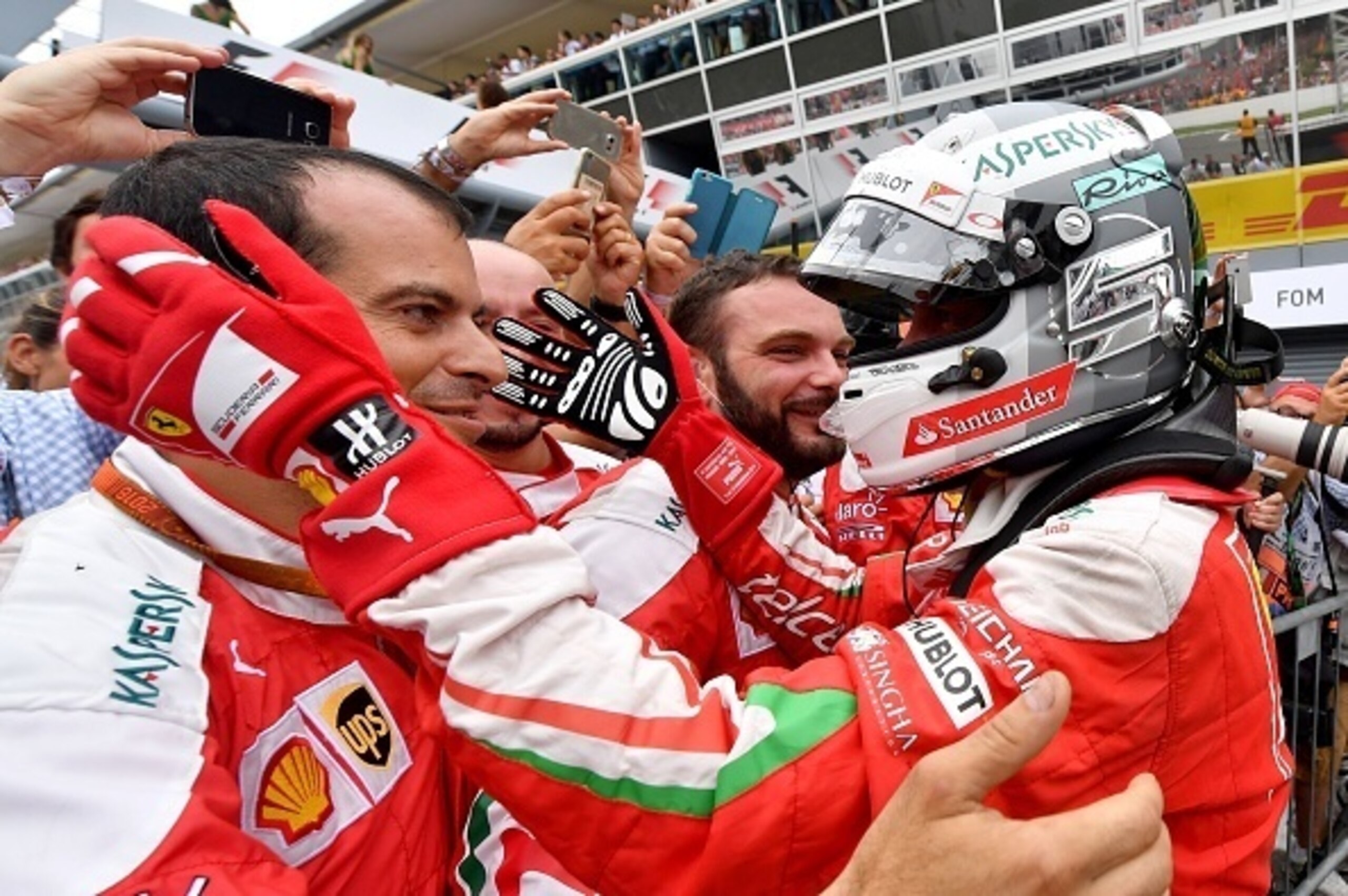
As noted by F1 journalist Peter Windsor, Ferrari chairman Sergio Marchionne is utterly obsessed with his cars being on the softest possible tyres at every available opportunity.
The reasoning? He doesn't want to watch the Prancing Horse stumbling on knackered old rubber when Ferrari—the most sacred team of them all—must be bold, brave and win in style.
While his determination to keep Ferrari fashionable is to be admired, this bizarre fixation—this "basic, underlying philosophy" he has implemented, as Windsor put it—has cost his team plenty of points and prizes in 2016.
It cost them a victory in Australia, where Vettel switched to the super-soft tyres after the red-flag stoppage as both Mercedes' drivers elected for mediums. It cost them another in Canada, where the four-time world champion committed to an extra pit stop.
And it cost them a potential double-podium finish at Monza, where—in front of the tifosi and their Italian flags—Ferrari just couldn't help themselves.
After Hamilton's slow start, Vettel and Kimi Raikkonen were running relatively comfortably in second and third place when the team again committed to a two-stop strategy, with the drivers pitting for another set of supersofts on Laps 16 and 15, respectively.
With the regulations forcing drivers to use at least two different compounds in a dry-weather race, that left Vettel and Raikkonen defenceless against the one-stopping Hamilton, who was effectively gifted second place when the Ferraris made their second stops.
On fresher soft tyres, Vettel closed to within six seconds of Hamilton in the final stint but the gap was just too big to overhaul, with the German—back on the podium for the first time since June's European GP—finishing around six seconds behind Hamilton.
After another unsatisfactory weekend, the chairman, who watched the race from the garage, will—as usual—be thumping on the desk and demanding more from his team,
But the time has come for Marchionne to take a long, hard look in the mirror.
Winner: Valtteri Bottas
5 of 7
Sure, he could have done more to stop Ricciardo from mugging him at the first chicane, yet the Red Bull driver's moment of brilliance should not detract from what was an important, stabilising weekend for Bottas.
At a circuit where Williams comfortably finished third in 2014 and 2015, his sixth-place finish was a reflection of how far the team—now unable to even threaten Mercedes and Ferrari on their good days—have fallen this season.
But Bottas deserves credit for extracting "pretty much the most [Williams] could achieve" at Monza, as head of performance engineering Rob Smedley told the team's official website.
His admission after qualifying, per Motorsport.com's Charles Bradley, that he removed some "small cooling scoops" on his helmet prior to the session to improve straight-line speed offered further proof that Bottas—a protege of esteemed driver coach Rob Wilson—is among the more meticulous drivers on the grid.
And that intelligence was there for all to see in the early stages of the race, when he defended cleverly and fairly from the recovering Hamilton.
As he later told the team's official website, Williams' inherent lack of pace meant Bottas had to push his tyres "a little bit more" than he wanted in the opening laps of a stint, which left him "struggling a bit" toward the end of each stint.
That, coupled with his rival's switch to supersofts, left him vulnerable to Ricciardo in the latter stages, although Bottas should be commended for having the awareness to spot the Red Bull driver in his rear-view mirrors and avoid a collision when the move was made.
His best finish since June has allowed Williams to retake fourth in the constructors' standings, with the team now holding a three-point lead over fellow Mercedes customers Force India.
Loser: Manor
6 of 7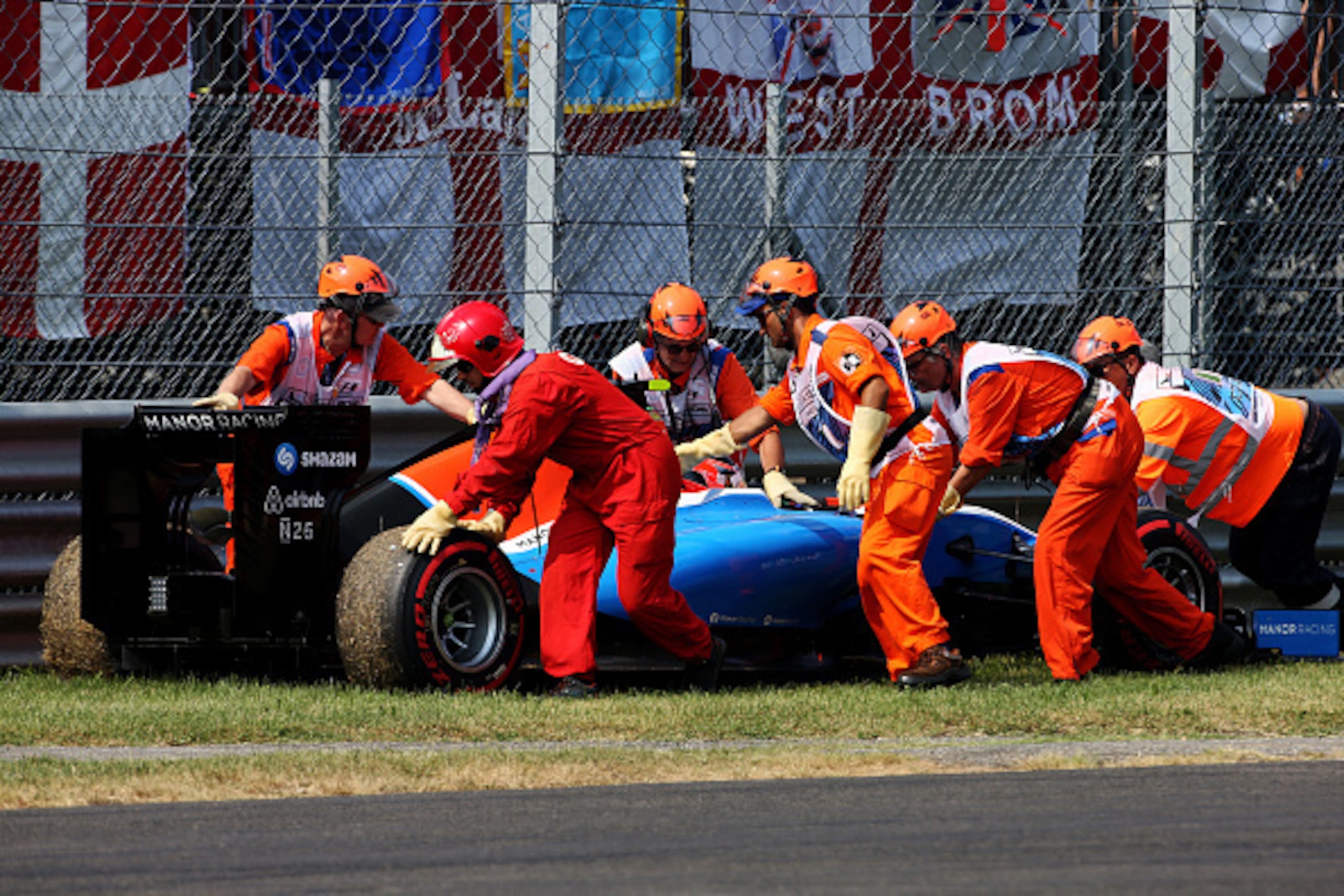
When Manor signed the contract to switch to Mercedes power units for 2016, the backmarkers would have been counting down the months, days, hours and minutes until September 4.
With several long straights connected by short, slow corners, the Italian GP represented an outstanding opportunity for the smallest team in the sport—with their standard-setting engines and lack of downforce—to hit new heights.
After Pascal Wehrlein reached the second segment of qualifying in Austria and Germany, could Manor force their way into Q3 for the first time? Could they add to the point he scored in Austria?
With one of the most exciting drivers lineups on the grid, could they even manage to get two cars into the top 10?
Manor entered this race with greater expectations than ever before, but they leave Monza having experienced their most frustrating weekend of the season.
Wehrlein once again progressed to Q2, but—despite telling Autosport (h/t Eurosport) a place within Q3 was within reach—found himself 0.364 seconds adrift from a place in the top 10 when it really mattered on Saturday afternoon before an oil leak ended his race after 26 laps.
Meanwhile, team-mate Esteban Ocon was unable to even set a time in qualifying after suffering what he told the team's official website was "a repeat" of the electrical issue he suffered in Friday practice.
As noted by Ted Kravitz during Sky Sports' television coverage, Manor then took Ocon's car "completely apart" on the morning of the race in an effort to get to the bottom of those problems.
All that hard work paid dividends in the race as the the car ran faultlessly, but Ocon—having finished two laps behind the race winner—will have been praying for another issue to put him out of his misery.
This was a missed opportunity for F1's milk floats to become rocket ships for the day.
Loser: Felipe Nasr
7 of 7
When Massa formally announced his retirement on the eve of the Italian GP, Nasr was instantly installed as the favourite to replace his compatriot at Williams.
As reported by Sky Sports' Kravitz, Nasr's relationship with the team, where he held a reserve role in 2014, made the Brazilian—arguably the most underrated driver on the current grid—likely to partner Bottas next season.
Come race morning, however, that had changed.
Per Motorsport.com's Adam Cooper, teenage development driver Lance Stroll had emerged as "the clear favourite" to replace Massa, with Williams' answer to Max Verstappen already agreeing a deal "in principle" for 2017.
As such, the Italian GP—targeted by Nasr as a race where Sauber could end their long wait for a point, per Motorsport.com's Valentin Khorounzhiy and Jamie Klein—was a chance for Nasr to remind Williams of his qualities.
But an error on the exit of the second chicane on Lap 2, when he left no room for Jolyon Palmer and banged wheels with the Renault driver, spinning his own car out of the race, cost him dearly.
Nasr soon rejoined to observe a 10-second time penalty for causing the collision before retiring for a second time, much to the disgust of Palmer, who accused his former GP2 rival of "not racing very fairly" before adding he had seen "better racing in GP2 or GP3," per Sky Sports' James Galloway.
The timing and clumsy nature of that incident, and Nasr's stubborn reaction to it—he told the same source it was, in fact, Palmer to blame—is unlikely to impress Williams, who are set to go for a Stroll in 2017.
Timing and tyre data sourced from the official F1 website, the FOM television feed and Pirelli's official race report.
.jpg?w=2560 "Hill Injury Update Football")
.jpg?w=2560 "Titans Giants Football")
.jpg?w=2560 "Tyreek makes another cryptic post amid Chiefs rumors")