10 Major Sports Injuries That Changed Franchises
Injuries are a part of sports. They often serve as frequent reminders of how circumstances can change in the blink of an eye.
Major injuries tend to lay a dent in the flight path of professional sports franchises. Once certain stars go down, everything veers off into space. In our findings, we found 10 injuries that came with tangible proof of this phenomenon.
Whether it was for better or worse, these 10 incidents directly modified the direction of a franchise.
Honorable Mentions
1 of 11
Looking for some other sports injuries that changed the direction of a franchise? Before the official list gets going, here are a handful of honorable mentions.
- Yao Ming, Houston Rockets
- Mark Prior, Chicago Cubs
- Brandon Roy, Portland Trail Blazers
- Kerry Wood, Chicago Cubs
- Plaxico Burress, New York Giants
- Daniel Bryan, WWE
- Bill Walton, Portland Trail Blazers
- Teddy Bridgewater, Minnesota Vikings
Chris Webber
2 of 11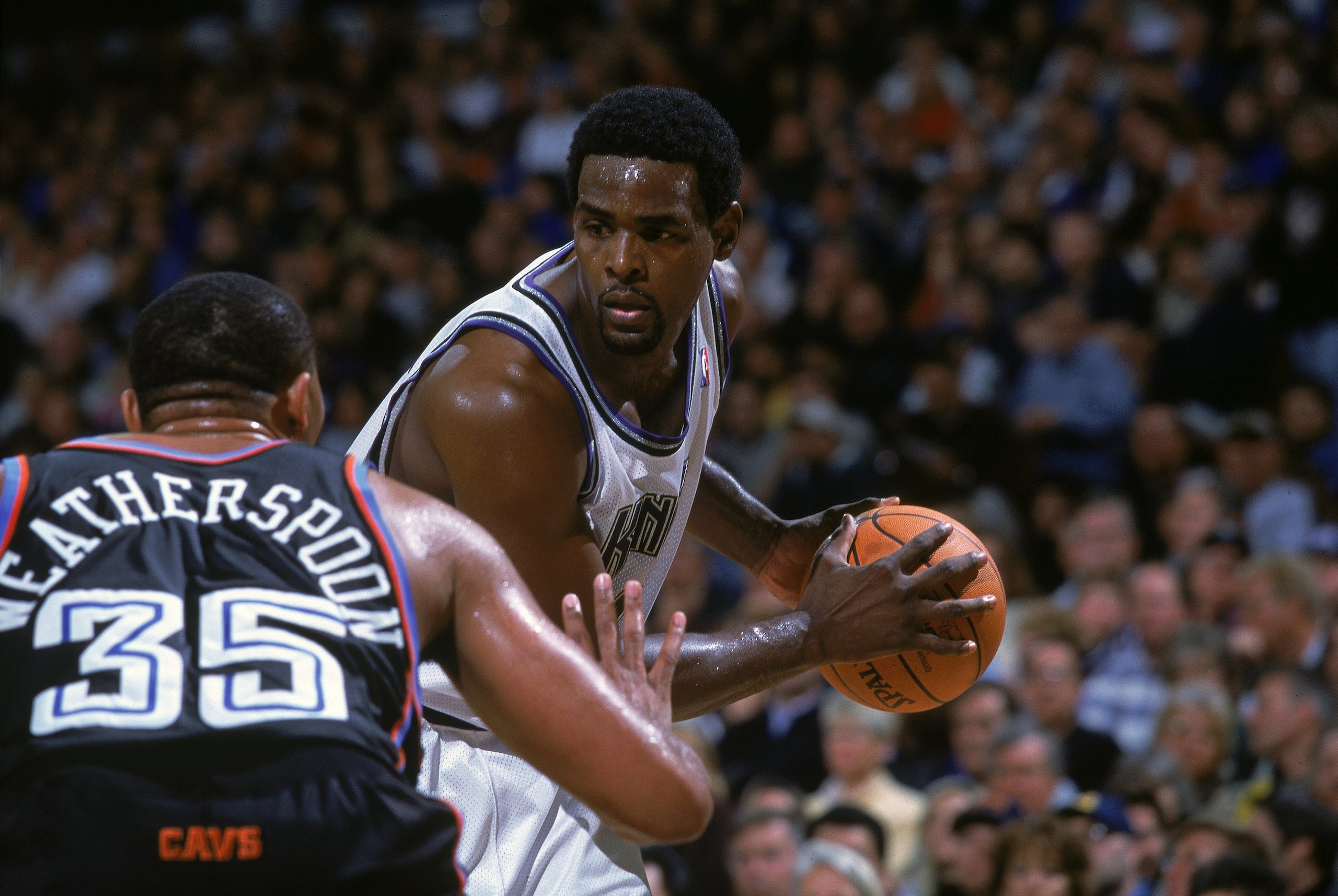
Don't let anyone tell you differently: Chris Webber was deafeningly talented. His time with the Sacramento Kings reflected more than anything else, as a meteoric offense was born in Northern California.
Webber was a steady force in Sacramento, averaging 23.5 points, 10.6 rebounds, 4.8 assists and 1.5 blocks per game over seven seasons. Few power forwards in the NBA were able to hang with Webber for the bulk of his Sacramento run.
To properly judge his impact, you have to understand where the Kings were before Webber joined the franchise. "Sacramento, meanwhile, had reached the playoffs only twice in its first 13 seasons in Northern California before Webber's arrival," ESPN's Marc Stein said.
C-Webb helped a stacked roster get within one game of the 2001-02 NBA Finals. The following year he shredded his ACL in the playoffs, and life never looked the same again.
A constant barrage of knee problems and chemistry issues, led to the Kings trading him in 2005, essentially breaking down the walls of its core roster.
A year later marked the last time the Kings would make the playoffs. It's now been a dystopian 11 seasons since we've seen this once storied franchise in the big dance.
Daunte Culpepper
3 of 11
It's staggering to think Daunte Culpepper's catastrophic knee injury in 2005 changed the direction of two franchises. The Minnesota Vikings and Miami Dolphins were both affected.
Culpepper eviscerated three ligaments in his knee in November 2005. The injury ended his season and threw the Vikings' quarterback situation into uncharted waters. It also precluded the firing of Mike Tice as the head coach.
Minnesota's front office sent Culpepper to Miami in March 2006 for a second-round pick—a pick they used to draft center Ryan Cook. The deal gave former Dolphins head coach Nick Saban his starter and also pushed Drew Brees to the New Orleans Saints.
It remains a decision etched in time. Culpepper spent four games as the Dolphins starter. He was released a year later. The Vikings turned to veteran Brad Johnson to ease their woes, going 15-17 in a two-year span.
Miami lost Saban, and then went 1-15 the year after. Luckily they turned things around with Chad Pennington at QB in 2008.
The post-knee injury Culpepper saga was a dreadful chapter for both franchises involved. Both the Dolphins and Vikings were in a holding pattern for the two seasons it went on.

.jpg?w=2560 "Cardinals Giants Football")

'Stone Cold' Steve Austin
4 of 11
WWE isn't a franchise, but the departure if its franchise player was worthy of this list.
"Stone Cold" Steve Austin personifies professional wrestling more than anyone else. The only other person you could argue made a bigger impact than him was Hulk Hogan.
In the late 1990s, Austin became a fixture for Vince McMahon's WWE platform. Battling a war with rival company WCW, Austin's out-of-control antics, reckless attitude and skill in the ring helped WWE blow past its competition.
The curtain came down on the Austin era in 2003. Due to a lingering neck injury—one that forced him out of action for a year at the end of 1999—he walked away from the sport he put on the map.
McMahon's company focused on other stars at the time, like Dwayne "The Rock" Johnson, Brock Lesnar, Triple H and The Undertaker. But the impact of Austin's departure was real. Austin leaving the WWE in a wrestling format changed the industry.
There hasn't been anyone like him since, and WWE over the years has shifted away from mature content in favor of a more kid-friendly product. Say what you want, but that change couldn't have happened on a full-time basis if Austin had remained the face that ran the place.
Greg Oden
5 of 11
Imagine the Western Conference with a healthy Damian Lillard, Brandon Roy, LaMarcus Aldridge and Greg Oden on one Portland Trail Blazers team.
This might have been a reality had it not been for injuries. Greg Oden's in particular altered the state of the Trail Blazers.
Portland chose to put the foundation of its franchise on the back of Oden in 2007. The team selected Oden over Kevin Durant, leading to one of the more infamous draft-day decisions of all time.
Oden's talent was undeniable. He was a big, unpolished, rebounding machine, shot blocker and was growing offensively as well.
But Oden's NBA career was derailed almost out of the starting gate, due to knee injuries. He had five surgeries—three being of the microfracture kind—from 2007 until 2012, as Jason Quick of the Oregonian wrote.
Oden only logged two seasons with Trail Blazers, playing a total of 83 times. His injury history forced Portland to look elsewhere for success and removed the possibility of having a prominent center for the next decade.
Drew Bledsoe
6 of 11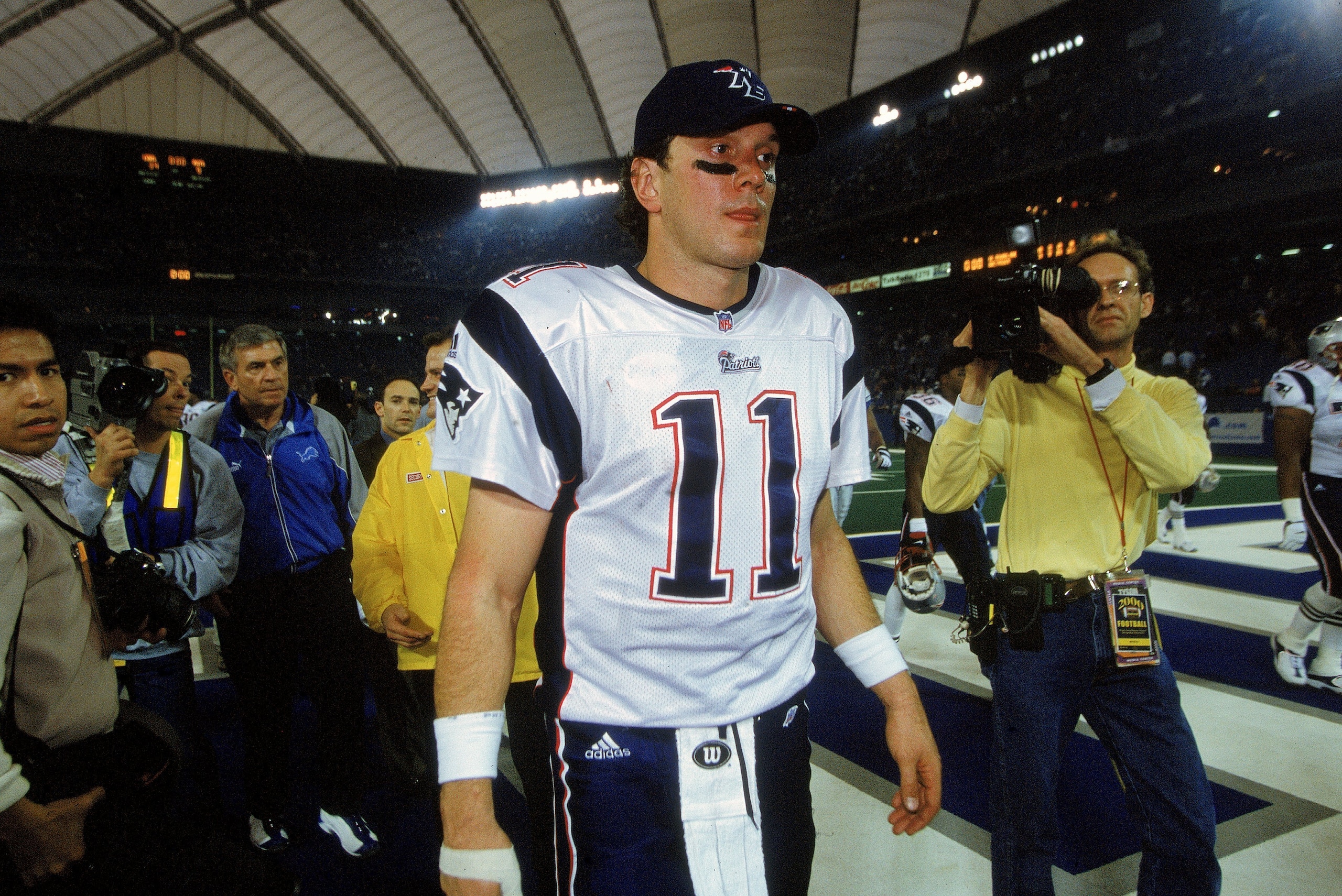
The New England Patriots had a franchise quarterback before Tom Brady grabbed control of the reins. His name was Drew Bledsoe and he had inked a record-breaking 10-year, $103 million deal with the club prior to the 2001 season.
Bledsoe was a statuesque, strong-armed thrower, who looked every bit the part of an elite entity. He gave the Pats a handful of quality years from 1993 to 2001, including three Pro Bowl appearances.
Life changed when an oncoming train named Mo Lewis destroyed Bledsoe. The hit laid down by the New York Jets linebacker was destructive, forcing internal injuries that almost led to death, as this NFL Films documentary mentioned.
It also hurried Tom Brady into the spotlight, handing the reins of the Pats over to a young quarterback from Michigan.
Football fans know the narrative by heart. Brady led the Patriots to an improbable Super Bowl win, became a Hall of Fame QB and put Bledsoe out of a job by midseason '01.
Bledsoe went on to start for the Buffalo Bills and Dallas Cowboys before retiring. Brady went on to guide the Patriots to four Super Bowl wins in six appearances.
Derrick Rose
7 of 11
None of us will ever be able to question Derrick Rose's pure sense of talent. Out of Memphis, Rose became the No. 1 overall pick of the 2008 NBA draft and the immediate fix to the Chicago Bulls' post-Michael Jordan woes.
Rose surged from the get-go. He won Rookie of the Year honors in 2008-09, averaging 16.8 points and 6.3 assists per game. His athleticism was rare and his savviness continued to grow, manifesting into an NBA MVP trophy in 2010-11.
His impact on the Bulls was there from the start. Dating to Rose's rookie year, the team didn't miss the playoffs for six straight years.
Sadly, after his MVP season, unrelenting injuries ravaged the dynamic point guard's career and sent the Bulls into a challenging long-term place.
Rose hasn't played more than 66 games over the last four seasons, battling constant knee problems. And with a steady decline in production—Rose went from averaging 25 points per game in 2011 to 16.4 last season—the Bulls dealt him to the New York Knicks this past offseason.
It's crazy to think Chicago went from being a team on the cusp of an NBA title to just another cog in the Eastern Conference. Rose's nagging line of injuries directly changed the way people perceived this franchise.
Peyton Manning
8 of 11
While Daunte Culpepper changed the outcome of two franchises for the worse, Peyton Manning achieved the opposite. His neck injury in 2011 forced the Indianapolis Colts to go in a different direction and turned the Denver Broncos into an AFC powerhouse.
Manning missed the entire '11 season after enduring spinal fusion surgery. It was a season where the Colts lost 15 games. Knowing this, the Colts parted ways with their legendary leader prior to the 2012 campaign.
With No. 1 overall pick Andrew Luck selected to guide the Colts into the future, Manning had his choice of suitors. He chose the Broncos.
We know what happened next. Manning shattered passing records, throwing for 55 touchdowns in 2013 and played in two Super Bowls, winning the second one. The Broncos became arguably the AFC's best team, while the Colts have made the playoffs three out of the last four seasons, losing no more than eight games in the process.
Not a bad deal if you ask me.
Karl Malone
9 of 11
The injury Karl Malone suffered that went on to change the course of the Los Angeles Lakers hasn't totally been documented. Thankfully, Bleacher Report's Ric Bucher scribed a detailed oral history of Malone and the rest of the 2003-04 Lakers, helping more eyeballs see what went down.
The Lakers thrived with Malone from the jump. Alongside Kobe Bryant, Shaquille O'Neal and Gary Payton, Malone became the glue to Phil Jackson's triangle offense. "We got off to such an incredible start. Everything everyone expected us to be, we appeared to be that. Then Karl went down," former Lakers forward Rick Fox explained to Bucher.
When Malone went down for 39 games, the Lakers limped to a 22-17 record—they were 19-5 prior to his knee issues. When he returned, the team somehow pushed through the playoffs and wound up in the NBA Finals, where they would stack up against the Detroit Pistons.
The Pistons outworked the Lakers, while Malone hurt himself again in Game 3 and didn't dress for Game 5—the last time this "super team" would play together.
O'Neal was traded to the Miami Heat the following offseason, Payton moved on to Boston and Malone retired. Had Malone been healthy throughout, perhaps this story would have had a different ending.
Don Majkowski
10 of 11
Timing in life can be everything. Former Green Bay Packers quarterback Don Majkowski found that out the hard way when he suffered an ankle injury against the Cincinnati Bengals in 1992.
“The Packers medical staff discovered some pretty severe ligament damage and was still working on Majkowski long after the Packers had come in for a glum halftime break,” Pat Yasinkas mentioned in his ESPN piece.
His replacement that day was some guy named Brett Favre.
Favre stepped in and history was made. He never missed a start for the Packers after Majkowski found his way to the trainer’s room. The Packers would go onto win a Super Bowl with Favre and he would cement himself as a Hall of Fame QB, playing for four different teams in 20 years.
Penny Hardaway
11 of 11
There was never a single knee-shattering moment in Penny Hardaway's career, as Kelly Dwyer of Yahoo Sports discussed. It was more long term, degenerative issues that plagued him and ripped away the hopes and aspirations of Orlando Magic fans everywhere.
Hardaway was a vibrant point guard. Paired with Shaquille O’Neal, he pushed the Magic into a place where they would contend for NBA titles. Between 1993 and ‘96, Orlando went to the NBA Finals once, Eastern Conference Finals twice and never won less than 50 games in a single season.
Hardaway helped steer the wagon in those years, scoring points, dishing out the ball and serving as Robin to O’Neal’s Batman. It was a combo destined for long-term greatness.
Those visions of greatness were shattered between Shaq leaving town and Hardaway’s nagging knee problems. Starting in ‘96, he never was able to suit up for more than 59 games. In the years that followed, Hardaway was sent to Phoenix—at his request—essentially tearing apart what was left of that classic Orlando team.
Had Penny stayed healthy and O’Neal remained, the two just might have had enough talent to shift the balance of power in the Eastern Conference away from the Chicago Bulls. O'Neal and Hardaway even talked about this in the ESPN Films documentary, This Magic Moment.
All stats, box scores and information via Sports-Reference.com, unless noted otherwise.
.jpg?w=2560 "Hill Injury Update Football")
.jpg?w=2560 "Titans Giants Football")
.jpg?w=2560 "Tyreek makes another cryptic post amid Chiefs rumors")