
Every NHL Team's Worst Contract for the 2016-17 Season
The NHL's salary cap saw a modest increase for 2016-17 from $71.4 million to $73 million. For a team carrying a bad contract, such as the San Jose Sharks with forward Patrick Marleau, it puts a squeeze on its cap payroll for the upcoming season.
Some of these players, such as Marleau, signed their contracts before their skills eroded. Others, such as David Clarkson of the Columbus Blue Jackets, inked deals worth far more than their true value.
Here's a look at every NHL team's worst contract for 2016-17, listing the contract details and the player's recent performance. The deals are evaluated for their potential effect upon their respective club's payroll for the coming season.
As always, you can express your views in the comments section below.
Kevin Bieksa, Anaheim Ducks
1 of 30
Kevin Bieksa is tied with Cam Fowler as the second-highest-paid defenseman on the Anaheim Ducks. Entering the first year of a two-year, $8 million contract, his annual cap hit is $4 million.
Based on Bieksa's recent performance, however, they will be overpaying him in 2016-17.
During his years with the Vancouver Canucks, Bieksa emerged as a physical top-pairing blueliner. While no longer an offensive presence, he was among the Ducks' leaders in hits (152) and blocked shots (108) in 2015-16.
Age could catch up with the 35-year-old Bieksa in 2016-17. His physical style has sidelined him at various times throughout his career. It could take its toll in the upcoming season.
With promising defensemen Shea Theodore and Brandon Montour waiting in the wings, Bieksa could slide down the depth chart. The Ducks could end up paying $4 million this season for a third-pairing blueliner.
Mike Smith, Arizona Coyotes
2 of 30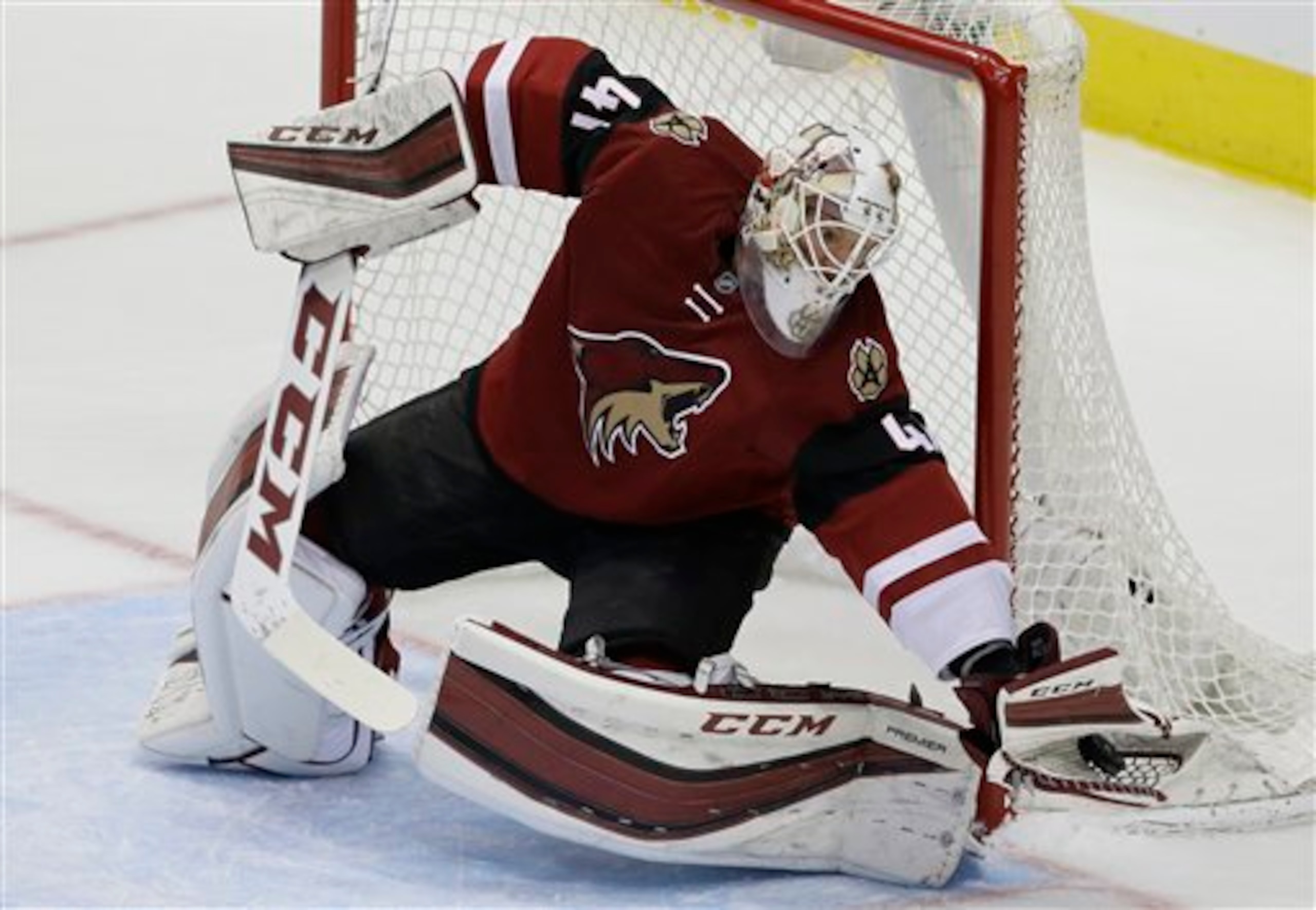
On July 1, 2013, the Arizona Coyotes announced that they re-signed goaltender Mike Smith to a six-year, $34 million contract. Unfortunately, his performance in recent years hasn't been up to the level of a goalie earning an annual average salary of $5.66 million.
Smith's career season in 2011-12 earned him that big contract a year later. He had 38 wins and eight shutouts, with a 2.21 goals-against average and .930 save percentage.
Since then, he's been unable to replicate that stellar effort.
A core muscle injury limited Smith to only 32 games in 2015-16. Now 34, he's at an age when a player's performance usually declines.
While it's possible Smith could rebound with a solid effort in 2016-17, he's unlikely to come close to his career-best numbers. The Coyotes are paying far too much for a starting goalie whose best seasons are well in the past.
Zdeno Chara, Boston Bruins
3 of 30
In 18 NHL seasons, Boston Bruins defenseman Zdeno Chara established himself as a future Hall of Famer. Now in the twilight of this career, his $6.916 million cap hit for 2016-17 is eating up too much of the Bruins' cap space.
The 39-year-old Chara still put up good numbers last season. He led the Bruins in time on ice per game (24 minutes and five seconds) and tied for first in blocked shots (123) while netting 37 points in 80 games.
However, the Bruins' lack of defensive depth in 2015-16 forced them to overuse Chara. While he's still a well-conditioned athlete, age and the wear and tear of his long career have slowed the 6'9", 250-pound Bruins captain.
If the Bruins don't add a skilled transitional defenseman this summer, they will lean heavily again on Chara in 2016-17.
At this stage in his career, a significant decline is inevitable. If it happens this season, the Bruins will have a very expensive fading star on their hands.

Matt Moulson, Buffalo Sabres
4 of 30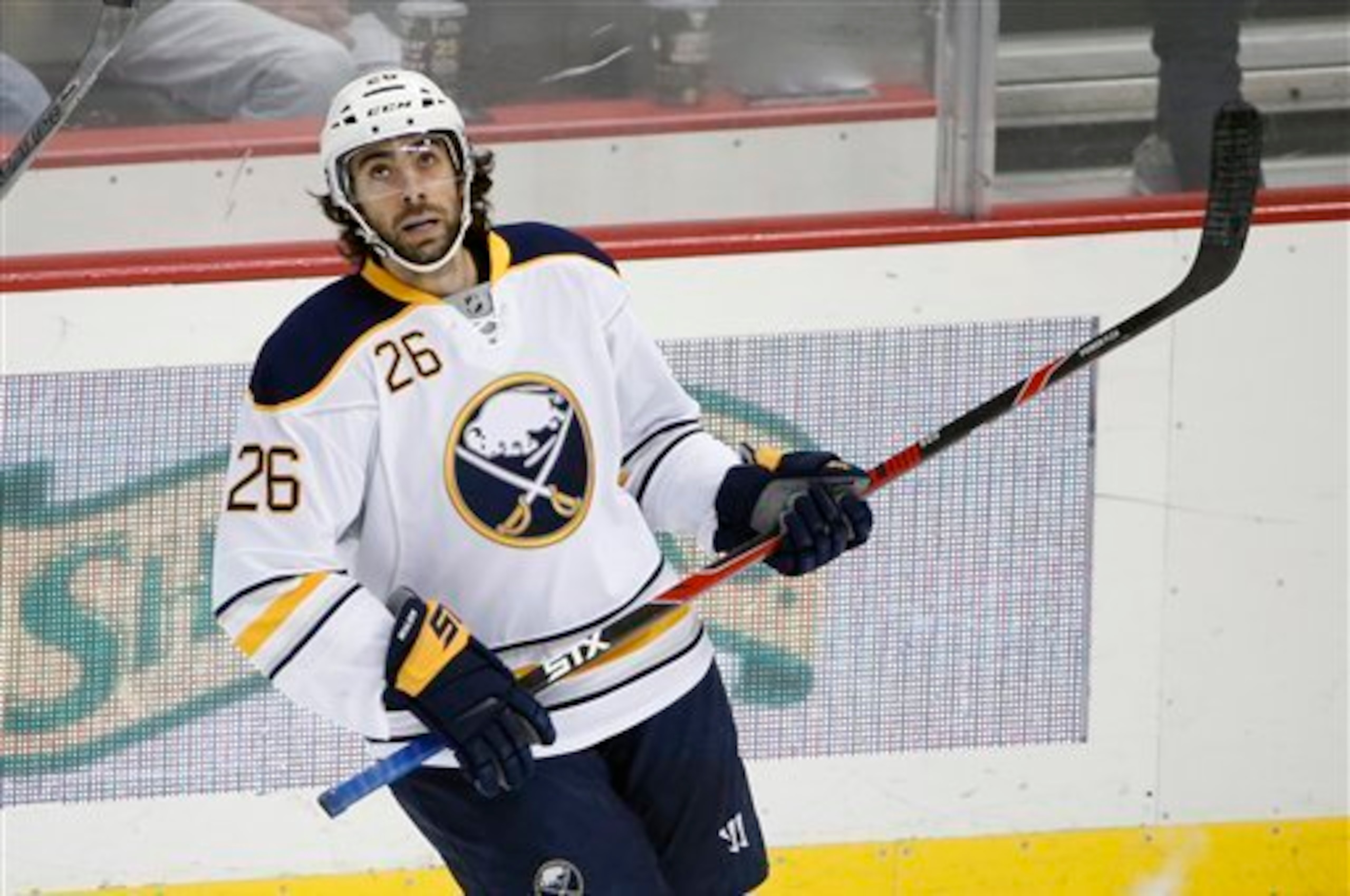
Left wing Matt Moulson netted 29 points in 44 games with the Buffalo Sabres in 2013-14. That compelled them to bring him back as an unrestricted free agent. On July 1, 2014, they signed him to a five-year, $25 million contract. It was not a shrewd investment.
In 2014-15, Moulson managed 41 points in 77 games. Last season, his production declined to only 21 points in 81 games.
As the 2015-16 campaign progressed, he was dropped to the third line. At times, he also saw fourth-line minutes.
Last season was also Dan Bylsma's first as Sabres head coach. Moulson seemed to struggle under Bylsma's fast-paced system. He turns 33 on Nov. 1, and it's unlikely the veteran winger's speed will improve.
The Sabres are a rebuilding club stocked with young talent. As those players improve, Moulson could remain buried on the third and fourth lines. At an annual cap hit of $5 million, he's now become an expensive checking-line forward.
Dennis Wideman, Calgary Flames
5 of 30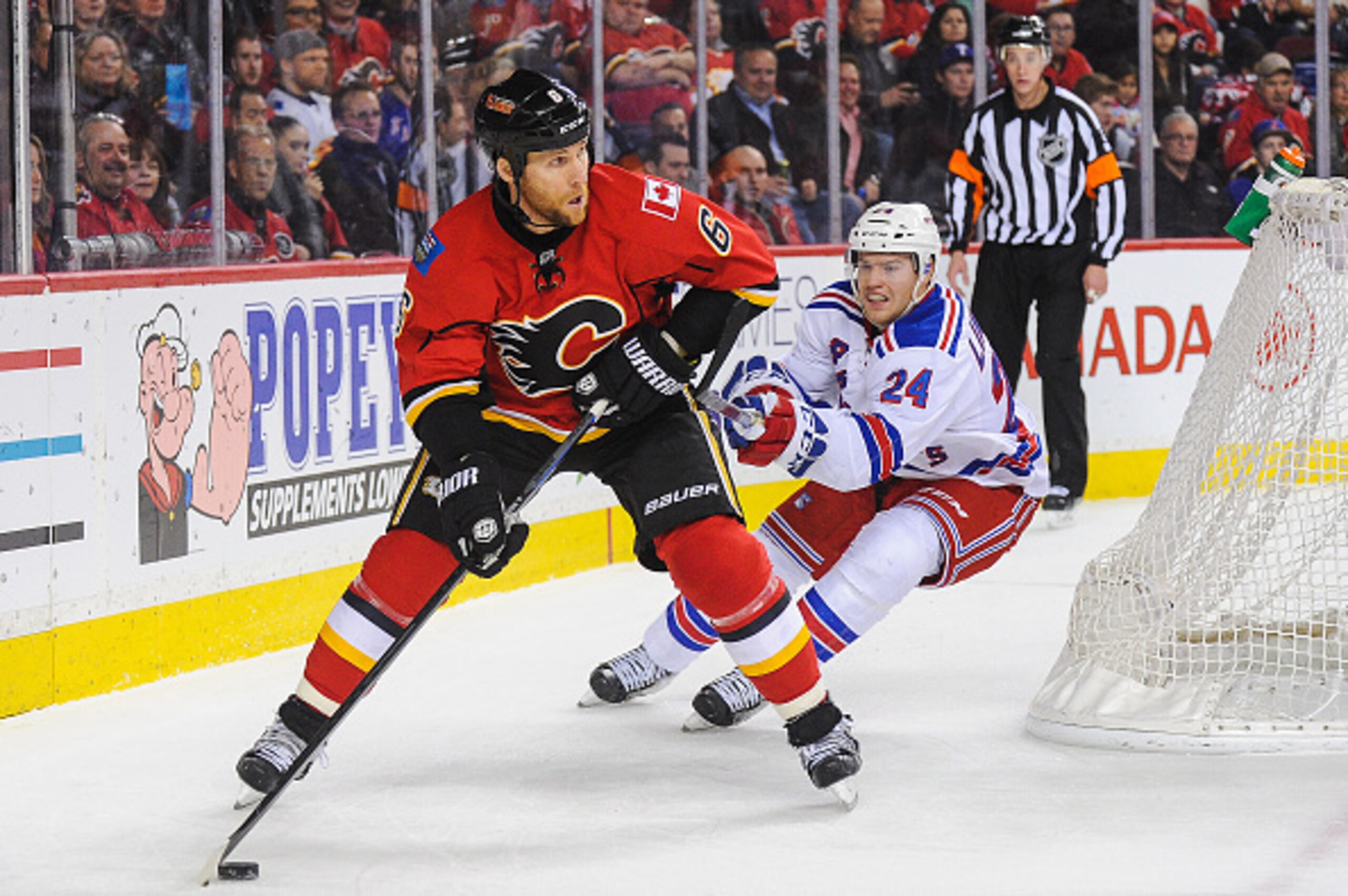
Entering 2016-17, Calgary Flames defenseman Dennis Wideman is facing a crucial point in his career. He's in the final season of his five-year, $26.25 million contract. At 33, he's at an age when his skills could decline.
In 2014-15, Wideman set career highs in goals (15), assists (41) and points (56). Unfortunately, his numbers dropped sharply last season, tallying only 19 points in 51 games.
The Flames' acquisition in 2015 of young blueliner Dougie Hamilton led to a reduction in his playing time and production. He also received a 20-game suspension for hitting a linesman from behind.
Now in his contract year, Wideman probably doesn't have a future in Calgary. With rising star left wing Johnny Gaudreau due a hefty raise, shipping out Wideman would free up considerable cap room. However, his $5.25 million cap hit and no-movement clause make his contract very difficult to move.
Jordan Staal, Carolina Hurricanes
6 of 30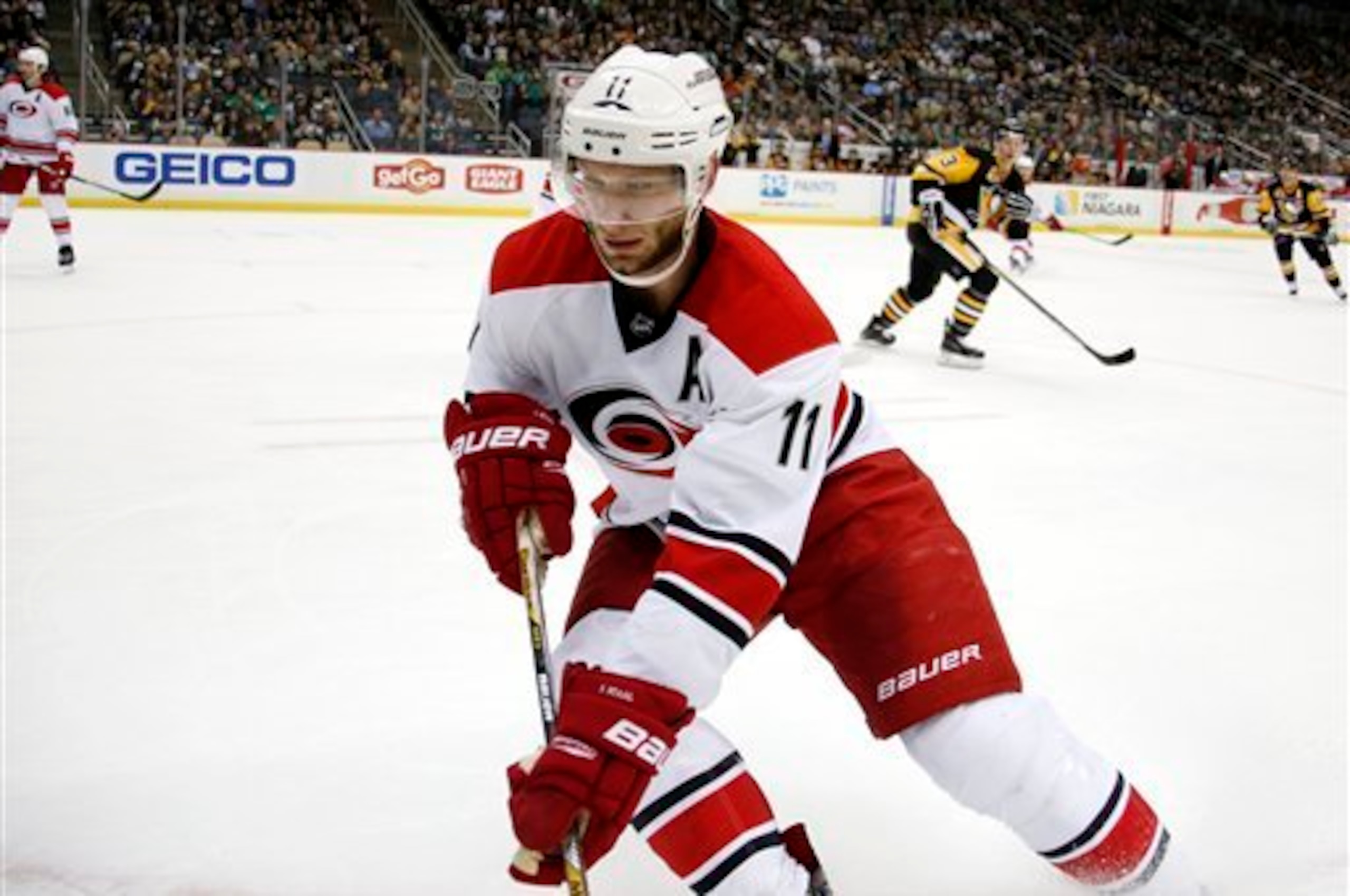
Center Jordan Staal's performance in 2015-16 (20 goals, 48 points) was his best since joining the Carolina Hurricanes in 2012. Unfortunately, those numbers aren't worthy of a top-line center earning $6 million annually.
Blame former Hurricanes general manager Jim Rutherford for signing Staal to a 10-year, $60 million contract on July 1, 2012. A skilled two-way center, Staal's done his best to justify that deal. He tied for second among Hurricanes scorers last season, was their leader in faceoff wins and finished second in takeaways (55).
On a deeper club, Staal is best suited for second-line duty. On the rebuilding Hurricanes, he's the most experienced center they have.
Staal, who turns 28 on Sept. 10, should be among the Hurricanes' leading scorers in 2016-17. However, he's earning far more than his actual value. Staal's contract lasts to the end of 2022-23 and has a full no-trade clause. The Hurricanes are stuck with it for a while.
Marian Hossa, Chicago Blackhawks
7 of 30
On July 1, 2009, Marian Hossa signed a heavily front-loaded 12-year, $63.3 million contract with the Chicago Blackhawks. Up until last season, he was consistently among their top forwards.
The 2015-16 campaign, however, was a struggle for Hossa. Injuries limited him to only 64 games. As a result, he tallied only 33 points. It was his lowest total (minimum 50 games played) in a season since 1998-99.
Age is catching up with the 37-year-old Hossa. In recent years, he's adjusted his style to compensate. Still, last season was indicative that he's paying the price for 18 seasons of NHL action.
Since joining the Blackhawks, Hossa helped them win three Stanley Cup championships. Up to now, he was worth his $5.275 million cap hit. An ongoing decline in his performance could make his contract burdensome for the cap-strapped Hawks this season and over the deal's remaining term.
Jarome Iginla, Colorado Avalanche
8 of 30
Colorado Avalanche right wing Jarome Iginla has enjoyed a long, productive Hall of Fame-worthy NHL career. Now entering the final season of his three-year, $16 million contract, he could struggle to justify that $5.333 million cap hit.
Iginla, who turned 39 on July 1, really showed his age last season. His 22 goals and 47 points were the lowest in a non-lockout NHL season since his 32-point sophomore campaign in 1997-98. Of those goals, 13 came on the power play.
With his production deteriorating, Iginla faces the prospect of failing to tally 20 goals in a full season for the first time since 1997-98.
For an Avalanche team hoping to reach the playoffs this season, his decline could hamper its offensive attack.
If Iginla fails to rebound in 2016-17, the Avs will have an expensive declining winger on their hands. The third season of his contract could prove to be one year too many.
David Clarkson, Columbus Blue Jackets
9 of 30
The Columbus Blue Jackets weren't responsible for right wing David Clarkson receiving a seven-year, $36.75 million contract. However, they could already be regretting the decision to acquire him from the Toronto Maple Leafs on Feb. 26, 2015.
With Nathan Horton sidelined by a potentially career-ending back injury, the Jackets were faced with paying out $5.3 million annually through 2019-20 to a winger no longer able to play.
Clarkson struggled with the Leafs, but he was at least an active player.
In his first full season with the Jackets, Clarkson missed 52 games to injury. In the 23 he skated in, the 32-year-old managed only four points. Not exactly the production the Jackets expected of their fourth-highest-paid forward.
At this stage in Clarkson's career, it's doubtful he'll ever come close to his career-best 30-goal campaign in 2011-12. With only $3.8 million in cap space, Clarkson's $5.25 million cap hit could cost the Blue Jackets dearly in 2016-17.
Kari Lehtonen, Dallas Stars
10 of 30
The Dallas Stars are paying Kari Lehtonen an annual average salary of $5.9 million as their starting goaltender. Unfortunately, he hasn't performed to the level expected of a starter.
Lehtonen, 32, split the goaltending duties in 2015-16 with Antti Niemi, who's earning $4.5 million annually. Of the 16 teams that reached the 2016 playoffs, the Stars had the worst GAA (2.78). In the postseason, Lehtonen and Niemi combined for a bloated 3.23 GAA.
Despite winning 25 regular-season games, Lehtonen had a GAA of 2.76 and a save percentage of .906. While he won six of 10 playoff starts, his numbers (2.81 GAA, .899 SV%) were awful.
Niemi deserves his fair share of blame, but it's Lehtonen who's the starting goalie and earning the bigger salary. Another subpar performance in 2016-17 could hurt the Stars' playoff hopes. They need Lehtonen to play up to his pay grade. Otherwise, he'll be the most overpaid starter in the league this season.
Jimmy Howard, Detroit Red Wings
11 of 30
As the starting goaltender of the Detroit Red Wings, Jimmy Howard is earning an annual average salary of $5.291 million. Over the last three seasons, however, his play has left much to be desired.
Since inking his six-year, $31.75 million contract on April 16, 2013, Howard's performance has declined. He hasn't had a 30-win season since 2011-12. He hasn't posted a sub-2.44 GAA and higher save percentage than .910 since 2012-13.
In 2015-16, Howard lost the starter's job to backup Petr Mrazek by midseason, regained it down the stretch and lost it again in the playoffs. Last season, his GAA was 2.80 and his save percentage was .906. Those stats were his worst as an NHL starting netminder.
Entering 2016-17, consistency remains an issue for Howard.
If he fails to regain his once-stellar form, the Wings will be paying a lot of money for him to back up Mrazek. Combine that with his contract, and he will be very difficult to trade.
Ryan Nugent-Hopkins, Edmonton Oilers
12 of 30
Once projected as a top-line center for the Edmonton Oilers, Ryan Nugent-Hopkins was awarded a seven-year, $42 million contract on Sept. 19, 2013 by the club's previous management. However, the 23-year-old has yet to achieve the type of stats worthy of a center pulling in $6 million per season.
Nugent-Hopkins hasn't played poorly. He reeled off consecutive 56-point efforts in 2013-14 and 2014-15. Injuries limited him to just 34 points in 55 games last season.
Still, his two-way play has improved and he has the offensive skills to regularly exceed 50 points again.
However, Nugent-Hopkins is being knocked down the Oilers' depth chart by younger centers Connor McDavid and Leon Draisaitl. McDavid, 19, is a true first-line center and franchise player. Draisaitl, 20, can skate at right wing but is best suited filling the second-line center role.
McDavid and Draisaitl could remain as the Oilers' top two centers in 2016-17. If so, Nugent-Hopkins becomes a very costly third-liner.
Nick Bjugstad, Florida Panthers
13 of 30
On Dec. 31, 2014, the Florida Panthers re-signed center Nick Bjugstad to a six-year, $24.6 million contract. At the time, the 6'6", 218-pounder was on the verge of cementing the role of second-line center.
In his rookie campaign of 2013-14, Bjugstad led the offensively anemic Panthers in scoring with 38 points. The following season, he was their leading goal scorer (24) and finished third in points (43). He seemed poised for bigger and better things in 2015-16.
Unfortunately, injuries limited Bjugstad to 34 points in 67 games last season. He also slipped down the depth chart, as promising Vincent Trocheck moved into the second-line center spot.
Bjugstad could regain his second-line role in 2016-17, perhaps if the Panthers shift Trocheck to right wing. But if they feel Trocheck is better suited as a center, they will be paying Bjugstad an annual cap hit of $4.1 million to toil on the third line.
Dustin Brown, Los Angeles Kings
14 of 30
On July 18, 2013, the Los Angeles Kings re-signed right wing Dustin Brown to an eight-year, $47 million contract. Having captained the Kings to a Stanley Cup title in 2012 and the 2013 Western Conference Final, Brown seemed worthy of a $5.875 million annual cap hit.
Brown led the Kings to another Stanley Cup championship in 2014, but his play was already in decline by then. With only 27 points in 2013-14, it was the start of three seasons in which Brown failed to exceed 28 points.
Those numbers were also a steep decline from Brown's consecutive 50-plus-point campaigns from 2007-08 to 2011-12. The 31-year-old also tumbled down the Kings' depth chart last season to the third line.
On June 16, the Kings replaced Brown as captain with Anze Kopitar. Given the decline in his performance and the Kings' limited cap space, Brown's contract is now a headache for management in 2016-17.
Jason Pominville, Minnesota Wild
15 of 30
Minnesota Wild right wing Jason Pominville is entering the third season of a five-year, $28 million contract. After coming off a subpar performance in 2015-16, the 33-year-old is on the decline as an effective top-six winger.
Since joining the Wild in a late-season trade with the Buffalo Sabres on April 3, 2013, Pominville's offensive numbers have steadily dropped. From a 60-point effort in 2013-14, he tallied 54 points in 2014-15 and only 36 points in 75 games last season. That was his lowest mark in a full NHL season since his 30-point rookie season in 2005-06.
Pominville also tumbled down the Wild's depth chart last season to the checking lines. While he showed a return to form in the 2016 playoffs with seven points in six games, it remains to be seen if he can carry that over into this season.
Under new head coach Bruce Boudreau, Pominville could regain his offensive form. If he doesn't, the Wild will be paying him an average annual salary of $5.6 million to be a third-line winger.
Tomas Plekanec, Montreal Canadiens
16 of 30
On Oct. 16, 2015, the Montreal Canadiens re-signed longtime center Tomas Plekanec to a two-year, $12 million contract extension. Given his consistent effectiveness as a two-way forward and the Habs' lack of depth at center, they couldn't afford to lose him to free agency.
Plekanec had a solid effort in 2015-16. His 40 assists, 18:31 of average ice time and 46 blocked shots led all Canadiens forwards. His 54 points ranked third in team scoring.
Turning 34 on Oct. 31, Plekanec is also at an age when a decline in on-ice performance is inevitable. His two-way style could start to take its toll on him this season.
At an annual average value of $6 million per season, the Canadiens are overpaying Plekanec as a second-line center. For a team with limited cap space, that cap hit bites deeply. A decline in his production could make him an expensive problem for Habs management.
Pekka Rinne, Nashville Predators
17 of 30
Between 2008-09 and 2014-15, Pekka Rinne did a fine job as the starting goaltender for the Nashville Predators. A three-time finalist for the Vezina Trophy, Rinne is heading into the fifth season of a seven-year, $49 million contract.
In 2015-16, Rinne exceeded 30 wins for the fifth time. However, his goaltending was erratic. His .908 save percentage was his lowest as a starter in a full NHL season, while his 2.48 goals-against average was his highest since 2009-10.
Rinne, who turns 34 on Nov. 3, could be entering the downside of his career. In 2013-14, an infection in his surgically repaired hip sidelined for most of the season. Perhaps a lingering effect from that ailment accounts for his puzzling play in 2015-16.
The Predators' hopes for a Stanley Cup run this season rest upon Rinne. Considering his $7 million average annual salary through 2018-19, it's important they get full value for their money. Another inconsistent season from him will leave them with a costly question mark between the pipes.
Mike Cammalleri, New Jersey Devils
18 of 30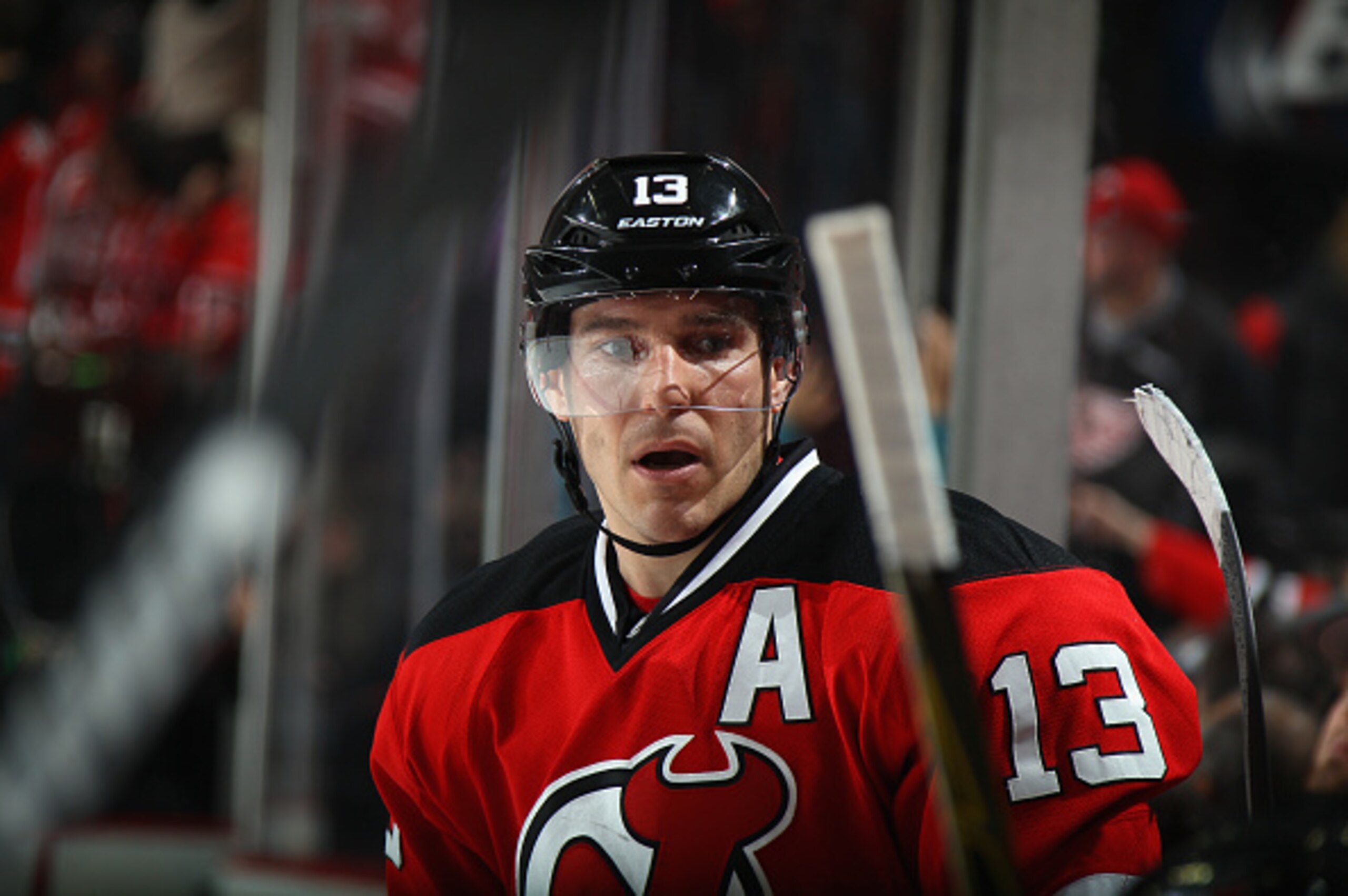
On July 1, 2014, the New Jersey Devils signed unrestricted free-agent left wing Mike Cammalleri to a five-year, $25 million contract. It was an expensive gamble by former general manager Lou Lamoriello to bolster the Devils' sluggish offense.
Cammalleri has done his best to justify his $5 million annual salary. In 2014-15, he led the Devils with 27 goals. Last season, he had 38 points in 42 games before suffering a season-ending upper-body injury.
Injuries have hampered Cammalleri throughout his NHL career. He last played more than 68 games in 2008-09. It's doubtful he'll buck that trend in 2016-17. Now 34, he's also at the stage when production inevitably declines.
The acquisition this summer of left wing Taylor Hall knocks Cammalleri down to the second line. He could benefit from the reduced playing time. Considering his age and injury woes, however, it's unlikely the Devils will get full value from their investment this season.
Mikhail Grabovski, New York Islanders
19 of 30
When the New York Islanders signed center Mikhail Grabovski as a free agent in 2014, he was expected to provide two-way depth as a third-line center. At four years and $20 million, it was a surprisingly expensive investment.
Earlier in Grabovski's career, he reached or exceeded 20 goals three times and 50-plus points twice. Unfortunately, he last reached those heights in 2011-12.
In Grabovski's first season with the Islanders, injuries limited him to just 19 points in 51 games. Last season proved no better, as he tallied 25 points in 58 games.
Now 32 and with a lengthy injury history, it's doubtful Grabovski can provide the Isles full value for their $5 million annual cap hit investment in him. While he lacks a no-trade clause, they won't get many takers for his services on the trade market.
Dan Girardi, New York Rangers
20 of 30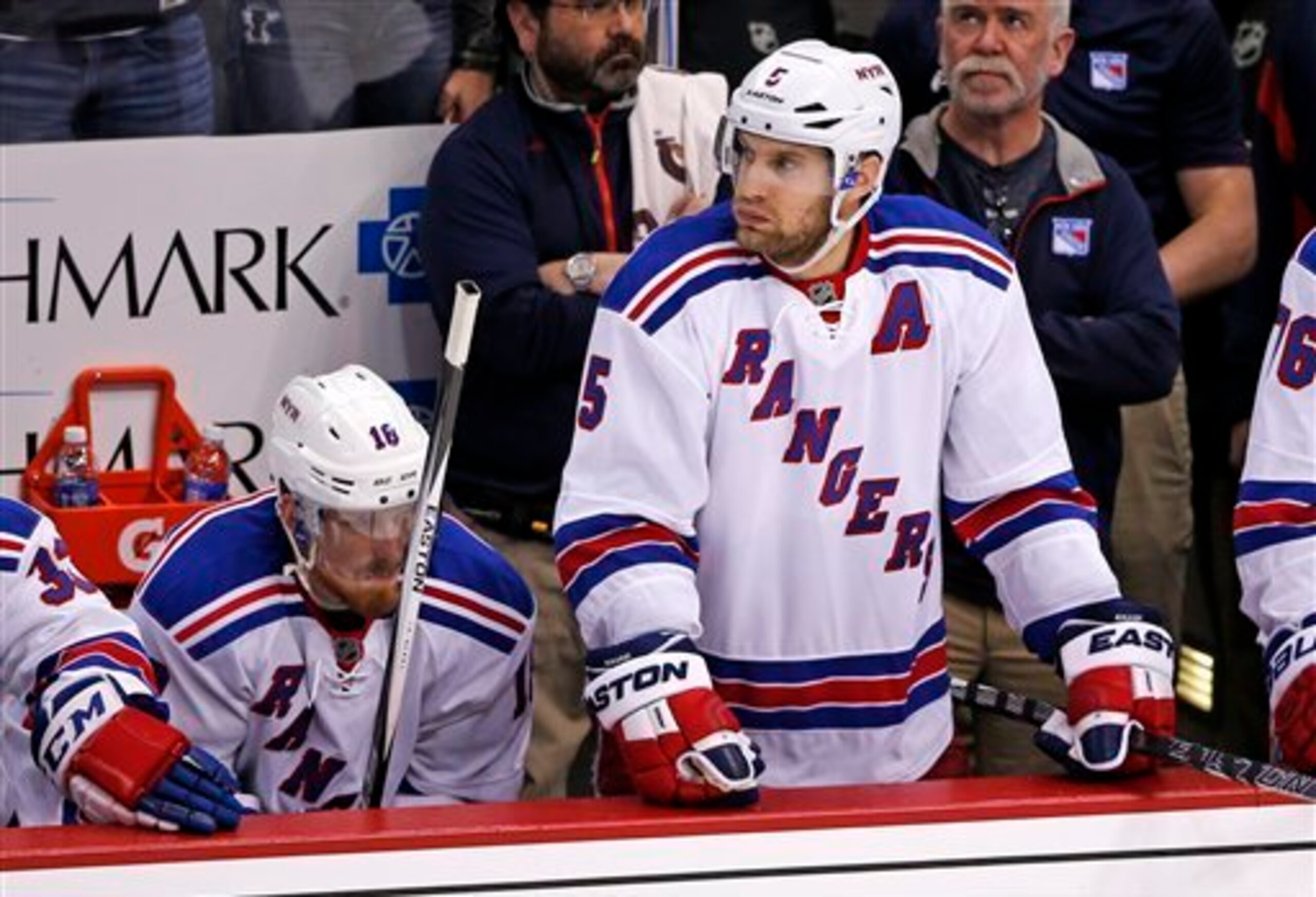
When the New York Rangers re-signed defenseman Dan Girardi to a six-year, $33 million deal in 2014, he was considered an invaluable part of the blue line. Entering 2016-17, however, his contract has become a salary-cap headache.
From 2007-08 to 2014-15, Girardi regularly finished first or second among Rangers skaters in ice time. He was a consistent physical presence, ranking among their leaders in hits and blocked shots.
Last season, however, saw a notable decline in Girardi's performance. His 20 minutes, 19 seconds of time on ice per game was his lowest since 2007-08 (21:11). Now 32 and entering his 11th NHL season, his physical style of play seems to be catching up to him.
If Girardi's decline continues, the team could move him down to second-pairing duty. For a club with limited salary-cap space, his $5.5 million annual cap hit could hamper efforts to improve the roster.
Dion Phaneuf, Ottawa Senators
21 of 30
The Ottawa Senators didn't sign defenseman Dion Phaneuf to his seven-year, $49 million contract. By taking on his $7 million-per-season salary-cap hit in last season's trade with the Toronto Maple Leafs, the Sens landed their most overpaid player.
Phaneuf, 31, is a physical puck-moving defenseman who can log big minutes. In 71 games last season split between the Leafs and Senators, he reached the 30-point mark (32) for the ninth time in his 11 NHL seasons. He averaged 22 minutes, one second of ice time with the Leafs and 23:10 with the Sens.
While he's skated top-pairing minutes for most of his career, Phaneuf is best suited on the second pairing. In 2016-17, the Senators are likely to have him skating alongside the promising Cody Ceci.
While Phaneuf will bring depth and experience to the blue line, he's not worth the salary of a top-two defenseman. The Senators are paying a steep price cap-wise for his services.
Andrew MacDonald, Philadelphia Flyers
22 of 30
On April 15, 2014, then-Philadelphia Flyers general manager Paul Holmgren signed defenseman Andrew MacDonald to a six-year, $30 million contract. That deal is now a problem for Holmgren's successor, Ron Hextall.
MacDonald is a decent puck-moving defenseman, but Holmgren overpaid to keep him with the Flyers. MacDonald was limited to just 58 games in 2014-15. The 29-year-old spent most of last season with the Flyers AHL affiliate in Lehigh Valley, Pennsylvania.
With the promising Shayne Gostisbehere cracking the lineup last season and Ivan Provorov and Samuel Morin knocking on the door, the Flyers must make room for these young defenders. MacDonald's annual salary-cap hit of $5 million makes it difficult for Hextall to move him via trade or waivers.
MacDonald could maintain a full-time spot with the Flyers in 2016-17 by beating out veterans such as Nick Schultz and Michael Del Zotto. If so, he'll be an overpriced depth blueliner.
Marc-Andre Fleury, Pittsburgh Penguins
23 of 30
Until the 2016 Stanley Cup playoffs, Marc-Andre Fleury was the unquestioned starting goaltender for the Pittsburgh Penguins. His $5.75 million annual salary through 2018-19 seemed a worthwhile deal. However, the rise of Matt Murray could make Fleury's contract troublesome for the Penguins.
Until sidelined by a late-season concussion, the 31-year-old Fleury was enjoying one of his best campaigns. His 35 victories marked the eighth time he had exceeded the 30-win plateau. His 2.29 goals-against average was the best of his career, while his .921 save percentage tied a career high.
Fleury's injury opened the door for Murray, who went on to backstop the Penguins to the 2016 Stanley Cup. Fleury was relegated to a backup role, seeing action in only one game.
If Fleury is unable to win back the starter's job in 2016-17, the Penguins will have an expensive backup on their hands. Already pressed for salary-cap space, they could reconsider Fleury's place in their future plans.
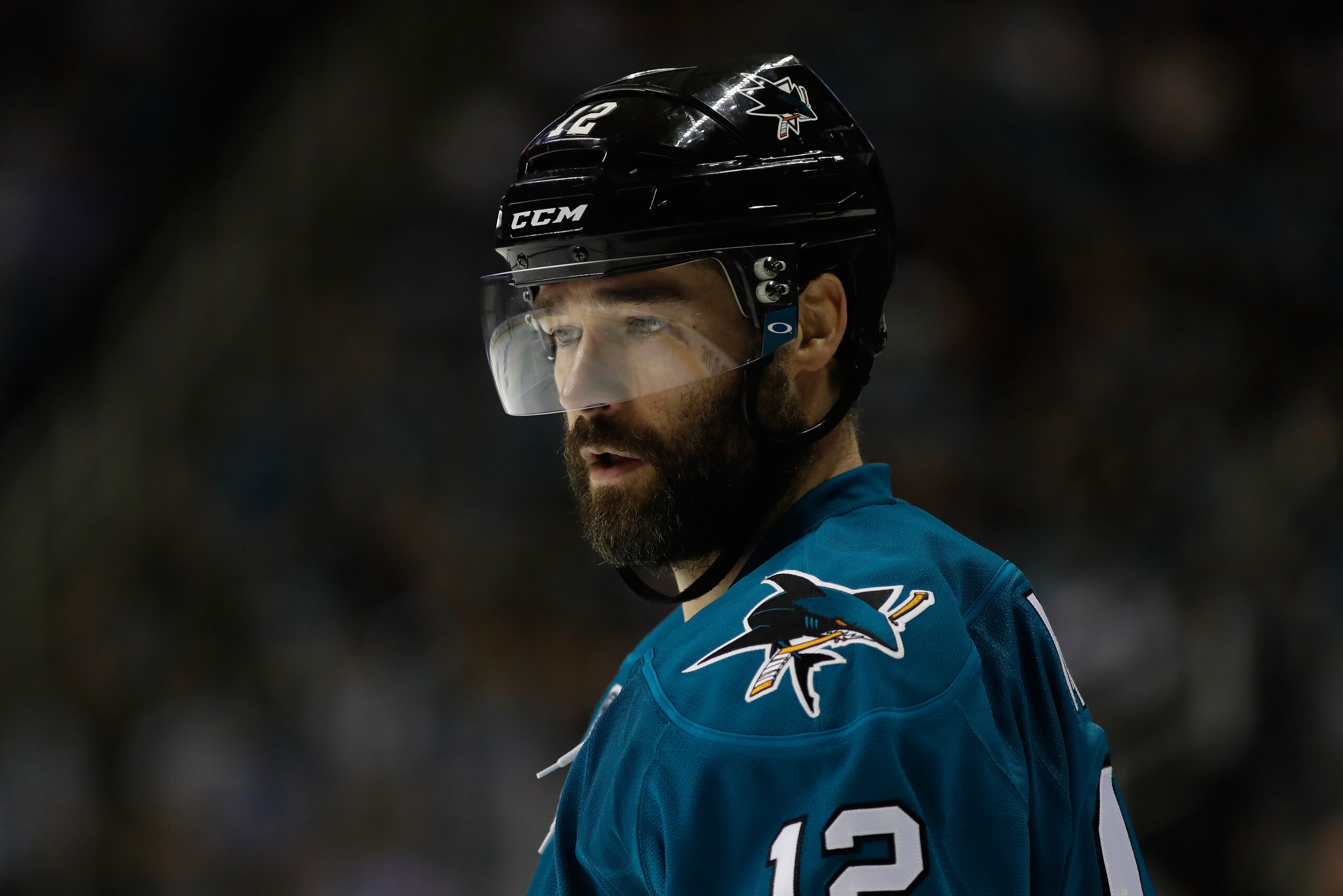
Patrick Marleau, San Jose Sharks
24 of 30
Left wing Patrick Marleau is entering his 19th and possibly final season with the San Jose Sharks. Given his annual salary-cap hit of $6.66 million, the Sharks appear to have a pricey, waning star on their hands.
Marleau put up decent numbers in 2015-16, tallying 25 goals and 48 points in 82 games. He exceeded 20 goals for the 13th time and 40 points for the 16th time. During the Sharks' run to the 2016 Stanley Cup Final, he tallied 13 points in 24 games.
Still, Marleau's production is on the decline. After scoring 33 goals and 70 points in 2013-14, he netted 19 goals and 57 points the following season. At times during 2015-16, he saw third-line duty.
In the past, Marleau always rebounded from previous dips in his production. Turning 37 on Sept. 15, it's doubtful he can do it again. At this stage in his long career, Marleau has become an overpriced asset.
Paul Stastny, St. Louis Blues
25 of 30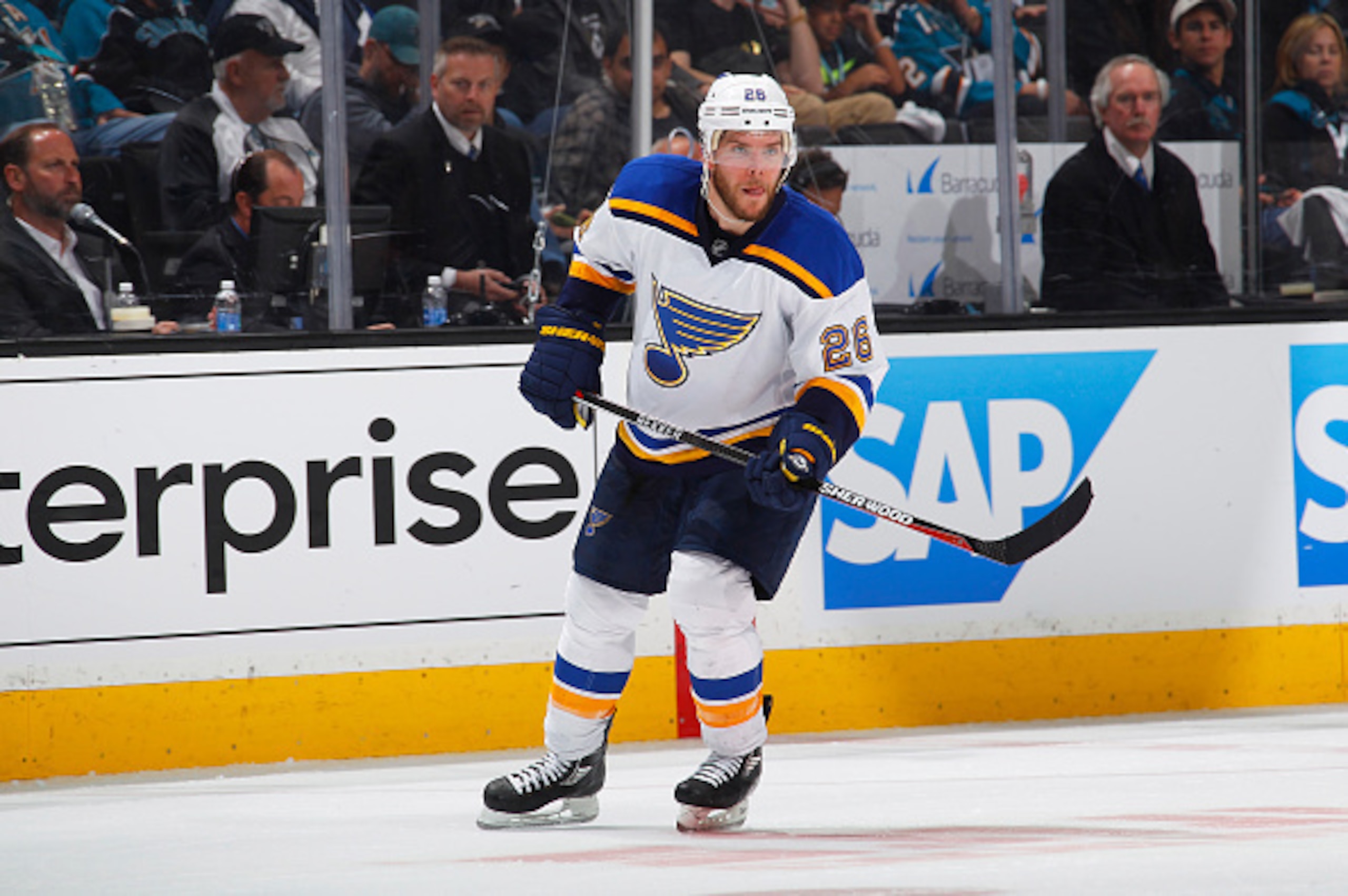
The St. Louis Blues signed Paul Stastny to a four-year, $28 million contract on July 1, 2014. He was supposed to boost their offense at the center position. Unfortunately, they haven't received full value for their $7 million annual investment.
Stastny struggled through injuries and inconsistency in 2014-15, netting only 46 points in 71 games. Injuries again waylaid the 30-year-old in 2015-16, limiting him to 49 points in 64 games.
It's unfortunate that Stastny was sidelined so often over the last two seasons, as it cut into his effectiveness as a top-six center. So far, his time in St. Louis is among the least productive of his career.
Stastny is the second-highest paid player on the Blues. While he cannot be faulted for his injury woes, he's become a costly acquisition. For $7 million annually, the Blues were probably expecting much more.
Valtteri Filppula, Tampa Bay Lightning
26 of 30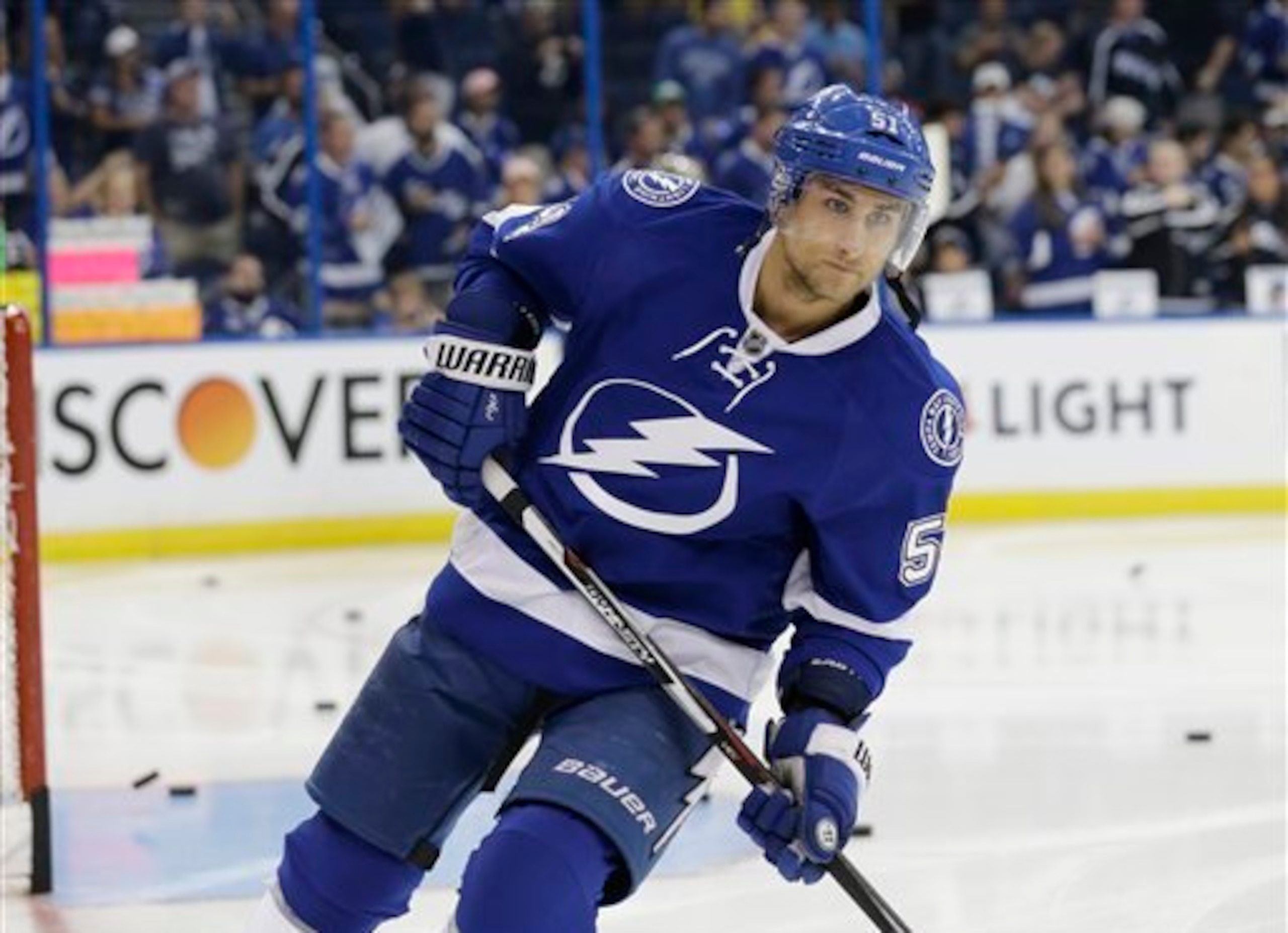
On July 5, 2013, center Valtteri Filppula inked a five-year, $25 million contract with the Tampa Bay Lightning, Over time, that $5 million annual salary-cap hit has proved more costly for the Bolts.
Since joining the Lightning, Filppula's production has steadily declined. From 58 points in 2013-14, he tallied 48 points in 2014-15 and 31 points last season. The latter was his lowest total in a non-lockout campaign since his rookie season in 2006-07.
The 32-year-old Filppula is still strong in the faceoff circle, leading the Bolts last season in faceoff wins (632). He also plays a solid defensive game. However, he's now dropped to the third line.
If Filppula were earning less than his current cap hit, Tampa Bay could take his decline in stride. But for a team with limited salary-cap space in the upcoming season, the Lightning need to address the problem in the near future.
Joffrey Lupul, Toronto Maple Leafs
27 of 30
Toronto Maple Leafs left wing Joffrey Lupul is entering the fourth season of a five-year, $26.25 million contract. Over the last three years, the Leafs haven't received full value for their investment.
Injuries plagued Lupul in recent years, hampering his play and limiting his effectiveness. In 2013-14, he scored 22 goals and 44 points in 69 games. The following season saw him net only 21 points in 55 games. Lupul appeared in just 46 games in 2015-16, scoring 11 goals and recording 14 points.
Lupul turns 33 on Sept. 23. Given his age and injury history, it's unlikely he'll have another full, productive NHL season again.
The Leafs are rebuilding with young talent. Lupul probably doesn't fit into their plans. Moving his $5.25 million annual salary-cap hit, however, could prove difficult.
Alexandre Burrows, Vancouver Canucks
28 of 30
Vancouver Canucks right wing Alexandre Burrows is entering the final season of his four-year, $18 million contract. At the tail end of his career, the 35-year-old Burrows is now an overpriced winger on the downside.
Earlier in Burrow's career, he was a productive winger for the Canucks. Between 2008-09 and 2011-12, he scored 20-plus goals and 48-plus points four times.
Over the course of his current contract, however, Burrows' production and effectiveness steadily deteriorated. In 79 games last season, he scored only nine goals and 22 points. No longer a top-six winger, he was dropped to the Canucks' fourth line.
If not for Burrows' $4.5 million salary-cap hit, his decline would be manageable. Unfortunately, it's now a burden on the Canucks' salary-cap payroll for 2016-17. The steady drop in his play and his full no-trade clause make him difficult to trade.
Brooks Orpik, Washington Capitals
29 of 30
On July 1, 2014, the Washington Capitals signed defenseman Brooks Orpik to a five-year, $27.5 million contract. They brought him in to bring more experience and grit to their blue line.
Orpik led the Capitals in 2014-15 in hits (306) and finished second in blocked shots (192) while logging 21 minutes, 47 seconds in average ice time. Last season, however, injuries limited Orpik to just 41 regular-season games. His average ice time also slipped to 19:48.
Entering 2016-17, Orpik's performance will continue to decline. He turns 36 on Sept. 26, and his best seasons are behind him. Dmitry Orlov, 25, could bump Orpik down to the third pairing.
Capitals management gambled on Orpik remaining an effective top-four defenseman for most of his contract. Now in the third season of his five-year deal, he could instead become a costly burden.
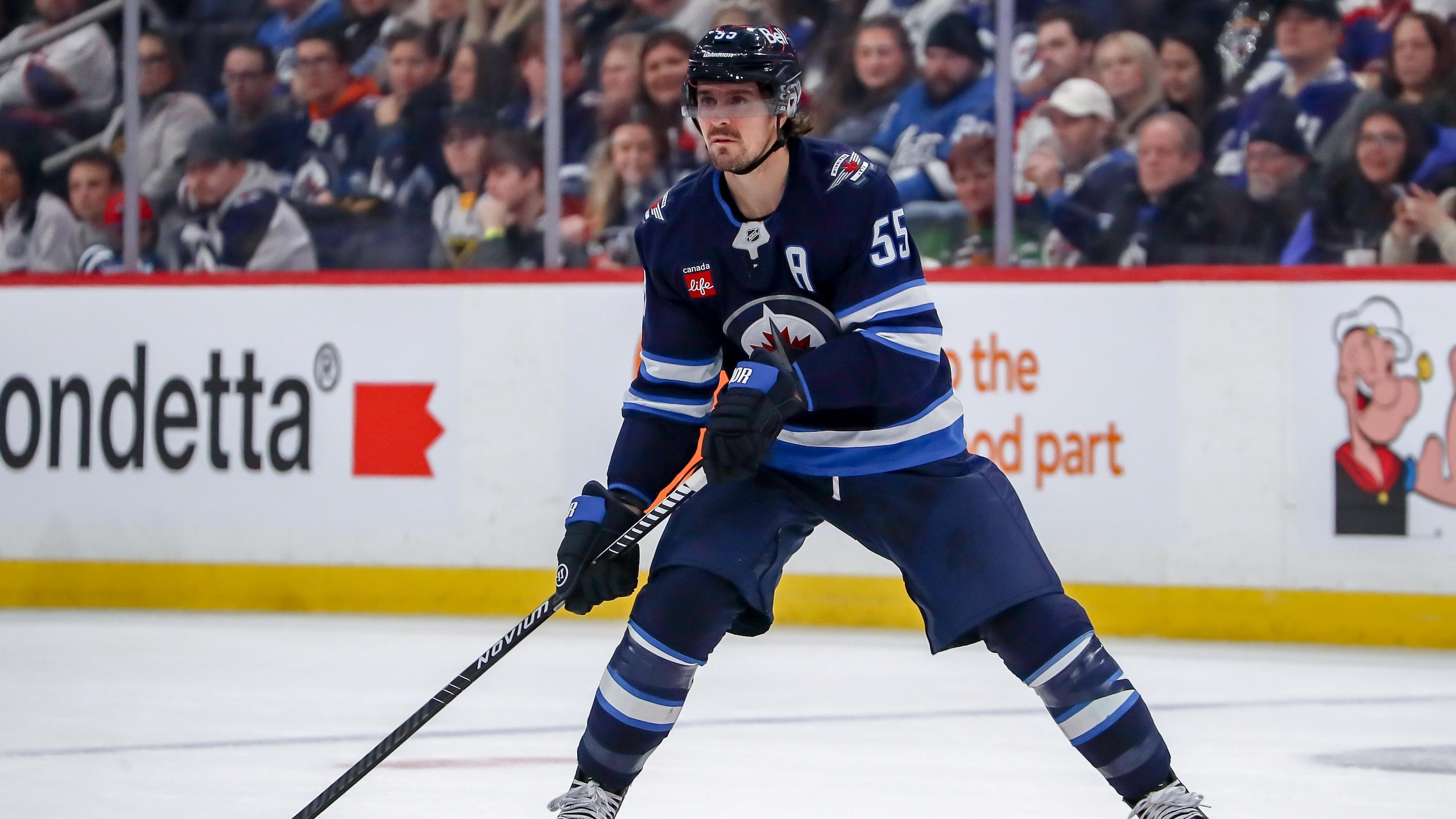
Toby Enstrom, Winnipeg Jets
30 of 30
Winnipeg Jets defenseman Toby Enstrom is entering the fourth season of his five-year, $28.75 million contract. While his $5.75 million salary-cap hit is the second-highest among Jets defensemen, his play in recent years has declined.
Earlier in Enstrom's career, he was a puck-moving blueliner. He exceeded 30 points in five of his first six NHL campaigns. While he had another 30-point season in the first year of his current deal, his production dropped to 23 points in 2014-16 and only 16 points in 2015-16.
Enstrom should remain paired with Tyler Myers on the Jets second defense pairing for 2016-17. Given the ongoing decline in his offensive production, he'll likely play a more defensive role.
However, Enstrom is still being paid like a first-pairing, two-way blueliner. The Jets tend to be a budget-conscious club, so his contract becomes more difficult to carry as his skills decline.
Player stats via NHL.com. Salary and cap info via Cap Friendly.


.jpg?w=2560 "NFL investigating 2 referees for separate viral exchanges")

.jpg?w=2560 "Report: Chiefs Contact Hill's Agent")
.jpg?w=2560 "OBJ Calls Out Giants 😳")
.jpg?w=2560 "Tyreek makes another cryptic post amid Chiefs rumors")



