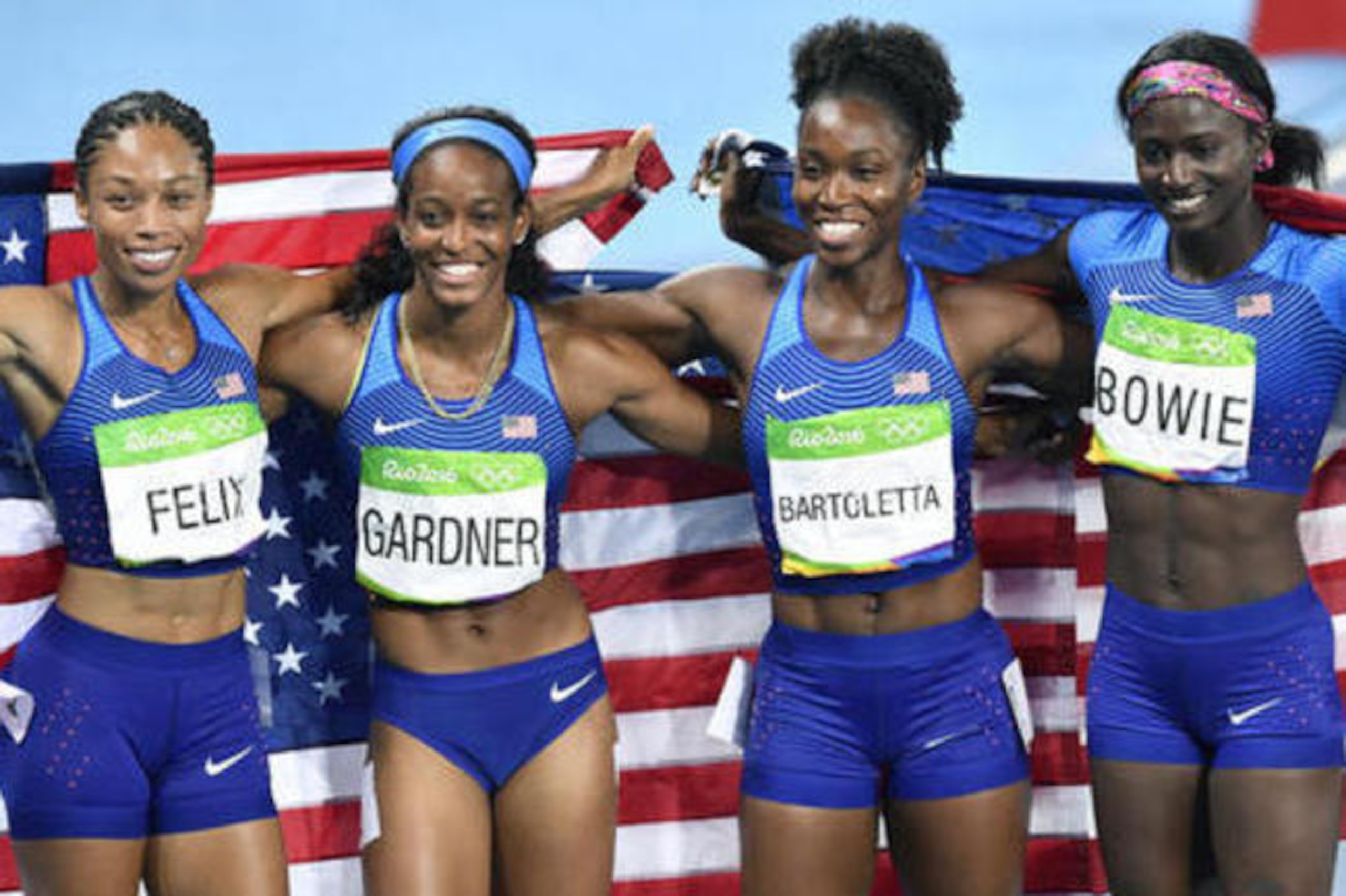

USA's Allyson Felix was already one of the biggest winners in Rio de Janeiro, becoming the first woman in track and field history with five Olympic gold medals earlier in the week.
But just in case anyone had any ideas of passing her one day, she added a little insurance to her record with a sixth gold in the women's 4x400-meter relay Saturday night.
It was a good day for USA women seeking No. 6, as the basketball team won its sixth consecutive gold medal in blowout fashion against Spain. But it was six dives that did in Great Britain's Thomas Daley, whose performance in the semifinals of the men's 10-meter platform dive was a far cry from what he did in Friday's preliminary round.
Brazil's men put the soccer ball in the net six times—once in regulation; five times on penalty kicks—to win gold for the first time in history.
And South Korea's Inbee Park shot a 66 for the third time this week on the golf course to win the gold. Big day for the number six, indeed.
Read on for the rest of Day 15's biggest winners and losers.
Winner: USA Women's Basketball
1 of 9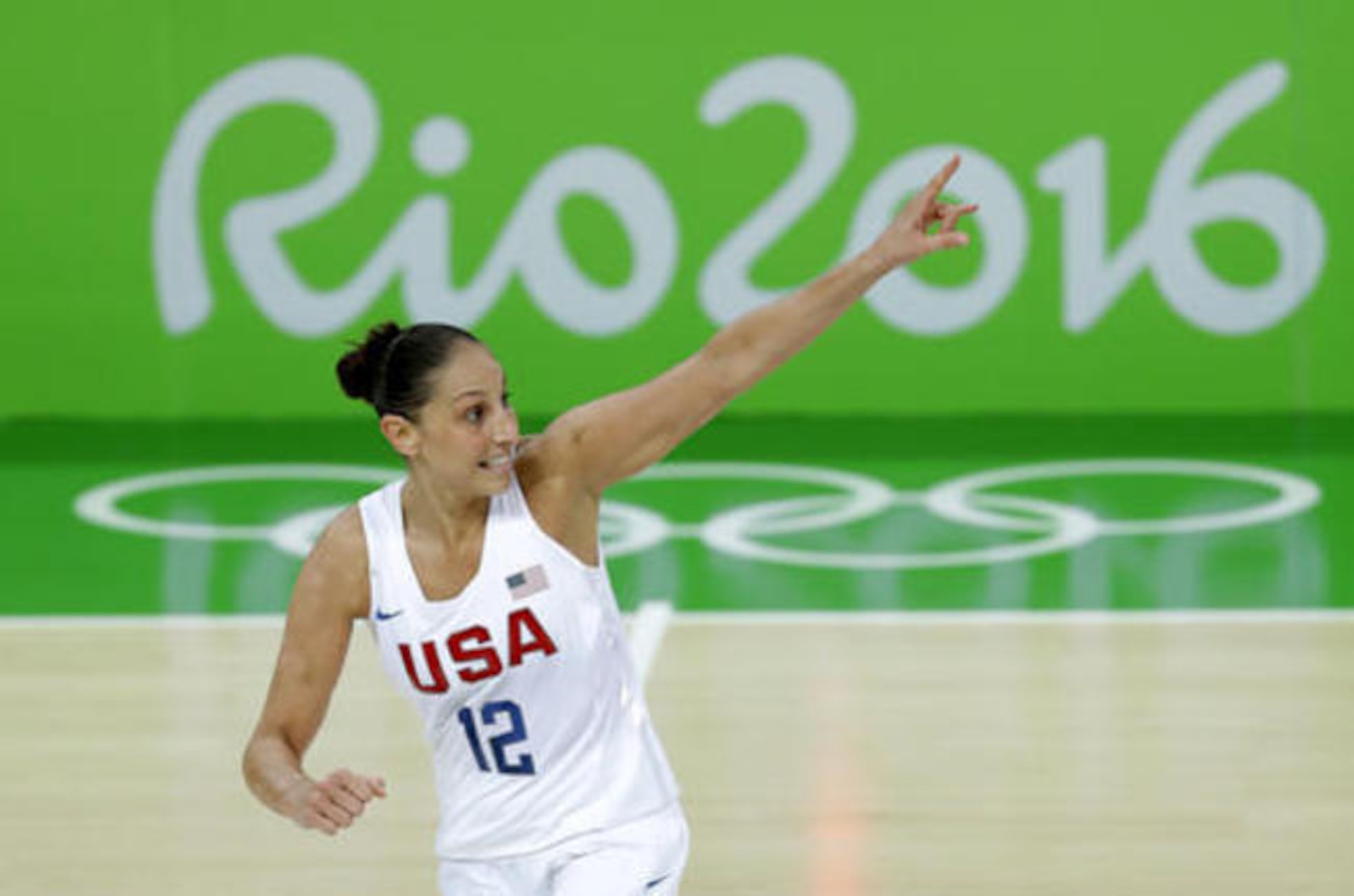
In what felt like little more than a formality, USA took gold in women's basketball with a 101-72 trouncing of Spain.
Diana Taurasi and Lindsay Whalen led the way with 17 points each as USA cruised to its sixth straight gold medal and 49th consecutive win in Olympic play.
As has been the case for most of those years, none of the games were even close. The 19-point win over France in the semifinals (playing without Sue Bird) was the closest thing to a nail-biter the women experienced.
Their average margin of victory was 37.3 points.
Forty-eight of their 49 wins during the streak have come by double-digit margins.
In case you haven't gotten the picture, this should sum up how much better than the rest of the world Team USA has been: Spain went 6-0 against everyone else but lost twice to Team USA by a combined margin of 69 points.
Loser: People Who Said Olympic Golf Wouldn't Matter
2 of 9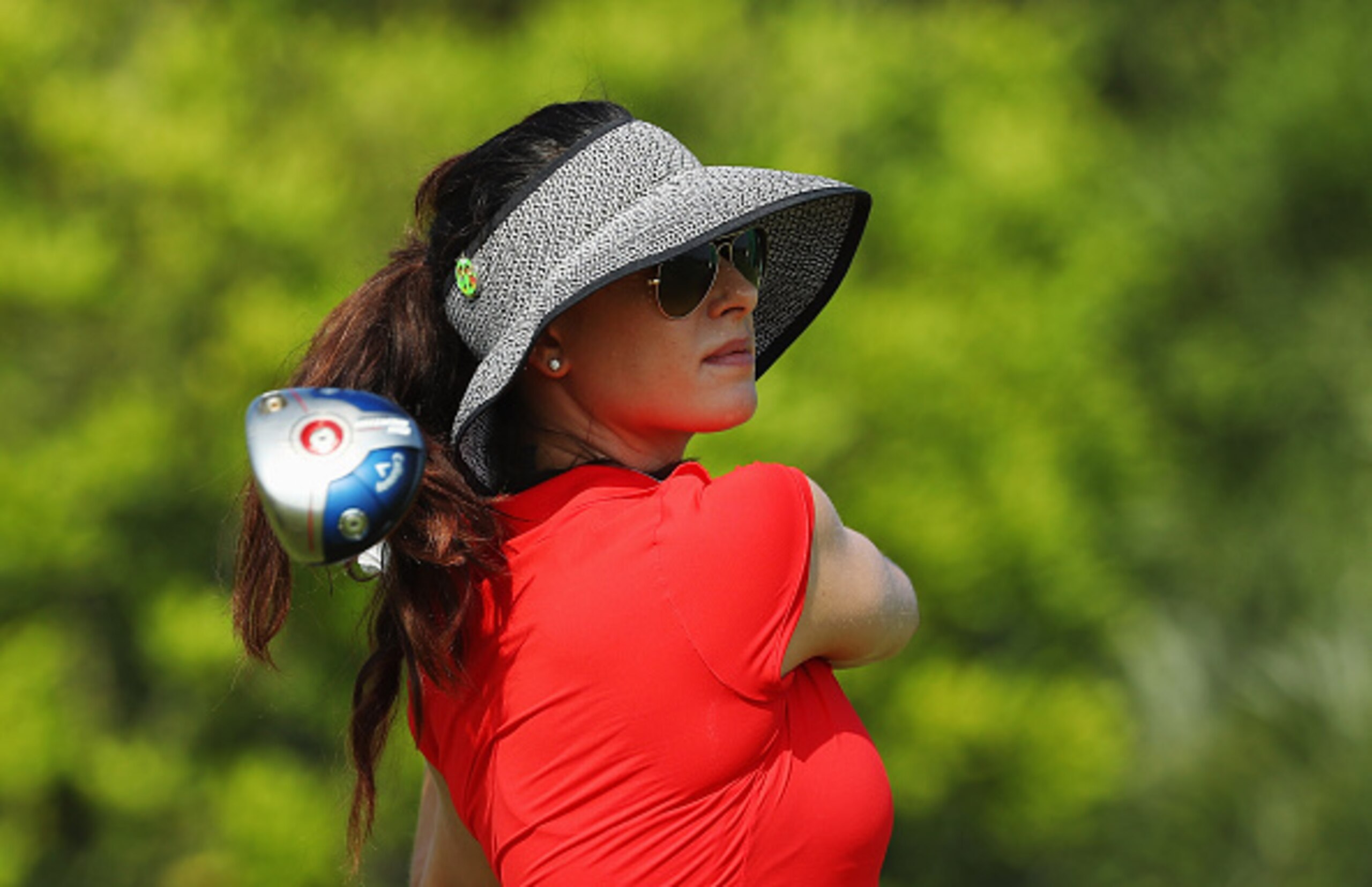
Citing concerns about the Zika virus, many of the world's top male golfers declined the opportunity to compete in golf's debut in the Summer Olympics. Jason Day, Jordan Spieth and Rory McIlroy were all notably absent from Rio. Most were gracious and diplomatic in making their decisions, but not McIlroy.
"I'm very happy with the decision I've made, I have no regrets," McIlroy said before the British Open last month, according to the BBC. "I'll probably watch the Olympics, but I'm not sure golf will be one of the events I'll watch. ... [I'll probably watch] the events that…track and field, swimming, diving, the stuff that matters."
When one of the most famous golfers in the world implies Olympic golf doesn't matter, that's a tough blow for the sport.
But try telling USA's Gerina Piller it doesn't matter.
Piller entered the final day of the women's tournament tied for second place, two strokes behind leader and eventual gold medalist Inbee Park. But Piller never got into a groove, bogeying her first two holes en route to shooting a three-over 74 and dropping into 11th place.
Fighting back tears, Piller told NBC's Steve Sands, "Just a tough day, but I'm just gonna work harder and just keep going."
Meanwhile, Russia's Maria Verchenova had a polar-opposite kind of day, entering the round at five over before shooting a course-record 62, including a hole-in-one on the par-three fourth hole. She still finished six strokes away from the medal podium but was thrilled with her result, telling Sands that she'll be keeping her scorecard as a memory of the achievement.
Winner: Neymar
3 of 9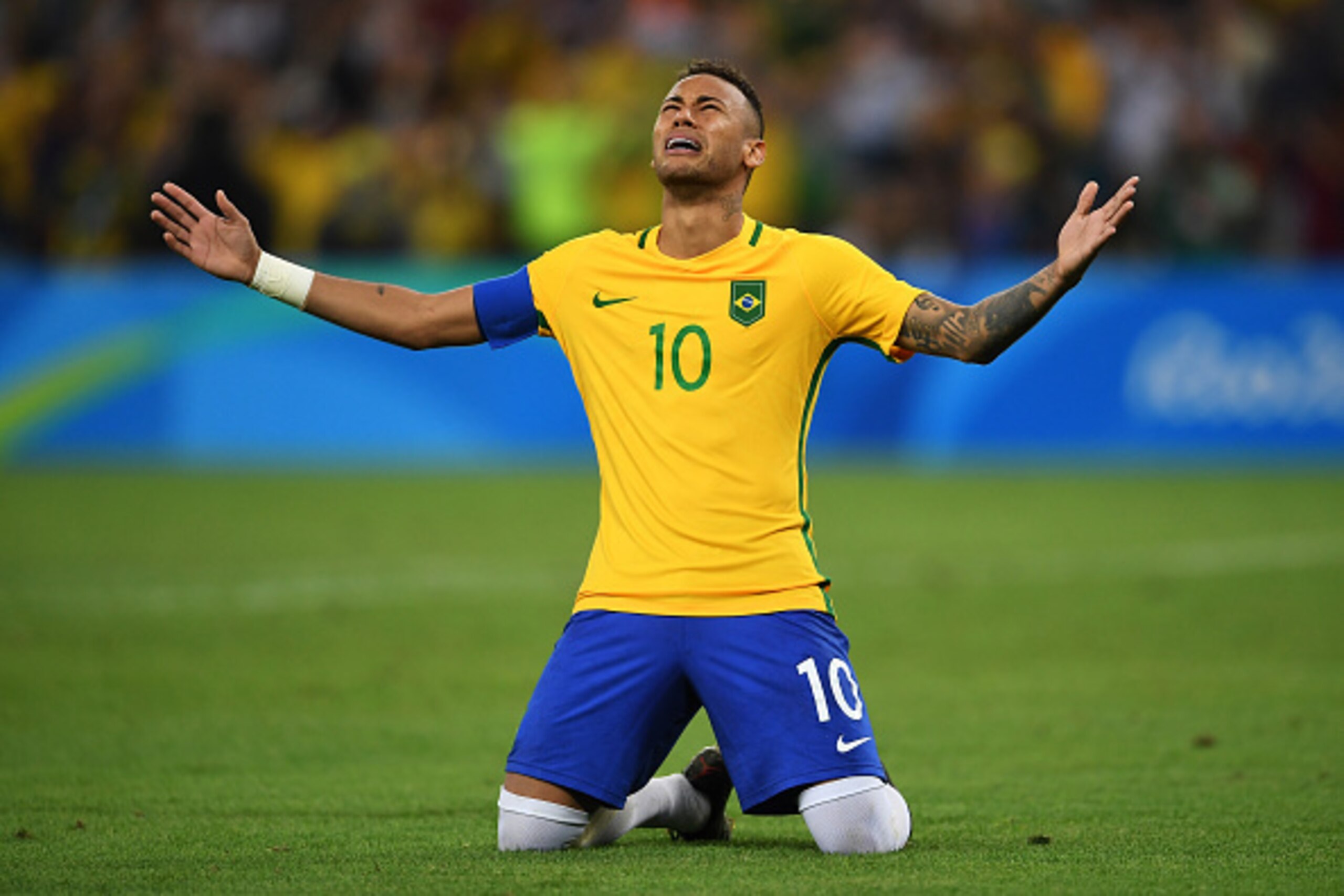
"It just may be the defining moment of the Olympic Games for the host nation," bellowed NBC's Arlo White, with Maracana Stadium still roaring in jubilation several minutes after Neymar's game-winning, gold-clinching penalty kick.
That Neymar was even competing should tell you just how much this tournament meant to Brazil.
While most of the world's best players were on a different continent for the start of the English Premier League season, Neymar remained in his home country, serving as one of Brazil's allotted three players over the age of 23 in hopes of securing Brazil's first-ever men's Olympic gold medal in soccer.
He played every minute of Brazil's games. He scored its only regulation goal of the gold-medal match (on a gorgeous free kick). He was its anchor for the shootout. And he collapsed in tears of joy after sinking that final PK.
Just two years earlier in Rio, it was Germany that eviscerated Brazil in the semifinals of the 2014 World Cup by a score of 7-1 in the semifinals. Save for Germany's Matthias Ginter—who didn't even play in the blowout—the only similarities on the rosters are the countries they represent. Even Neymar was unable to play in the World Cup game, suffering an injury in the previous win over Colombia.
Nevertheless, it felt like a revenge win for Neymar and the Brazilians against the Germans.
Moreover, it was vindication for the past two Olympics, losing to Argentina in the 2008 semifinals before a 2-1 loss to Mexico in the 2012 gold-medal match.
They needed Neymar just to withstand the intense pressure on their shoulders, and he delivered multiple times when it mattered.


Loser: Post-Match Interviews After a Loss
4 of 9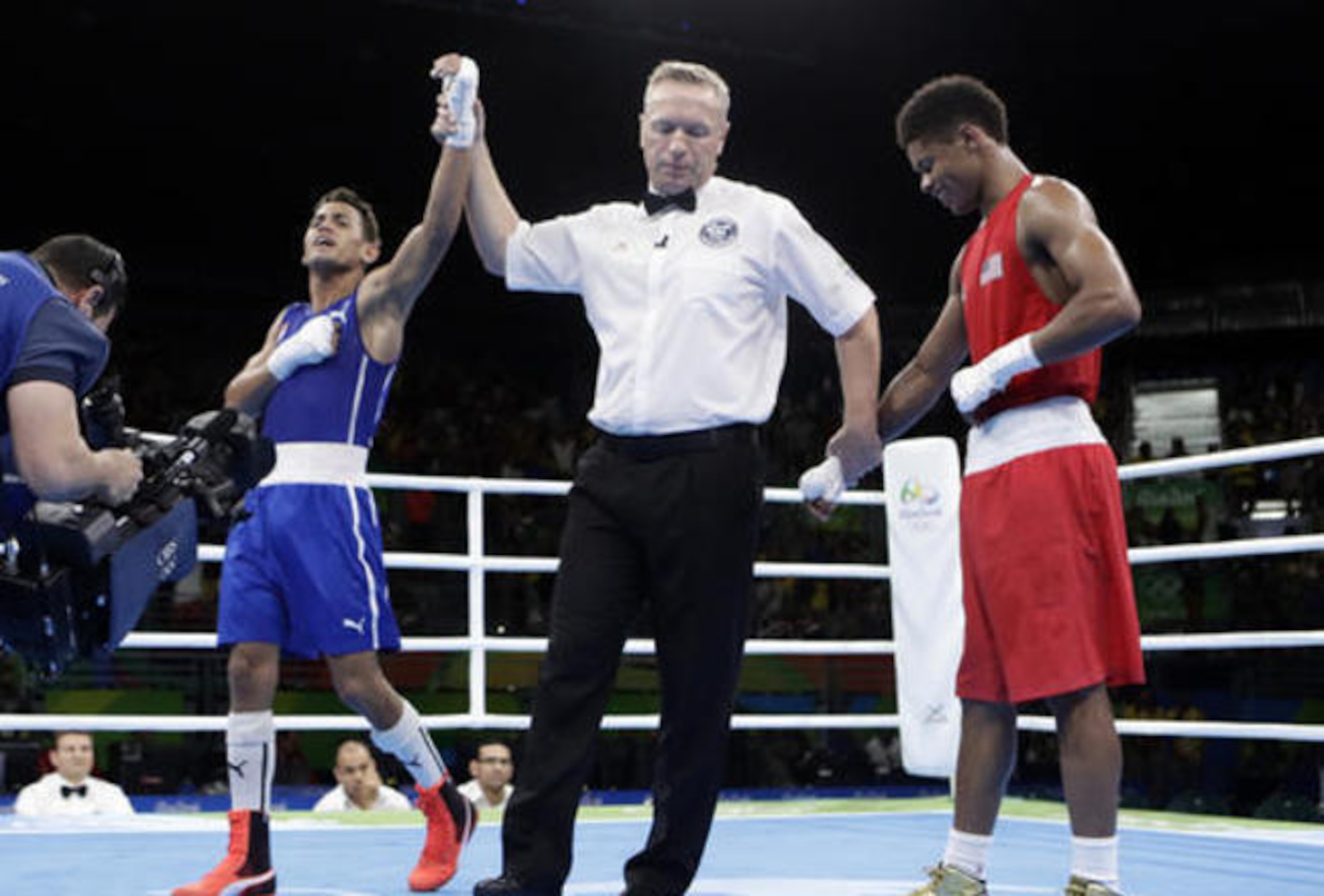
One day after USA wrestler Jordan Burroughs struggled to come to grips with his shocking failure to medal, there was more agony in defeat for an American combatant.
USA's bantamweight boxer Shakur Stevenson entered the Olympics as one of the favorites to medal and had the weight of an entire country on his shoulders—plus some added nerves from having his idol, Floyd Mayweather Jr., in the stands for his quarterfinal fight.
Once the most dominant boxing country in the world, the USA hadn't won a gold or silver in men's boxing since Andre Ward's light heavyweight gold in 2004. By reaching the finals, Stevenson at least ensured that drought would end.
But he didn't want silver and couldn't even process the fact that he had lost by split decision to Cuba's Robeisy Ramirez.
Though visibly upset, Stevenson made it through two of the post-match interview questions from NBC's Chris Mannix with poise and grace.
"I'm hurt. I felt like [Ramirez] won. Much respect to him, I just don't like to lose, so I'm hurt."
"I had to make it clear," Stevenson said in response to Mannix's question about whether he felt he had done enough in the third round to win the bout. "I like all my fights to be clear victories. I felt he got his victory and much respect to him."
And here's where Mannix twisted the knife: "You come in here, I know you wanted that gold medal. I know it's emotional. But you walk away with a silver medal, which is an incredible accomplishment. Can you take any pride in that?"
The 19-year-old boxer broke down in tears halfway through the question before saying, "No! I don't like to lose. Second..."
Thus ended the interview—which you can watch here, but have a tissue handy—with Stevenson trying to understand how he could have lost.
It was brutal stuff, worse than an entire compilation of kids crying on the bench after losing in college basketball's March Madness. What Stevenson needed was a hug and some time to compose himself. What he got was a microphone in his face. Raw emotion makes for great theater, but it was impossible not to feel bad for him.
Winner: Germany's Canoeing Program
5 of 9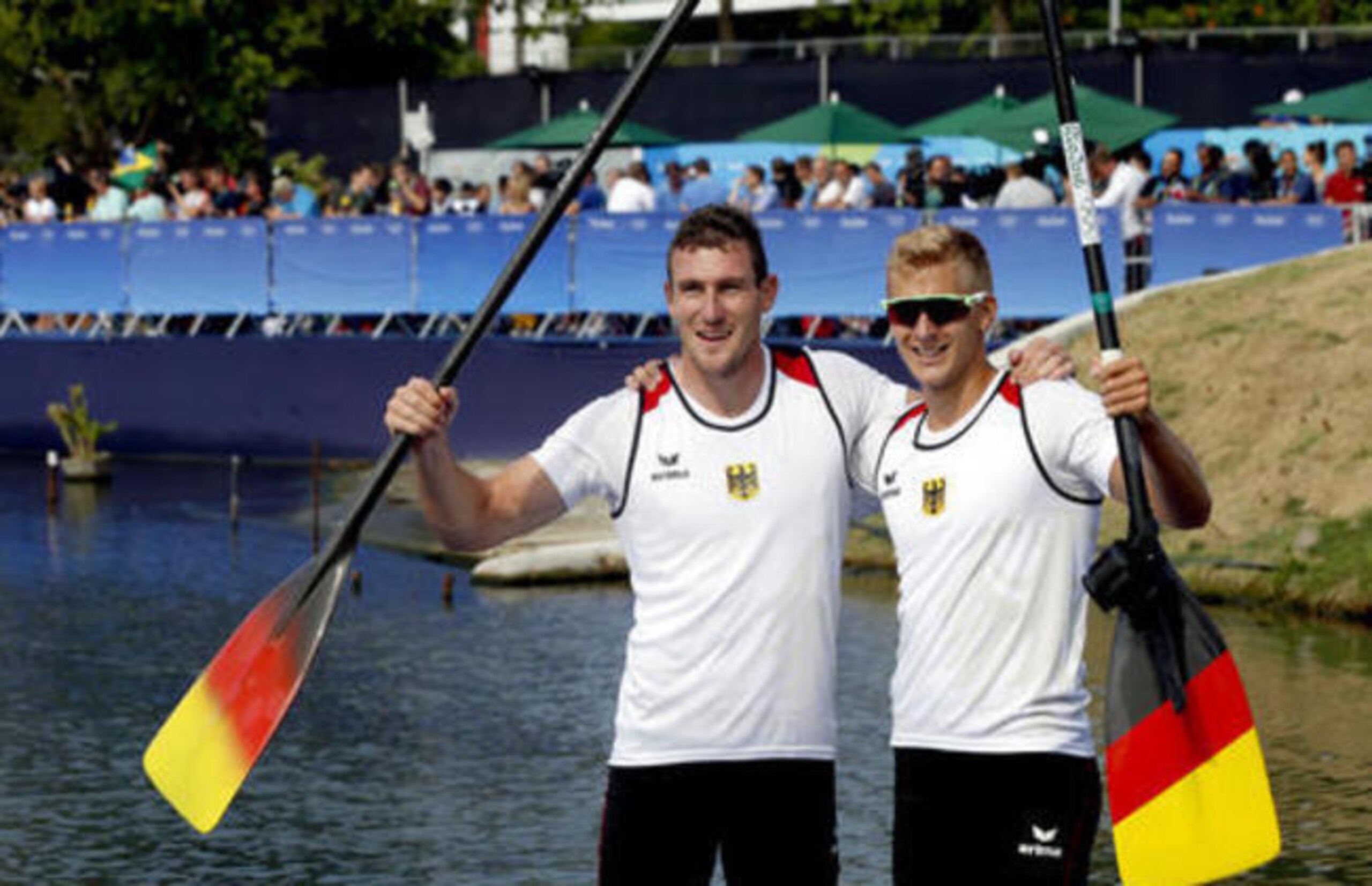
Canoe slalom didn't go so well for the Germans, as they were shut out of the medal podium for the first five days of canoeing action.
But with two golds, one silver and one bronze in Saturday's four canoe sprint events, Germany solidified its spot as the world's best paddling country.
Sebastian Brendel first got the taste for world gold at the 2012 Olympics, winning the men's canoe single 1,000-meter event. He went on to win five gold and three silver medals at the next three world championships before taking a pair of gold medals in Rio—one on Tuesday for the same event he won in 2012 and one Saturday with teammate Jan Vandrey in the men's canoe double 1,000 meters.
Elsewhere in the water, Germany took gold in the men's kayak four 1,000-meter race and silver in the women's kayak four 500-meter race. It also tied for bronze in the men's kayak single 200 meters when Ronald Rauhe and Spain's Saul Craviotto both crossed the finish line in 35.662 seconds.
It was the first tie for any medal in the history of Olympic canoe sprint.
Along with Brendel's gold from Tuesday, a silver won by Tina Dietze and Franziska Weber in Tuesday's women's kayak double 500 meters and a Thursday gold for Max Rendschmidt and Marcus Gross in the men's kayak double 1,000 meters, the Germans finished the Olympics with four gold, two silver and one bronze medal in the 12 canoe sprint events, slightly improving upon their three gold, one silver and two bronze medals in 2012.
Loser: Thomas Daley
6 of 9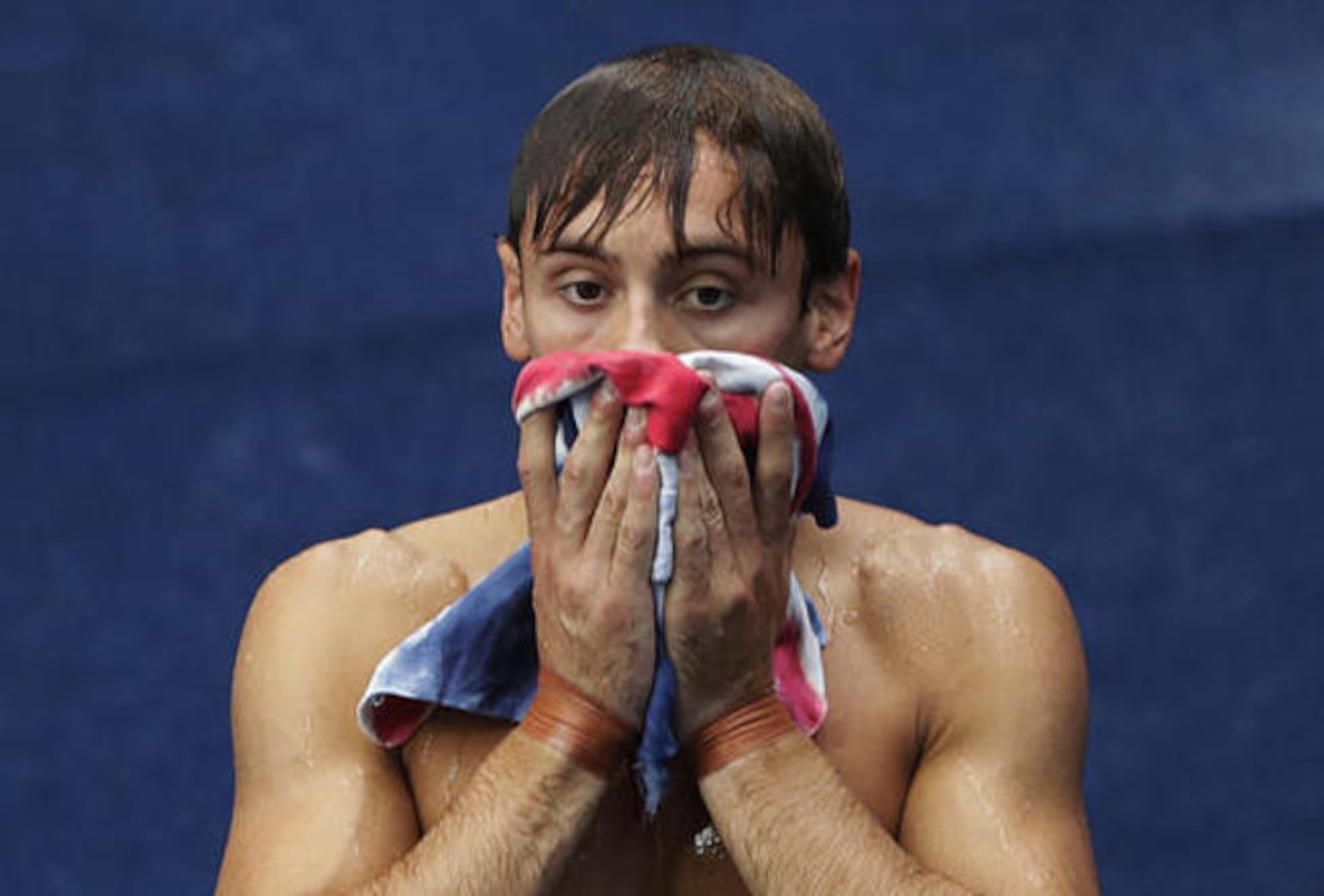
I hate referring to individual athletes as losers—particularly when those athletes have already won a medal at these Olympics and participate in a sport that I wouldn't even attempt on a dare—but Great Britain's Thomas Daley really took Reese Bobby's "If you ain't first, you're last" motto to heart in the men's 10-meter platform diving semifinals.
Daley was masterful in Friday's preliminary round. His 571.85 was the highest score of the 28 divers, as only he and the two Chinese divers (Qiu Bo at 564.75 and Chen Aisen at 545.35) eclipsed the 500-point threshold.
Daley had been unable to best Chen or USA's David Boudia in recent years, but it looked like he was finally going to break that seal.
Instead, he placed dead last among the 18 semifinalists with a score of 403.25, badly missing his entry on his second, third and sixth dives.
"I'm kind of in shock right now because I know that I could win that gold medal and I think right now I'm the only one that could challenge the Chinese for that gold medal," Daley told Brenda Goh of Reuters.
"I gave it everything that I had. I worked as hard as I possibly could in the build-up to this, harder than I've ever worked in my life, because I knew that these were going to be the Games where I could win."
Unfortunately, it just wasn't his morning. If he could have duplicated his performance from the preliminaries, he would have won silver. Chen's gold-winning score was 585.30, but no one else came close to matching what Daley did Friday.
Winner: Like Father Like Son
7 of 9
The USA had not won gold in the men's 1,500-meter run since Mel Sheppard did it in 1908. In fact, Leonel Manzano's silver medal four years ago in London was the first time an American even medaled in the men's 1,500 since 1968.
But it was also four years ago that USA's Matt Centrowitz was heartbroken, missing the medal stand by 0.04 seconds.
"I had tears coming around the victory lap," Centrowitz told NBC's Lewis Johnson after winning in Rio. "But different tears this year [than in London]. ... My goal was just to get on the podium. Didn't dream, ever dream of actually winning."
At the end of the interview, Centrowitz showed off the "like father like son" tattoo on his chest, an homage to his father, who competed in two Olympics and won four consecutive gold medals at the USA Outdoor Championships from 1979 to 1982.
But Centrowitz Sr. never actually won an Olympic medal, so Jr. may need to update his ink.
Loser: Running as a Contact Sport
8 of 9
One week ago, Ethiopia's Etenesh Diro was tangled up when two women behind her fell in a 3,000-meter steeplechase heat, ultimately losing a shoe, finishing the race without it and becoming a symbol of the heart and dedication that goes into the Olympics.
But hers was also just the first of several collisions to come in the track and field portion of the 2016 Games.
Great Britain's Mo Farah competed his double-double, winning gold in both the men's 5,000-meter and 10,000-meter runs for the second consecutive Olympics. But he was tripped up in the middle of the 10,000-meter race, falling to the ground before quickly getting back up and regaining his form.
Thursday featured a much more controversial collision in the second heat of the women's 4x100-meter relay. Allyson Felix dropped the baton when a Brazilian runner stepped into USA's lane and impeded Felix's progress. The U.S. women protested the result and were given the opportunity to re-run the race by themselves at the end of the night to qualify for the final, which they eventually won.
There were two more collisions on the track Saturday night.
The first came in the men's 1,500-meter run when Ayanleh Souleiman and Abdalaati Iguider tried to bounce to the outside to go around Ronald Kwemoi, who ended up getting his feet tangled and was sent tumbling to the ground. Considering Kwemoi had the fastest time in Thursday's semifinals, it was a big development that ultimately resulted in him coming in last place in the finals.
And in the men's 5,000-meter run, USA's Paul Kipkemoi Chelimo appeared to have won the silver medal until he, Mohammed Ahmed and Muktar Edris were disqualified for jostling for position with their hands in the final lap.
Chelimo found out about the DQ via NBC's Lewis Johnson and was nearly in hysterics, trying to explain that the other runners were impeding his attempt to move to the outside to stay with leader Farah. Chelimo filed a protest and was reinstated, so he ended up with the silver he originally thought he had. Still, it was bizarre that running ended up being as much of a contact sport as fencing.
Winner: Gwen Jorgensen
9 of 9
Four years is a long time to wait for redemption.
USA's Gwen Jorgensen was one of the top up-and-coming candidates for gold in the women's triathlon in London. She only started running professionally in 2010 but was named the USA Triathlon Rookie of the Year, according to TeamUSA.org. She followed that with a banner year in 2011, placing second at the World Championship Series in London to earn her spot on the 2012 Olympic team.
But a flat tire in the cycling leg of the race doomed her to a 38th-place finish in 2012.
In the buildup to Rio, she was even more incredible. She won 12 consecutive triathlons from 2014 to 2015 to be ranked the No. 1 triathlete in the world at the end of 2015.
This year, the bike didn't let her down, and she destroyed her competition, winning gold by a margin of 40 seconds. In 2012, Nicola Spirig finished less than one second ahead of Lisa Norden and just two seconds ahead of bronze medalist Erin Densham. Winning by 40 seconds is Katie Ledecky-level stuff.
In her post-race interviews with NBC's rotating staff of on-air personalities, Jorgensen kept saying there's no script for how one is supposed to celebrate winning Olympic gold. She erupted in tears of joy and disbelief and wrapped herself in the Rio banner before finding her husband for a much-needed, golden embrace.
.jpg?w=2560 "LA Premiere of \"Chad Powers\"")



.jpg?w=2560 "Landing Spots for Trade Candidates 📍")
.jpg?w=2560 "Ugly Jets Scoring Stat 😳")