Can Simone Biles Pull off Another Impossible Feat: Staying Great for 2020?
The sight of Simone Biles next to Gabby Douglas was a little unsettling. They were the best gymnasts in the world in consecutive Olympics, and yet Biles was nonstop smiles and power and flying high, higher, highest.
Douglas? She did not appear to want to be there.
So Biles was treated as a hero, while Douglas, the hero last time, left Rio in an aura of negativity and even some criticism.


What happened to Douglas? Does it mean anything about Biles' future?
Before the floor finals, which Biles won, she tweeted:
First Olympics? To say something like that suggests she's thinking about a second Olympics. You look at her strength and power, and you might think that another Olympics is a given. She's only 19 years old, but Douglas, at 20, offers proof of how uncertain Biles' immediate future might be.
As dominant as the U.S. women's gymnastics dynasty is, American female gymnasts age in dog years. From Carly Patterson to Nastia Liukin to Douglas to Biles—all-around gold-medal winners at the past four Olympics—this is something that maybe we ought to look into.
It might just be that in the American system, this is a sport for girls, not women. I don't think that's what it is, but it is striking that these young Americans keep winning gold as the best in the world and then don't show up at another Olympics ever again. Or, in Douglas' case, they show up in fumes.

Think about this: Douglas and Aly Raisman, who won the silver in all-around in Rio at age 22, are the only two American female gymnasts to return to the Olympics since 2000. Keep in mind that Martha Karolyi took over control of the U.S. system in 2001.
She is leaving the program now after developing, with her husband, Bela, the U.S. into a dominant women's gymnastics force. Few gymnasts from other countries would have been good enough to make the U.S. team this year.
In March, I talked with Douglas about what things were like after she won gold in London in 2012. What was it like to move forward after you have been in a grind for years and then reached all of your goals?
"After the Olympics, it's like, 'We're doooooone,'" she said. "'My gosh, we get a break. We get a rest.' Especially when you do so well and it's such a hard, so stressful, so difficult competition. It's like, 'Yes, I can take a break now.'"
So, did it take six months to recharge batteries and be good to go again?
"More like two years later," Douglas said. "There were so many opportunities that I got to do. My mind...I definitely needed a break. And I'm so glad I took those two years off because I needed it. You're training for, like, 12 years and then, you know."
Douglas found that in those two years off, she grew three inches, from 4'11" to 5'2". She thought, "Oh no, this is going to mess everything up."
Any tiny change in balance and equilibrium can throw everything off when you're doing flips to land on a four-inch beam. Not to mention the multiskilled passes on floor. The timing has to be perfect.
Well, Douglas is still one of the best gymnasts in the world, but she isn't one of the best five in the U.S., even though she was given a spot on the U.S. team. She finished seventh in the Olympic trials. Luckily for her, rules allowed Karolyi to ignore that result and put Douglas on the team anyway.
In the Olympics, Douglas was granted one of the three spots on the team to compete for all-around, even though 16-year-old Laurie Hernandez, who finished second in trials, is now better.
It's hard to describe what Douglas was going through. Let's call it superhero fatigue. She needed a mental rest. Her body and balance changed. She got endorsement deals, dealt with a movie about her, an autobiography, a reality show. All that while dealing with the complexities involved in going from a 16-year-old girl to a 20-year-old woman.
Don't blame her for looking the way she did in Rio. By the time she got there, she was totally burned out.
And it showed.
By contrast, Raisman came back better than she was in 2012. In London, she had lost out on the all-around bronze medal on a tiebreaker. That kept her motivated to come back.
"It was traumatizing," Raisman told me in the spring. "It was just very frustrating. I'm sure that's part of the reason I'm still in gymnastics now."
So now Biles is unbeatable, but we've seen how quickly that can change. Injuries from the years of pounding, commercial opportunities and just the need to take a break can change everything while a gymnast deals with the physical and emotional baggage of maturing to adulthood.
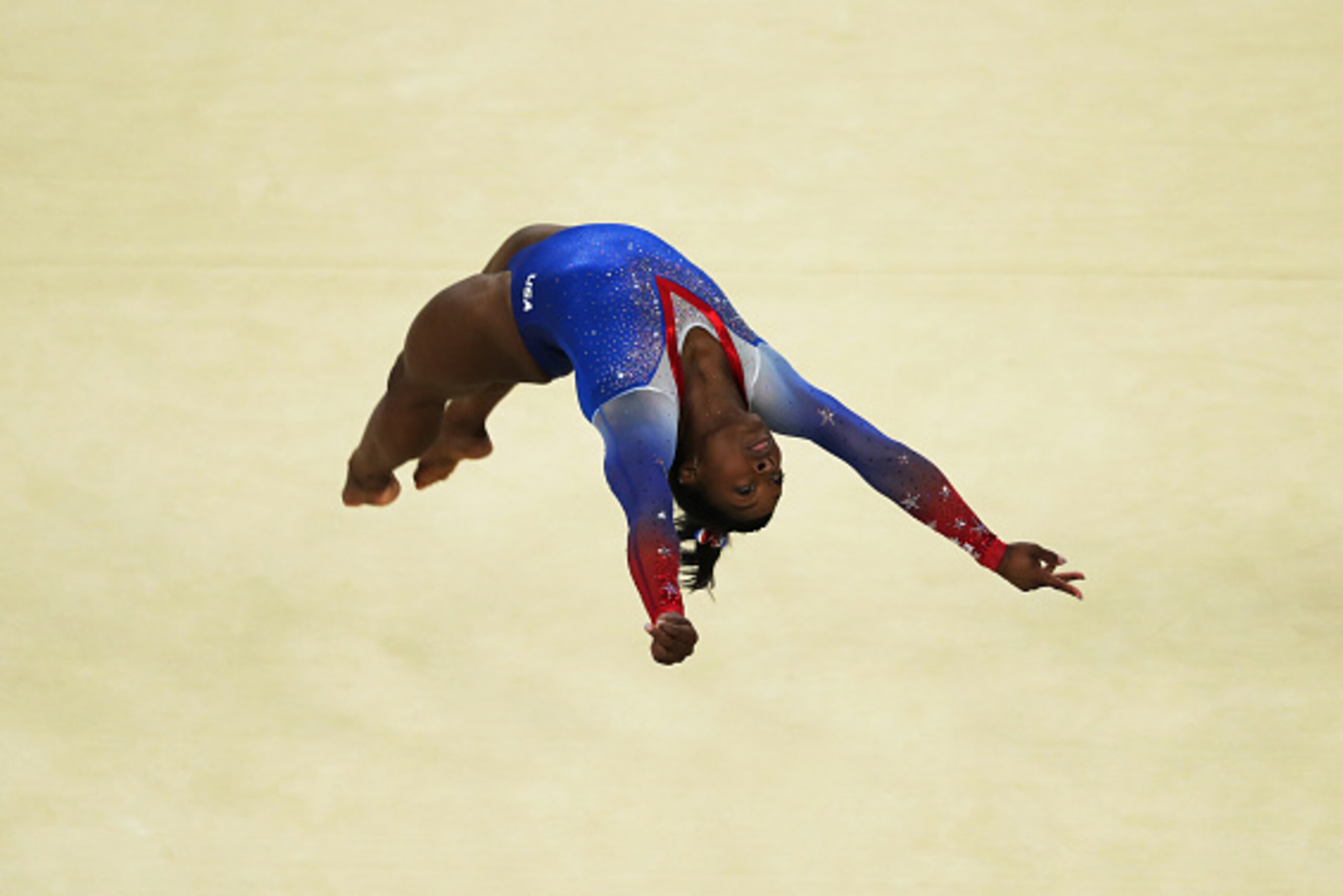
It's hard to imagine Biles coming back looking like Douglas. Or Liukin, who faceplanted on bars in the Olympic trials four years after winning gold in Beijing.
It's hard to imagine Biles losing that edge. But maybe in the U.S. system, the constant pounding and intense focus over years is too much for teenagers to take into adulthood.
Still, while Douglas was taking a needed break, Biles was coming and then surpassing her. That's the cycle we're on. While kids are still kids, they will do what they're told, so they keep improving relentlessly while past champions try to refresh.
What will Biles do now? She will have all the opportunities Douglas had. She's already said she can use a break.
But a few things are different. For one, Biles is already 19. While that might seem like a negative, maybe it isn't. At 19, Biles is already a woman, not a girl. She won't have quite the same adjustments moving forward as Patterson, Liukin and Douglas, who were all younger.
Meanwhile, the sport keeps changing, demanding more and more power. The good news for Biles is that people gain strength between the ages of 19 and 23. I even wonder what would happen now if Douglas tried to come back in 2020. She'll also be getting stronger, and more mature, on the other side of the biggest difficulties, physical and, one hopes, emotional.
Raisman too told NBC that she's considering coming back.
This might be about getting over the hump. So far, Biles has taken on everything so easily and beaten the world at her sport.
Now for the hard part.
Greg Couch covers the Olympics for Bleacher Report. Follow him on Twitter @gregcouch.

.jpg?w=2560 "LA Premiere of \"Chad Powers\"")