

Rio Report: Boxing Threatens the Integrity of the Olympic Games Once Again
OLYMPIC PARK, RIO DE JANEIRO — Despite containing no sport, the Olympic opening ceremony is always a highlight of any Games.
At the Maracana, we were treated to a low-frills depiction of the history of Brazil, a supermodel walking in a straight line, 110 minutes worth of athletes parading to a samba beat and a worthy environmental message.
Towards the end of the festivities, we saw a tradition that is central to the integrity of the Olympiad. Just before the speech of International Olympic Committee president Thomas Bach, the Olympic oaths were given. Brazilian sailor Robert Scheidt first spoke on behalf of the athletes:


"In the name of all the competitors, I promise that we shall take part in these Olympic Games, respecting and abiding by the rules which govern them, committing ourselves to a sport without doping and without drugs, in the true spirit of sportsmanship, for the glory of sport and the honor of our teams.
"
Martinho Nobre then spoke on behalf of all those officiating in Rio: "In the name of all the judges and officials, I promise that we shall officiate in these Olympic Games with complete impartiality, respecting and abiding by the rules which govern them in the true spirit of sportsmanship."
For the Olympic Games to be virtuous, it it vital that both athletes and officials abide by these oaths.
Sadly, it is no secret that some athletes have not upheld their side of the bargain: Doping has become a controversial theme in several Olympic disciplines, while the bad sportsmanship of someone such as Hope Solo certainly goes against the principles of the Games.
It is even more unfortunate that several judges and officials appear to have betrayed the oath taken upon their behalf.
Great Britain marathon swimmer Jack Burnell described the refereeing in his event as an "absolute joke," while the USA basketball team have been frustrated with the officiating in their competition.
While these complaints may be nothing more than subjective gripes, the same almost certainly can't be said with the looming spectre of corruption that once again hangs over Olympic boxing.
Several weeks before the start of the Games, the Guardian's Owen Gibson revealed that senior figures within boxing had warned that many bouts could be fixed. One source, he reported, was in "no doubt" that some of the International Boxing Association (AIBA) judges "will be corrupted."
It appears as though that senior official's fears have come to pass.
On Tuesday, Irish boxer Michael Conlan suffered a highly surprising 3-0 defeat to Russian Vladimir Nikitin in the quarter-finals of the bantamweight competition. The reigning world champion and 2012 Olympic bronze medalist appeared shocked and disgusted as three scores of 29-28 were announced in his opponent's favour, and he proceeded to give his thoughts in a foul-mouthed tirade on Irish television (warning: NSFW language).
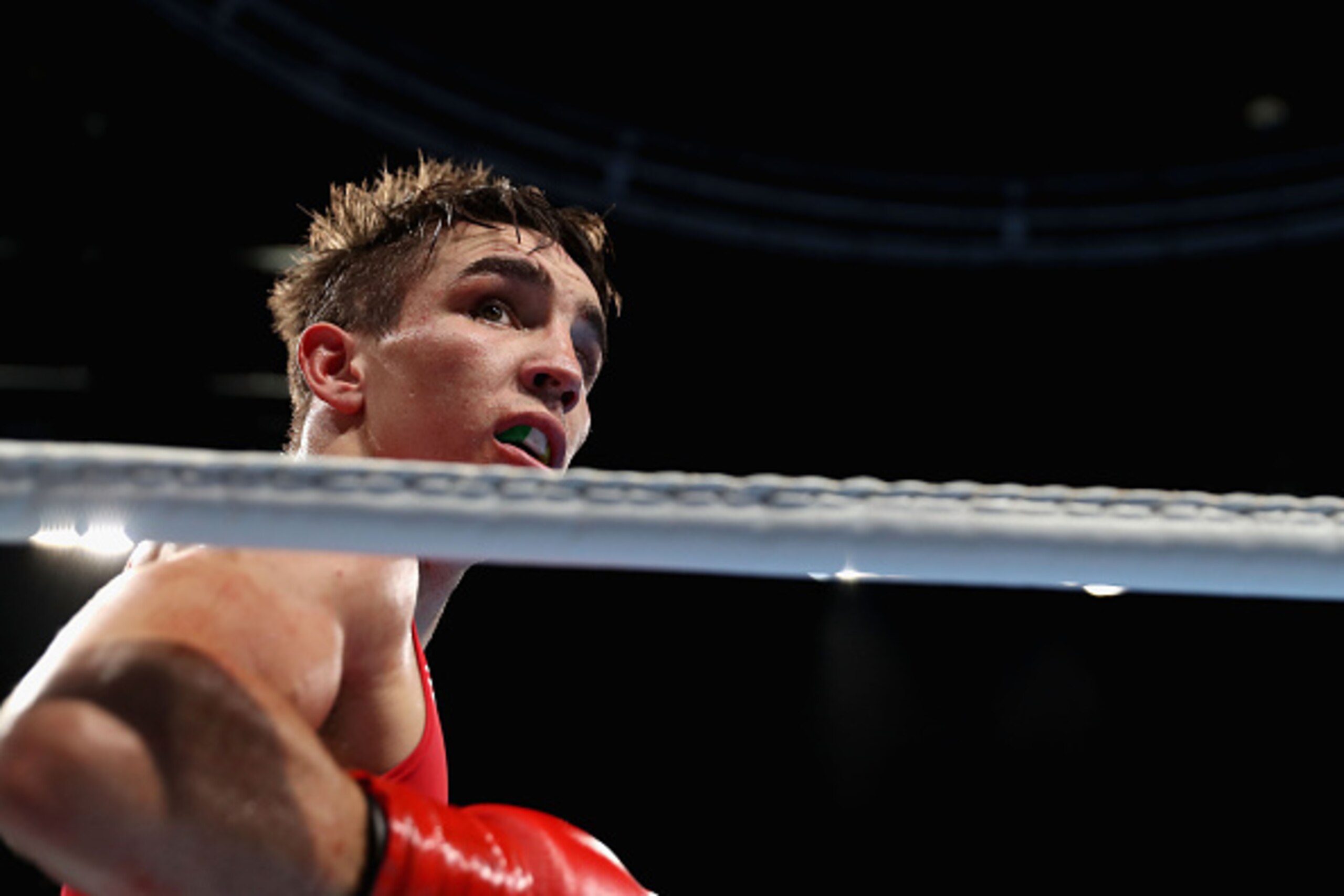
The Irishman did not mince his words: "They're known for being cheats. ... Amateur boxing stinks from the core right to the top."
Conlan went as far as to tweet at Russian president Vladimir Putin, suggesting he had paid the officials to award the fight to his opponent:
This controversial decision was by no means an isolated incident.
An hour after the Conlan debacle, American light welterweight boxer Gary Antuanne Russell was adjudged to have lost his quarter-final bout to Uzbekistan's Fazliddin Gaibnazarov despite appearing to dominate proceedings.
"He got robbed, this is f----d up," shouted his father, Gary Russell Sr., from ringside, according to the Guardian. Professional fighter Floyd Mayweather Jr was at the Riocentro venue as a spectator, later telling journalists: "Gary Russell was robbed – clearly, clearly."
And on Monday, Kazakhstan's Vassiliy Levit faced Russia's Evgeny Tishchenko in the gold-medal match of the heavyweight competition. All three judges scored the fight unanimously in Tishchenko's favour, prompting a chorus of boos from the venue.
This would not be the first time Russians have been booed at these Games—fans have shown their disappointment at the decision to let so many Russian athletes compete in spite of an alleged system of "state-sponsored doping"—but Tishchenko's victory was marred as the majority of spectators felt the match should have been awarded in Levit's favour.
It has been a shameful few days for AIBA and the integrity of amateur boxing, with some, including Team USA head coach Billy Walsh, citing this as the worst example of corrupt officiating since the 1988 Games in Seoul, South Korea, per the Guardian's Gibson, Kevin Mitchell and Les Carpenter.
In 1988, Roy Jones Jr famously lost the gold-medal fight to South Korea's Park Si-Hun. Jones dominated the match—landing 86 punches compared to Park's 32—and appeared to be a shoe-in for gold. However, the judges somehow ruled in Park's favour, making for an uneasy medal ceremony:
It was later discovered that a systematic process of bribery was in place at AIBA, and an IOC investigation found Korean organisers had "wined and dined" the offending judges. Those judges were eventually suspended.
If we are to give a quantum of credit to AIBA today, the process of reprimanding judges appears to have been expedited. The BBC reported that the judges whose "decisions were not at the level expected" have been dropped from the Games, with AIBA noting there have only been a handful of issues in the 239 bouts fought in Rio.
This punishment, however, is merely a quick dab of the magic sponge on the gaping wound that has manifested itself in amateur boxing.
The senior official who spoke to the Guardian before the Games suggests that the only way to rid the sport—and by extension, the Olympics—of endemic corruption is to raze AIBA to the ground and start again: "President [CK] Wu needs to resign, as well as the executive director and the senior staff. Every RJ [referee and judge] and ITO [international technical official] needs to be suspended. That's the only way it's going to change."
At a time when the IOC's upstanding reputation is taking a beating, drastic action clearly must be taken in the sport of boxing. Otherwise, the Olympic oath is as meaningless as the action in the ring.
.jpg?w=2560 "LA Premiere of \"Chad Powers\"")


.jpg?w=2560 "Landing Spots for Trade Candidates 📍")
.jpg?w=2560 "Ugly Jets Scoring Stat 😳")