Revised Expectations for Ferrari Going into 2nd Half of 2016 Formula 1 Season
After kissing the kerb of Turn 17 for the 66th time in the German Grand Prix, Sebastian Vettel lifted his right foot from the floor and coasted toward the Hockenheim finish line.
As a lapped Renault disappeared into the distance, the four-time world champion took Formula One's tiresome debate surrounding track limits to a whole new level by ignoring the apex of Turn 1 and taking to the run-off area to pick up fragments of discarded rubber.
At the end of another long, hard and forgettable race, Vettel's Prancing Horse was rolling around the tyre marbles with all the giddiness of a pig in you-know-what when something strange happened.


With the now-familiar grumble of a Ferrari V6 turbo engine at full power, the Haas VF-16 of Romain Grosjean flashed by and along the short straight toward Turn 2.
Then, barely a second later, another car—this time Carlos Sainz Jr.'s Toro Rosso—appeared from behind Vettel's right shoulder, retook the racing line and continued his pursuit of Grosjean and 13th place.
It was at that point, as Vettel rejoined the track and checked his mirrors for any more fast-approaching boy racers, that the realisation finally hit him: There was still one more lap to go.
When footage of that incident, which according to the official F1 website cost him "around 14 seconds" but thankfully no positions, emerged four days after the race—all 67 laps of it—it was welcomed as an instant-classic blunder and used as evidence to prove racing drivers are indeed human after all.
But behind all the light-hearted comments and suggestions that Vettel simply couldn't wait to start his summer holidays and spend some much-needed time out of the Scuderia pressure cooker, there was a quite alarming truth.

Even a driver as professional, diligent and attentive as Vettel is not immune to the madness that has infected Ferrari in 2016.
Such silly mistakes have defined Ferrari's season, a year in which they have occasionally had a car capable of matching and beating Mercedes but have all too often carried the aura of a team with no idea what to do with it.
Per F1 journalist Peter Windsor, their odd obsession with being on the softest available tyres at every possible opportunity saw them throw away potential victories in Australia and Canada, with reliability problems, on-track errors and overambitious strategic calls costing them further points.
As a result, at the halfway stage of a season they were expected to end their eight-year wait for a world title, Ferrari remain without a victory.
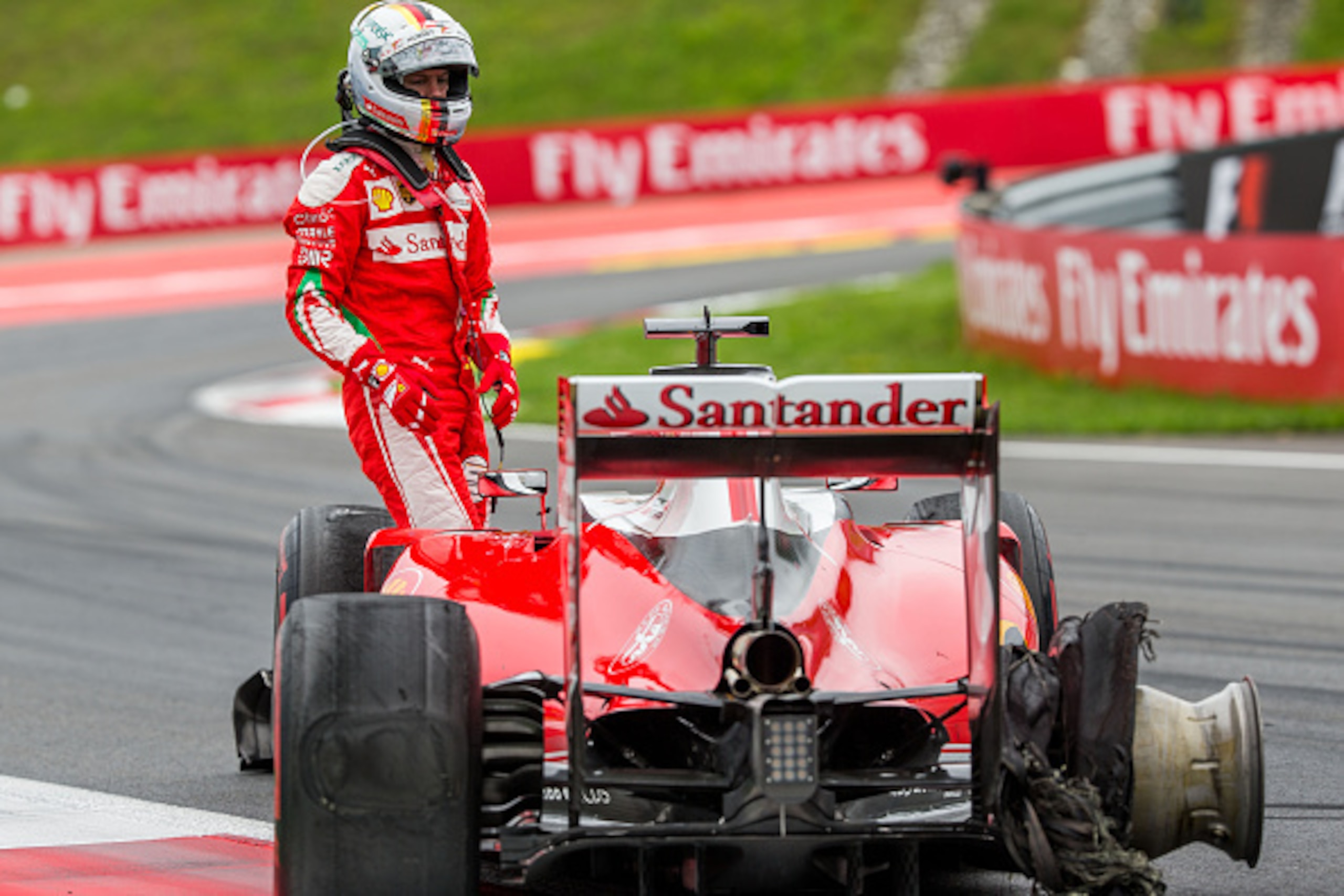
They are third in the constructors' standings, 173 points behind Mercedes, and Vettel is 97 adrift of the championship leader, already reduced to a distant onlooker in yet another two-horse race between Lewis Hamilton and Nico Rosberg.
And despite Vettel's vow, per Autosport (h/t Eurosport), that Ferrari—having "understood a lot" about the "strengths and weaknesses" of the SF16-H car over the last few grands prix—should "be stronger" in the second half of the year, their predicament could become worse before it gets better.
With major regulation changes on the horizon, it is probable that Mercedes—like Vettel and Red Bull at the end of the last rules cycle in 2013—will be allowed to win all of the final nine races of 2016 as those behind halt the development of their current cars with the aim of making a fresh start in 2017.
Team principal Maurizio Arrivabene's admission to Motorsport.com's Jonathan Noble that Ferrari have added no downforce to the SF16-H since May suggests the team have been prioritising next year's program for some time.
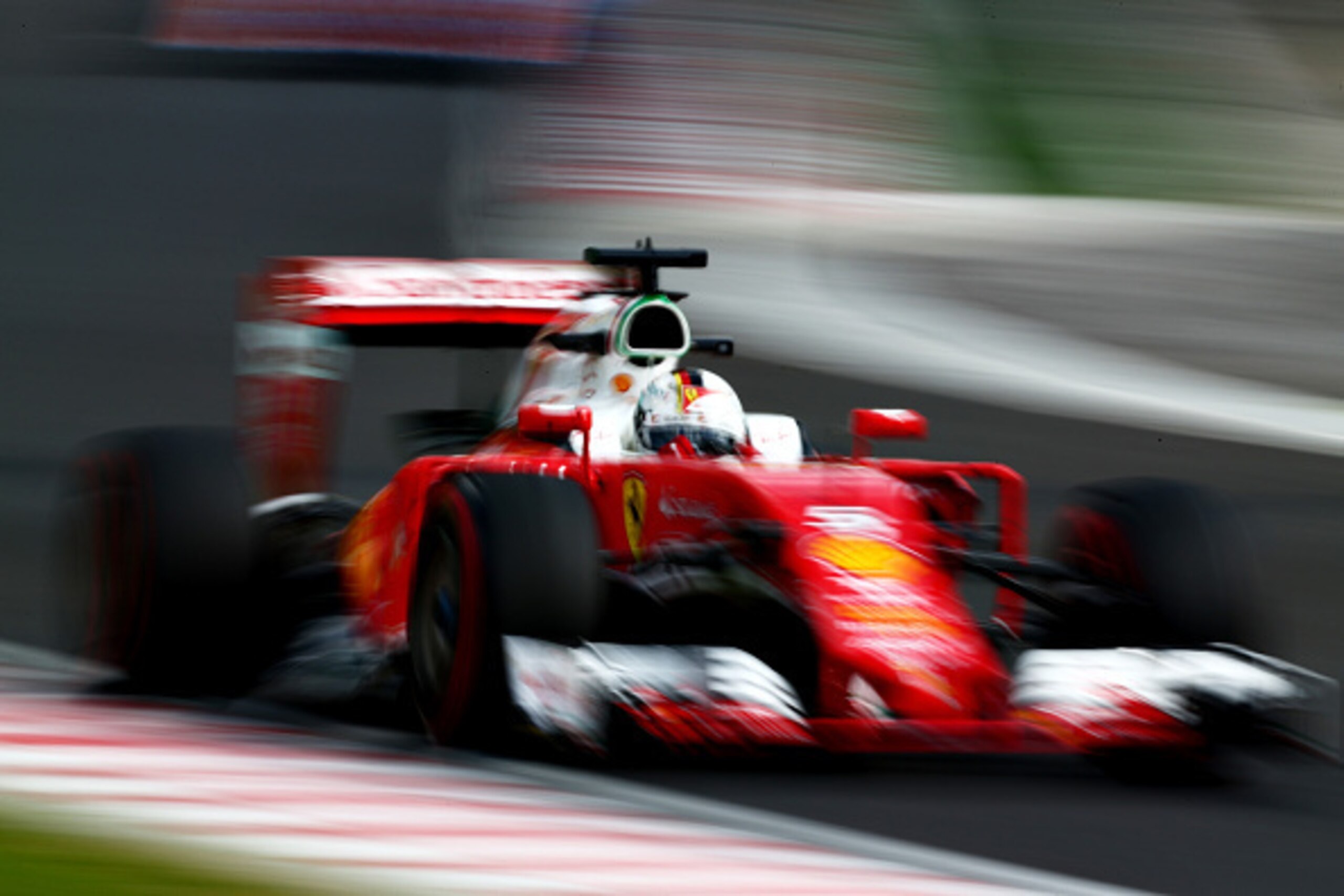
Mercedes boss Toto Wolff recently revealed his team think that is the case, explaining how he believes Ferrari "switched off" the development of their 2016 car "very early," per Autosport (h/t Eurosport).
Ferrari's focus on exploiting the new regulations means the rest of 2016 is, to some extent, meaningless.
But while the results may be inconsequential—especially now that the main prize is out of their reach—their performances between now and 2017 are crucial in terms of rediscovering the confidence that took them so far a year ago.
Given the amount of errors made by Ferrari in the first 12 grands prix, the second half of this season should be treated as an interim period, an opportunity to compete without the pressures associated with fighting a losing title battle and to finally eradicate those careless, sloppy slip-ups.
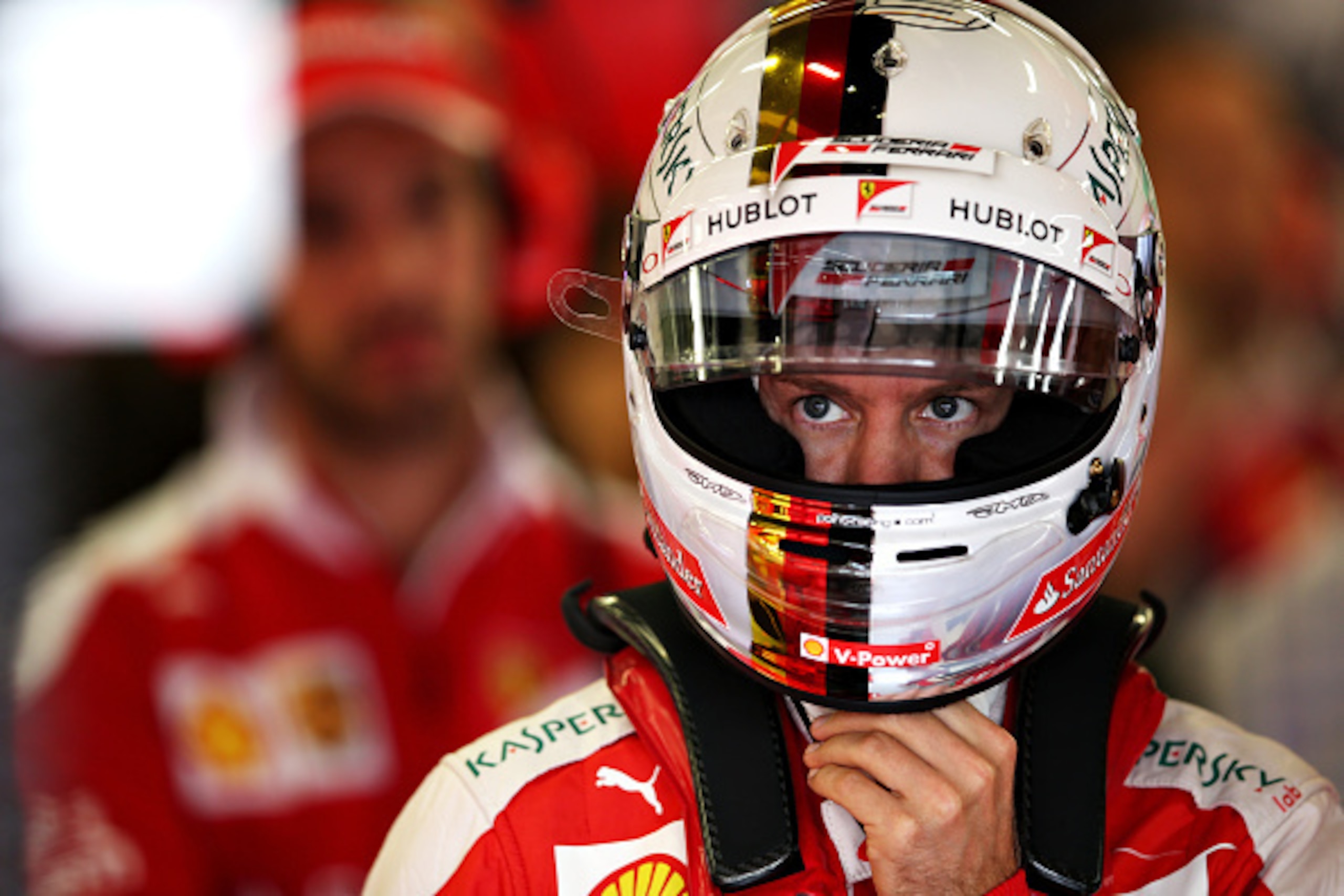
For the pit wall, these final nine races should be all about making smart, well-considered strategy decisions and avoiding more Melbourne-esque mistakes.
For the mechanics, they should be about resolving any reliability issues in a calm, efficient manner and preventing a repeat of the Austrian and British GP weekends, when Vettel suffered three gearbox failures and two grid-place penalties in the space of seven days.
And for Vettel and team-mate Kimi Raikkonen, they should be about re-establishing their rhythm behind the wheel and cutting out the misjudgements, miscalculations and scruffy pieces of driving that have only magnified their team's ineptitude.
And if all that still isn't enough to topple Mercedes and a resurgent Red Bull, so what?
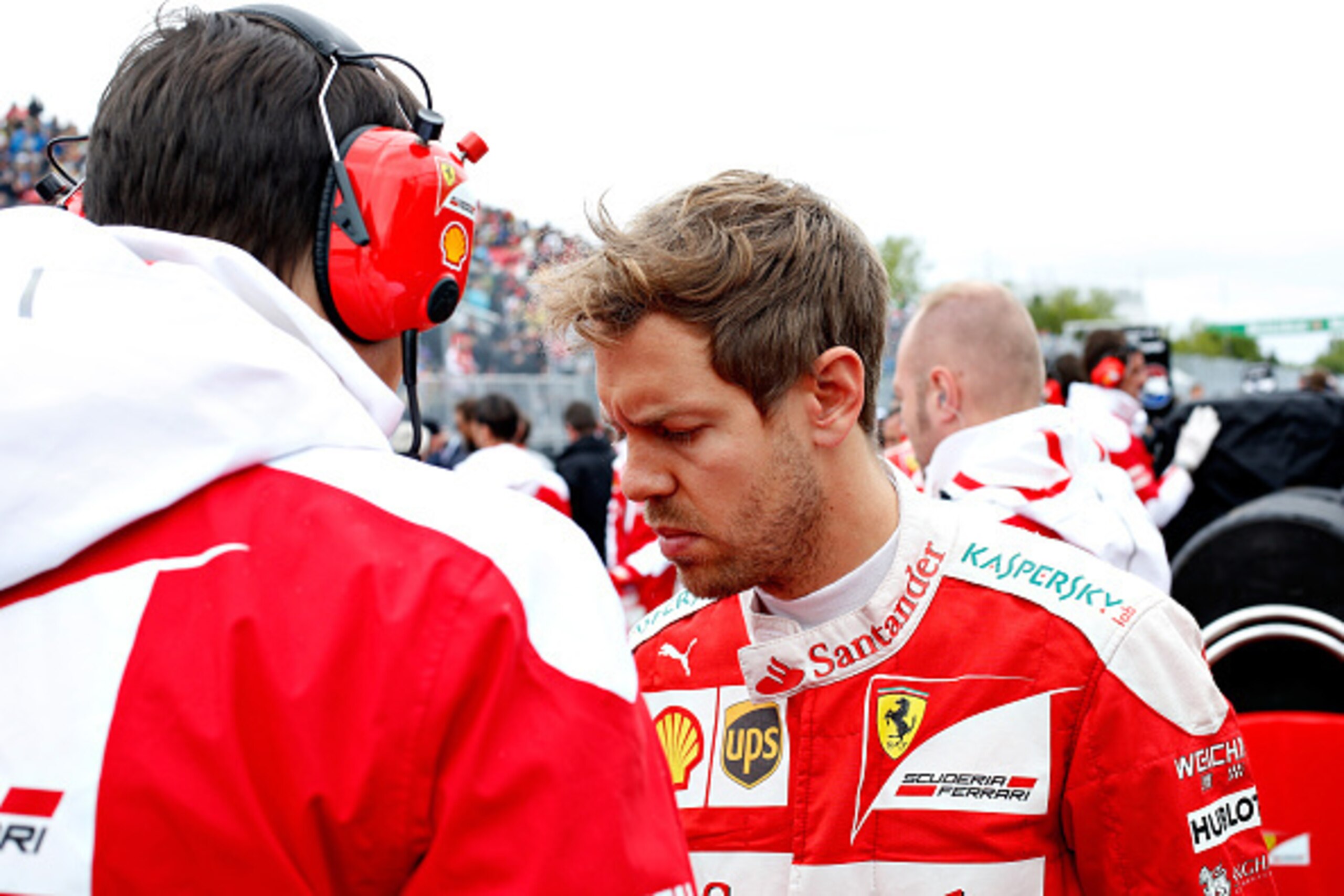
All that matters now is that when Ferrari leave the circuit on the Sunday evening of each race, they do so in the knowledge they extracted everything possible from themselves and the machinery at their disposal—something that is still yet to happen in 2016.
Preventing a second winless season in three years and pipping Red Bull to the consolation prize of second in the championship would be a bonus.

.jpg?w=2560 "LA Premiere of \"Chad Powers\"")