Return from Exile: Wrestler Daniel Dennis Faces the World After Desert Retreat
RIO DE JANEIRO — Daniel Dennis will never forget that long, lonely drive across the United States, pulling out of Iowa City, Iowa, in the spring of 2013 and cruising onto an endless ribbon of road. Only now can he see that those first few miles in the dusty Midwestern countryside were the beginning of his Olympic odyssey.
The two-time college All-American wrestler was in the $500 pickup he had just purchased off Craigslist with his life savings. He rolled down the window and—for minutes, hours, days—listened to nothing but the wind, as if it spoke secrets. Dennis was on his way out west to Utah, where he planned to live out of his rattletrap 1986 Ford, climb rocks during the day and clear his head at night.


"I didn’t even turn the radio on when I drove," said Dennis, now 29. "When it’s quiet, I can think. And I had a lot to think about it."
At the University of Iowa, Dennis wrestled at 133 pounds. In the 2010 NCAA championship bout, he faced Minnesota’s Jayson Ness. With 20 seconds left, Dennis held a 4-1 lead. Dennis tried to stall by retreating, but Ness caught him and threw him on his back with seven seconds left. Dennis lost, 6-4.
"After the match, Daniel was crawling on his hands and knees and shrieking he was in so much emotional pain," said Tom Brands, his coach at Iowa who is also an assistant coach on the Olympic team. "Those shrieks came from deep in his soul. He was devastated."
"Losing that match was a life-changing moment for me," Dennis said. "It was hell. I felt like my world had crumbled."
As he spoke, Dennis was standing just outside the Olympic Village, less than half a mile from where he will begin competition in the 57-kilogram (125.5 lbs) class on Friday—his long-awaited moment of reckoning on the mat.
He then closed his eyes and replayed it all again from the grainy film of his memory, the story of how he became an Olympian. It began on that road out of Iowa City.
In the spring of 2013, he reached Indian Creek in Utah, a hot spot for sandstone crack climbing. Dennis' body was broken down from wrestling—he had neck and arm injuries—but he was still strong enough to rock climb.
In the mornings, he’d meet up with friends, hike to the base of a mountain and then scale the faces of rocks for hours. In the evenings, he’d cook his meals outside his truck, rinse off in a solar-powered shower and then read as he stretched out his 5'4" frame in the cab of his truck.
Other nights, he’d meet strangers and together, under a big sky of twinkling stars, they’d share stories from their life and times.
"You’d meet up with a group of people and you’d sit around the campfire until 3 a.m. with a guitar and just drinking beer," Dennis said. "Just living life."
He moved to different campsites throughout the West, often going days without cell service. Sometimes he’d have as many as 100 text messages and voicemails when he returned to civilization, many of them from coaches and former teammates urging Dennis to come back to Iowa and train for the Olympics.
He ignored their pleas. He earned money coaching at different wrestling camps, working at a gas station and working as a roofer. After five months of living out of his truck, he bought a 26-foot-long fifth-wheel trailer for $2,500.
Alone at night, with no electricity and no internet in his trailer, he’d replay the national championship match from 2010. He never experienced a white-light epiphany, but in his own way, he grieved the loss. For two years, as he lived in that trailer in California, time healed.
"We don’t reflect much in our society, and I needed to reflect," Dennis said. "What brought me back to wrestling was a lot of friends telling me I should come back. I was being pestered almost nonstop, but it was good to know I had so much support. They were on my side."
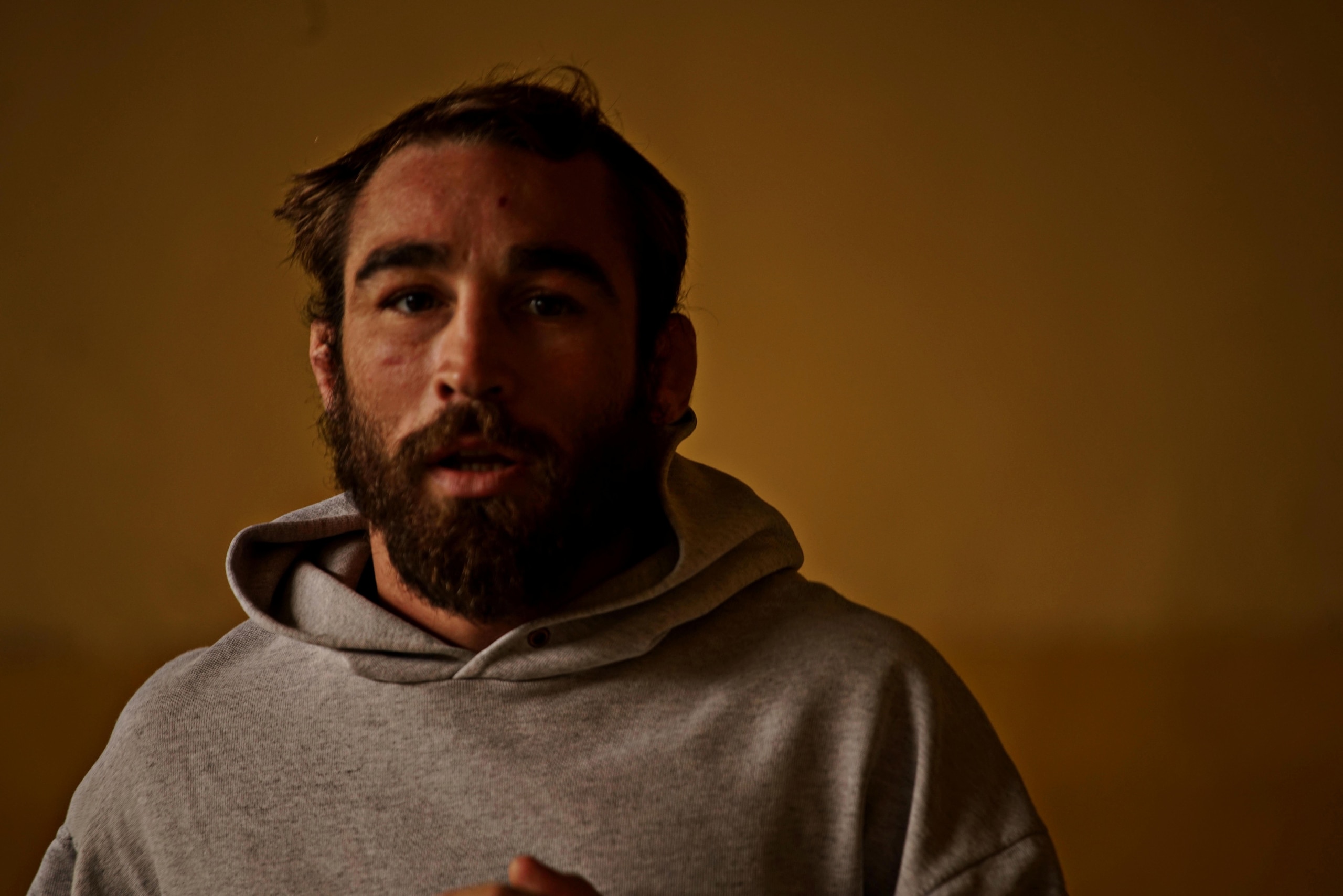
His mind and body in order, Dennis returned to Iowa City in April 2015, a substantial beard cascading from his face. He began practicing with his old coach at Iowa. Within weeks, the wrestling magic was back. He qualified for the Olympics by defeating 2014 NCAA champion Tony Ramos in the wrestling trials in April 2016—one year to the month after his return from the wilderness.
"Daniel is a better wrestler now than he was before he went out west," said Brands, his personal coach. "There is peace in his mind. He won’t ever panic, and he’s capable of scoring against the best in the world. He’s dangerous here in Rio. Daniel has now made pain part of the journey. He laughs at pain and believes he can take any amount of pain."
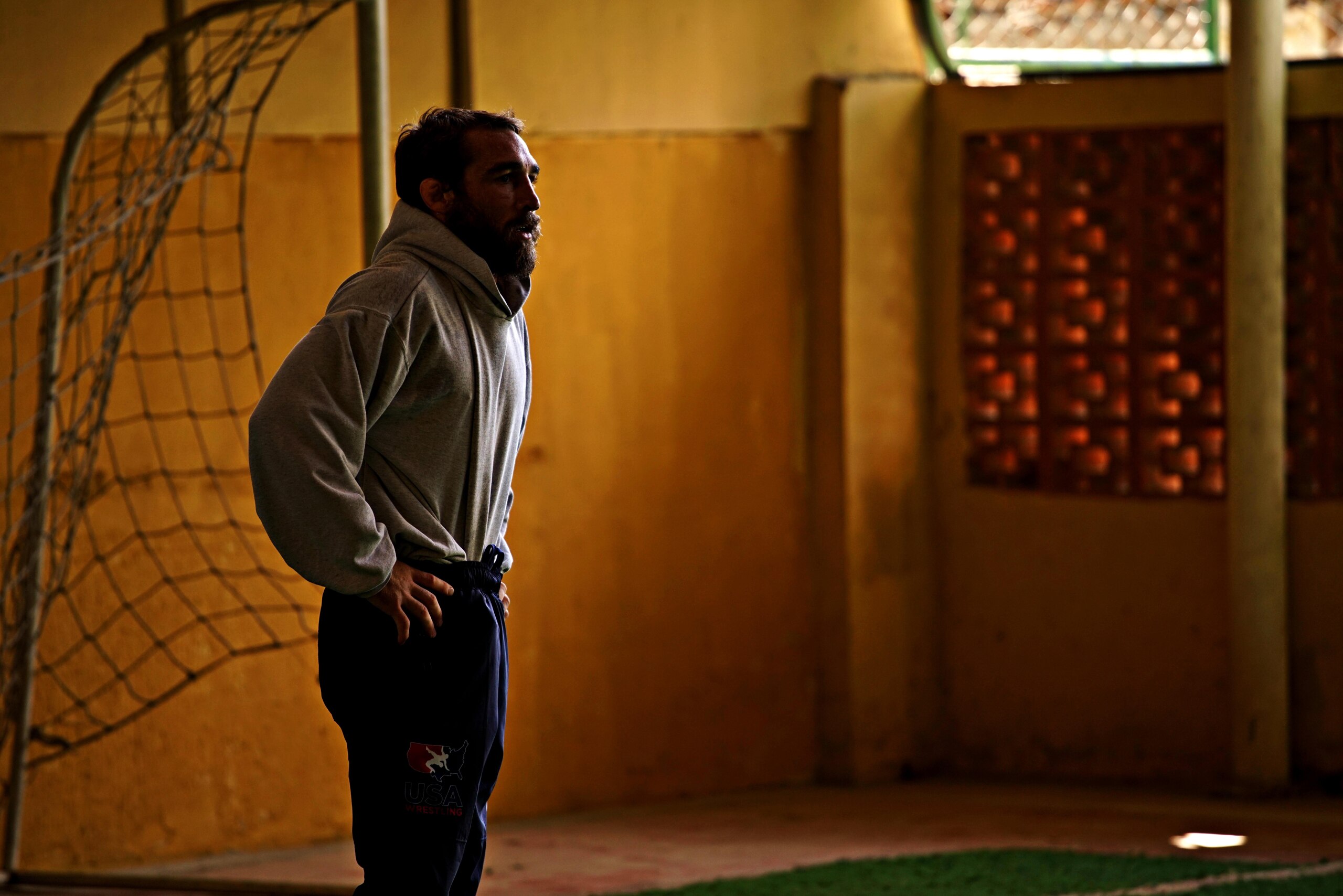
Brands points into the distance at Dennis, who is working out at the Team USA wrestling practice facility in a Rio outpost. Dennis is pushing himself hard. He quickly moves from lifting free weights to running on a treadmill to doing pull-ups on a rusted soccer goal. His first Olympic match is eight days away, but there already is a wild-eyed intensity flashing in his eyes.
"Daniel has this look of pure fire in his eyes," said J'den Cox, a U.S. Olympic team member who wrestles at 86 kilograms (189 lbs). "He goes hard after his opponent, like he will keep up a pace that others choose not to. He’s out there on the mat to show you what kind of man he is."
Dennis kept pushing himself at the practice facility, running, jumping, lifting himself up on the soccer goal—over and over. He was doused in sweat. He was breathing hard. His eyes were afire.
The man who recently found peace looked ready for violence.

.jpg?w=2560 "LA Premiere of \"Chad Powers\"")