

Rio Report: Poor Organisation, Cost and Olympic Apathy to Blame for Empty Seats
OLYMPIC PARK, RIO DE JANEIRO — It’s 5:20 p.m. in Rio, and Russia’s Tuiana Dashidorzhieva is taking on China’s Hui Cao in women’s archery. It’s being staged at the Sambodromo, the world-famous parade area that is home to Rio’s Carnival. During the Carnival celebrations—or while hosting Rolling Stones and Coldplay concerts—its steep grandstands and surrounding areas hold 90,000 people.
On this slightly drizzly evening, however, there are barely any spectators in the vacuous valley of seating.
Granted, women’s archery may not be a major draw for Olympic spectators, but the view of empty seats has been a common one across the games. A tennis match featuring Rafa Nadal was played to a backdrop of plastic chairs. I have attended diving sessions where there appeared to be as many competitors as fans. Equestrian, rugby and several events held at the Deodoro complex—some 13 miles from the main Olympic Park—have also suffered from a lack of crowd support.


AP journalist Daniella Matar, who has been covering equestrian disciplines, admits that she has been surprised by the lack of people observing the equine action. “Maybe they grossly overestimated local interest,” she tells me. “But curiously, a lot of people who tried to buy equestrian tickets from Europe were told that the events were sold out.”
Beach Volleyball, set against a stunning backdrop on Copacabana Beach, was expected to be a huge draw. But even the glamorous action on the sand has suffered from sparse attendances, with Victoria Craw of news.com.au claiming the stands to be just 20 per cent full for some matches.
"The Olympics no one saw. Beach volleyball and NBA superstars play to thousands of empty seats at #Rio2016. pic.twitter.com/DvvVwA0brH
— Mike Sington (@MikeSington) August 7, 2016"
Even the Opening Ceremony, one of the most hotly anticipated tickets of any Olympiad, was pockmarked by gaps in the stands of the Maracana:
According to Karolos Grohmann of Reuters, Olympic organisers are claiming to have sold five million tickets. This accounts for 84 per cent of all available tickets.
This represents a significantly lower demand than the London 2012 Games—even though the tickets are around half the price.
Attendance has become such an issue that Usain Bolt was commissioned to give an impassioned plea to Brazilians to start filling the stands:
Brazilians make up 75 per cent of the fans in Rio and are known to be “late buyers.” Evidently, there are not enough of those late buyers: A cursory glance at the Olympic ticketing site shows myriad options. At the time of writing on a Thursday, there are 36 events available for Friday, including the first day of athletics action, round two of the men’s golf and medalling sessions for rowing, gymnastics and weightlifting.
It is peculiar that the greatest sporting event on earth should garner such little interest from the people of Rio de Janeiro—but there are many reasons for the empty stands.
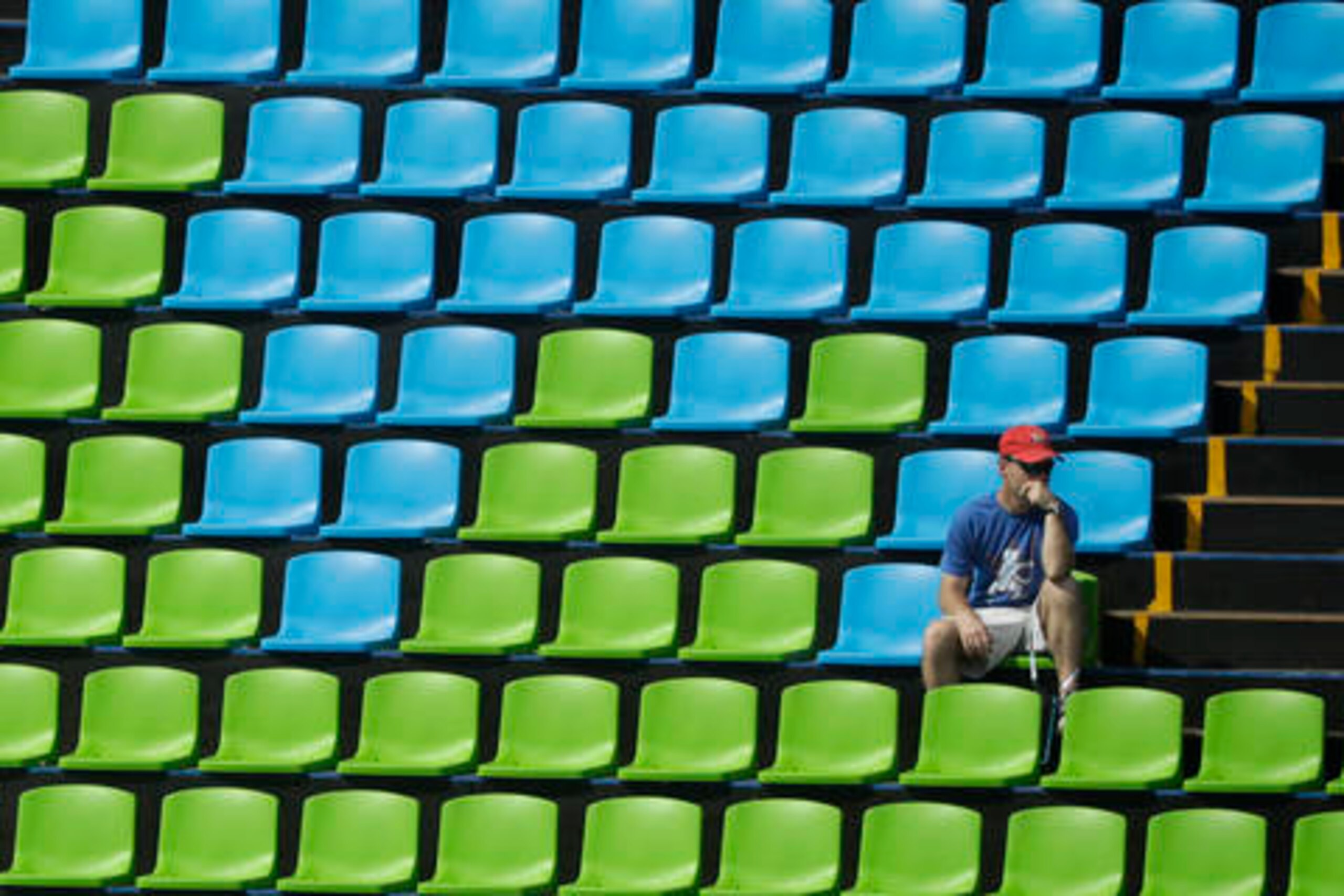
Firstly, being at the Olympic Park, it is easy to see the organisational issues that have denied paying ticket holders from attending events.
Heavy traffic congestion means it can often take more than an hour to travel the three miles from my hotel to the Olympic Park. Every morning outside the Park, long lines sprawl from the entrance as fans pass through airport-style security scanners.
Several ticket holders have complained of missing their events thanks to these lines, which appear to stem from a combination of poor organisation and, at some points, strikes held by the police who conduct the security checks. The queues shorten with each passing day, but they were said to be over a kilometre long to begin with.
And it must be noted that the sold-out Opening Ceremony had so many empty seats because of security issues. It took me an hour to enter the Maracana, with many ticket holders waiting for two hours to take their seats.

Many of the empty seats apparently belong to Olympic sponsors, whose VIP guests have chosen not to attend. “The person who owns the ticket can decide when and if they want to enjoy,” Rio 2016 spokesperson Mario Andrada told Sports Business Daily's Ben Fischer.
I attended a Team USA basketball game on Wednesday evening which was packed with passionate fans—including actor Matthew McConaughey and many who had travelled from the U.S.—but the sponsors’ section was notable for being the least populated area.
With so many tickets available, there have been fewer issues with ticket touting. Still, according to Owen Gibson of the Guardian, organisers are believed to have seized 12,000 tickets from illegal resellers:
This is good for fans who will not be stung with high prices, but of course, it means tickets are taken out of circulation.
And speaking of high prices, there have also been some accusations that fans have been priced out of the Games. I mentioned earlier that tickets cost around half what they did in London in 2012, but according to the latest data from Trading Economics, average monthly wages in the country are just R$1972 (around £484). In March 2014, just before the nation hosted the World Cup, average wages were at an all-time high of R$2068 (£508).
Brazil is currently in the grip of its worst recession since the 1930s, meaning there is little disposable income to spare for artistic gymnastics or fencing.
Available tickets for athletics range from R$260 to R$900 (£64 to £221). For a teacher or bus driver, the high-end tickets would equate to a month's salary.
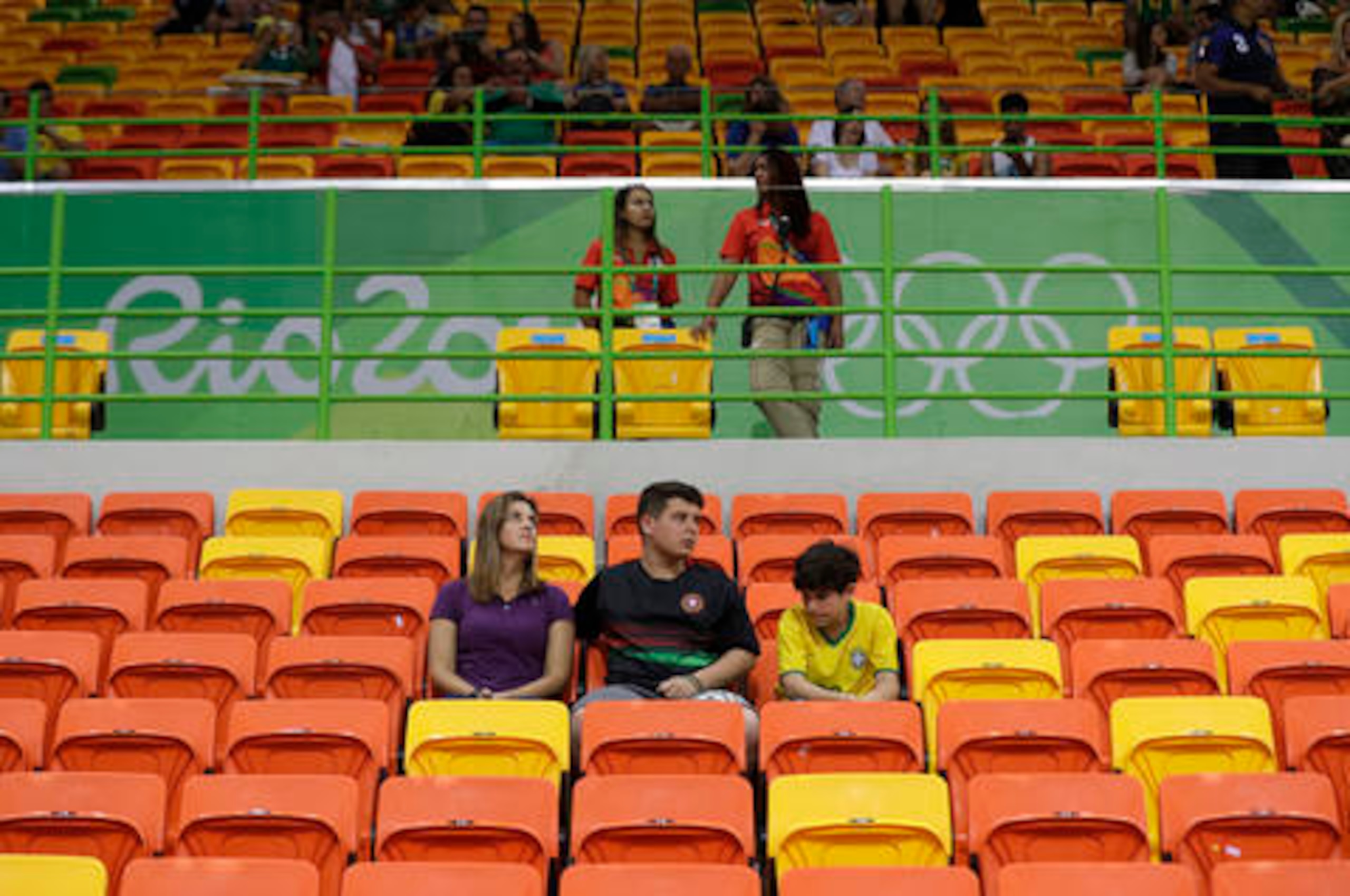
High prices might have been tolerable if there was demand. But there is a perception that many of the sports on offer are simply not enticing for the South American palette. Both the BBC and the Daily Mail have suggested that Brazilians have not shown the engagement of past host nations.
This certainly seems to ring true here. Restaurants and bars will screen Brazilian football matches from the tournament, but, from personal experience, little else appears to attract the attention of the locals of Rio.
Apathy, poor organisation and an economic downturn have all conspired to keep bums off seats at these Games. The organisers continue to sell thousands of tickets each day, but don't be surprised to see sparsely populated stands as the festivities move into their second week.
.jpg?w=2560 "LA Premiere of \"Chad Powers\"")


.jpg?w=2560 "Landing Spots for Trade Candidates 📍")
.jpg?w=2560 "Ugly Jets Scoring Stat 😳")