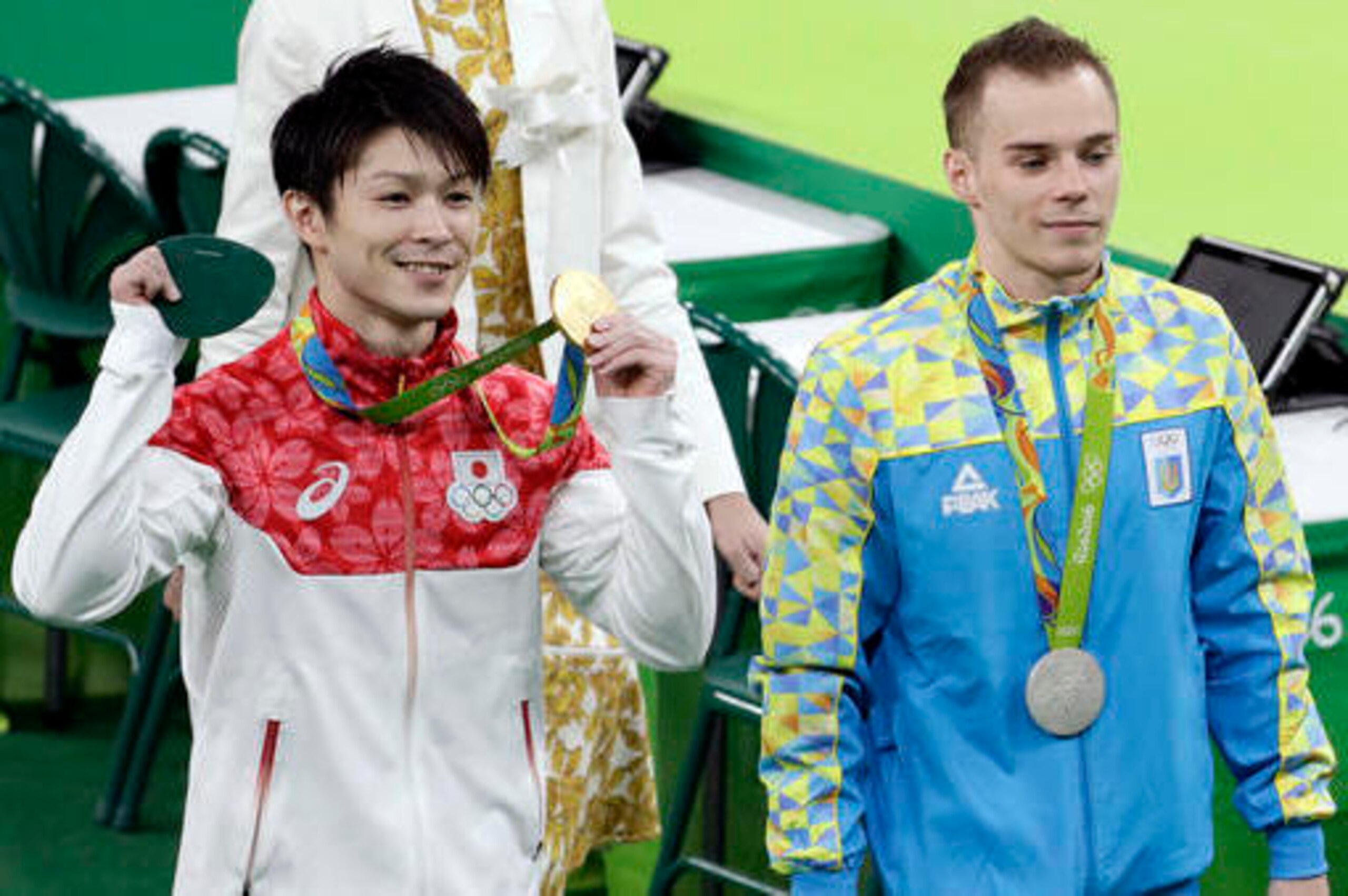

Day 5 of the 2016 Summer Olympics seemed to have more upsets than the first four days combined, resulting in a plethora of big winners and losers.
A 42-year-old won the woman's cycling time trial, a man competing without a country won the double trap, Kohei Uchimura nearly lost the men's gymnastics all-around and China's three-meter springboard diving duo missed both gold and silver in a shocking development.
Michael Phelps and Katie Ledecky both won their swims, and China finished gold and silver in women's table tennis, so Wednesday didn't get too topsy-turvy. Still, it was a wild ride of fencing, judo, rugby sevens and everything in between.
Except for rowing and tennis. Mother Nature made sure those didn't happen.
Read on for the rest of Day 5's biggest winners and losers.
Winner: Kristin Armstrong
1 of 10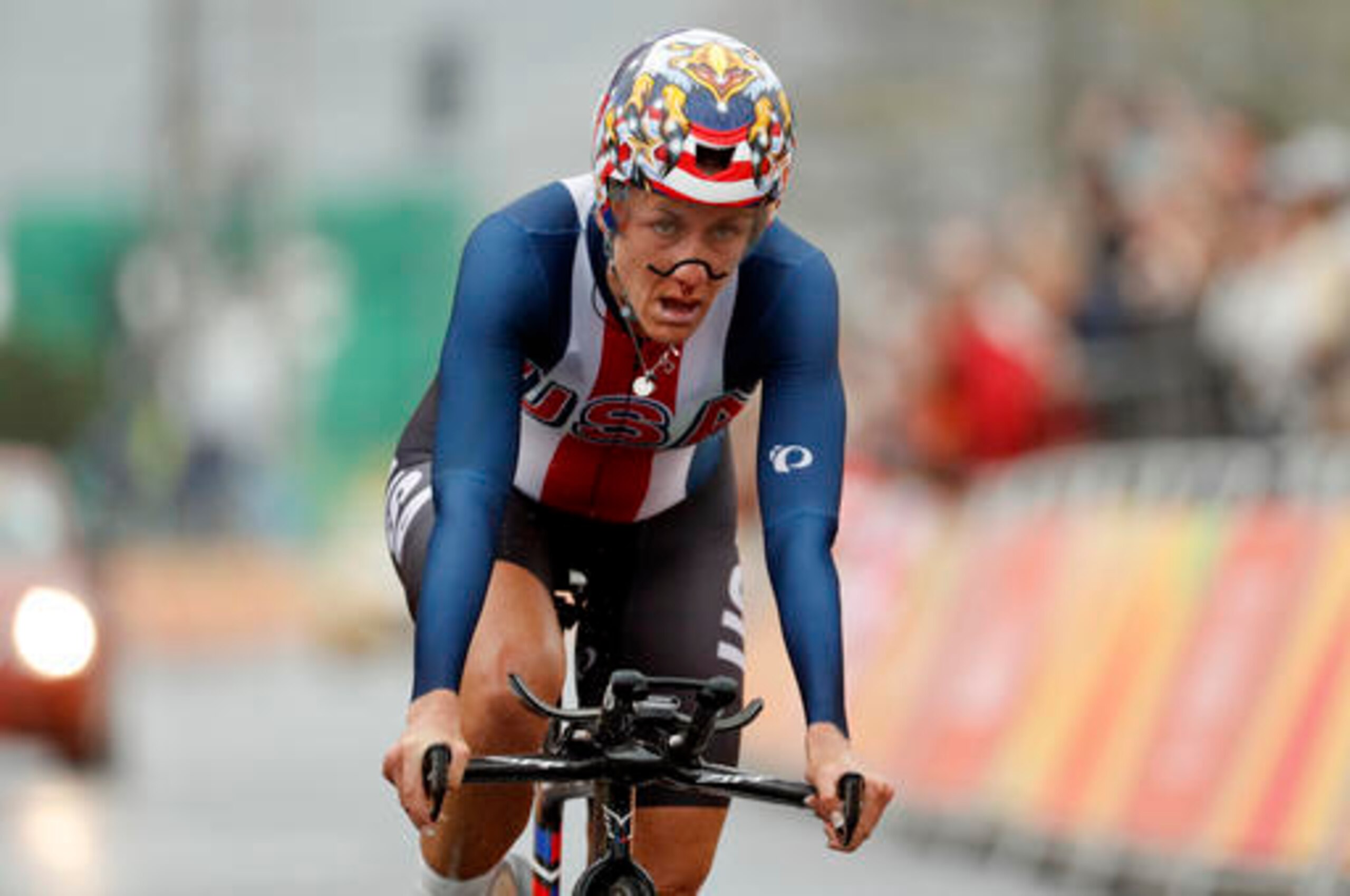
Four years ago—less than two weeks before her 39th birthday—Team USA's Kristin Armstrong became the oldest cyclist to win Olympic gold in a time trial. It was her second consecutive gold medal in the event, winning by a margin of 15.47 seconds after taking the 2008 time trial gold with a cushion of 24.29 seconds.
Shortly after the 2012 Olympics ended, Armstrong decided to go out on top, announcing her retirement from cycling.
For 31 months, that was the end of the story. But in April 2015—a full year after Michael Phelps could no longer resist the itch to come out of his retirement—Armstrong was back on the bike. And by May of that year, she was back on top of the sport, winning the US Time Trial Championship in Chattanooga, Tennessee, by a margin of 13 seconds.
On the eve of her 43rd birthday, she shattered her own "Oldest Cyclist to Win Time Trial Gold" record by four years, edging out Russia Olga Zabelinskaya by 5.55 seconds.
After winning her third straight gold, Armstrong spoke with NBC's Steve Porino.
"People have asked me over and over 'Why? Why am I back?' And it's because I can, and I showed it today. ... This is a result that I want to end with, and this is a result that any athlete wants to end with: The top step of the podium in the Olympic Games. I couldn't be more proud."
Loser: Arianna Errigo
2 of 10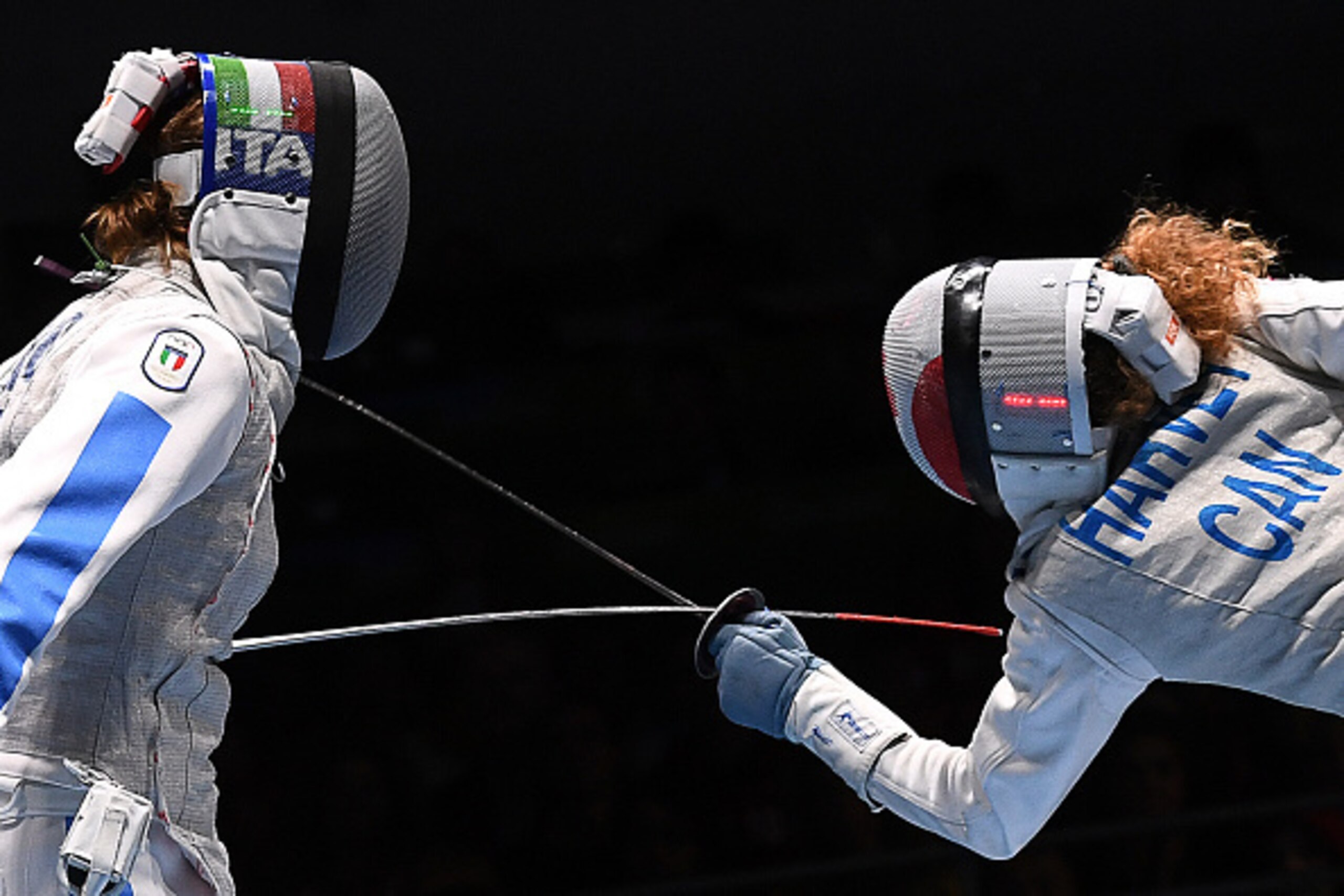
There was a massive upset in Monday's early rounds of men's individual archery. South Korea's Kim Woojin—who set a new world record during Friday's qualifying round—was shockingly ousted in the round of 32.
Underdogs claimed another victim Wednesday morning in the women's individual foil event. Italy's Arianna Errigo entered the event as the clear favorite. Between the Olympics, World Championships and European Championships, she had accumulated 14 gold, four silver and four bronze medals since 2009, including the silver in this event in 2012.
The day started out well for Errigo. She defeated Vietnam's Thi Anh Do with relative ease (15-9) in the round of 32 and had opened up a 10-5 lead over Canada's Eleanor Harvey in the round of 16.
That's when it all fell apart. Harvey scored eight consecutive touches and 10 of the final 11 points to pull off the 15-11 upset.
In April 2015, 21-year-old Harvey wasn't even on the senior circuit, taking silver in the Junior World Fencing Championships. But by beating the best in the world, she proved she may soon ascend to that throne.
Winner: Indepedent Olympic Athlete Fehaid Aldeehani
3 of 10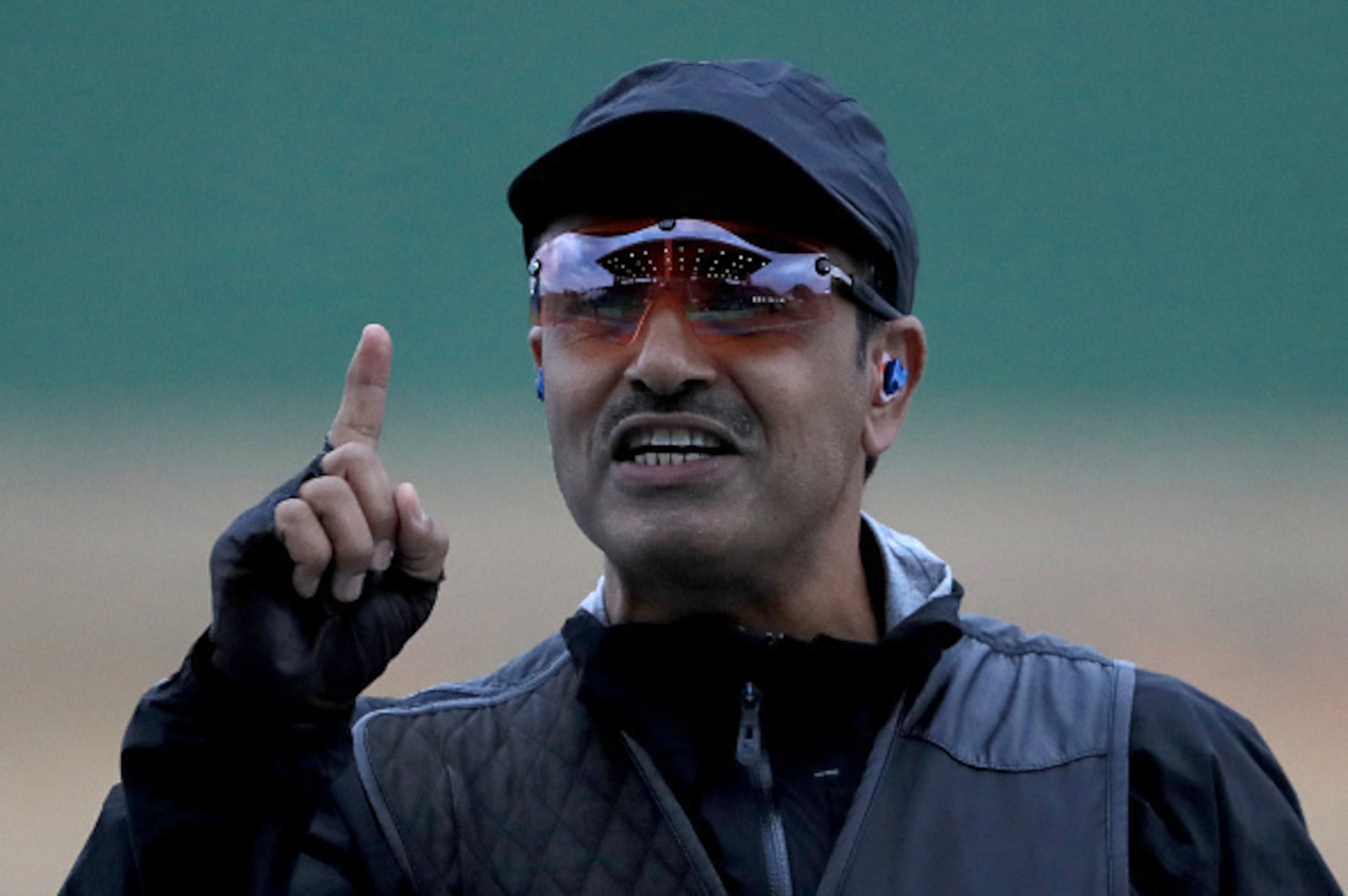
Roughly 99 percent of the athletes participating at the 2016 Olympics are doing so under the flag of a specific country. But there are a few—like men's double trap shooter Fehaid Aldeehani—who were forced to compete as "Independent Olympic Athletes."
There are several reasons why an athlete might fall onto this team. In Aldeehani's case, his country (Kuwait) has been suspended by the International Olympic Committee due to government legislation allowing interference in national sport federations, according to The Guardian.
Thus, despite earning bronze medals for Kuwait in 2000 and 2012, he suddenly had no country to compete for.
Rather than miss out on the Olympics due to circumstances well out of his control, the 49-year-old competed as an independent—though he refused to carry the IOC's flag during the opening ceremony, according to ArabNews.com.
"I am a military man and I will only carry the Kuwait flag," Aldeehani said.
Once the Games began and he was able to focus on his craft, though, Aldeehani did what he does best. He just barely qualified for the semifinals of the men's double trap, but he rebounded in the afternoon with the highest score in the semifinals before winning 26-24 over Italy's Marco Innocenti in the gold-medal match.


Loser: New Zealand Men's Rugby Sevens
4 of 10
No country has a richer history in men's rugby sevens than New Zealand. Since the World Rugby Seven Series began in 1999-2000, New Zealand has been the champion in 12 of 17 seasons, never finishing lower than fourth. And at the Rugby World Cup Sevens, it won gold in 2001 and 2013, silver in 2005 and bronze in 1997, failing to medal just once in the past two decades.
Fiji (2-1) and South Africa (47-20) had better odds to win gold by the slimmest of margins, according to Odds Shark. New Zealand had the third-best odds at 5-2, and every other country was 11-1 or worse. Thus, with Fiji in Pool A, South Africa in Pool B and New Zealand in Pool C, the All Blacks Sevens should have won their pool, advancing at least to the semifinals before earning a medal.
Instead, they lost to Japan (250-1 odds to win gold) in Tuesday's opening match and proceeded to lose to Great Britain on Wednesday, putting their spot in the quarterfinals in serious jeopardy. Fortunately, their point differential (plus-19) was one point better than that of Team USA, so they sneaked into the bracket as the No. 8 seed, immediately drawing No. 1 seed Fiji.
They led 7-5 at halftime, but a Fiji try in the opening 90 seconds made the score 12-7, where it stayed until the end of the match. All told, one of the winningest teams in the history of the sport went 1-3 and will go home without any medals.
Winner: Chris Mears and Jack Laugher
5 of 10
With China's Qin Kai going for his third consecutive Olympic gold medal in the men's three-meter springboard synchronized dive and Russia's duo of Evgeny Kuznetsov and Ilya Zakharov seeking their fifth silver medal in the past six years in the event, Great Britain's Jack Laugher and Chris Mears weren't given much of a chance to win.
But if there's one man who knows how to beat the odds, it's Mears.
While training in Sydney in January 2009, Mears suffered a ruptured spleen, lost five pints of blood and fell into a coma for several days. He was given a 5 percent chance to live and was told he would never dive again, according to Gordon Rayner of the Telegraph.
Never didn't last for long, though, as he and then-teammate Nicholas Robinson-Baker took fourth place in the three-meter synchro dive at the 2010 Commonwealth Games—just 18 months after the injury that nearly took his life.
In the 2012 Olympics, Mears and Robinson-Baker finished in fifth place.
Since teaming up with Laugher, Mears has been one half of one of the best synchro duos in the world. They took bronze at the 2015 World Championships and gold in the 2016 European Championships. After Wednesday's incredible 91.20 final dive, they now have an Olympic gold medal as well.
Loser: Events Postponed by Mother Nature
6 of 10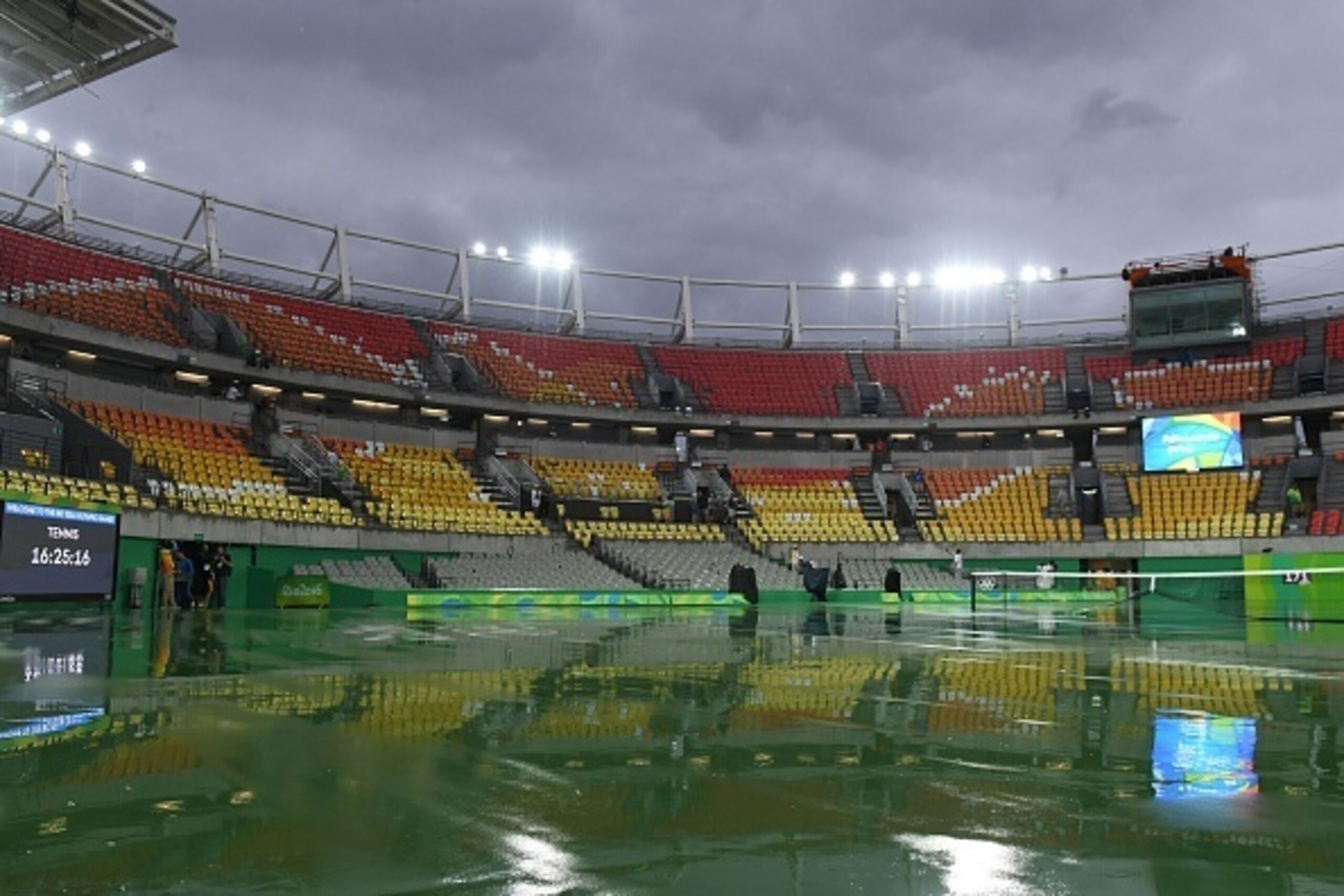
Wednesday was jam-packed with action, but Mother Nature made sure the slate wasn't nearly as full as it was supposed to be.
How they managed to hold the cycling time trials and beach volleyball in the rain is a mystery, because several of the outdoor sports were impacted by the weather.
Rowing was scheduled to begin first thing in the morning, but all of those events—including the gold-medal races for men's and women's quad sculls—were postponed until tomorrow. Tennis kept delaying the start of its matches one hour at a time before finally giving up and pushing everything back a day. One sailing heat (Nacra 17 Mixed Race) was also postponed.
Archery continued as normal, but the drizzling made the super slow-motion replays even more cinematic, as the arrows sliced through droplets en route to their targets.
And should we blame Mother Nature for the green water in the diving pool? The official explanation was a "proliferation of algae," but that was hard to look at and didn't make it any easier for divers to execute their acrobatics.
Let's hope the weather cooperates the rest of the way, or else the golfers (men's begins Thursday; women's begins next Wednesday) will feel like they're back at the British Open.
Winner: Men's Gymnastics Drama
7 of 10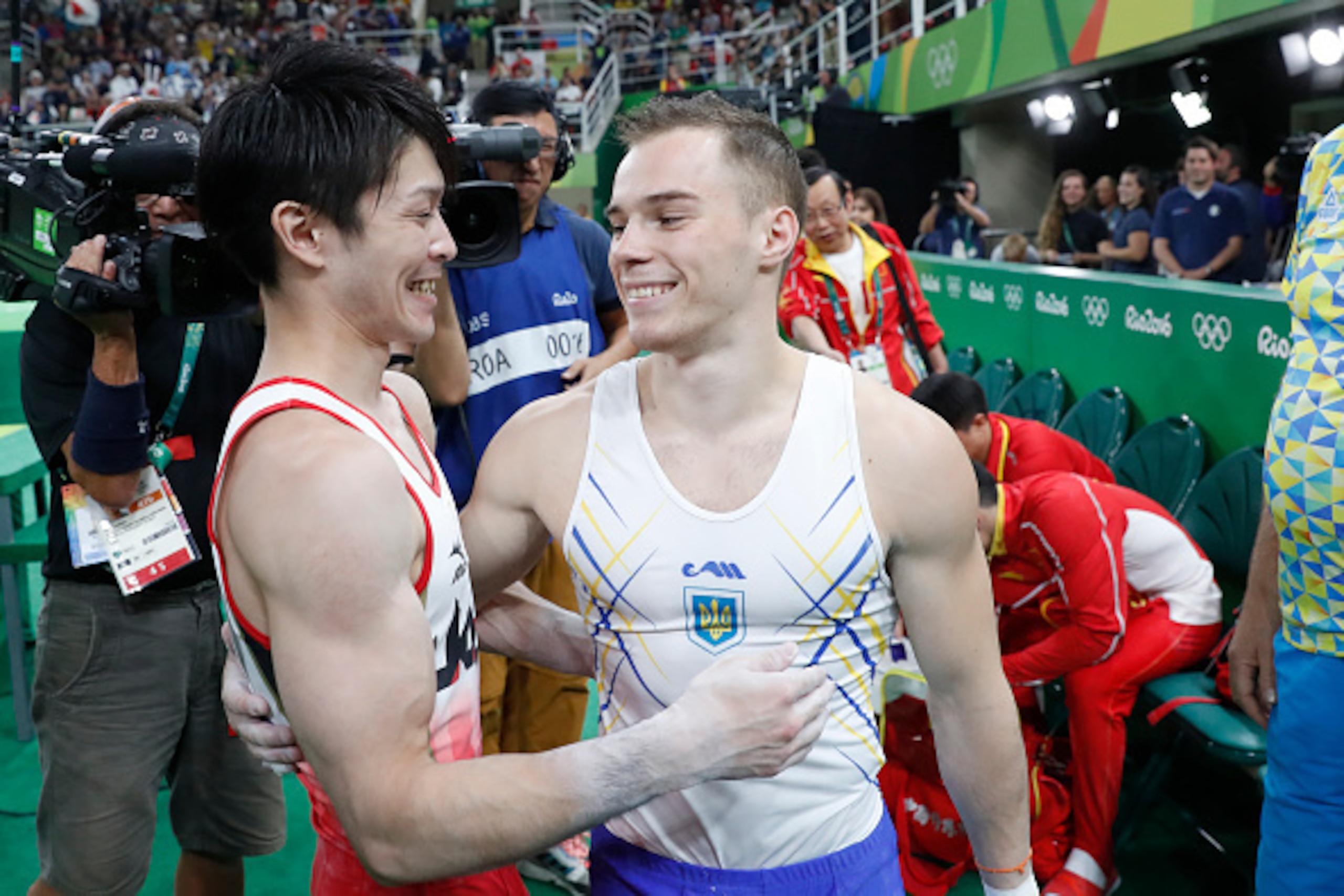
Japan's Kohei Uchimura (AKA "King Kohei") has dominated men's gymnastics for the past eight years.
Since taking silver in the men's all-around at the 2008 Olympics, he has not lost. Uchimura won gold in all six World Championships held from 2009-15, as well as the 2012 Olympics.
Frankly, he didn't even leave much hope for the silver medalist in any of those years. His average margin of victory for those seven golds was 2.162 points. Even his worst score during that stretch (91.500 in 2009) was better than that of the best silver medalist (Marcel Nguyen's 91.031 in 2012).
At long last, though, there was a nail-biter in Wednesday's men's final—and it wasn't because King Kohei lost a step. Uchimura had an impressive score of 92.365, which is the third-highest score during his eight-year streak and his highest since 2012.
Rather, it was a photo finish because Ukraine's Oleg Verniaiev was just as incredible with a score of 92.266.
It all came down to the final dismount.
Verniaiev entered the last leg (horizontal bar) with a lead of 0.899 points, but Uchimura put the pressure on with a sensational routine. His 15.8 score was more than a half point better than anyone scored on that apparatus all day and meant Verniaiev needed a 14.9 to win. Because of a slight hop on his landing, though, he received a 14.8, and Uchimura became the first back-to-back men's all-around Olympic gold medalist since Japan's Sawao Kato in 1968 and 1972.
Loser: USA's Grip on Men's Basketball Gold
8 of 10
Following Team USA's five exhibition games and first two games of Olympic pool play in men's basketball, the public perception of this team was: "No Stephen Curry? No LeBron James? No problem!"
In addition to Carmelo Anthony, Kevin Durant and company beating China and Venezuela by a combined margin of 101 points, Spain and France—regarded as the two teams that might be able to challenge USA—had a combined record of 1-3 and didn't look good at all. Suddenly, Australia was the biggest threat, and even that wasn't much of one, as USA was favored to win Wednesday's battle with the Aussies by 29 points, per Stephen Campbell of Odds Shark.
To everyone's surprise, they were tied at the end of the first quarter. Then Australia led by five at halftime. And with nine minutes remaining in the game, USA trailed by a deuce.
The Americans went on to win by a double-digit margin, sinking five three-pointers in the process of scoring 26 points in the final 7:37. But gold isn't nearly the certainty it was 24 hours ago.
Durant and Klay Thompson both struggled, shooting a combined 6-of-25 from the field. As a team, they had no answer for Australia's Patty Mills and Matthew Dellavedova backcourt—a duo that combined to start zero of their NBA teams' 30 playoff games in 2016.
Were it not for Anthony scoring 31 points and shooting 60 percent from three-point range, USA would have lost the game. And there are plenty of New York Knicks fans who could tell you that needing Anthony to score 30 points per game to win is a terrifying position to be in.
Team USA will draw Serbia on Friday before finishing up pool play with Sunday's game against France.
Will it reassert its dominance before the quarterfinals begin?
Winner: Japanese Judokas
9 of 10
While sports like fencing, table tennis and archery permit countries to be represented by multiple athletes, judo has a firm cap of one per weight class per country. Thus, from the 24 women competing in 70 kilograms and the 35 men competing in 90 kilograms, Japan only had two representatives: Haruka Tachimoto on the female side and Mashu Baker on the male side.
With one win after another, Japan also finished the day with two judokas standing. Tachimoto bested gold-medal favorite Colombia's Yuri Alvear with a maximum ippon score in the finals, followed by Baker winning his gold with an early takedown of Georgia's Varlam Liparteliani.
Baker won bronze at the 2015 World Championships and landed on the easier side of the bracket, so it wasn't much of a surprise that he medaled. Tachimoto, however, was a bit of a Cinderella story.
Because there were only 24 female competitors in the 70 kilogram weight class, the top eight received a bye into the round of 16. But ranked No. 14 in the world, according to Daily Mail, Tachimoto didn't get that honor. It only gave her more time to build up a head of steam, though, as she only allowed one of her five opponents to score a single point.
Historically, Japan has been the best in the world in judo, entering 2016 with 36 Olympic gold medals while the three next-best countries—France (12), South Korea (11) and China (8)—had just 31 combined. But London was not kind to Japan, as it had just four judokas reach the finals, resulting in one gold and three silver medals.
With Wednesday's wins, Japan now has nine out of a possible 10 medals in judo—three gold and six bronze.
Loser: Favorites in the Pool
10 of 10
Michael Phelps and Ryan Lochte took care of business in the semifinals of the men's 200m individual medley, and Katie Ledecky won yet another gold medal for her part in Team USA's 4x200 women's freestyle relay. So, it wasn't all bad news for Wednesday's favorites.
However, there were two swimmers who entered the day as favorites, only to have disappointing departures.
Germany's Marco Koch swam in the men's 200-meter breaststroke finals, which has been gold or silver in each of the past four years. He won that event at the 2014 European Championships and 2015 World Championships while taking silver in the 2013 Worlds and 2016 Euros. But after posting the seventh-fastest time in Tuesday's semifinals, he wound up in the same place in the finals, missing a medal by three-tenths of a second.
But at least Koch made it that far.
In the men's 200-meter backstroke, no one has been better than Poland's Kawecki Radoslaw in recent years. He took silver in the event at the 2013 and 2015 Worlds and gold in the 2014 and 2016 Euros. He should have at least been able to coast into the semifinals, but it seems he let his foot too far off the gas in the afternoon heats, finishing in 17th place, failing to qualify by a margin of 0.03s.

.jpg?w=2560 "LA Premiere of \"Chad Powers\"")