Ultimate Guide to the Women's Gymnastics Individual All-Around Competition
The most coveted title in Olympic gymnastics is the individual all-around, but the biggest battle in Rio de Janeiro will almost certainly be for second place—or third.
Credit 19-year-old American Simone Biles. She has been every bit as good as advertised in these Games, so much so that her slight bobble on the balance beam in Tuesday’s team competition, one the U.S. won easily, made news.
As the first gymnast in history to win three straight world championships, Biles has been anointed the best gymnast ever before even setting foot in Rio. Mary Lou Retton and Nastia Liukin, all-around Olympic champions in 1984 and 2008, respectively, were among those chiming in on her greatness.


.jpg?w=2560 "Seahawks Chiefs Football")
Not only that, but her teammate, Aly Raisman, is heavily favored to win silver after she and Biles went 1-2 in all-around qualification Sunday.
But this is Biles’ event. Consider the all-around’s iconic figures: Larisa Latynina, Nadia Comaneci, Retton, and put the teenager among them.
If, as expected, Biles pulls it off, it will be the first time in history one country has produced four consecutive all-around Olympic champions, men or women.
For the men, Italy (1908-1920) and the Soviet Union (1952-1960) managed three. For the women, the Soviets won three (1952-1960), along with the United States—Carly Patterson in 2004, Nastia Liukin in 2008 and Gabby Douglas in 2012.
Here are some storylines to follow:
Can Biles do it?

One down. Four to go.
Biles has been the talk of the sport—and of this event in particular—since winning her first world all-around title in 2013.
Thankfully, for those experiencing "Biles Hype Overload," that talk is coming to fruition this week.
The first-time Olympian finally became a gold medalist Tuesday after helping the U.S. win the team title. Now she breaks out on her own, and the results are expected to be just as impressive. She is favored to win gold in all-around, then individual vault, beam and floor over the next week.
If she manages that, she will accomplish another women’s gymnastics first by winning five golds in a single Games. That’s Eric Heiden (speedskating) territory.
In Tuesday’s team competition, she was the only American in all four events. She put up the field’s best scores in three, posting a 15.9 on vault, 15.3 on beam and 15.8 on floor.
In Sunday qualifying, she did the same, winning vault, beam and floor, and she scored a respectable 15.0 (placing 14th) on her worst event, the uneven bars.
Raisman’s redemption?
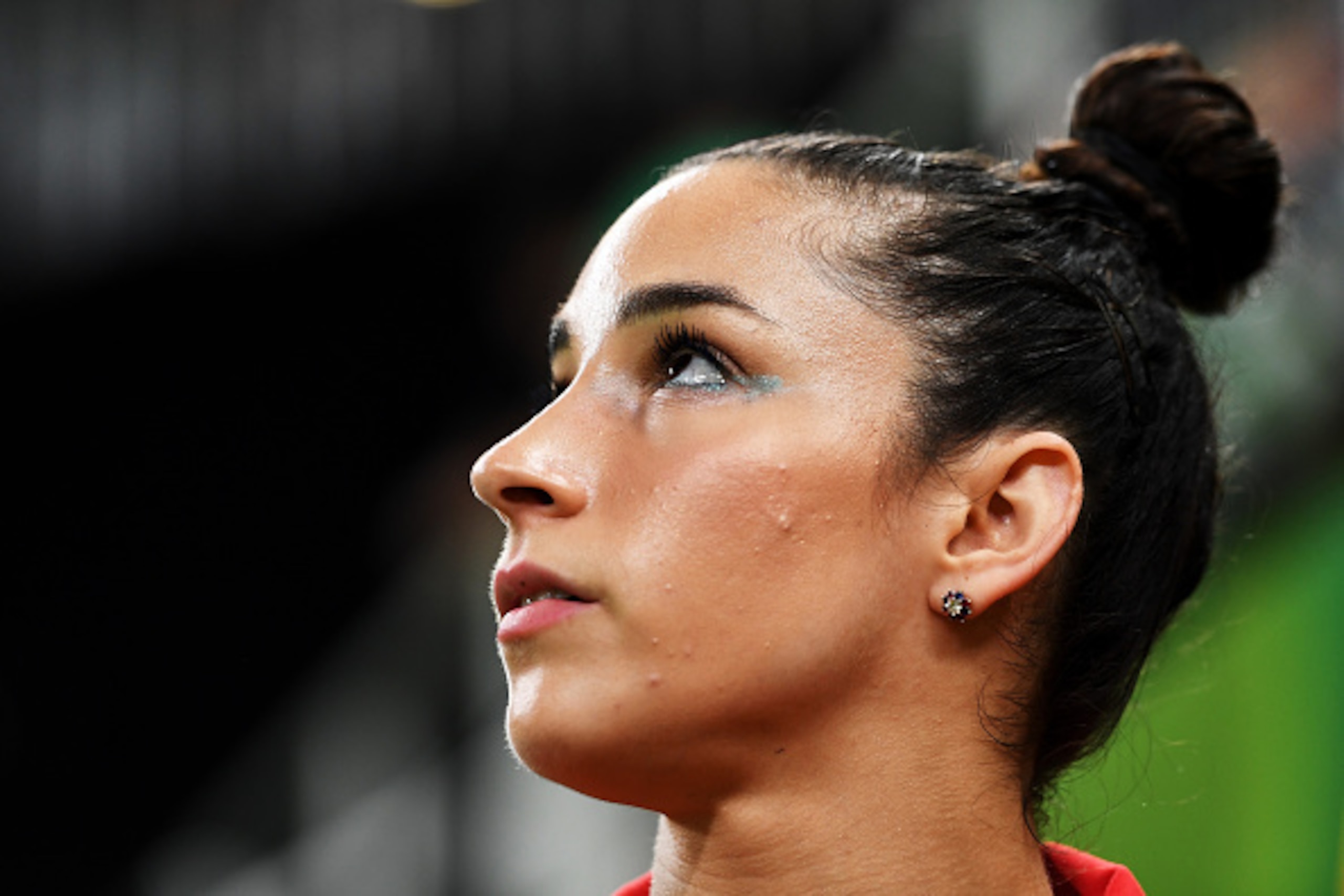
Lost in the past three years of buzz about Biles and Gabby Douglas’ return has been Raisman’s quiet campaign for personal redemption.
The two-time Olympic team captain and oldest member at 22 finished tied for third with Russia’s Aliya Mustafina in the 2012 Olympics all-around. So both win bronze, right?
Wrong. Mystifyingly, gymnastics does not give duplicate medals for this. Instead, they determine the medalist by dropping each competitor’s lowest score and calculate the other three. Mustafina won.
To be fair, Raisman won her 2012 balance-beam bronze in similar manner after a tie with Catalina Ponor, where the tiebreaker is execution score.
But it’s clear the all-around fourth place four years ago sticks in her craw, as she told USA Gymnastics’ Jo-Ann Barnas in 2014:
"The thing that still lingers in my head is that I almost got that all-around medal. I tied for it and they didn’t give it to me – so I think that’s something that I still think about all the time and I still use that for motivation when I’m really tired and I’m having a rough day. I think about how painful that was for me to not get that medal even though I did have the third-highest score and I tied. It’s very... it’s one of those things that I think will always bother me.
"
Throughout these Olympics, the captain has delivered. Raisman had to beat Douglas to qualify for all-around behind Biles, no easy task.
Raisman, the runner-up, posted a score of 60.607 to Douglas’ third-place 60.131 to win the second berth. Raisman edged Douglas in two events, vault and floor, lost in bars and tied on beam (14.833).
Their duel might have been decided on the vault, where Raisman’s degree of difficulty—she does one of the sport’s toughest maneuvers, the Amanar—was a half-point higher than Douglas, who dropped the Amanar earlier this season after having trouble with it.
The Amanar will help Raisman in Thursday’s all-around. Few do it in competition.
In Tuesday’s team event, Raisman’s vault was a marvel of precision. She scored a 15.833, second only to Biles’ 15.9. Only three top all-around gymnasts, Brazil’s Rebeca Andrade, fourth in all-around qualifying; Russia’s Mustafina (sixth) and Switzerland’s Giulia Steingruber (15th), scored 15 or higher in qualification.
Who else can get on the podium?
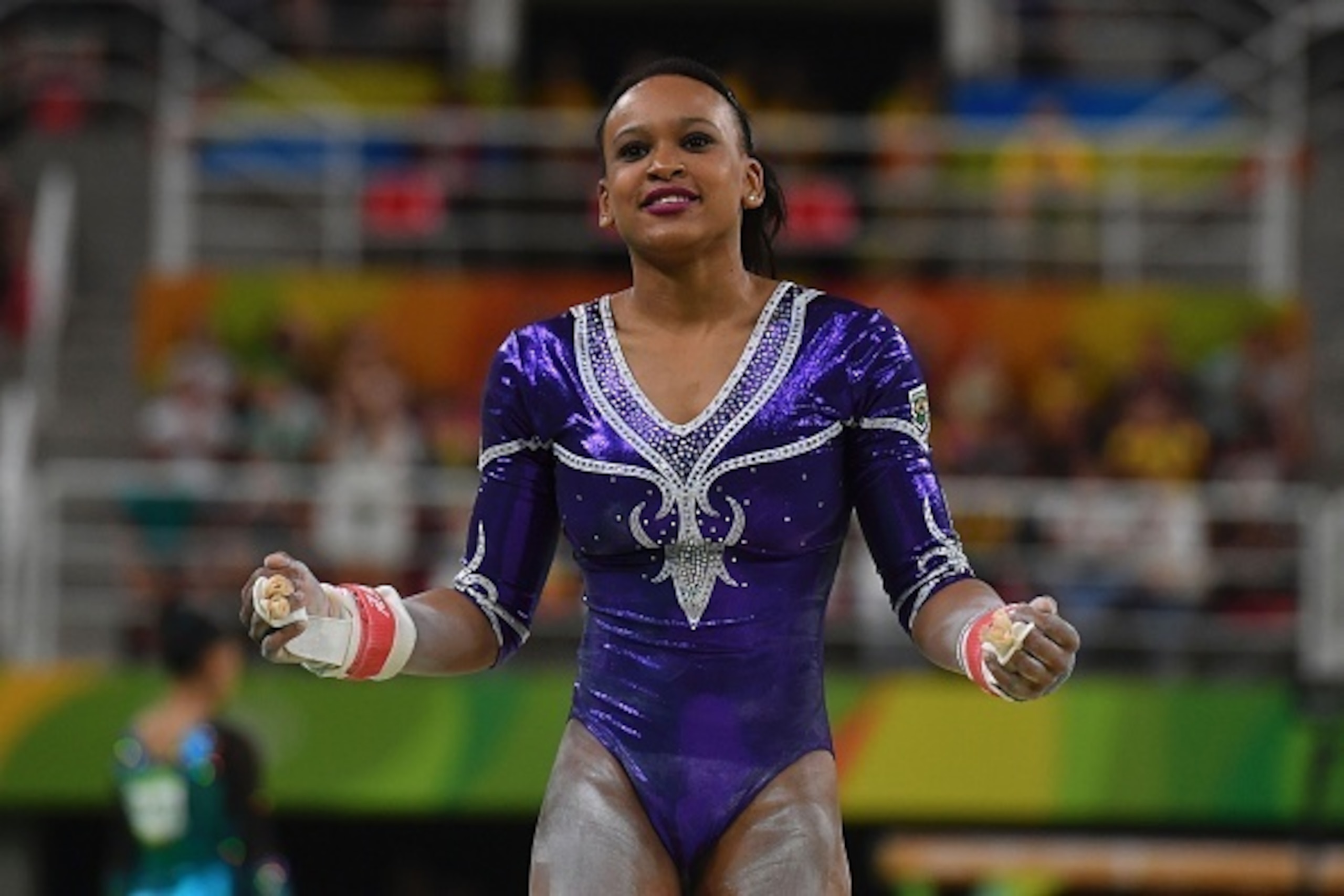
With Biles practically a given for gold and an inspired Raisman getting even better each day, the biggest competition here is likely for bronze.
Romanian stalwart Larisa Iordache, 2015 world championship bronze medalist, is not at the Olympics due to injury, further opening the competition.
The bronze-medal contenders include:
Rebeca Andrade, Brazil: With Rio Olympic Arena crowds as animated as they have been for home-country athletes, it would be fun to see—and hear—them raise the roof should Andrade be in the mix for a medal. She was fourth in all-around qualifying, fewer than two points behind Raisman. Her strengths are vault and bars.
Seda Tutkhalyan, Russia: She's a surprise all-around qualifier when emerging star teammate Angelina Melnikova, the 2016 Russian all-around champion, was poor on floor. Tutkhalyan was 15th at the worlds, when Russia had a disastrous time on the balance beam and finished fourth as a team.
Tutkhalyan, who scored a dismal 12.700 on beam there, has improved, posting a 13.875 while placing fifth in qualifying, a surprise one spot higher than veteran teammate Mustafina. Her only qualifying score in the 15s was on bars. She did not compete on bars or vault in the team competition.
Aliya Mustafina, Russia: Team captain and four-time 2012 Olympic medalist, Mustafina did not compete at the 2015 worlds due to injury. Still, she appears to be rounding into form. Sixth in all-around qualifying, Mustafina is strongest on vault, uneven bars and beam.
Yan Wang, China: Strong on floor exercise and vault, Yan, 16, is the leading member of China’s youth brigade. She was 11th in all-around at October’s worlds, where China finished second behind the U.S. She was the event’s youngest competitor at 15. Good on vault and floor in qualifying, Yan did not compete on bars in Tuesday’s team event. Her triple full dismount (three twists, full flip) on beam is something to see.
Others who could pull off an upset for a medal: China’s Chunsong Shang, fourth at worlds but 20th in Sunday qualifying; Switzerland’s Steingruber, who sprung the fourth-best vault in qualifying and placed fifth at the worlds, and Dutch gymnast Eythora Thorsdottir, who was eighth in qualifying.
Mai Murakami of Japan, a surprising fourth in the team competition, was ninth in all-around qualifying.
Why only two in all-around?
The U.S. is so deep that four of five team members would be legitimate threats for all-around medals in Rio. So why aren’t they?
Biles, Raisman and Douglas finished 1-2-3 in Olympic qualifying. Yet just two entrants—Biles and Raisman—will be competing for the U.S. in the all-around competition. Rules allow each nation a maximum two gymnasts, no matter how strong the team.
Raisman, for one, thinks it’s a stupid rule. She has thought so since 2012, raising a stink then, too.
The idea is that allowing more countries’ gymnasts entry to the all-around, where the top 24 all-arounders from qualifying compete, helps give the sport more exposure and, presumably, helps the sport grow.
That’s debatable, as some argue qualifying already provides for the inclusivity gymnastics is looking for. Meanwhile, the defending Olympic all-around champion, Douglas, will be sitting on the sidelines Thursday.
Will Karolyi’s last big decision pay off?
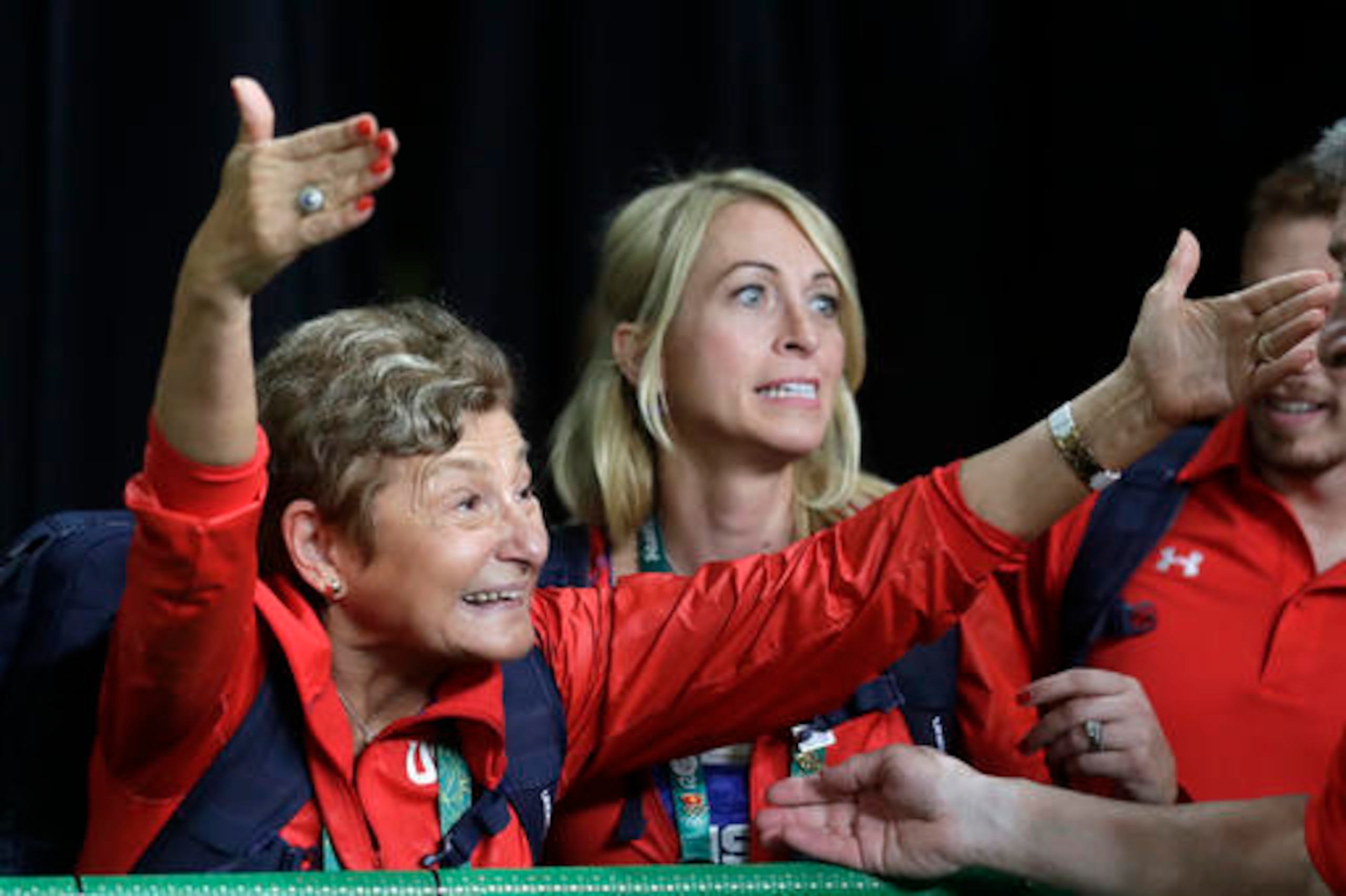
It’s a credit to Martha Karolyi’s wildly successful 15-year career as national team coordinator that only the slightest of murmurs were heard when she picked Raisman over fan favorite and upcoming star Laurie Hernandez to compete for the second all-around spot behind Biles.
(The same credit is due for selecting Douglas for the Olympic team after the defending all-around Olympic champion’s woeful seventh-place finish at trials, but that’s another story.)
Karolyi’s stock has gone nowhere but up in the 15 years since 2001, when she took over for her famous-but-embattled husband, Bela, as coordinator.
Under Martha Karolyi, the U.S. women’s team found its sweet spot by switching to a semi-centralized system, where personal coaches trained their charges most of the year, but athletes attend monthly camps at national team headquarters in Texas.
Look at Karolyi’s 2016 team now: Successful defenders of Olympic gold in the team competition; Biles and Raisman poised to go 1-2 in the individual all-around; every individual-apparatus event populated by at least one U.S. gymnast.
Her legacy is secure and perhaps will go unmatched: Since Martha, the U.S. has won six gold medals in world and Olympic team competition. If it didn’t win gold, it won something, medaling in every major international team final. Compare that to zero team medals at the 1999 world championships, as well as a fourth-place finish at the 2000 Sydney Olympics until China was stripped of its bronze in 2010.
Certainly, the team’s new name for themselves—the Final Five—unveiled after winning team gold Tuesday, is a nod to Karolyi.
Karolyi, 73, has said she will retire as coordinator after these Games. But she’s not going anywhere—except, maybe, to visit family in Romania more often. The famed 2,000-acre Karolyi ranch in Texas has been sold to USA Gymnastics, and word is the Karolyis will continue to live nearby.
It may be the end of an era. Then again, maybe not. Word is the U.S. men’s team—fifth in the past two Olympics—needs an overhaul. Martha?



.jpg?w=2560 "Latest Peyton-Colts Rumors")