Women's Gymnastics Team Competition: USA's Strengths and Weaknesses
We won’t know until Tuesday, when things really count in the team final, but judging from Sunday’s preliminaries, the U.S. women's gymnastics team might even be better than we expected—and that's saying a lot.
Is it the best the U.S. has ever produced? From the numbers, it sure seems that way.
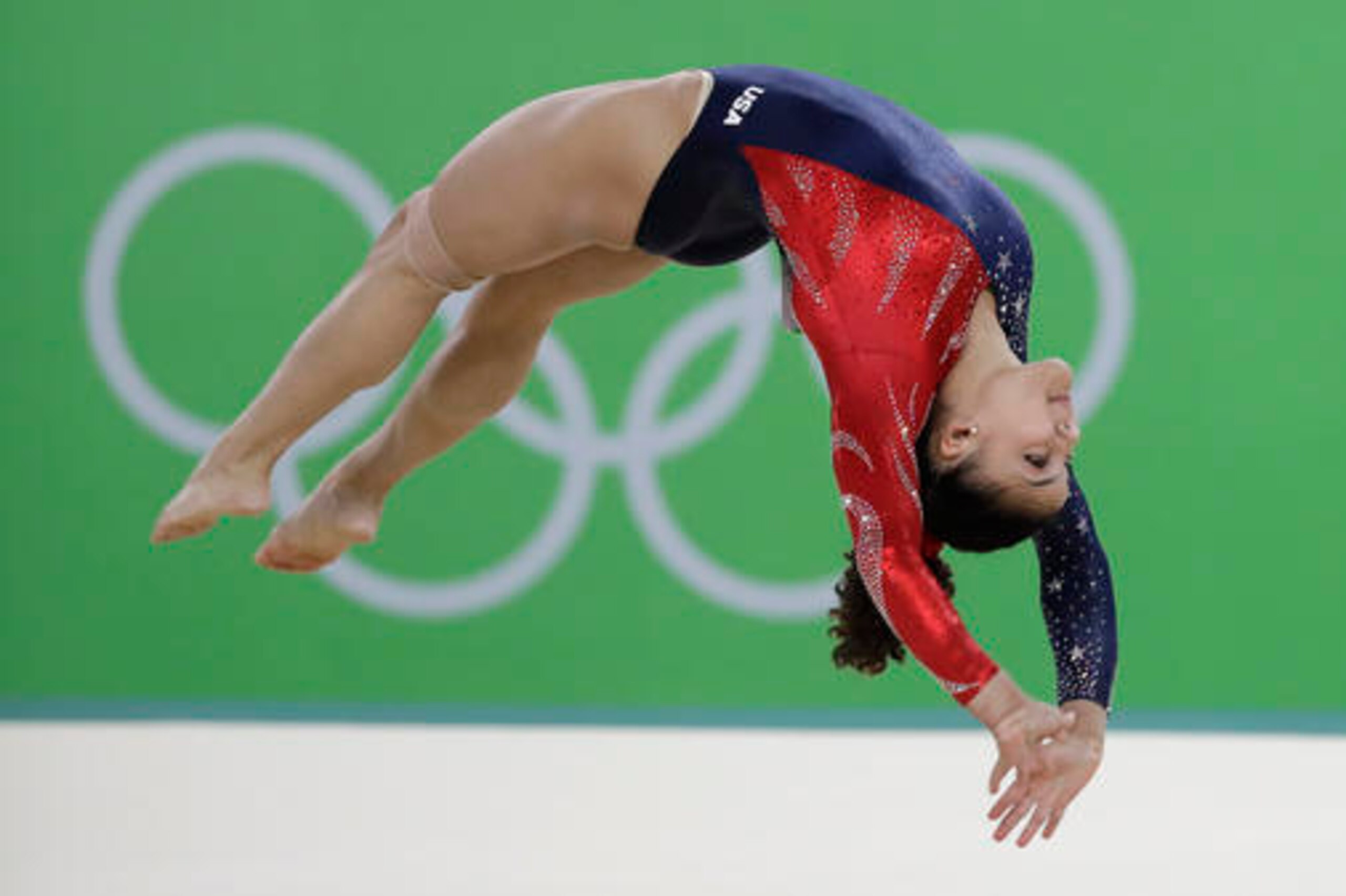
Predictably led by a soaring Simone Biles, the gold-medal favorite, the U.S. finished first in qualification with 185.238 points, ahead of runner-up China by nearly 10 points in a sport that is usually decided by fractions.
To give you an idea just how dominant the Americans are, just 1.215 separated the three next teams: China, Russia and Great Britain, all of whom expect to contend for team medals—but behind the United States.
Shockingly, Romania is not around to make a run this time, failing to qualify a team.
But let's not hand the U.S. team the gold medal yet. The real competition hasn't started. Preliminary scores are wiped out before Tuesday's team event. The reset, technically, gives other teams a glimmer of hope. But not much of one.
"They are unbeatable at the moment,"Russian gymnast Aliya Mustafina told reporters.
They're also human (we think)—for proof, check out last month's Olympic trials. While the Americans dominated Sunday, Tuesday is another day.
One thing to remember: Unlike prelims, when three of four scores from each team counted, in Tuesday’s team final, the “three up, three count” format is used. That means all three scores will count on each apparatus. Three gymnasts (of the five total—Simone Biles, Aly Raisman, Gabby Douglas, Laurie Hernandez, Madison Kocian) can be used in any combination on each apparatus. Prelim scores don't carry over.
The U.S. team brings an intimidating resume: It has won every major international title (World Championship or Olympics) since 2011—that’s three worlds (2011, 2014, 2015) and one Games.
That’s unprecedented for an American gymnastics team. For international perspective, however, consider the Soviet Union won eight straight team Olympic titles from 1952-80.
Put it this way: If the U.S. team, led by three-time world champion Biles, fails to defend its gold, it will be the most stunning upset in the Games.
So, hey, no pressure. Here's a breakdown of the U.S. team's biggest strengths and weaknesses.
Strength: Depth
1 of 6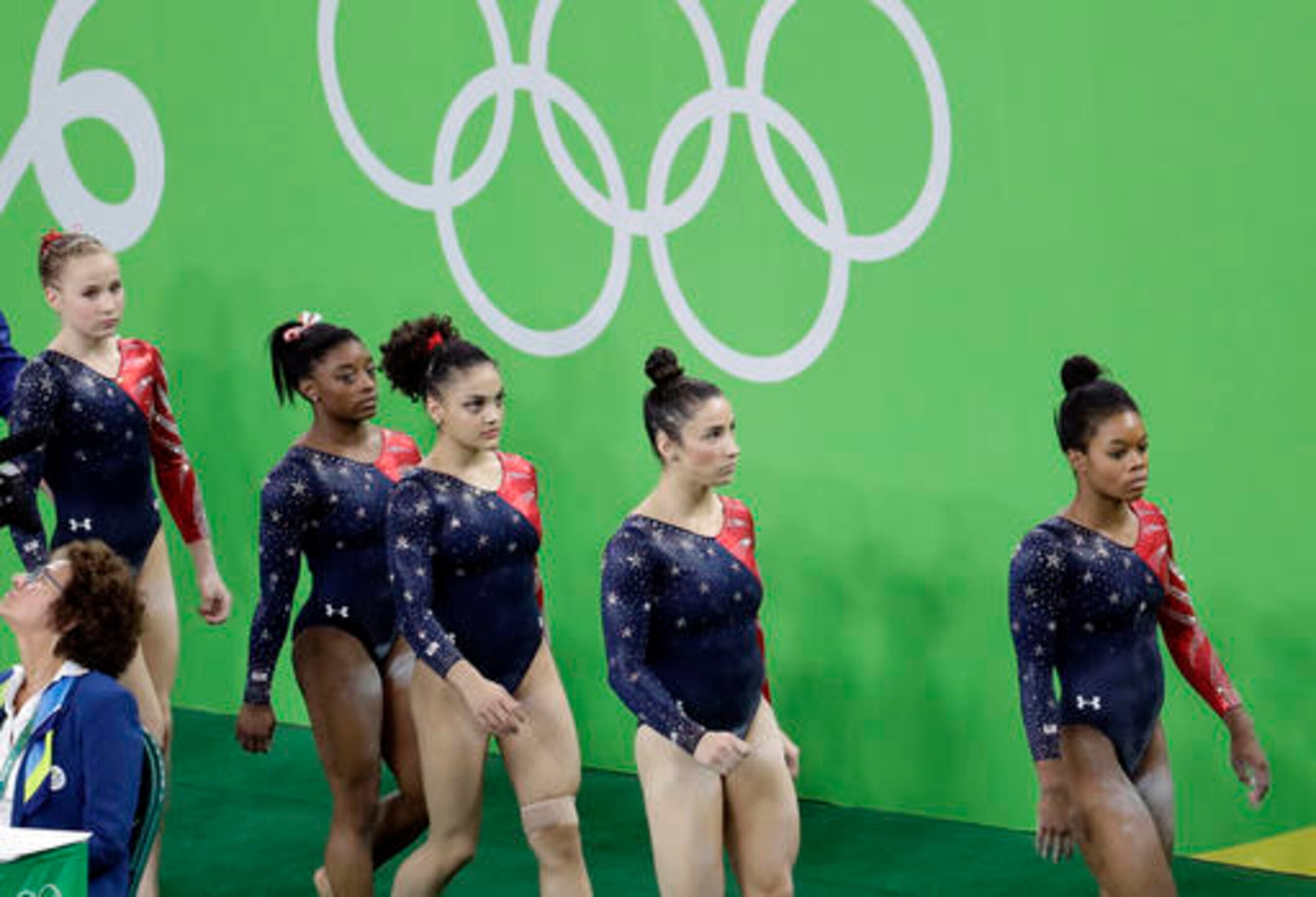
What other team has the sport’s first three-time world all-around champion (Simone Biles) on its roster, along with the current world runner-up and defending Olympic gold medalist in the all-around (Gabby Douglas); a three-time 2012 Olympic medalist (Aly Raisman), a current bars world champion (Madison Kocian) and a 16-year-old budding all-arounder (Laurie Hernandez) who has already beaten three of four of her teammates in competition this year?
Answer: No one.
With the three-up, three-count format, depth is key.
This embarrassment of riches is topped by Biles, perhaps the most accomplished Olympic rookie of the 2016 Games. The 4'9" Biles looms large among the world’s best and is considered a shoo-in for Thursday’s all-around gold.
She also holds world titles in floor and balance beam and has not lost an all-around competition in three years. She upgraded both vaults this spring to the Cheng and Amanar (DEFINE)—considered the world’s toughest combination.
Douglas and Raisman accomplished something just by making it back to the Olympics because the career span of an Olympic gymnast generally lasts no more than one four-year cycle.
Douglas, the 2012 world runner-up in the all-around, is already in rarefied air. The last all-around Olympic champion to return to the Games was Nadia Comaneci in the boycotted 1980 Moscow Games, when she finished with an impressive silver. Douglas, edged by Raisman on Sunday, won't get the chance to defend her all-around title.
China, the 2015 world silver medalists, will try to challenge with an otherwise unproven team, none of whom have Olympic experience. Russia, which only Friday was cleared to compete by the International Federation in the midst of its massive doping scandal, has been beset by injury and illness, but 2012 all-around bronze medalist Aliya Mustafina is back, along with a teen phenom of its own in Angelina Melnikova.
Weakness: Olympic Experience
2 of 6
There’s nothing like the Olympics as a sporting event, and all the worlds in the world can’t prepare you fully for the five-ring spotlight.
Don’t forget Biles, Kocian and Hernandez are all teenagers and all experiencing the Games for the first time, though they hardly acted like it in Sunday's prelims.
As sure-footed as they were in qualifying, you just never know.
Biles, 19, has her own method of coping, and Hernandez seems impervious to pressure. (Hey, she’s 16.)
Say what you will about Biles’ dominance—until Tuesday’s team final, she will have yet to compete with an Olympic medal at stake.
If the rookies can be inspired by team history, there’s lots of material.
As a team, the U.S. women have medaled in every Olympics since 1992, and if successful in Rio, they would defend their gold for the first time since Romania won back-to-back Olympic titles in 2000-2004.
While the U.S. has three Olympic first-timers, that's better than China, which has an entire team of newbies, and Russia, which has experienced injury and illness.
Strength: Simone Biles
3 of 6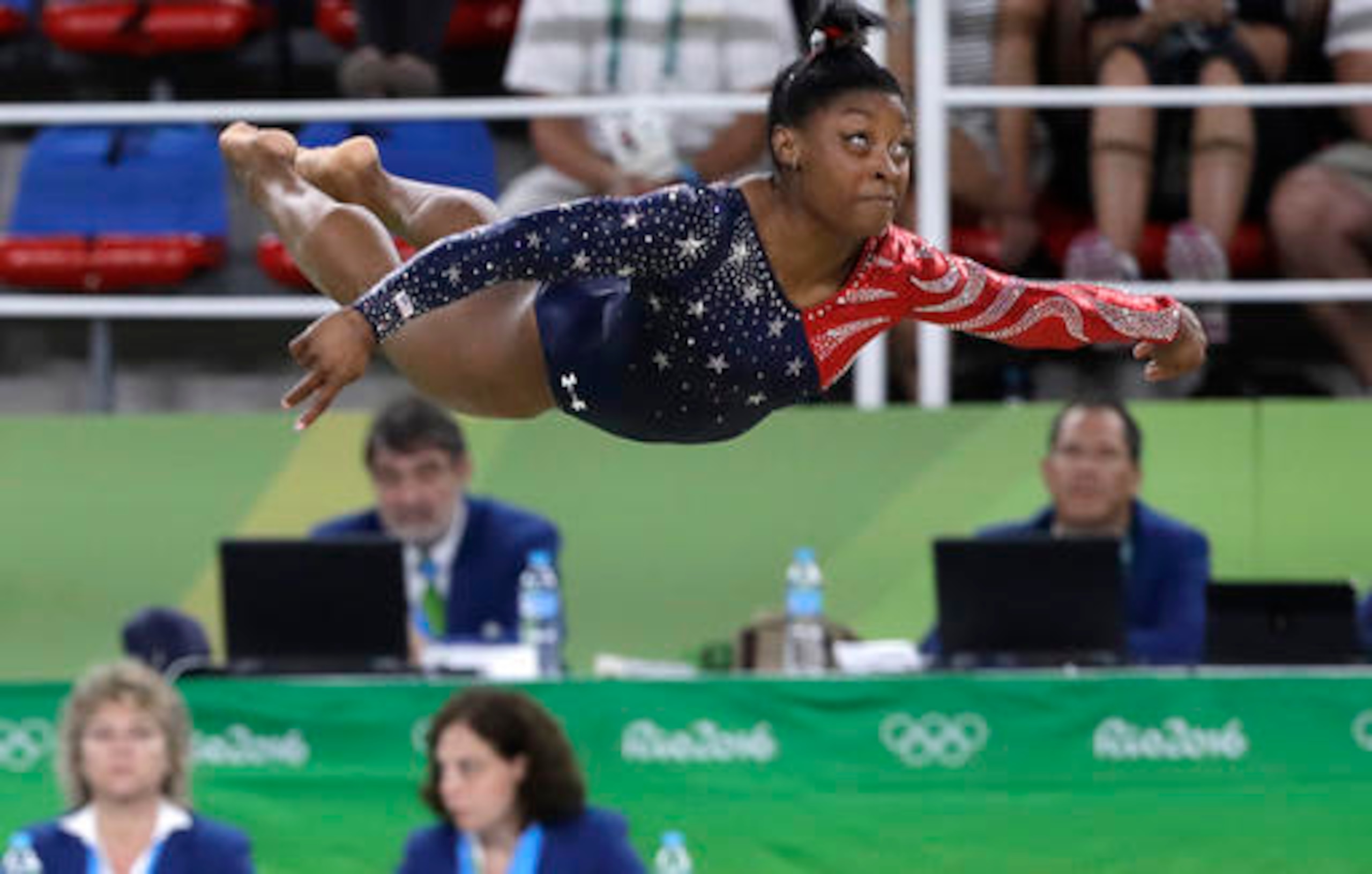
As good as advertised?
Maybe better.
Biles, 19, drew audible gasps from spectators with her elevation at the Rio Olympic Arena during Sunday's qualifying.
She turned in the day's top scores on three of four pieces of equipment. The fourth, she was second.
Bars were supposed to be her weakest event. But she wound up second in the entire field—to her teammate, specialist Madison Kocian.
She dispelled any notion that an uncharacteristically shaky Olympic trials (which she still won) meant some pre-Games nerves were showing.
While others struggled to score mid-15s (combination of difficulty and execution points) in various events, Biles posted a staggering 16.0 and 16.1 on her two vaults. The vaults are already the hardest on the circuit—the Cheng and Amanar—with only a handful of others attempting them.
Biles, who appeared on the cover of Time magazine in the Olympic lead-up, currently also holds world titles in floor and balance beam and has not lost an all-around competition in three years.


Weakness: Uneven Bars
4 of 6
Bars are considered the U.S. team’s weakest event and the only one with a "specialist," Madison Kocian, who, barring a crisis, is not expected to contribute on any other apparatus.
Sunday's qualifying, however, told a different story.
Raisman turned in a season-best score of 14.733. Biles, on her "worst" event, scored a remarkable 15.0. Douglas also had a season-best with 15.766. Kocian delivered, topping the 96-person field—and even teammate Biles—with a 15.866.
The message: With this team, "weakest" is relative.
Kocian owns a 2015 World Championship gold medal, albeit shared with three others—China’s Fan Yilin and Russians Daria Spiridonova and Viktoria Komova, who is not at the Games due to a back injury.
As the tie at worlds indicated, bars should be the most hotly contested event in the team final Tuesday and the apparatus event Aug. 14.
Strength: Versatility
5 of 6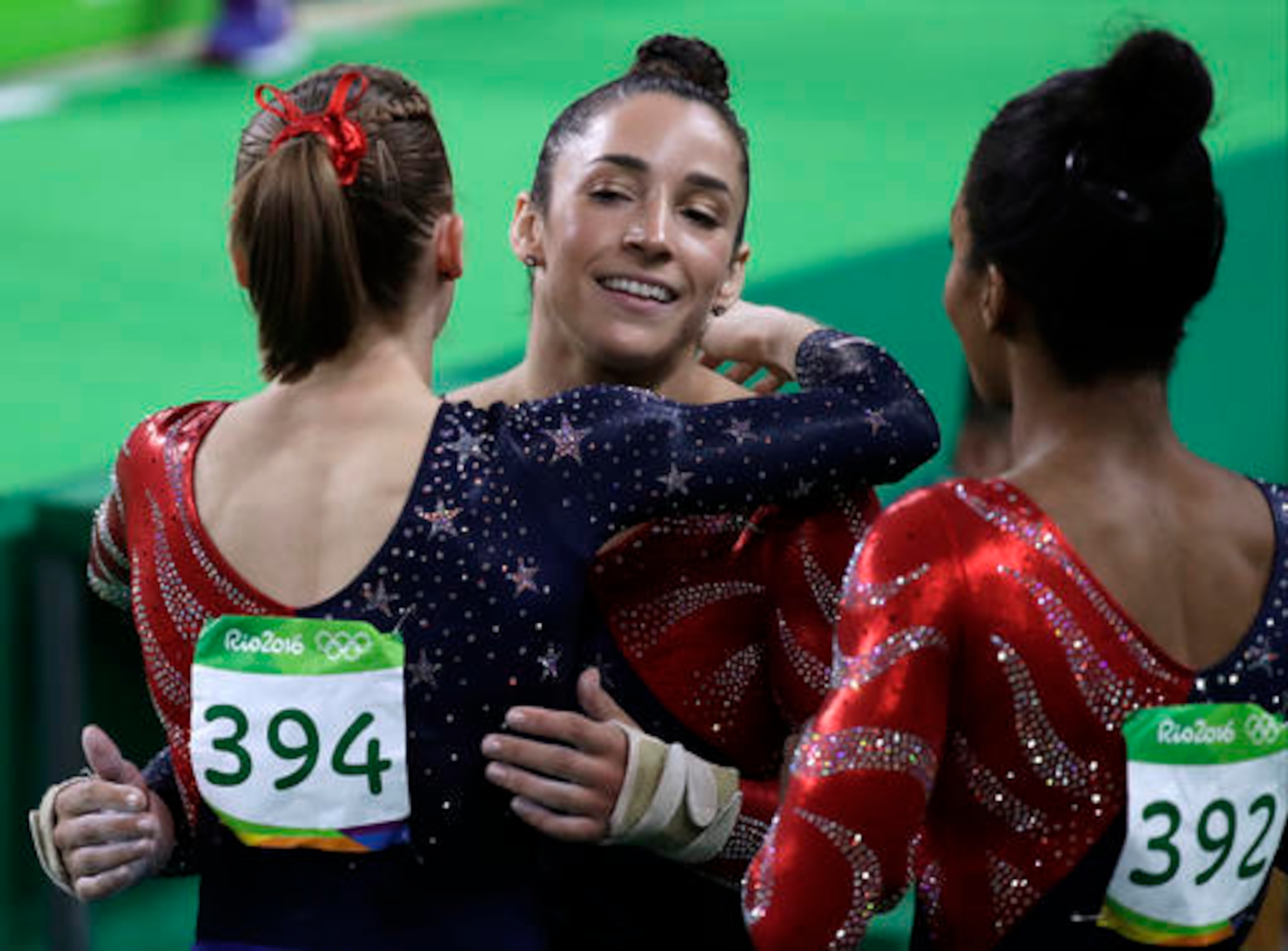
Two-time Olympic team captain Aly Raisman, 22, brings more than leadership and stability to the U.S. team.
On Sunday, she just brought it.
Operating in Biles' shadow, it's easy to overlook what Raisman did in Sunday's prelims.
Raisman finished second in the entire field. She beat out (barely) teammate and defending Olympic champion Gabby Douglas for the second all-around spot. She turned in her season-high 14.733 score on the uneven bars and an impressive 15.766 on the vault. She was solid on beam.
Just as impressive: Her teammates brought it too.
Laurie Hernandez, whom team coordinator Martha Karolyi later revealed was limited by a strained ab muscle, turned in the day's second-best beam score (to Biles).
Douglas, seventh at the Olympic trials, turned in a season-best bars routine and conquered the balance beam after falling from it twice at trials.
Kocian landed the day's best routine on her specialty—the uneven bars.
Biles...well, see slide No. 4.
Versatility like this can cause headaches, but it looks like Karolyi made the right calls in: 1. Naming Douglas over Ashton Locklear, who outperformed her in trials, to the Olympic team. (Karolyi told reporters it was the toughest decision she had to make in her 15 years as team coordinator); and 2. Selecting Raisman over Hernandez for all-around contention in qualifying—though Hernandez's injury must have made that decision easier.
And, yes, most teams would kill for headaches like this one.
Weakness: Consistency
6 of 6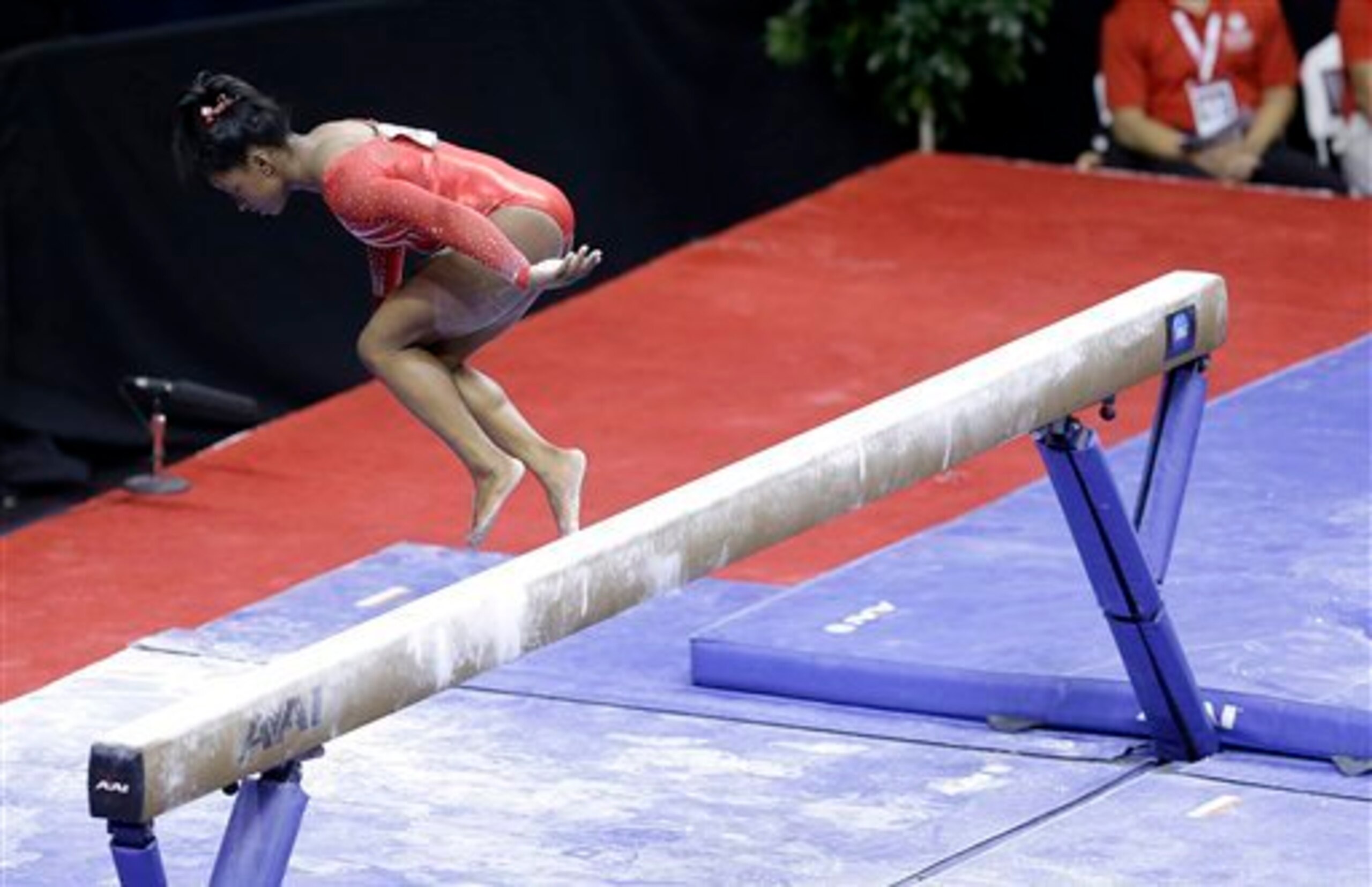
Coming into the prelims, the U.S. had some ghosts of competitions past to contend with.
Considering how the U.S. team practically lapped the field Sunday, they are almost hard to remember now:
There was Gabby Douglas’ unsteadiness at an Olympic trials that saw her finish seventh and teammates’ uncharacteristic mishaps on the balance beam and floor at trials. Raisman’s reputation for steadiness took a hit when she went through a crisis of confidence late last year (fifth at worlds) and early this season following a long layoff after the 2012 Games.
Raisman worked her way out of it. As for Douglas, only Karolyi’s faith—and knowledge that Douglas can deliver in big moments—made her a 2016 Olympic team member. That and a stint of hard work at the Karolyi ranch last month.
But that seems to be in the past now, with Sunday’s prelims a showcase for a team that is thriving. Bring on the team competition.



.jpg?w=2560 "Latest Peyton-Colts Rumors")