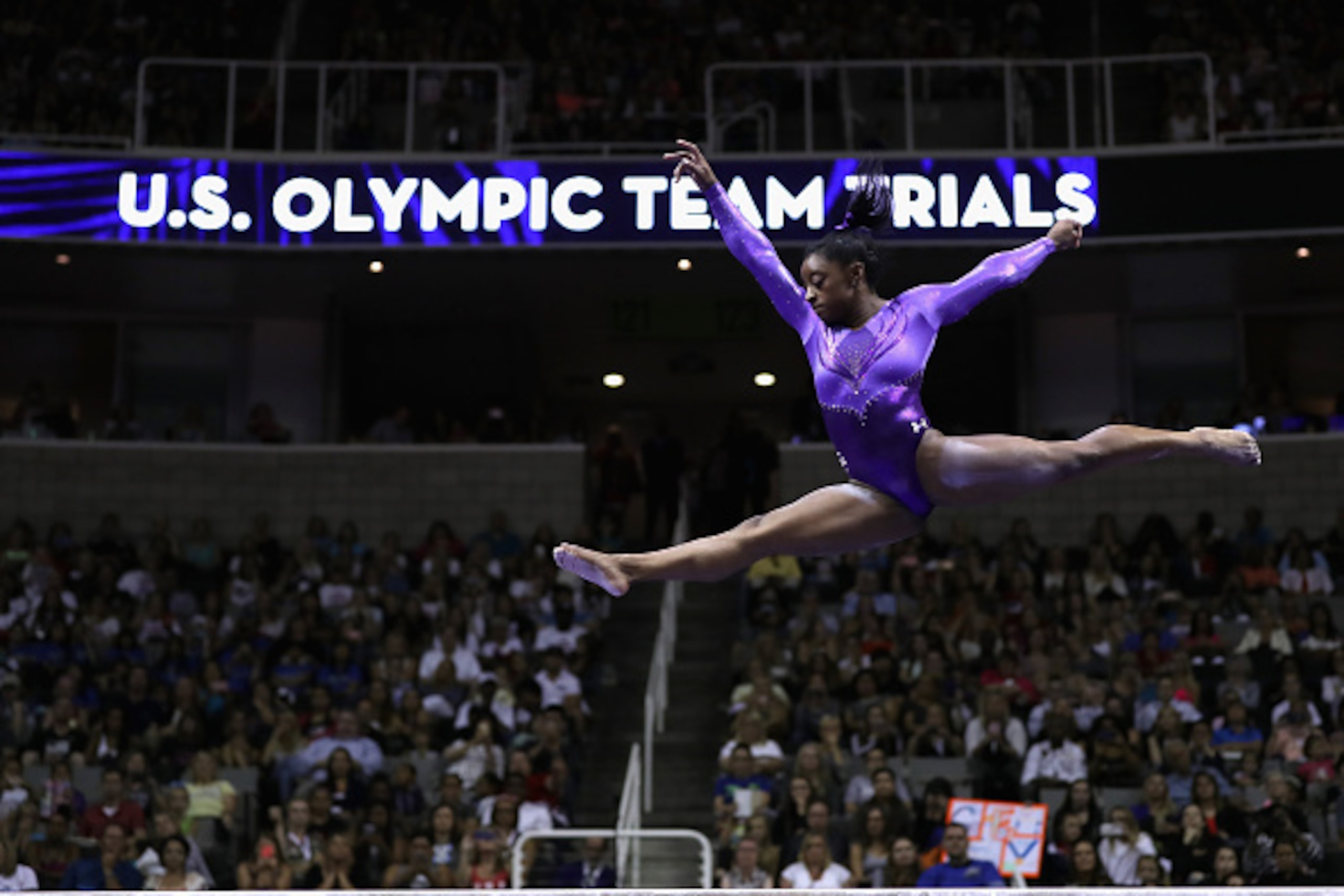
2016 Summer Olympics: Complete Guide to Women's Gymnastics
Forty years ago, Romania’s Nadia Comaneci scored the Olympics’ first perfect 10, on the uneven bars. It was something no one had seen before at the Olympic Games.
The method of scoring that allowed the "perfect 10" is gone, replaced by a two-score system measuring degree of difficulty and execution. But this year, there's a feeling that a similar threshold will be passed when people see Simone Biles for the first time at the Olympics.
Biles, 19, familiar to those who follow the sport, flies higher, spins tighter and appears to do so with less effort than everyone else. Before Biles, no one had won three straight all-around world championships.
Almost as remarkable is the fact that Biles is surrounded by a team of accomplished stars, of which any other country would be happy to have even one. The U.S. team of defending Olympic gold medalists features London returnees in all-around Olympic champion Gabby Douglas and floor exercise gold medalist Aly Raisman, who also won bronze on the balance beam.
Douglas will try to do what no Olympian since Comaneci has done since 1980: return from winning all-around gold to win a medal at the next games. Add rising star Laurie Hernandez, who came in second all-around to Biles at the U.S. Olympic trials, and Madison Kocian, who shared uneven bars gold at last year’s world championship, and you have what could be one of the greatest teams in U.S. Olympic history.
It would be a fitting sendoff to team coordinator Martha Karolyi, who will retire after these games, ending her legendary career.
But that’s for later. For now, watch Biles soar.
Overview and History
1 of 9
Gymnastics has always been part of the Olympics, starting with the modern games in 1896 in Athens. It just didn’t look like it does now. It took until 1924 to resemble the current program, when the men competed in an individual and team format. Women started competing in 1928.
Before that, gymnastics events included events that were later dropped, like club swinging, rock lifting and swimming.
In 1952, amid the Cold War, the Soviet Union and its satellite countries began a long era of domination in the sport. The Soviet Union won nine of 10 Olympic team golds from 1952 to 1988. Romania’s team won medals in every Olympics since 1976 but stunningly failed to qualify a women’s team this year. Star Larisa Iordache’s injury played a role.
Gymnastics is one of the three longest running and most popular sports in the Olympics, along with swimming and track and field.
Gymnastics images often become Olympic icons because the sport is regularly among the most popular of the games.
For example, there was Comaneci, at 14, on the bars, her arching back a flourish after a perfect dismount in 1976; a pigtailed Olga Korbut, the small Belarus star who smiled and won four medals in 1972; and Mary Lou Retton’s determined vault approach in 1984 that won her all-around gold and the U.S. team’s first Olympic team medal since 1948.
There was also Kerri Strug’s vault dismount and flamingo stand to protect her injured ankle, followed by then-coach Bela Karolyi, Martha’s husband, carrying her to the medal ceremony; and Carly Patterson’s all-around gold in 2004, the first of three straight golds by Americans, who now are dominating the sport.
Women's Gymnastics Schedule
2 of 9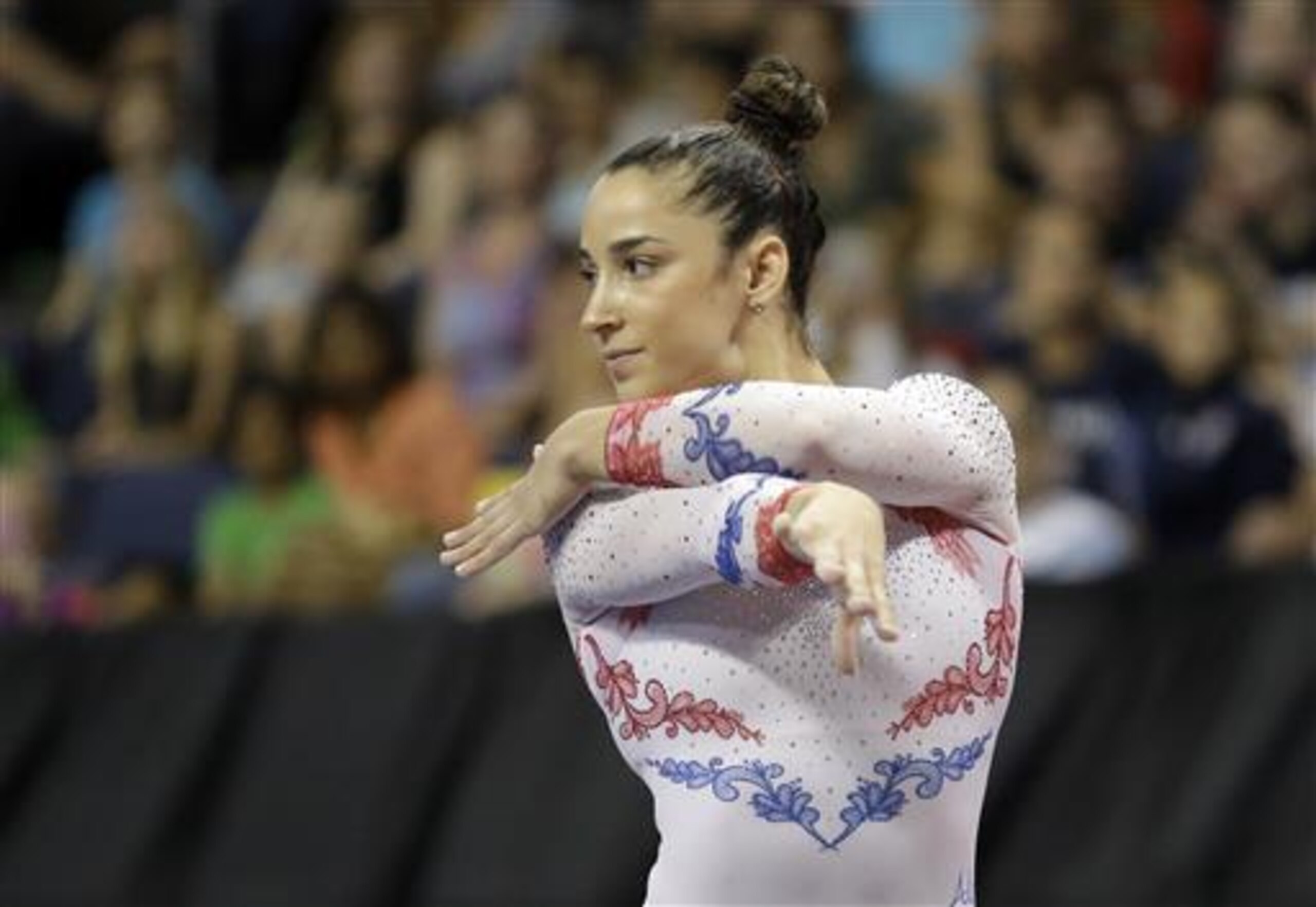
Aug. 7 – Qualification
Aug. 9 – Team all-around finals
Aug. 11 – Individual all-around finals
Aug. 14 – Individual apparatus finals, vault and uneven bars
Aug. 15 – Individual apparatus finals, balance beam
Aug. 16 – Individual apparatus finals, floor exercise
Top Storylines
3 of 9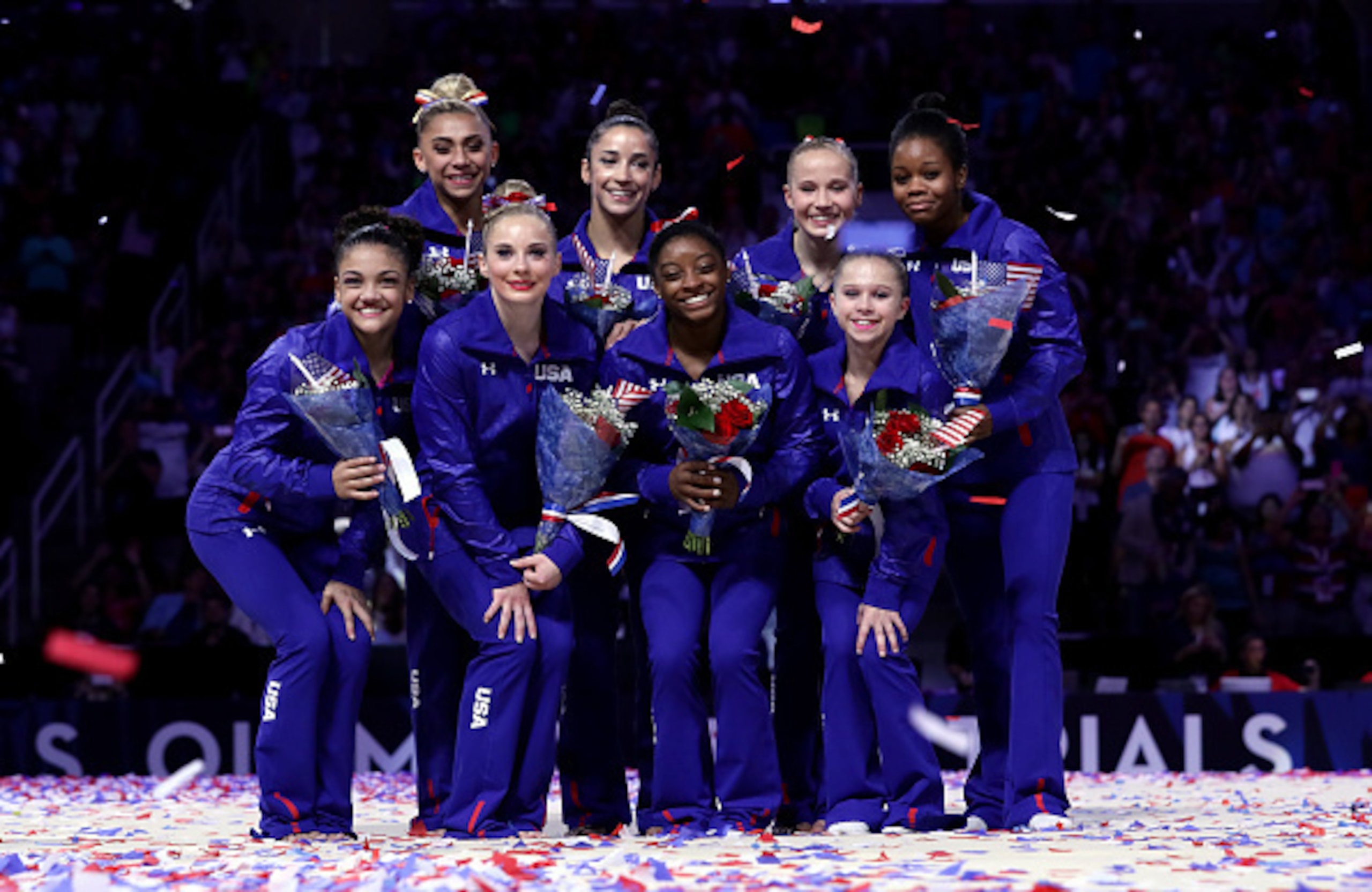
U.S. dominance
No U.S. women’s gymnastics team has come into an Olympics with greater expectations than this one. Everyone’s all but handing the team the gold medal. Can they pull it off in the glare of the biggest spotlight ever?
The defending Olympic champions are led by the sensational Simone Biles, 19, winner of an unprecedented three world titles, and returning Olympic medalists in Gabby Douglas (all-around, team) and Aly Raisman (team, floor, beam).
They also have a rising star in Laurie Hernandez and a whiz on uneven bars in Madison Kocian, owner of a gold medal—in a bizarre four-way tie—from the world championships last October.
But most of the expectations surround Olympic rookie Biles, who has won an unprecedented three straight world titles, including 14 world medals (10 gold). If she wins the all-around title—Biles has won every major all-around competition since 2013—the U.S. would have back-to-back Olympic all-around champions for the first time in its history.
Who can challenge?
China – A largely unknown and unproven group—no gymnasts return from the 2012 fourth-place finishers—China nonetheless took silver in the 2015 world championships in October. Look for Wang Yan (beam) and Fan Yilin (uneven bars) to star in Rio.
China has been dogged by age controversies in the past two games and was stripped of its team bronze medal in 2000 after an investigation determined China used an underage gymnast. In 2008, there were similar suspicions, but no sanctions were handed down after investigations by both the International Olympic Committee and the International Gymnastics Federation.
The 2000 medal was awarded to the U.S., which had finished fourth. Officials insist this year’s team is legal, all aged 16 or older.
Russia – This perennial power had a shockingly poor worlds, finishing out of the medals as all three gymnasts fell in the team beam competition and had ho-hum floor routines.
Viktoria Komova, one of the four bars champions, is injured and Ksenia Afanasyeva, world silver medalist on floor, abruptly retired just before the games, reportedly due to kidney stones, per RSport (h/t Amanda Wijangco of FloGymnastics.com).
Still, Russia can deliver in Rio, with Aliya Mustafina (all-around), Angelina Melnikova (all-around), Daria Spiridonova (bars) and Maria Paseka (vault) favored for medals.
Great Britain – Great Britain won its first world medal in October, earning bronze, a huge breakthrough for the program that capitalized on Russia’s woes and showed growth on the sport’s international stage after a ninth-place finish as Olympic host in 2012. Britain doesn’t have a huge star but used strong performances on floor and beam to place at worlds.
Becky Downie, the European bars champion, is the only member with Olympic experience, and that was in 2008 (she was a reserve in 2012). This year, she helped Britain win team silver at the European Championships. If Britain hopes to replicate its surprising world championship result, Downie will have to be on and get help from sister Elissa and all-arounder Claudia Fragapane.
Which Gabby Douglas will show up?
Will we see the Douglas who earned an all-around silver behind Biles at the 2015 world championships? Or the one who finished seventh at the Olympic trials?
The defending all-around Olympic champion looked on form at the world championships after a lengthy post-Olympics layoff. But two shaky performances preceding the games, including a fourth at the national championships (she was a coaches’ selection to the Olympic team after trials), have cast her medal chances in doubt.
Douglas, 20, fell from the balance beam on both nights of trials but looked strong on vault and steady on her strength, the uneven bars. Her reputation on bars and as a clutch performer, one familiar to team coordinator Martha Karolyi, likely helped seal her Olympic team berth.
Since trials, Karolyi has said Douglas worked out her problems during the pre-Olympic team camp at the Texas ranch where the team trains regularly. If Douglas rediscovers her magic in a big way in Rio—and somehow beats Biles—she would be the first gymnast since 1968 to win consecutive all-around gold.

Can't-Miss Events
4 of 9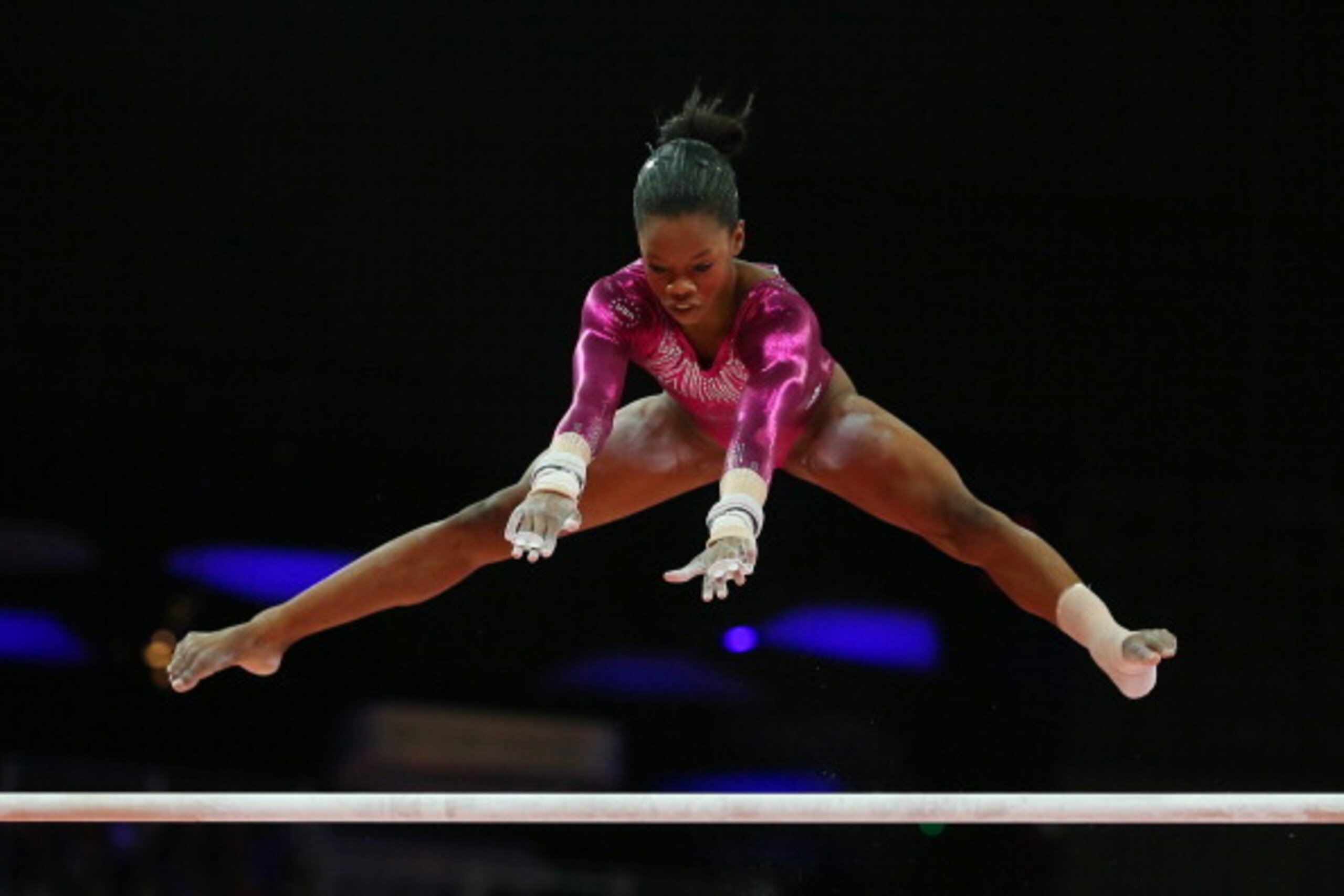
Aug. 7 – Qualification. This is the early subplot that will set the stage for the competition to come, especially for the deep U.S. team. Format allows for only two entries in the all-around competition. That means Simone Biles and…who?
Gabby Douglas, the defending Olympic champion and world silver medalist? Laurie Hernandez, the Olympic rookie who was a runner-up in the Olympic trials? Or Aly Raisman, who was third at trials and lost in a tiebreaker for 2012 bronze?
Aug. 9 – Women’s team finals. The heavily favored U.S. could make history by matching the gold of 2012’s “Fierce Five” Douglas, Raisman, McKayla Maroney, Kyla Ross and Jordyn Wieber. But if U.S. gymnasts falter like they did at trials, China and Russia, and perhaps Great Britain, can make it a contest.
Aug. 11 – Women’s all-around final. The closest competitor to Biles, who hasn’t lost an all-around competition in more than three years, might be her own teammates, Douglas, Hernandez or Raisman. Watch out for China's Shang Chunsong and Russia's Angelina Melnikova.
Aug. 14 – Individual apparatus finals, vault and uneven bars. Look for Russia's Maria Paseka and North Korea's Hong Un-Jong to challenge Biles for gold. Bars is a tossup, with China's Fan Yilin, Madison Kocian of the U.S., Russia's Daria Spiridonova and possibly Britain's Becky Downie in the mix.
Aug. 15 – Individual apparatus finals, balance beam. Given Biles' wobbliness at trials, this is not a slam dunk gold. China's Wang Yan, Hernandez of the U.S. and Russia's Aliya Mustafina should compete.
Aug. 16 – Individual apparatus finals, floor. Biles will again be favored for gold, but Raisman could medal as could Switzerland's Giulia Steingruber.
Locks for Gold
5 of 9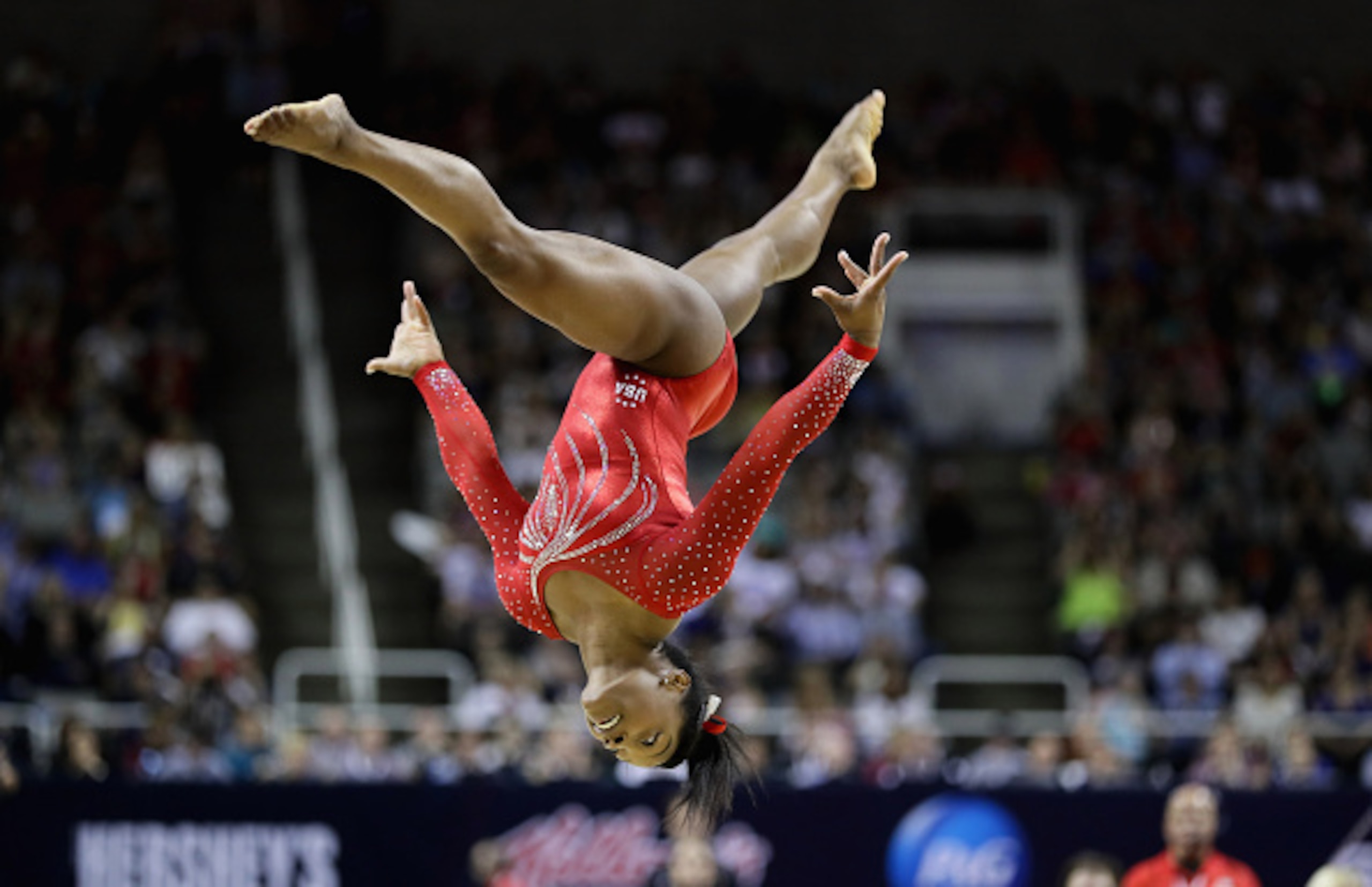
Simone Biles, all-around – With a degree of difficulty in most events substantially higher than anyone else, it’s like Biles has a 10-yard head start in the 100-yard dash. At the 2015 worlds, her all-around score was more than a full point better than teammate Gabby Douglas, the runner-up, and Romania's Larisa Iordache.
U.S., team – No team has the depth of the United States, winner of the last three world team titles. At the 2015 worlds, more than five points separated the Americans from runner-up China, a huge margin in the sport (about four points separated second through fourth places). Nine scores by Americans were 15 or above, compared to five for China.
Biles, vault – Her vault is the Amanar, so tough that some gymnasts don’t have it in their programs. It's a back handspring onto the horse, then a 2.5 twisting layout backflip off it. Others, like Russia's Maria Paseka and North Korean's Hong Un-Jong, have it. Biles scores on the vault at worlds were 15.966 in the team competition and 15.833 in the all-around. Paseka's 15.6 in the team event was the closest.
Dark Horses to Watch
6 of 9
Oksana Chusovitina – From Uzbekistan, Chusovitina is one of the best underdog stories of the entire games. At 41 and the oldest and only gymnast to compete in seven Olympics, she is entered in a full slate of events. Her specialty is the vault, where she holds the record for most world medals in a single event (nine).
Chusovitina has competed for three different national teams at the Olympics, partly due to her son, diagnosed with leukemia, which prompted her to move to Germany to seek treatment. In Rio, she will compete for Uzbekistan.
Madison Kocian – The bars specialist the U.S. needs, Kocian shared gold in a bizarre four-way tie with Russians Daria Spiridonova and Viktoria Komova and Fan Yilin of China at the 2015 world championships.
Kocian has shown grit. She survived a pressure-packed Olympic trials duel with Ashton Locklear for the team’s fifth spot, posting the highest score of the competition on bars and proving she could be solid on other apparatuses, giving her the edge for an Olympic berth. The two-time world team member, Kocian recovered from a broken bone in her left leg in February.
Becky Downie – Britain’s most prominent gymnast is best on bars, probably the tightest field of the competition, and is also strong on beam. If Britain is to repeat its world championship performance and medal in Rio, Downie will have to do well on both and get help from teammates.
Potential Breakout Stars
7 of 9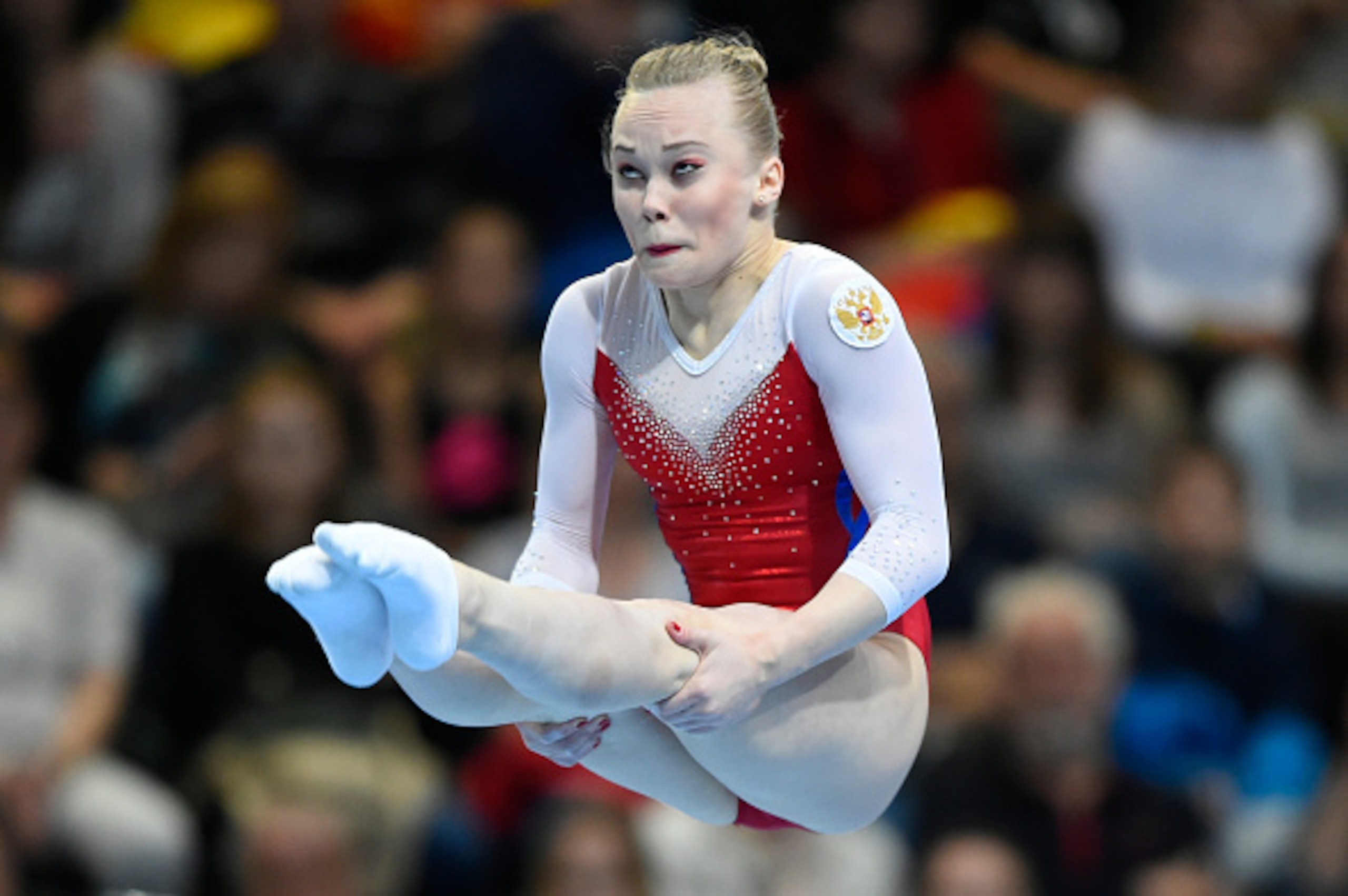
Laurie Hernandez – With her poise and flair, it’s easy to forget Hernandez, 16, has yet to compete in either world championship or Olympic competition due to the sport’s minimum age requirement (16).
But her runner-up finish behind Biles at the Olympic trials, where she earned the field’s highest scores on beam, and her consistent performances since joining the senior ranks (she was also third behind Biles and Raisman at nationals) have her in medal contention for the Olympic all-around.
Angelina Melnikova – Like Hernandez, Melnikova was too young to compete in the 2015 world championships, but she's skilled at multiple events. Melnikova, 16, is the Russian senior national all-around champion, winning the balance beam and floor. In 2014, she won the European junior all-around title.
Aliya Mustafina – Call this Mustafina’s revival after four years of troubled health (knee, back, flu, ankle). The Russian star missed last year’s world championship (back), undoubtedly playing a role in her nation’s slide from the medals.
Mustafina and teammate Maria Paseka are the only two returning Olympians from Russia’s 2012 silver medal team, where she won more medals than any gymnast (four) – team (silver), all-around (bronze), bars (gold) and floor (bronze).
Team USA Outlook
8 of 9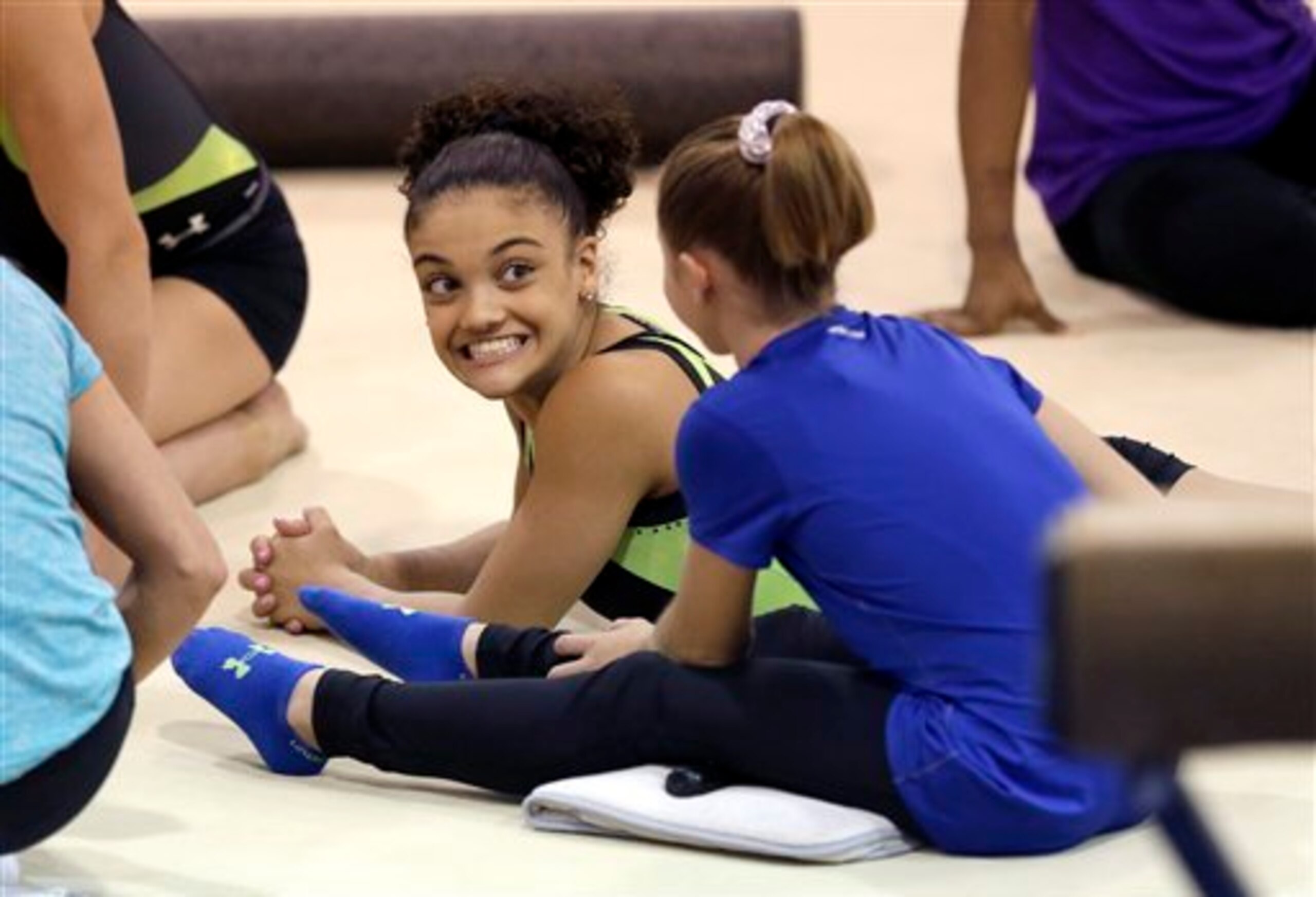
Nerves?
Hard to bet against the U.S. for team gold and Simone Biles for at least three golds (all-around, team, vault) and at least one other medal for floor.
Olympic veteran Aly Raisman, winner of two golds and a bronze in 2012, will likely figure into medals in team and possibly floor.
The subplot adding drama to the gymnastics’ prelims is who will be the second all-around competitor? Teams are allowed three competitors each in qualifying, with the top two making the prestigious all-around competition. Barring injury or a meteor striking the Rio Olympic Arena, Biles will be one. Martha Karolyi and crew will have to decide who among Raisman, Gabby Douglas and Laurie Hernandez will compete.
Douglas is a question mark but could medal in the all-around, and Madison Kocian should win at least bronze in bars. Hernandez has a shot at a medal on floor and all-around.
Biles has an outside chance to leave Rio with five gold medals if she performs as well as she has on the international stage in the three years leading up to this one.
The U.S. has never won consecutive Olympic team golds, so this would be a first. But when considering the U.S. team's place in gymnastics history, look at the Soviet Union teams—they won nine of 10 team titles from 1952 to 1988.
Predictions for Biggest Stars
9 of 9
Simone Biles, U.S. – Team (gold), all-around (gold), vault (gold), floor (silver). Biles will lead the team to gold, and her Amanar will help win vault. Her all-around streak will remain intact, but Switzerland's Giulia Steingruber will be the surprise winner on floor.
Gabby Douglas, U.S. – Team (gold), all-around (bronze). Last week, national team coordinator Martha Karolyi said Douglas had improved at a team camp and was a "strong possibility" for the all-around after a shaky Olympic trials saw her finish seventh. If Douglas rediscovers her magic in a big way in Rio—and somehow beats Biles—she would be the first gymnast since 1968 to win consecutive all-around gold.
Douglas changed coaches twice since 2012 and created a stir when she switched from having regular coach Kittia Carpenter on the competition floor to another coach, Christian Gallardo.
Aliya Mustafina, Russia – Team (bronze), beam (silver). Russian team captain Mustafina, 21, the 2010 all-around world champion, still has some gas left in the tank. With first-year senior and Russian champion Angelina Melnikova, 16, she'll help lead Russia to a redemptive team bronze (behind the U.S. and China) and will use her savvy to win a medal on beam.

.jpg?w=2560 "World Series Game 4 Highlights 🎬")
.jpg?w=2560 "Goff's 'Waterboy' Costume 💧")