Ryan Fitzpatrick and the NY Jets Finally Did the Smart Thing for a Silly Reason
Sometimes, it takes something really stupid to convince smart people to do the smart thing.
Take Ryan Fitzpatrick and the New York Jets, a journeyman quarterback and the team he led to the verge of the playoffs last year. Fitzpatrick and the Jets brought out the best in each other in 2015. They work better together than Fitzpatrick has ever worked with another team or the Jets with any recent quarterback. But pride, principle and a little bit of money kept them apart from the start of free agency through the first day of training camp.
Nothing could bring them together. Not an icy free agent market for Fitzpatrick's services, and not a shallow draft class that left the Jets scraping the bottom of the prospect barrel. The Jets spent the offseason with the three worst Friends episodes on their quarterback depth chart: The One Who Gets Punched by Teammates, The One Who Can Barely Play Madden and The One Who Couldn't Beat Northwestern. Fitzpatrick spent the offseason in limbo.
.jpg?w=2560 "Colts Football")
.jpg?w=2560 "Commanders 49ers Football")
.jpg?w=2560)
It got so bad that Fitzpatrick bestie and team leader Brandon Marshall even got involved, offering strong endorsements and even leading a micro-holdout on Fitzpatrick's behalf. Not only did the protest fail, but Fitzpatrick stopped responding to Marshall's messages for a while, "scaring" his wide receiver pal, as he said on the I AM RAPAPORT podcast. That's what happens when a buddy gets stuck in the middle of a lover's tiff.
No one would budge. The Jets penciled literal organizational punching bag Geno Smith in as the starter. Fitzpatrick, who eventually checked in with Marshall for an Instagram session, prepared to do whatever bearded Harvard alums do when not playing football—haunt flea markets or something. Jets camp opened on Wednesday with no Fitzpatrick in sight and reports from all the insiders that he would not arrive any time soon.
Then, something stupid happened.
The Rams cut Nick Foles, former prized acquisition turned overpaid catastrophe. There was suddenly another quarterback with starting experience on the open market.
Within hours, Fitzpatrick signed a one-year, $12-million contract (with an additional $3 million in incentives), as Adam Schefter of ESPN first reported.
Months of speculation and negotiation, passionate lobbying by Marshall and other veterans, the threat of Bryce Petty walking on the field with an Xbox controller (he claimed earlier this year showed his growth as a QB) to operate in relief of Smith and universal appeals to common sense all failed, but the threat of Nick Foles as a Fitzpatrick surrogate succeeded?
The Foles-as-leverage story feels too simplistic and reductive to be true. But the thrifty one-year deal Fitzpatrick signed suggests that he knew he was out of alternatives. Fitzpatrick and agent Jimmy Sexton may not have believed that the Jets would really sign Foles—adding one more unpredictable variable to the Smith-Petty-Christian Hackenberg equation would create more problems than it solved—but felt that Foles' presence on the market closed the door on Fitzpatrick's other theoretical opportunities.
Maybe Fitzpatrick read the sad litany of quotes emanating from Jets camp on opening day. Veterans would not speak at length about the quarterback situation, stating that the team ordered them to not address the topic. Nick Mangold delivered a weird soliloquy about corpse flowers. Neither coach Todd Bowles nor Geno Smith offered an inaugural camp address. Fitzpatrick heard his friends getting weird and reciting emo poetry and decided that he could not bear to stay at home.
Maybe Fitzpatrick saw a one-year deal as an enticing gamble-on-yourself opportunity: one more big year with Marshall again stretching and twisting to haul in all his wobbliest passes, and Fitzpatrick could hit the market again in 2017 as a $40-million guaranteed veteran gunslinger. Granted, such a deal becomes more appealing when the one and only available starting job is suddenly in danger of disappearing.
Whatever the reason, Fitzpatrick did the right thing. So did the Jets by offering a short contract that operates like a discount franchise tag.
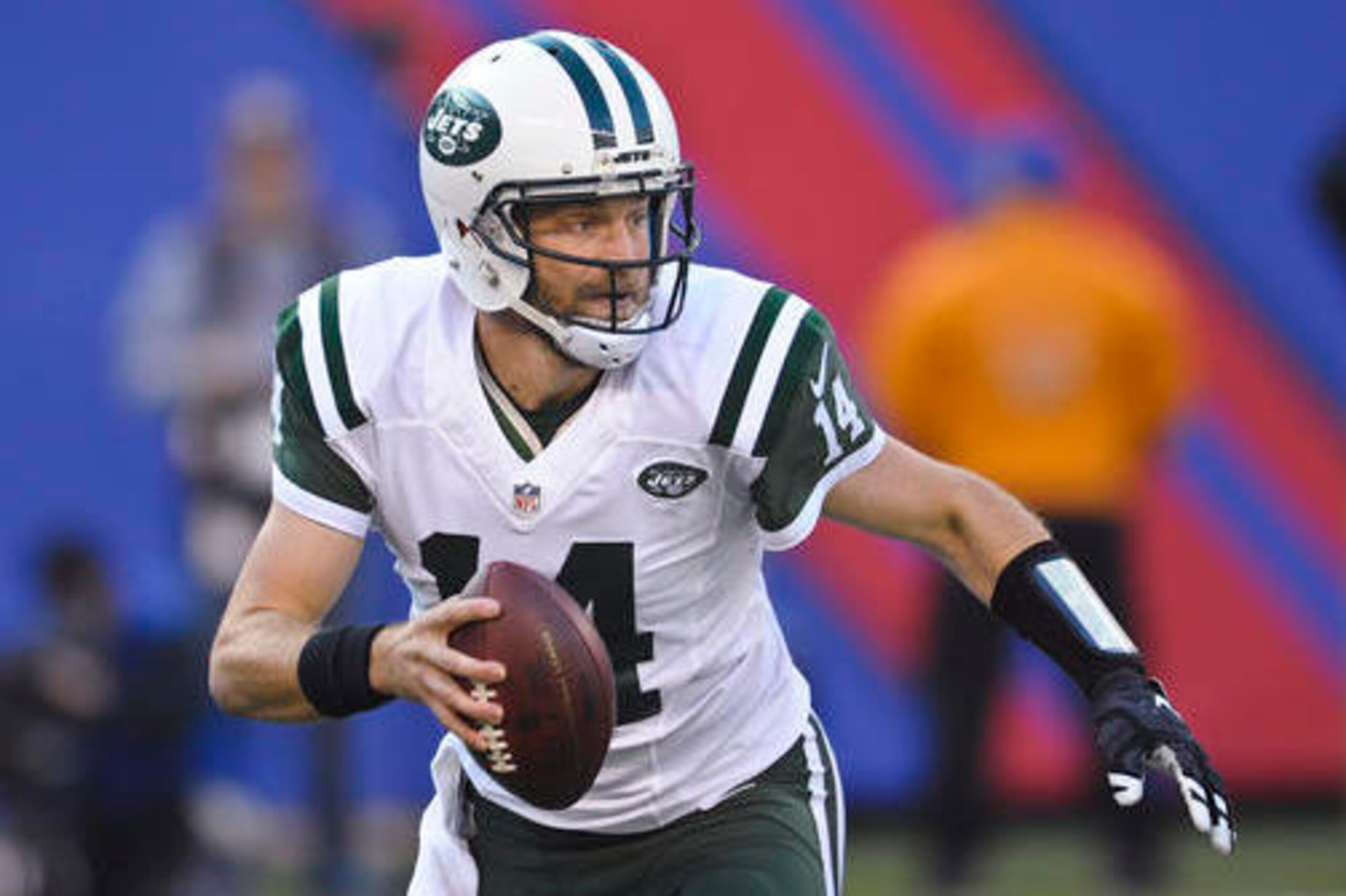
The quandary the Jets faced in placing a value on Fitzpatrick stems from the fact that there have always been three Ryan Fitzpatricks.
There is Ryan FitzMagic, the broadcaster's binkie and aging middle-class white guy wish fulfillment avatar, the quarterback who finds a way with his Ivy League education and throbbing determination.
Then there's Ryan FitzBogus, a straw-filled tackling dummy for the analytics crowd to work out its aggressions about "replacement level quarterbacking." Years ago, the Bills overpaid for the first guy during a hot streak and found that they handed the keys to the franchise to the second guy, a mistake the Jets surely remembered during their budget meetings.
In between the two extremes is the real Fitzpatrick: adequate stopgap starter, capable backup, useful scout troop leader and playbook tutor. For all of his limitations, Fitzpatrick can provide four services the Jets desperately need in 2016:
- Baseline professionalism at quarterback
- A trust-comfort factor among Marshall and the other veterans
- A quarterback who needs limited reps to prepare, allowing the youngsters get more opportunities
- The twinkle-eyed media savvy to defuse drama if and when things get weirder than they got when Mangold started turning into April Ludgate on Wednesday.
The Jets weren't going anywhere in 2016 without those four services. What's worse, they risked jeopardizing the development of their young quarterbacks. Petty and Hackenberg couldn't exactly look up to Smith as an exemplar of success and professionalism.
But the Jets, an expensive veteran team with win-now expectations inside and outside the locker room, picked a strange time to start playing Moneyball. And Fitzpatrick spent the offseason expecting some of that sweet short-term starter money the Eagles and Sam Bradford agreed to in March and almost immediately regretted. Even if the Jets were inclined to give him that kind of money (which they weren't), their salary cap situation made it almost impossible.
Each side tried to bluff the other, even though each had a losing hand.
Then along came Foles, who had a hot streak in 2013, when Chip Kelly's no-huddle offense was taking opponents by surprise. He parlayed a 18-touchdown, zero-interception run in a seven-game stretch into an Eagles playoff appearance and a Pro Bowl.
Then reality set in and kept setting in for two solid years. The more defenses saw of him, the worse he got. Immobile and fumble prone, Foles was last seen losing a starting job to Case Keenum. The last two teams Foles played for traded truckloads of draft picks to move up in the draft to solve the quarterback problems that he exacerbated.
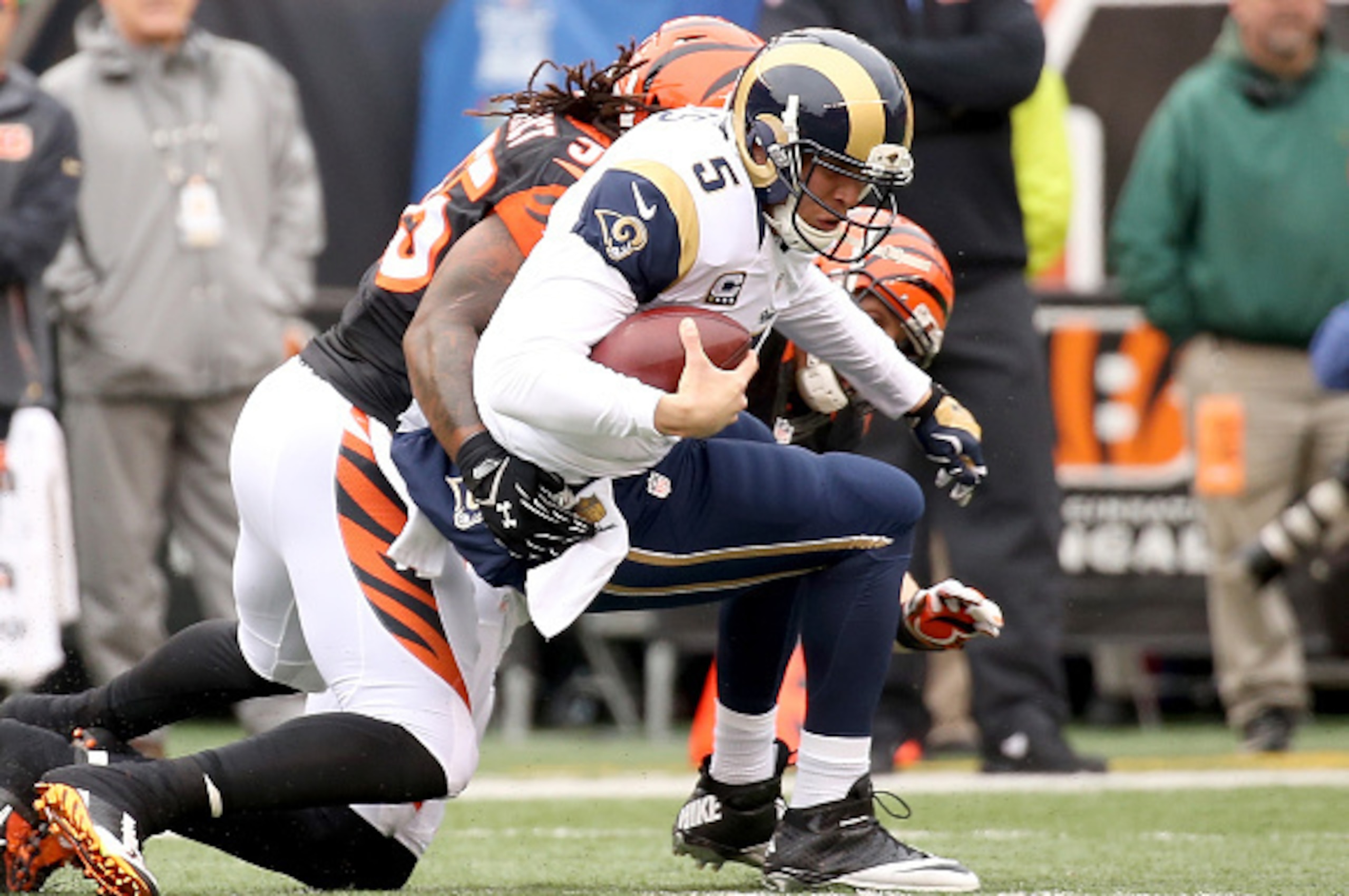
Foles is a great guy with a strong arm and a can-do spirit, but he is not an NFL starter, even at Fitzpatrick's modest level. But his brief flirtation with excellence, followed by years of evidence to the contrary, makes him exactly the kind of quarterback mistake the Jets have a habit of making.
Maybe that's what made Fitzpatrick so eager to sign.
Whatever the cause, it was not just a wise move for both sides. It was the only move. With Fitzpatrick, the Jets are a 10-11 win team with something the franchise rarely enjoys: good chemistry. Without him, they would have been an overpriced rebuilding team that couldn't even get through opening-day stretches without issuing a bunch of "no comment" responses.
The Jets aren't the Patriots, and Fitzpatrick is far from Tom Brady. But for now, they meet each other's needs. They complete each other. They should have settled these differences weeks ago.
Maybe Foles really did give the Jets leverage and Fitzpatrick motivation. Or maybe both sides just needed a long, honest look at their real alternatives.
Mike Tanier covers the NFL for Bleacher Report. Follow him on Twitter @MikeTanier.
.jpg?w=2560 "DOLPHINS-AIKMAN")




.png?w=2560 "Week 8 Winners & Losers 📊")