
Ranking the Most Prestigious Summer Olympic Events
Every gold medal awarded at the 2016 Summer Olympics will be the same size, but not all seem to have the same weight. Some events simply carry more prestige.
Let’s face it: American viewers typically are not going to laud an athlete who picks up a gold medal in, say, taekwondo as much as they would someone like Mary Lou Retton, who is pictured above a few days after her gold-medal-winning gymnastics performance in 1984. In this we'll look at things from an American perspective, which may not be the same as the world’s viewpoint.
We selected nine Olympic events that seem to top the list in terms of prestige in the eyes of the American public, then ranked those nine accordingly.
Some sports presented problems. Tennis is a well-regarded Olympic sport, but since tennis at the Olympics ranks as just the fifth-most prestigious event in the sport, behind the four Grand Slam tournaments, it was not included. Where golf would fit in during its first year as an Olympic sport since 1904 was impossible to ascertain, especially with many of the top players not participating, so it was left out.
Olympic swimming as a whole carries a lot of prestige, although no particular swimming events stand out as the sport’s centerpieces, making it difficult to rank swimming. It was impossible to leave swimming out completely, however.
It should be noted that popularity and prestige are not the same, although they have a strong correlation.
9. Beach Volleyball
1 of 9
The relatively new Olympic sport of beach volleyball edged out its cousin, volleyball, for the final spot on our list because of two people: Kerri Walsh Jennings and Misty May-Treanor.
That American pair won the women's beach volleyball gold medal in each of the past three Olympics, which served to focus attention on the sport. With May-Treanor now retired, Walsh Jennings will try to win a fourth gold medial in Rio with new partner April Ross, per the New York Times. Since Ross was a member of the silver-medal-winning duo in 2012, Walsh Jennings and Ross figure to be the favorites in Rio.
But it was primarily Walsh Jennings and May-Treanor who were responsible for the spike in interest in beach (or sand) volleyball, according to a 2015 report by Scott Graf of public radio station WBUR.
"What they did to put the sport of beach volleyball on the map is legendary and I think will never be repeated," Kathy DeBoer, executive director of the American Volleyball Coaches Association, told WBUR.
In 2014, sand volleyball became an NCAA sport, with colleges able to award scholarships in that sport, according to the Star Tribune.
On the Olympic level, it has now become a prime viewing event.
In 2008, David Hinckley of the New York Daily News noted how much coverage NBC was devoting to beach volleyball. In 2012, Headline Planet reported, via NBC, that the riveting Olympic semifinal match between China and Walsh Jennings/May-Treanor was one of the events that led to historic TV ratings that day.
8. Men's 1,500 Meters
2 of 9
Seldom does an American athlete who finished second find his name in the headlines of a major newspaper. But when Leo Manzano won silver in the 1,500 meters at the 2012 Olympics, USAToday.com reported the story with this headline: "USA's Manzano comes from behind to claim silver in 1,500."
The attention given to a runner-up has something to do with the event, which carries the weighty moniker of "the metric mile." The mile run is laced with tradition, especially the competition that took place more than 60 years ago to run the first sub-four-minute mile. The feat was accomplished in 1954 by Roger Bannister, who never won an Olympic medal but is still famous for that single achievement, as noted by the Telegraph.
In 2009, Kenny Moore wrote a Runner's World article in which the subhead began as follows: "The mile. It's the most glamorous race in running."
The mile is not run in the Olympics, and the 1,500 is the closest thing to it, measuring 139.34 meters shy of the mile distance. The 1,500 still carries some of the mythical allure of the mile.
The inability of Americans to perform well in the event also plays a role in the event's significance in this country. Manzano was the first American to win an Olympic medal in the 1,500 since Jim Ryun won silver in 1968. And it was Ryun who helped make the 1,500 meters important. In 1967, Ryun set the world record in the 1,500 at 3:33.1, a mark that stood for more than six years. He also set the world record in the mile in 1966, slicing more than two seconds off the previous record, and he held the mile record for nearly nine years.
In a 2015 retrospective about Ryun, Scott M. Reid of the Orange County Register wrote about Ryun's status during his prime: "In an age when track and field was more popular in the U.S. than the NBA, NHL and what is now NASCAR, no one was a bigger star than Ryun. He appeared on the cover of Sports Illustrated seven times, more than Willie Mays, Wilt Chamberlain, Sandy Koufax or Jim Brown."
When Manzano won his silver medal, he was asked if he had heard of Ryun. Manzano told the Denver Post: "I've known about Jim Ryun. He's from Kansas if I'm correct. A lot of the U.S. distance running has lived in his shadow."
7. Marathon
3 of 9
The Olympic marathon carries several levels of prestige.
First, the event's apparent ties to ancient history has allure. Time magazine reported that the event may have been spawned by the fact that Pheidippides ran from Marathon to Athens, covering a distance of about 25 miles, to proclaim that Athens won the Battle of Marathon in 490 B.C. However, the article notes that nobody can be sure of the race's historical origin, adding to the event's mystery.
Second, the race has an iconic and seemingly arbitrary distance: 26 miles, 385 yards. Apparently that was the marathon distance in the 1908 Olympics and it simply stood thereafter, according to the New York Times. The odd distance seems to make the event distinctive.
However, the main reason the gold-medal winner of this long-distance event is so lauded is the enormous amount of endurance and mental toughness needed to win. As Jere Longman of the New York Times wrote in 2002, "It is said that the marathon is really two races, the first 20 miles and the final six, when a runner's body and intent can hit the wall."
Marathon lore is also a factor in the event's significance, and Abebe Bikila of Ethiopia holds a special place in that lore. He was a relative unknown when he won the 1960 Olympic marathon while running the race barefoot, according to Sports-Reference.com. He won it again four years later while wearing shoes.
The United States has not been a major force in the marathon during the Olympics, with Frank Shorter's gold-medal run in 1972 and Joan Benoit's victory in 1984 being the notable exceptions. It is the event and its distinctive demands and history that are the story.



6. Men's Basketball
4 of 9
Men's basketball holds an odd prestige position among American viewers. This Olympic team sport gets the most attention in this country when the United States does not win the gold medal. That is when the sport's prestige seems to rise.
The United States has won the gold medal in 14 of the 17 Olympics in which it participated. But America's losses seem to illuminate Americans' pride in this sport, which was invented and developed in the U.S.
The first time America failed to win the gold medal in men's basketball was 1972, and the controversy that surrounded that loss to the Soviet Union in the title game still lives. The Huffington Post refers to the result as "stolen glory," and American team members refused to accept the silver medals as second-place finishers.
The loss in 1988, when the United States settled for bronze, led to the United States' Dream Team, which became an Olympics phenomenon in the 1992 Summer Games. It was the first year pros were put on the U.S. Olympic team, and the squad, which included Michael Jordan, Larry Bird and Magic Johnson, beat its Summer Games opponents by an average margin of 44 points. Even opponents seemed to worship this U.S. team.
The 1992 USA basketball team epitomized prestige.
"It was like Elvis and the Beatles put together," said U.S. coach Chuck Daly, per Huffington Post. "Traveling with the Dream Team was like traveling with 12 rock stars. That's all I can compare it to."
The gap between the U.S. and the rest of the world subsequently shrank, and the Americans finished third again in 2004. Following the Americans' 19-point loss to Puerto Rico in a preliminary-round game, David DuPree of USA Today wrote that the Americans were "rocked, shocked, humiliated and exposed on sports biggest stage."
The U.S. team lost three games in the 2004 Olympics, and that embarrassment got the attention of American basketball fans. It also led to the reorganization of USA Basketball, as noted by Tim Bontemps of the Washington Post.
To Americans, the prestige of Olympic basketball is in the fact that Americans should own the sport and never lose.
5. Decathlon
5 of 9
The prestige of the decathlon emanates from one mythical title that is bestowed on the event's gold medalist: world's greatest athlete. No public-relations firm could top that as a means of elevating the status of an event.
The Olympic decathlon may not carry the status it once did, as ESPN.com's Jim Caple suggested while noting that Ashton Eaton, the 2012 Olympic decathlon champion and world-record holder, is not as well known as some past decathletes.
Nonetheless, the tradition of the decathlon keeps it among the most prestigious Olympic events.
Jim Thorpe was named the Greatest Athlete of the First Half of the Century by the Associated Press, as noted by ESPN.com. Finishing first in the 1912 Olympic decathlon, which earned him a ticker-tape parade when he came home, had a lot to do with it. Thorpe finished nearly 700 points ahead of the second-place finisher, according to Sports-Reference.com, but the gold medal was later taken from Thorpe after reports he had been paid for playing baseball.
Bob Mathias won decathlon gold in 1948 and 1952, leading to The Bob Mathias Story, in which Mathias played himself, according to a New York Times obituary.
Bruce Jenner was on the front of Wheaties cereal boxes after winning the 1976 Olympic decathlon. Those boxes are selling for hundreds of dollars, according to Time magazine, after Jenner came out as transgender.
Reebok put together the expensive "Dan and Dave" ad campaign, promoting two American decathletes, Dan O'Brien and Dave Johnson, prior to the 1992 Olympics, per TeamUSA.org. That fizzled when O'Brien failed to make the U.S. team that year, but he won the gold medal four years later.
Bill Toomey (1968) and Rafer Johnson (1960) also gained fame as gold-medal-winning decathletes.
However, the prestige comes from that slogan, "world's greatest athlete," which, according to John Powers of the Boston Globe in 2012, is the label given to the person who wins the Olympic decathlon following Thorpe's feat.
4. Men's 50-Meter Freestyle
6 of 9
The choice of the 50-meter freestyle for this slot is somewhat arbitrary.
Although Olympic swimming is an immensely popular sport among viewers, there is really no one event that is more prestigious than another. The prestige in swimming is measured by the number of medals, particularly gold, that a particular swimmer wins.
American swimmers Mark Spitz, Michael Phelps and Jenny Thompson are famous not because of the specific events they won, but because of how many gold medals they captured.
The fact that swimming has no specific prestige event drops it a few rungs in these rankings. The 50-meter freestyle is selected because it is the most fundamental race, and the one that promises the closest finish. It is swimming's version of the 100-meter dash, an all-out sprint where anything can happen.
In the 2004 Olympics, Gary Hall finished first in the 50-meter freestyle by a margin of one-hundredth of a second, according to the Associated Press, via the San Diego Union-Tribune. Four years earlier in Sydney, Hall and Anthony Ervin finished tied, according to the New York Times, and both were awarded gold medals after finishing 0.05 of a second ahead of the third-place swimmer.
With his two Olympic gold medals, Hall stands as the star of the 50-meter freestyle, which did not become an Olympic event until 1988. In time, this event may develop a status similar to the 100-meter dash in track and field. For now it stands as the symbol for the high level of prestige afforded any Olympic swimming gold medalist, particularly those who win more than one.
3. Women's Soccer
7 of 9
The fact that American men are not yet able to compete for world superiority in soccer helps the American women's team grab additional glory by being the world's pre-eminent force in the game.
It is debatable whether the Women's World Cup or the Olympics is the more important event for women's soccer, but it is clear that both have considerable prestige in the eyes of American viewers.
The prestige and popularity of the women's soccer team is reflected in the players' endorsement power. Per Christine Birkner of Adweek, Matt Powell, a sports industry analyst at NPD Group, said of the U.S. women's soccer players, "Their endorsement value is white-hot."
Birkner added this about American star Alex Morgan and Carli Lloyd:
"Brands already have sought out Morgan, who currently makes an estimated $3 million per year from endorsement deals with Nike, Coca-Cola, McDonald's and Nationwide, and Lloyd, who has an endorsement deal with Visa. In July 2015, Morgan became the first woman to grace the cover of EA Sports' FIFA video game.
"
The players' demand for equal pay with the American men puts additional attention on the women.
"This fight for equality has made the American soccer fanbase love these women even more," Roger Bennett, co-host of Men in Blazers, told Adweek.
The fact that NBC and NBCSN feature the U.S. women's soccer team in many of their promotional ads for the Olympic Games indicates how important the network believes women's soccer is to viewership. Sports Business Daily notes that NBC, in its presentation of women's soccer, is well aware that the Olympics are one of the rare sporting events with majority female viewership.
Fusion reported this year that the 2012 Olympic gold-medal game between the U.S. and China pulled in 4.350 million viewers on the NBC Sports Network. It set the record for the largest audience ever for that network, eclipsing the 2010 NHL Stanley Cup Final. NBC reported that the gold-medal game was the most-watched Olympic live stream.
2. Men's 100-Meter Dash
8 of 9
The track and field athlete best known to the general public in the United States is not even American. The fact that a Jamaican, Usain Bolt, is lauded in America and virtually everywhere else in the world tells you all you need to know about the 100-meter dash.
Prior to Bolt's performance in the 2012 Olympic Games, the Sydney Morning Herald ran a story with a headline that called him "the world's most famous athlete." And that was before he won both the 100 and 200 meters in the London Games.
It is why Gatorade, Visa, Pepsi, Optus, the South African telecommunications company Telkom and Virgin Media are among those that have featured Bolt in advertisements.
However, it's not just Bolt who became famous by winning the 100-meter dash.
Carl Lewis owns two gold medals in the 100 meters, but he actually finished second in the 1988 finals. Ben Johnson crossed the finish line first in world-record time, but was later stripped of his gold medal because he failed a drug test. It led to CNN 24 years later declaring the 1988 100-meters final "one of the most infamous and fascinating" moments in Olympic Games history.
An Academy Award-winning movie, Chariots of Fire, was based on two British athletes, one of whom, Harold Abrahams, gained fame by winning the 100 meters in the 1924 Olympics.
Jesse Owens won four gold medals in the 1936 Olympics in Berlin, striking a blow to Adolf Hitler's assertions of Aryan superiority. As Larry Schwartz wrote for ESPN.com, "The master athlete humiliated the master race." Owens' victory in the 100 meters was the most noted of those four victories.
Americans Bob Hayes and Jim Hines also made names for themselves by winning Olympic gold in the 100 meters. The fact that the United States has captured gold medals in the men's 100 meters in 17 of the 27 Summer Olympics in which it participated adds to the event's importance in this country.
The event packs speed and a close finish into less than 10 seconds of high-intensity drama. It is easy to watch and understand, because it is just people running as fast as they can.
Despite the race's short duration, NBC reported that the 100-meter finals in 2012 was the third most-watched Olympic live stream, behind only the women's soccer finals and the United States' gold-medal performance in women's team gymnastics.
The factor that puts the 100-meter dash near the very top in terms of Olympic prestige is the mythical title awarded to the gold medalist: world's fastest human.
1. Gymnastics, Women's All-Around
9 of 9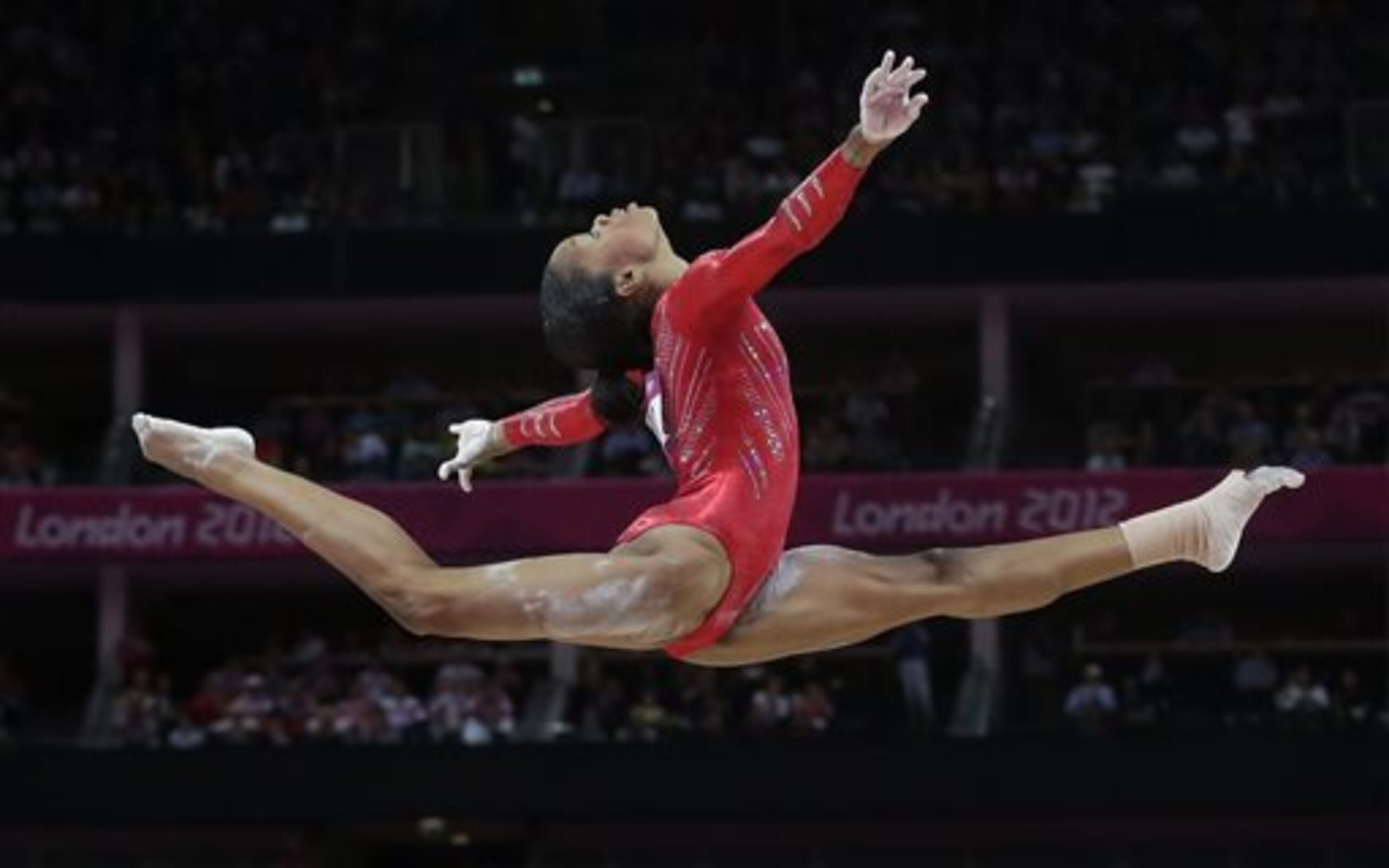
The fame of the names says it all: Mary Lou Retton, Nadia Comaneci, Olga Korbut. Even though none have participated in an Olympics in more than 30 years, their names still ring a bell with even the casual sports fan. And it was their performances at the Olympic Games that made them world famous.
Women's gymnastics in the Olympic Games creates stars, and the event that identifies the world's best overall gymnast is the all-around.
The fact that two of the three stars mentioned above were from communist countries during the Cold War era (Korbut from the Soviet Union and Comaneci from Romania) yet still were idolized in the United States indicates the influence of their gymnastics celebrity.
Korbut did not medal in the all-around competition in 1972, as mistakes on the uneven bars ruined her chances. But she captured three gold medals at those Olympics, and became an instant star.
Comaneci and Retton did win all-around Olympic gold medals, and each did it in a historic way. In 1976, Comaneci was the first to score perfect 10s in Olympic competition, a feat that put her on the cover of Time magazine. Comaneci remains an Olympic icon, and People magazine noted that Comaneci's marriage to American gymnast Bart Conner still holds public interest.
In 1984, Retton became the first American to win an Olympic medal in gymnastics, capturing the most prestigious gymnastics event, the all-around. Retton subsequently had her face on the front of Wheaties cereal boxes and on the cover of Sports Illustrated and Newsweek.
In 2012, Gabby Douglas captured the all-around gold medal, becoming the first African-American to do so. Liz Clarke of the Washington Post called her performance "one of the most riveting stories of the Summer Games," and described the ramifications of her achievement as follows:
"Her world changed overnight as global media scrambled to tell the story of the 4-foot-11 trailblazer who had traveled such a difficult road. Book publishers and talk-show hosts called. An autobiography, “Grace, Gold & Glory: My Leap of Faith,” followed, as did a Lifetime biopic, “The Gabby Douglas Story”; an Essence cover story; a Vanity Fair profile; and visits with Oprah and first lady Michelle Obama.
"
Neither Retton nor Douglas won a single Olympic gold medal in any of the four individual gymnastics events (vault, uneven bars, balance beam, floor exercise), but gained their fame by winning the all-around competition, which is sort of the decathlon for gymnasts.
People are watching this event. Forbes noted in 2012 that TV ratings for women's gymnastics at the Olympics were quite high. David Sweet, for NBCNews.com, suggested in 2008 that gymnastics in the Olympics benefits from two factors: It's good television, and over half the Summer Olympics television audience is female.
Whatever the reason, the women's all-around competition clearly carries a lot of prestige. Retton won just one individual gold medal at the 1984 Games, and that was enough for Sports Illustrated to name her 1984 Sportswoman of the Year, according to CNBC.com.
.png?w=2560)



.jpg?w=2560 "Jonathan Taylor Landing Spots")