
Champion of the World: Wrestling Finally Gets Its First Great Novel
Sports movies are a dime a dozen. There are great ones, like The Natural or Raging Bull, indifferent ones, like My All American, and truly dreadful and ponderous ones, like The Legend of Bagger Vance. Audiences are content with the sports movie. We understand their basic ethos, their cookie cutter plots and find comfort in their sweeping tales of morality, togetherness and hope.
Sports and literature, however, have always had an uneasy relationship. Most great novels that include athletics are not really about athletics. Books like Infinite Jest and A Fan's Notes are ostensibly about tennis and football respectively. Deep down, of course, something else lurks.
TOP NEWS

🚨 NC State Fires Head Coach

Heat, Giannis were down by 20+ in each of their 3 losses

Malachi Toney Sets ANOTHER Record
You can count the truly great sports novels on two hands and have fingers to spare. Wrestling, the sport of kings, has never had one—until now.
Bleacher Report's lead MMA writer Chad Dundas has done the impossible. He has written a book about professional wrestling that appeals not only to fans of the grappling arts, but to sophisticated readers who wouldn't know a wristlock from a wrist watch.
The 1920s were a tumultuous time, both for America and the for the sport of professional wrestling. The nation had put a cork in alcohol sales of all kinds—but not in people's desires to drink and have a good time. On the mats, competition was giving way to cooperation, and the traveling circuses of wrestling's past were quickly becoming antiquated vestiges of yesterday.
It's into this strange world that Dundas drops the reader. But you find yourself immediately at home as he paints a vivid picture of the cardsharps, grifters and bootleggers that made the carnival such a compelling and dangerous place. It's here that we meet Pepper Van Dean, a former champion looking for the same thing every failed athlete searches for—one more chance.
Bleacher Report sat down with Dundas to discuss both his book about the wild world of professional wrestling and how a book about a sport for the common man found a home with the Manhattan literary elite.
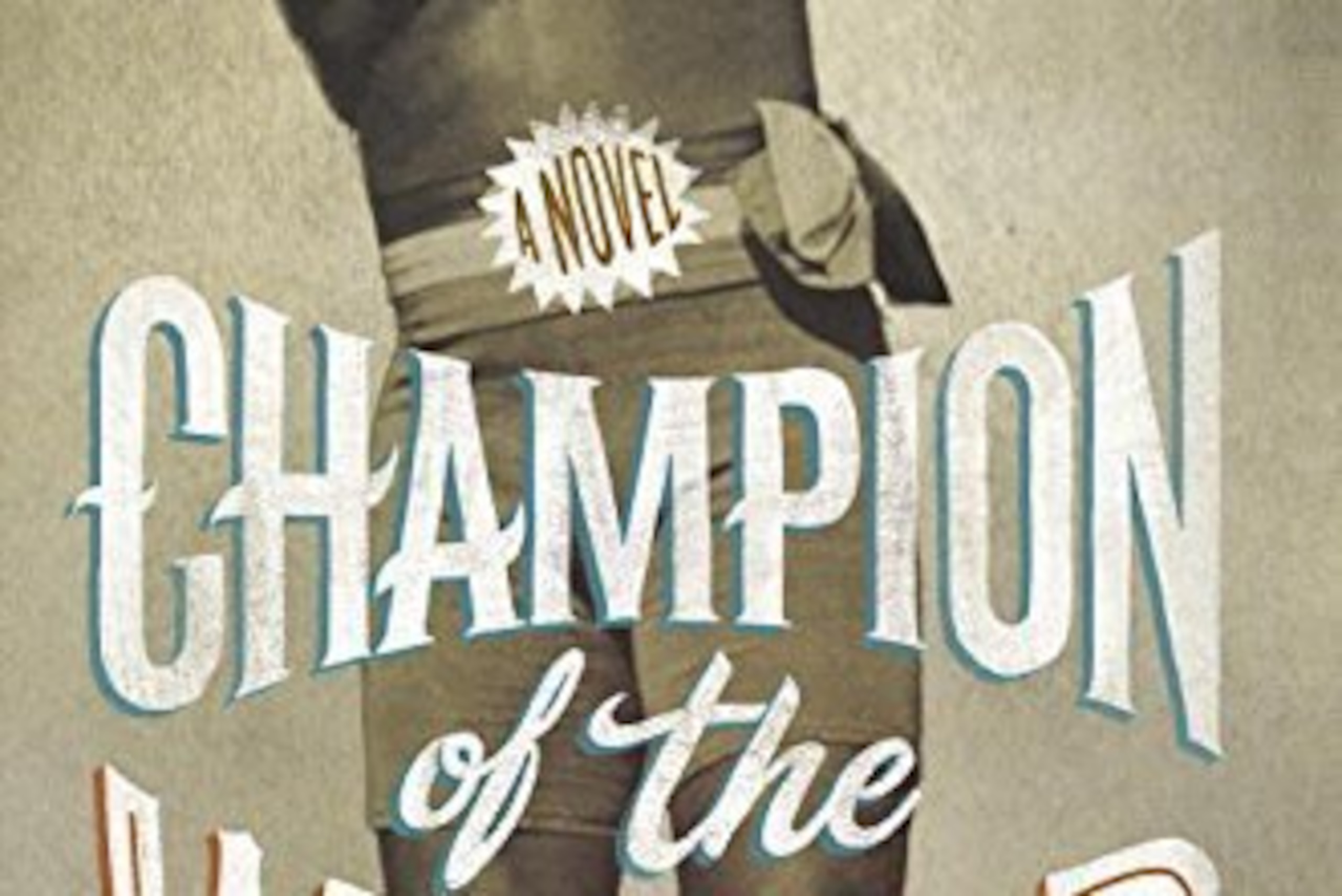
Jonathan Snowden: I've always been fascinated by the world of the traveling circus, especially the athletic show. It's incredibly colorful, yet somehow bathed in shadows, a bright veneer covering a rot that only gets worse the deeper you dig. Was it the simplicity of the wrestling match that attracted you to the subject matter, two men in the ultimate battle of wills? Or was it the complex system of power that lurked just outside the ring ropes?
Chad Dundas: It was probably a little of both. Obviously, once you decide to set a story about wrestling during the early 1900s, the siren song of the carnival rings pretty loud. A lot of the performances these wrestlers commonly did as part of athletic shows are unthinkable by today's standards. Guys taking on all-comers during open-weight challenge matches in one town after another? That could never happen today for any number of reasons.

That, of course, is to say nothing of the hangman's drop trick, an actual carnival performance that my chief protagonist, Pepper Van Dean, performs a fictionalized version of during the early part of the book. Legend has it that Martin "Farmer" Burns—the man who trained Frank Gotch to the world heavyweight championship—could withstand a six-foot drop from a platform with a noose around his neck, hang for three minutes and whistle "Yankee Doodle Dandy." When I found out that stuff like that actually existed I felt like I had no choice but to include it in the book. It's just too delightful and savage to leave out.
But you're right—trying to imagine what those athlete's lives must have been like outside of the ring was just as big a draw for me as the actual competitions. The book tries to scratch away at some of that—the age-old struggle between promoter and performer, for example. A lot of it, frankly, comes straight from modern life. As you and I both know from covering MMA all these years, the relationship between fighter and promoter isn't always the easiest. That's just one of innumerable tricky power dynamics that athletes in real life—and in this book—have to navigate on a, more or less, daily basis.
JS: You borrowed a lot from the real life tales of early 20th century wrestling, some of which, as you mention, are truly stranger than fiction. I hear echoes of the past in the character of Garfield Taft too.
Wrestling, as you note, drew a much firmer color line in the sand than even boxing. While the sports world searched desperately for a great white hope to dethrone Jack Johnson, wrestling champion Frank Gotch refused to face a wrestler of color. What inspired this African-American contender with the pretty white wife?
CD: When I first conceived of the book, I thought Taft was just going to be another white wrestler toiling alongside the rest of the characters. For a short time, I actually considered making him be Frank Gotch. Gotch was a pretty interesting guy in his own right, bursting on the scene, winning the heavyweight title in 1908 and becoming a sports celebrity comparable to contemporaries like Ty Cobb or, a few years later, Jack Dempsey. But Gotch's run was a short one. By 1913, he was retired, and by 1917, he was dead at age 40. So for a number of reasons he seemed like a fairly dramatic possible character choice.
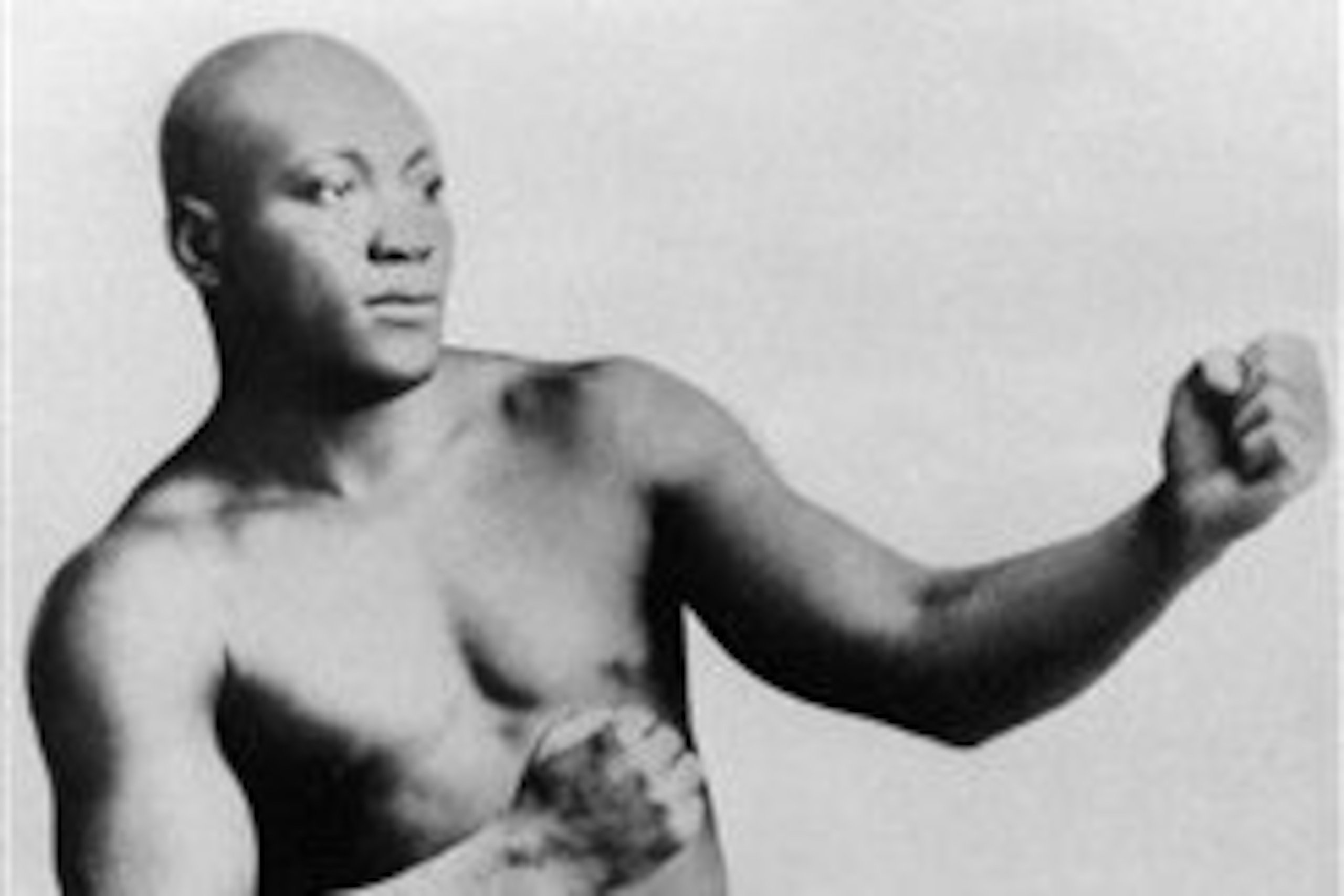
But while doing some research for another novel I was thinking about trying—this one about Jack Johnson's exile in Mexico after his trumped up conviction under the Mann Act—I read Geoffrey C. Ward's fantastic biography Unforgivable Blackness and watched the Ken Burns documentary of the same name. Johnson's probably in the running for one of the most fascinating figures of the 20th Century. I didn't end up writing a book about him, obviously, but his story got me thinking about what it must have been like for African-American wrestlers around the same time. So, I based the character of Taft pretty heavily on Johnson and, once I started to get him down on paper, I realized this book was approximately 1,000 times better and more interesting with him in it.
JS: Your book is set in 1921, as competitive professional wrestling was taking its last desperate breaths. There are many who would suggest that matches in that era, including those of your heroes, would have certainly been fixed. But, legitimacy aside, the sport was changing in a big way.
By 1925 a college football player named Wayne Munn was champion of the world, essentially because he had a look, some size and a name. Not long after, wrestlers were running the ropes and doing some spots that wouldn't look strange to a contemporary fan.
What was it about the seismic changes of that era—whether racially, in athletics or with Prohibition, that attracted you so much as an artist? And what do you think Pepper Dean would have made of what wrestling was slowly becoming?
CD: I definitely played a little fast and loose with wrestling's historical timeline. In real life, I think it's very possible that by the early 20s most professional wrestling matches were works. By that time, there's no way a salty old veteran like Van Dean would have been quite as naive about the concept of fixed matches as he proves to be during the course of the book.
One of the things I did to research the novel was to go back to look at some old newspaper coverage of wrestling to see if I could gauge anything about its legitimacy from the way sportswriters were writing about it. Around that time, you start to see characters like "The Masked Marvel" show up in wrestling results, which is a pretty dead giveaway that you're not exactly witnessing a pure competition. But I also found some matches being angrily decried as "obvious fixes" while others were celebrated for at least appearing "on the level." It also wasn't unheard of for wrestlers to be brought up on fraud charges for participating in worked matches. So, at the very least, there was still an expectation of legitimacy around wrestling well into the mid-1920s and beyond.
Nobody knows for sure exactly when wrestling crossed the line from hard-nosed real sport to choreographed spectacle, and, frankly, I adjusted the timeline to fit my storytelling needs. I wanted the novel's bootlegging plotline and a couple of other things to line up with the wrestling, and so there wasn't really any other choice but to set the story during prohibition. Honestly, I let myself off the hook a little bit by deciding: Look, this is professional wrestling. If there's any industry that should be cool with me fudging the details a little bit, it's this one.
But in all seriousness, that transition away from competition and into pre-determined outcomes couldn't have been easy for a lot of the athletes. These were guys who had spent their whole lives trying to be the toughest guys around and to suddenly be told that didn't matter anymore? It would be a rude awakening. Think of how much they might have resented that and how much they might have resented a guy like Munn being crowned wrestling champion.
A man as proud and hardheaded as Pepper Van Dean wouldn't have taken kindly to being turned into—as he says at one point in the book—"the world's fattest ballet dancer." But wrestling is also all he knows, so I think there's a good chance he would get sucked into "the business" just from a sheer lack of other options.
JS: The grifters of that time were fascinating. There were bands of performers who would travel the country getting rubes to bet on their sports contests of all kinds, not just wrestling. My favorite were the troupes of wrestlers who would gin up huge bets on which of them could walk the fastest. It was a magical time.
Your book does a great job of evoking that era. While stories of aging athletes are universal, this one is very specific and perfectly fits what was truly a golden age for America. There really aren't a lot of books about this time. Instead, most focus on the great shift, when mass transit and the growth of cities helped turn spectator sports into destination events, not something that came through town once or twice a year in an explosion of excitement and chaos.
If fiction were divided by topic, your book would be pretty lonely on the shelves. Besides The World According to Garp, are there any wrestling books of note? This is a polite way of asking how in the world you convinced a major publisher to walk this road with you. It's a remarkable accomplishment—for both you and your agent.
CD: When you decide to write a book about professional wrestling in the 1920s the last thing you think is, "This is going to be huge! Everybody's going to love it!" At first, my goal was just to finish a novel draft, because that was something I'd never done before. After that, I tried to whip it into the sort of shape I felt like I could be proud of and started soliciting representation for it. I was very fortunate to land with my agent and later my editor and publishing company, all of whom have showed the book more care and support than I had any right to expect.
Usually in my fiction, the ideas that end up making it to the page are the ones that won't leave me alone. This was one of those. It hung around in my mind so long that eventually I felt compelled to write it, just to get it out of there. Certainly it's a weird synthesis of three of my great loves—wrestling, professional fighting and fiction. The terrible creative writing workshop cliche says "write the kind of book you want to read," and that's what I did.
Part of it, admittedly, was that for a long time I looked around the landscape of literature and saw tons of boxers and books about boxing. I always wondered, where are all the books about wrestling? So I took it upon myself to try to write one.
JS: One of my favorite things, because I'm the weirdo child of two college professors and basically grew up in the library, was exploring old books and magazines. It's where I first discovered what they used to call "physical culture" and the copious photos of mustached men in leotards lifting enormous barbells. An extension of that was the instructional—for our purposes the wrestling instructional. We think of MMA, the sport we both cover for a living, as a very modern creation. But when you look at the manuals of Burns, Gotch, George Hackenschmidt and other wrestling stalwarts, many of the techniques look pretty familiar. When you described wrestling bouts in the book, how much of the action was actually born in MMA matches you watched on grainy old VHS tapes?
CD: I was exactly the same way and, a certain extent I still am, though these days obsessing over my interests takes place largely on the internet instead of in dusty stacks. One of my favorite parts of writing this book, in fact, was that it turned out to include a lot of trips to the library. I perused some old newspapers, some old medical manuals, old military manuals, some old real estate brochures. I looked up some vintage menus to see what kinds of food it would be realistic for people to be ordering in restaurants at that time. All that stuff is so much fun to me.
I bought a reprinted copy of the wrestling manual Frank Gotch published with Farmer Burns in 1908. Along with some fairly stellar pictures, I tried to use it as a guide for the kind of language and the sorts of moves wrestlers might use in the sport around the turn of the century.
For the actual wrestling scenes in the book, I'm probably guilty of modernizing the action a fair amount. I wanted the book—and those scenes in particular—to be accessible and entertaining for modern readers, so the wrestling might sound a little bit more like modern MMA than would've been 100 percent historically accurate. One thing I tried to be faithful to, however, was the importance of the pin.
There are no pins in MMA, obviously, but you get the impression they were held in very high esteem in wrestling of that time, as they still are today. Even in bouts where submissions were legal, pinning your opponent was still the most glorious way to win. So I tried to play my characters accordingly.
JS: Full disclosure—we are colleagues at Bleacher Report, and you are the third best performer on my favorite podcast. But even if you weren't, I'd be telling everyone in my circle about this book. It's a masterpiece, a shockingly good first novel.
And that's not just me talking. More learned readers and reviewers seem to agree. There have been comparisons to Cormac McCarthy and Philipp Meyer, titans of modern American literature, and praise has been universal.
Most books, even exceptional ones, don't get this kind of traction. How did you get people to read this wacky pro wrestling book in the first place? And, once they did, how does it feel to bask in glory, if only fleetingly?
CD: I've been bowled over by the critical response so far, honestly. I had no idea what to expect from the publication process or how the book would be received—either by literary types or wrestling people. I was prepared for it to pretty much be ignored by everybody. To see it now get good reviews from places like Kirkus Reviews and Booklist and get some attention from places like NPR and the Huffington Post, it's thrilling and totally humbling.
Every undertaking in writing is done on such a wing-and-prayer, as you well know. When you're sitting by yourself in the office pecking away at the keyboard, it seems foolish to imagine that anyone else will ever even read it. So the feeling of getting the book out there in the world and having some notable people say nice things about it is very gratifying.
It makes me feel like anything is possible. Maybe I can even up my podcast game.
Jonathan Snowden is the author of Shooters: The Toughest Men in Professional Wrestling. He covers combat sports for Bleacher Report.
.png?w=2560)

.jpg?w=2560 "Malik Beasley Negotiating Plea Deal (AP)")
.jpg?w=2560 "Jonathan Taylor Landing Spots")