

Rebuilding Spain: Del Bosque's Successor Faces Tricky Task After Euro 2016 Exit

This wasn't a Roy Hodgson-style exit, but ultimately the same result was coming, and right there he knew: It was time. "I have more or less decided," Vicente del Bosque said succinctly.
Spain had just been defeated by Italy in Paris on Monday at Euro 2016, and the post-match press conference hadn't taken long to get to the subject of the manager's future, Spain's future. There, Del Bosque expressed his belief that this wasn't the end of an era despite the widespread conclusion of such and his clear hint that he was on his way.
"We have a lot of good players coming through," he insisted with a glance ahead, and on that he was correct.


But through humility he was wrong elsewhere: This was the end of an era, because he's largely representative of one and now he was departing.
The following day Del Bosque returned home, and by Thursday he'd confirmed what most already knew or at least suspected. "I have no intention of continuing as national coach," he told Radio Nacional de Espana (h/t AS). "However the European Championships went, I had no doubts about my future."
So there it was: After eight years, 114 games, 87 wins and two historic titles, the end had arrived, the most successful manager in Spain's history gone.
To that, a successor is now required.
And the task is not a straightforward one.
For Spain's next boss, following Del Bosque will present numerous challenges. Succeeding greats always does—and Del Bosque is a great, one whose legacy should go grow stronger with time even if certain portions of the frustration towards him now are valid—but this is a case involving more than that.
The timing is delicate here, too.
As La Roja exited Euro 2016, the need for evolution was the overriding feeling. For two tournaments running now, the Spanish have seen their once-indomitable method unraveled by savvy and well-prepared opponents—opponents who have created doubts and questions without obvious answers.
"I think we have to undertake a big reflection, in terms of style and level," Gerard Pique said. "We don't have the level that we had a couple of years ago. We are a team that can win matches because of our name and our past, but we are not the best team."
It was striking when he added: "We are not in a position to win tournaments right now."
The next major tournament that looms is the 2018 FIFA World Cup. To contend for it, Spain will need reinvigorating through a moderate overhaul, one addressing both personnel and approach. The requirement is for something faster and more athletic. Something more versatile. Something more robust.
Essentially, the task for Del Bosque's successor is to harness the existing strengths of Spain and add another dimension. It's an easy assessment to make, yes.
But to execute?
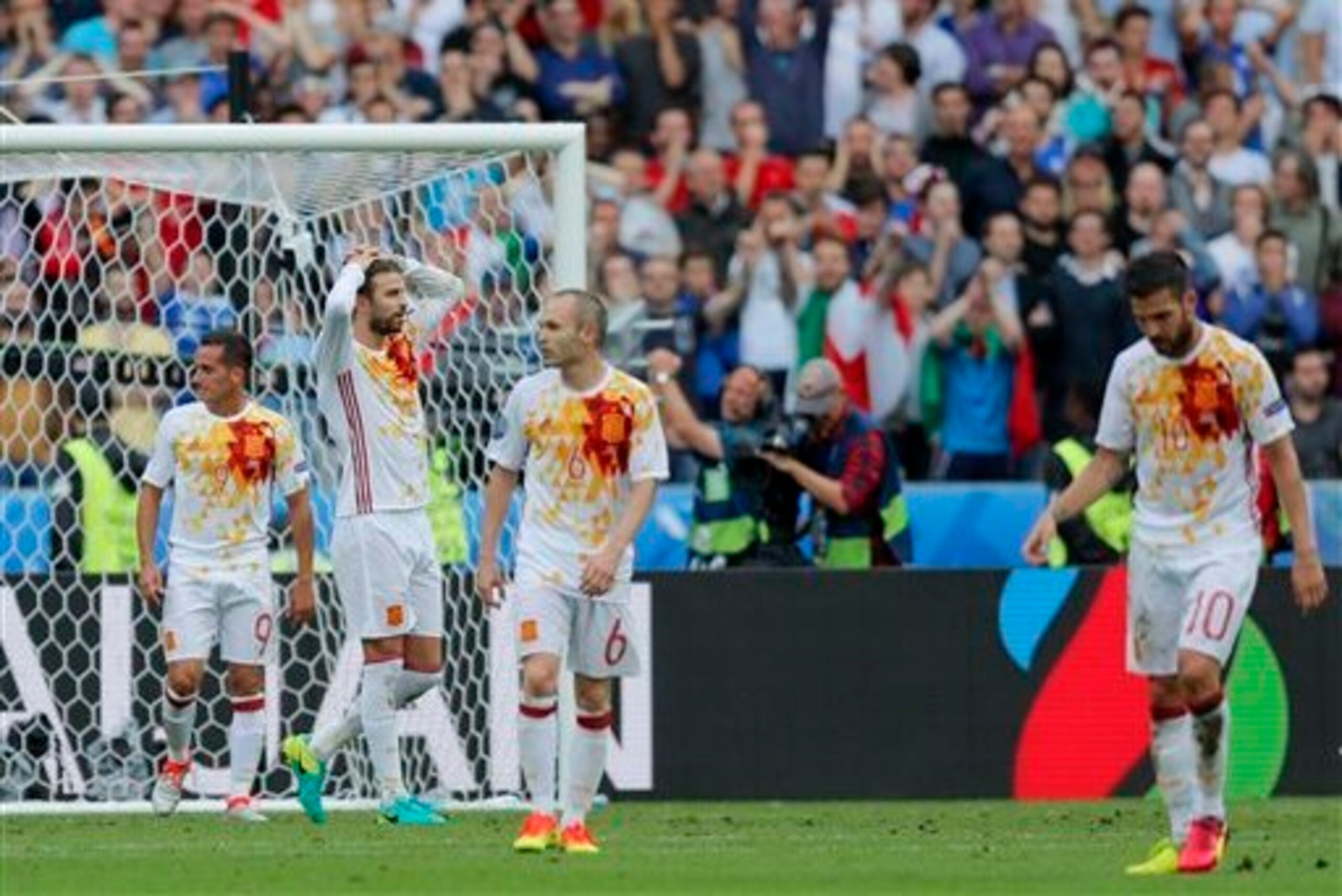
This is a complex matter for La Roja. The alteration of a team's identity involves a journey and not the flicking of a switch, and this is the international level where money and transfer markets can't solve issues.
Right now, Spain have a core of a certain profile: Andres Iniesta, David Silva, Sergio Busquets and Cesc Fabregas dictate the style. Coming through behind them, the talent line is immense, but as a collective, stylistic similarities remain: Thiago Alcantara, Isco, Saul Niguez, Sergi Roberto, Koke, Marco Asensio and Denis Suarez form a prominent collection from the next crop.
Contrasting skill sets exist, of course; the likes of Alvaro Morata, Diego Costa, Paco Alcacer, Javi Martinez, Hector Bellerin and Lucas Vazquez strike as men capable of influencing a new-look side. But the key thing to recognise is that Spain's 2008-12 dominance has shaped its talent and the production of it.
Look through the emerging wave, and you'll find an abundance of exquisite technique, intelligence and vision. But amid a desire to evolve into something more dynamic, La Roja can't simply plug in some midfield destroyers and storming wingers to respond to the game's tactical tide that has moved away from them. Those players don't exist, and that's not Spain.
Instead, Spain's move to something new will have to be more subtle. The characteristic strengths will need embracing rather than shunning, but answers must be found to the physicality, intensity, pressing and counter-attacking of opponents who are no longer in awe. Suddenly, Spain are being outthought and outmuscled.
That's significant. When Pique spoke of the necessity for a "big reflection," he couldn't have emphasised the big enough. Depth in thought is required, but who will be doing it?
One should never really compare Spain with England, but at present the Spanish are facing a similar issue to their English counterparts in the search for a new manager.
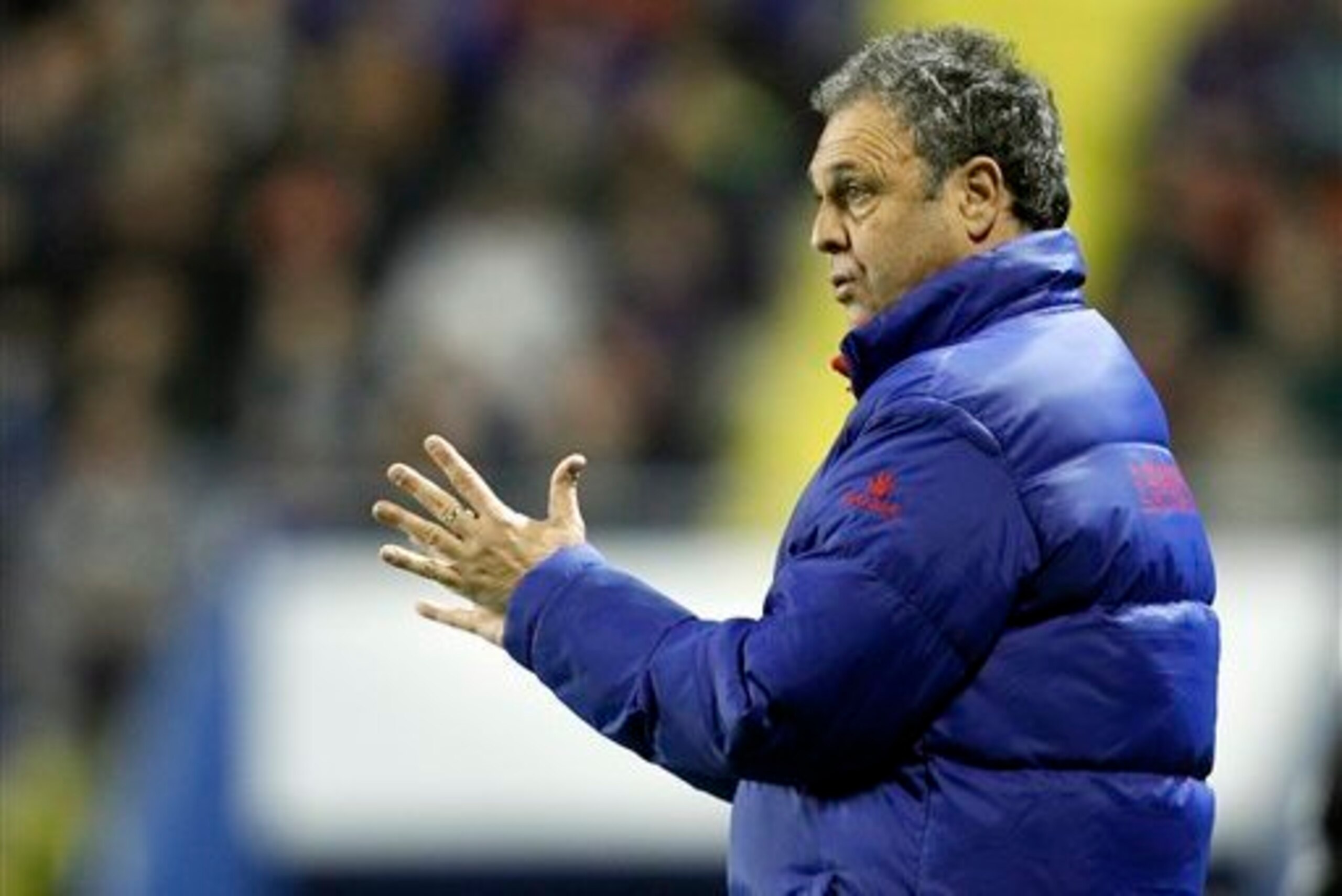
If the list of potential England candidates makes for grim reading, Spain's is hardly better. AS stated that Joaquin Caparros is the front-runner to replace Del Bosque and has been for some time, while Paco Jemez is considered an alternative. Marca had also indicated Julen Lopetegui was an option, but he's now headed for Wolverhampton Wanderers.
For Spain, who have insisted on the next boss being Spanish, the problem is not a shortage of elite options but rather availability. Pep Guardiola is at Manchester City. Luis Enrique is tied up at Barcelona. Marcelino is excelling with Villarreal. Unai Emery has joined Paris Saint-Germain. Ernesto Valverde is unlikely to leave Athletic Bilbao. Javi Gracia has been lured to Russia.
It's left them with Caparros and Jemez. The former is known for his intensity and foundation-setting work with Sevilla and Athletic, but the second of those stints ended five years ago, and his overall record in La Liga isn't flattering. Picturing Caparros, whose method is defence-first, guiding La Roja stirs visions of stylistic loggerheads, too.
Then there's Jemez, the fiery renegade whose kamikaze Rayo Vallecano delighted and infuriated in equal measure, led by a boss who knows only one way. "On the day they were handing out brains, I ended up with a small one, but when they handed out balls, I got the biggest," he said before his side's trip to the Bernabeu to face Real Madrid in December.
Once there, Rayo conceded 10.
And so here Spain are: Their supremacy had slowly departed, and now Del Bosque has too. An era has ended, and rebuilding to an extent is necessary. Spain need something new, something fresh. But precisely how that will be achieved isn't yet clear, and nor is whether Del Bosque's successor will possess the acumen for it.
A tricky task awaits.

.jpg?w=2560 "NBA Gambling Charges")

.png?w=2560 "Week 8 Winners & Losers 📊")

.jpg?w=2560 "Aikman Blasts Cowboys WR 🫣")
.jpg?w=2560 "Jonathan Taylor Landing Spots")