

How Will Jose Mourinho Respond to Wayne Rooney's Abject Euro 2016 Performance?
Manchester United and England captain Wayne Rooney was abysmal for his country as they limped out of Euro 2016, and his performance further highlighted the headache his presence will give Jose Mourinho in the season ahead.
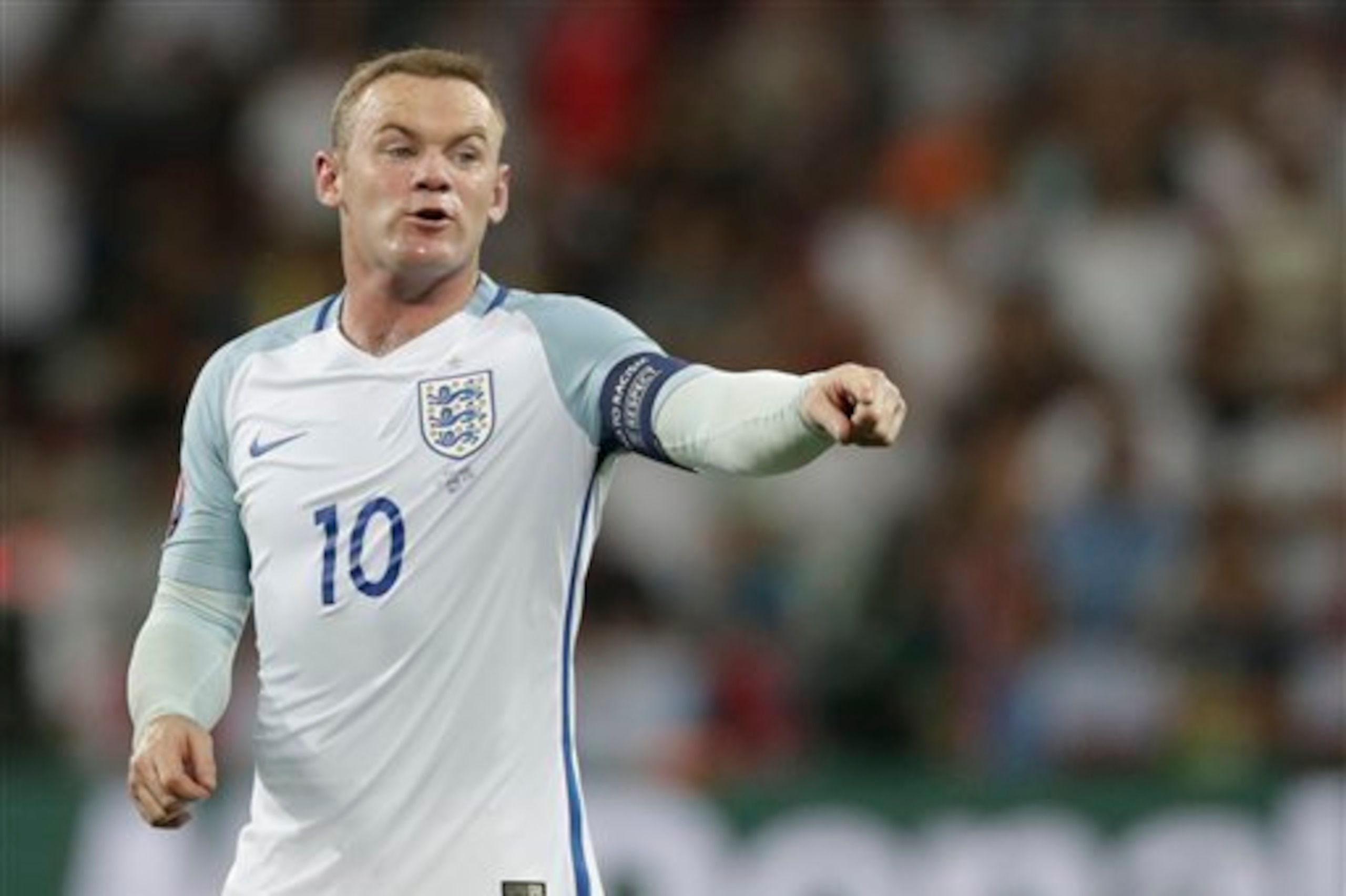
Rooney had excelled earlier in the tournament, dominating the second half of England's group-stage win against Wales, for example. In that 45-minute period, he completed 89 per cent of the 36 passes he attempted, of which four were key passes.
TOP NEWS
Billboard Trolls Man City 👀

New NFL contenders starting to emerge after Week 4
.jpg?w=2560 "Cardinals Giants Football")
NFL investigating 2 referees for separate viral exchanges
He completed four of the five dribbles he tried, found an England man with three of the five corners he put in and got one of his two shots on target. He had the ball for 10.2 per cent of the half, more than any other player on the pitch.
If it feels as though there is a "but" coming, that's because there is. In the second half, Wales sat deep, no longer pressing aggressively as they had done in the first. But against Iceland, it was a different story.
In truth, watching Wales' performance against England having spent the last stretch of the domestic season watching Rooney in United's midfield, it really felt like they were missing a trick.
After all, Rooney's best games in that central berth—the FA Cup semi-final against Everton, the 2-0 home win against Crystal Palace—were sharply contrasted by his borderline hopeless performance against West Ham United away in the league, when victory would have kept UEFA Champions League qualification in the Red Devils' hands.
The treatment of Rooney in that game was practically a template for how to negate him, and the same could be said of Iceland's aggressive pressing.
The bare numbers of his performance do not look that bad. He was dispossessed twice and gave away 11 passes, but he completed 61.
It was the manner in which he gave those 11 passes away which should worry Mourinho.
The clip below might be a little cruel, shining an unforgiving spotlight on six seconds of action, but it is a fairly perfect encapsulation of his performance. He scored his penalty and deserves some credit for that, but otherwise it was an utter failure.
"Midfield maestro https://t.co/phH3R5ap9g
— Joe Bacon (@joebacon92) June 28, 2016"
He was given 4/10 for his performance by the Daily Mail and the Evening Standard. The following are a handful of the more repeatable things people said about him on social media.
"Playing Wayne Rooney out of position and then making your attack run through him in that position might not have been a great idea.
— Michael Caley (@MC_of_A) June 27, 2016"
Again, the key point here is that it was not a surprise. Rooney clearly has this kind of performance in him and has done for a long time. When discussing his potential midfield role at United on 10 June, I wrote that "it makes sense not because it is a great option but because it is the least worst."
Back in March, I wrote, "Rooney has always been a bursty player, capable of wonderful moments, but he has become increasingly prone to a poor first touch or an ill-judged pass."
Those ill-judged passes were in abundant display against Iceland, and the other key significance of his performance was the implication for his role as a captain.
Other than the FA Cup win—which, for balance, it must be said he had a crucial hand in—United have repeatedly failed to deliver in big moments under Rooney's captaincy.
They crashed out of the Champions League, then failed to win the big end-of-season games they needed to to get back into it next season. And against Iceland, England were crying out for some inspiration. It eventually arrived in the form of Marcus Rashford, but by then it was much too late.
Rashford's fearless performance, full of the naivety of youth, should have been an embarrassment to his more senior colleagues, especially Rooney, given his captaincy. The teenager's performance was also most reminiscent of the United skipper himself—the 2004 version.
From a human perspective, it is easy to empathise with the size of the occasion and weight of expectation inhibiting the captain's performance, but from a cold, analytical perspective it is a damning knock against Rooney that he was unable to lift his team when they needed him most.
It is an even greater indictment against him that his personal performance regressed so badly.

Before the Iceland game, Rooney's friend, Steven Gerrard, had written about the challenges of adapting from being a forward to a midfielder in his Telegraph column:
"It involves seeing the game from an entirely new perspective, knowing how and when to change the tempo. You have to be able to weigh your passes, see the bigger picture across the park, control the game and at the same time get involved in far more duels with players than you would as an out-and-out striker. You go from being the goalscorer to the creator. To make that transition successfully – particularly at international level – takes an unbelievable amount of skill and the most mature football brain.
At the moment, Wayne is showing he can play the latter part of his career playing that so-called 'Paul Scholes role'.
"
The moment was short-lived. Paul Scholes was a virtual embodiment of what it meant to be a deep-lying midfielder who could cope under pressure, able to receive the ball in tight spaces and make good use of it, almost until his retirement.
Rooney is simply miles off that level yet. Indeed, the comparison is insulting to Scholes, not in terms of their relative footballing abilities when taking in totality, but in terms of their respective understanding of what it takes to be an elite midfielder.
On top of all this, United are well stocked with midfielders, though questions remain about all of them. What is more, they are reportedly in the market for more players who could compete for that spot.
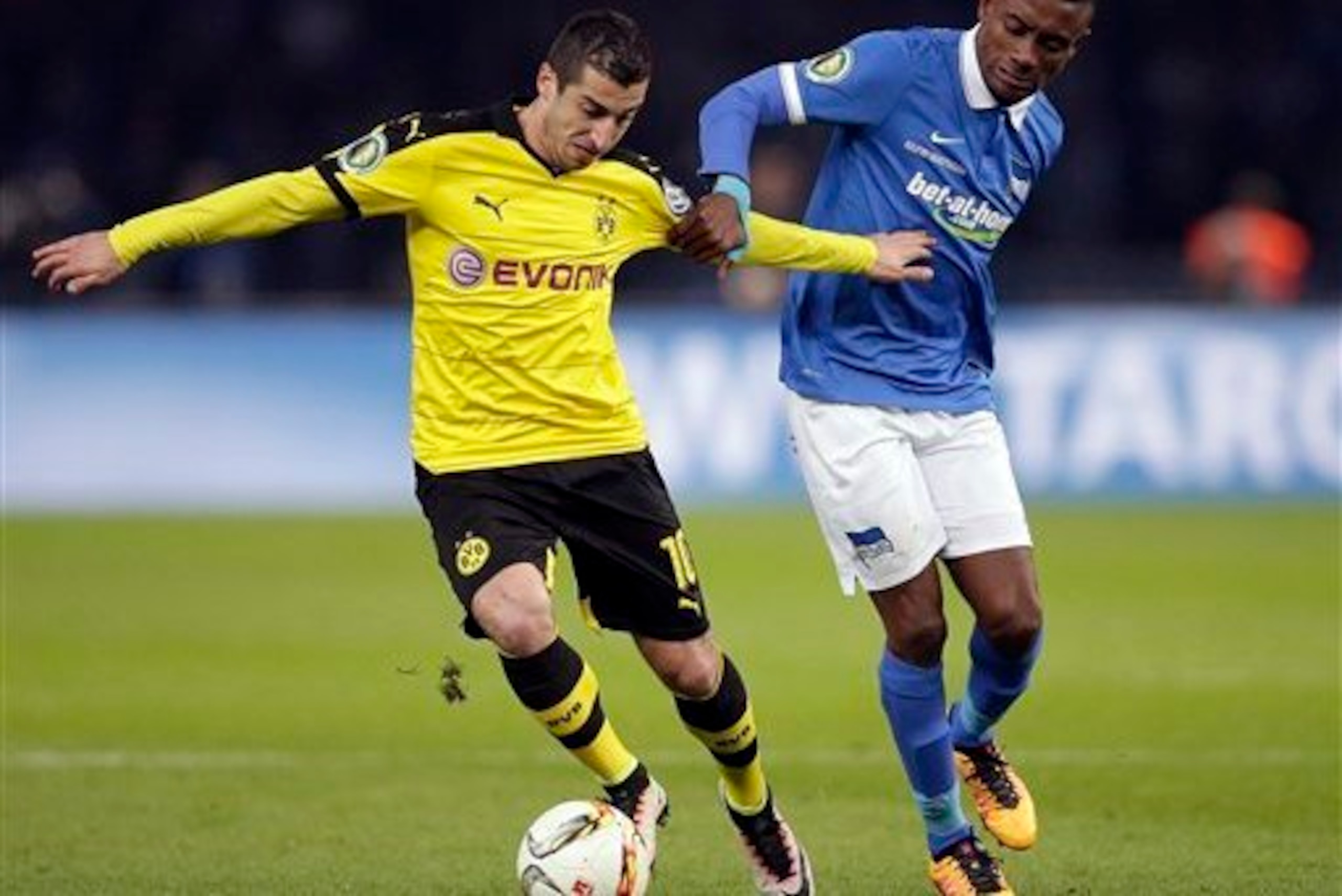
The Red Devils appear serious in their pursuit of Henrikh Mkhitaryan, with Borussia Dortmund chief executive Hans-Joachim Watzke telling Westdeutsche Allgemeine Zeitung (h/t The Independent):
"The situation has changed—Manchester United improved their offer [for Mkhitaryan].
In situations like this you have to see things from different points of view and in the end we will make a decision.
I have contacted the relevant people and we will decide at the weekend. We need the opinions of different people and after that the board of directors will decide.
"
Mkihtaryan is an extremely flexible player, as covered in more detail here. Right wing is the most obvious spot in which to play him given United's current squad makeup, but using him as the more creative of a midfield pairing is another option—and that would be bad news for Rooney.
And then there are the rumours that the club is pursuing a move for Paul Pogba, though that does not seem to be nearly as advanced.
AS reported that "United's close and productive relationship with [Pogba's agent Mino] Raiola could be the thing that tips Pogba's future in their favour," (h/t the Daily Star), but that is hardly equivalent to the selling club's chief executive publicly discussing the matter.

Whoever comes in, though, Rooney's days as a star man at United must surely be numbered. He will no doubt put in a few good performances and his many defenders will point to those and decry his doubters.
But the decline is visible and was on public display against Iceland. Mourinho has a major headache to deal with. The average level of tactical nous in the Premier League will go through the roof this summer with the arrival of Antonio Conte and Pep Guardiola, meaning the chances that Rooney's vulnerability to aggressive pressing will be ignored are minimal.
It would be no surprise at all were this to be Rooney's last United campaign. He has been a superb player for the club, but all things must eventually come to an end.
Advanced data per WhoScored.com.

.jpg?w=2560 "Hill Injury Update Football")
.jpg?w=2560 "OBJ Calls Out Giants After Release")
.jpg?w=2560 "Tyreek makes another cryptic post amid Chiefs rumors")


.jpg?w=2560 "Greenlaw Talks Payton Exchange")
