
Big Ten Q&A: Who Will Be the B1G's Most Improved Team in 2016?
Between the end of the NBA Finals, baseball season heating up and the UEFA European Championship hitting its home stretch, it's been a relatively quiet week in the college football world. Not even Jim Harbaugh has managed to make a stir, aside from the announcement that he and his wife Sarah are expecting another child, which came in a manner only the Michigan head coach could deliver.
"Attacking this pregnancy with an enthusiasm unknown to mankind," Harbaugh said, per Maize and Blue News' Matt Pargoff.
On that note, let's get to this week's Big Ten Q&A. This week, we'll tackle the conference's most improved team, a brewing rivalry between first-time head coaches, Ohio State's quarterback situation and the Wolverines' running back position.
_0.png?w=2560 "CFB Top 25")
.png?w=2560)

As always, you can send me your questions each week on Twitter @BenAxelrod.
Let's get started.
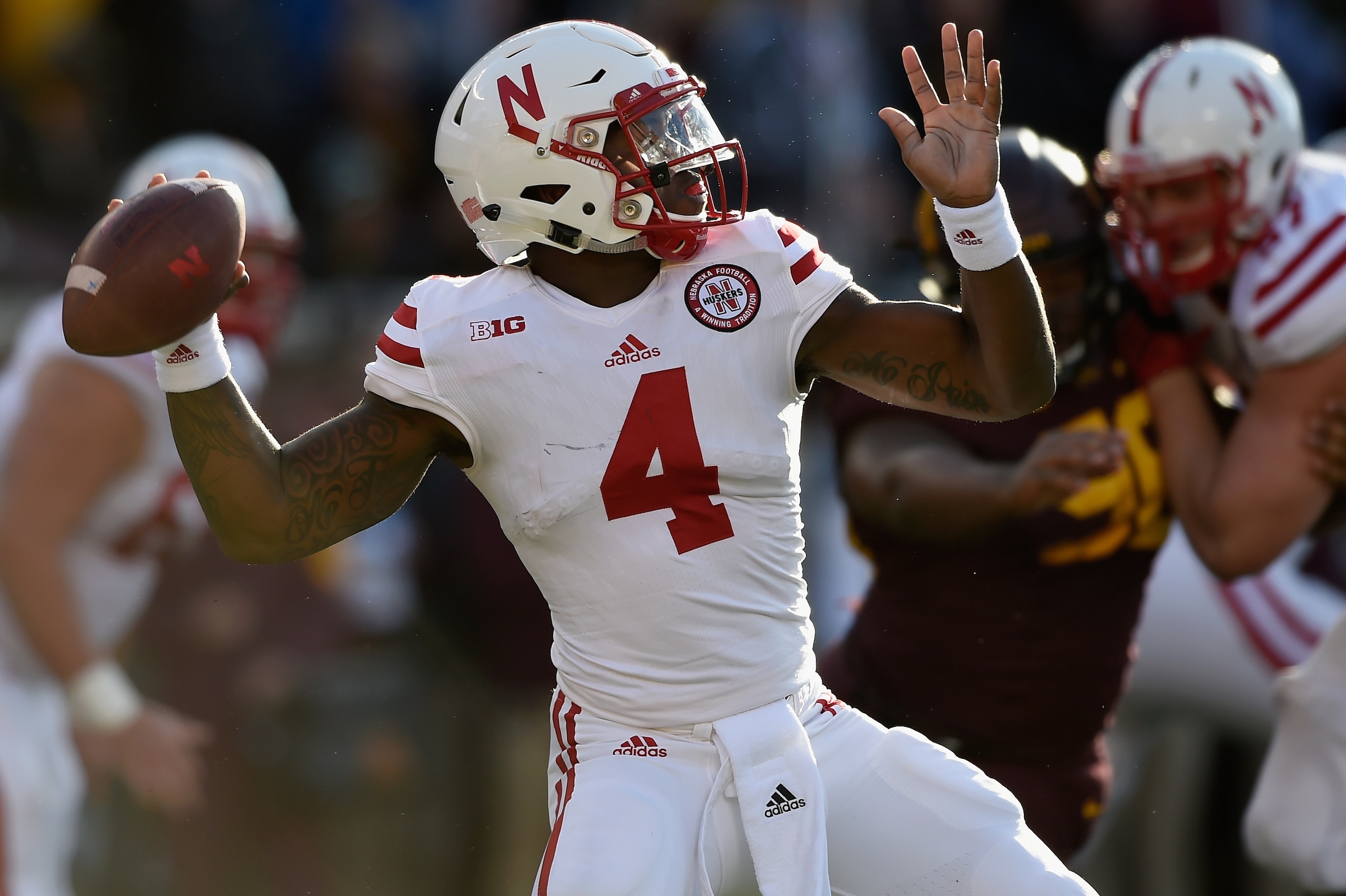
Last week, I made the case for Nebraska being the Big Ten's sleeper team in 2016. And while I hate to repeat answers, I believe so strongly in the Cornhuskers' chances at improving dramatically on last year's 5-7 regular season that it'd be hard for me to justify deviating from that pick.
Why?
Between all of the talent Nebraska returns and the frequent close calls that made up the majority of their seven losses, the Cornhuskers are simply due to see dramatic improvement. A bounce here and a bounce there and Nebraska could have easily been 7-5, a mark they could easily improve on with 94 percent of its offensive production returning, per SB Nation's Bill Connelly.
While Nebraska was only credited with five regular-season wins, a 10-win season in 2016 is hardly out of the question, given that the Cornhuskers' makeup was more reminiscent of a seven-win team. Its schedule doesn't do it many favors with an out-of-conference game against Oregon and back-to-back road trips to Wisconsin and Ohio State, but Nebraska should remain on track to control its destiny in the Big Ten West with just one win over either the Badgers or Buckeyes.
Ultimately, a big part of the Cornhuskers improving their record will be dependent on the steps taken by a roster returning 14 combined offensive and defensive starters from a year ago. But as its Foster Farms Bowl victory over UCLA at season's end showed, the pieces are there for Nebraska to go from one of the Big Ten's biggest disappointments to conference contender, all in the span of a year.
This is a good question and one of the Big Ten storylines that won't receive much national attention throughout the 2016 season or in the years to come.
And while it may not make much of an impact in the conference-title race anytime soon, it's still fascinating to see former in-conference coordinators D.J. Durkin and Chris Ash take over programs in Maryland and Rutgers, which don't have the apparent upside of being nationally relevant so long as they play in the Big Ten East.
Although I liked both the hirings of Durkin and Ash, the reality remains that as long as Urban Meyer, Jim Harbaugh and Mark Dantonio are around, it's not going to be easy to gain a lot of ground in the Big Ten East. Both coaches can still make positive impacts on their programs, but to expect either to become contenders within their own division simply seems unrealistic.
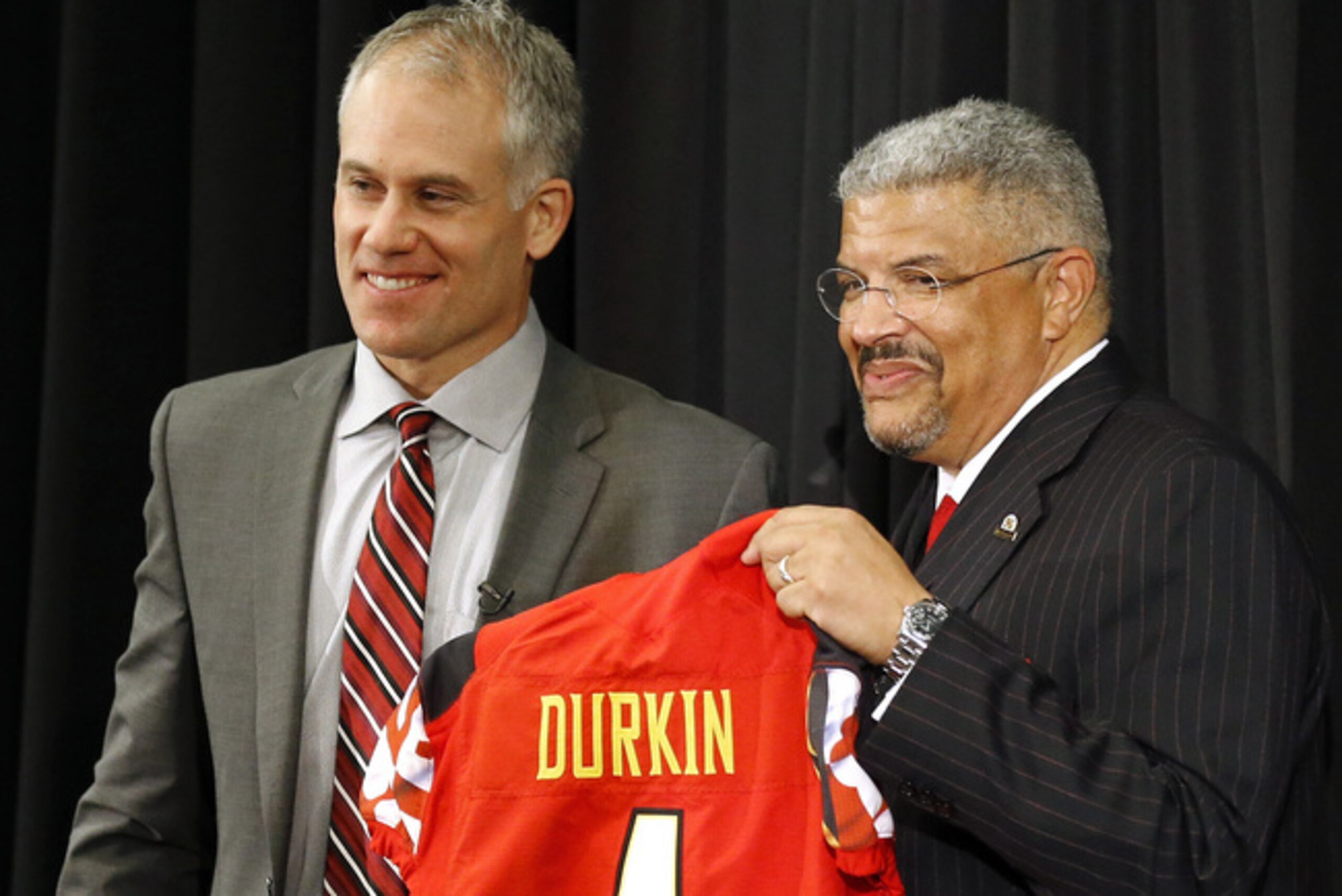
As far as which first-year head coach is more capable of instant success, I'll roll with Durkin, simply because the talent is more apparent on Maryland's roster at the moment, despite the Terrapins suffering through a 3-9 season in 2015. And regardless of how each team's season plays out, there should still be plenty on the line when Durkin and Ash meet in the final week of the regular season—a year after doing the same as the defensive coordinators at Michigan and Ohio State.
As for either competing with their former bosses, I wouldn't count on that taking place anytime soon. They're each simply starting in too big of a hole and the Buckeyes and Wolverines should only be getting better in the coming years.
When you look at the dual-threat nature of the quarterbacks Meyer typically recruits, the answer to this question would usually be "yes." After all, we've already seen this situation play out before, with Torrance Gibson moving to wide receiver upon arriving at Ohio State alongside fellow quarterback Joe Burrow in the Buckeyes' 2015 class.
But when looking at the quarterbacks slated to arrive in Columbus in the coming years—Dwayne Haskins this summer and Tate Martell and Danny Clark next year—none fit the mold of a pass-thrower who can also be a pass-catcher. Both Haskins and Clark are more pro-style passers than anything else, and as the top-ranked player at his position, Martell's future is clearly as a signal-caller.
So what happens with Ohio State's logjam at quarterback, which is slated to possess six scholarship quarterbacks in 2017?
Obviously, a lot can—and likely will—change between now and then.
For one, it's possible J.T. Barrett will forgo his final season of eligibility next year, having already spent four years on campus, three of them as Ohio State's starting quarterback. Any questions about Barrett's draft stock won't have to do with his talent so much as they will his height, and that won't change with another year on campus.
After that, Stephen Collier is in the midst of recovering from a torn ACL, and his future as a potential starter for the Buckeyes already appeared in doubt as recently as this spring. Burrow has shown promise and Haskins' ceiling remains unknown, but neither is the type who would play anything but quarterback.

As for the two 2017 commits, Martell is on his third commitment and Clark gave his pledge when he was merely a high school freshman. Needless to say, neither commitment is a lock to stick until signing day.
So will there be a position switch somewhere on the Buckeyes' quarterback depth chart? Probably not.
But other changes could soon be afoot, as these situations have a history of figuring themselves out.
At this point, the odds-on favorite has to be running back De'Veon Smith, who led the Wolverines in rushing with 753 yards in 2015, although the senior-to-be is hardly a lock to repeat as Michigan's rushing king.
Rather, I'm turning my attention toward true freshman Kareem Walker, one of the crown jewels of the Wolverines' 2016 class, who should find a way to make an instant impact in the coming year.
A former Ohio State commit who at one point ranked as the nation's top prospect at his position, Walker already possesses the size at 6'1" and 203 pounds to play right away in his college career. Perhaps most importantly, as an early enrollee, the New Jersey native will hardly be shell-shocked when fall camp begins, as he'll already have been on campus for eight months at that point in time.
As for Smith, the 5'11", 228-pounder has been steady but unspectacular to this point in his college career. And with Harbaugh's pro-style offense predicated on a strong running game, steady may not cut it, especially with a first-year starter behind center at quarterback.
Walker possesses the potential to add that extra spark to the Michigan offense, one which was missing throughout the majority of the 2015 campaign as the Wolverines ranked eighth in the Big Ten in rushing with an average of 158.2 yards per game. Smith may very well begin the season as Michigan's starter, but don't be surprised if Walker's apparent ability shines through by season's end.
Ben Axelrod is Bleacher Report's Big Ten lead writer. You can follow him on Twitter @BenAxelrod. Unless noted otherwise, all quotes were obtained firsthand. Recruiting class rankings courtesy of 247Sports' composite.



.jpg?w=2560 "Jonathan Taylor Landing Spots 📍")


