

USGA's Rules Faux Pas Only Adds to Dustin Johnson's Gutsy US Open Win
The sarcastic, stinging phrase was first uttered decades ago, although its original author has been forgotten in the mists of time.
Over the years, the biggest event run by the U.S. Golf Association has been fraught with bad administration, head-scratching decisions and too many raging egos to mention.
It finally prompted one wit to caustically crack: “The U.S. Open: The greatest event in the world, run by amateurs.”


Amateurish was the kindest term being slung about after what transpired in the final round Sunday night with tournament leader Dustin Johnson, a player who had absorbed a thousand body blows in his career already.
Seven holes from finally hoisting his first major-championship trophy, the star-crossed Johnson unwittingly became embroiled in a ruling scenario that not only stole the storyline, but it infuriated millions. Among them, his compatriots on the PGA Tour, who vigorously voiced their criticism of the USGA’s absurdly timed officiating.
Johnson, who turns 32 next week, was forced not only to beat a field of 156 players, but a bunch of overly officious and questionably qualified guys in the USGA rules tent, too.
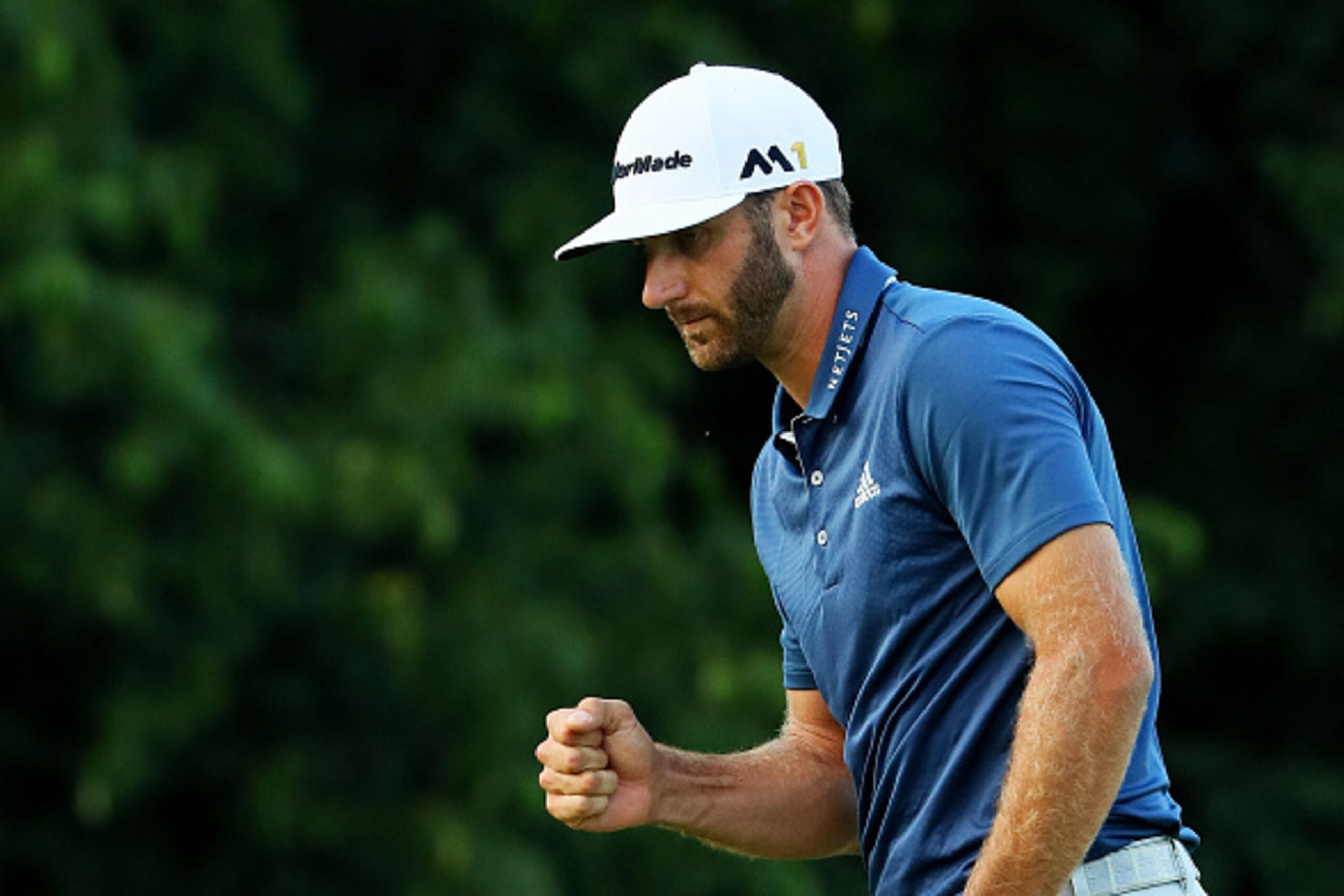
Having already lost the 2010 PGA Championship following an infamously contentious two-stroke penalty that was added to his score on the 72nd hole, Johnson stoically held his ground and won by three strokes at four under par overall.
If there were ever any question about his ability to shake off adversity, Johnson proved his mettle and moxie under the most trying of circumstances as a rules review dangled over his head over the last two hours of the final round.
The day unspooled painfully and slowly. About 90 minutes into his round, as Johnson stood near his ball on the fifth green, he took two short practice strokes and then began to move his putter behind the ball. But before he grounded the club at address, the ball moved a few millimeters, almost imperceptibly.
Johnson immediately backed off and informed playing partner Lee Westwood what had happened, and the Englishman flatly stated that Johnson had done nothing to cause the ball to move, per BBC.com. The USGA official assigned to the group consented to allow Johnson to play the ball where it came to rest, with no penalty assessed.
The official? Mark Newell, chairman of the USGA’s Rules of Golf Committee. It only went downhill from there.
After starting the round four shots back, Johnson shot a sterling 33 on the front nine to take a two-stroke lead. Any building celebratory mood was derailed on the 12th tee, though, when USGA official Jeff Hall pulled Johnson aside to tell him the video of the incident on No. 5 had been reviewed and Johnson was likely facing a one-shot penalty for causing the ball to move.
Never the most animated guy in cleats, Johnson seemed more stone-faced than ever. He was told he’d be required to sit through the video review after the round and plead his innocence. The threat of the penalty, until then, would hang in the air like a dull sword overhead.
The catcalls were immediate, unanimous and in million-part harmony. The visit on the 12th had become the event’s signature moment, writ large in red ink.
Ernie Els, a two-time U.S. Open winner, tweeted that it was “absolutely shocking. No way he made the ball move.”
Added Jordan Spieth, the event’s defending champion: “This a joke?”
Chimed in Rory McIlroy, another former Open winner: “Let the guy play without this crap in his head.”
Even Jack Nicklaus had choice words, per ESPN.com's Ian O'Connor:
The USGA had clearly made up its mind that he initiated the movement, despite a complete lack of a smoking gun. David Fay, a former USGA executive director working this week as an analyst for Fox, tried to explain the inexplicable to fans who have grown darn tired of the often indecipherable rules of the sport.
“If the weight of evidence indicates that it is more likely than not that the player caused the ball to move, even though that conclusion is not free from doubt, the player incurs the penalty,” Fay said during the telecast. “That always has been the case in the game of golf.”
Translated: It takes indisputable video evidence to overturn a ruling in MLB or the NFL. But in golf, the mere possibility that D.J. had initiated the movement was enough to assess a penalty shot to his score.
Wobbling after the initial discussion with Hall, Johnson seemed destined to blow yet another major. He looked like a dead man walking and fast fell into a tie with 54-hole leader Shane Lowry.
His brethren didn’t need to look far to find a reason.
Nearly Man, as he has been described overseas, was ready to hand off another trophy. Yet, facing his toughest majors test of all, he somehow persevered.
“I just tried to focus on what I was doing, and not worry about the penalty stroke, on just playing golf from there to the house,” Johnson said.
It wasn’t just a potentially ruinous decision for Johnson, but his fellow competitors, who had no way of knowing whether Johnson’s score would stand or be amended. Several minutes passed before the others on the leaderboard were informed of the situation.
McIlroy tweeted: “This isn't right for anyone on that golf course. If it was me I wouldn't hit another shot until this farce was rectified.”
An incendiary discussion broke loose about whether the USGA should have spoken with Johnson during his round, period.
Hall said Johnson was contacted about the pending penalty “so that he can adjust his strategy accordingly.”
Rickie Fowler called it “laughable.” Hudson Swafford went even further:
On the fastest greens in major-championship play, there was little question in the minds of many that Johnson did nothing to prompt the ball to move. The frighteningly fast green speeds, set up by the USGA itself, were the cause.
Said former world No. 1 Luke Donald:
Would it have been better for the USGA to say nothing until the round was over? Would merely assessing the penalty on the spot have been more prudent? Actually, making the right call on the fifth green would have been darned helpful, too.
“What other sport would wait until the end of a competition to make a ruling?” said former PGA Tour star Brad Faxon, who worked as an analyst during the Fox telecast. “This is ridiculous in my opinion.”
USGA Executive Director Mike Davis tried to explain the predicament, but came up short. As have many of his predecessors over the years.
“People are going to be upset however we rule,” Davis said. “Bottom line, we have to follow the rules, no matter what."
McIlroy, who left Oakmont without comment after missing the cut, had plenty to say about the whole scenario:
It was hard to decide who was more relieved afterward, Johnson or the USGA, which added a shot to his score—a completely moot gesture—after he actually won by four. The only thing that kept it from becoming a mortal wound to the USGA’s credibility is that Johnson somehow climbed off the mat and rallied to win.
As he stood on the 18th green with his arms wrapped around the winner’s trophy, the penalty was broached over the public-address system and fans from the Pittsburgh region—widely characterized as a no-nonsense lot—booed lustily.
Johnson grinned and gave them a knowing glance. After such a transcendent day, he could afford to take the high road. The USGA, mostly manned by blue-blood volunteers and country-club types, had stepped in it yet again.
Steve Elling covers golf for Bleacher Report. Quotes are firsthand unless otherwise noted.
.jpg?w=2560 "Cardinals Giants Football")


.jpg?w=2560 "Tyreek Deal May Come Soon")
.jpg?w=2560 "Mahomes' Wife Trolls Kubiak 💀")