

European Grand Prix 2016: Winners and Losers from Baku Race
Nico Rosberg claimed his fifth victory of the 2016 Formula One season in Sunday's European Grand Prix at the Baku City Circuit in Azerbaijan.
After failing to finish in the top three since his last win in Russia, the German finally returned to the podium after dominating from pole position at F1's newest track, where Mercedes team-mate Lewis Hamilton could only recover to fifth after a disastrous qualifying session on Saturday.
Joining Rosberg on the podium were Sebastian Vettel, who maintained his strong recent form and showcased his leadership skills by overriding Ferrari's pit call, and Sergio Perez, who registered Force India's second podium finish in three races.
On a day Kimi Raikkonen was hit with a five-second time penalty and Red Bull suffered one of their worst performances of 2016, here are the winners and losers from Baku.
Winner: Nico Rosberg
1 of 7
Turns out Nico Rosberg can't do it on a cold, wet Sunday afternoon in Monaco. Or make his way through the field in the cool and cloudy conditions of Canada.
But if you're looking for a driver to win from pole position on a bright, warm summer's day when his main championship rival is stranded in the midfield, Rosberg's your man.
Rosberg's fifth victory of the season was virtually assured at the end of qualifying, when he was celebrating a third pole of 2016 as Mercedes team-mate Lewis Hamilton sat motionless with his front-right wheel skew-whiff.
At a brand-new circuit with the potential to invite and punish silly mistakes, Hamilton couldn't afford to become complacent and risk losing his concentration. That's because Rosberg remained as professional as ever to return to the top step of the podium for the first time since the Russian GP at the beginning of May.
After poor starts saw the Mercedes drivers ambushed by Sebastian Vettel in Montreal, Rosberg had a decent getaway on this occasion. He swiped to the right-hand side of the track to cover the inside line into the first corner.
With the only threat to his supremacy stifled, the German went on to enjoy a tranquil, lonely race. Rosberg followed Pirelli's predicted strategy almost to the word by making his sole tyre change from supersofts to softs on Lap 21 of 51 and managing the gap to second-placed Vettel.
Having extended his advantage over Hamilton to 24 points, Formula One's fair-weather driver suddenly looks much more comfortable at the top of the championship.
Loser: Lewis Hamilton
2 of 7
As Formula One arrived in Baku for the first time ahead of the European GP, it was fascinating to learn how the drivers prepared to tackle a brand-new circuit.
While the likes of Carlos Sainz Jr. and Sebastian Vettel had no trouble admitting they completed up to 100 laps in their teams' simulators, per the FIA's official website, Lewis Hamilton almost seemed to take pride in revealing he spent just eight laps in the sim and didn't even bother with a track walk.
To him, the Mercedes simulator—"a very bad computer game," Hamilton told Motorsport.com's Adam Cooper—kills the exhilaration of driving an F1 car.
Rather than wasting his time doing homework, one of the most naturally gifted drivers of his generation was more than happy to feel his way around the street track.
After he dominated Friday practice, Hamilton's purer approach seemed to expose the students of the simulator as a bunch of overcomplicating computer geeks.
Yet as the weekend progressed and he became increasingly lost in the cockpit of his Mercedes W07, Hamilton's lack of preparation was there for all to see.
An untidy qualifying session came to a premature end when Hamilton clattered the inside wall of Turn 11, leaving him 10th on the grid ahead of what was expected to be one of the most chaotic opening laps of the season.
A mature, clean start set him up for a potential recovery to the podium, but his hopes of a top-three finish ended when his car developed a technical problem, leaving Hamilton flustered over team radio.
Mercedes boss Toto Wolff later told Sky Sports' Mark Crellin how the issue affected both cars, but while Nico Rosberg was able to quickly resolve the problem, Hamilton—with limited guidance from his race engineer due to the 2016 radio restrictions—wasted 12 laps before finally flicking the correct switch.
You suspect Hamilton, who was forced to settle for a distant fifth, might have also found a quick fix had he been prepared to spend a little more time in the simulator.
Winner: Sebastian Vettel
3 of 7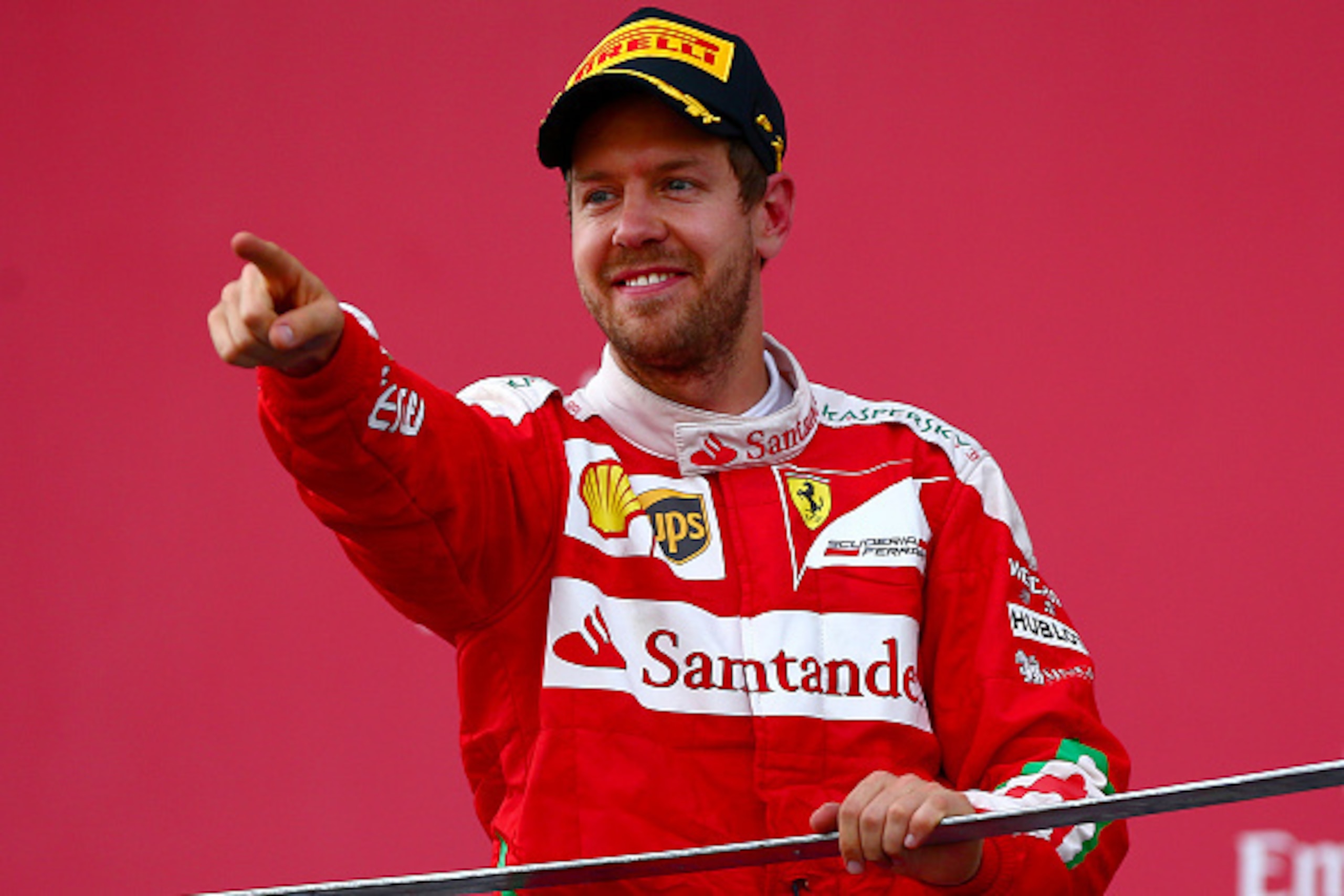
When another strategic error cost Ferrari yet another potential victory in the Canadian GP, Sebastian Vettel vehemently defended the Prancing Horse.
"I'm not a big fan of blaming anyone or anything," he told Sky Sports' James Galloway, reiterating his belief that Ferrari "have a very, very strong team" strategy-wise and insisting they had a "great" weekend despite gifting the win to Lewis Hamilton.
But for all his we-win-and-lose-as-a-team statements in the aftermath of the Montreal race in public, Vettel would have surely promised himself he would never again allow Ferrari to throw away another strong result with an ill-advised strategy call.
It was significant, then, that when his race engineer, Riccardo Adami, instructed him to box at the end of Lap 8 in Azerbaijan, the four-time world champion questioned the pit wall's wisdom.
"Are you sure about this?" he asked over team radio, encouraging Ferrari to think it through and reminding them his pace on the supersoft tyres was still "good."
The result?
Vettel's team-mate Kimi Raikkonen was given the suggested strategy as the German, having effectively overridden his team's decision, extended his first stint as far as Lap 20.
On a day seven of the top-10 finishers utilised a one-stop strategy, it was unquestionably the correct move and—having saved Ferrari from themselves—Vettel was left to celebrate second place and a second successive podium finish for the first time since last October.
_0.png?w=2560 "CFB Top 25")

.png?w=2560)
Loser: Kimi Raikkonen
4 of 7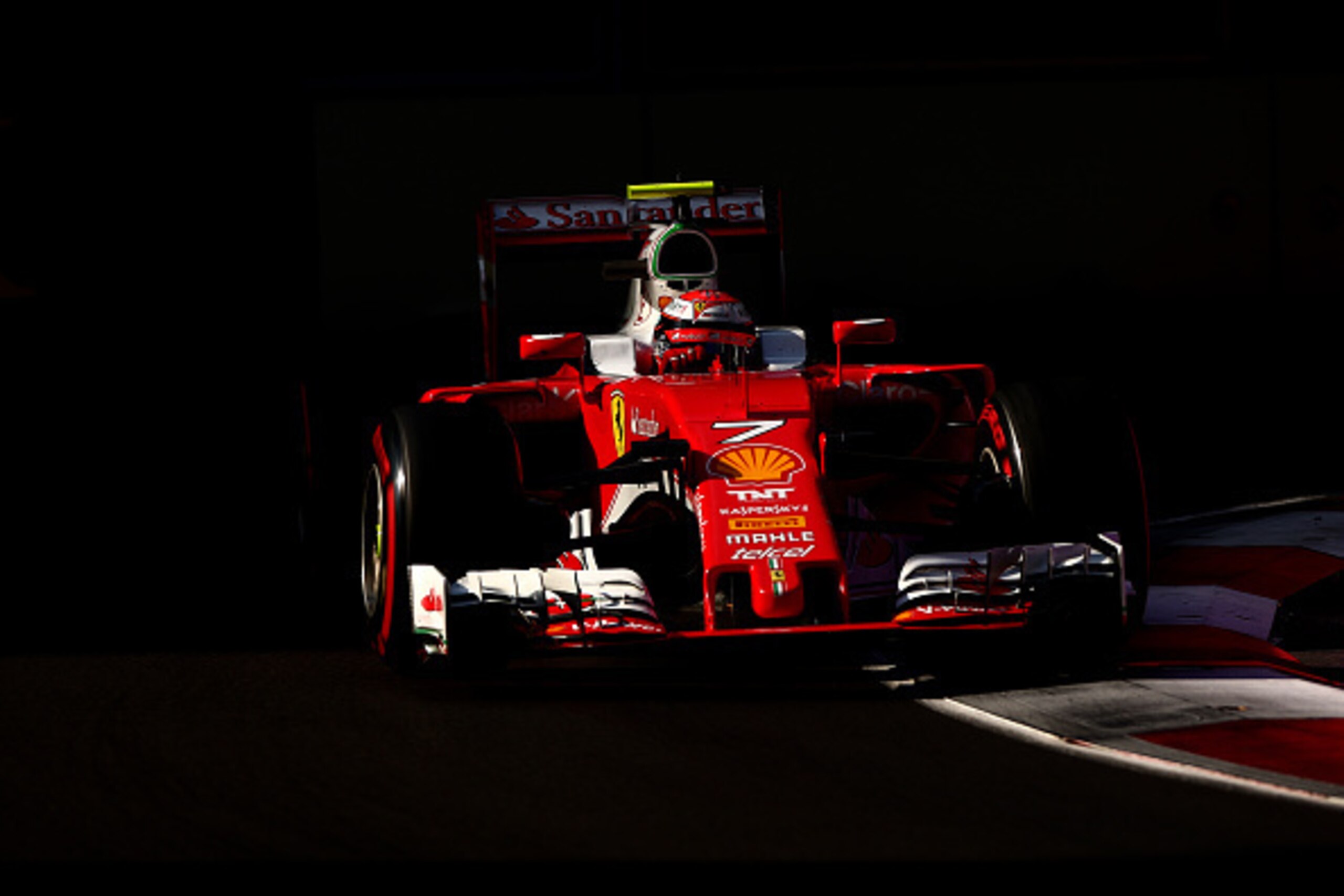
As Ferrari chairman Sergio Marchionne told Sky Sports' television coverage of the event, Kimi Raikkonen had been suffering from a stomach upset in the buildup to the European GP.
And the 2007 world champion would have felt even queasier after losing a podium finish to the driver arguably most likely to replace him at Ferrari next season.
After his poor performances in Monaco, where he retired after crashing at the slowest corner in F1, and Canada, where he finished almost a minute behind team-mate Sebastian Vettel, a fourth top-three finish of 2016 would have been very timely on the streets of Baku.
Yet his podium prospects were effectively extinguished in the early stages, when he received a five-second penalty after crossing the pit-entry line while slipstreaming Daniel Ricciardo down the main straight.
Per Motorsport.com's Pablo Elizalde, Raikkonen later referred to the punishment as "stupid," insisting he gained "zero" from the manoeuvre.
Although the penalty was deemed harsh, the debate surrounding the safety of the pit entry throughout the weekend—which led to the FIA altering that section of the track and warning the drivers against crossing the white line, as reported by Motorsport.com's Adam Cooper—meant it was fully justified.
Like Lewis Hamilton, Raikkonen is also renowned for his dislike of simulator work and track walks, and his limited understanding of the intricate workings of his car—as well as the current radio restrictions—was exposed when he too was forced to manage a problem in the closing stages of the race.
As he told Ferrari's official website, a fourth-place finish was "not too bad" given the circumstances, but still not good enough.
Despite Marchionne's insistence that Raikkonen's own performances will determine his future, it it likely to be his relationship with Vettel—whom he gifted second place on Lap 28—that will decide whether he is retained for 2017.
Winner: Sergio Perez
5 of 7
After registering his third podium finish in as many seasons at the recent Monaco GP, Sergio Perez made an emotional appeal to the paddock.
Instead of judging him on his miserable one-season stay at McLaren in 2013, the Mexican told Sky Sports' Matt Morlidge, F1 folk should focus on the progress he has made since joining Force India at the beginning of 2014.
If they did, they would see a much improved, "more complete driver in all aspects" and someone who is "ready" for a second chance at a leading team.
Over the last 12 months in particular, Perez has offered frequent reminders of why he might be worth a punt, but front-running outfits—seemingly swayed by the memories of the McLaren year—remain reluctant to take that risk.
Perez gave the likes of Ferrari another reason to overlook him in the closing seconds of FP3 on Saturday morning, when he smacked the barrier on the exit of Turn 15, damaged the rear of his VJM09 and left his mechanics with less than two hours to repair his car for qualifying.
The true test of a driver's character and capabilities is how they recover after such confidence-shattering setbacks at crucial times. And, just like he rebuilt his career after the McLaren experience three years ago, Perez came back even stronger as the weekend progressed.
His best-ever qualifying result of second—achieved in part thanks to the red-flag stoppage in Q3—was impossible to celebrate without ruing the earlier incident that led to him dropping five places on the grid due to a gearbox change.
But Perez's performance in the race, when he made a strong start and withstood huge pressure from his McLaren predecessor, Lewis Hamilton, more than made up for his error the previous day.
His final-lap pass on Kimi Raikkonen for third place at Turn 1—a move he didn't even need to make due to the Finn's five-second time penalty—felt symbolic as he joined the other Ferrari driver on the podium.
With his sins now forgiven, Perez would make a fine No. 2 alongside Sebastian Vettel in 2017.
Loser: Red Bull
6 of 7
Even with the advantage of Renault's upgraded power unit, the Baku track—featuring one of the longest straights in F1, according to F1 Stat Blog, and several other high-speed sections—was never expected to favour Red Bull.
Yet, as noted by Sky Sports' Ted Kravitz, the root of the team's struggles in the European GP was not their enduring lack of straight-line speed, but their curious inability to "switch on" their tyres.
Per the team's official website, extreme rear-tyre degradation led to both Daniel Ricciardo—who almost defied logic to start as high as second on the grid—and Max Verstappen to commit to two-stop strategies at an early stage, with both drivers pitting for soft-compound rubber within the first six laps.
Although that tyre was expected to last until the end of the race—as evidenced by Manor's Rio Haryanto, who made his only stop on Lap 1 and completed the remaining 50 on softs—both drivers continued to struggle before the decision was taken to switch to the mediums.
Ricciardo, who made his second stop on Lap 22, and Verstappen, who made his final visit to the pits two laps earlier, were two of just four drivers to use the white-striped compound over the course of the grand prix.
That rather desperate move sparked a recovery of sorts as Ricciardo and Verstappen, on more durable rubber, ambushed Williams' Felipe Massa and Force India's Nico Hulkenberg in the closing laps to finish seventh and eighth respectively.
That Verstappen set the third-fastest time of the entire race on the penultimate lap confirmed Red Bull had the pace to challenge in Baku, if only they had managed to make their tyres last.
Loser: Toro Rosso
7 of 7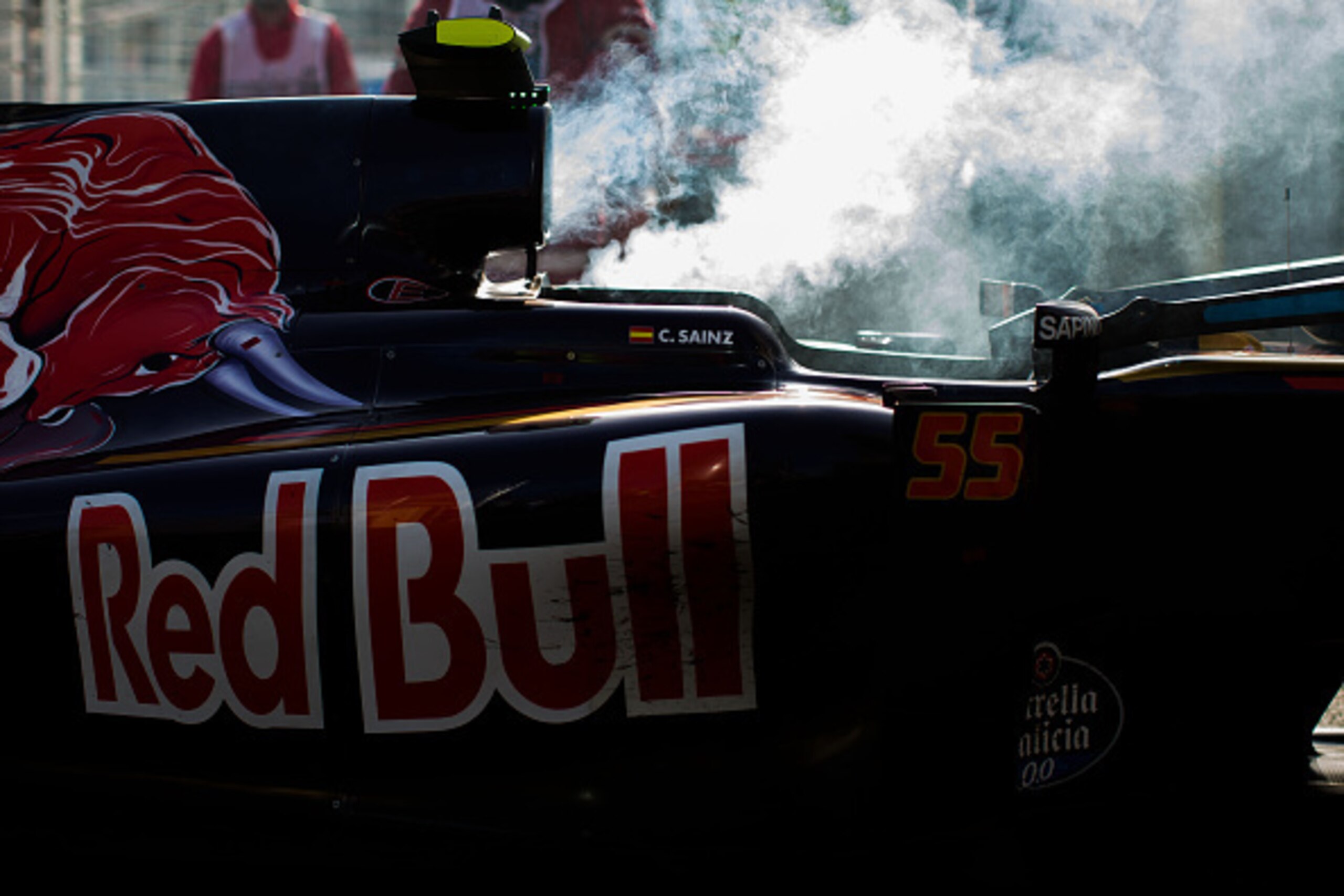
"Why this happens to me all the time?" sighed Daniil Kvyat in the early laps in Monaco, where an electronic issue left him crawling at the rear of the field, a lap behind his fellow competitors.
A similar thought must've run through his mind at the beginning of the European GP as another technical problem brought an early end to one of his more convincing weekends since his return to Toro Rosso.
As with the senior Red Bull team, the high-speed nature of the Baku circuit hardly played to the strengths of Toro Rosso—running 2015-specification Ferrari power units—yet the Russian still found a way to drag his STR11 into the third segment of qualifying.
His time of one minute, 44.687 seconds in Q2 was 0.313 seconds quicker than Carlos Sainz Jr.—quietening the commotion currently surrounding his team-mate—with Lewis Hamilton's crash, the handbags between Max Verstappen and Valtteri Bottas and Sergio Perez's grid penalty allowing Kvyat to start as high as sixth.
He didn't stay there for long, however, losing positions to all four drivers—as well as Haas' Romain Grosjean—before retiring with a rear-suspension problem after just six laps.
Kvyat's elimination meant it was once again left to Sainz, currently enjoying the best run of form of his F1 career, to carry Toro Rosso's hopes.
The Spaniard ran as high as eighth at one stage, but retired from P14 with an identical issue—which is believed to have been caused by the dampers getting stuck and "impeding the normal movement of the suspension, as Franz Tost told the team's official website—after 31 laps.
On a day Perez registered his second podium finish in three races, Toro Rosso's first double DNF since Silverstone 2015 has left them 27 points behind Force India in the fight for fifth in the constructors' championship.
All timing and tyre data, as well as team radio quotes, sourced from the official F1 website, the FOM television feed and Pirelli Motorsport's infographic on Twitter.
.jpg?w=2560 "Colts Football")





