


In England, the buildup to Euro 2016 has largely centred on nostalgic throwbacks to the last time they were in France’s position—hosting the tournament and with a nation willing them on.
With no international success to speak of since the World Cup in 1966, the penalty-shootout defeat to Germany at Wembley Stadium in the semi-finals of the European Championship in 1996 (as well as the defeat via the same method to the same nation at the same stage of the 1990 World Cup) is all the nation has to cling to.
They believed they were so close, so close, to ending generations of hurt, only to fall short.
TOP NEWS

Final Men's Ballon d'Or Rankings 📊
_0.png?w=2560 "CFB Top 25")
Unranked Teams Cause Chaos in Rankings 📊

Brown with an all-time summary of relationship with Tatum
But although they might like to think so, England don’t have a monopoly on heroic failure in this competition. That dubious honour, since 2000 at least, belongs to Portugal.
Because when it comes to the European Championship, the Portuguese don’t just have one story of recent heartbreak to tell. They have three.
Euro 2000
It began with a bang.
Humberto Coelho, the former Portugal centre-back who had been out of coaching for a decade before accepting the job after his nation’s failure to reach the 1998 World Cup, their third consecutive absence, took a talented if flawed team to Euro 2000 in Belgium and the Netherlands. Hope was high.
But 18 minutes in to their opening group game against England in Eindhoven, goals from Paul Scholes and Steve McManaman had the Three Lions 2-0 up and believing they could finally move on from Euro 96.
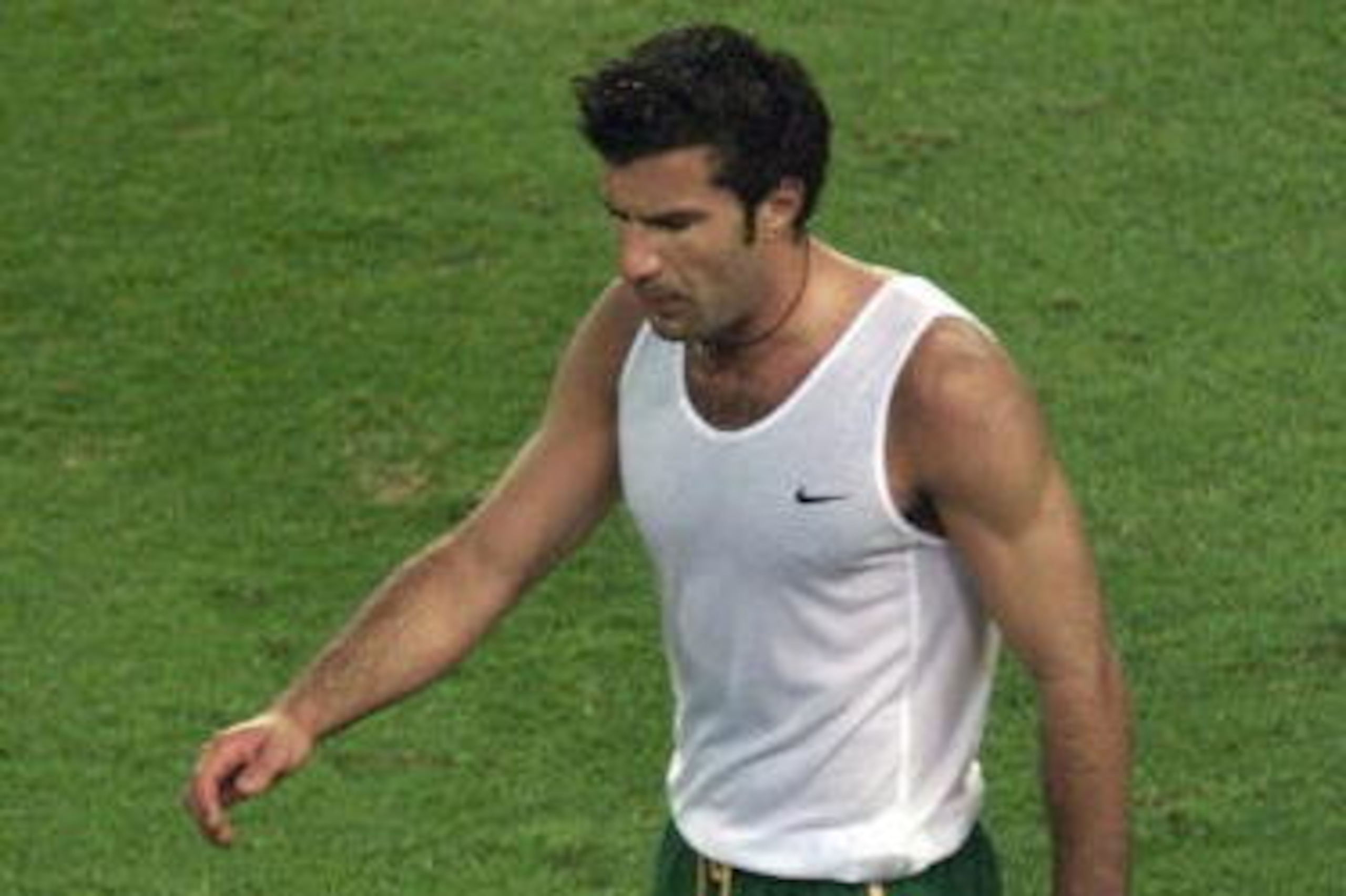
Portugal needed a response, and Luis Figo decided to pick his nation up from the floor.
A month before he made his controversial move from Barcelona to Real Madrid, Figo blasted his side back into it with a stunning goal four minutes after McManaman’s strike, and then Joao Pinto and Nuno Gomes struck either side of half-time to seal a remarkable comeback victory.
Portugal were off and running, and a 94th-minute winner from the substitute Costinha against Romania in Arnhem assured qualification for the last eight with a game to spare.
The feeling this Portuguese side could do something special was emphasised when a much-changed team hammered a dismal Germany 3-0 in Rotterdam in their final group game. Sergio Conceicao—in for the rested Figo—hit a hat-trick, and he remains one of only seven players to have done so in a European Championship finals.
Nuno Gomes, the arch predator who would finish the tournament on four goals, one strike behind top scorers Patrick Kluivert and Savo Milosevic, profited from two Figo assists in the quarter-final win against Turkey in Amsterdam.
The team headed to Brussels to face world champions France confident they could cause an upset.
A brilliant goal from Nuno Gomes opened the scoring, but after Thierry Henry’s equaliser, the game looked to be heading for penalties until Abel Xavier—denied by a fine save from Fabian Barthez minutes earlier—handled a Sylvain Wiltord effort in the penalty area three minutes from the end of extra time.
Confusion reigned, but after Austrian referee Gunter Benko eventually gave the penalty, the brilliant Zinedine Zidane scored the golden goal that knocked Portugal out amid vociferous protests from Xavier, Paulo Bento and Nuno Gomes.
The latter received a red card, and UEFA later banned all three from international football for a number of months.
Embattled and enraged, a sense of destiny had been lost, and this entertaining Portugal side didn’t go away quietly.
Euro 2004
Fear not, though, because four years on, it was their turn to play the hosts.
With Brazil's 2002 World Cup-winning coach, Luiz Felipe Scolari, on board, players such as Figo, Fernando Couto, Rui Costa and Pauleta all coming toward the end of their distinguished international careers, and six of the squad having just won the Champions League with Jose Mourinho’s Porto, it felt the time was right for this generation to strike gold.
A defeat to unheralded upstarts Greece in Porto on the tournament’s opening day was a shock, but it was never considered terminal. Wins over Russia and in a highly charged match against Spain, both in Lisbon, got the nation believing again.
After winning Group A, Scolari’s men took on Sven-Goran Eriksson’s England, who were being powered by the performances of then-teenage star Wayne Rooney. But Rooney lasted less than half an hour in Lisbon, going off with a broken metatarsal with his side 1-0 up thanks to Michael Owen.
England defended well—with Ashley Cole impressing up against Portugal’s own young star, Cristiano Ronaldo—until substitute Helder Postiga, fresh from a dismal season at Tottenham Hotspur, during which he’d scored just one league goal, headed them level late on.
Sol Campbell had a goal disallowed, Rui Costa scored a fantastic goal from distance and Frank Lampard equalised in a wild period of extra time, which then resulted in a penalty shootout. David Beckham and Darius Vassell missed for England, and the Portugal goalkeeper Ricardo drove home the winning spot-kick. A nation went wild.
There was a real sense, more so than four years earlier, that Portugal were being driven by destiny.
The impressive midfielder Maniche scored the stunning and physics-defying winner against the Netherlands in the semi-finals, and suddenly the hosts were in a final against those same upstarts they’d lost to on the opening day. And then there was nothing.
As if frozen by the occasion, Portugal just couldn’t get going. The master Figo looked a shadow of his former self, and his apprentice, Ronaldo, was subdued by Greece’s organised defending.
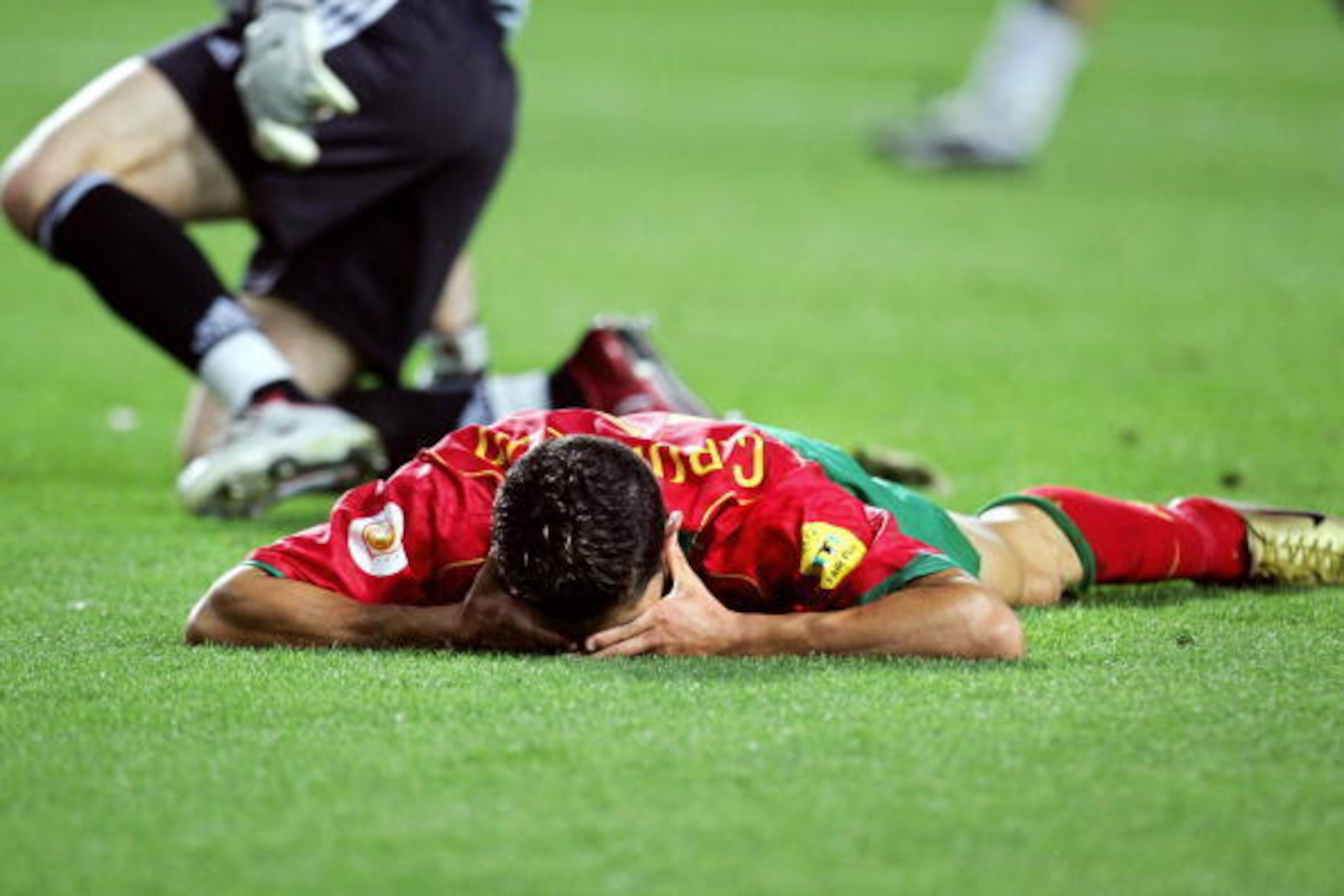
Coach Otto Rehhagel had created a remarkably solid side that refused to yield, and the biggest upset in European Championship history was completed when Angelos Charisteas headed home Angelos Basinas’ corner.
Portugal were beaten, broken.
Ronaldo’s tears at the full-time whistle became a symbol for the whole tournament, with the hosts seemingly convinced the trophy was going to be theirs.
Euro 2012
Euro 2008 was a decent tournament from Portugal’s point of view, albeit not as successful as their previous two (Scolari guided them to the semi-finals of the 2006 World Cup).
The Brazilian coach took his team out of a fairly simple group before falling to an idiosyncratic but effective Germany in a quarter-final loss in Basel, and after a disappointing 2010 World Cup under Carlos Queiroz, it was Paulo Bento calling the shots at Euro 2012 in Poland and Ukraine.
Again Portugal lost their opening game, 1-0 to Germany in Lviv, but a tricky group was escaped thanks to Silvestre Varela’s late winner against Denmark and a well-taken Ronaldo brace against the Netherlands in Kharkiv, Ukraine.
Unlike in previous years, there wasn’t any great sense Portugal were building toward glory here—rather that Ronaldo was dragging a fairly mediocre squad as far as he could. The then-world’s most expensive player headed the only goal 11 minutes from time to see off the Czech Republic in the quarter-finals in Warsaw.
And so it was to the semi-finals and a clash with Iberian rivals Spain—going for a third straight tournament success—in Donetsk, Ukraine. It had been billed as Real Madrid’s Ronaldo up against his great rivals in the Spain side, many of whom played for Barcelona.
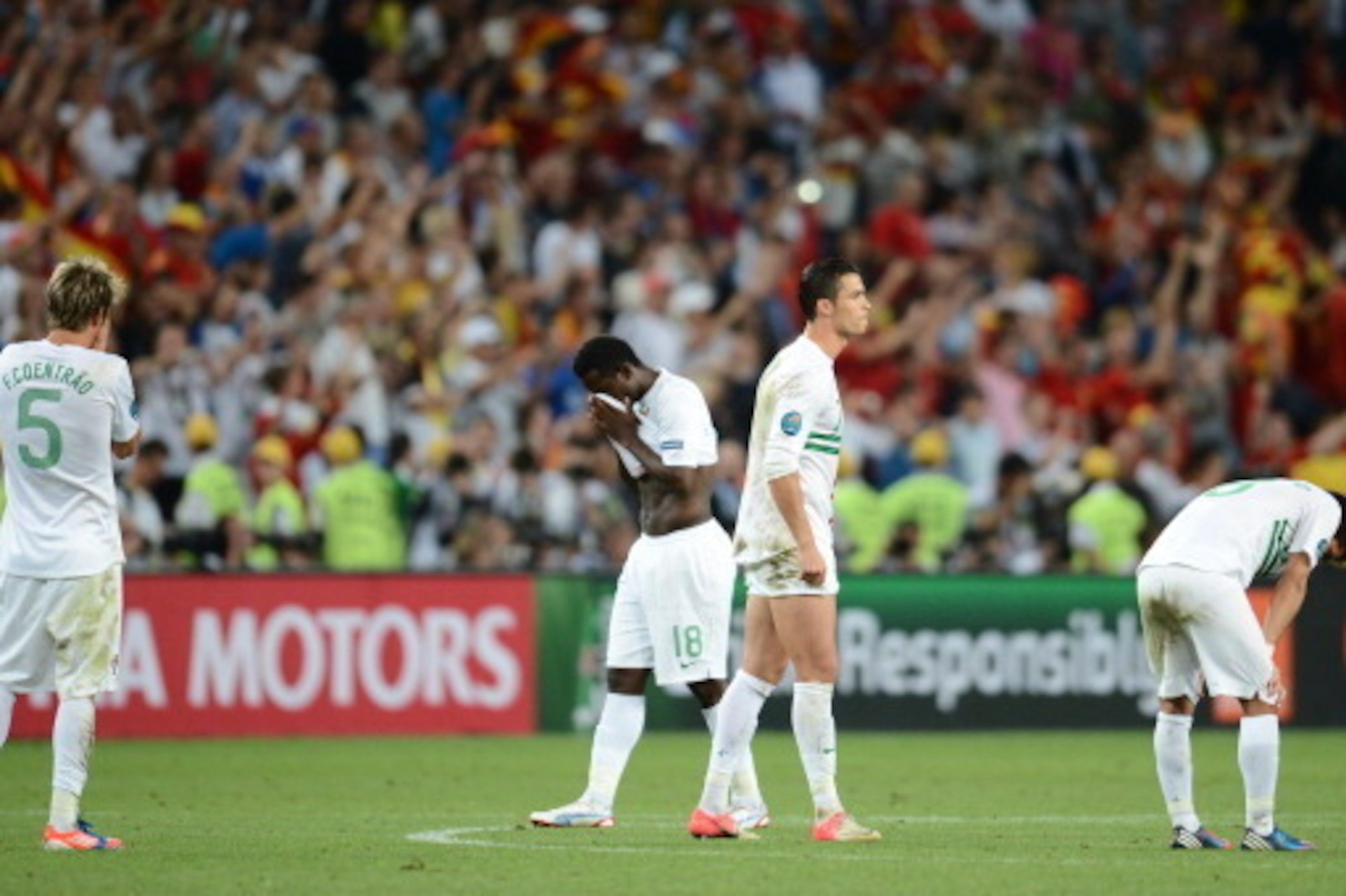
The match itself was something of a disappointment though, with Portugal arguably having the better of it. Joao Moutinho and Xabi Alonso missed their team’s opening penalties in a shootout that had become inevitable.
Later, Sergio Ramos scored for Spain with a fine chip, Bruno Alves hit the bar for Portugal, and it was left to Cesc Fabregas to put his side into the final, in which they’d play Italy and win 4-0.
All that was left for Portugal was a familiar sense of heartache, desperation and a belief this decade hasn’t been too kind them.
Will all that change in France? Portugal surely can’t take any more of this.
.png?w=2560)
.jpg?w=2560 "Colts Football")





