

The Complete Guide to UFC Fight Night 89: MacDonald vs. Thompson
The UFC makes its first trip to Ottawa, Ontario, Canada, this Saturday with an excellent Fight Night slate on Fox Sports 1.
In the main event, former title contender Rory MacDonald makes his return to the Octagon after his devastating fifth-round loss to champion Robbie Lawler in July. MacDonald faces karate expert Stephen Thompson, who put a stamp on his entry into the welterweight division's elite with a crushing first-round knockout of former champion Johny Hendricks in February.
This is one of the best matchups in a division stacked with talent, and it could determine the next contender to the welterweight crown.
This is the last bout on MacDonald's contract. If he wins, he will become one of the biggest free agents to hit the market in the history of the sport.
The rest of the night is stacked with fun fights. Action fighter Donald Cerrone takes on veteran Canadian brawler Patrick Cote in an entertaining co-main event, while former hockey enforcer Steve Bosse meets Sean O'Connell in another promising bout.
Name value isn't the preliminary card's strong suit, but nearly every fight should be full of action. Keep an eye on the middleweight bouts between Tamdan McCrory and Krzysztof Jotko, and Elias Theodorou and Sam Alvey, the latter of which headlines the Fight Pass portion of the event.
Let's take a look at each matchup.
The Fight Pass Prelims
1 of 7
Flyweights
Ali Bagautinov (13-4; 3-2 UFC) vs. Geane Herrera (9-1; 1-1 UFC)
Former title contender Bagautinov looks to rebound from a two-fight losing streak against up-and-coming Floridian Herrera.
Bagautinov, a native of Dagestan, won his first three in the UFC but ran into champion Demetrious Johnson in June 2014, suffering a one-sided defeat. Joseph Benavidez won a competitive but clear decision in Bagautinov's follow-up fight in October after the Dagestani's suspension for erythropoietin usage. Herrera dropped his short-notice debut to blue-chipper Ray Borg but knocked out Joby Sanchez in December.
The former title contender is well-rounded and dangerous. Explosive wrestling complements his crushing power on the feet, and he blends the two nicely. A former world champion in combat sambo, he also drops bombs from top position. Unfortunately, he doesn't throw enough volume, and despite his counterpunching skills, he spends too much time waiting and failing to produce offense at range.
Herrera is an excellent athlete with big power in his hands. He does his best work counterpunching and mixes in flying knees and jumping kicks. On the mat, he's aggressive and dangerous, and he's a competent wrestler. His offense runs hot and cold, however, and he's too willing to accept bottom position.
Prediction: This should be entertaining. Herrera is still raw and has made substantial strides from fight to fight, while Bagautinov is a better wrestler and packs more power on a shot-for-shot basis. This will be close, but Bagautinov takes a fun, back-and-forth decision.
Welterweights
Colby Covington (8-1; 3-1 UFC) vs. Jonathan Meunier (7-0; 0-0 UFC)
Canada's Meunier steps up on short notice to replace the injured Alex Garcia against former NCAA All-American wrestler Covington. Meunier has finished all seven of his professional opponents and has yet to see the third round against decent regional competition. Covington is an excellent prospect who suffered his first professional defeat against Warlley Alves last December.
Wrestling is still Covington's wheelhouse, and he's explosive with his double-leg takedowns. He throws with real power from top position and excels at sneaking in shots in the clinch against the fence. Striking is still a weak point, though, and the southpaw is both limited offensively and hittable as he presses forward.
Meunier is huge for the division at 6'3". While he has a background in kickboxing and throws sharp kicks from both stances, he does his best work with takedowns and top control.
Prediction: Covington's wrestling game should be a huge advantage here. He repeatedly takes down Meunier and works him over from the top for a decision.
Strawweights
Randa Markos (5-3; 1-2 UFC) vs. Jocelyn Jones-Lybarger (6-2; 0-1 UFC)
The Ultimate Fighter 20 alum Markos takes on Arizona's Jones-Lybarger in an excellent strawweight matchup. Markos has shown flashes of brilliance in her UFC career but dropped her last fight to Karolina Kowalkiewicz after her lone victory over Aisling Daly. Jones-Lybarger dropped a decision to Tecia Torres on short notice in December.
The Canadian Markos is an excellent athlete blessed with great quickness and real power in her right hand. She throws hard kicks and has an explosive takedown game, but she doesn't show much variety as a striker and struggles to defend takedowns. Jones-Lybarger has a high-output boxing game and is a solid wrestler, but she isn't particularly dangerous or athletic.
Prediction: Markos isn't the striker that Torres is and doesn't keep that kind of pace. While Markos should have a substantial athletic advantage, Jones-Lybarger works faster and should be able to keep it standing. The American takes a decision.
Middleweights
Elias Theodorou (11-1; 3-1 UFC) vs. Sam Alvey (26-7, 1 N/C; 3-2 UFC)
The Ultimate Fighter: Nations winner Theodorou looks to rebound from the first loss of his career. Theodorou started his UFC career with three consecutive wins but ran out of gas after a strong first round against Thiago Santos in December. Alvey had strung together a three-fight winning streak of his own, but contender Derek Brunson finished him in two minutes, 19 seconds in August.
His perpetual smile notwithstanding, Alvey is a dangerous fighter. The southpaw is a counterpuncher by trade and packs crushing power in his preferred right hook. Striking defense is a real problem, though, and Alvey is far too hittable for comfort. Strong defensive wrestling keeps him standing, and he's competent in the clinch, but that's the extent of his game.
Theodorou is a quick-paced fighter. He likes to work behind a consistent kicking game and to throw a high volume of strikes at range, which covers his clinch entries and takedowns. The Canadian loves to grind against the fence and throws brutal knees. When he gets to top position, he just never lets up. He's still inexperienced, though, and has holes in his striking game and a tendency to be inefficient with his energy.
Prediction: If Theodorou burns through his gas tank in the first round again, Alvey will be ready to pounce as the fight wears on with his durability. The Canadian isn't a defensive master, and his aggression could get him in trouble against the counterpuncher. The more likely scenario, though, involves Theodorou grinding Alvey in the clinch and wearing him down. Theodorou takes a decision.
The Fox Sports 2 Prelims
2 of 7
Bantamweights
Joe Soto (15-5; 0-3 UFC) vs. Chris Beal (10-2; 2-2 UFC)
Former title challenger Soto gets one last chance in the UFC against TUF 18 competitor Beal. Since filling in against TJ Dillashaw on late notice in August 2014, Soto has dropped an additional pair of fights against Anthony Birchak and Michinori Tanaka. Beal has lost two in a row, dropping decisions to Neil Seery and Chris Kelades. The loser will likely receive his walking papers, while the winner will have a new lease on his career.
Soto is technical and well-rounded. A wrestler at Iowa Central Community College, he shoots a lovely single, grapples with real skill on both top and bottom and throws smooth combinations. He's hittable, though, and has a somewhat fragile chin.
Beal is quick and athletic and prefers to box on the feet, but he's not especially powerful and is awkward with his technique. He's a solid wrestler.
Prediction: Soto is better technically everywhere. Unless he struggles to pull the trigger, which has happened before, he should have advantages in each phase. Soto takes a decision.
Middleweights
Tamdan McCrory (14-3; 4-3 UFC) vs. Krzysztof Jotko (17-1; 4-1 UFC)
Talented middleweights meet in one of the best-matched fights on the card. McCrory returned to the UFC after a six-year absence in December, eventually submitting Josh Samman to earn his first victory in the Octagon since 2009. Poland's Jotko has won three in a row in the UFC, defeating Brad Scott in February.
The winner will be in line for a Top 15 or even Top 10 opponent.
The 6'4" McCrory is a dangerous fighter both standing and on the mat. He's a slick and powerful combination puncher with sharp knees in the clinch, an active guard and brutal strikes from top position. Wrestling isn't his strong suit, although he's better than he was in his first UFC run seven years ago.
Jotko is well-rounded and athletic. The southpaw mostly prefers to strike, throwing a sharp straight left and an assortment of rangy kicks. It's nearly impossible to take him down, and while he's not especially powerful, he works at an excellent pace on the feet.
Prediction: This is another close fight. McCrory is a slight favorite, but Jotko is the cleaner range striker and should be able to keep this standing. The Pole takes a decision.
Light Heavyweights
Misha Cirkunov (11-2; 2-0 UFC) vs. Ion Cutelaba (11-1, 1 N/C; 0-0 UFC)
Canada's Cirkunov takes on Moldova's Cutelaba in a strong matchup of light heavyweight prospects. Cirkunov defeated Daniel Jolly and Alex Nicholson in his first two UFC bouts, while Cutelaba debuts after a career spent in Eastern Europe fighting low-level competition.
The southpaw Cirkunov is still a bit stiff as a striker, but he packs real power in his punching combinations and left kick. He's on firmer ground in the clinch, where he shows smooth takedowns and vicious strikes. On top, he moves like a much smaller man, with slick passes, hard strikes and a nose for the submission.
Cutelaba is a bomber with huge power in his hands. He throws winging combinations as he works his way forward and complements that with strong takedowns and good work on top. His takedown defense is questionable, though, and so too is his defensive grappling.
Prediction: This is a straightforward matchup on paper, with Cutelaba holding a substantial advantage in the striking and Cirkunov everywhere else. The latter seems likely to prevail, so the pick is Cirkunov by submission in the first round.
Lightweights
Jason Saggo (11-2; 2-1 UFC) vs. Leandro Silva (19-3-1, 1 N/C; 3-2, 1 N/C UFC)
Canada's Saggo meets Brazil's Silva in a solid lightweight fight. Saggo has sandwiched wins over Josh Shockley and Justin Salas around a loss to contender Paul Felder, while Silva hasn't lost since dropping a fight to Francisco Trinaldo in September 2014.
Saggo can do a bit of everything. He's a quality striker with a nice kicking game, but he does his best work as an offensive wrestler and especially on the mat. Silva too likes to kick on the feet and has a strong combination of offensive wrestling and grappling.
Prediction: Neither fighter is particularly good at defending takedowns, and neither throws much volume on the feet. Saggo is more dangerous on the ground, however, and he should find some success if he can get on top. The pick is Saggo by decision.
Valerie Letourneau vs. Joanne Calderwood
3 of 7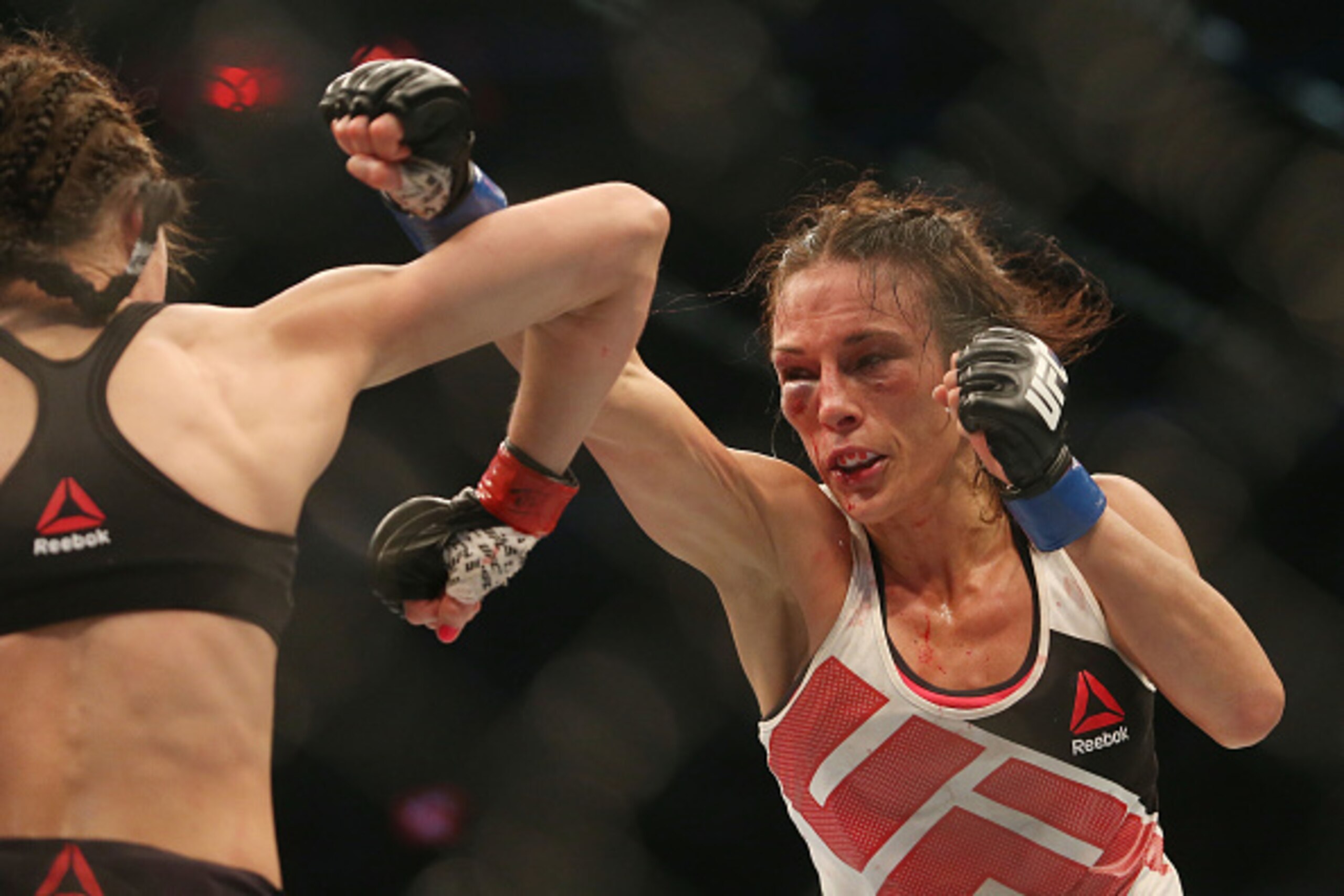
Flyweights
Valerie Letourneau (8-4; 3-1 UFC) vs. Joanne Calderwood (10-1; 2-1 UFC)
Former strawweight title challenger Letourneau takes on Scotland's Calderwood in the UFC's first women's flyweight contest. A native of Canada, Letourneau won her first three in the UFC before falling short against Joanna Jedrzejczyk in November. Calderwood was a highly touted prospect and has sandwiched wins over Seohee Ham and Cortney Casey around a huge upset loss to Maryna Moroz.
There will be plentiful matchups with the strawweight Top 10 for the winner if she can make it back down to 115 pounds. Alternatively, this might spark the UFC to add a flyweight division.
Letourneau is a striker by trade. She shows off a crisp but inconsistent jab and relies heavily on a potent right hand that she often doubles or triples. The Canadian is particularly sharp with her counters and shows off excellent timing and well-trained triggers for her responses. Letourneau often lets her right leg drift forward after she throws the right and loves to follow with a hard left kick to the body or head.
Pace is a strong suit for Letourneau. She works fast and usually throws more than one shot at a time. Defensively, her command of distance is her strongest suit, but an opponent can touch her up in the pocket.
The clinch is another strong area for the Canadian. She puts her 5'7" frame to good use with serious leverage and a good command of head positioning against the fence. The occasional trip adds some variety. She's an exceptional defender of takedowns, and from top position she controls and lands a few strikes.
Calderwood is likewise mostly a striker. She starts slow and is vulnerable early in the fight, but as she gets her timing and distance, she drops an increasingly rapid output of front and round kicks to set a long distance. The Scot wears her opponent down with a steady stream of shots to the legs and body and tosses in a few long punches for good measure.
Calderwood has little to offer in the pocket and is hittable at punching distance, but she spends little time at that range. Instead, she excels at sliding from kicking distance into the clinch, which is her wheelhouse. Double-collar ties, over-unders and frames all provide avenues for Calderwood to slam home knees to the body and head, and she mixes in elbows and short punches with strong control and muay thai-style sweeps.
Strong takedown defense keeps Calderwood standing, and she can hit both trips in the clinch and decent double-leg takedowns when the mood strikes. She's still a relatively novice grappler, though, and does little more than control and land strikes. If she finds herself on her back, Calderwood is in serious trouble.
Betting Odds
Letourneau -175, Calderwood +155
Prediction
This is a close fight. Letourneau is more athletic, hits harder and is the more dangerous striker in general, while Calderwood is better in the clinch and at kicking range. Letourneau will probably try for a takedown or two, though it's unlikely she'll get them.
Calderwood will probably eat a number of shots early, but as she adjusts and gets her offense going, she'll outpoint Letourneau at range and in the tie-ups. The pick is Calderwood in a close, back-and-forth decision.

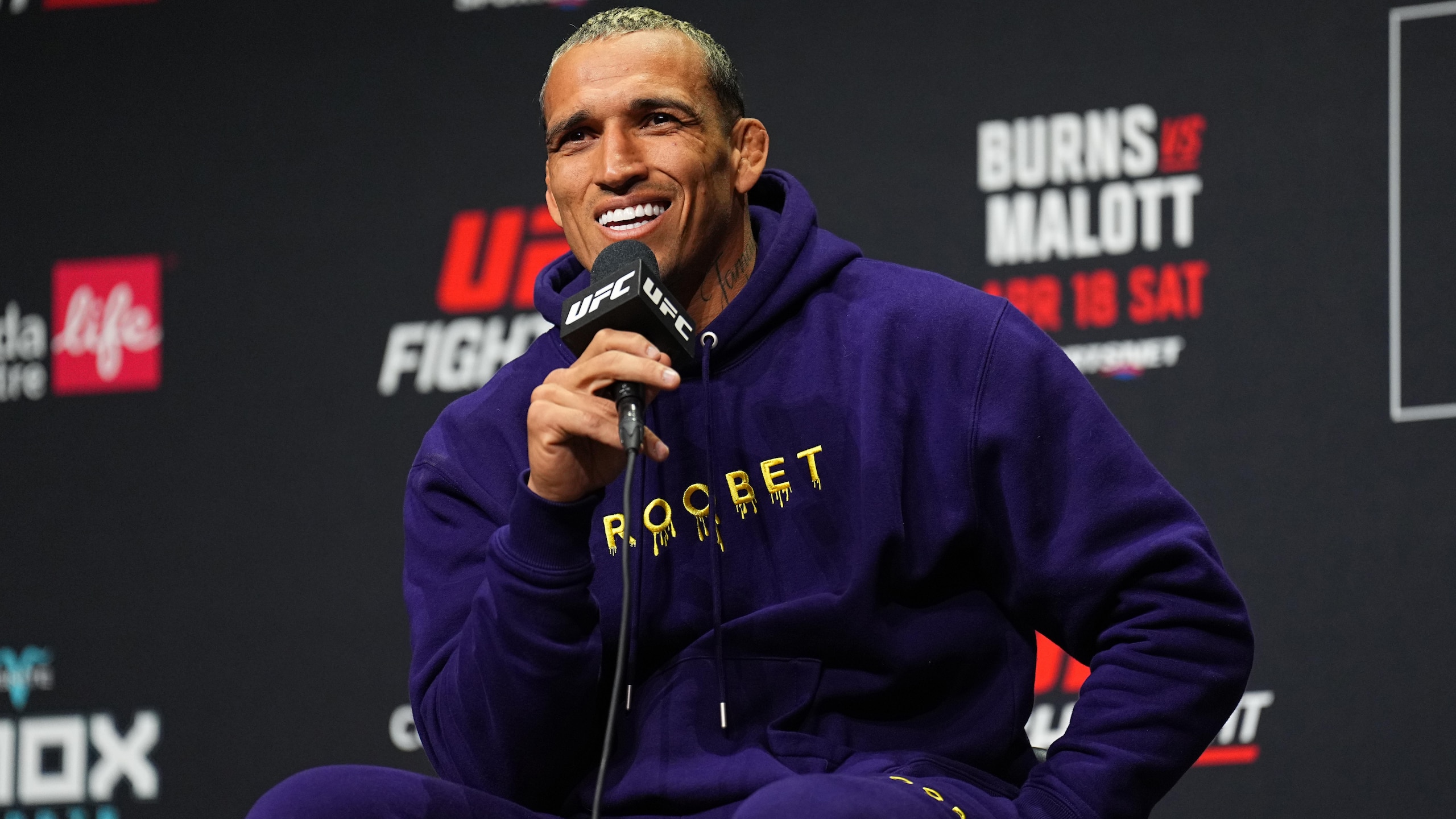

Olivier Aubin-Mercier vs. Thibault Gouti
4 of 7
Lightweights
Olivier Aubin-Mercier (7-2; 3-2 UFC) vs. Thibault Gouti (11-1; 0-1 UFC)
The Ultimate Fighter: Nations finalist Aubin-Mercier tries to get back on track against France's Gouti in a solid lightweight bout. Following his loss to Chad Laprise in the show's final, Quebec's Aubin-Mercier ran off three consecutive wins, looking the part of a blue-chip prospect. Carlos Diego Ferreira put a stop to that streak in January, though.
Gouti debuted on short notice in February against Teemu Packalen and fell to a submission inside 30 seconds.
Aubin-Mercier is the A-side of this matchup, and this is essentially an opportunity for him to rebound in front of the Canadian fans.
Gouti is an aggressive pressure striker. He has crisp and well-trained hands that fire off a steady stream of combinations, usually starting with a sharp jab. Countering in the pocket seems to be a specialty, and he carries real pop in his shots.
The Frenchman seems to be a competent defensive wrestler and a reasonably skilled grappler with some submission knowledge, but there isn't much to go on.
The Canadian is a wrestler and grappler by trade. The judo black belt does his best work in the clinch with a strong array of trips and throws, which he chains together smoothly with singles and doubles against the cage. Aubin-Mercier is technically sound, strong and relentless when he gets in on a shot.
His specialty lies in creating a scramble more than establishing top position. In transitions, Aubin-Mercier excels at letting his opponent move under him and then using the opportunity that follows to get to his opponent's back. The Canadian has a vicious rear-naked choke and a series of effective setups for his back-takes.
Striking is the weakest part of Aubin-Mercier's game. The southpaw is athletic and powerful but stiff. He throws a brutal left kick at all levels and has some pop in his hands, but he rarely moves his head and has a bad habit of throwing the same thing over and over, which allows his opponent to time and counter him. Aubin-Mercier has made improvements in his last several fights, but he has a long way to go.
Betting Odds
Aubin-Mercier -400, Gouti +325
Prediction
As the biggest favorite on the card, this is Aubin-Mercier's fight to lose. If he gets stuck at punching distance against Gouti, he'll be in trouble, but Aubin-Mercier is the superior wrestler and grappler. There's no reason to think he won't take Gouti down, and on the mat he should control and probably finish the Frenchman. Aubin-Mercier submits Gouti in the second round.
Steve Bosse vs. Sean O'Connell
5 of 7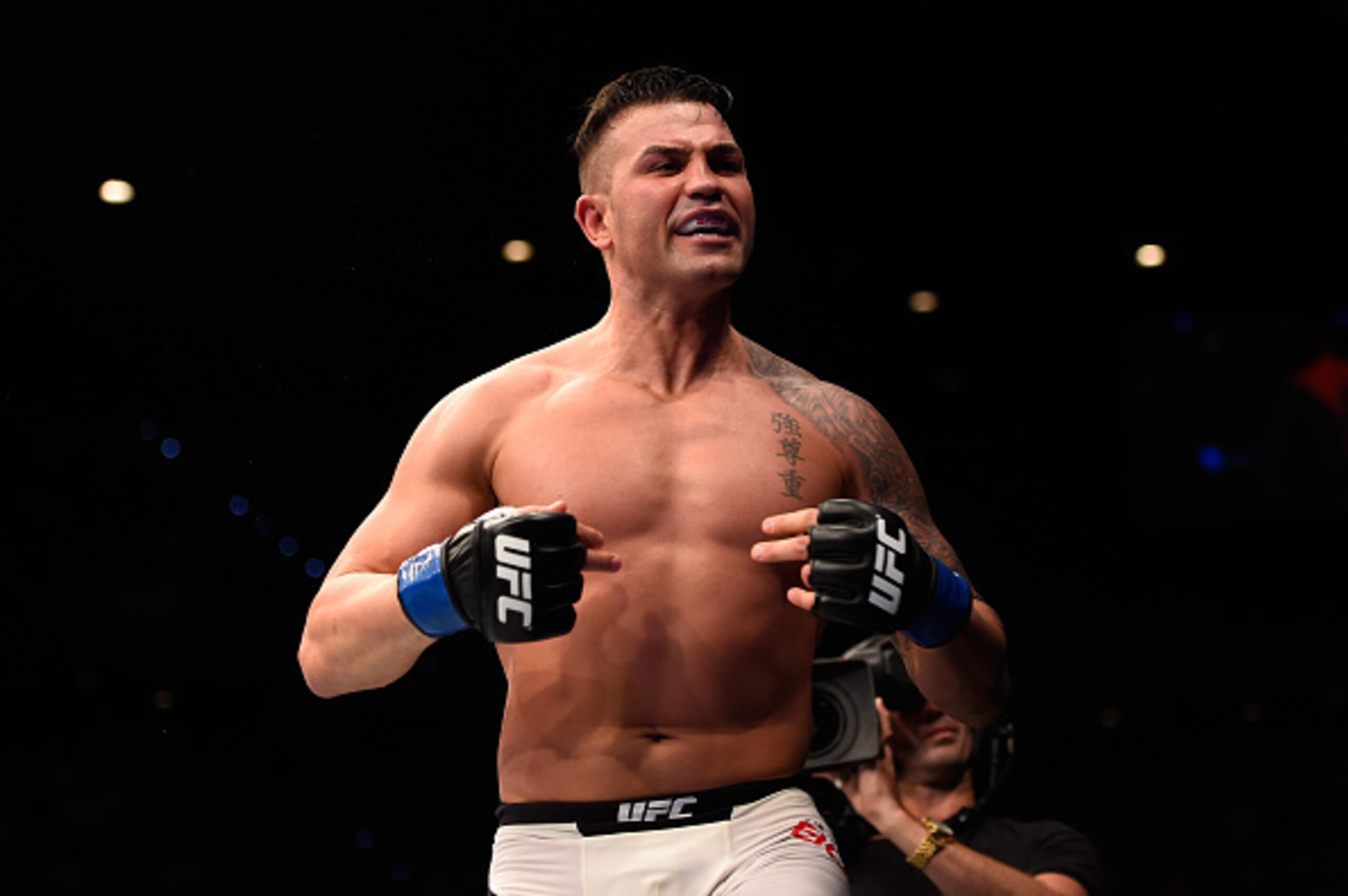
Light Heavyweights
Steve Bosse (11-2; 1-1 UFC) vs. Sean O'Connell (17-7; 2-3 UFC)
Former hockey enforcer Bosse, a native of Canada, takes on the American O'Connell in an excellent matchup of light heavyweight action fighters. Bosse ate a head kick in his UFC debut but knocked out James Te Huna in devastating fashion in March. O'Connell rebounded from losses in his first two UFC outings by defeating Matt van Buren and Anthony Perosh, but he saw that streak come to an end against Ilir Latifi in January.
Neither fighter is in line for a title shot, but both are entertaining and put on fun fights. The winner will get to do that for a while longer.
There's no mystery to Bosse's game: He's a brawler, plain and simple, and one with good athletic tools and big power. He has shown increasing craft in the last few years, however, with a better command of angles, smoother footwork and cleaner triggers on his counters. The overhand right is his bread and butter, and he'll throw it two or even three times in a row.
While he's happiest in the pocket, Bosse is content to be in the clinch. Slashing elbows, strong knees and hard uppercuts make him a handful in the tie-ups. The sample size is limited, but Bosse seems to be a competent defender of takedowns.
O'Connell is an aggressive, come-forward fighter who relies on his pace and durability. He wades into the pocket behind a sharp jab and stinging low kicks, and once at close range he unleashes nonstop punching combinations that carry power. The American never throws one shot at a time, mixing up his shots to the head and body while showcasing tricky timing and rhythm in the pocket.
This sounds risky, and it is, but O'Connell's pressuring style means he's most often exchanging with his opponent's back to the fence. That makes it somewhat less dangerous, though O'Connell still gets hit a lot.
The clinch is a strong secondary area for O'Connell, and he excels at grinding against the fence while mixing in knees and short punches. He's a solid if not outstanding defender of takedowns, and that's the extent of his game.
Betting Odds
Bosse -160, O'Connell +140
Prediction
This is a perfectly matched fight. Both fighters love to be in the pocket and the clinch; both are dangerous and love to push the pace. Bosse hits harder on a shot-for-shot basis, but O'Connell works faster, is more durable and has more technical clinch and wrestling games.
This likely comes down to O'Connell's consistent pressure against Bosse's counterpunching, and in that scenario the former seems a little more reliable. The pick is O'Connell by knockout in the second round.
Donald Cerrone vs. Patrick Cote
6 of 7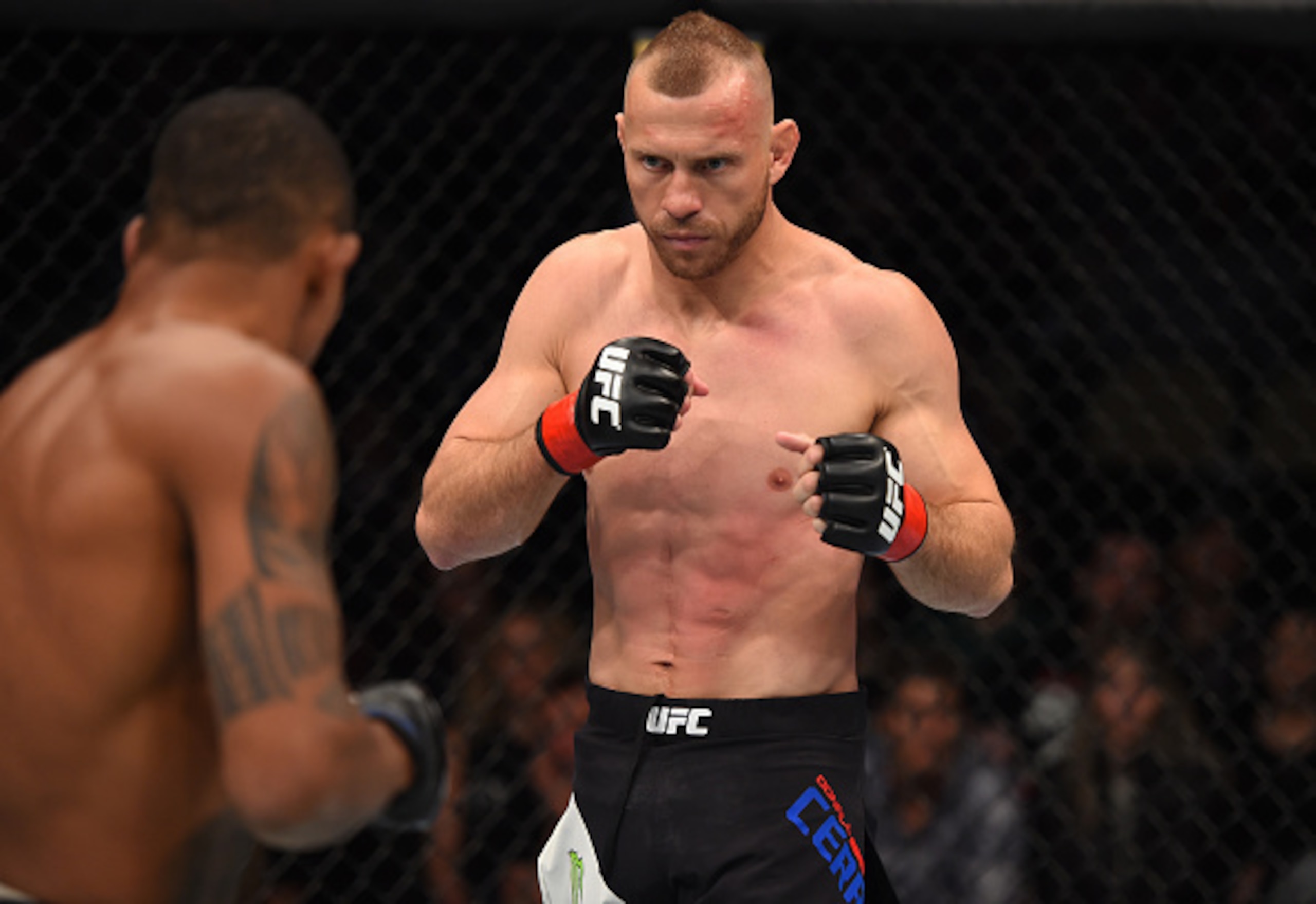
Welterweights
Donald Cerrone (29-7, 1 N/C; 16-4 UFC) vs. Patrick Cote (23-9; 10-9 UFC)
Action fighter extraordinaire Cerrone tries his hand at welterweight for the second time, taking on longtime Canadian veteran Cote in a strong co-main event at 170 pounds.
The American's first UFC title shot ended in only 66 seconds, as lightweight champion Rafael dos Anjos finished Cerrone early, but prior to that Cowboy had run up an eight-fight winning streak against the cream of the division. A move up to 170 pounds led to a rebound win, as Cerrone defeated Alex Oliveira on short notice in February.
This will be Cote's seventh fight at welterweight after a long run at 185 pounds. He is riding a three-fight winning streak with victories over Ben Saunders, Josh Burkman and Joe Riggs. His last loss came against contender Stephen Thompson in 2014.
This is essentially a stay-busy fight for Cerrone, who will likely bounce between divisions while looking for fun matchups; wins and loss are no longer important for him. This would be one of the biggest wins of Cote's career, however, and could set up a fight with an elite opponent.
Cerrone can do everything, but he remains a striker by trade. More specifically, he prefers to operate in the center of the cage, sticking his opponent on the end of his rangy kicks.
The American has an established habit of starting slow, moving at range while flicking the occasional front or round kick along with straight punches. He's hittable in the early going and needs some time to get his range and timing.
Once he gets going, however, Cerrone is a monster. He drops a steady stream of punch-kick combinations, stepping in with a punch or two before sliding to an angle to slice his opponent's legs with a crushing low kick. Once his opponent begins to feel the shots to the leg, Cerrone moves his kicks to the body and eventually the head. Stepping knees add another layer of danger for opponents who want to pressure.
That's the core of Cerrone's game. He's vulnerable to aggressive opponents who can push him back to the fence, taking away the space he needs to operate, or who can fight him in the pocket. If allowed to fight at range, in the middle of the cage, Cerrone has few peers.
The rest of Cowboy's game is excellent. Not only is he a strong defensive wrestler, but his front headlock and quick move to the back make it dangerous to shoot on him in open space if he has room to sprawl. He's less able to defend with his back to the cage, though.
Offensively, Cerrone has a nice array of trips in the clinch. He excels at changing levels and hitting reactive takedowns against aggressive opponents, especially the knee tap. On top, he passes smoothly and constantly hunts for the back. Transitions and scrambles are his specialty, and few in MMA are better at finding a submission against a hurt opponent.
Cote is a durable and dangerous veteran with good skills everywhere. He's still mostly a striker with big power in his right hand, but sharp low kicks and an occasional jab complement the overhands and uppercuts he's been known for throughout his career. The Canadian is willing to sit down and exchange in the pocket, where his iron chin and power make him a threat.
Pace isn't Cote's strong suit, and he's far too hittable for comfort, but his craft and experience make him a tricky opponent.
Things don't get much easier in the clinch, where Cote's raw strength combines with solid technique. He loves short uppercuts from the collar tie, throws nasty knees and is happy to grind his opponent against the fence for extended periods of time.
Wrestling was a weak point for Cote, but he has improved in recent years. His takedown defense is spotty, but he has a nice array of trips in the clinch and doubles that he's using more and more.
On the mat, Cote drops bombs from top position and passes smoothly while maintaining a heavy base. He's even dangerous from his back, with an active guard and strong sweeps.
Betting Odds
Cerrone -160, Cote +145
Prediction
This is an interesting matchup. Cerrone has technical edges in every area, but he's giving up a substantial amount of size to the former middleweight. Cote knows how to use that size, particularly in the clinch, and even at 155 pounds Cerrone has had trouble when pressed against the fence.
That's almost certainly the angle Cote will take, attempting to pressure Cerrone while forcing him backward and then grabbing the clinch against the cage to wear the American down. This could work, especially in a three-round fight. The fact Cerrone is hittable and Cote hits like a truck makes the range striking dangerous for the American, too.
On balance, however, the matchup favors Cerrone. He's much faster, throws more volume and is a better technical wrestler. If he can minimize the clinch exchanges and keep this at kicking distance, it's his fight to lose.
The pick is Cerrone by decision.
Rory MacDonald vs. Stephen Thompson
7 of 7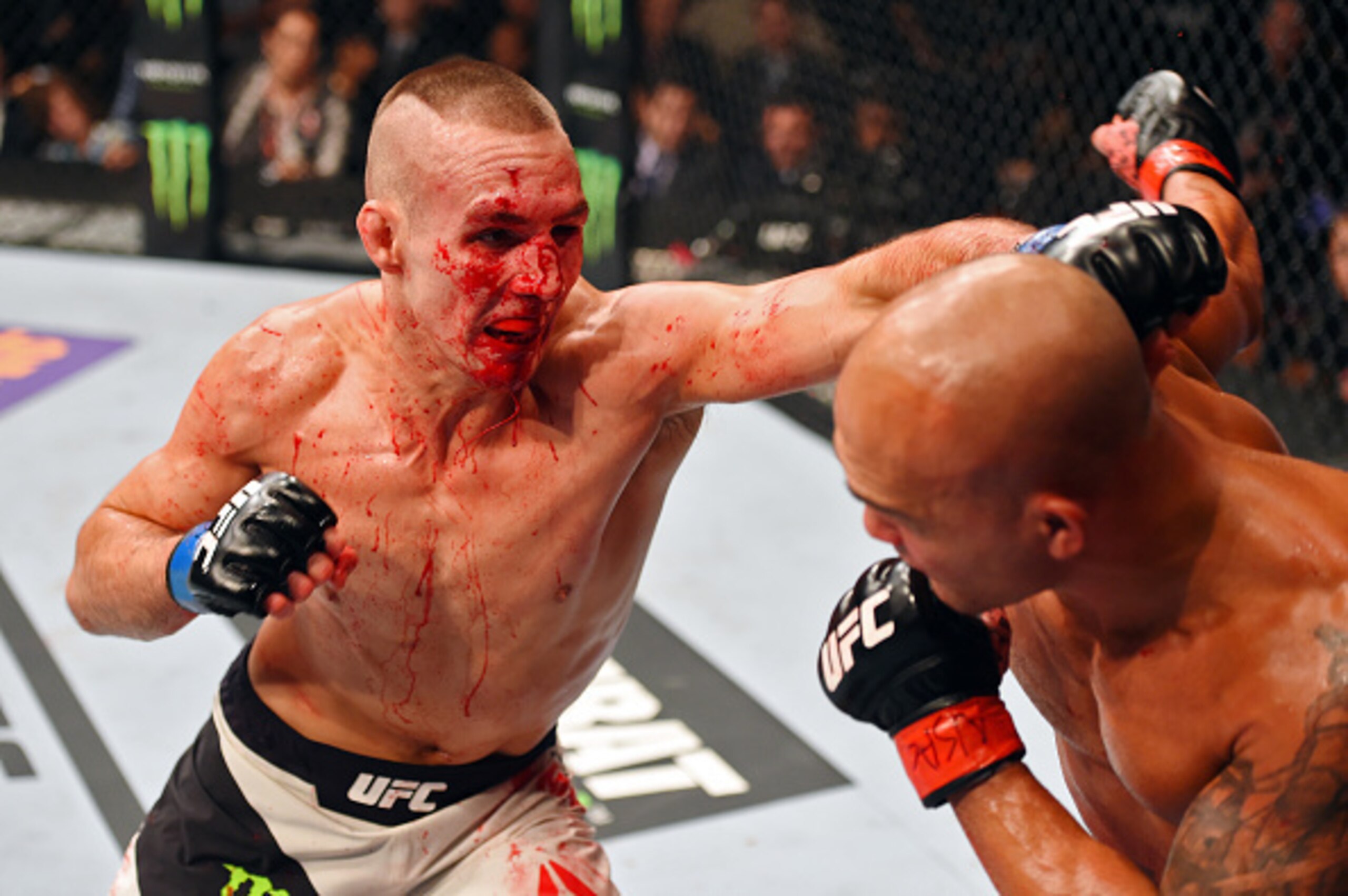
Welterweights
Rory MacDonald (18-3; 9-3 UFC) vs. Stephen Thompson (12-1; 7-1 UFC)
Former title contender MacDonald makes his return to action following an epic war with Robbie Lawler at UFC 189 in July. The Canadian is in the final fight of his contract before a potentially lucrative bid for free agency, and a victory would have meaning beyond just getting back on the winning track.
Thompson has come a long way since a one-sided drubbing at the hands of Matt Brown in 2012. The karate practitioner has won six straight, capping that streak with a brutal finish of former welterweight champion Johny Hendricks in February.
The winner will have a great claim for a title shot, particularly if Thompson comes through. For MacDonald, a win would mean a tremendous amount of leverage as a free agent, and he could reset the entire pay scale for elite fighters moving forward.
The phrase "well-rounded" gets thrown around a great deal in MMA, but no fighter embodies that description better than MacDonald. He can strike, wrestle, grapple and fight in the clinch with equal skill, adopting whatever game plan is most suitable and switching fluidly over the course of the fight.
MacDonald puts his 6'0" height and 76" reach to good use on the feet. He boasts one of the trickiest and most punishing jabs in the sport, using it to measure the range, disrupt his opponent's rhythm and re-establish long distance after a combination.
That jab pairs nicely with MacDonald's rangy front kick, round kick and right straight, all of which begin with the same motion of his hips.
The combination of these strikes manipulates his opponent's hand positioning and head movement, creating openings for each. The straight moves the opponent's hand in front of the head, leaving a path for the right high kick. The high kick keeps his opponent's hand up, leaving the body open for the front kick. He loves a question-mark kick, which looks just like a front kick but then curves up and over the shoulder.
MacDonald is happy to stick his opponent at long distance with these four simple strikes, but when he backs his opponent to the fence, he boasts some of the best flurries in MMA. He mixes up hooks and straights to the head and body with jumping knees and elbows, working around, under and through the opponent's guard.
While he can win fights as a pure range striker, MacDonald is even better on the floor. He's an ace defensive wrestler and has a strong array of singles, doubles, trips and throws that he chains together beautifully. Turning caught kicks into takedowns is a particular specialty, and he excels at disguising his level changes and clinch entries with strikes or countering his opponent with takedowns.
The Canadian is an elite grappler on the mat. He survived an entire round on the bottom against Demian Maia, an unmatched feat in the recent past. From top position, he's a monstrous ground striker with technical posture, strong control and a slick passing game. Traditional ground control and mat wrestling blend seamlessly in his approach.
Submissions haven't been a major part of his game in the UFC, but he excels at using leg locks to sweep and initiate scrambles.
If MacDonald has a weak spot, it's defense in the pocket. He relies on distance and a tricky defensive guard to avoid his opponent's strikes, and at close range his lack of head movement is an issue, particularly in exchanges.
Thompson is a striker by trade. The South Carolina native owns a deep background in karate and competitive kickboxing, and that shows in his emphasis on playing the outside game.
He has a variety of tools for establishing and maintaining his preferred range, all of which play together to create a series of dangerous layers for his opponent. Thompson moves seamlessly from orthodox to southpaw and consistently circles through the space of the cage, cutting angles and forcing his opponent to react to shorten the distance.
A steady barrage of side, round and front kicks to the body and head sticks his opponent outside. Thompson throws them quickly and powerfully, with no telegraphing, and excels at sneaking them through and around his opponent's defensive guard.
Once his opponent is a step or two beyond comfort, Thompson's game opens up. He can leap in with blitzing combinations of straight punches, sneaking in a round kick after the onslaught. Alternatively, he can let his opponent come to him, and when that happens Thompson opens up with smooth, technical combinations.
Counters are the most dangerous part of Thompson's game, and he has a series of equally devastating options at his disposal. He can land them from orthodox or southpaw; he can throw them with his feet planted or as he steps back; and he can move in straight lines as he counters or step off to angles.
These different pieces of Thompson's game reinforce one another. The counters make his opponents wary of overcommitting to an attack, which sticks them for longer and longer periods on the outside, where Thompson can chew them up with kicks and blitzing punches.
It's hard to overstate Thompson's timing, understanding of range and overall craft. He's hardly untouchable, but he's one of the best strikers in the sport.
None of this would matter if Thompson didn't have the wrestling chops to keep himself on the feet. The karateka has turned into one of the better defenders of takedowns in the sport, with a quick sprawl and good work against chained attempts with his back to the fence. He wastes no time in separating and re-establishing distance. It's not impossible to take Thompson down, but it's not easy to hold him down either.
The occasional takedown and period of top control adds some variety for Thompson, and his sense of timing and distance helps in that regard.
Where Thompson parts company from many of MMA's karate practitioners is his pace. The South Carolinian works fast, dropping a steady stream of kicks and combinations of punches at a rapid rate. Even if he doesn't land a single devastating strike, Thompson can still win rounds.
Betting Odds
Thompson -115, MacDonald -105
Prediction
As the betting odds indicate, this is a close fight. Neither fighter is helpless in the other's wheelhouse, and both are well-coached, tough and experienced against elite competition.
Both fighters prefer to strike at long range, but there's little question that Thompson is more dangerous at that distance. If MacDonald is content to stay in the middle of the cage and trade kicks and punching combinations with Thompson, he's going to lose, and a finish is hardly out of the realm of possibility.
Except to establish that he can't be bullied at that distance, however, MacDonald has no reason to consent to that kind of fight. He's a competent pressure fighter with the footwork and strike selection to cut off his opponent's escape angles and force him toward the fence; the Canadian has done it before, against Tarec Saffiedine and Tyron Woodley, though Thompson is a more difficult challenge.
With his back near the fence, Thompson's advantages disappear, and MacDonald's flurries, clinch game and wrestling all come into play in a major way.
With all of that in mind, the balance of the matchup runs slightly in the Canadian's direction. The pick is MacDonald by close decision.
All betting odds via Odds Shark.
Patrick Wyman is the Senior MMA Analyst for Bleacher Report and the co-host of the Heavy Hands Podcast, your source for the finer points of face-punching. He can be found on Twitter and Facebook.


.jpg?w=2560 "NFL investigating 2 referees for separate viral exchanges")

.jpg?w=2560 "Report: Chiefs Contact Hill's Agent")
.jpg?w=2560 "OBJ Calls Out Giants After Release")
.jpg?w=2560 "Tyreek makes another cryptic post amid Chiefs rumors")


.jpg?w=2560 "Greenlaw Talks Payton Exchange")
