College Football Teams with Worst Heisman Trophy Droughts
The Heisman Trophy is the most prestigious individual award in college football. Awarded annually to, as the Heisman Trust’s official website states, “the outstanding college football player whose performance best exhibits the pursuit of excellence with integrity,” it is the crowning achievement of any college career.
Aside from the College Football Playoff, its voting is the most scrutinized in the college gridiron universe, with players regularly rocketing into consideration and falling out of favor with stunning quickness. Winning a Heisman is meaningful for a program.
Since the first Heisman was handed out in 1935, 35 different programs have boasted a Heisman winner. The game has changed plenty, however, since the 1930s, meaning there are many teams that have won a Heisman in the distant past but are still waiting for their next winner.
Here’s a look at the 10 FBS teams enduring the longest Heisman Trophy droughts.
Teams Without a Heisman Trophy Winner
1 of 11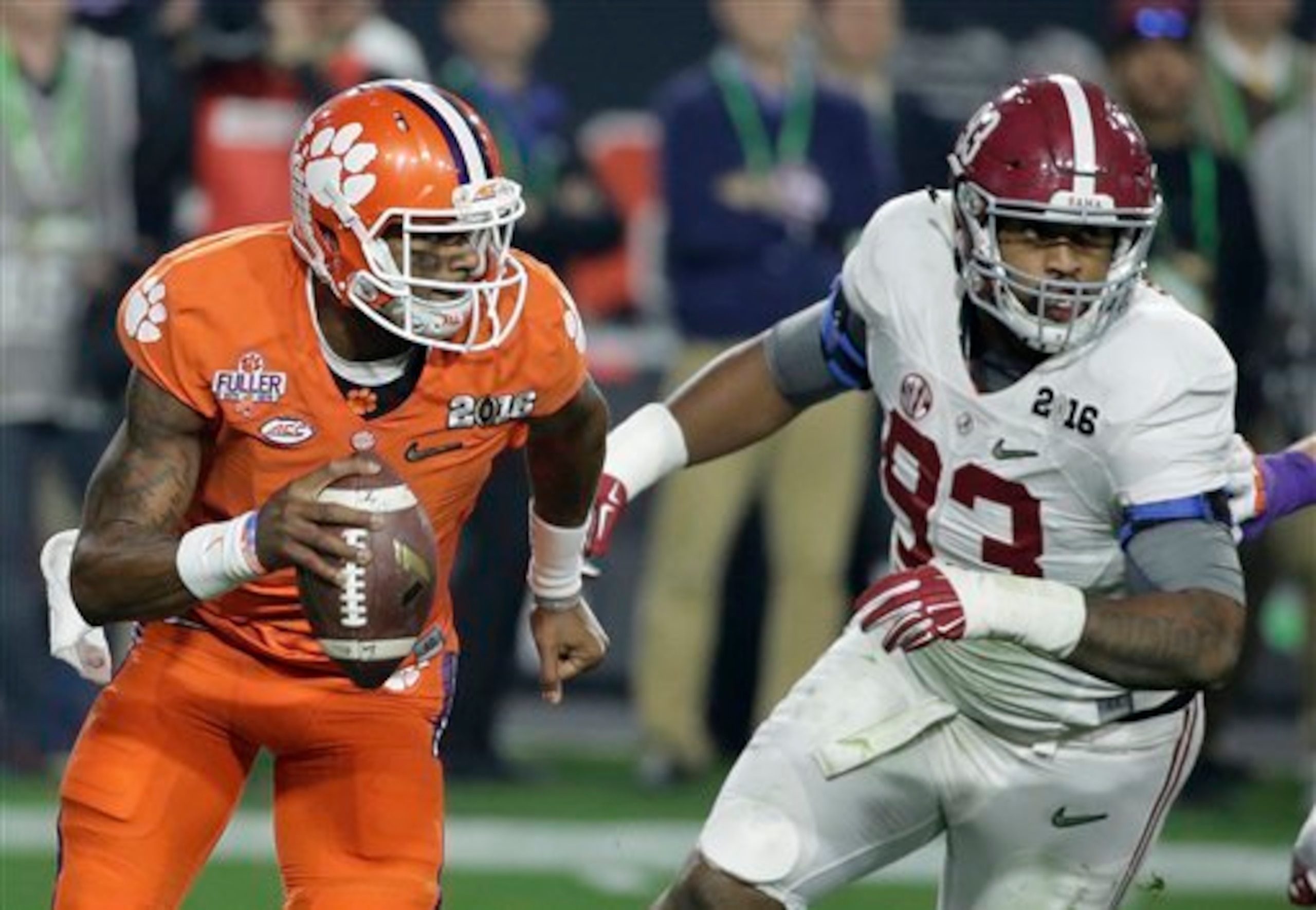
A surprising group of Power Five programs have never boasted a Heisman Trophy winner. They include Missouri, Washington, Cal, Virginia Tech, Texas Tech, Ole Miss, Arkansas, Michigan State, Clemson and Tennessee.
Of those programs, Clemson is the most likely to break out of that group in 2016. The Tigers are the returning national runner-up after starting 2015 14-0 and pushing Alabama to the brink before falling 45-40 in the national title game.
Head coach Dabo Swinney returns nine offensive starters, including junior quarterback Deshaun Watson. Watson finished third in the 2015 Heisman voting and became the first college quarterback ever to throw for 4,000 yards and rush for 1,000 yards in a single season. If Clemson challenges for the national title again, its dynamic quarterback will earn a ticket to New York as a Heisman Trophy finalist.
10. UCLA
2 of 11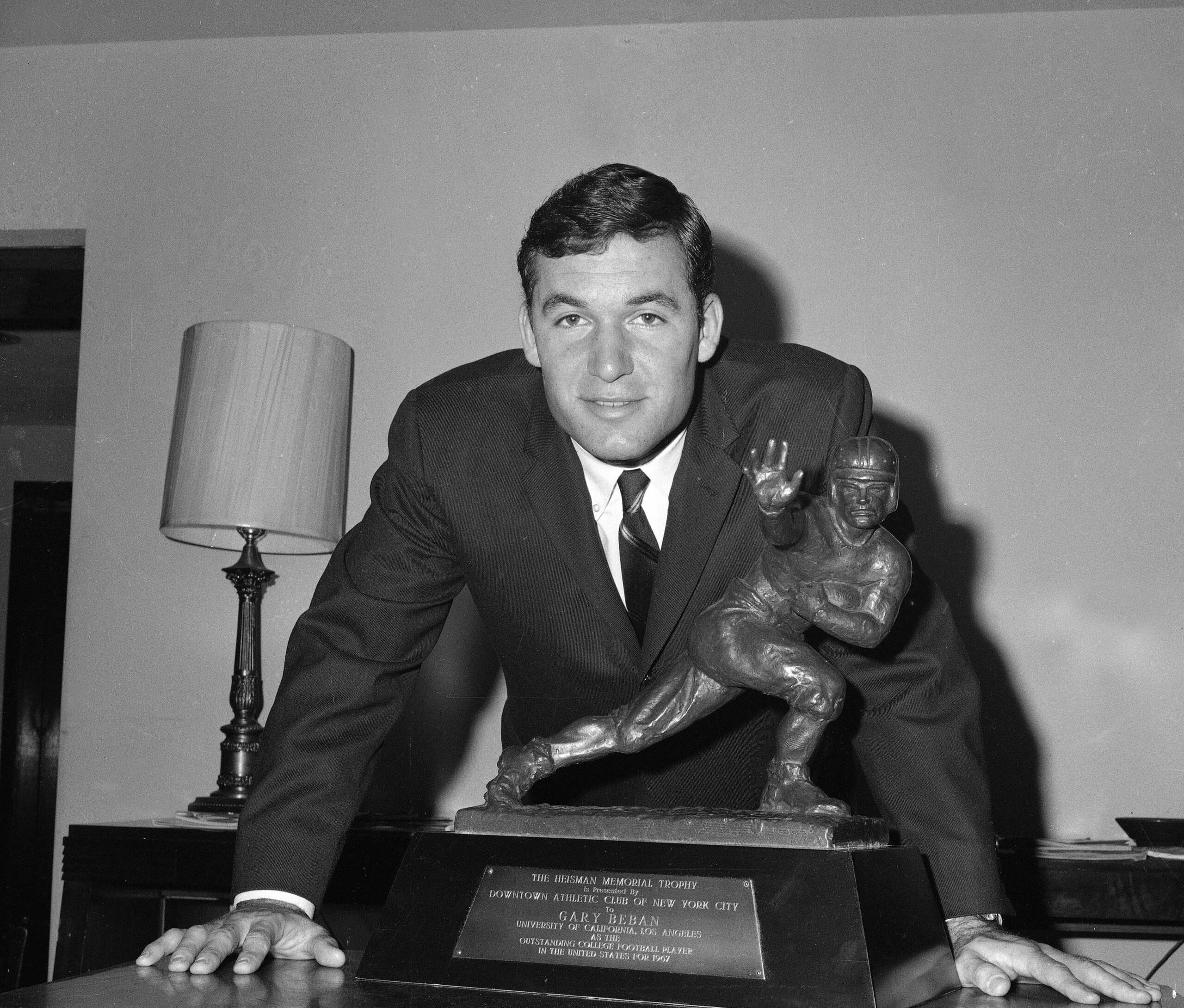
UCLA has a strong football program that has garnered its share of attention in star-happy Los Angeles, but the Bruins perpetually operate in the shadow of crosstown rival Southern California, the Pepsi to the Trojans’ Coca-Cola.
UCLA has 17 league titles in the Pac-8/10/12 but has only one national championship, in 1954, and one Heisman Trophy winner. Gary Beban won the Heisman Trophy in 1967, but his most famed game, which saw him pass for 300-plus yards and two touchdowns against No. 2 USC and O.J. Simpson, resulted in a 21-20 loss for the No. 1 Bruins. Beban was a dual-threat quarterback who rushed for 35 touchdowns and threw for 23 in his collegiate career.
Following Beban’s departure, the Bruins have had players make noise nationally, but they haven’t really threatened for a Heisman Trophy. The closest UCLA came was a pair of third-place finishes by Troy Aikman in 1988 and Cade McNown a decade later.
The best hope to end the drought? Sophomore quarterback Josh Rosen. Rosen showed great pocket-passing skills in throwing for 3,670 yards, 23 touchdowns and 11 interceptions as a true freshman. If he continues on this track, Rosen will get the attention of NFL scouts and Heisman voters alike.
9. Navy
3 of 11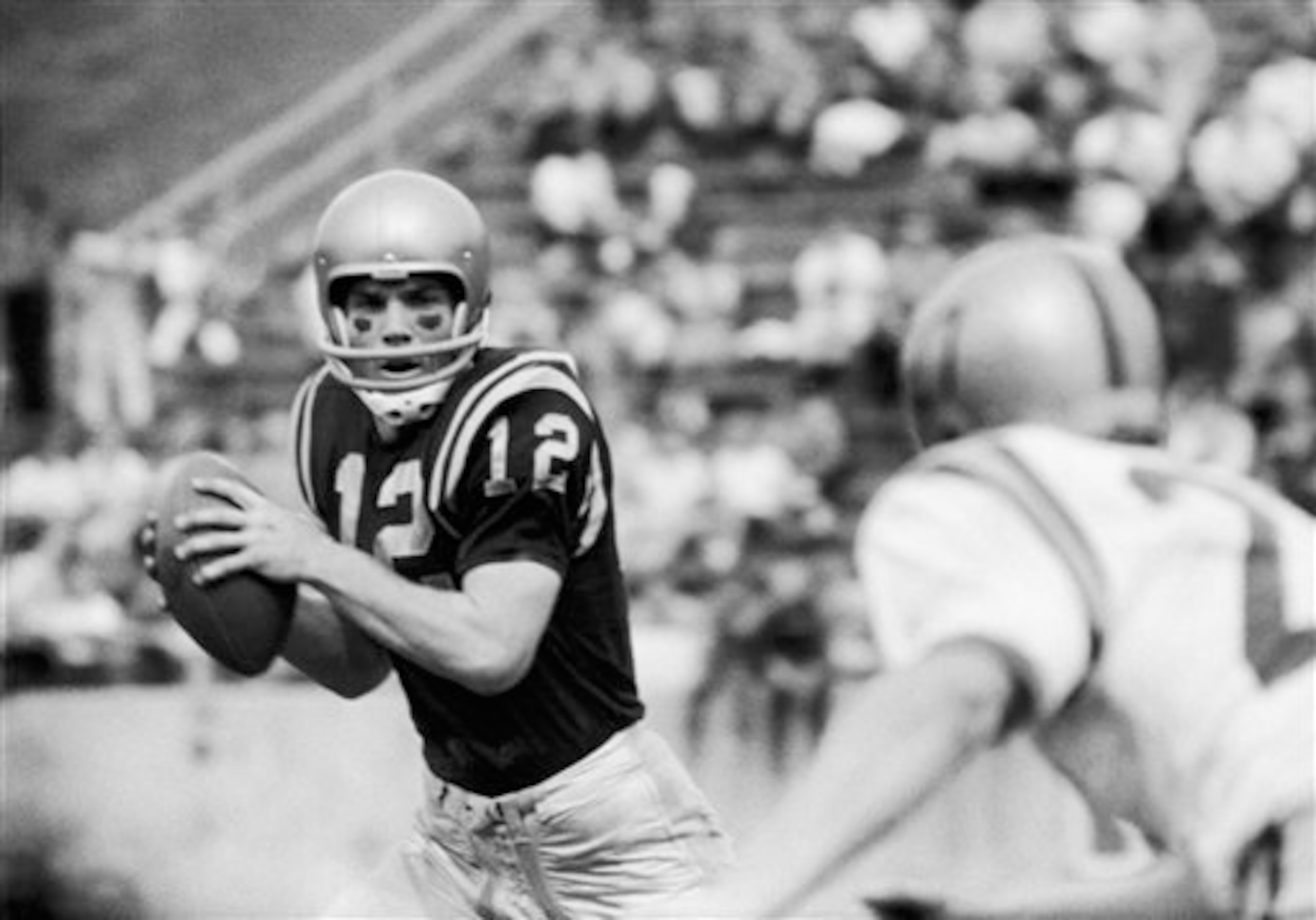
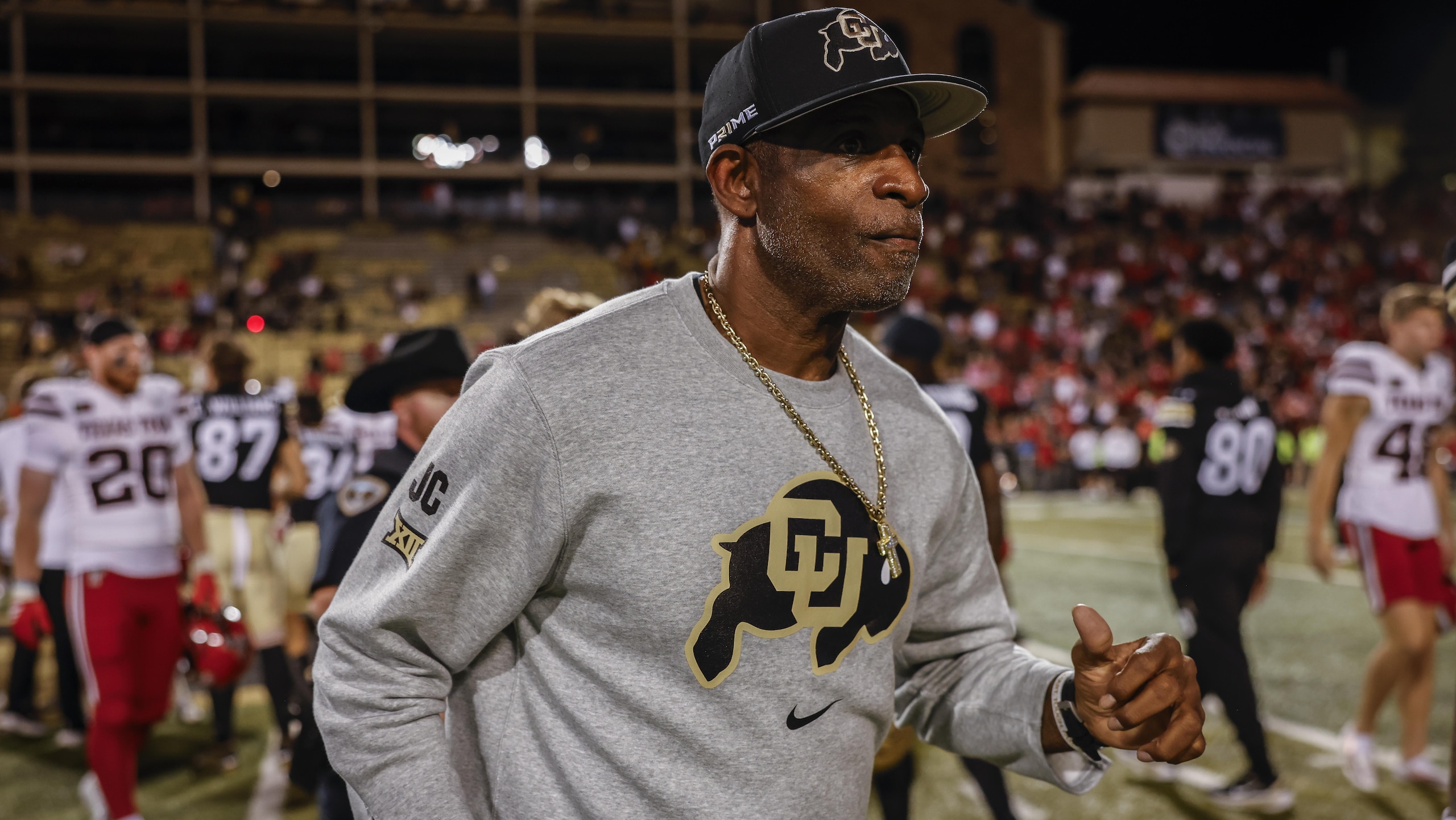
There was a time when Navy was one of college football’s most prominent programs. The Midshipmen won a national title in 1926 and boast 19 players and three coaches in the College Football Hall of Fame. Navy has enjoyed a resurgence under coaches Paul Johnson and Ken Niumatalolo, making bowl games in 13 of the last 14 seasons with the tough-to-stop flexbone offense.
But the Midshipmen, entering their second season in the American Athletic Conference, have yet to regain the relevance they enjoyed in the early 1960s. Tailback Joe Bellino won the Heisman in 1960, and quarterback Roger Staubach won the award in 1963.
Since then, however, Navy has had only two players crack the top 10 in voting. Tailback Napoleon McCallum finished sixth in 1983 after rushing for 1,587 yards and seventh in 1985 following a 1,327-yard effort.
Last fall, quarterback Keenan Reynolds became the FBS all-time career rushing touchdown leader, as he rushed for 1,373 yards and 24 touchdowns while passing for 1,203 yards and eight touchdowns during a solid 2015 season. That was good enough for fifth in the Heisman voting, but with Reynolds graduated, the Midshipmen don’t have another legit Heisman candidate on the roster.

_0.png?w=2560)
8. Oregon State
4 of 11
Oregon finally broke through to win a Heisman Trophy, thanks to Marcus Mariota in 2015. The Ducks have become the state of Oregon’s highest-profile program—a flashy, consistent winner. Meanwhile, Oregon State and second-year head coach Gary Andersen are trying to find their collective bearing. Mike Riley didn’t leave Andersen much in the cupboard, as the Beavers lost their final nine games to finish 2-10 last fall.
Oregon State’s lone Heisman Trophy win came when quarterback Terry Baker took home the trophy in 1962. Baker passed for 1,738 yards (second-best nationally) and 15 touchdowns as the Beavers went 9-2.
Since then, however, the program has boasted just one top-10 Heisman finisher, tailback Ken Simonton, who rushed for 1,559 yards and 19 touchdowns for an 11-1 Oregon State team in 2000 and finished ninth in voting. Given the current level of talent on the roster, don’t expect anyone to break through in 2016.
7. Syracuse
5 of 11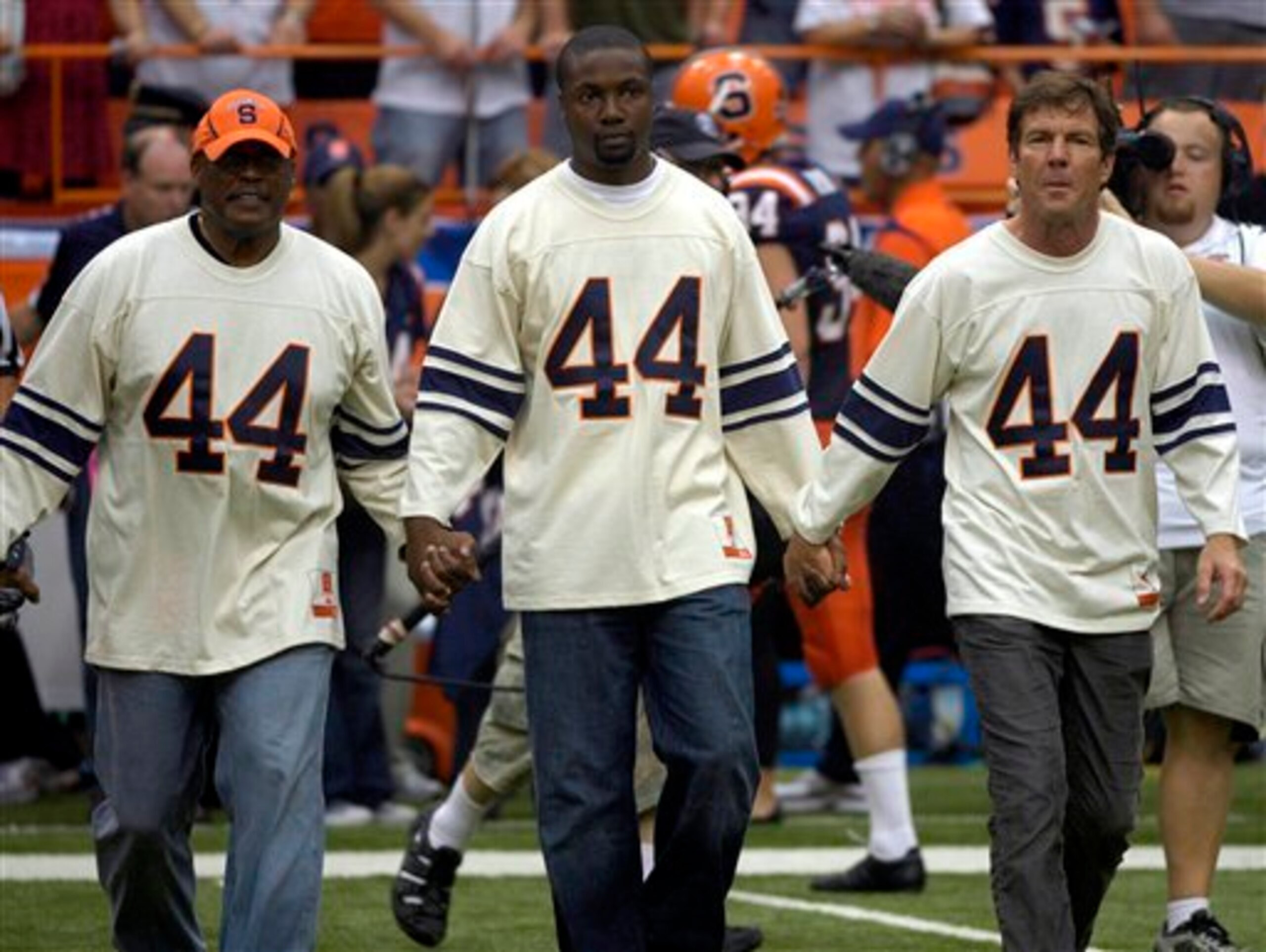
It’s fair to say that Syracuse football has seen better days. The Orange have managed just three winning seasons in the last 14 years following 2001’s 10-3 campaign, and head coach Scott Shafer was shown the door after consecutive 3-9 and 4-8 seasons in favor of Dino Babers and his fast-paced offense.
Syracuse once boasted a strong backfield tradition with players who wore the No. 44, including Jim Brown, Ernie Davis and Floyd Little.
However, only Davis won the Heisman Trophy, taking home the stiff-arm trophy in 1961. Since then, the Orange have had a number of near-misses, most notably quarterback Don McPherson, who finished second to Notre Dame wide receiver Tim Brown in 1987. Star quarterback Donovan McNabb finished fifth in 1998, and defensive end Dwight Freeney was the rare defensive player to crack the top 10, finishing ninth in 2001.
Babers hopes to pile up points and wins, but he has work to do with the roster Shafer left behind. Quarterback Eric Dungey has promise but isn’t a legit Heisman candidate.
6. LSU
6 of 11
LSU owns one of college football’s proudest overall traditions, but the Tigers’ Heisman Trophy case has plenty of room for growth. LSU has just one Heisman winner in its long history, with Billy Cannon taking home the trophy in 1959 on the strength of his famous “Run in the Mud” against Ole Miss.
Since then, however, the Tigers have suffered through a series of close-but-not-quite candidates. Tailback Jerry Stovall finished second to Oregon State’s Terry Baker in 1962. Quarterback Bert Jones was fourth in 1972, and tailback Charles Alexander finished fifth in 1977.
A pair of defensive players have also cracked the top 10, with defensive end Glenn Dorsey finishing ninth in 2007 and Tyrann “Honey Badger” Mathieu finishing fifth in 2011.
This could be the year that the drought ends, however. Junior tailback Leonard Fournette is one of the most powerful runners in recent memory, and he rushed for 1,953 yards and 22 touchdowns as a sophomore. He rushed for at least 150 yards in eight consecutive games and was the Heisman front-runner entering November, but he was held to just 122 yards total in losses to Alabama and Arkansas, which ended his hopes of winning.
Fournette faded to sixth with 10 first-place votes, but he should be a strong contender to take the next step toward the trophy in 2016.
Cannon told Roy Lang III of the Shreveport Times that he supports Fournette's run for a Heisman win.
"He is a tremendous athlete and a tremendous kid," Cannon said.
5. Army
7 of 11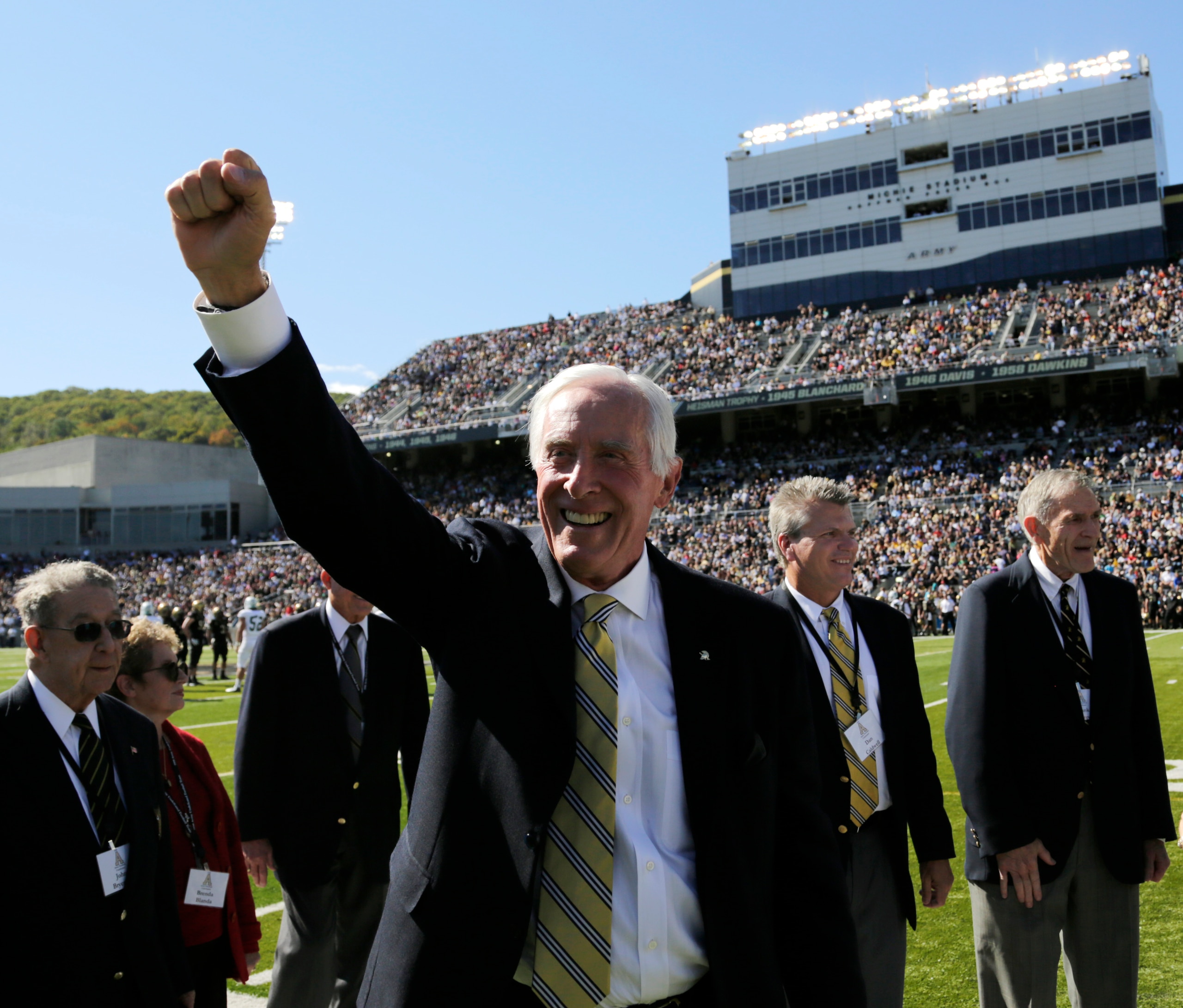
Army was once a name brand in college football. The Black Knights have three Heisman Trophy winners in their history, with Pete Dawkins the last to claim a trophy (1958). That ended a 23-year span that saw Army place 14 players in the Heisman top 10.
Since then, however, the program has had just one top-10 finisher, with Mike Mayweather rushing for 1,338 yards and 10 touchdowns and earning a 10th-place finish in 1990. Coming off a 2-10 season, that trend won’t change in 2016.
4. SMU
8 of 11
SMU has a strong, prolific past. The Mustangs claim 10 conference titles and three national titles in their history. But anyone who watched ESPN’s great “Pony Excess” 30 for 30 episode knows the rest of the story. A number of serious NCAA rules violations led to the NCAA hitting SMU with the first and only “death penalty,” which shut down the program for the 1987-88 seasons.
SMU had just one winning season in a 20-year span after restarting its program, and while former head coach June Jones led the program to four bowl games and three winning seasons from 2009-12, the Mustangs slipped in his final seasons.
The Mustangs finished just 1-11 in his final season in 2014 and 2-10 in 2015 in Chad Morris’ first season. It’s a far cry from the program’s glory days. Doak Walker was one of college football’s all-time great backs, bracketing third-place finishes in 1947 and 1949 with a Heisman win in 1950.
Fellow tailback Kyle Rote finished second in 1950 and “Dandy” Don Meredith finished ninth and third in 1958 and 1959, respectively. “Pony Excess” centerpiece Eric Dickerson finished third in Heisman voting in 1982, but the death penalty ended SMU’s hopes of serious Heisman contention. No one on Morris’ current roster has a legit hope of ending that drought this fall.
3. Minnesota
9 of 11
This fall, Tracy Claeys hopes to prove that Minnesota made the right choice in elevating him into the full-time head coaching role following Jerry Kill’s 2015 midseason departure for health reasons. However, he’s walking into a program that has had a tough time finding true national relevance in recent history. The Gophers claim seven national titles, but none since 1960, and they have just one 10-win season in the last 115 years (10-3 in 1993).
They have just one Heisman Trophy winner, with quarterback Bruce Smith taking the trophy in 1941. In 1953, tailback Paul Giel finished second to John Lattner in 1953, and seven years later, guard Tom Brown finished second to Navy tailback Joe Bellino. In 1961, quarterback Sandy Stephens finished fourth, and offensive tackle Bob Bell finished third a year later.
However, since then, Minnesota hasn’t had a single top-10 Heisman finisher. Mitch Leidner is regarded as one of the top senior quarterbacks in America, but he’ll have to improve on his 2015 stats (2,701 yards, 14 touchdowns, 11 interceptions) to get on the 2016 Heisman radar.
2. Iowa
10 of 11
Iowa has a long, proud football tradition. On fall Saturdays, 70,000-plus fans crowd into Kinnick Stadium in Iowa City to watch the Hawkeyes swarm onto the field in black-and-gold uniforms as AC/DC’s “Back in Black” blares over the speakers.
They’re there to cheer on a tradition that includes 13 conference titles and one claimed national title, and, of course, Nile Kinnick. In 1939, Kinnick was involved in 16 of Iowa’s 19 touchdowns and 107 of Iowa’s 130 points on the season. He won the Heisman Trophy. Four years later, his plane crashed during a training flight for World War II off the coast of Venezuela. His body was never recovered, and he was the first Heisman Trophy winner to die.
Iowa renamed Kinnick Stadium in his honor in 1972, and he is the Hawkeyes’ only Heisman winner. In 1957, Alex Karras finished second, as did Randy Duncan a year later. In modern times, a pair of quarterbacks have also finished second. Chuck Long finished second to Bo Jackson in 1985, and Brad Banks finished second to Carson Palmer in 2002.
Iowa is coming off a 12-2 2015 (and 12-0 regular-season finish), so head coach Kirk Ferentz’s team is hardly off the radar this fall. Senior cornerback Desmond King is the returning Jim Thorpe Award winner as the nation’s top defensive back and also has the versatility to return kicks. In addition, senior quarterback C.J. Beathard is a mobile threat who is an excellent team leader. He could make noise if the Hawkeyes make another statement in 2016.
1. TCU
11 of 11
TCU and head coach Gary Patterson had to feel good about hopes of breaking the program’s Heisman Trophy drought last fall. The Horned Frogs were coming off a 12-1 season and boasted the returning fourth-place Heisman finisher in dual-threat quarterback Trevone Boykin.
So much for that. The Frogs finished 11-2, and Boykin put up solid stats, throwing for 3,575 yards with 31 touchdowns against 10 interceptions while rushing for 612 yards and nine scores. However, his stats slipped from 2014 levels after he missed parts of two games with injuries. Boykin finished 10th in the Heisman voting, with just one first-place vote.
It continued the Frogs’ long Heisman slog. Quarterback Davey O’Brien won the fourth-ever Heisman Trophy in 1938, but no TCU player has matched that feat. Jim Swink was the runner-up in 1955. In 1984, Kenneth Davis finished fifth. And tailback LaDainian Tomlinson finished fourth in 2000 despite rushing for 2,158 yards.
Texas A&M transfer Kenny Hill is vying for Boykin’s old job. He created Heisman buzz with the Aggies in 2014, but to do the same at TCU, he’ll have to hold off backup Foster Sawyer for the starting role.

.jpg?w=2560 "NFL investigating 2 referees for separate viral exchanges")
.jpg?w=2560 "Report: Chiefs Contact Hill's Agent")
.jpg?w=2560 "OBJ Calls Out Giants After Release")
.jpg?w=2560 "Tyreek makes another cryptic post amid Chiefs rumors")

.jpg?w=2560 "Greenlaw Talks Payton Exchange")