
10 Times When Muhammad Ali Would Have Broken the Internet
The words icon and legend are tossed around far too cavalierly in the world of sports today, but boxing, and truly the whole world, lost a man who personified both and more on Friday.
Muhammad Ali died on Friday evening in Phoenix after 74 years of life that saw him capture the heavyweight championship of the world three times, while becoming a tireless advocate for the poor and oppressed who constantly challenged and changed societal conventions.
NBC News broke the story after reports throughout the day that Ali, who had Parkinson's disease for several decades, was in grave condition and had been placed on life support, per Fox News.
The loss is truly an incomprehensible one. It hurts, stings and will linger.
Ali was easily one of the most recognizable and important personalities in American history, forget sports.
He had a sharp jab and an even sharper wit.
In tribute, we've collected these 10 moments from his life and career that showcase who Muhammad Ali, both the fighter and the person, truly was.
This list isn't meant to be comprehensive. There are omissions. Lots of them.
Some were left out on purpose, just to put some eyes on the hidden gems.
The task of sifting through a life that produced literally thousands of iconic moments and paring them down to 10 is impossible, so we encourage you to leave your own tributes, your own stories and your own moments in the comments section.
Ali Dodges 21 Punches in 10 Seconds
1 of 10Ali, then 35 years old, met Michael Dokes, a 19-year-old future heavyweight contender, in a 1977 exhibition match that showed that even at his advanced boxing age, The Greatest could not only still hang with a young, hungry lion, but make him look downright silly at times.
The bout was only scheduled to last three rounds, but it had a fair bit more jazz than your typical fluff exhibition fight. That was mostly because of Dokes' mouth and Ali's desire to make the young buck use that mouth to choke on his words.
"I'm gonna get you, old man, so you better get out while you can," a cocky 17-year-old Dokes told Sports Illustrated (h/t Ryan Grenoble of the Huffington Post) a warning for Ali two years before they stepped through the ropes.
That probably wasn't the best choice.
During the fight, Ali retreated to the corner and placed his gloves on the ropes while Dokes proceeded to pound every single square inch of air around Ali's head and body into oblivion without touching his opponent once.
Ali slipped, ducked and dodged an insane 21 punches in just about 10 seconds, threading the needle and then mocking his man with a little dance move to put the cherry on top.
"Cooper Hit Me so Hard..."
2 of 10Ali's sharp wit and humor were unmatched in boxing then, and they remain so today.
If there was one thing he did better than fight, it was talk.
Before moving on to a shot at Sonny Liston's heavyweight championship, Ali (then still fighting under the name Cassius Clay) took on British contender Henry Cooper in a fight he was heavily favored to win easily. The funny thing about those types of fights is they often don't work out that way.
In Round 4, Cooper connected on a left hand that nearly turned out to be the shot of his life. As one writer described it (via Donald Trelford of the Daily Mail), the punch dropped Ali "like a...sack of potatoes" along the ropes with just seconds left in the frame.
Ali rose at the count of four and was likely saved by the bell. His trainer, Angelo Dundee, had to help him to his stool and bought him some extra time by changing a ripped glove and administering (now illegal) smelling salts to jump start his charge.
Recovered by the start of Round 5, Ali hung in the pocket slinging vicious shots and opening a horrific cut over Cooper's left eye, which forced the ref to halt the contest.
Reflecting on the fight nearly 40 years later, Ali, per Trelford, delivered this gem after claiming the knockdown happened because Elizabeth Taylor's presence in the crowd distracted him: "Cooper hit me so hard, my ancestors in Africa felt it."
Gold.
Ali Lights the Olympic Flame
3 of 10The 1996 Summer Olympics in Atlanta had their share of iconic moments, but one in particular stands out.
The Olympic torch is one of the hallowed traditions of the Games. It always begins in Olympia in Greece and treks its way from there to the host country, where it will travel until the night of opening ceremonies.
For the Atlanta Games, the journey covered just a shade under 17,000 miles, and over 12,000 individuals carried the torch, but none more famous or inspiring than the very last.
In the internet age, it's virtually impossible to keep things a secret. There's always someone listening or watching, and then that person tweets, Facebooks, Snapchats (or insert your social media of preference here) and the story blows up in faster than you can snap your fingers.
That Ali, who captured a gold medal at the 1960 Games in Rome, would be the final man to carry the torch and officially begin the games was a closely guarded secret and only became public knowledge when he surprisingly appeared on the top of the ramp and received the torch from American swimmer Janet Evans.
It was one of those sports moments that send chills down your spine and a tear to your cheek, and when Ali, visibly struggling with his Parkinson's disease, lit a mechanical torch that cascaded up to light the Olympic flame, it produced one of the most inspiring and emotional moments in Olympic history.
_0.png?w=2560 "CFB Top 25")
"I Am the Greatest"
4 of 10Sonny Liston was one heck of an intimidating dude.
Nobody wanted to fight him, even though he was the heavyweight champ, and it didn't seem like a terribly good idea to poke that particular bear before stepping through the ropes with him.
But that's just what Ali, fighting for the final time as Clay, did.
He poked, prodded and generally did everything humanly possible to get under Liston's skin. Jeez, the guy even bought a bus for the sole purpose of putting the words "Liston Must Go in Eight" on the side to drive around and taunt his foe.
He even showed up outside Liston's Colorado home and woke him up in the middle of the night by yelling through his windows.
Context is key here, and in an America still in the throes of the civil rights movement, many of Ali's brash antics didn't play well in the press. The reaction was pretty much universally negative and critical heading into the toughest (at least in the eyes of others) challenge of his career.
Undaunted, Ali said Liston wouldn't last eight rounds on that night, but he was off. He took the title—in a fight named by Ring Magazine as 1964 Fight of the Year—when the champ didn't answer the bell for Round 7 because of an injury.
The new champ responded euphorically, dancing what would become the famous Ali shuffle in the center of the ring and demanding that the critical media eat its words.
It was to them that he gave us the words that will be his epigraph: "I am the greatest!"
"I'm Gonna Do Something to Joe Frazier That Might Be Illegal..."
5 of 10Ali's sense of humor and the hundreds or thousands of one-liners, tidbits of trash talk and expositions of why he was great and his opponent was not could fill volumes on a shelf. His words often took on the feeling of poetry, flowing together into pugilistic punchline after punchline.
A good deal of what he said in the '60s and '70s would send the political correctness police into a holy tizzy if uttered today.
Ali's longtime rivalry with Joe Frazier is one of the most enduring in all of sports.
The two men shared a ring three times (with Frazier winning the first and Ali carrying the second and third meeting) and engaged in more than their share of out-of-ring verbal fisticuffs.
There are so many to choose from in this particular rivalry, but one that truly stands out begins at the one-minute, 51-second mark of the above video.
"I'm gonna do something to Joe Frazier that might be illegal. My lawyers told me to bring a bail bondsman to get me outta jail. They might put my tail in jail and get me out on bail after what I do to Joe Frazier."
You just don't see that type of clever articulation anymore.
It was a real gift, and it helped contribute to Ali's ability to become the top showman in the history of boxing.
Ernie Terrell's Humiliating Beating
6 of 10Shortly after winning the heavyweight crown from Liston, Ali announced that he was a member of the Nation of Islam and would be changing his name. According to History.com, he "told reporters that he had renounced his surname, which he called his 'slave name,' and would be known as 'Cassius X' until Nation of Islam leader Elijah Muhammad gave him a holy name. That name, Muhammad Ali, was bestowed on March 6, 1964."
The change divided public opinion.
One man who tried to use it against him was Ernie Terrell, who had captured the WBA Heavyweight Championship after Ali was stripped of the title.
Ali and Terrell knew each other from the amateurs, and during the promotion for the fight, Terrell made a point of refusing to refer to Ali by his new name and instead kept calling him Clay.
This was a mistake—and one he paid dearly for.
Ali promised a humiliating defeat, and he delivered one, winning no less than 13 of the 15 rounds and screaming "what's my name?" at his foe throughout the fight.
It was vintage Ali, both with his fists and his mouth.
Ali Gives It All Up
7 of 10Note: Above video contains NSFW language.
Ali was a man of strong conviction, and unlike most, he showed absolutely no hesitation when it came to putting his money where his mouth was and making personal sacrifices to stay true to his beliefs.
The 1960s were a tricky time in America.
Domestically, you had the struggles for civil rights and equality, while internationally the Cold War raged, and the United States was deepening its involvement thousands of miles away in Vietnam.
Ali was an opponent of the war. He declared himself a conscientious objector and refused induction into the armed forces—a move that drummed up tremendous controversy and debate—based on his religious beliefs and was subsequently arrested, stripped of his title and had his boxing license suspended.
It took him nearly four years and a Supreme Court case (which ruled unanimously in his favor) to be able to erase the charges and get back in the ring to compete.
His stand was courageous, emphasizing that young, black men like himself were being forced to go to another country to fight to protect rights that they were denied at home. It's said that Ali's anti-war stance and public conviction even inspired Martin Luther King Jr. to become more vocal about Vietnam.
Those were the type of impacts he had that went far beyond a boxing ring.
The Phantom Punch?
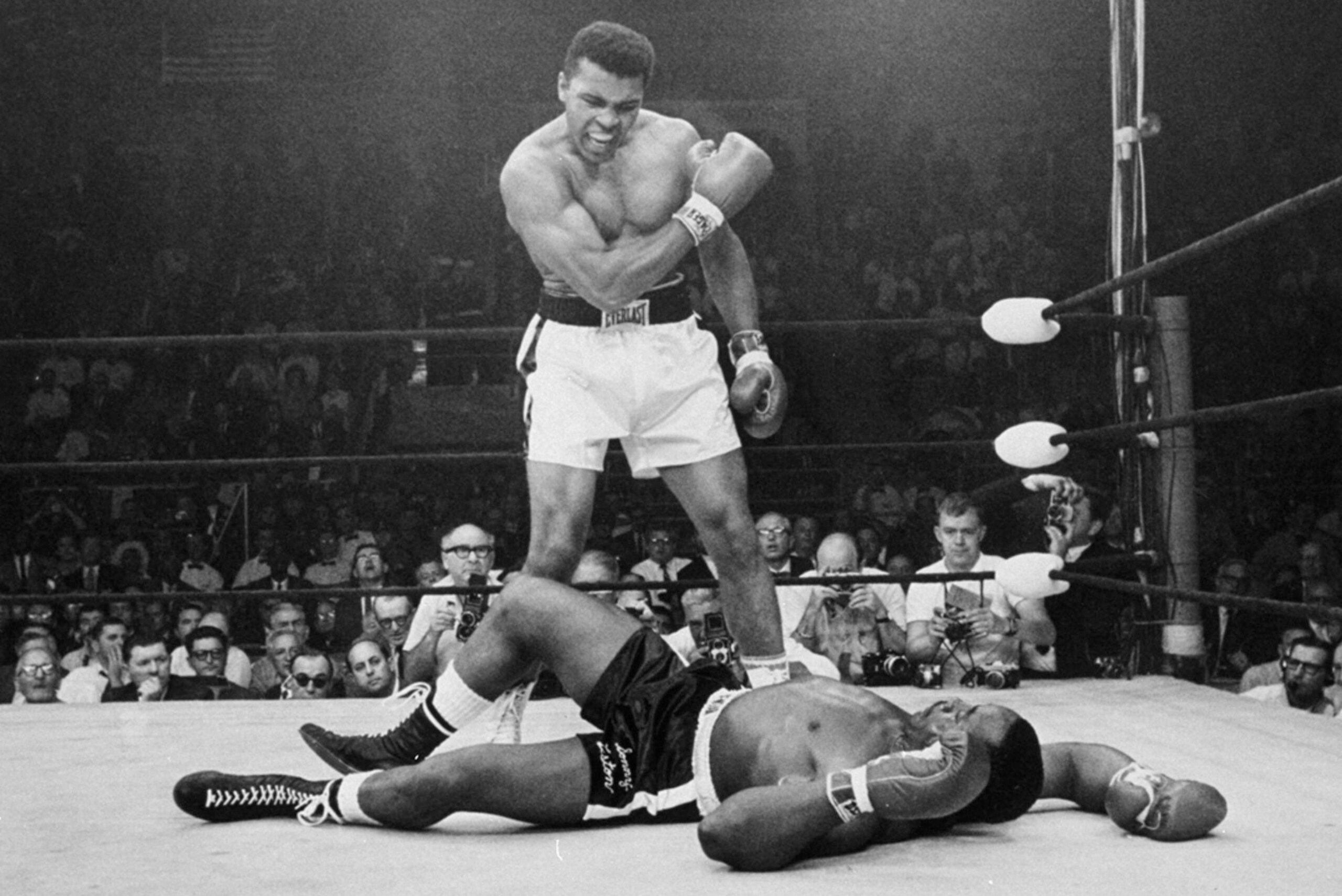
8 of 10It's a moment that produced a fair bit of infamy and the most famous photograph in the history of the sport.
Ali met Liston in a championship rematch in Lewiston, Maine, on May 25, 1965.
It remains the first and only heavyweight title fight to take place in Maine, and it only ended up there after Boston pulled out less than three weeks before fight night. The county district attorney was too concerned about rumors that the promoters had ties to organized crime, so the fight was moved.
Everything about this fight was odd to say the least, not the least of which being its ending that remains one of the most controversial and debated in the sport's lore even today.
In the opening round, with his back approaching the ropes, Ali threw a short right hand and Liston dropped to the mat flat on his back. You can never truly approximate the force of a shot unless it hits you, and Ali's hands were like lightning in a glove, but it just didn't look that bad.
Ali immediately stood over his fallen foe, creating that one iconic moment—(the photo on the intro slide)—who rolled around a bit but could not beat the count.
Endless replays over the last 50 years and many still refer to the punch that knocked Liston out as "the phantom punch."
Rope-a-Dope
9 of 10If you polled Ali's friends and family ahead of his epic showdown with George Foreman, most of them would probably have told you he was nuts to take the fight.
Foreman was an undefeated monster with 40 wins, 37 by knockout, and he had captured the heavyweight title with a two-round annihilation of Frazier.
Ali was an underdog heading into the Rumble in the Jungle, held in Kinshasa, Zaire. Most expected it to be the younger champion's time, that his raw power would trump the legend's speed and elusiveness.
But Ali had a plan.
Beginning in the second round, he began dropping back to the ropes and covering up, allowing the champ to wing huge punches with little return on his investment.
Ali, meanwhile, took advantage of lulls in his opponent's activity to shoot powerful shots right up the pike. As Foreman tired, he began taunting him, according to Jeff Powell in the Daily Mail:
"They told me you could punch, George."
"Is that all you got, George?"
Ali's rope-a-dope strategy tired the heavy-hitting Foreman and left him susceptible to the straight right hand that knocked him out in the eighth round and changed boxing history.
Ali Meets the Beatles
10 of 10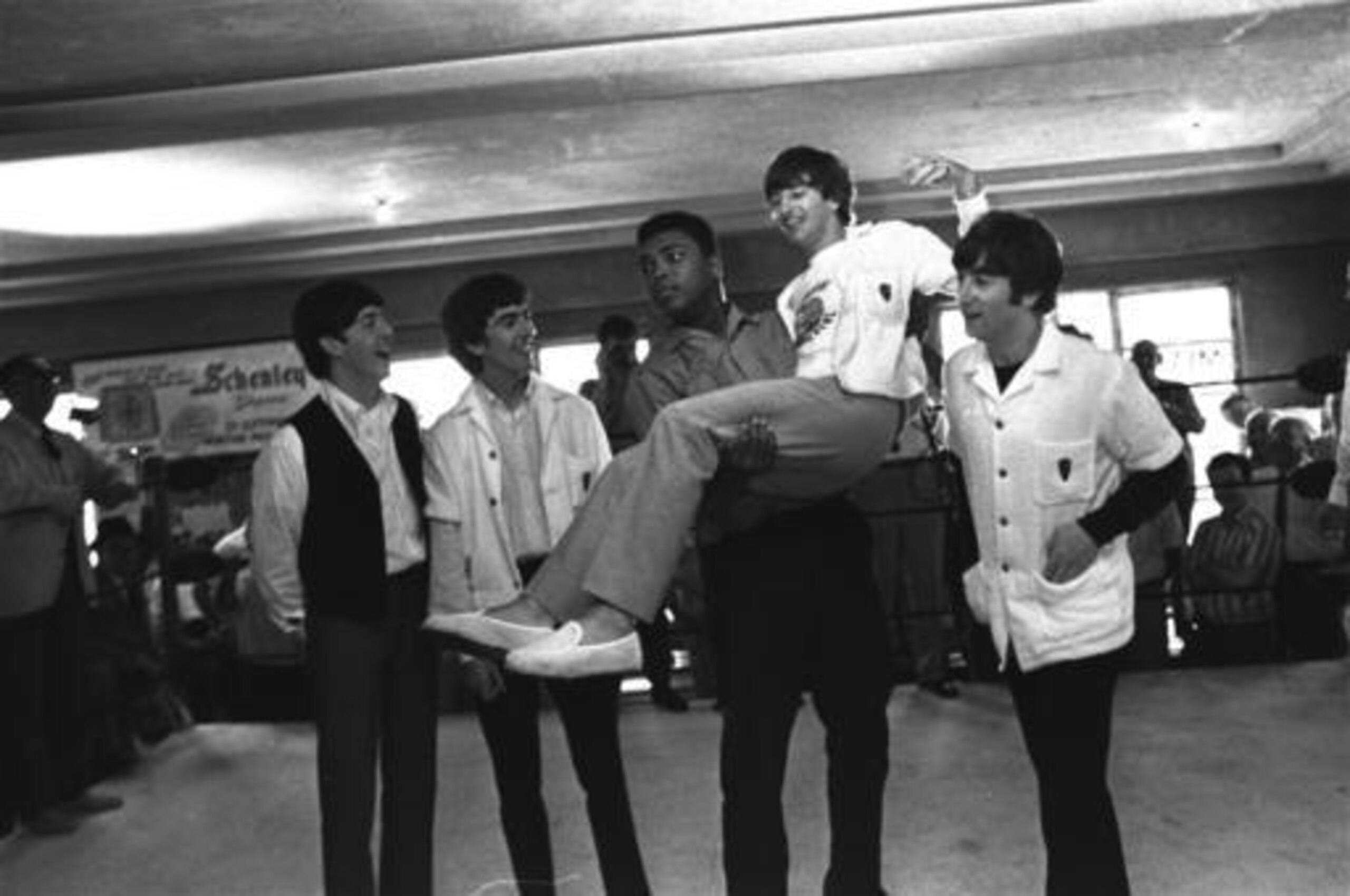
1964 was one hell of a year.
Early in February, The Beatles played The Ed Sullivan Show, and later in the month Ali captured the heavyweight crown from Liston in what most felt was an upset.
So it was a meeting of icons on February 18, when Ali crossed paths with John, Paul, George and Ringo in Miami.
The rock stars were there for a second performance on The Ed Sullivan Show, while Ali was in town ahead of his showdown with Liston.
"Muhammad Ali was quite cute, he had a fight coming up in a couple of days with Sonny Liston. There is a famous picture of him holding two of us under each arm," George Harrison said, per Beatles Bible.
It was one of those moments that would come to define a generation, featuring the biggest rock band in the world and its biggest sports icon.

.png?w=2560)
.jpg?w=2560 "Jonathan Taylor Landing Spots 📍")





