

Carlos Sainz Jr. Can Take Advantage of Max Verstappen's Rise to Red Bull
Shortly after becoming the youngest-ever winner of a Formula One race at last weekend's Spanish Grand Prix, Max Verstappen had plenty of thanks to dish out.
First and foremost to Red Bull Racing, who had provided him with "such a great car to win straight away" in his debut race for the team, as he told the post-race FIA press conference.
Then to his mother Sophie, who "did a very good job" by bringing him "into the world" to begin with, and his father Jos, who from the minute his son turned four had worked tirelessly to help him conquer it.


And, last but not least, to Dr. Evil himself, whose latest plot had instantly proved to be something of a masterstroke.
As noted by F1 journalist Peter Windsor, Verstappen had been suffering from that common teenage health condition, CBA, when, around 24 hours after the previous race in Russia, Dr. Helmut Marko called to invite father and son to a meeting in the Austrian city of Graz.
He was less than impressed by the timing of the request, but a fortnight on and with a winner's trophy in his hands, Verstappen knew every move made by the head of Red Bull's young-driver scheme was done with his best interests in mind and explained how Marko had come to establish "a bit of a combination" with Jos.
Without wishing to discredit Verstappen's achievement, the 18-year-old could have expressed his gratitude to any number of people within the paddock for his maiden victory at the Circuit de Barcelona-Catalunya.
Lewis Hamilton and Nico Rosberg for conspiring to end Mercedes' race before it even started; the Ferrari and Red Bull strategists for switching Sebastian Vettel and Daniel Ricciardo to costly three-stop strategies; Pirelli for producing a medium tyre capable of surviving 32 laps; and even the sparring partner he had left behind.
As reported by Motor Sport Magazine's Mark Hughes, one of the reasons behind Marko and Co.'s decision to fast-track Verstappen to Red Bull was to diffuse tensions at Toro Rosso, where his tug of war with Carlos Sainz Jr. for the prize of a promotion to the senior team was becoming increasingly unhealthy.
On Verstappen's day of destiny, however, Sainz played an influential role in his charge to victory, becoming a roadblock between the Red Bulls and the Ferrari pairing of Vettel and Kimi Raikkonen following the safety car period after a strong start elevated him from eighth to third.
The time Vettel and Raikkonen wasted behind Sainz, who defended the position as hard as he dared in those early laps, afforded the Red Bulls the space they required to establish a decent—perhaps decisive—lead, with both Ferraris ultimately crossing the finish line within six seconds of Verstappen.
It was apt that as his former team-mate became a grand prix winner, Sainz—draped in a Spanish flag—was also celebrating the best result of his 14-month-old F1 career with a sixth-place finish at the beginning of a series of races that could shape his future.
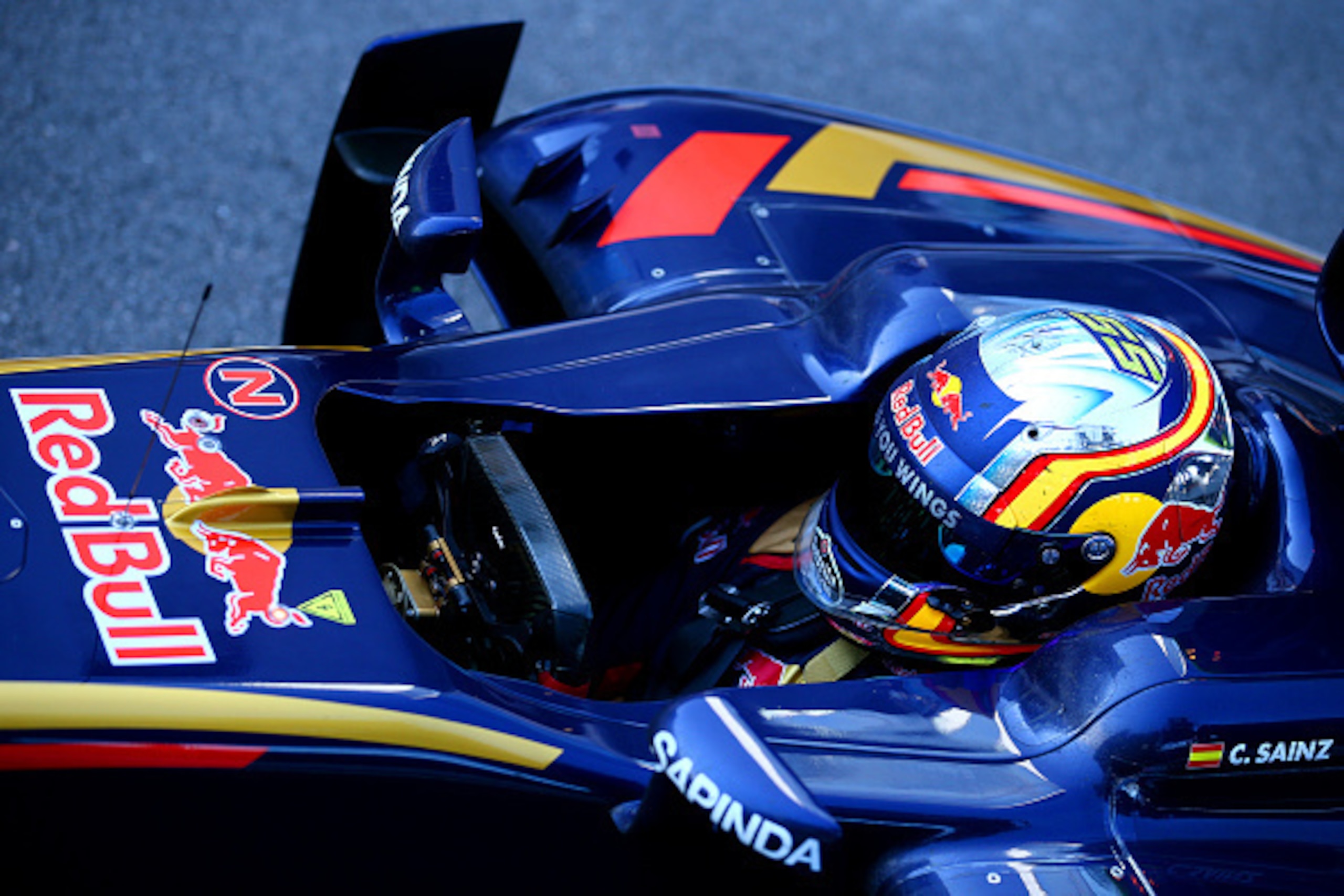
Although Verstappen's greater elegance behind the wheel had become increasingly noticeable as their partnership progressed, paddock perception declared Sainz's performances had been more than a match for the Dutchman since the beginning of 2015.
As such, there was an inescapable feeling that Sainz, for all the suspicions that it could have been him driving a RB12 to victory at his home track, had seen his reputation further enhanced as a consequence of Verstappen's win.
As noted toward the end of last season, Sainz's strong understanding of his team-mate's character and his awareness that his rival on the other side of the garage was a once-in-a-generation talent had almost led to him developing a defence mechanism alongside Verstappen.
Rather than worrying himself sick about beating the boy wonder, a realistic Sainz understood simply keeping his team-mate honest would do him no harm as he weathered the media storm and patiently waited for his own moment to shine.
We witnessed that maturity when the Spaniard made no issue of the team-orders squabble at Singapore 2015 but informed Motorsport.com's Pablo Elizalde the incident allowed him to "know more what Max is about" and how he had received confirmation of Verstappen's fondness of "the bad boy role."
And we witnessed it ahead of the Spanish GP, when Sainz—after the initial disappointment of being overlooked in the Red Bull seat swap—soon began to "see it more and more in a positive way."
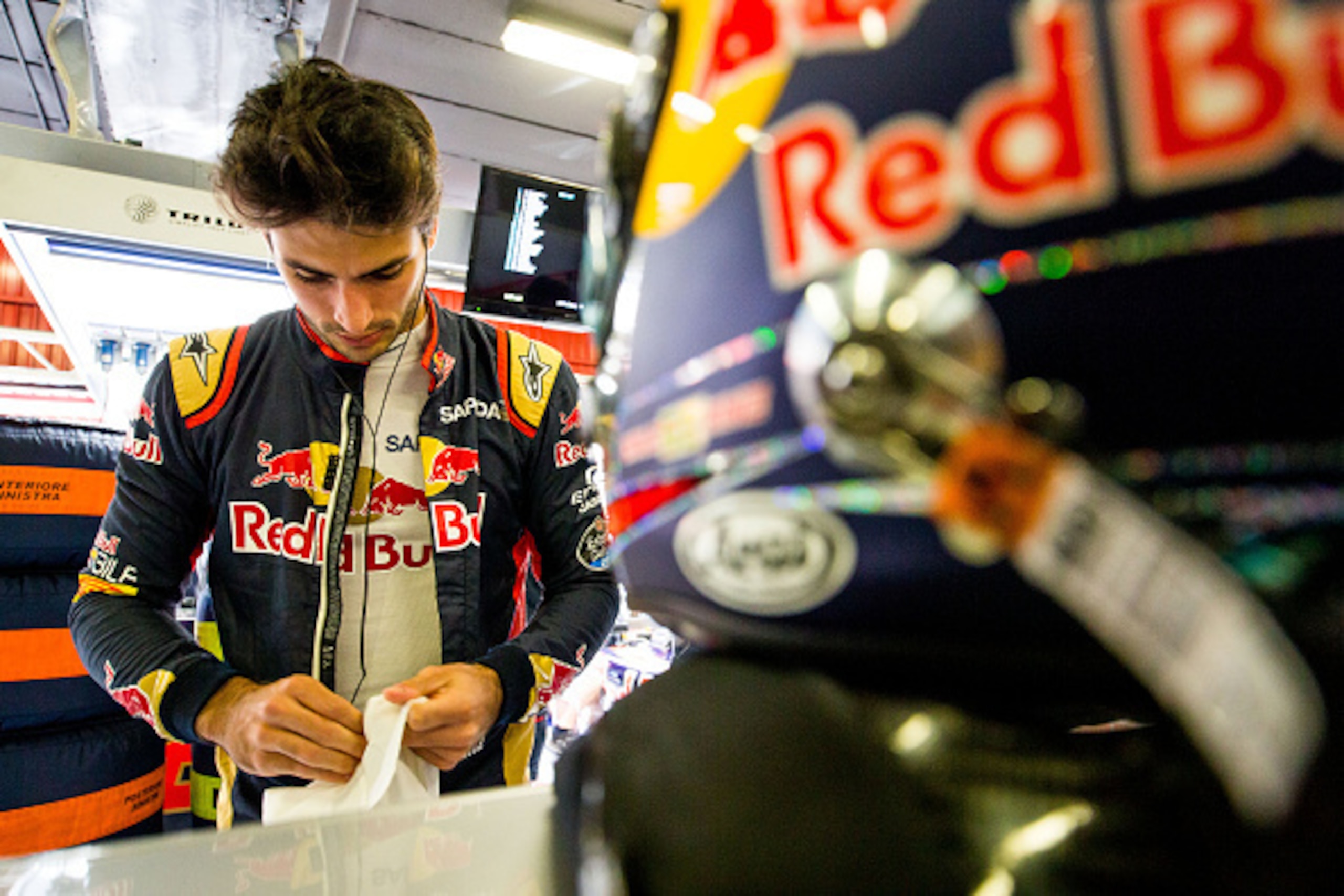
Per Elizalde, he insisted he will earn his "chance" if he continues to "do well" by turning "the speed that [he had] shown so far into results."
Watching a team-mate ascend to the senior team and achieve instant success—as we saw with Jean-Eric Vergne and, to a lesser extent, Sebastien Bourdais when Ricciardo and Vettel were promoted from Red Bull and Toro Rosso at the end of 2013 and '08 respectively—has the power to finish a driver's career.
But now standing proud as the Toro Rosso team leader—and no longer with Verstappen to "camouflage" his own efforts, as he told Elizalde—Sainz has found himself in the position of maximum opportunity he has always craved and with a much simpler path toward his ultimate "goal."
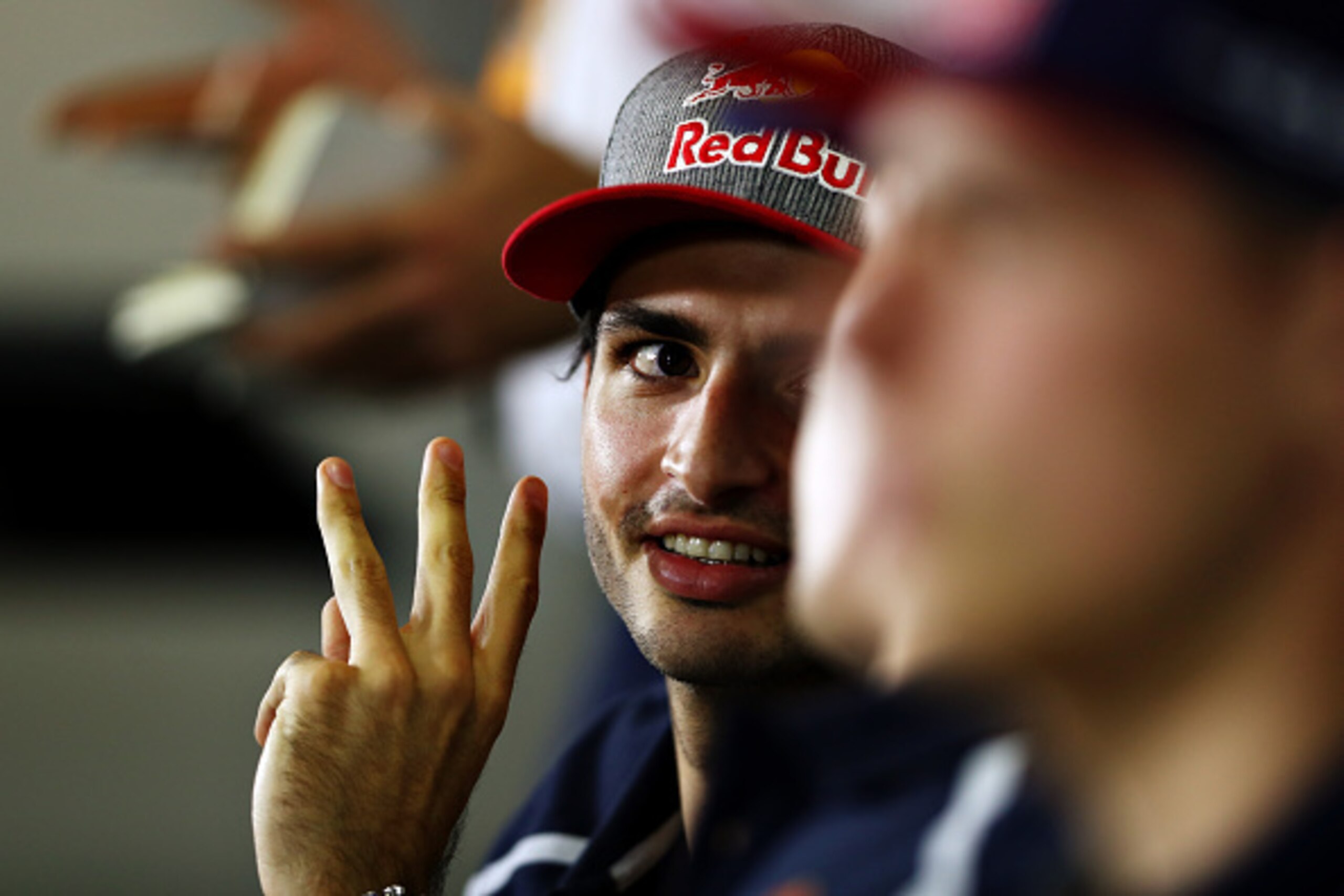
Should he maintain his advantage over new team-mate Daniil Kvyat, and should Verstappen hustle Ricciardo in the direction of a potential vacancy at Ferrari, Sainz, as the next cab off the rank, should be virtually assured of a Red Bull seat in either 2017 or '18.
Even when they have been pulled apart, Verstappen and Sainz—on the evidence of Spain—can still push each other along to bigger and better things.
.jpg?w=2560 "LA Premiere of \"Chad Powers\"")


.jpg?w=2560 "Ugly Jets Scoring Stat 😳")
.jpg?w=2560 "Landing Spots for Trade Candidates 📍")