
College Basketball Coaches with Most Job Security
Which Division I head coaches could suffer through, say, consecutive 7-24 seasons and not feel their job is in danger. Furthermore, which coaches are immune to the possibility of scandals, legal problems or NCAA violations that might force their schools' administrations to dismiss them?
With expectations, coaching salaries, prestige and exposure so high in college basketball these days it does not take much for a coach to go from adored to abhorred.
Just a few years ago, Syracuse head coach Jim Boeheim and Louisville coach Rick Pitino would have been on this list of coaches with a lot of job security. However, a lengthy NCAA investigation led Boeheim, now 71, to set his retirement plans, according to Nate Mink of the Syracuse Post Standard.
After allegations that a Louisville assistant had paid for an escort to "have sex with players and recruits," debates arose, such as the one presented by CBSSports.com, about whether Pitino should resign or be fired. Louisville self-imposed a one-year postseason ban as a result of the investigation, and Pitino might be on a shorter leash now.
A coach's job security is based primarily on two things: the history of success the coach has produced and the level of expectations of the fans and administration at a given school. Two other factors, the coach's history of objectionable behavior and the tolerance a school has for a coach's offenses, come into play in some cases as well. In a few instances, the likelihood that a coach would actually have consecutive 7-24 seasons was taken into account.
We present 15 Division I coaches who would have to do a lot things wrong and suffer through a series of disappointing seasons before they would get fired. They are presented in inverse order of their job security, with the head coach with the most job security listed last.
Arizona's Sean Miller, West Virginia's Bob Huggins, Ohio State's Thad Matta and Notre Dame's Mike Brey were among those under consideration who did not quite make the cut for one reason or another.
15. Steve Fisher, San Diego State
1 of 15
Record at San Diego State: 367-195 (.653 winning percentage)
Steve Fisher is 71 years old, so he probably does not have too many coaching years left. If he has a few seasons in which it appears he has lost touch with the game or the players, San Diego State officials could conceivably suggest that he step aside.
However, there have been no such signs, and based on his success with the Aztecs, Fisher probably can coach San Diego State for as long as he wants.
It seems that only an NCAA violation that could be traced back to Fisher could jeopardize his position, and in January, the NCAA found no significant wrongdoing at San Diego State after looking into some allegations of possible violations, the San Diego Union-Tribune's Mark Zeigler reported.
There was also the situation at Michigan, where, per Zielger in a 2013 report, Fisher was "fired by athletic director Tom Goss amid a payment-to-players scandal that, an NCAA investigation later found, involved no direct culpability by Fisher."
His influence on San Diego State's basketball success is unquestioned. Expectations were low to say the least when Fisher was hired in 1999. The Aztecs had registered a winning record in just one of the previous 14 seasons, and that 15-14 season in 1995-96 included an 8-10 conference mark that could hardly be considered a success.
Fisher took over a team that had been 4-22 the previous season and promptly went 5-23 in his first season. But the trajectory of the program went straight up from there.
The Aztecs have reached the NCAA tournament eight times in Fisher's 17 seasons at San Diego State, and that includes a run of six straight NCAA appearances that ended this season even though San Diego State won the Mountain West regular-season title by three games. San Diego State had been to the NCAA tournament only three times before Fisher arrived and only once since 1976.
San Diego State has won 20 games or more 11 years in a row and 27 or more the past three years. The Aztecs have been ranked in the final Associated Press poll three times in the past six seasons, including a final No. 6 ranking in 2011.
San Diego State is not going to dismiss the coach who brought the Aztecs unexpected national attention unless something unforeseen occurs.
14. Greg Kampe, Oakland
2 of 15
Record at Oakland: 558–415 (.573 winning percentage)
Record at Oakland as a Division I program: 294-253 (.537 winning percentage)
The typical reaction to the mention of Greg Kampe's name is: Who?
Kampe faces a perpetual identity crisis. Oakland University, where he has been the head coach for 32 years, is not located in California, but in Michigan. Furthermore, it is in the city of Rochester, which in the case of the Golden Grizzlies, is not in the state of New York, but in Michigan.
Whatever national attention the Oakland basketball program has received has been because of Kampe. Hired as Oakland's head coach in 1984 at the age of 28, Kampe lifted the program to national prominence in Division II, then led the program's transition to Division I status in 1999-00.
In his 17 seasons on the Division I level, Kampe has taken Oakland to three NCAA tournament berths. The Golden Grizzlies have finished among the top three in their conference nine of the past 10 seasons, including two regular-season titles.
Oakland finished tied for second this past season, and point guard Kay Felder was good enough to enter the NBA draft this year despite having another year of college eligibility.
Oakland knows it has a bargain in Kampe, who recently signed a three-year contract extension that pays him just $288,000, according to a report by Mark Snyder of the Detroit Free Press. Perhaps more indicative of the kind of job security Kampe enjoys was reflected in his comments regarding the extension.
"It was [a] very simple negotiation like it always is," Kampe told Snyder. "In fact, I wouldn't even call it a negotiation. It was a simple conversation."
Snyder referred to the 60-year-old Kampe as "an Oakland institution," and you don't fire institutions.
13. John Calipari, Kentucky
3 of 15
Record at Kentucky: 217-47 (.822 winning percentage)
Why, you may ask, is John Calipari so low on this list considering the success he has had at Kentucky?
In Calipari's seven seasons with the Wildcats, Kentucky has won a national title and reached the Final Four four times. He finished first in the Southeastern Conference four times and wound up second the other three years. That resume, along with his success in his previous college jobs, would seem to make him impervious to thoughts of dismissal.
Two things make Calipari's situation just a little different.
First of all, Kentucky fans do not tolerate losing. Tubby Smith won a national championship at Kentucky, but he took a step down in prestige to accept the job at Minnesota nine years later, presumably because of the pressure building at Kentucky.
As ESPN.com's Andy Katz wrote when Smith accepted the Minnesota job, "This season, in which the Wildcats finished 22-12 overall, 9-7 in the SEC and lost to Kansas in the second round of the tournament, saw a growing faction of Kentucky fans calling for Smith's ouster."
His replacement, Billy Gillispie, was fired after just two seasons, the second being 2009 when the Wildcats went 22-14 but missed the NCAA tournament for the first time since 1991.
Even Calipari might be under fire if his string of freshman phenoms turned out to be busts, leading to consecutive losing seasons.
The other issue is Calipari's propensity for controversy. Although he has never been found guilty of NCAA violations, two schools (Massachusetts and Memphis) had Final Four berths vacated because of NCAA violations that took place while he was that team's head coach, as Michael Powell noted in a 2015 New York Times report.
There is no hint of impropriety at Kentucky under Calipari, but he might be given less rope if any is discovered.


12. Randy Bennett, St. Mary's
4 of 15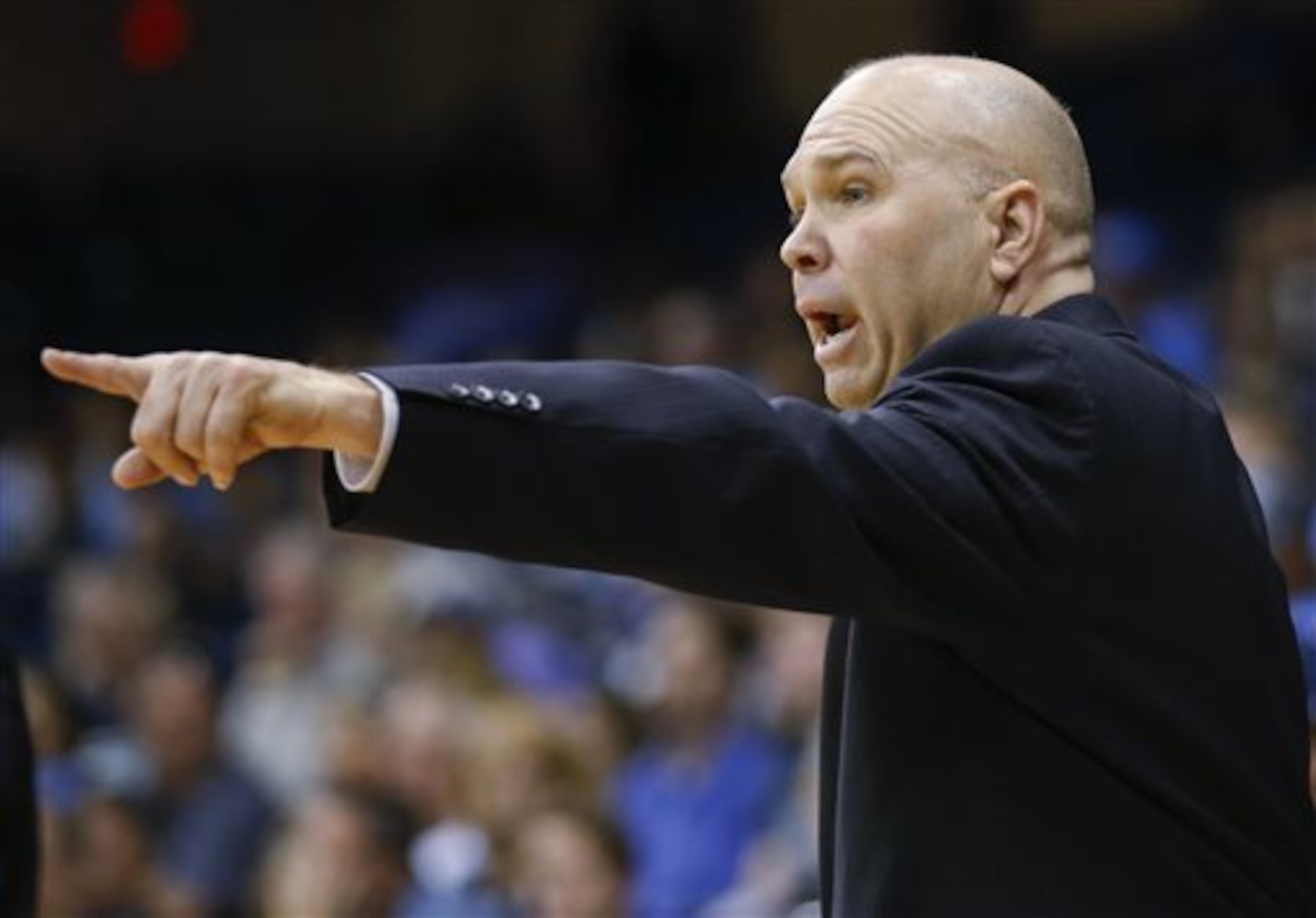
Record at St. Mary's: 333-151 (.688 winning percentage)
Before Randy Bennett arrived at St. Mary's in 2001, the Gaels had reached the NCAA tournament only three times: 1959, 1989 and 1997. In the latter two seasons, the accomplishment was considered so impressive that it earned the head coach a job at a high-profile basketball school, with Lynn Nance going to Washington and Ernie Kent going to Oregon.
Bennett took over a St. Mary's team that had been 2-27 the previous season, and folks at St. Mary's wanted little more from its basketball program than occasional success in the West Coast Conference.
The Gaels suffered through a 9-20 season in Bennett's first year, although they did end a 23-game losing streak. They showed marked improved by going 15-15 in Bennett's second season, then finished second in the West Coast Conference in third year before winning the conference regular-season championship and earning an NCAA tournament berth in his fourth season.
The Gaels have been a WCC power ever since, reaching the NCAA tournament five times in the past 11 seasons, despite the presence of Gonzaga in the same conference. Somehow Bennett failed to get his sixth NCAA tournament berth in 2016 despite going 27-5 and sharing the regular-season WCC title with Gonzaga.
St. Mary's has won at least 20 games in each of the past nine seasons and has won at least 25 games in all but two of them. St. Mary's has reached a level it never envisioned, and Bennett is unquestionably the reason.
The Gaels also know they have a major bargain. The last time St. Mary's got to the NCAA tournament in 2013, Bennett was among the lowest-paid head coaches in the event, earning less than $400,000 per year, according to a USA Today report.
He had been mentioned often as a possible candidate at high-profile schools, including openings at Oregon State, as noted by the San Jose Mercury-News, and at UNLV, an offer Bennett turned down according to a Twitter report by Mark Anderson of the Las Vegas Review-Journal. Those opportunities seem to be dwindling, though, for the 52-year-old Bennett, who seems perfectly satisfied to stay in rural Moraga, California.
St. Mary's was hit with probation, and Bennett was suspended for five games three seasons ago because of NCAA recruiting violations, per George Schroeder of USA Today. However, St. Mary's never considered dismissing Bennett, and his image was not harmed significantly. It would take more than that and consecutive losing seasons for the Gaels to contemplate firing Bennett.
11. James Jones, Yale
5 of 15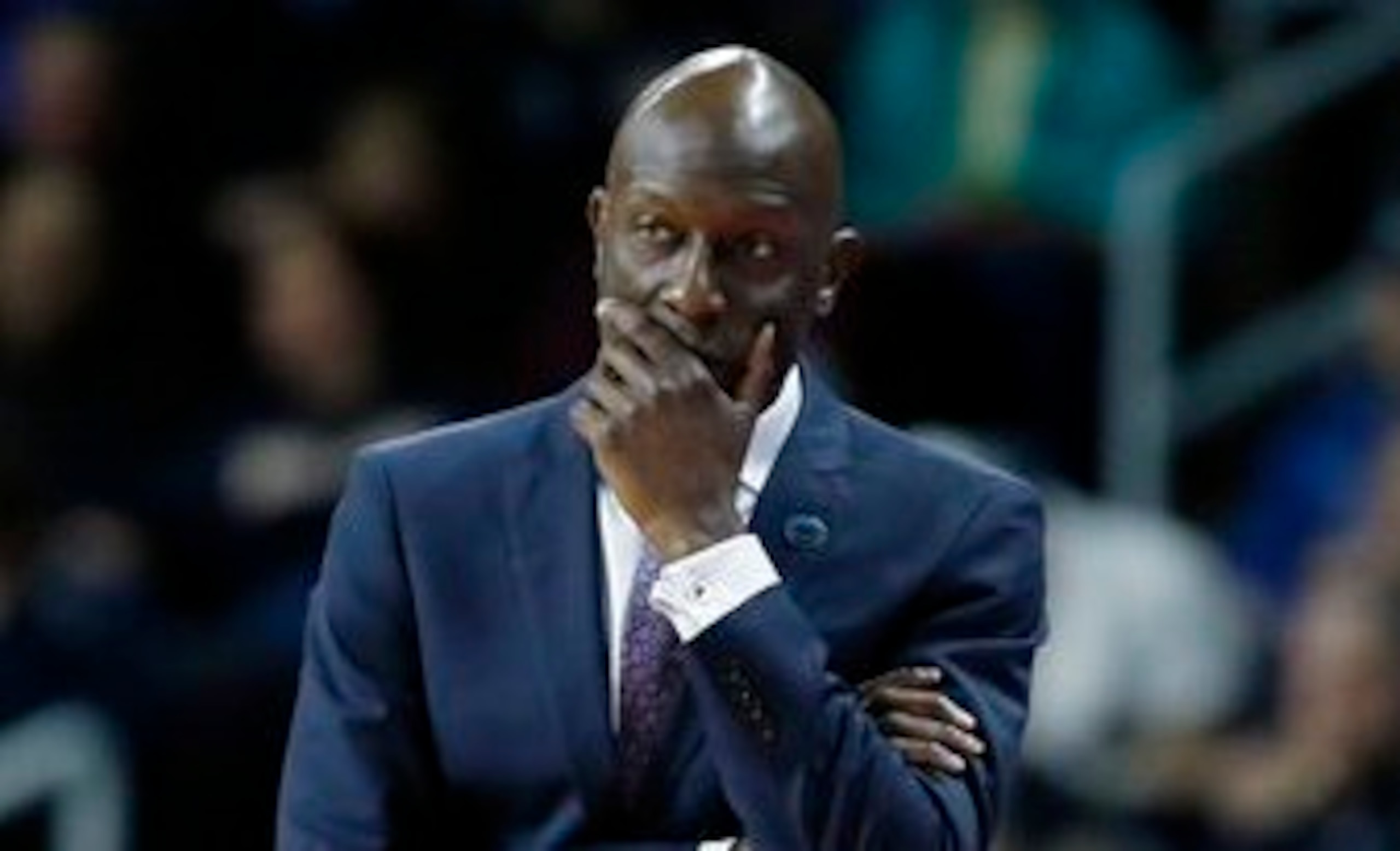
Record at Yale: 254-239 (.515 winning percentage)
When people think of Ivy League basketball, they generally think of Penn and Princeton, with the recent attention being paid to Harvard. But none of those schools can match the consistency of success that James Jones has had in 17 years as the head coach at Yale.
His overall record is nothing special, but Ivy League teams measure their success by how they do in conference play. When Jones took over the Yale program prior to the 1999-00 season, the Bulldogs were coming off a 4-22 season in which they tied for last place in the Ivy League for the second time in four years.
James pushed the Bulldogs to a tie for fifth place in his first season, and Yale has not finished worse than fourth in any of the 16 years since. None of the other seven Ivy League schools has finished in the top half of the league standings every year since 2001.
Three times Yale has won or shared the regular-season Ivy League title under Jones, and it has been particularly successful recently. Yale finished second behind a strong Harvard team in 2014, tied for first before losing a playoff to Harvard in 2015 and finished alone in first in 2016 with a 13-1 conference record.
The Bulldogs earned their first NCAA tournament berth since 1962 this season, then No. 12-seeded Yale upset No. 5-seeded Baylor for Yale's first NCAA tournament victory ever. Their 23 overall victories this past season were the most since 1906-07, when Yale went 30-7.
Jones was named Ivy League coach of the year for the second straight season.
This season's Yale team experienced some controversy, as the team captain was expelled from school following accusations that he had nonconsensual sex with a female student, according to a CNN's Jill Martin, who also reported that the player planned to sue the university. It is difficult to imagine that would have any effect on Jones' job status, though.
The chief concern of the Yale administration is the possibility of losing Jones to another program. As the Yale Daily News' Daniela Brighenti and Maya Sweedler noted, Jones' name has been mentioned in connection with several job openings the past two years.
Jones is still at Yale at the moment, and it would take a number of poor seasons or some unexpected occurrence for his job to be in jeopardy. In general, Ivy League schools are more hesitant to fire coaches because they don't want to foster a perception that athletics are more important than academics.
But there is even less chance Yale would fire a coach who has been with the Bulldogs for 17 years and has brought them unprecedented success for more than a decade.
10. Tony Bennett, Virginia
6 of 15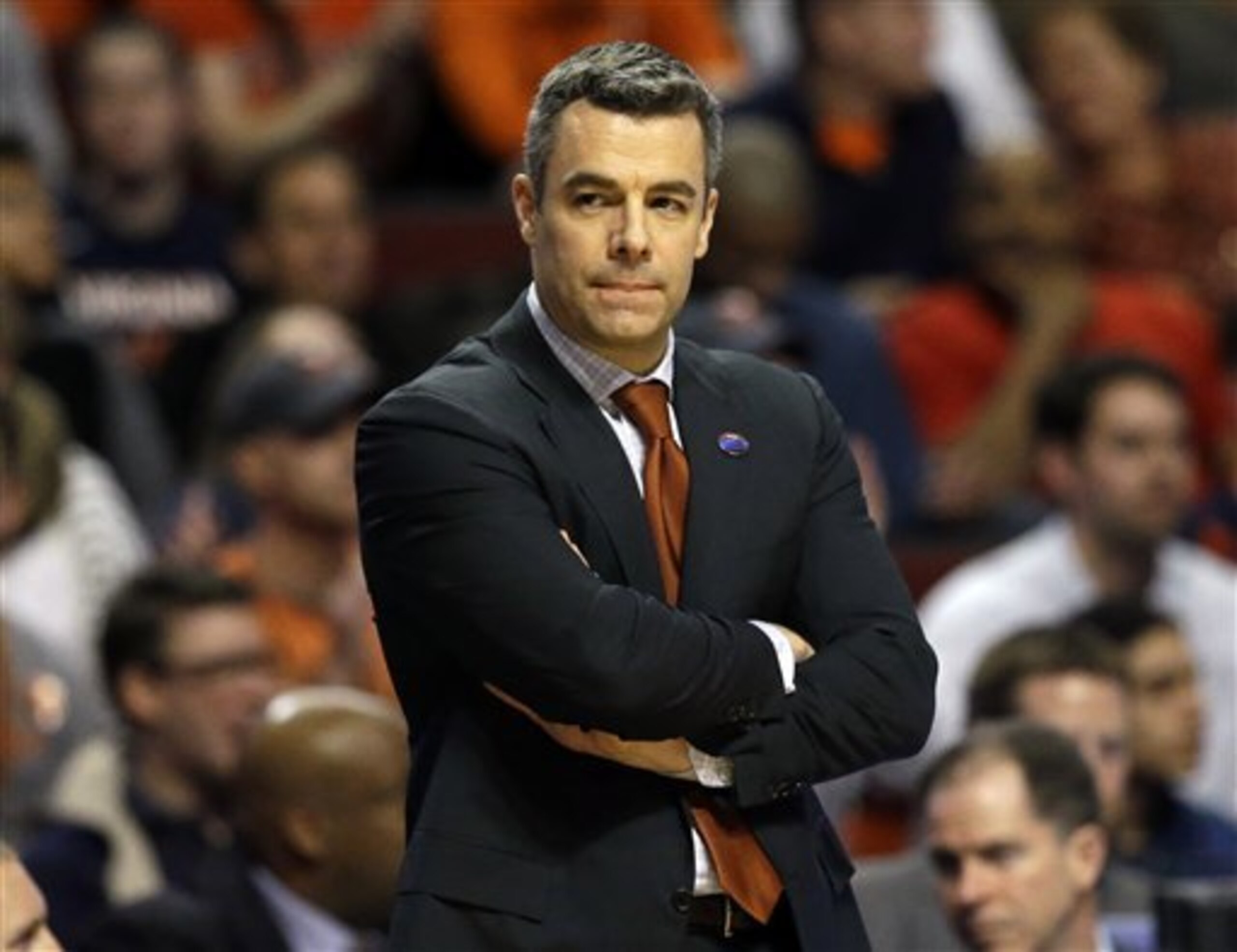
Record at Virginia: 165-72 (.696 winning percentage)
Tony Bennett has the least tenure at his school of anyone on this list. But after just seven seasons at Virginia, Bennett has established a recipe for success that will make it difficult to fire him even if he has several lean years. And there is no indication that any such lean years are in his immediate future.
Virginia had risen to the elite level of college basketball during the Ralph Sampson era of the early 1980s. The Cavaliers were ranked in the top five of the final Associated Press poll three years in a row from 1981 through 1983. They even reached the Final Four as an unranked team in 1984, the year after Sampson left.
They have had a number of good years in the meantime, but when Bennett was hired in 2008, the Cavaliers had not finished ranked among the Top 12 since 1984, Sampson's last year.
More to the point, they had reached the NCAA tournament only twice in the preceding 12 years, had placed better than seventh in the conference only once in the previous six seasons and had finished 10th and 11th in the Atlantic Coast Conference in the two seasons immediately before Bennett's hiring.
It took a while for Bennett's defensive scheme to take hold, but once it did, the Cavaliers became a national power despite the lack of high-profile recruits. The incoming Virginia freshman class, which is ranked No. 13 in the nation by Scout.com, is the first group of Cavaliers freshmen ranked among the nation's top 18 recruiting classes by Scout.com since Bennett arrived.
Nonetheless, Virginia has been ranked among the Top Six in the final Associated Press poll each of the past three seasons. The Cavaliers captured the outright ACC regular-season titles in two of those three seasons and were second, a game behind North Carolina, this season. The Cavaliers have finished ahead of Duke all three seasons and reached the NCAA tournament four of the past five seasons.
It's similar to the surprising success Bennett had at Washington State, leading the Cougars to the NCAA tournament and a final Top 25 ranking in two of his three seasons at a school where basketball success seemed impossible.
Bennett's low-key, squeaky-clean personality is immune to controversy, and his system seems immune to long-term failure regardless of the personnel. With Bennett being just 46 years old, there appears to be no reason Virginia officials would contemplate dismissal even if Virginia were to have a disappointing year or two.
9. Jay Wright, Villanova
7 of 15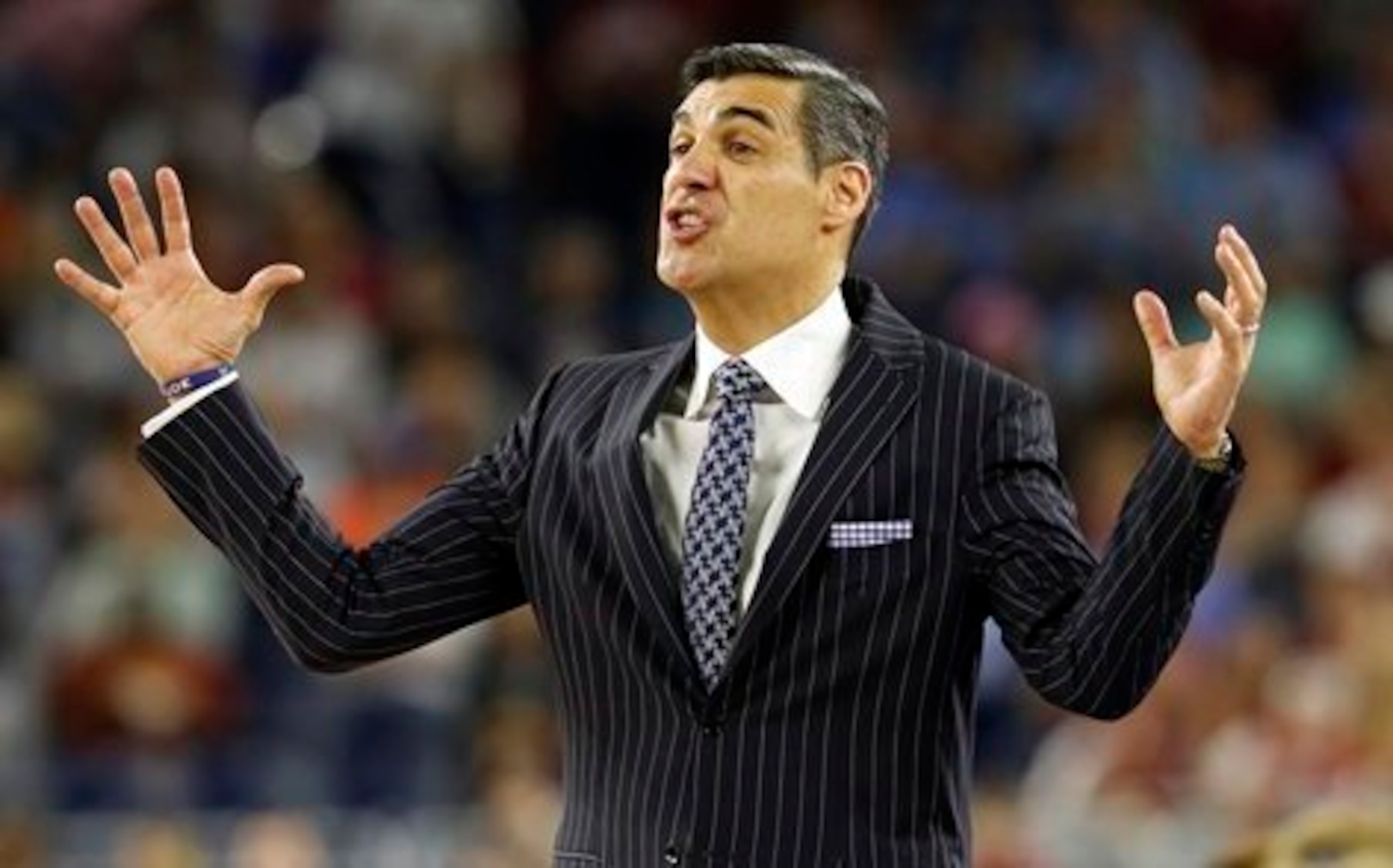
Record at Villanova: 354–157 (.693 winning percentage)
Jay Wright built up a huge storehouse of equity by winning the national championship this season.
Despite the sizable regular-season success in his first 14 years at Villanova, Wright was getting some heat for not faring well in the NCAA tournament. There was never a hint that he might be fired, but those postseason failures did not sit well with all the Villanova faithful.
Wright's first three seasons at Villanova were a little rocky, but he has won at least 20 games in 11 of the 12 seasons since, and this year the Wildcats reached the NCAA tournament for the 11th time in 12 years. This season was also the second year in a row and third overall in which Villanova won at least 30 games under Wright. The 13-19 season in 2011-12 was erased from memory, chalked up as a mere aberration.
However, there was one concern. Since getting to the Final Four in 2009, Wright's perimeter-oriented offense had failed to pay dividends in the NCAA tournament. Villanova did not get out of the first weekend in any of the six NCAA tournament between 2010 and 2015, and the Wildcats were seeded first or second in three of those.
That changed this season, when second-seeded Villanova beat a No. 2 seed (Oklahoma) and two No. 1 seeds (Kansas, the top overall seed, and North Carolina) to capture its first national title since 1985.
That will free the 54-year-old Wright from outside pressure for quite some time.
However, the Philadelphia area is not particularly patient when it comes to losing, even for its college basketball teams. Steve Lappas left Villanova for Massachusetts after an 18-13 season in 2001, fearing he would probably be fired if the Wildcats had another substandard season the following year, the Philadelphia Daily News' Dick Jerardi reported.
Of course, Lappas had missed the NCAA tournament for a second straight season in 2001 and had never advanced past the second round at the Big Dance.
8. Bob McKillop, Davidson
8 of 15
Record at Davidson: 516-313 (.622 winning percentage)
Stephen Curry deserves much of the credit for pushing Davidson into the national spotlight in 2007-08 and 2008-09, but Bob McKillop had a hand in it too. In fact, McKillop is the chief reason why the Wildcats have been to the NCAA tournament eight of the past 15 years and have recaptured some of the school's past basketball glory.
McKillop has been Davidson's head coach for 27 years, and you just don't dismiss that kind of successful, solid-as-a-rock coach with his type of commitment to the school. The team plays its home games on McKillop Court, for crying out loud. A coach with the arena's floor named after him doesn't get fired unless he suffers through a series of terrible seasons. And the 65-year-old McKillop has given no indication that things are going to turn sour for a while.
There was a time when Davidson was among the nation's top basketball programs. It was ranked in the Top 15 of the final Associated Press poll five times in a seven-year span between 1964 and 1970. Lefty Driesell was responsible for most of that success, but the Wildcats were a team with a 7-24 record and no conference the year before McKillop was hired in 1976.
McKillop won just four games in his first season and did not have a winning record in any of his first four seasons. However. the Wildcats have had just one losing season in the 23 years since then and have had no losing seasons the past 15 years.
He ushered the Wildcats through the step up in class from the Southern Conference to the Atlantic 10, winning the regular-season title in Davidson's first season in the Atlantic 10 in 2015 after the Wildcats were picked to finish 12th in the preseason poll. The Wildcats have won at least 20 games each of the past five seasons and in 10 of the past 12 seasons. And he has done it all with little media attention.
In Davidson, North Carolina, McKillop lives under the large shadow cast by North Carolina and Duke, leaving little exposure for McKillop with Mike Krzyzewski and Roy Williams around. Davidson quietly extended McKillop's contract before the 2014-15 season while no one was paying attention, but he was still among the Atlantic 10's lowest-paid head coaches, according to the Charlotte Observer's David Scott.
The folks at Davidson would not have named the home court after McKillop unless they intended to have him coaching on it for quite a while.
7. Mark Few, Gonzaga
9 of 15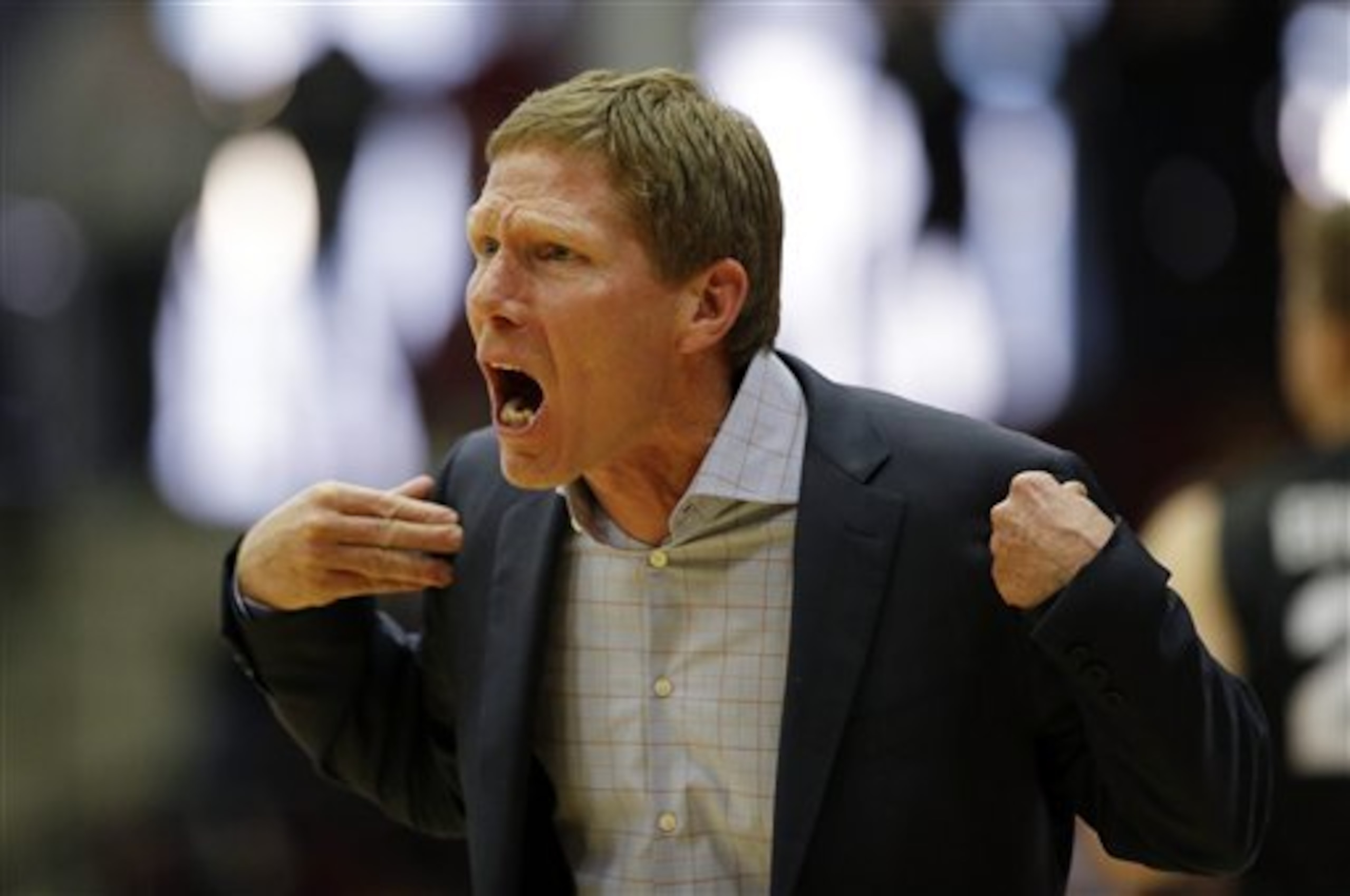
Record at Gonzaga: 466-111 (.808 winning percentage)
Although Dan Monson initiated Gonzaga's rise to national prominence, Mark Few gets most of the credit for establishing the Bulldogs as a perennial basketball power.
Before Monson became head coach in 1997, the Bulldogs had made one appearance in the NCAA tournament. That came in 1995 when Gonzaga finished fourth in the West Coast Conference but won the conference tournament to earn an automatic berth. Monson took the Zags to the NIT his first season as coach, then shocked the country when his team reached the NCAA tournament Elite Eight in 1999.
Monson left to take the head coaching job at Minnesota, leaving the position at Gonzaga to Few, a Bulldogs assistant. Few has taken the job and run with it, reaching the NCAA tournament in every one of his 17 years as head coach. The Bulldogs have won or shared the WCC regular-season title in all but two of those seasons, and they have won at least 23 games in all of them.
Before Monson arrived, Gonzaga had won at least 23 games just once in its history, the lone exception being a 24-11 season in 1947-48.
Few's name comes up frequently when vacancies arise at power-conference schools, but Few seems satisfied to remain in Spokane, Washington. When he did not leave to take the job at Oregon, his alma mater, in 2010, it appeared he was committed to Gonzaga for the rest of his career.
Gonzaga's excellence in basketball provides much of its national identity, and the school knows Few is responsible for that. The school did not have dreams of national basketball championships when Few was hired, but it does now. Even though the lone shortcoming in Few's resume is that he has never reached the Final Four, Gonzaga officials know the basketball program might return to mediocrity if he leaves.
Consecutive losing seasons, as unlikely as they may be, would not sway school officials from that opinion. The school still does not have the win-at-all-costs mentality.
Few has the highest winning percentage of any active Division I head coach, yet he ranked no better than 34th in salary among the head coaches in this year's NCAA tournament, according to USA Today. Gonzaga knows it has a bargain.
6. Roy Williams, North Carolina
10 of 15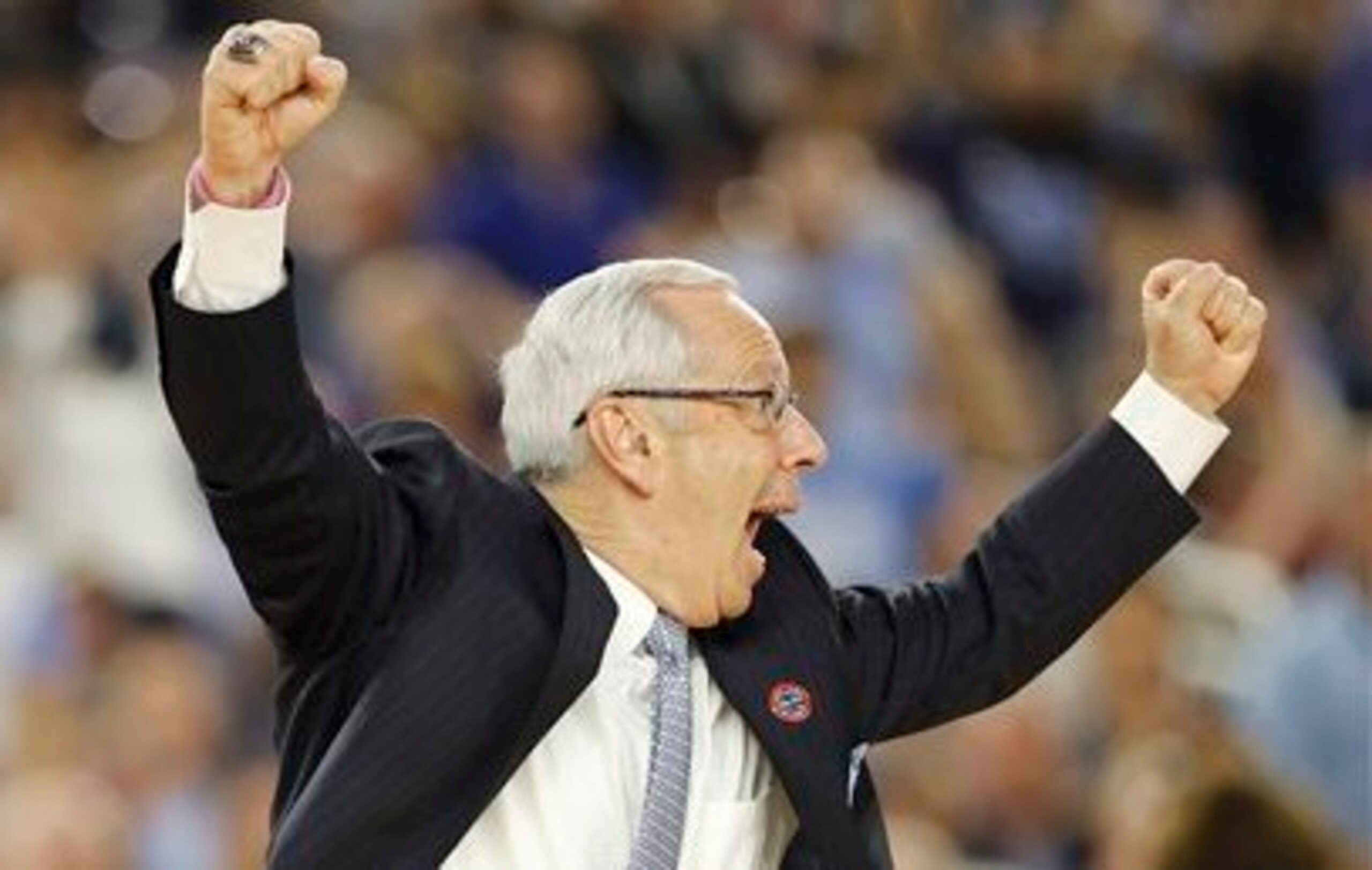
Record at North Carolina: 365-108 (.772 winning percentage)
Roy Williams is a Dean Smith disciple who has won two national championship in his 13 seasons at North Carolina. Those two factors give Williams considerable job security, because the 21,750 people who squeeze into the Dean Smith Center for big games like two things: the memory of Dean Smith and winning. Roy Williams is one of them, leaving an outstanding job at Kansas to come home to Chapel Hill.
North Carolina has finished first in the tough Atlantic Coast Conference in seven of Williams' 13 seasons, and only once did the Tar Heels fail to make the NCAA tournament under Williams. That was way back in 2010, the year after Williams won his first national title.
The four Final Four berths, including the runner-up finish this season, are icing on the cake for a coach whose job security is unquestioned—except for two issues.
One is health. Williams is 65 years old and has suffered from vertigo in the past. In February, he had to leave a game after collapsing near the bench. Williams insisted afterward that he is fine, but subsequent incidents may cause some officials to try to persuade Williams to retire.
The other issue is the NCAA investigation of possible academic fraud at North Carolina, which Pete Thamel of Sports Illustrated addressed. Williams has not been tied to the allegations in any way, but if the Tar Heels are hit with significant sanctions, Williams' name might be associated with the punishment in some people's minds. Sanctions themselves would not cost Williams his job, but they might make things a little less comfortable.
5. Gregg Marshall, Wichita State
11 of 15
Record at Wichita State: 230-85 (.730 winning percentage)
You could make a good argument that no Division I coach does more with the talent on hand than Gregg Marshall.
When Marshall took over at Winthrop prior to the 1998-99 season, the Eagles had never been to the NCAA tournament and were coming off seven consecutive losing season, including 7-20 in 1997-98. Winthrop went 21-8 in Marshall's first season and got to the NCAA tournament in seven of his nine seasons there.
Wichita State had moderate expectations when it hired Marshall in 2007. It had been to the NCAA tournament only once in the previous 19 seasons, and that one berth in 2006 was the chief reason Mark Turgeon was able to land the Maryland job despite going just 17-14 in his final season with the Shockers.
Marshall took Wichita State to heights that never seemed possible in today's game. The Shockers have been to the NCAA tournament in each of the past five seasons, but their 2012-13 and 2013-14 seasons turned Marshall into a national star. Wichita State beat Pittsburgh, No. 1-seeded Gonzaga, La Salle and Ohio State to reach the 2013 Final Four before losing by four points to eventual national champion Louisville.
The next season, the Shockers became the first team since the 1991 UNLV squad to enter the NCAA tournament unbeaten. That team claimed a No. 1 seed and a No. 2 national ranking before losing by two points in a second-round NCAA tournament game to a Kentucky team that advanced to the national championship game.
Marshall has done it by picking up talent wherever he could, whether with transfers from four-year colleges or junior colleges or by finding hidden gems from high schools. Not a single one of his recruiting classes at Wichita State was ranked among the top 25 classes by Scout.com.
At 53, Marshall has a lot of good years left. The Shockers know they are likely to sink back to obscurity if Marshall leaves, so his job is safe for as long as he wants it. Wichita State will always worry about Marshall's possible departure to a school with more basketball prestige. But he proved by staying at Winthrop for nine years despite frequent invitations from other schools that he is not likely to cut and run at a whim.
4. Rick Byrd, Belmont
12 of 15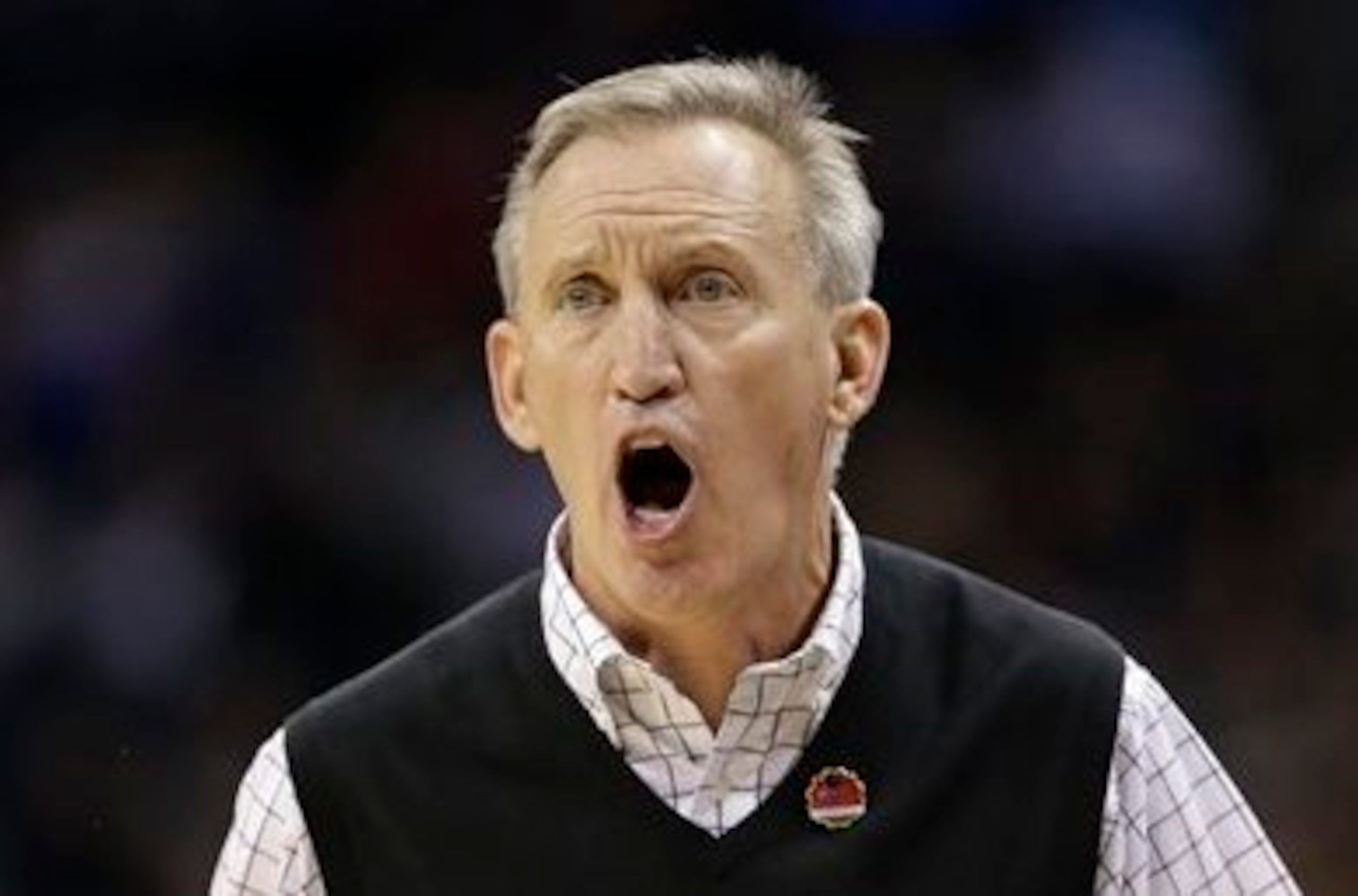
Record at Belmont: 639-324 (.657 winning percentage)
Record at Belmont as a Division I school: 341-198 (.633 winning percentage)
Rick Byrd is Belmont basketball, and how can you fire a coach like that?
The 63-year-old Byrd has been the Bruins head coach for 30 years, ushering them through the transition from NAIA to Division I status and being Belmont's only head coach in the 17 years it has been a Division I program.
Belmont struggled in its first season as a Division I program, going 7-21 as an independent in 1999-2000. But Byrd methodically worked the Bruins into being a perennial conference title contender, first in the Atlantic Sun Conference and later in the Ohio Valley Conference.
He has taken Belmont to the NCAA tournament in seven of the past 11 seasons, and the Bruins missed getting an eighth berth in heartbreaking fashion this past season. In the OVC tournament championship game, Belmont made a tip-in at the buzzer that was initially ruled good and would have given Belmont a one-point overtime victory over Austin Peay. But after a video review, it was ruled the shot came after the buzzer and the Bruins were handed a one-point loss.
Despite that loss, Belmont still finished with 20 wins or more for the sixth straight season and for the 10th time in the last 11 years. Four times in the past six seasons, Belmont won at least 26 games.
Byrd's name gets lost amid the hype in March because he has never won an NCAA tournament game. The Bruins are 0-7 in the Big Dance despite being seen as a possible upset pick nearly every year. Publicity comes with success in the postseason, and it has not happened for Byrd. Nonetheless, his legacy remains solid in Nashville, Tennessee, where Belmont is located.
Byrd does it the "right way" to boot. David Meeks of USA Today reported in March 2015 that no Belmont player since 2003 had left school for any reason other than graduation, and the team's cumulative grade-point average was 3.0 or better for 14 straight seasons. Byrd also was chairman of the NCAA rules committee for two years starting in September 2013.
How would an administrator rationalize dismissing a coach like that?
3. Tom Izzo, Michigan State
13 of 15
Record at Michigan State: 524-205 (.719 winning percentage)
It is hard to believe now that there were doubts about Tom Izzo's coaching ability two decades ago.
When he took over for Jud Heathcote in 1995, Izzo inherited a program that had been to the NCAA tournament five of the previous six seasons, had won an NCAA title in 1979 and was coming off a 22-6 year. Izzo promptly went 16-16 and 17-12 with identical 9-9 Big Ten records his first two seasons, both of which ended in the National Invitation Tournament.
Then, in 1997-98, things changed. The Spartans went 22-8, tied for first in the Big Ten, and received the first of 19 consecutive NCAA tournament berths. It is the third-longest active streak of NCAA tournament appearances, according to the Big Ten.
More significant is Izzo's success in the postseason. Izzo's Spartans have been to seven Final Fours and won the national championship in 2000. Despite this year's shocking first-round loss to Middle Tennessee State, Michigan State is still regarded as one of the best postseason teams in the nation. Izzo consistently gets his teams to improve through the course of the regular season and peak for the postseason.
Izzo does it without the high school stars that populate many of the top programs. Although the Spartans' incoming freshman class is ranked third in the nation by Scout.com, four of his previous 11 classes did not even rank in the top 25, and none of those 11 classes were in the top eight. He recruits primarily in the Midwest, with a good portion of his players being from Michigan.
The fact that he was elected to the Basketball Hall of Fame this year served to confirm his place among the best.
Izzo is beloved around Michigan State because of his emotion, his rapport with players and his background as a Michigander. He was born in Michigan, went to high school and college in Michigan and spent all but two months of his coaching career in Michigan.
He may have sealed fans' loyalty forever in 2010 when he turned down a chance to coach the Cleveland Cavaliers (and perhaps LeBron James) and double his salary to stay at Michigan State. In his statement regarding why he was staying at Michigan State, Izzo said, according to the Associated Press (via ESPN.com), "I am going to be a lifer. This is what I'm going to be, and I'm damn proud of it."
If Michigan State ever had a series of poor seasons and university officials had to fire Izzo, they would do so with tears in their eyes.
A few off seasons would not negate the work Izzo has done in his 21 seasons at Michigan State
2. Mike Krzyzewski, Duke
14 of 15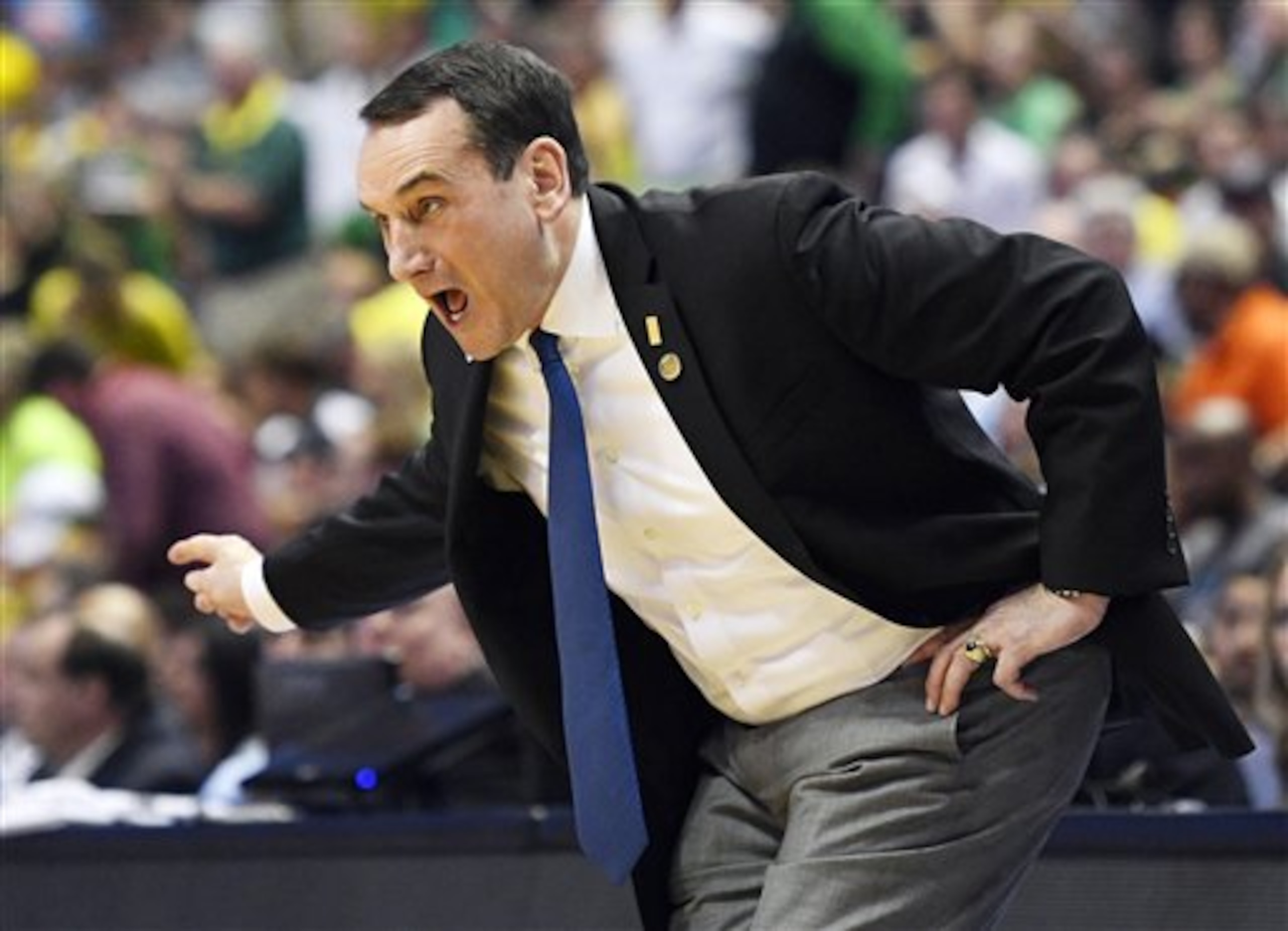
Record at Duke: 970–262 (.787 winning percentage)
No school's basketball program is more closely identified with its coach than Duke and Mike Krzyzewski. The two entities are almost inseparable. Even though Duke may be the most prestigious basketball program in the country, few could name the coach who preceded Krzyzewski. (It was Bill Foster, if you care.) Whether you like Duke or hate it, Duke basketball is Mike Krzyzewski, and Mike Krzyzewski is Duke basketball.
It is hard to imagine Duke basketball without Krzyzewski, which is one of the many reasons Krzyzewski is unlikely to retire in the next few years. When the time comes, Duke probably would like to replace Krzyzewski with one of his Blue Devils disciples.
But the top candidates, such as Jeff Capel, Johnny Dawkins, Chris Collins and Steve Wojciechowski, have had mediocre success as head coaches. The only ones who have passable resumes are Harvard's Tommy Amaker and Notre Dame's Mike Brey.
And none can approach the success Krzyzewski has had in his 36 years as Duke's head coach. He has won five national championships, advanced to 12 Final Fours and has won 30 games or more 14 times. Oh, and by the way, his 1,043 Division I coaching victories are more than 100 more than anyone else in history. In fact, his 970 victories at Duke alone would be more Division I wins than anyone else.
The man is a legend, and schools don't fire legends, especially if they are squeaky clean.
So why is Krzyzewski, who has never been implicated in shady dealings or possible NCAA violations, not No. 1 on this list?
He has one tiny feature that knocks him down one peg: age.
Krzyzewski will turn 70 next February, and though everyone expects him to know when it's time to retire, there remains a slim possibility that he won't realize it. If the Blue Devils suddenly go 12-20 in consecutive seasons, there might be talk that the master is getting too old to coach these kids. That sentiment could trickle down to the Duke administration, which might try to find a subtle way to ease him out the door.
Granted, this scenario is highly unlikely, but it is the one that prevents Krzyzewski from owning the top spot among coaches with the most job security.
1. Bill Self, Kansas
15 of 15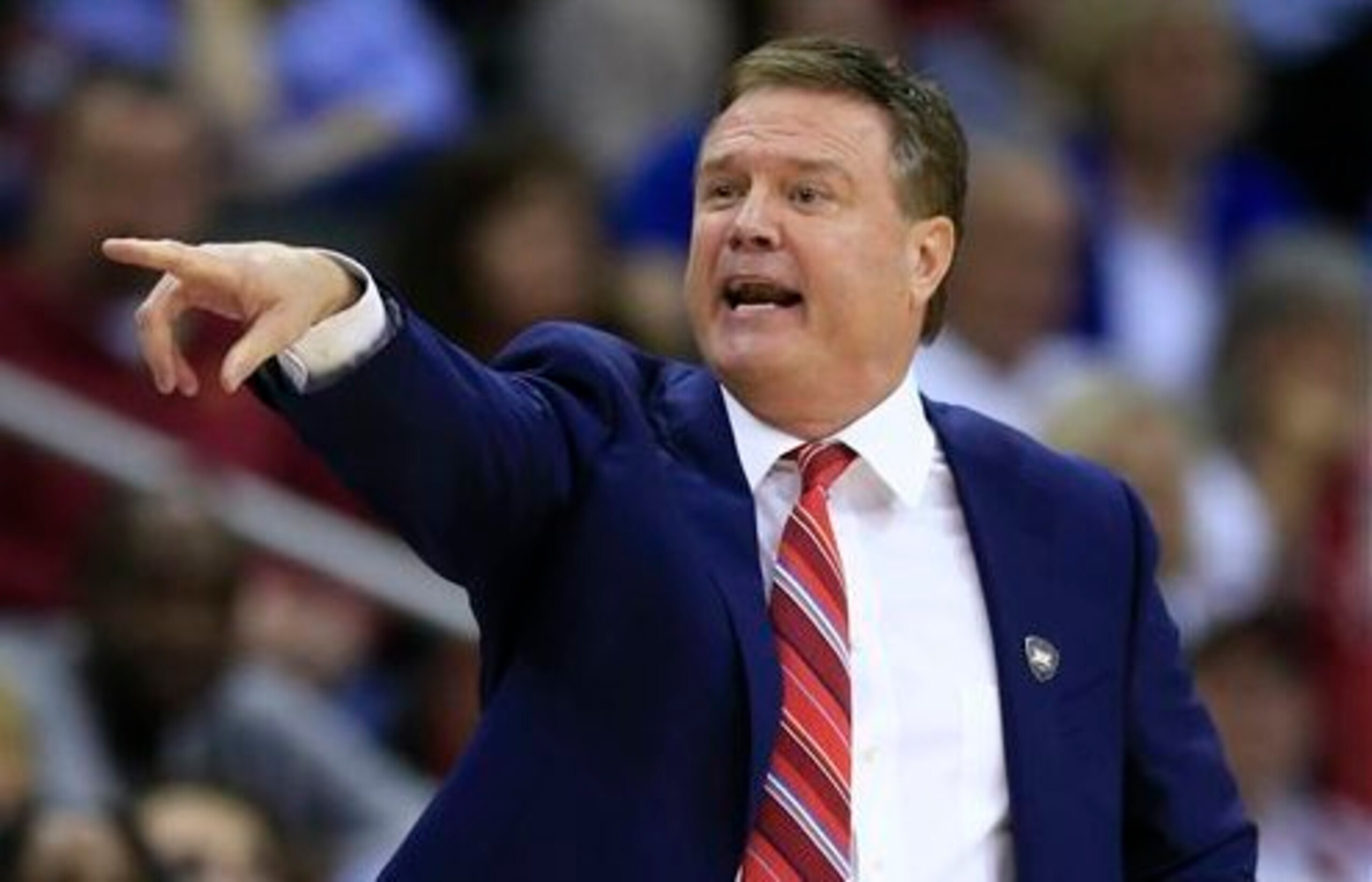
Record at Kansas: 385-83 (.823)
The consistency of Bill Self's success at Kansas is unparalleled in today's game. Kansas tied for second place in the conference in Self's first season in Lawrence, and the Jayhawks have won or shared 12 consecutive regular-season conference championships since then. And they have done it in the Big 12, a conference that is perennially one of the two or three best in college basketball.
Kansas has reached the NCAA tournament all 13 years Self has been its coach, and his winning percentage with the Jayhawks borders on the absurd, considering the opponents they face.
Nitpickers might quibble with Self's postseason record. He has reached the Final Four only twice at Kansas, despite having teams that seemed to be of championship quality, and five of his teams failed to survive the first weekend. But he has the 2008 NCAA title to his name, and he got to the championship game again in 2012. That is enough to keep any naysayers at bay.
It is one thing to take a downtrodden program and turn it into a winner, but it may be even more difficult to take a proven national power and make it even more consistently successful. That is what Self has done since succeeding Williams, and the officials at Kansas know it.
Self has never been fired as he climbed the coaching prestige ladder with success all along the way. He turned a 21-7 season at Oral Roberts into a job at Tulsa. He landed the job at Illinois after taking Tulsa to the NCAA tournament Elite Eight.
In his three years at Illinois, the Fighting Illini finished first in the Big Ten twice and second once, enabling him to get the job at Kansas. It all started at Oral Roberts, where Self took over a team that was 5-22 the season before he arrived.
Self is virtually clear of any NCAA malfeasance. The Jayhawks sustained some minor penalties in 2006 as the result of a booster's actions, but when Gene Marsh, chair of the infractions committee, was asked whether the current coaching staff was at fault for any violations, he said, according to the Lawrence Journal-World's Gary Bedore, "I don't think so, not that I can recall."
The kicker, and the one that lifts Self above Krzyzewski, is that Self is just 53 years old. There appears to be no way Kansas officials might push him out the door in the next decade thinking that the game had passed him by or that he had grown too old to do his job.
There is no reason to think Kansas would have consecutive bad seasons, but even if it did, Self's job would seem to be safe. The intriguing question is this: How many disappointing seasons would Kansas have to have for Self's job to be in jeopardy?
.jpg?w=2560 "LA Premiere of \"Chad Powers\"")



.jpg?w=2560 "Landing Spots for Trade Candidates 📍")
.jpg?w=2560 "Ugly Jets Scoring Stat 😳")