Canelo Alvarez's Coronation Still Not Complete Despite Stunning KO vs. Amir Khan
There's a lot to love about lineal middleweight champion Saul "Canelo" Alvarez. He's young, handsome, rich and pretty darn good at his chosen profession. With the retirements of Floyd Mayweather Jr. and Manny Pacquiao, and the decline of Miguel Cotto, it's no surprise that he's been anointed the new king of boxing.
Canelo, who knocked out Amir Khan in stunning fashion Saturday in Las Vegas, is only now coming into his own as a fighter despite four years in the spotlight. His 25 years, and his baby face, belie a boxer of serious experience, much of it at the top level.

.jpg?w=2560 "Eagles Titans Football")
In the ring, Canelo is a finished product, a professional at the height of his powers, ready for all comers. If an opponent wants to come forward—like Cotto, who he took the middleweight title from last year—Canelo is happy to meet them in the middle, landing powerful counters capable of staggering even the toughest foes.
If they prefer to "box," often code for backpedaling furiously for 45 minutes, Canelo has shown a surprising technical acumen. He outboxed Cuban master Erislandy Lara in 2014 and eventually tracked down and finished the fleet-of-foot Khan.

Khan controlled the action early, moving well around the ring and landing lightning-quick lefts and rights. But Canelo never stopped coming forward, eating Khan's best shots and spending valuable time working the body.
To win, Khan had to be perfect—and he was not. Eventually Canelo landed a right hand that literally knocked the snot from his opponent's nose and the consciousness from his body. The fight was all but over before Khan even hit the mat.
"When you're boxing, you can't tap a guy," HBO color commentator Lennox Lewis said after the fight. "You have to stop him. You have to hit him hard and slow him down. There was nothing to slow down Canelo. When he saw the moment, he seized it."
It was the kind of performance mythologies are built upon, something key to Canelo's brand. Merely being a great boxer is not nearly enough to become a legitimate attraction. That requires both memorable moments and wins that matter. Canelo, for all his winning and punching power, is not quite there, either culturally or at the box office.
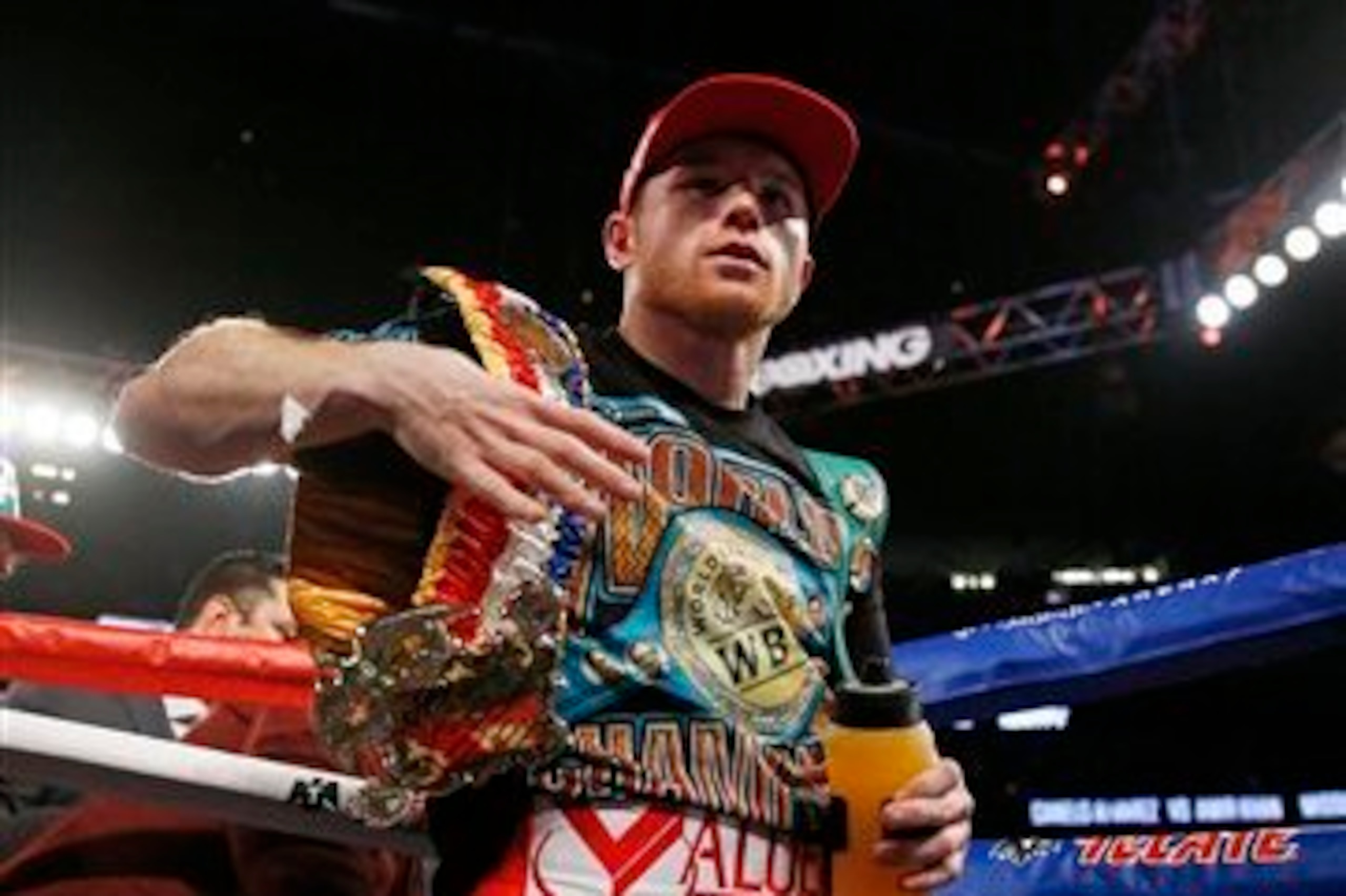
He's the top star in modern boxing—but he's not yet on a first-name basis with the American public. That's the difference between an icon and a mere star. A star is a fighter who's well-known in the insular world of professional boxing. An icon is someone sports fans know by just one name.
Mike. Evander. Oscar. Floyd. Manny.
It's a position earned in the ring and when receipts are counted up. Canelo isn't there just yet. His fight with Cotto, the last remaining icon in the sport, failed to reach the magic mark of one million pay-per-view buys, something Mayweather accomplished eight times in his career and Pacquiao managed seven times.
Though he's been in major fights before, against both Mayweather and Cotto, this was the first time he's been the A-side of a major pay-per-view show. While the crowd brought plenty of energy with it, he failed to sell out the new T-Mobile Arena in Las Vegas. Canelo's close—but he lacks the signature win required to further separate him from the pack.
After the bout, the other middleweight champion, Gennady Golovkin, stepped into the ring to stake his claim as Canelo's next challenger. The fired-up Mexican responded with expletives, hinting at taking the fight the entire boxing world is salivating for—the kind of fight that births legends.
"I invited him into the ring,” Alvarez told HBO's Max Kellerman after the fight. “Like we say in Mexico, 'We don't f--k around.' I don't fear anyone. We don't come to play in this sport. I fear no one in this sport."
While those were bold words, he stopped just short of accepting Golovkin's challenge. At the post-fight press conference, Canelo's promoter, Oscar De La Hoya, said he'd start work immediately to make the fight happen.
"Golovkin, make sure you answer your phone tomorrow morning," De La Hoya said after the fight. "We will call you...that's the fight to make."
So say we all.
Jonathan Snowden covers combat sports for Bleacher Report.