Will Ailing Roger Federer Be Healthy in Time for Wimbledon and the Olympics?
A solemn Roger Federer sat before a horde of reporters at the Madrid Open and unexpectedly announced his withdrawal from the event before his opening match.
It's a task that's becoming all too routine for him in 2016.
Federer entered the tournament looking to regain his footing and pick up some valuable clay preparation with the French Open at Roland Garros drawing near. Those hopes were dashed because of an ill-timed back injury.
TOP NEWS

K9's Blunt Postgame Quote 😑

J-Dub Suffers Gruesome Injury
Rodgers Calls Out Owners After Paris Game
Quoted by the New York Times' Ben Rothenberg, Federer voiced his irritation about this latest development:
"I’m very disappointed, to say the least. I was hoping to play. I changed my schedule around and practiced well in Switzerland before coming here. This is not really what I wanted to do, come here and do a press conference about pulling out. It’s been a tough year.
[...]
I mean, I am frustrated. I’m a little sad, of course, not to be playing here. At the same time, I’m still upbeat that the back issue is going to go away.
"
No stranger to problems with that part of his body, Federer's battled similar ailments throughout his career, notably during a tough 2013 campaign and before the 2014 ATP World Tour Finals championship match.
He's had plenty of experience dealing with this type of setback and knows how to adjust his training. Whether Federer will be ready in time to play in Rome next week is anyone's guess, but this new back problem is emblematic of a bigger concern.
At age 34, Federer is enduring his most injury-and-illness-plagued season to date.
The first obstacle came after the Australian Open. A day after his semifinal loss to Novak Djokovic, Federer hurt his knee while tending to his twin daughters. It turns out he suffered a torn meniscus, necessitating him to go under the knife for the first time in his career.
Minor surgery or not, Federer had to wade through murky water by attacking his rehab delicately and not rushing his return. Ultimately, he'd sit out Dubai, Rotterdam and Indian Wells trying to get back to full strength.
Feeling confident that he was fit again, an eager Federer returned for Miami. He wouldn't get a chance to play, this time undone by a stomach virus that forced him to withdraw prior to his second-round match against Juan Martin del Potro.

When he descended on Monte Carlo last month, expectations were understandably low because of his layoff. No one was sure how his knee would respond and what impact it would have on his movement.
Federer alleviated some of those concerns with a promising week that saw him reach the quarterfinals. While he lost a three-set thriller to Jo-Wilfried Tsonga in that round, the fact he played at a high level just weeks after surgery had to be considered a massive positive.
Adjusting his schedule to get ready for the French Open, Federer decided to enter Madrid, where he's won two titles since the tournament transitioned to clay. The higher altitude and faster courts there suit his game, a perfect spot for him to continue building momentum.
Once again, things didn't go according to plan. While practicing last weekend, Federer hurt his back. When the injury didn't heal itself sufficiently, he opted not to risk further damage and pulled out of yet another event.
Between Brisbane, the Australian Open and Monte Carlo, Federer's played only 13 matches in 2016. He prioritized his calendar before the year to peak during the summer. Now, he might not get that chance.
Rome is the last stop on the road to Roland Garros. With runner-up points there to defend, Federer's participation (providing his back recovers) is vital if he hopes to find his rhythm for Paris. Regardless of how he does on clay, Federer has to be concerned about his health.

Wimbledon is several weeks away. It's the place he always focuses so much of his attention, and it's where he has the best shot of ending his Grand Slam drought and adding major No. 18. We've sang that refrain for almost four years now. But there's less optimism this time around.
He's come so close the last two years, falling to Djokovic in the final both times. A third straight championship meeting might not be on the cards. As the Serb soars to new heights, Federer is being grounded by all these nagging injuries.
With all the time he's spent resting the last few months, Federer's missed out on an important opportunity: getting back to No. 2. Not having the security of that ranking means he could face Djokovic earlier than the finals at the French Open or Wimbledon.
The hiring of Ivan Ljubicic as coach was seen as a tool that could provide intel to solve the Djokovic riddle. But the two haven't had many results to build on this season due to Federer's absences. Short on matches, it's a mystery what kind of form he'll bring to the grass.
Slated to compete in Stuttgart and Halle ahead of his trip to the All England Club, Federer is clearly placing an emphasis on his grass results. But will his body hold up and allow him the preparation he needs?
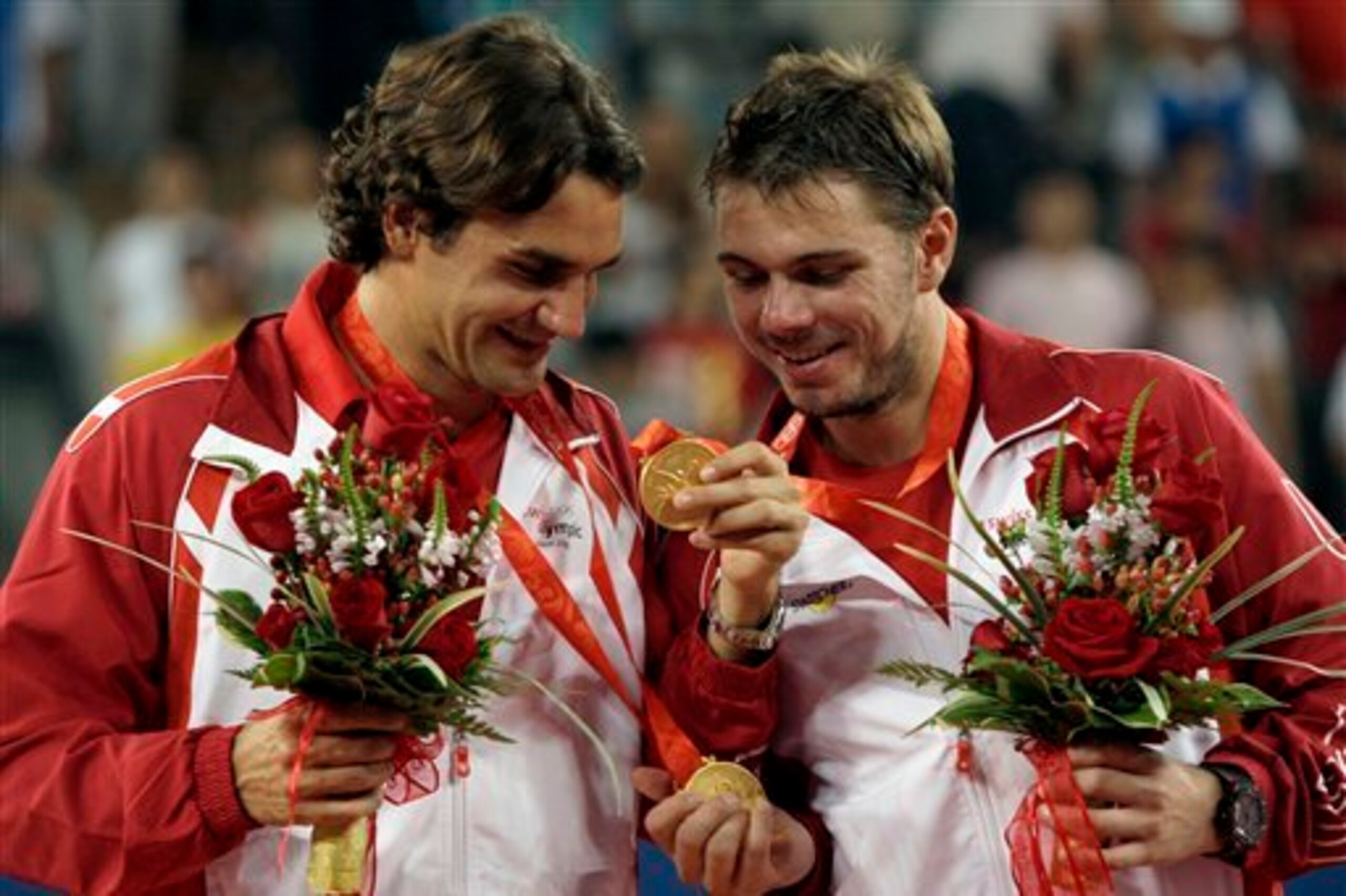
Just as significant as Wimbledon, Federer has an eye toward what is likely his final Olympic Games. A gold medalist in doubles (Beijing 2008), he's yet to earn the same for singles and complete the career Golden Slam. That mission is one he doesn't take lightly.
Driven to bring as many medals as possible home to Switzerland, he's mentioned the possibility of playing singles, doubles and mixed doubles in Rio, per ESPN. It would be a shame if injuries derailed those hopes.
None of Federer's recent misfortunes on their own—knee surgery, stomach virus and back spasms—are anything that should overly worry him. Rather, it's the accumulation of all those problems in such a short time that's worrisome.
A beacon of health for so long, not even Federer can outrun the injury bug forever. But is this a sign that his body is breaking down or just an unlucky series of coincidences?
He'll pray it's the latter with so much on the horizon.
All statistics are courtesy of ATPWorldTour.com unless otherwise noted.
Joe Kennard is a featured columnist for Bleacher Report.
.jpg?w=2560 "LA Premiere of \"Chad Powers\"")
.jpg?w=2560)

.jpg?w=2560 "Landing Spots for Trade Candidates 📍")