
2017 NFL Draft: An Early Look Ahead to Next Year
With the 2016 NFL draft class behind us, it's never too early to look toward the future. If you are tired of draft grades, a healthy alternative is to peer at what is coming ahead.
Maybe your team is aging. Maybe a key player is slated to hit free agency. Maybe your team didn't address a major position of need. The idea of the 2017 draft brings one thing universally for fans: hope.
The 2016 talent pool was defined by certain traits. There weren't many quarterbacks or receivers, but it was deep at the top with interior linemen, both on the offensive and defensive side of the ball. Projecting in advance, like all 32 franchises do, we can look at what some of the attributes of the next draft class are.
Is there a certain program that will dominate headlines like Ohio State did in 2016? Who needs to take a step up? Which positions are stronger than the typical class, and which are weaker? We will address all of those subjects as we look over the potential prospects in the 2017 draft.
Cautious Optimism at Quarterback
1 of 5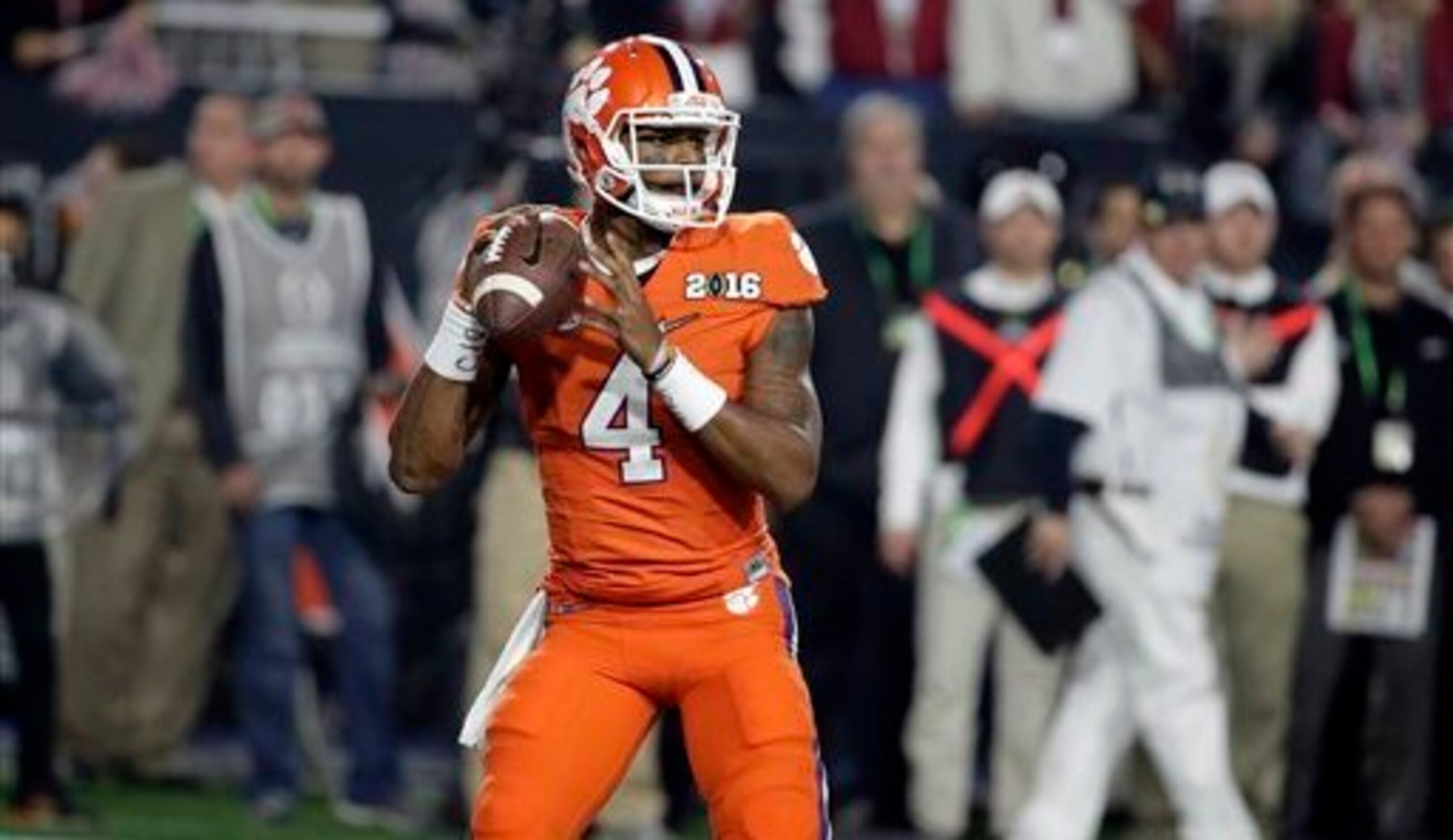
Quarterbacks were drafted back-to-back to start the 2016 NFL draft, but not by teams that originally held the selections. Instead, the Los Angeles Rams and Philadelphia Eagles traded a combined four first-round picks, three second-round picks, three third-round picks and a fourth-round pick for Jared Goff of California and Carson Wentz of North Dakota State respectively.
It's pretty clear that the NFL is desperate at the position. The Eagles were already paying Sam Bradford and Chase Daniel more combined than any individual passer in the league, on an average salary basis. Both are slated to make more than maximum rookie salary in 2016, meaning the second overall pick, whom the franchise mortgaged their franchise for, will be the third quarterback on their own roster in terms of average salary.
So, who is the next face of a mega trade? At this point, the consensus top senior quarterback looks to be Chad Kelly of Mississippi, the nephew of Hall of Famer Jim Kelly. On the field, Kelly's wild play is as big of a projection as is was for Johnny Manziel coming out of the Southeastern Conference.
Kelly was also kicked off the Clemson football team in the spring of 2014 for "conduct detrimental to the team," which led to a stint in junior college. Between seasons at East Mississippi Community College and the University of Mississippi, Kelly was arrested in New York for an incident that allegedly involved him saying, "I’m going to go to my car and get my AK-47 and spray this place," per Joseph Popiolkowski of the Buffalo News.
There are two prized underclassmen as the draft stands today: Deshaun Watson of Clemson and Brad Kaaya of Miami.
Watson, an incoming true junior, has a history of injury problems dating back to high school, which will lead to easy Robert Griffin comparisons for the dual-threat quarterback. Much of his "draft stock" is based on his post-season run, which may not be the best way to judge a passer.
Just a few years ago, Tajh Boyd, another former Tigers quarterback, posted a three-total-touchdown, 346-passing-yard and 78-percent-completion-percentage bowl effort against LSU and was compared to Russell Wilson for a summer, even by some of the best draft evaluators in the business, like Daniel Jeremiah of the NFL Network. Boyd was drafted 213th overall in 2014, and he still hasn't thrown an NFL pass.
Kaaya is more projection than player at this point. Mark Richt, Kaaya's new head coach, was also a quarterback at the University of Miami, and he's helped groom NFL quarterbacks like former Super Bowl champion Brad Johnson and former first-overall pick Matthew Stafford during his time at Florida State and Georgia. Kaaya isn't there yet, but there's reason to believe that he could take the next step with a new coaching staff.
You can't hang your hat on any quarterback prospect heading into the 2016 regular season. There isn't an Andrew Luck out of the bunch, but there are a lot of "ifs," which is the sword that quarterback-needy franchises will have to live and die by.
Returning Alabama Talent
2 of 5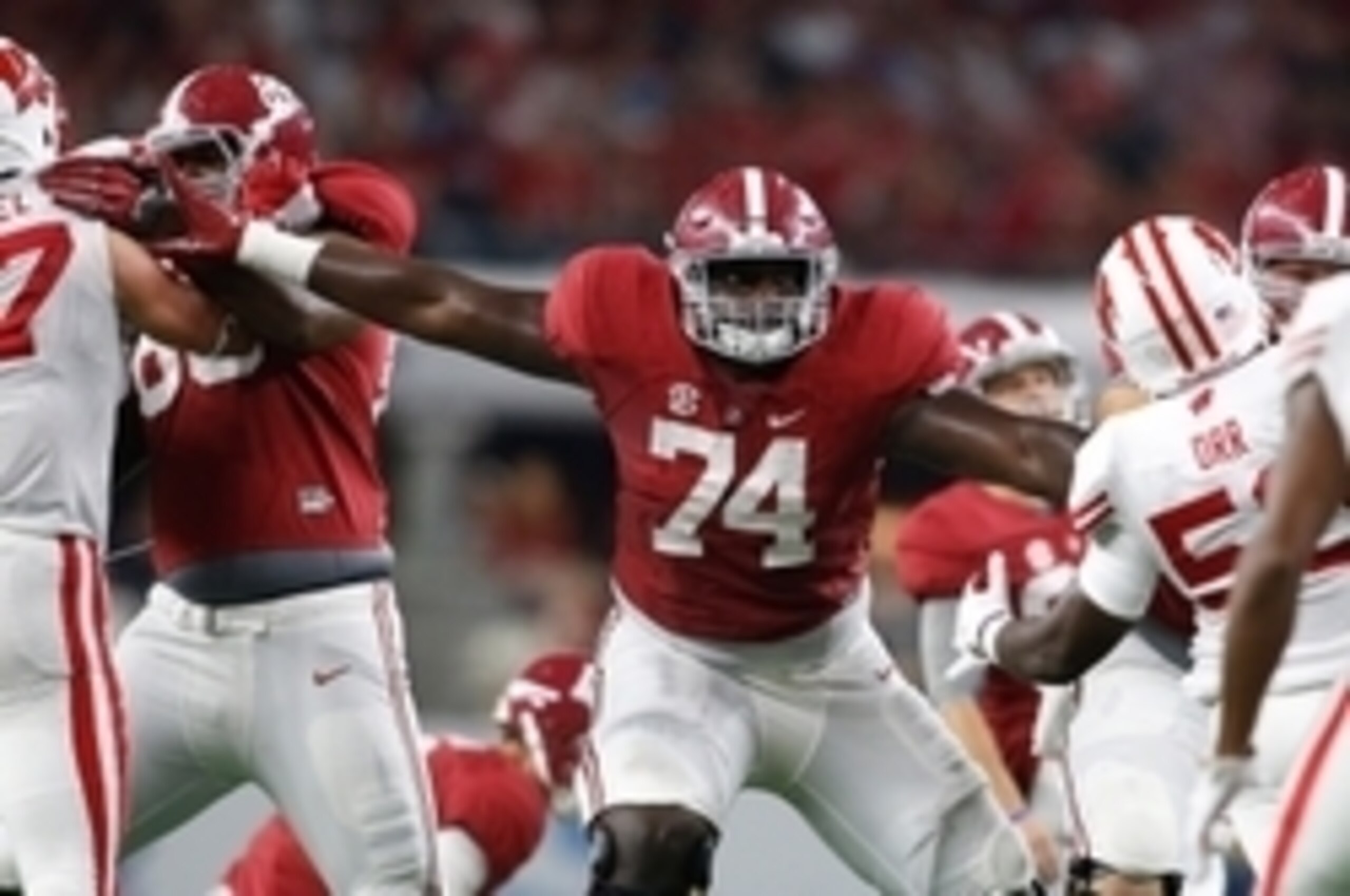
While a major talking point is that 12 Ohio State players were drafted in the 2016 class, Alabama's mark of seven, good for the fourth program in terms of volume, is worth mentioning, too. All of their selections—Rimington Trophy-winning center Ryan Kelly, SEC Defensive Player of the Year linebacker Reggie Ragland, Heisman Trophy-winning running back Derrick Henry, All-American defensive lineman A'Shawn Robinson, defensive lineman Jarran Reed, cornerback and returnman Cyrus Jones and running back and returnman Kenyan Drake—were top-75 draft choices.
Even despite those losses, the 2017 Crimson Tide draft class may reach double-digit prospects drafted. Four of the best seniors returning to college football are defensive lineman Jonathan Allen, pass-rusher Tim Williams, tight end O.J. Howard and safety Eddie Jackson.
After Howard's 208-yard game in the national championship against Clemson, which earned him MVP honors for his effort, expect offensive coordinator Lane Kiffin to go to his giant pass-catcher more often in 2016. With Robinson, Reed and others now freeing up snaps on the defensive line, rotational players like Allen and Williams should earn full-time roles in the coming season.
The Crimson Tide have three other NFL-types on their defensive line in Daron Payne, Dalvin Tomlinson and Da'Shawn Hand. Bo Davis, whose first season with the team was in 2014, recently resigned as the team's line coach, but Karl Dunbar, who spent time in the NFL between 2006 and 2015, will replace Davis, per Matt Zenitz of AL.com. With a professional coach guiding highly talented potential prospects, assume their development as an overall unit is kicked up a notch.
Four other prospects of note are Cam Robinson, who might be the best offensive tackle left in college football; Ryan Anderson, a talented outside linebacker; Reuben Foster, who might have been better than Ragland at inside linebacker in 2015; and Marlon Humphrey, who looks to be the next cornerback drafted in a long line of Nick Saban's proteges.
An Improved Pass-Rushing Class
3 of 5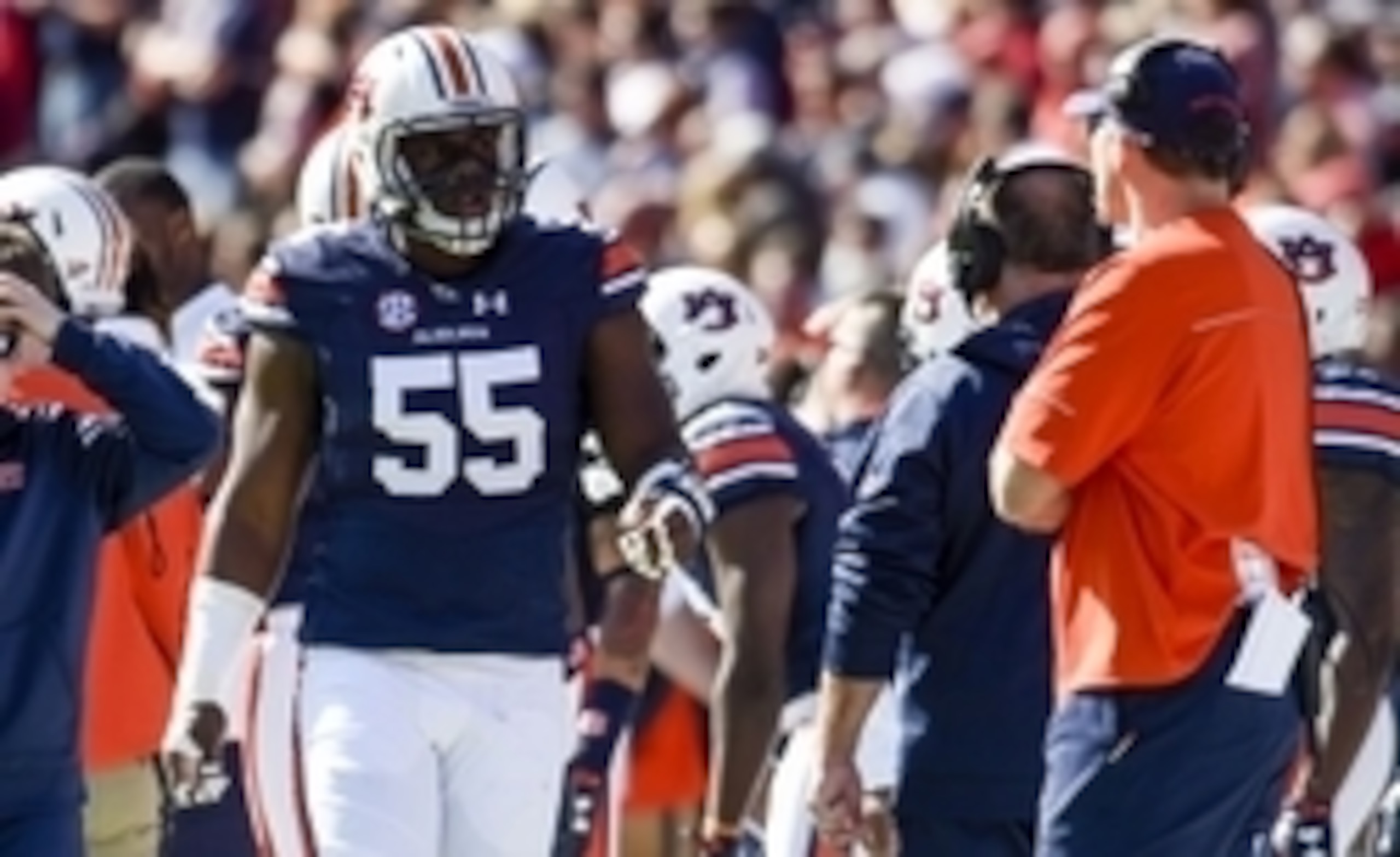
Last year's draft class wasn't great for pass-rushers. Two defensive ends were drafted in the top 10, with Joey Bosa of Ohio State going to San Diego with the third overall pick and DeForest Buckner of Oregon going to San Francisco with the seventh-overall pick. Both landing in 3-4 schemes, they are slated to play 5-technique defensive end in base looks and to kick inside to 3-technique for nickel and dime downs.
Leonard Floyd, who was drafted ninth overall by the Chicago Bears after a trade up, showed up to the combine at 6'6" and 244 pounds. While Floyd is tabbed as a true pass-rusher, he was moved to an off-the-ball linebacker role during his final season at Georgia, and he has a Dion Jordan and Manny Lawson feel to his game.
The first true pass-rusher drafted who is projected to play a true pass-rushing role was Shaq Lawson of Clemson, the final pass-rusher drafted in the first round. At 19th overall, he landed in the hands of Rex Ryan's Buffalo Bills.
Typically, when a draft class is significantly strong or weak at a specific position, the next draft class is the inverse. This rule, at least on paper, looks to be true for the 2017 pass-rushing talent pool.
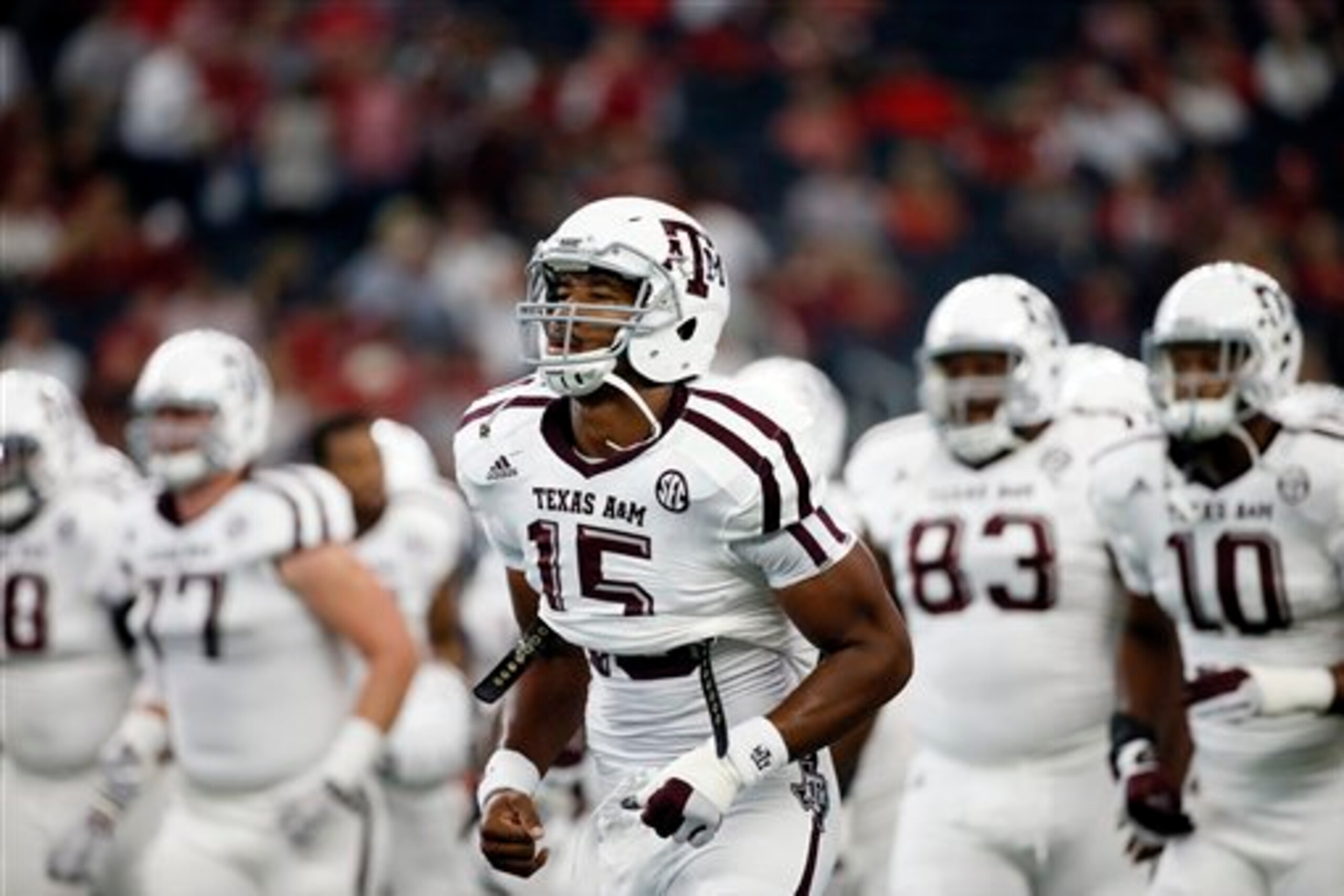
Auburn's Carl Lawson, Alabama's Tim Williams, Texas A&M's Myles Garrett, Louisville's Devonte Fields and Missouri's Charles Harris all have first-round potential as pure pass-rushers. Tennessee's Derek Barnett and Alabama's Jonathan Allen are also first-round projections at this point as Michael Bennett-style inside-outside pressure players.
With sleepers like Ohio State's Sam Hubbard, Boston College's Harold Landry, Illinois' Dawuane Smoot and Rutgers' Kemoko Turay lingering, the 2017 pass-rushing class has the potential to be the best since 2011, when pro bowlers Von Miller, Aldon Smith, J.J. Watt, Robert Quinn, Ryan Kerrigan, Cameron Jordan, Muhammad Wilkerson and Justin Houston were all brought into the NFL in one fell swoop.

.jpg?w=2560 "LA Premiere of \"Chad Powers\"")
Bounce-Back Players
4 of 5
Some big-name players, like Auburn's Carl Lawson and Clemson's Deshaun Watson, have been labeled as "injury-prone" over their college careers, but there are four names who stand above the rest as potential NFL prospects who lost the majority of their 2015 seasons due to health.
If not for an ACL injury, defensive lineman Eddie Vanderdoes could have pushed UCLA from eight to nine drafted prospects in 2016, good for second in the country. The 21-year-old is best known for summer transfer from Notre Dame before he ever played a down for the Fighting Irish, but the former blue-chip recruit has Freshman All-American honors and three years of starting experience under his belt now. In 2015, he posted two tackles for a loss in his one healthy game of the season.
Two years ago, against Utah, Oregon tight end Pharaoh Brown sustained a brutal non-contact injury while running through the Utes end zone. Visually, it was similar to the injury Jaylon Smith, the Dallas Cowboys' second-round linebacker, had in his Fiesta Bowl performance.
Brown will finally play his senior season in 2016, and he participated in the Ducks' spring game. If not for injury, his on-field talent would have ranked him first out of all tight ends in this past draft class.
As a sophomore in 2014, James Conner of Pittsburgh was an All-American running back. In the 2015 season-opener against Youngstown State, though, he tore his MCL in his right knee, ending his year. Later in 2015, it was announced that Conner was diagnosed with Hodgkin lymphoma.
Conner responded with a statement that included, "I will play football again." He has since began working with the team, and appears on pace to play with Pittsburgh in 2016.
Despite losing star receiver Mike Williams in 2015, Clemson still made it to the national championship game. Williams could have been the first wideout off the board for this past draft class, one thin at the top in pass-catchers, but his freak accident neck injury involving the Tigers' goal post ended his campaign in September.
Everyone is rooting for all four players to recover from their health concerns, as they hopefully get back on the track to success.
The Return to the Ground Game
5 of 5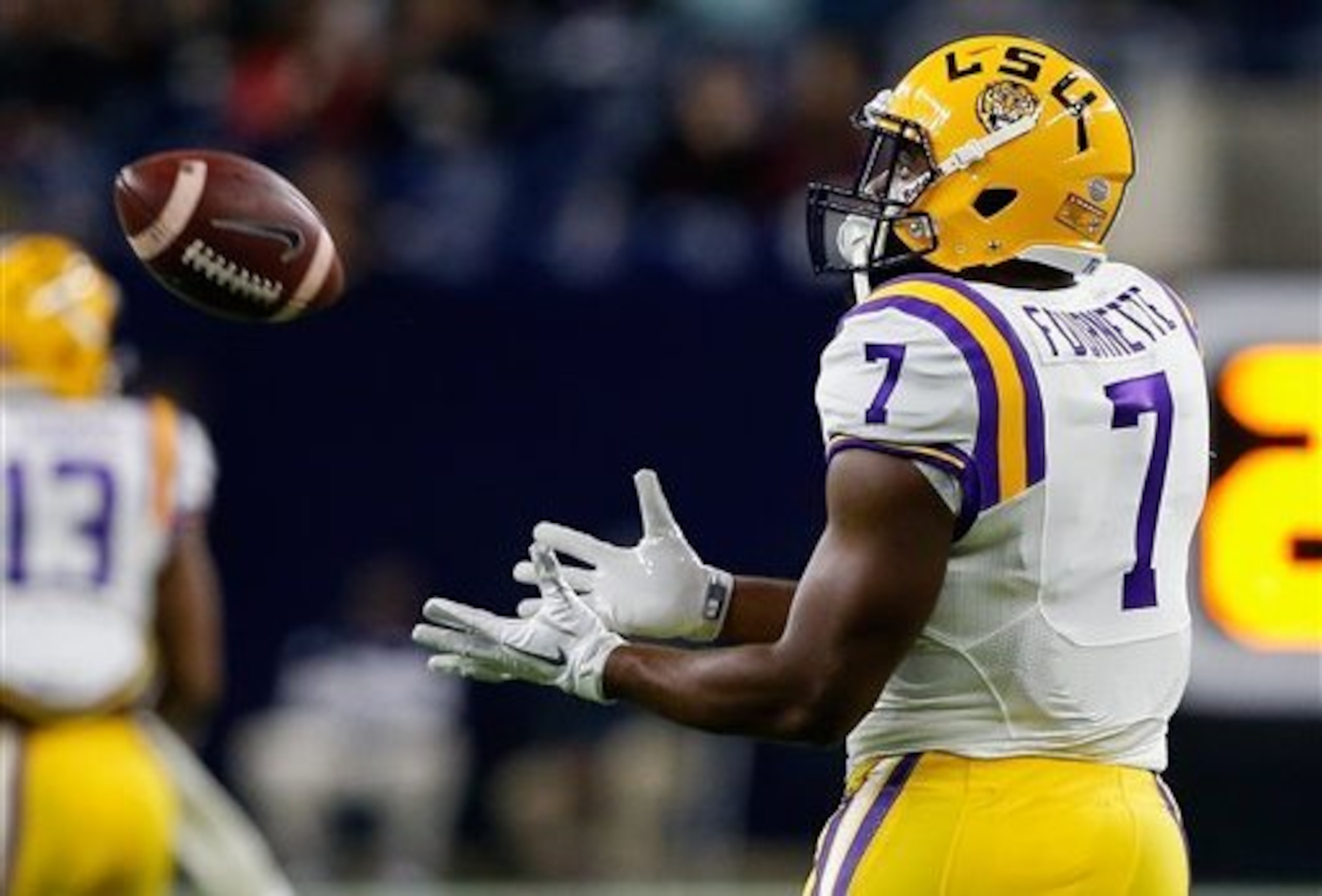
In a league where average quarterbacks with less than one season of starting experience are awarded contracts of nearly $20 million per season, the NFL's focus on the ground game may reemerge. We already see franchises trying to get smaller at linebacker with the new "moneybacker" position that is gaining steam after Deone Bucannon's success with the Arizona Cardinals.
How can teams combat tweener pass-rushers and hybrid linebackers who are getting smaller and faster by the season? Running it up the gut. Maybe the Dallas Cowboys, who drafted running back Ezekiel Elliott fourth overall and have dumped investments on the offensive line, are planning for the post-Tony Romo Era, but with a different spin.
If the NFL is going to once again put a premium on the running back position, this is the class that will gauge their interest. Leonard Fournette of LSU is viewed as the consensus top running back prospect in college football, and, early in the season, he was the Heisman Trophy favorite, not Derrick Henry of Alabama, who won the award and was drafted 45th overall by the Tennessee Titans.
Other top names at the position include Christian McCaffrey of Stanford, an all-around back and Heisman finalist; Dalvin Cook of Florida State, who is up there with Fournette as the best pure runner in the class; and Royce Freeman of Oregon, who will be compared to Jonathan Stewart often over the next 12 months.
When players as talented as Nick Chubb of Georgia, Samaje Perine of Oklahoma and James Conner of Pittsburgh are afterthoughts, it speaks to the strength of the group.
.jpg?w=2560)


.jpg?w=2560 "Landing Spots for Trade Candidates 📍")