3 Reasons Behind Nico Rosberg's Strong Start to 2016 Formula 1 Season
And there we were thinking the 2016 Formula One season would be a fight of the ages between Lewis Hamilton and Sebastian Vettel.
Throughout those long, dark winter months, the thought of the two most successful drivers in the sport's recent history—one in the gleaming silver of Mercedes, the other in the hallowed scarlet red of Ferrari—stimulated many an F1 enthusiast.
With the Prancing Horse galloping close behind the Silver Arrows, it was difficult to envisage a scenario where Hamilton and Vettel wouldn't engage in an exclusive battle over the course of a 21-race campaign.


But one of the support acts has upstaged the stars of the show.
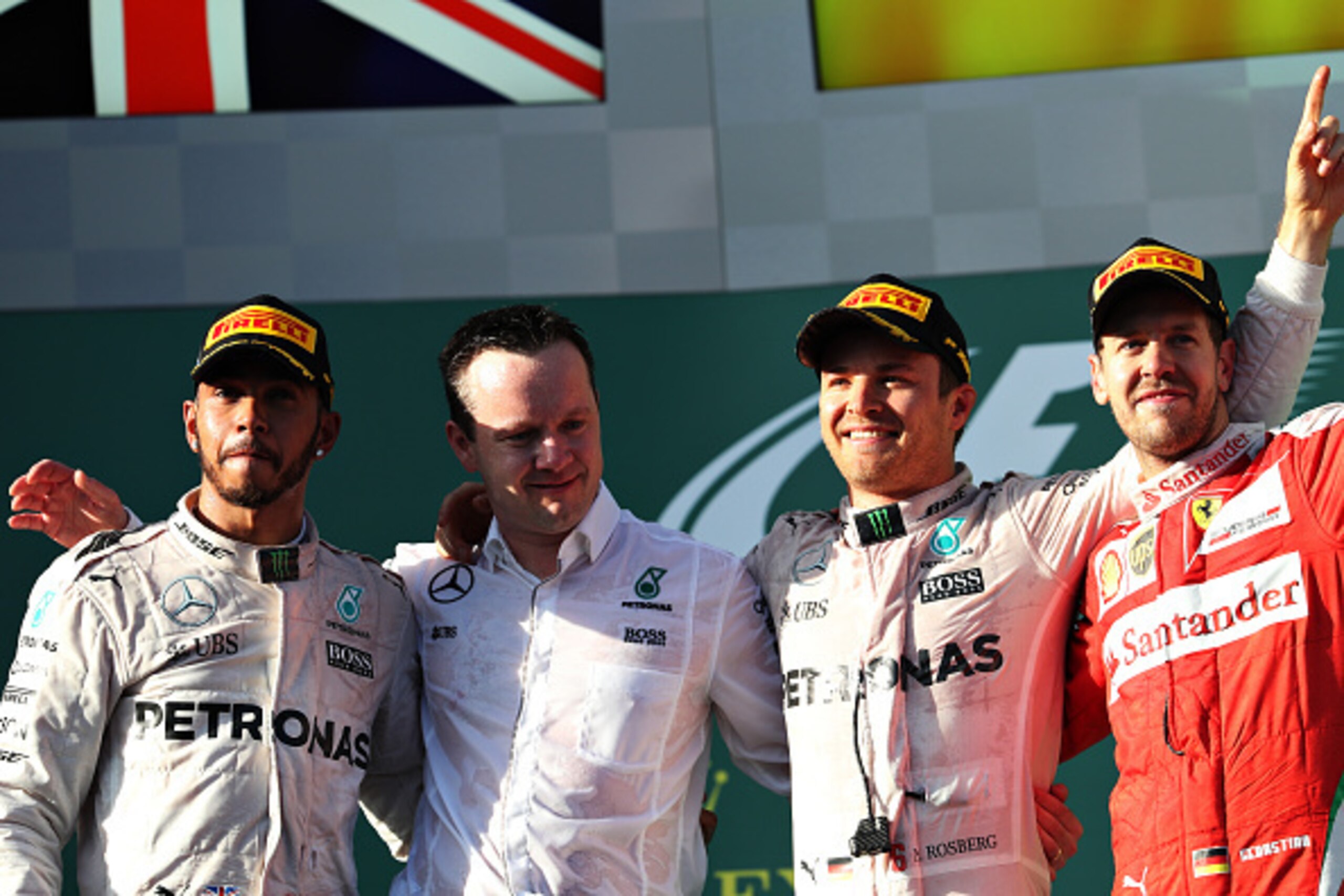
Despite losing out to Hamilton in the all-Mercedes affairs of 2014 and '15, it is Nico Rosberg who currently leads the drivers' standings after winning each of the opening three races in Australia, Bahrain and China and extending his career-best winning run—which began at last November's Mexican Grand Prix—to six.
Having extracted a maximum of 75 points from the first month of the season, Rosberg is already 36 ahead of Hamilton and a further six ahead of Vettel, both of whom face the challenge of hunting down the championship leader before it's too late.
So how has Rosberg, beaten in commanding fashion by his Mercedes team-mate for much of the last two years, suddenly found himself in such a comfortable position? Here are three reasons behind his near-perfect start to 2016:
Several slices of luck
For the first five hours of the new season, things weren't exactly going to plan for Rosberg.
He had damaged one of Mercedes' new noses after clouting the barrier in the wet second practice session in Australia, before running off track on his very first lap under the elimination-style qualifying format and requiring two separate attempts just to secure his customary place on the front row of the grid.
Ever since he lined up alongside Hamilton on Sunday afternoon at Albert Park, however, everything has gone his way.
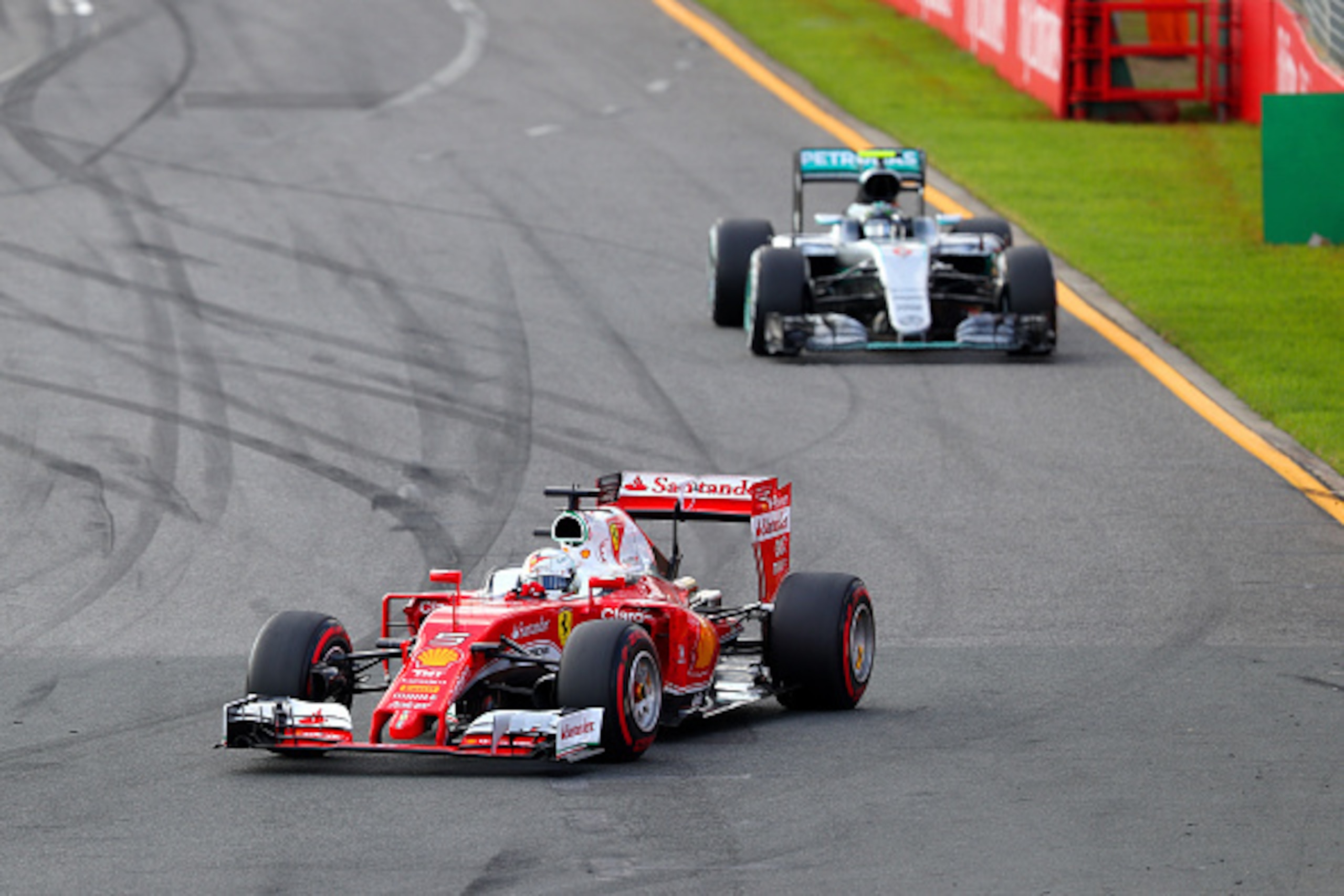
His mistake of locking up at Turn 1 as the Mercedes drivers were ambushed by the Ferraris had the bonus effect of sending his team-mate wide and immediately out of race-winning contention, with Rosberg fortunate to avoid a puncture after Hamilton's front wing made slight contact with his rear-left tyre.
Sebastian Vettel's strategic error of retaining the super-softs following the red-flag stoppage meant Rosberg only had to stay within touching distance of the four-time world champion to be assured of victory, and Ferrari's frailties also helped him win in Bahrain.

Vettel's engine blowout on the formation lap saw one challenger eliminated before the race began, and the remaining two disappeared soon after as Hamilton and Kimi Raikkonen made poor starts, the former assaulted by Valtteri Bottas at the first corner for good measure.
But even that was nothing compared to the chaos of China, where Rosberg's opponents fell over themselves in almost comical fashion.
Nailed to the back of the grid after an engine problem in qualifying, Hamilton was collected on the opening lap by Felipe Nasr, who was busy trying to avoid Raikkonen, who in turn was limping back to the pits after colliding with Vettel.
And the hopes of the only other driver capable of providing a semi-serious challenge to the No. 6 car, Daniel Ricciardo, evaporated after just three laps, when his Red Bull suffered a puncture on the back straight.
Hamilton—who has unfairly been accused of taking "his eye off the ball," as F1 journalist Kevin Eason told Sky Sports—has been particularly eager to point out his team-mate has benefited from the misfortune of others, telling CNN's Tom Sweetman how the German has "had pretty much a breeze" thus far.
Yet Rosberg surely deserves credit for capitalising on all those incidents and for not allowing himself to be dragged into the madness.
A happy end to 2015
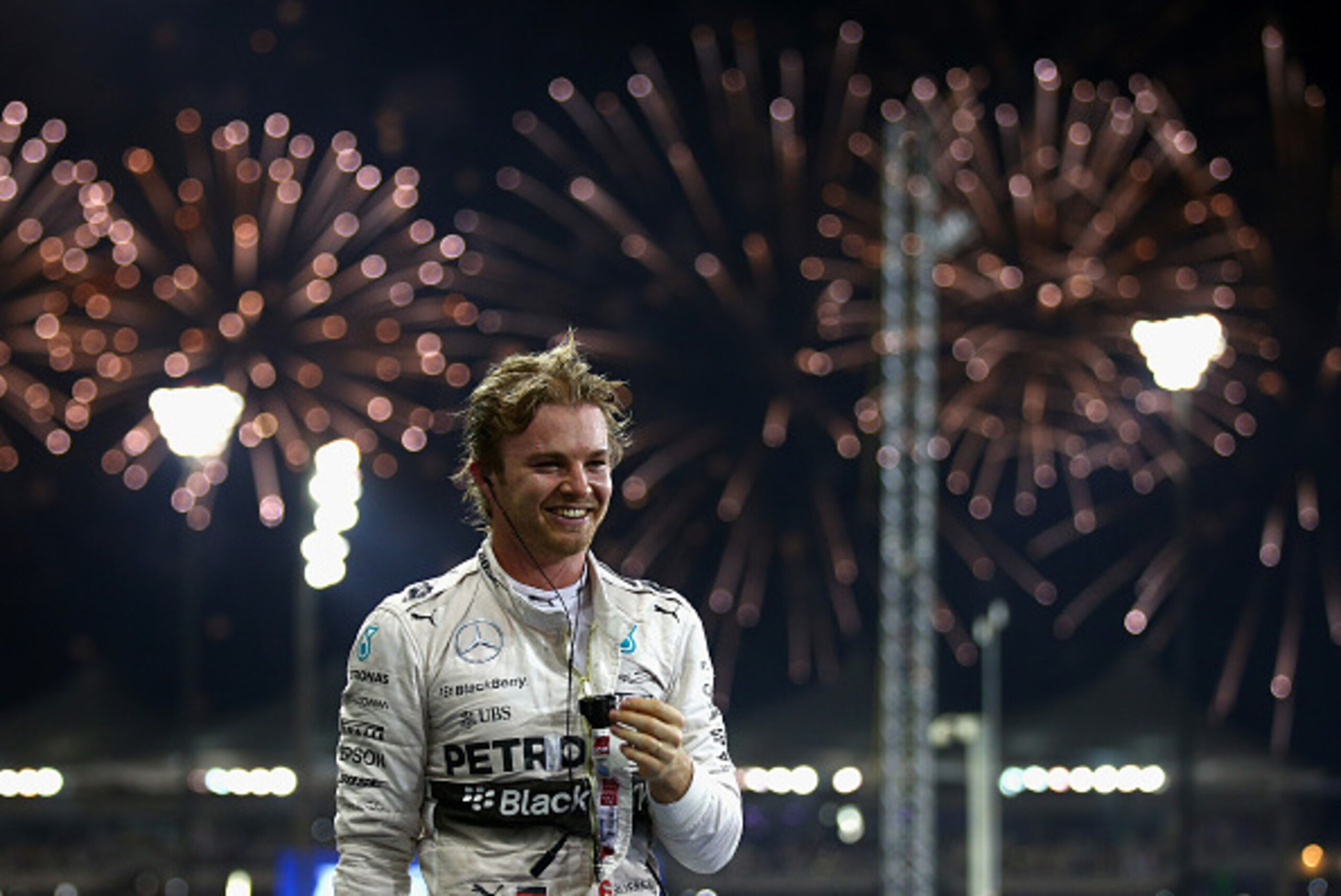
At the time, Rosberg's victories in the final three grands prix of 2015 were dismissed as mere footnotes at the end of a chapter in which Hamilton cemented his greatness.
As impressive as his performances were in Mexico, Brazil and Abu Dhabi, the lingering suspicion was they were simply a case of the No. 2 driver having a little fun after his Mercedes team-mate had completed the serious business of securing a third world championship.
But with his career-best winning streak bleeding into this year, the importance of those three "non-championship" races is becoming increasingly obvious.
Throughout that period, it was largely forgotten the final month of last season was the first time in two years—35 races to be precise—that Rosberg could compete without the stresses and strains associated with a title fight.

Rather than concerning himself with points gaps and the positions of his championship rivals, he was allowed to drive with an increased sense of freedom and rediscover his enjoyment of racing with little fear of the consequences.
That explained why Rosberg, once alarmingly submissive in direct combat with Hamilton, was refreshingly aggressive off the line in Mexico and Brazil and beat the No. 44 car to both pole and the win at Yas Marina—a venue where Hamilton is often formidable—with the return to winning ways providing a much-needed boost of confidence.
Confidence he has clearly carried into the early weeks of 2016.
It's now or never

As noted by F1 journalist Peter Windsor, Rosberg was among the two drivers who evaded the Melbourne Walk on the morning of the Australian GP, where the great and the good of the paddock normally spend several minutes signing autographs and posing for pictures upon their arrival at the circuit.
It offered a very early indication of the approach he has adopted for this season and how he is prepared to act a little more selfishly—no interference, no distraction—in what could be his last chance of becoming a world champion.
Despite telling Sky Sports' James Galloway of his confidence "there is going to be many more years to go here at Mercedes," his future at the team remains relatively uncertain after Toto Wolff implied Mercedes are willing to bide their time before offering Rosberg a new deal for 2017, per Autosport's Ian Parkes.
Rosberg's form in the opening month of 2016, as well as his seemingly healthier relationship with Hamilton—settled rather than simmering at this stage—would suggest a contract extension is edging ever nearer.

But even if he does remain with the Silver Arrows for an eighth season, will Mercedes still be the team to beat in 2017?
On the evidence of their progress across the V6 turbo era, Ferrari are not going to disappear, and with next year's proposed regulation changes set to lead to an even greater emphasis on downforce, Red Bull—who have long been recognised as the best chassis designers in F1—will be offered a route back to the top.
What we are currently witnessing, then, is a driver with little consideration for the future who is fully aware this may be his final opportunity to fulfil his potential and is utterly determined to make the most of it.



.jpg?w=2560 "Latest Peyton-Colts Rumors")
.jpg?w=2560 "Chiefs, Steelers Eye WR Trades")