The Growing Problem of Golf and Its Olympics Irrelevance
In the 1,224 days since I wrote “Why Golf Shouldn’t be in the Olympics,” my opinion has since been significantly bolstered. Many of the tensions I highlighted in 2012 are coming to the fore, and they will only continue to do so as the August competition in Rio de Janeiro approaches.
Forget about Zika or the debacle of course construction and consider this: In the past week, three high-profile golfers have backed out of the Olympics citing variations on the theme of “scheduling conflicts,” which is exactly what many others, including myself, said would happen back in 2012.
Adam Scott released a statement opting out of consideration for the Olympic team, stating the decision was due to scheduling conflicts "and other commitments, both personal and professional."


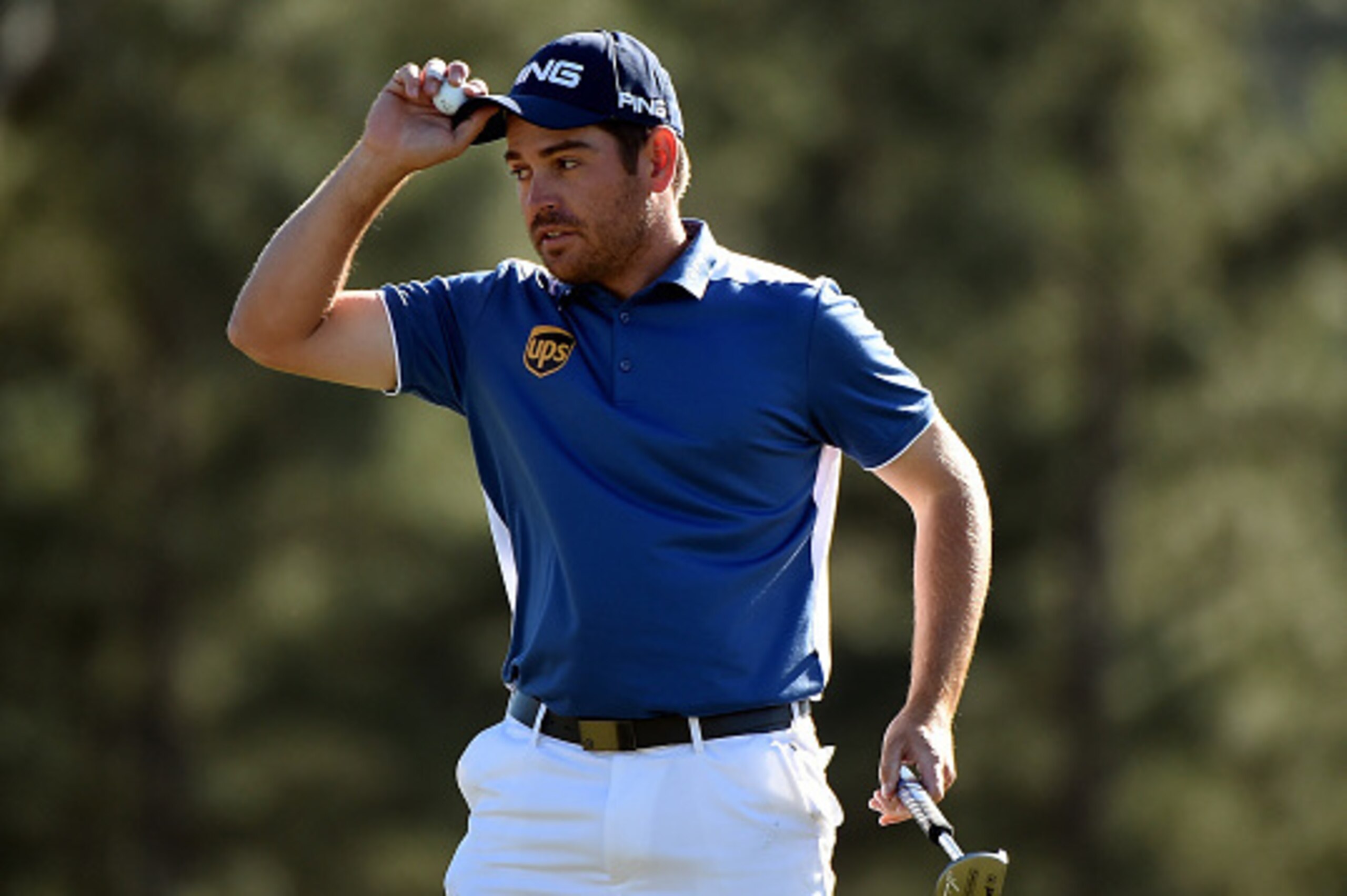
Vijay Singh said, “No thank you,” last week, citing concerns over scheduling and the Zika virus. And South African Louis Oosthuizen is taking a pass stating, "I have always represented South Africa with pride so I didn't make my decision without a great deal of thought." 2010 British Open winner Oosthuizen said in a statement, "I would like to wish our golfers and all other athletes competing in Brazil all the very best for success.
In other words, those are three big names, three two-man team shoe-ins who are saying, “We’re not interested.”
It’s not a good look, and these are just the guys who are forward-looking and honest.
A straw poll of the players interested in heading to South America for a stroke play competition amid a five-week stretch that includes the U.S. Open and the British Open would certainly reveal that those men are not alone in their sentiments. We haven’t even made it to the heart of the golfing calendar, when players will begin feeling fatigue and the prospect of Olympic competition will seem even less appealing.
Certainly, we can expect that the number of players who are saying “Don’t pick me” will rise before the Aug. 5 start of the Olympics.
Australian swimming legend Dawn Fraser posted a message about Scott's announcement on Facebook, per Reuters (h/t the New York Times):
"Very sorry to hear that Adam Scott cannot fit it into his schedule to play for Australia at the Olympics. Well done, Adam... great to put your country on hold so that you can fulfill your own schedule. How much money do you want in life? Not showing much for your country... I guess working three jobs a week to secure my place as an Olympic swimmer has given me the strength to say what I feel about sportsmen and women that do this.
"
Which highlights an important point: Unless players are filled with some sort of overwhelming nationalistic spirit, top players are not going to be keen to compromise their U.S. Open and Open Championship performances to chase gold medals.
Of course, it’s an entirely different situation for say, Adilson da Silva of Brazil and Miguel Tabuena of the Philippines, who won’t be participating in major championships.
Or is it? As those players, and other non top-tier golfers who aren’t in the major fields, will be chasing dollars and status on various tours—far more important quantities to most professional golfers than medals, it seems.
I want to now examine the specific issues I outlined in 2012 (not because of any brilliance on my part), but as an illustration that the points are still relevant and without rebuttal.
I said:
"Olympic Golf Will “Dilute the Majors”
"
Last week, newly-ordained Ryder Cup captain Tom Watson said that he felt Olympic Golf will “dilute” the four major championships. This is both as a function where the Olympics fall on the calendar—between the Open Championship and the PGA—and the fact that professional golf already has four “pinnacle” events during the same relative period of time. Jamming another “significant” event into top professionals' already-overburdened summer schedules adversely influences the majors.
The reality today: It seems that the possibility of the Olympics adversely affecting golfers' major play and preparation (i.e. scheduling conflicts), has pointed out that the crammed calendar is a real issue.
I said:
"An Olympic Triumph Should Be the Summit of an Olympic Athlete’s Career
"
Where would a gold medal really rank for Woods, who is already a decorated professional golfer? The Olympic games ought to be a competition amongst amateur athletes, for whom the gold medal is the absolute pinnacle of their careers, not simply another item in the trophy case.
The reality today: Fraser’s criticism points out the truth of the above. For her, the Olympics was the greatest sporting moment(s) of her life. For Adam Scott, major glory and PGA Tour success are. The Olympics matter most to professionals whose sports have little exposure and amateurs in similar positions. It could be argued that only professional basketball offers up its biggest stars for a competition they care about.
I said:
"There Are Already International Team and Individual Competitions in Pro Golf
"
Two pretty adequate team competitions exist in men’s professional golf today. Perhaps you’ve heard of them?
The Ryder Cup and the Presidents Cup are all the team golf we really need. Why dilute the value of these fine international competitions with an additional spectacle of weaker players?
The reality today: The hype surrounding the most recent Ryder Cups is evidence of the strength of those competitions.
And from the stroke-play standpoint, this remains true:
"The four major championships and the World Golf Championship events constitute more than enough international individual stroke play tournaments. The strength of field is better in these events. Additionally, they mean more, and they pay.
"
I said:
""
Competing in the Olympics Doesn’t Matter to Pros
The following unbylined quote from Tiger Woods sums up the professionals’ take on Olympic Golf: "It would be great to have an Olympic gold medal...but if you asked any player, 'Would you rather have an Olympic gold medal or green jacket or Claret Jug...more players would say the majors.'"
Professional golfers do not need a tournament they don’t get paid for, or another item on their congested golfing calendars. Professional golfers care about playing in the Olympics about as much as professional soccer players do—that is, not very much. A significant portion of pros, including Ernie Els and Nick Faldo, think that Olympic Golf is the business of amateurs, not professionals.
The reality today: No real follow-up needed to this one.
I said:
"The Current Format Is Ridiculous
"
Even if you’re sold on the novelty factor of golf in the Olympics, there’s no doubt that the present format is patently absurd. 72 holes of stroke play, featuring the top 15 golfers in the world, but no more than two players beyond that number from any one country makes for a comically weak, long and boring event. Team match play is the sensible and significantly more entertaining option.
It’s also entirely laughable that many of the best players in the world, as clearly determined by the Official World Golf Ranking, as well as tour membership and money list rank, wouldn’t be able to play in the event because of the oversaturation of the United States, Great Britain and Australia.
For example, the 40th ranked player in the world may not be eligible for the tournament if he’s from the U.S., but the 500th player in the world would be competing alongside Rory McIlroy if he’s from, say, the Philippines.
The reality today: As the standings are shaping up, it’s clear that this is what you’ll see. In essence: a tournament with a not-quite WGC event calibre field.
And none of this is treason. If you believe an athlete ought to represent his country whenever s/he is able to do so, that’s well enough. But it’s becoming clear that nationalistic pride and patriotism is the only reason a top-tier touring professional would choose to compete in the Olympics. And for Olympic golf, which is making its return after a 100-plus year absence, this is as problematic as it seemed it would be in 2012.

.jpg?w=2560 "LA Premiere of \"Chad Powers\"")