
Best Scheme Fits for NFL Draft's Top Running Backs
The 2016 NFL draft commences on Thursday, April 28. While the fate of your favorite team will ultimately be determined on the field, it’s the players selected over the course of the three-day event who set the stage for what’s possible. Finding the right players and matching them with the perfect scheme will maximize production.
The running back position is deep with talent again this year, featuring several mid-round options who could grow into major roles early in their careers. Using CBS Sports’ board, we’ve identified the best scheme fits for the seven backs who rank in the top 100 picks. If their projections bear true come draft weekend, each of these players will be off the board by the end of Day 2.
Let’s jump in and take a look at what the top seven backs do well and where they fit across the league. I’ve included projected landing spots based on team needs and scheme.
Who would you like to see your team draft? Make sure to leave your thoughts in the comments section below.
Ezekiel Elliott: Zone-Blocking
1 of 7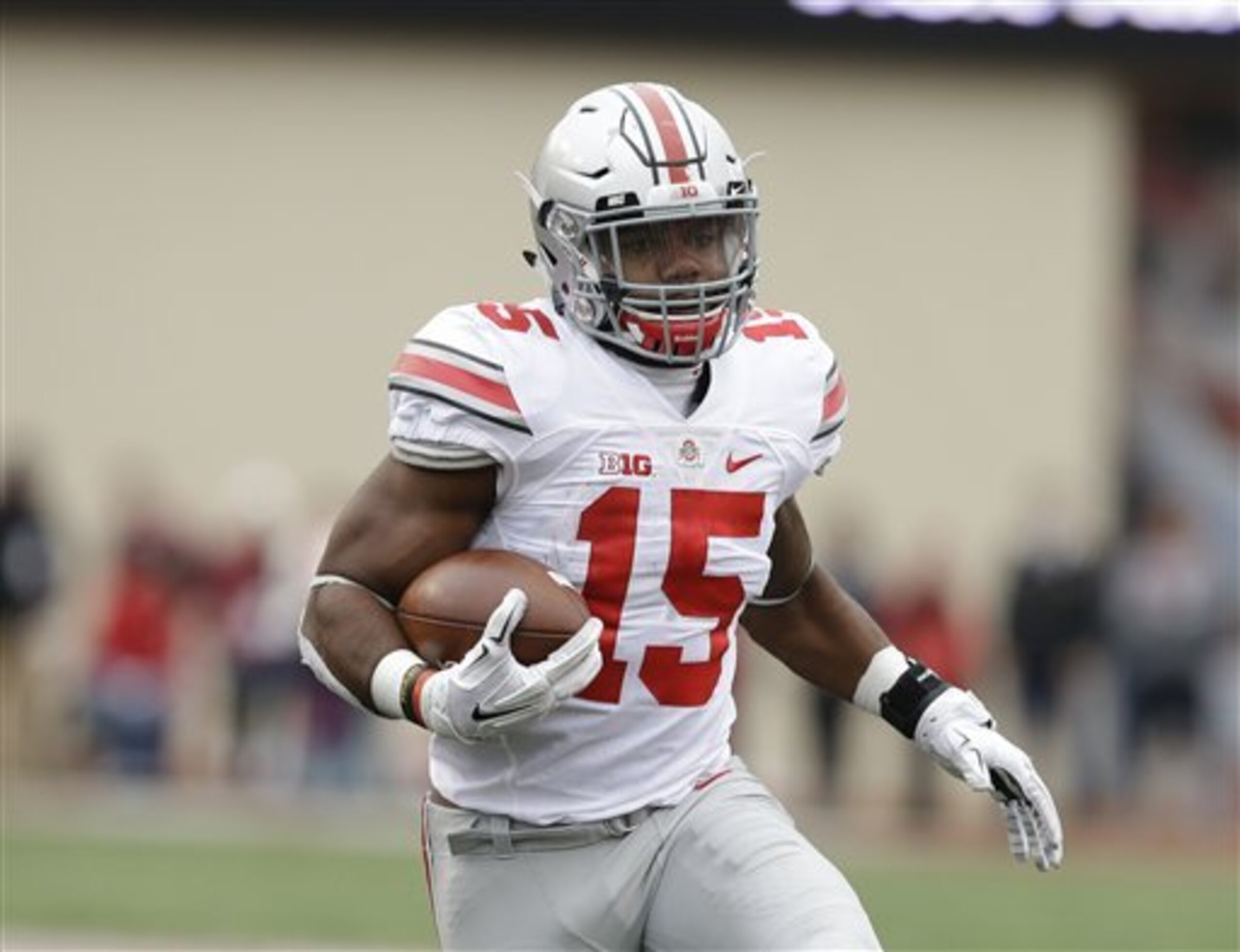
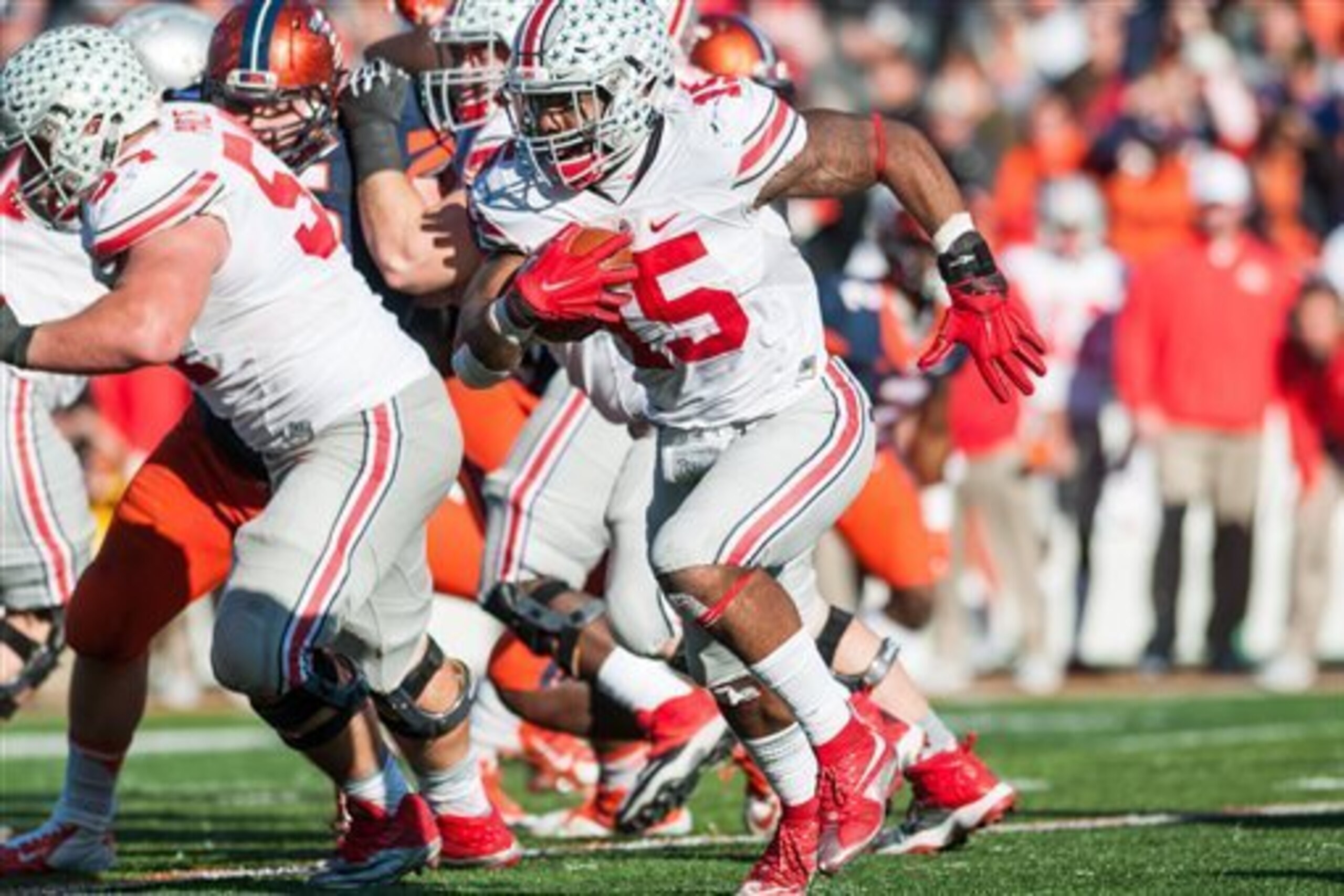
The top running back in the 2016 class is Ohio State’s Ezekiel Elliott. The 6’0”, 225-pounder was a workhorse for Urban Meyer’s Buckeyes the last two seasons. He finished his career with 3,961 rushing yards, 43 rushing touchdowns and an additional 449 receiving yards on 58 receptions.
Like Todd Gurley in 2015, Elliott brings a unique and special skill set to the table. He’s a phenomenal blocker and receiver out of the backfield to complement his ability to carry the rock. He has Pro Bowl potential as a rookie, as he always seems to fall forward after picking up a handful of yards.
Elliott’s ability to hit the big runs cannot be questioned, as he ran a 4.47 40-yard dash at the NFL Scouting Combine. He finished with seven runs over 47 yards in 2015, with six resulting in touchdowns. But his consistency gaining yards before breaking free will endear him to zone-blocking schemes.
His quick feet and elite vision help maximize his average yards per play while also minimizing the big hits he takes. He has experience in both inside and outside zone, so keeping him in a familiar scheme ensures his transition to the NFL goes smoothly.
Elliott is the best offensive playmaker in the draft. His range in the first round starts with the Dallas Cowboys and includes the Baltimore Ravens, New York Giants and Miami Dolphins.
Derrick Henry: Power Gap, Inside Zone
2 of 7
There is no comparable running back to Alabama star Derrick Henry. The 6’3”, 247-pound Heisman Trophy winner isn’t your typical bruiser who will play only on third downs or convert red-zone opportunities. Henry is a freight train once he reaches the second level of the defense and is nearly impossible for most defensive backs to bring down.
Coming from Alabama’s power-driven offense, Henry produced an NCAA-leading 395 carries, 2,219 yards and 28 touchdowns in 2015. It was just his first season as a starter, making his ascent into a star even more impressive.
Henry’s unique build does cause some concern, as his hips are high. This gives a large target area in the leg region for defenders to target. It also helps explain his limited short-area burst.
That’s not a major concern in a power scheme, though. Henry’s job is to press the line of scrimmage and draw in the linebackers until a lane starts to show. Once he sees it, he accelerates quickly and can break a big play in a flash.
The best situations for Henry will be those that rely on inside zone and power running schemes. The Carolina Panthers, Tennessee Titans and Chicago Bears are the top options in the late first round and early second round.
Devontae Booker: Zone-Blocking
3 of 7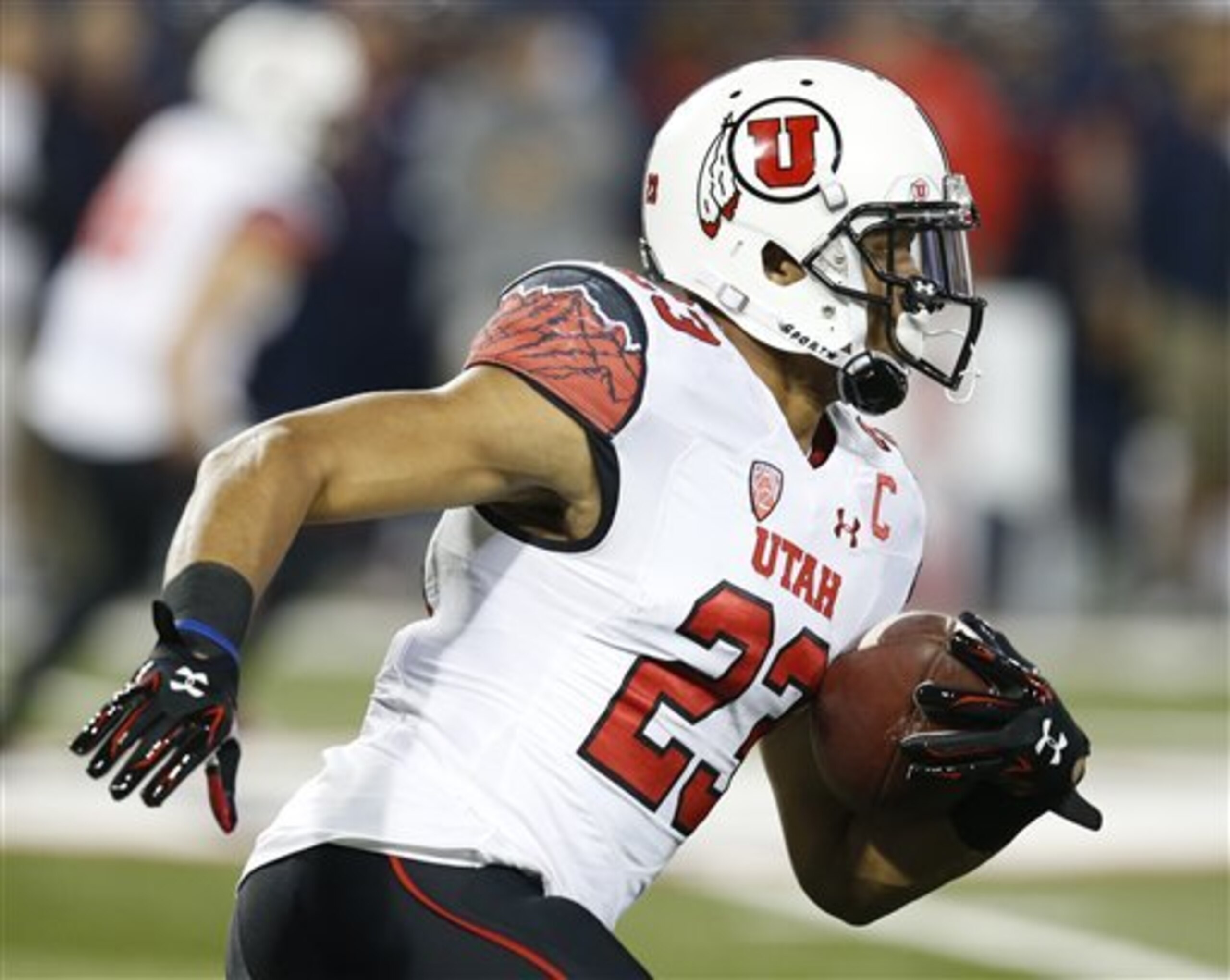
Rhythm runners like Utah’s Devontae Booker can prove to be valuable if an offense is willing to feed them opportunities. He was exceptionally productive for the Utes, finishing his two-year career with 2,773 rushing yards, 21 rushing touchdowns and an additional 622 yards on 80 receptions. He is a three-down back who is reliable in all phases of the game.
Although Booker is not explosive, he is reliable and consistent. His short-area quickness and great vision between the tackles maximize his overall average physical makeup. He is elusive yet powerful enough to handle a starting load in a zone-blocking scheme.
Booker is coming off a torn meniscus, so his stock could take a hit depending on his medicals. The second-team All-Pac-12 runner is worth the risk, though, as his talent will instantly impact an offense. Most running backs have a short shelf life, so utilizing Booker on a cheap rookie contract for four years has little financial ramifications but considerable upside for that cost.
The third round makes the most sense for Booker, given his injury. The Miami Dolphins, Dallas Cowboys, Indianapolis Colts and Seattle Seahawks should be interested in his services.


Kenneth Dixon: Balanced
4 of 7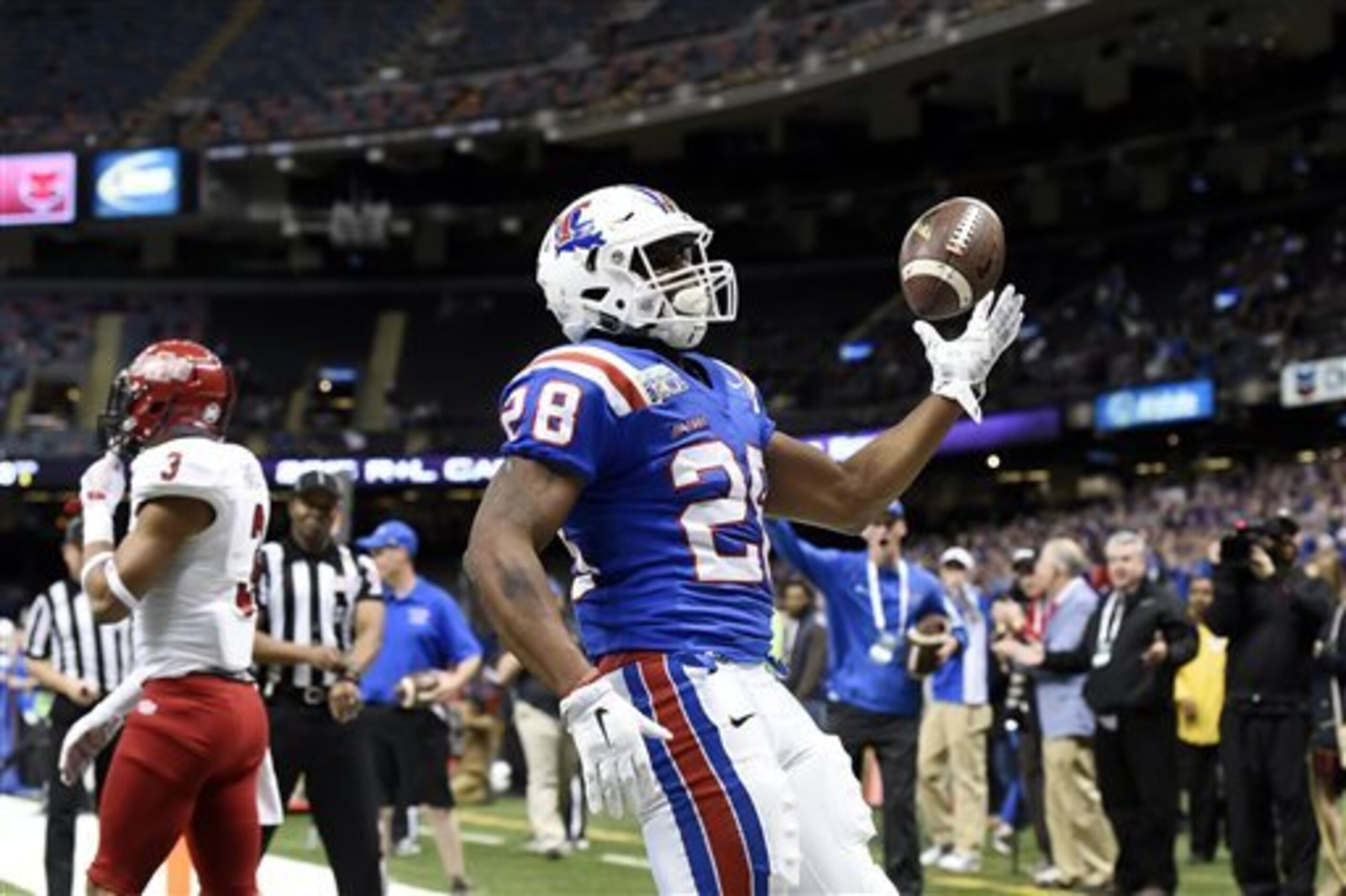
One of the most electric running backs in the class is Kenneth Dixon of Louisiana Tech. The 5’10”, 215-pound senior isn’t the most explosive player, but he is experienced and proved himself as a legitimate offensive weapon. Dixon is a capable runner and receiver threat out of the backfield in the physical mold of LeSean McCoy and Dion Lewis.
The NFL Scouting Combine helped capture Dixon’s skill set in the timed testing well. He’s a good athlete who relies on his quickness more than pure speed. He can force missed tackles and find more yards after contact because of his shiftiness. His times of 6.97 seconds in the three-cone drill and 11.5 seconds in the 60-yard shuttle were well above average, which the tape confirms.
Dixon may not be a starter at the next level, but he can be highly effective as a rotational back. He finished his career with 4,483 yards and three 1,000-yard seasons with 889 total touches. Getting him the ball quickly can lead to fireworks as he tortures defenders in the open field.
Since Dixon has experience playing in a balanced system that features both zone and power concepts, he’s able to fit balanced offenses. He’s capable of executing in either role effectively due to his quickness, good vision and decisiveness. Third-round fits include the Cleveland Browns, Baltimore Ravens and Chicago Bears.
C.J. Prosise: Balanced
5 of 7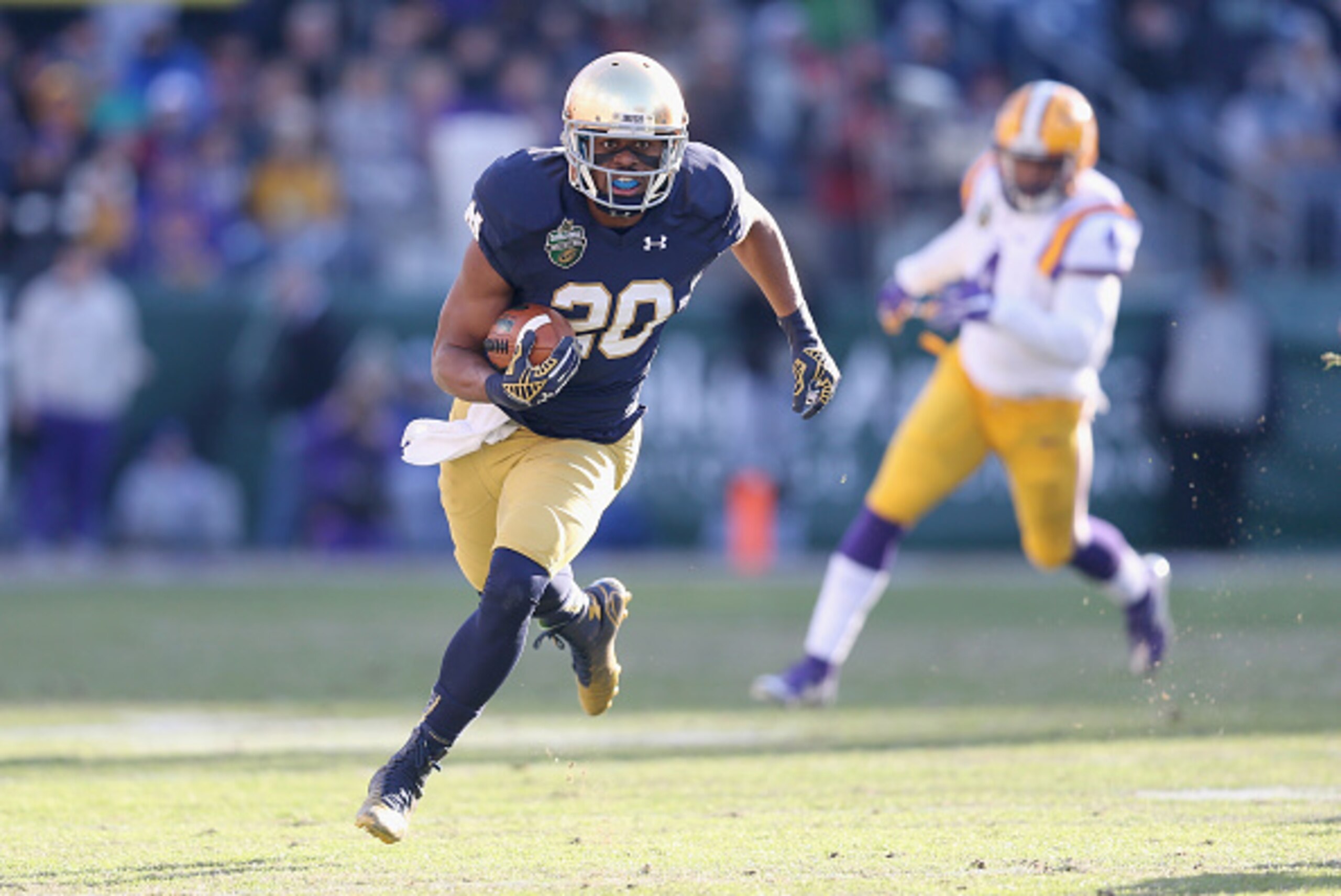
A surprising breakout player in 2015 was Notre Dame running back C.J. Prosise. The former wide receiver brings inexperience but also upside to the position. He’s the ultimate wild card in the class because of his low floor and relatively high ceiling.
A good athlete, Prosise tested well at the NFL Scouting Combine. His 4.48 40-yard dash, 35.5-inch vertical jump and 121-inch broad jump each ranked in the top 39 percent of any running back mark at the event since 1999, per Mock Draftable.
He flashed the ability to develop into a more nuanced but explosive back throughout his first year at the position in 2015. In 157 carries, Prosise finished with 1,029 yards and 11 rushing touchdowns. He’s also a legitimate receiving threat in the slot or out of the backfield. He caught 62 receptions for 896 yards and three touchdowns over the course of three seasons.
Since Prosise is so green at the position, he often has little idea of what he sees in front of him. He’s indecisive and lacks lateral burst, so he’ll have to improve upon his field vision and decision-making. That’ll be tough to do in the NFL where coaches want immediate gratification. That’s why an intriguing athlete like Prosise will need to be eased into a role and improve quickly.
The middle rounds are a good value for his upside, though. The Indianapolis Colts, San Francisco 49ers and Philadelphia Eagles make a lot of sense for him because they can vary the blocking schemes he sees.
Jordan Howard: Power Gap
6 of 7
The top power-only back in the 2016 class is Indiana running back Jordan Howard. One year after seeing Tevin Coleman go to the Atlanta Falcons in the third round of the 2015 draft, the former UAB transfer Howard had a stellar season for the Hoosiers. He finished the season with 1,213 yards and nine touchdowns in only nine games.
Howard is a big-bodied, strong runner who stands 6’0” and 230 pounds. He’s a brute between the tackles, proving to be a difficult target for undersized defenders to bring down. However, his punishing style is concerning as it invites big hits and could lower his durability.
Howard could either cut some weight to become more laterally explosive and evade tacklers or serve as a LeGarrette Blount-type back who thrives in a specific role. There’s value even in a rotational role, since Howard is not just a plodder who will average three yards per carry. He churns his legs hard and has good vision on power plays.
As defenses get smaller to perform better against passing attacks, Howard could be a great change-of-pace back. He’ll force safeties to drop into the box in an effort to slow him.
The third round would be a reasonable place for him to be selected. The Detroit Lions, Oakland Raiders and New England Patriots would be solid fits for Howard.
Alex Collins: Power Gap
7 of 7
The Arkansas Razorbacks have built an effective power-run scheme under head coach Bret Bielema since he took over the program in 2013. He acquired several massive hogs to create clear rushing lanes to improve the Razorbacks’ SEC standing, and it’s been effective, returning the program to a more successful level.
Alex Collins split time with Jonathan Williams in 2014 and then took over the position in 2015 as Williams missed the year with a foot injury. Collins was terrific in his expanded role, finishing with 1,577 yards and 20 touchdowns this past season. For his career, he totaled 3,703 yards and 36 touchdowns over three years.
The 5’10”, 217-pound mauler is a bit of a plodder, showing slow feet whenever he has to change directions. If the hole is open, he’s good at taking what is there and maybe breaking a tackle or two to earn a few more yards. But he’s not a creator who will start at the next level.
Collins tested poorly at the combine, with noticeably low explosion scores on his jumps. Fortunately for him, power-gap running schemes won’t ask him to exploit his weaknesses. He’d fit well in a tandem with a more dynamic lead back.
The Cleveland Browns, Detroit Lions and Green Bay Packers would be intriguing options in the third or fourth round.
All stats used are from Sports-Reference.com.
Ian Wharton is an NFL Featured Columnist for Bleacher Report.

.jpg?w=2560 "LA Premiere of \"Chad Powers\"")