Hall of Fame Worthy? 20 Athletes with Short but Dominant Careers
Placing an athlete in the Hall of Fame isn't an easy task. Countless names have been snubbed over the years for a variety of reasons.
One category that will be debated until the end of time is athletes who had short but dominant careers. Should they be in the Hall in Fame? If so, why?
We’ve seen brief careers by the likes of Gale Sayers and Yao Ming result in inaugurations. But for 20 other names, they haven’t been as lucky.
Using basketball, baseball, hockey, football and other professional sports as our guide, it was time to determine who should be in the Hall of Fame and who shouldn’t.
These are names who either changed sports as we know them or produced at such a high level they deserve to have a sense of immortality.
For the sake of consistency, we used a career spanning 12 years or less as the benchmark for this slideshow. Knowing that, let’s explore 20 dominant, but short careers, and figure out if those names should eventually be called into the Hall of Fame.
Mark Prior
1 of 20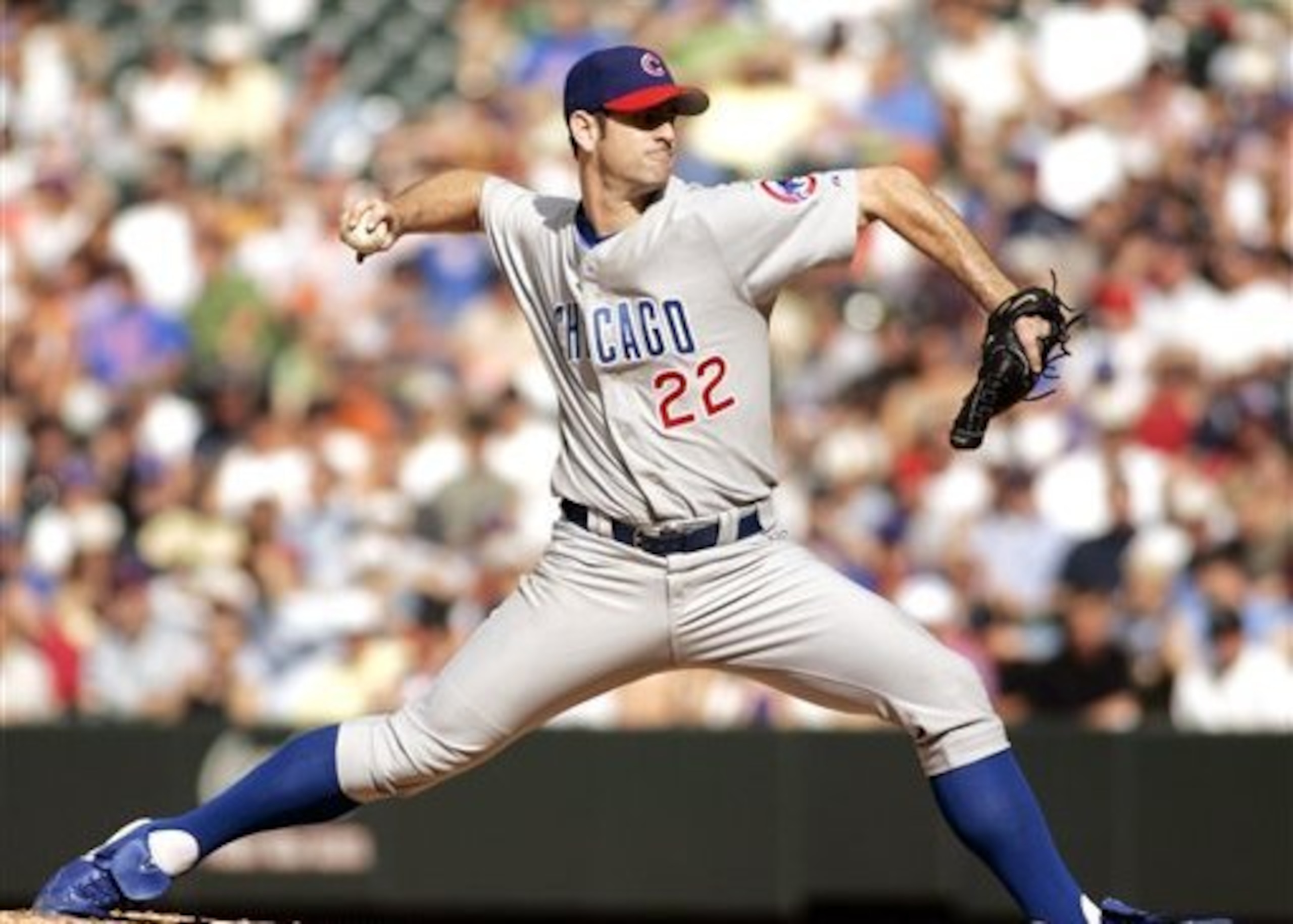
Mark Prior was a pitching prospect who had all the physical tools needed to change the game of baseball. He quickly became a stalwart—a beacon of hope for the Chicago Cubs. Prior was a guy this team could hinge its future on.
When he entered Major League Baseball in 2002, he was 22 years old. Prior went 6-6 that season, posting a 3.32 ERA to go along with 147 strikeouts.
This kid looked the part. He was sharp, had complete control of his stuff and overpowered hitters when he needed to. From that point on, Prior cemented himself as an ace.
The following season, he won 18 games, struck out 245 batters and topped it all off with an ERA of 2.43. But a nagging wave of injuries followed him around after that. Prior would only last three more seasons before his career came to an end.
He forged a few comeback attempts, but none were successful. So, in 2013, a man once considered to be a beacon of hope walked away from the sport for good.
Prior's final numbers looked like this: 42 wins, a 3.51 ERA and a strikeout ratio of 10.4 batters over nine innings of play. As ESPN noted in the article above, when he retired that ratio placed him behind only Randy Johnson.
Sadly, he doesn't deserve a Hall of Fame nod. However, if he had stayed healthy, we'd all be talking about his eventual trip to Cooperstown. Prior was that good.
Hall of Fame: No
Sergei Makarov
2 of 20
Sergei Makarov got a late start to his NHL career. Having said that, once he got onto the ice, he was an immediate powerhouse.
He was a 31-year-old rookie with the Calgary Flames during the 1990-91 season. His veteran presence—Makarov played in the Soviet League prior to his NHL stay—allowed him to step in and win the Calder Trophy from the jump.
That forced the NHL to change its rules when it came to handing out the league's version of rookie of the year, according to ESPN.com’s Pierre LeBrun.
LeBrun also raised another good point. Hockey’s Hall of Fame is about the sport in general—not just the NHL. With that in mind, Makarov needs to be in there. Between his Soviet League numbers and NHL totals, he scored a staggering 437 goals, per HockeyDB.com.
Hall of Fame: Yes
Bo Jackson
3 of 20
Bo Jackson made quite the living for himself bouncing between professional baseball and football.
He was a Hall of Fame-caliber talent who saw his playing career cut short after suffering a debilitating hip injury in 1990.
Jackson played 38 games with the Los Angeles Raiders. When you see that number, it's an upsetting total. There was so much potential there. Regardless, in 38 games he rushed for 2,782 yards and scored 16 touchdowns.
His MLB career with the Kansas City Royals was also focused on power and speed. Eight seasons in baseball—two of those occurred after his hip injury—turned into 141 career home runs, 415 RBI and 82 stolen bases.
Jackson was a star in every sense of the word. Had he not been injured, the Hall of Fame would have a lock in football, and Cooperstown may have called as well if he continued to produce big power totals.
He changed the way we perceive not only athletes, but their abilities as well. And for that reason alone, he should be in the Hall of Fame.
Hall of Fame: Yes
.jpg?w=2560 "Seahawks Chiefs Football")


Brandon Roy
4 of 20
For five seasons with the Portland Trail Blazers, Brandon Roy was really good. He made it to the All-Star Game three times and even won the NBA's Rookie of the Year trophy in 2007.
Degenerative knees cost Roy his chance at having an extensive career. He retired from the Trail Blazers after playing just 47 games over the course of the 2010-11 season.
When he left the team, Roy had averaged 19 points, 4.3 rebounds and 4.7 assists per game. He was building an incredible resume, where he seemed to get better with each passing season.
A last-ditch effort to make a come back with the Minnesota Timberwolves in 2012 was cut short after only five games, proving he wouldn't ever be able to sustain that scintillating level of play we all were accustomed to seeing.
Roy had enough talent to make a run at the Hall of Fame. The problem is, his resume didn't last long enough to warrant an induction. In any case, he should be considered one of the greatest Trail Blazers to ever do it.
Hall of Fame: No
Tony Conigliaro
5 of 20
Tony Conigliaro’s eight-year MLB career was a tragic, yet riveting, footnote in baseball history.
Coming up with the Boston Red Sox, Conigliaro turned out to be a natural talent. At age 19—his rookie season—the outfielder propelled 24 home runs, drove in 52 RBI and ended that season with .290 batting average.
He was well on his way to stardom.
At any time between 1965 and ‘67, Conigliaro could have been deemed a superstar. He hit the long ball, drove in runs, got on base and, most importantly, he kept on improving.
Tragedy came calling 95 games into the 1967 season. Conigliaro was drilled by a pitch in the head, per Larry Stewart’s Los Angeles Times.
That pitch wrecked his vision and forced him out of baseball for a year.
Conigliaro would fight his way back, logging three additional seasons of action before he was forced to retire at the age of 30 for good. Even with a bad eye, he still hit 62 home runs and drove in 222 runs over his final four seasons.
He never made it into the Hall of Fame, but he should have. Conigliaro proved not even a freak injury could stop him. There wasn't a single time he fell short of expectations.
Hall of Fame: Yes
Ralph Sampson
6 of 20
Ralph Sampson burst onto the scene with the Houston Rockets in 1983 and quickly found his footing. He spent the first two seasons of his NBA career logging 164 out of 164 possible regular-season games, becoming insanely productive in the process.
Sampson averaged 21.5 points and 10.7 rebounds per game during those first two seasons. And the years that followed weren’t horrible from a statistical standpoint either.
ESPN.com’s Neil Paine spoke about what made Sampson such a valuable asset: “Paired with Olajuwon, Sampson often played away from the basket with a more finesse-oriented style, attacking with his face-up game and mid-range shooting.”
It all went downhill after his third NBA season. Paine explained in greater detail: “But, in the 1986-87 season, Sampson hurt his knee while slipping over a slick spot on the court, the first of many injuries that ultimately would derail such a promising career.”
Sampson ended up playing a total of nine seasons—six of those hampered by injury. When he retired from the sport in 1992, he left the sport with 15.4 points and 8.8 rebounds per contest.
Those certainly aren’t Hall of Fame numbers, but again, injuries cranked those totals down a notch. Besides statistics, Sampson didn’t do enough to change the sport. And that is the main reason why he doesn’t deserve to go to the Hall.
Hall of Fame: No
Sterling Sharpe
7 of 20
The Green Bay Packers had a winner in Sterling Sharpe. Paired up with Brett Favre, Sharpe led the NFL in receptions on three separate occasions—and in receiving touchdowns twice.
Each season he played, he was ultra-productive. Sharpe’s seven-year stay with the Packers—before leaving football due to a neck injury—was nothing short of primo.
He broke the 1,000-yard receiving mark five times and, coincidentally, appeared in that many Pro Bowls.
Sharpe currently sits at No. 85 on the NFL’s all-time list for receiving yards. He was brilliant during his peak but didn’t sustain nearly enough of that production to get his named called into Canton.
Does he deserve it? Absolutely. He was that consistent and that good. As his brother Shannon Sharpe mentioned during his own Hall of Fame speech voters should “think about Sterling Sharpe’s numbers for seven years.”
It doesn't get much better than that.
Hall of Fame: Yes
Sean Taylor
8 of 20
Every now and then, football fans are blessed with a extraordinary talent. Washington’s Sean Taylor was that in the form of a safety.
Taylor was built like no one else. He was a 6’3”, 220-pound mastodon of the gridiron—an athlete who was designed to play the sport.
The four seasons he spent in Washington were full of production and YouTube-worthy moments. Taylor’s career resulted in 12 interceptions, 238 tackles and two Pro Bowls—both coming in consecutive years.
His life was cut short after being shot in the leg during a home invasion. Taylor passed away, leaving broken hearts scattered across the world.
Though brief, Taylor was on a path to achieving monumental success. Woefully, his numbers aren’t close to enough to deserve enshrinement from a statistical point of view.
Hall of Fame: No
J.R. Richard
9 of 20
At 6’8”, former Houston Astros pitcher J.R. Richard was able to find a streak of dominance that’s rarely seen in today’s game.
Richard’s career got off to a slow start, but by the time he turned 25, the oversized right-hander was considered a destructive force on the mound.
In 1976, Richard won 20 games, posted a 2.75 ERA and struck out 214 batters. He’d only improve from that point on.
Richard would go on to win 18 games three seasons in row, striking out more than 300 batters twice. He was baseball’s tallest ace.
Sadly, his career took a turn for the worse when he suffered a stroke in 1980, per Brian McTaggart of MLB.com. At the time, he was 10-4 with 1.90 ERA.
Richard never made it to Cooperstown. Instead, his career is now reserved for baseball historians. With a 107-71 record, Richard simply doesn’t have enough clout to put his name in the Hall.
Regardless, he should be remembered as a paramount pitcher who was well on his way to 300 wins.
Hall of Fame: No
Calvin Johnson
10 of 20
Calvin Johnson’s decision to walk away from football is reminiscent of another great member of the Detroit Lions named Barry Sanders—you might have heard about him.
Sanders’ played 10 seasons, while Johnson registered nine. Like Sanders, the toughest part about Johnson retiring is that he was still producing at an extraordinary high level.
In 2015—his last year—Megatron caught 88 passes for 1,214 yards and nine scores. He was as close to unguardable as it got for a wide receiver thanks to a sprawling 6’5” frame.
Johnson leaves the sport ranked No. 27 on the all-time receiving yards list and No. 22 in touchdowns. Those numbers don’t make him a lock for the Hall of Fame.
Still, as ESPN’s John Clayton mentioned, he has a strong case: “Johnson, 30, is a seven-time Pro Bowler and made the most of his time in the league. Only Torry Holt and Jerry Rice caught more passes than Johnson in the first nine years of any receiver's career.”
When the ballots are tallied, Johnson should get in. He’s not only high up in the record books, but as Clayton noted, in good company.
Hall of Fame: Yes
Mark Mulder
11 of 20
The Oakland Athletics have been a team continuously equipped with strong pitching. In the early 2000s, Mark Mulder was part of a dominant starting trio that also featured Barry Zito and Tim Hudson.
At 6’6”, Mulder was as good as it got. He won 21 games and pitched four shutouts—all at the age of 23.
Continuing down that avenue of riveting play, Mulder would spend the next four seasons—three in Oakland and one with the St. Louis Cardinals—winning 15 games or more. The Athletics and Cardinals relied on him as a durable, all-encompassing arm.
A rotator cuff injury—one that dragged on forever—signaled the beginning of the end for Mulder. He was never able to regain his All-Star form after the ‘05 season.
At the end of day, Mulder left the baseball diamond with 103 wins and 60 losses to his name. He compiled a string of five noble seasons and gained cult status with the A’s Big Three before bowing out for good.
A few more seasons could have pushed in into the Cooperstown discussion. Unfortunately, there are far more deserving names.
Hall of Fame: No
Daunte Culpepper
12 of 20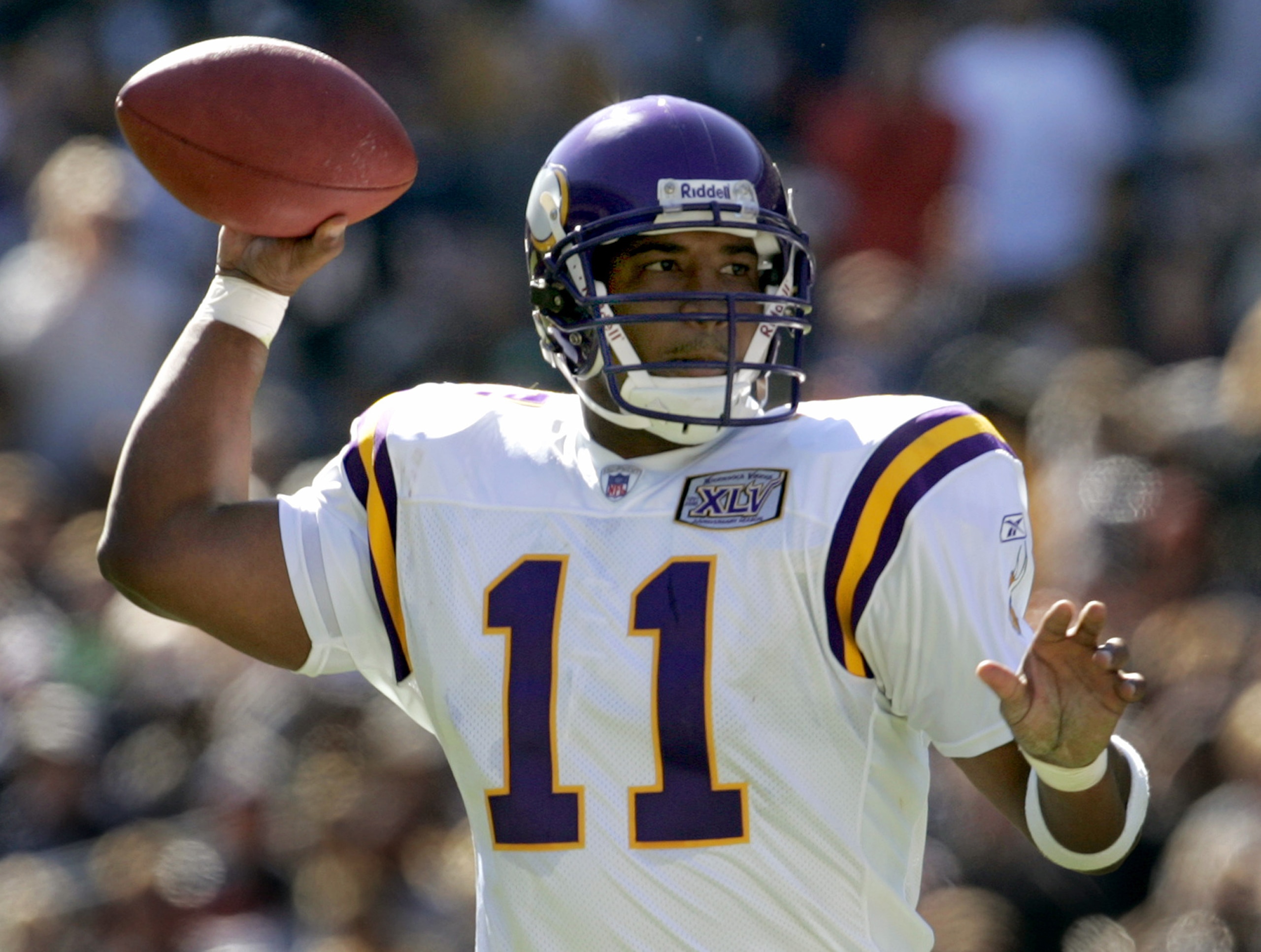
Daunte Culpepper's NFL career will forever be tied to Randy Moss, explosive plays and being blessed with a huge arm.
When Culpepper took over the starting gig for the Minnesota Vikings in 2000, he was a man on fire. No. 11 tossed 33 touchdowns and threw for 3,937 yards.
Culpepper represented a new generation of quarterbacks.
After that initial year, his stats fluctuated between posting high interception totals and posting a large number of TDs. But in 2004, Culpepper stabilized once again leading to his best statistical season—a season that saw him go for 4,717 yards and 39 touchdowns.
The following year he tore his ACL, effectively ending his career in Minnesota. Culpepper signed with the Miami Dolphins after that, but that tumultuous relationship didn't last long.
Brief stops with Oakland Raiders and Detroit Lions didn't amount to anything either. Culpepper never was able to regain his electric form.
Deeming him Hall of Fame-worthy is a challenging argument. Despite three monster seasons, Culpepper was never able to lock in any sort of level of consistency.
Hall of Fame: No
Brad Daugherty
13 of 20
LeBron James' Cleveland Browns takeover makes all previous franchise players forgotten soldiers. Brad Daugherty has remained one of those names.
For people who don’t remember him, Daugherty was an extremely capable center who could score the basketball with great technique and rebound with the best of them.
Similar to King James, Daugherty was a former No. 1 overall pick, and he never produced a porous season with the Cavs.
Eight seasons of sustained action saw Daugherty accrue 19 points, 9.5 rebounds and 3.7 assists per game. He became a five-time All-Star for his work around the glass.
Daugherty was on a good pace when his career abruptly ended due to chronic back problems.
With so many riveting players in pro hoops rocking out around the same time, Daugherty's Hall of Fame legacy has remained overshadowed. He was great, but putting him in the Hall remains a tough sell.
Hall of Fame: No
Terrell Davis
14 of 20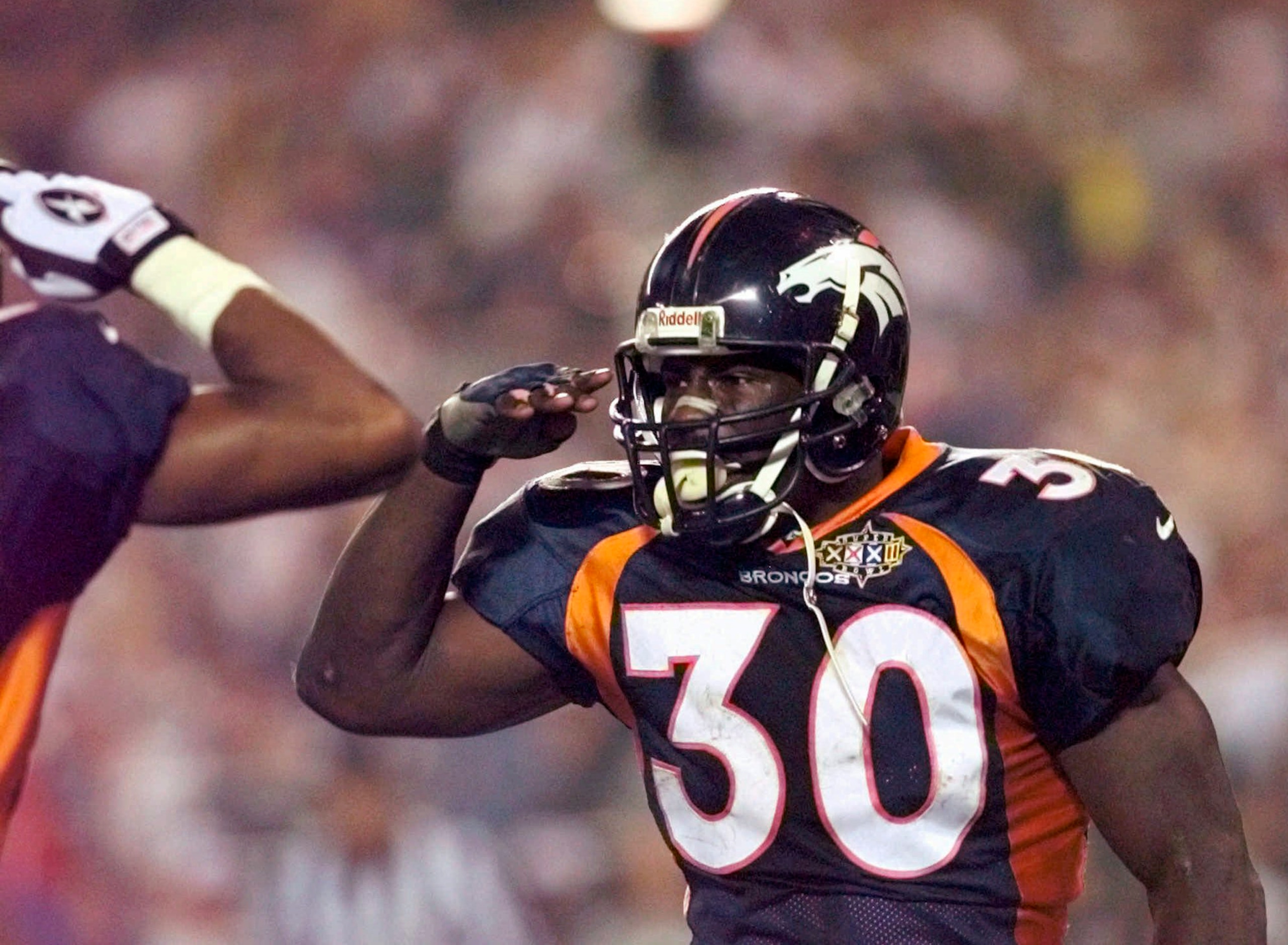
There’s been an ongoing debate on whether former NFL MVP Terrell Davis belongs in Canton. His resume, though short, oozes quality.
A healthy TD was the Denver Broncos’ starting running back from 1995 until ‘98. Those seasons produced magical results—results that turned into two Super Bowl wins for the franchise.
Over that period, Davis ran the ball 1,343 times, cutting his way to 6,413 yards—including a season where, yardage-wise, he ran for 2,008.
He was the cream of the crop in terms of NFL tailbacks.
Nevertheless, a knee injury flattened the trajectory of his rushing career, effectively wrecking his last three seasons, as ESPN’s Jeff Legwold acknowledged: “In his final three seasons, Davis carried the ball 67, 78 and 167 times as a result of the knee injury he suffered while trying to make a tackle during an interception return.”
It was a tough out for TD, but the fact he was overly brilliant in regular and postseason action should count for something. “The Broncos won 91.7 percent of their regular-season and postseason games combined when Davis ran for at least 100 yards,” Legwold wrote about Davis.
Those advanced totals amount to a strong case for Davis' Hall of Fame bid. Eventually, voters have to realize he deserves to be enshrined in Canton.
Hall of Fame: Yes
Kenny Easley
15 of 20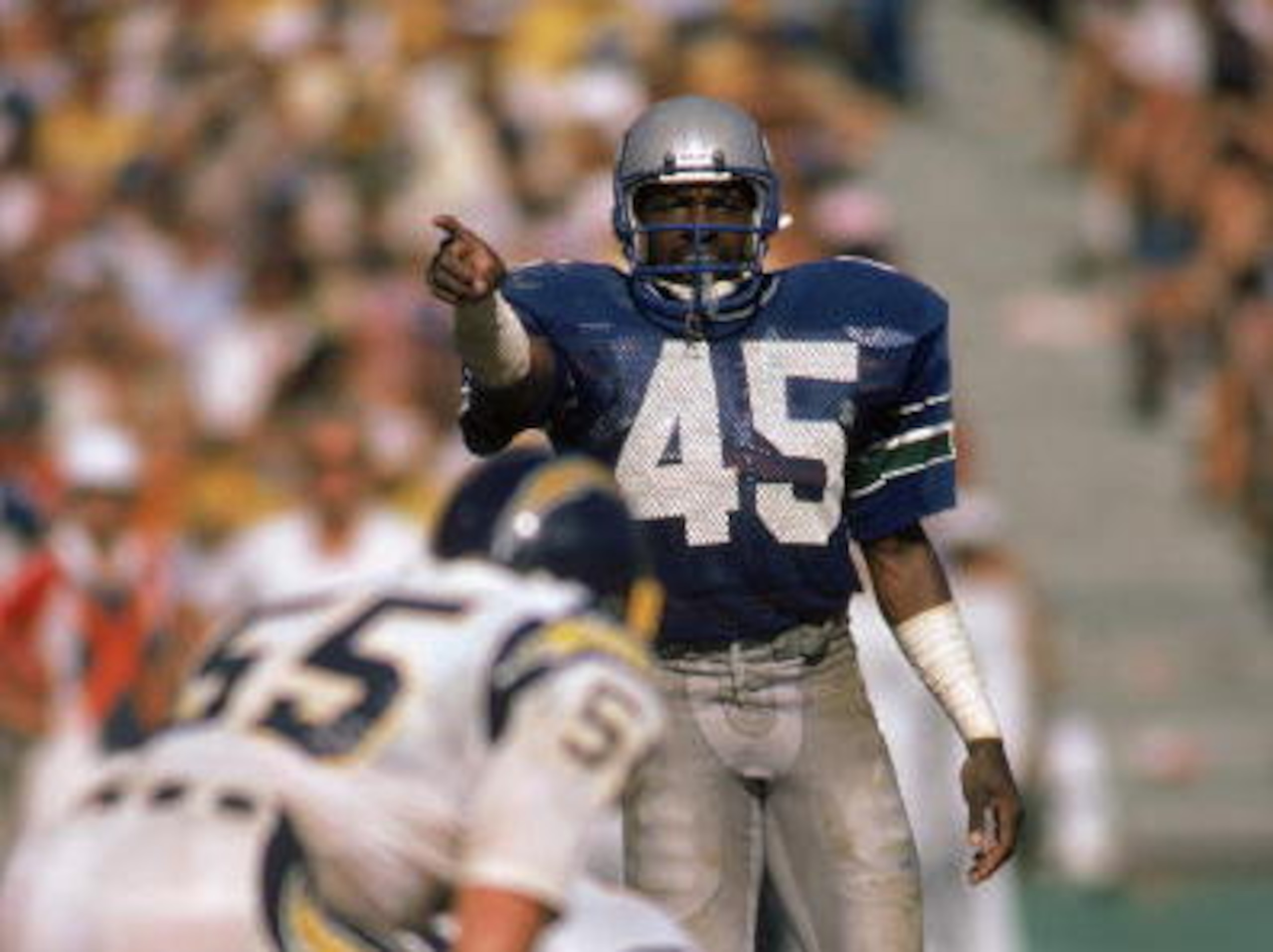
Prior to the Seattle Seahawks forming the Legion of Boom, Kenny Easley provided everything the secondary needed from the safety position.
Easley stacked up trophies early on in his career. He won AFC Defensive Rookie of the Year, AFC Defensive Player of the Year and, finally, it all culminated with the NFL Defensive Player of the Year prize in 1984.
The end of Easley’s career came in an unusual way. Attempting to dull the pain of injuries, Easley began ingesting over-the-counter medicine like Advil. This resulted in severe kidney issues, as Elliott Almond’s Los Angeles Times piece talked about.
Kidney damage like that was enough to end his NFL career in 1987, putting his Hall of Fame resume on hold.
Elliot Harrison of NFL.com discussed why despite his brief career, the hard-hitting safety should make it into Canton: “His career might have been short, but that doesn't mean it wasn't brilliant. There was not a better safety in pro football in the first half of the 1980s, including Hall of Famer Ronnie Lott (who played mostly corner until 1986)."
We agree. When you’re the best player at your position for a lengthy period of time and have the awards to prove it, the Hall should be in your immediate future.
Hall of Fame: Yes
Johan Santana
16 of 20
Johan Santana was gifted beyond belief. From 2003 until 2008, he put on a pitching clinic.
Debating his Hall of Fame case isn’t as cut and dry as wins, losses and ERA. And Grant Brisbee of SB Nation detailed why in an extensive article discussing his Cooperstown bid.
There’s a line lodged into that article that should never be forgotten, no matter how much time goes by. Brisbee explains, “Santana was, for that three-year stretch, almost as great as any pitcher in baseball has ever been.”
It’s the truth. Santana was marvel between 2004 and ‘07. He won the Cy Young twice, maintained an ERA under 2.88 and led the American League in strikeouts each and every year.
Was that dominance enough to push him toward enshrinement? No, it wasn’t.
Lingering shoulder injuries put a halt to his chance at immortality. It’s a shame too. Santana turned out to be a rarity in the game of baseball. His best years stack up in an all-time capacity.
Hall of Fame: No
Tony Boselli
17 of 20
Tony Boselli held down the left tackle position for seven seasons with the Jacksonville Jaguars before a tough shoulder injury ended his career in 2003. He became a five-time Pro Bowl player and a three-time first-team All-Pro tackle thanks to his lockdown ability.
Boselli is as good as it gets in terms of NFL linemen. He was named to the NFL’s All-Decade Team representing the 1990s, even though his career kicked off in ‘95.
In 91 games—90 of those he started—this big, bull-like tackle was the gold standard for the left tackle slot. He deserves a Hall of Fame plaque because of all the memorable years he put forth, helping an upstart franchise get its start.
Hall of Fame: Yes
Daniel Bryan
18 of 20
The WWE’s version of the Hall of Fame isn’t like a lot of other professional sports bodies out there. Choosing which performers get into this Hall isn’t solely about accomplishments.
It’s also about revolutionizing the sport. And in that regard, Daniel Bryan more than fits the bill.
Bryan’s WWE run may have been brief—though he had an extensive career prodding around various independent promotions—but the impact he had was considerable.
He was a three-time WWE World Heavyweight champion, one of the most “over” guys in the industry—a term used to describe someone who's popular—and he did it all with charisma, talent and that “Yes” chant.
It’s only a matter of time before Bryan finds his way over to the WWE Hall of Fame.
Hall of Fame: Yes
Jerome Brown
19 of 20
Jerome Brown became a mainstay with the Philadelphia Eagles from 1987 until 1991. He was a big, physical defensive tackle, who was able to control the line of scrimmage thanks to his size.
Very few men could produce like that in the trenches. Brown’s 29.5 sacks for a defensive tackle were huge totals. He was a run-stopper and pass-rusher all in the same breath—a player whose skill set was far ahead of his time.
Fresh off back-to-back Pro Bowl seasons, Brown was tragically killed in 1992—along with his nephew—in an automobile accident. He was 27 years old.
It was an emotional and stunning time in Philadelphia. Reggie White—Brown's teammate—first broke the news to a crowd of fans in Veteran’s Stadium. That moment will live on forever.
Brown looked like a sure bet to make it into Canton. He had reached his career's apex, controlling all things defense in Philadelphia. It’s just a shame he never got the chance to continue down that path and make it to Canton.
Hall of Fame: No
William Andrews
20 of 20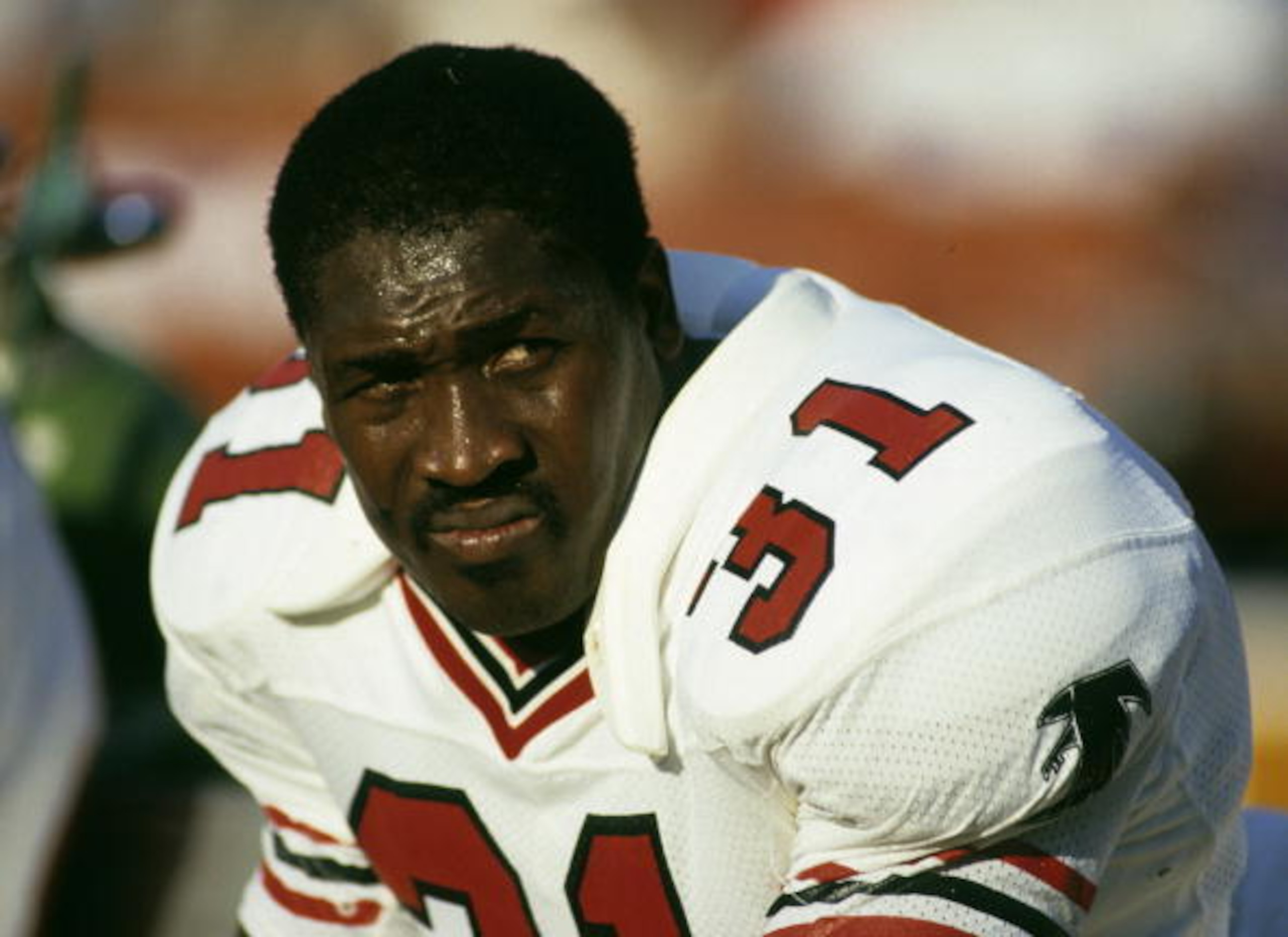
The Atlanta Falcons used a third-round pick on Williams Andrews back in the 1979 NFL draft. With Andrews, the franchise secured itself a starting halfback who far exceeded his draft position.
Andrews ran for 1,000 yards or more to start off the first three seasons of his career. He played in 47 out of 48 games without showing any signs of letting up.
To show you how fantastic he was, you have to go back to Rick Telander’s Sports Illustrated piece. It was there that Telander mentioned in 1983 Andrews’ “1,567 rushing yards and 609 receiving yards were 39% of the Falcons' total offense.”
Like so many names on this list, Andrews’ playing days were cut short. A non-contact injury in training camp decimated his knee after four Pro Bowl appearances.
Andrews would spend the next two years attempting to rehab and make a comeback, but those efforts proved to be futile. He served as a backup in ‘86 and retired after that season ended.
Despite being a radiant tailback, Andrews’ 5,986 yards rushing aren't enough to warrant a trip to Canton. Nevertheless, he was introduced into the Falcons’ Ring of Honor in 2004—an honor he more than deserved.
Hall of Fame: No
All stats and information via Sports-Reference.com unless noted otherwise.