Why Nico Rosberg Is the Biggest Threat to Lewis Hamilton in His F1 Title Defence
Lewis Hamilton's defence of his Formula One drivers' championship crown didn't get off to the best of starts at the 2016 Australian Grand Prix.
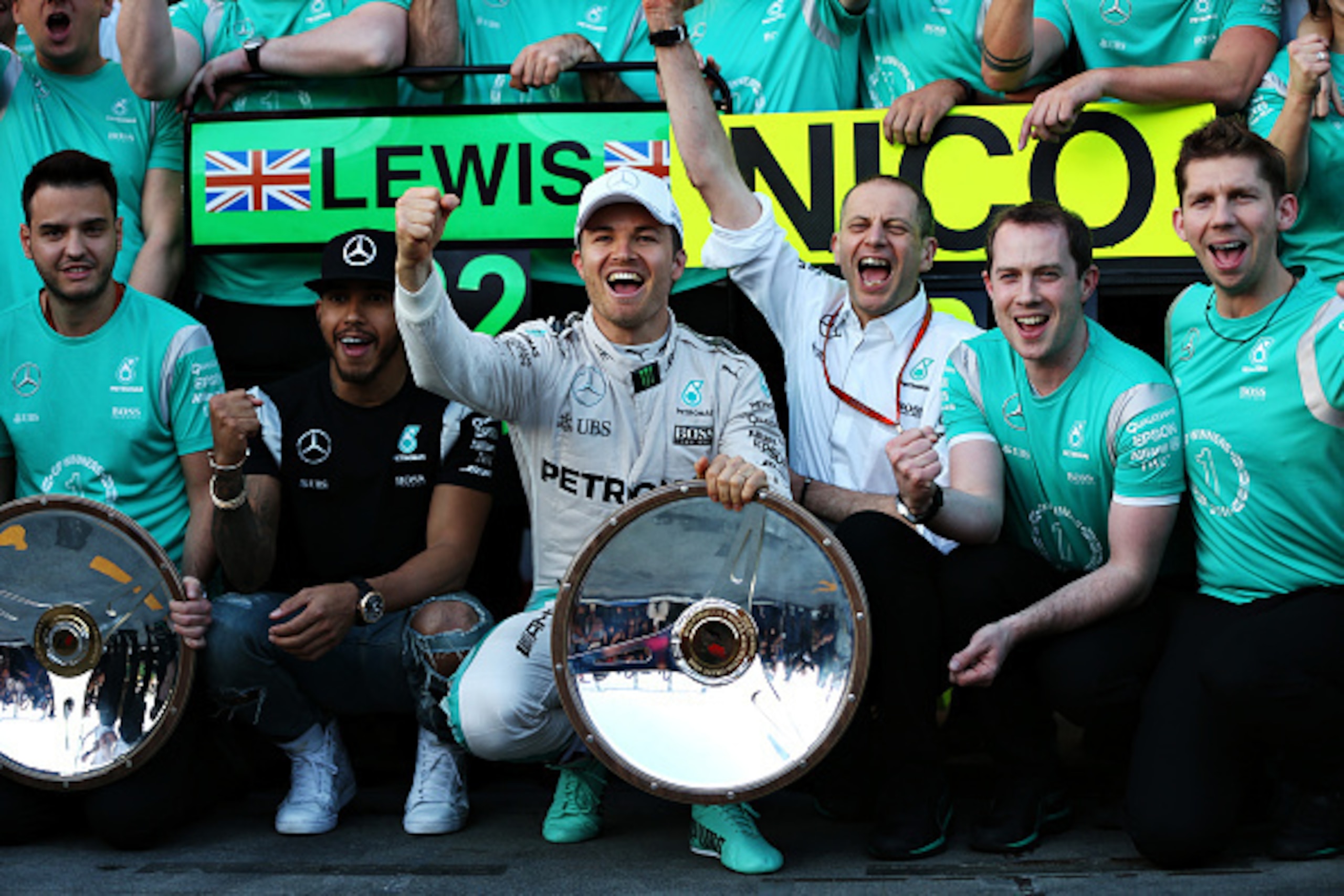
Despite a dominant pole the day before, a poor getaway off the line and contact at Turn 1 with team-mate Nico Rosberg left the Brit down in sixth at the end of the first lap. The red flag and a smart strategy call from Mercedes helped him back to second, and for once Hamilton seemed happy to be runner-up.
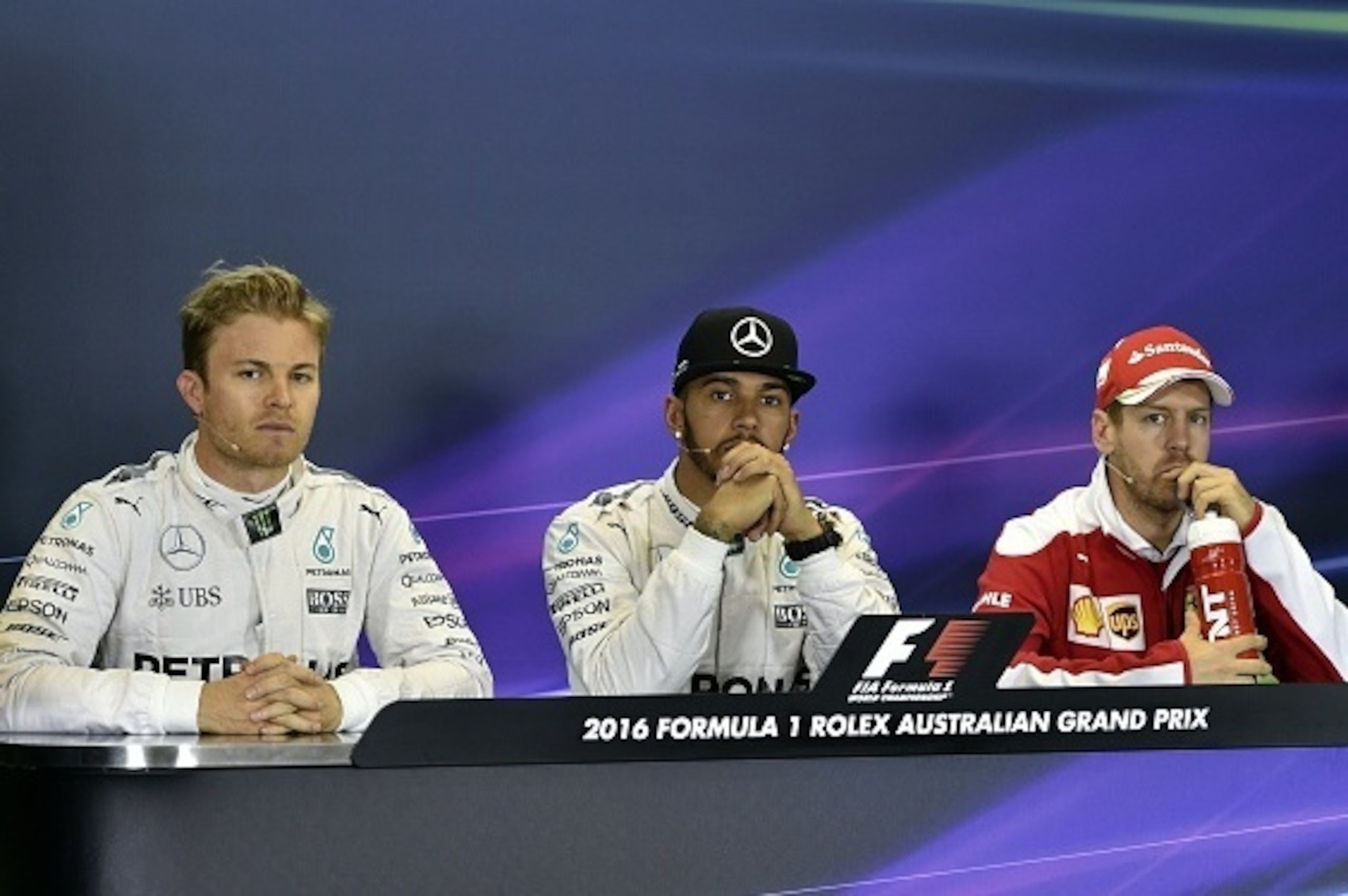
He was smiling as he jumped out of his car in parc ferme, said on the podium that he was "really happy to get the result" and even found time to have a "No. 2 cap" joke with Sebastian Vettel.
TOP NEWS

Broadcaster sorry for false LeBron rumor

Stephen A. Apologizes After Lane Johnson Comments
Ravens Trade for Eagles Pro Bowl OL 🚨
And this time, Hamilton had good reason to be happy because the outcome for him could have been far worse. He suffered only minor front-wing damage at the first corner, was pulled back into play by the red-flag period, the Toro Rossos didn't hold him up for too long and Mercedes' smart tyre strategy did the rest.
Ferrari helped as well—had they fitted medium tyres to Vettel's car during the stoppage, the German could have won and Hamilton would be 10 points behind the championship leader, rather than seven.
But in the long term, that might have been a good thing. Had Vettel won, Hamilton would be just three points behind his team-mate, not seven—and at this stage it's Rosberg, not Vettel, who looks the greater threat to the Brit securing a third consecutive world title.
After Ferrari's three race wins in 2015, many fans—including those who enjoy a multi-team mix-up at the front of the field—were hoping the Scuderia could build on their success and mount a genuine challenge to Mercedes in 2016.
With the regulations remaining stable over the winter, it was always going to be a tall order. Ferrari were the second-best team in 2015, but the gap to Mercedes was substantial—ESPN reports an average qualifying gap of 0.67 seconds for the season as a whole, and though the SF15-Ts were closer on race day they were still a long way behind.
Furthermore, it went without saying that Mercedes would improve as well. Ferrari were chasing a rapidly moving target, needing to do more than just close the gap from 2015.
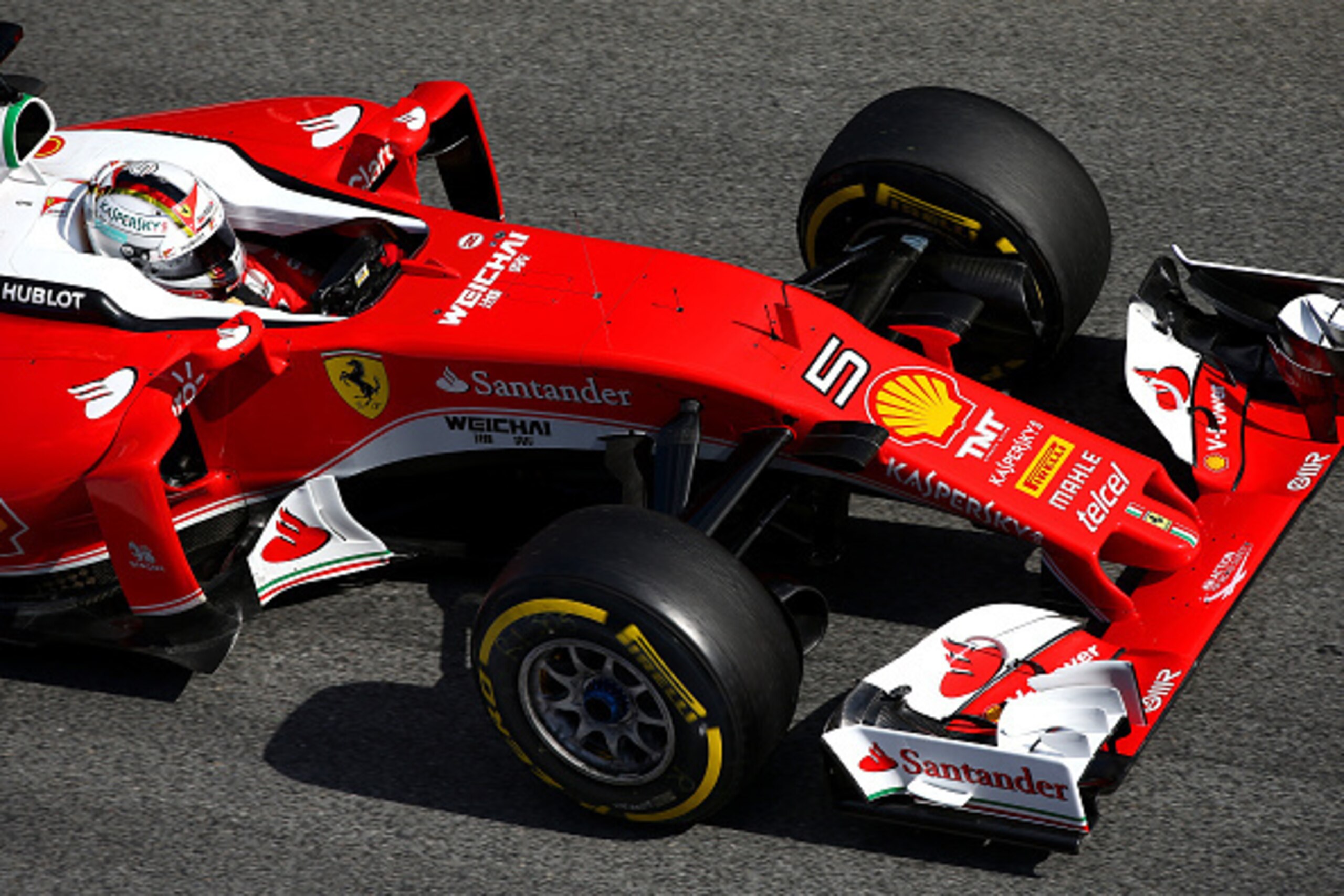
But this would be the winter during which the restructuring work at Ferrari carried out toward the end of 2014 would start to bear fruit, and the new car would be the first designed entirely under the watchful eye of highly rated technical director James Allison.

When the new SF16-H emerged, initial responses were positive, primarily because it bore few resemblances to its quick, but not quick enough, predecessor. Sky Italia's Antonio Boselli (per Sky Sports F1) described the car as a "revolution"—exactly what Ferrari needed to get on terms with Mercedes.
A simple evolution of the old car would not have been enough.
The start of testing suggested the new car was quick; Vettel and Kimi Raikkonen topped the timesheets on five of the eight days, with the Finn's time of one minute, 22.765 seconds, set on the new ultrasoft tyres, the quickest of the whole test.
But headline times have a habit of presenting a skewed picture of the true running order, and it was clear Mercedes had not even tried to beat Raikkonen's benchmark.
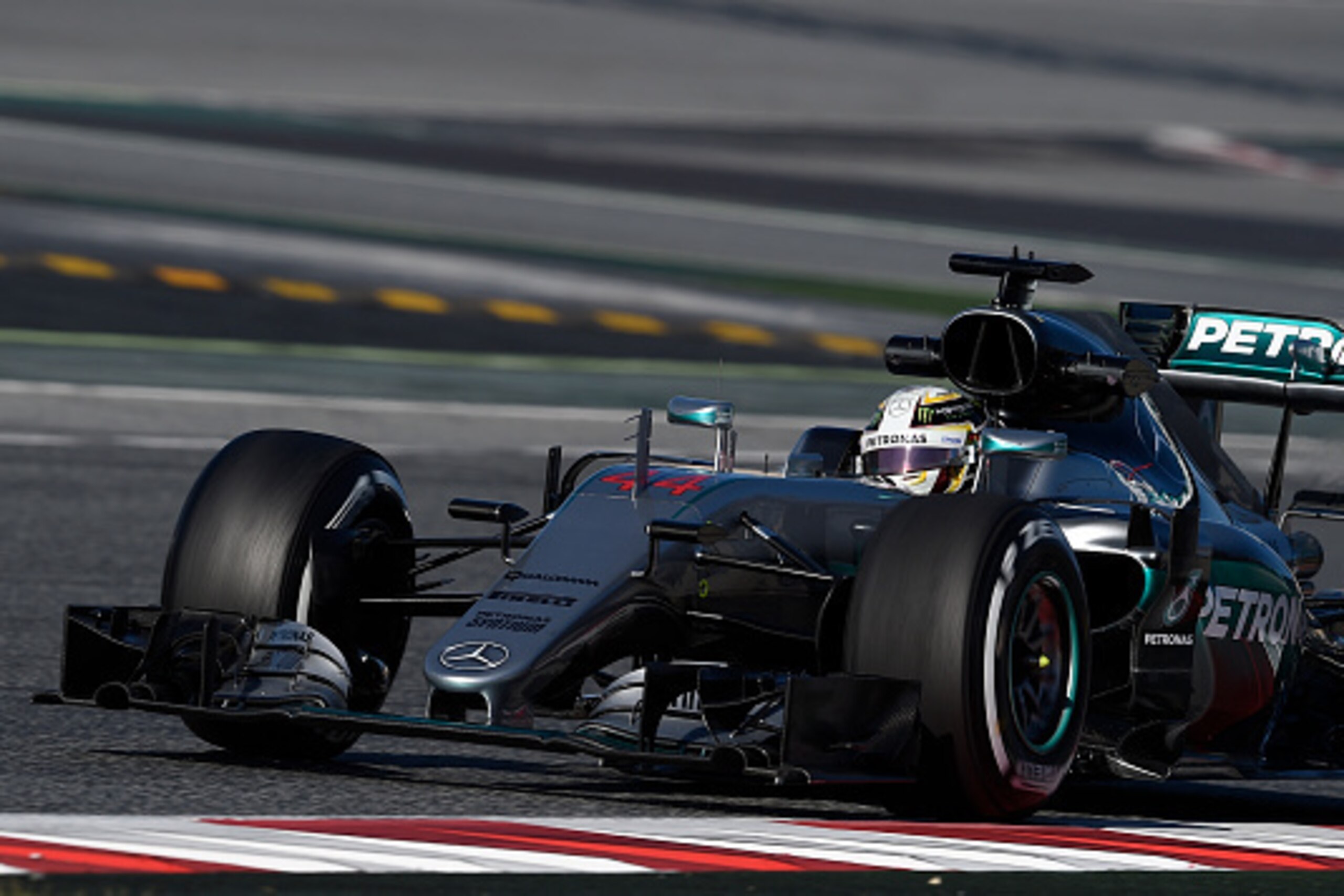
The Silver Arrows conducted almost all of their running on the slower, harder tyre compounds, and F1 Fanatic's data reveals they were one of only three teams—along with Williams and Sauber—to go slower in 2016's pre-season testing than they were ahead of 2015.
Instead, the German team focused on testing their new W07 to destruction, and in the process proved their new power unit was almost bulletproof. The car ran and ran and ran, and the official F1 website reports Mercedes clocked up 6,024 kilometres in just eight days.
Ferrari only did 4,148 kilometres, and there were a number of reliability issues for the works team and their two customers. ESPN's Nate Saunders reported speculation was mounting over the Ferrari power unit's reliability, and though team principal Maurizio Arrivabene insisted to Motorsport.com's Jonathan Noble, "Ferrari does not have an engine problem," the figures did not look good.
Even if Ferrari were quicker than before in terms of absolute pace—and that was by no means certain—they were nowhere near as comfortable with their car as Mercedes were and, despite Arrivabene's denial, question marks remained over the power unit.
Wet weather on the Friday of the Australian Grand Prix meant we had no early opportunity to get a handle on the single-lap and long-run pace of the top two, and no one ran close to their limit in third practice on Saturday.
The first real chance we had to assess the single-lap pace of the runners was qualifying—and it was immediately clear that Mercedes were still well ahead, with a large advantage even when everyone was running the supersoft tyres.
In recent seasons the Silver Arrows have tended to gain less time on the red-marked tyres than their rivals, but here they were significantly quicker.
Ferrari only did one flying lap in the final part of qualifying, while Mercedes did two, so the times from before the Silver Arrows' second run provide us with the best comparison.
Hamilton's first quick lap was a 1:24.113, while the only time set by Vettel was 1:24.675. The gap between the two was 0.542 seconds—just one-tenth of a second less than the 2015 average.
The expectation at this stage was that we'd have another first-race "silverwash," with Ferrari resigned to their usual third place.
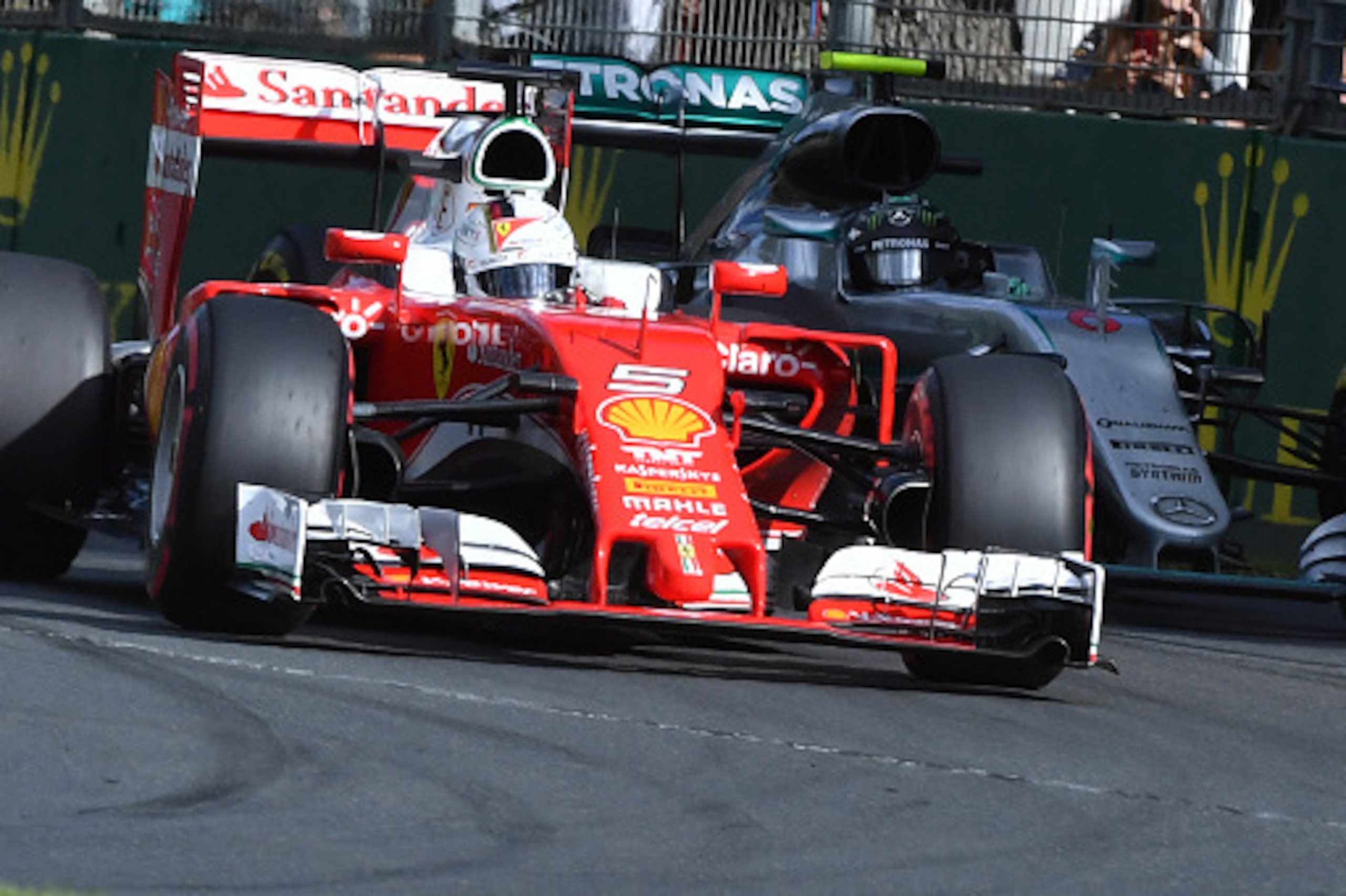
However, the race start changed everything. Both Mercedes—Hamilton in particular—had poor getaways, while Vettel leapt off the line like a scalded cat and took the lead. Rosberg went deep into Turn 1, Hamilton was pushed further wide and Raikkonen was able to capitalise, moving up into second.
At the end of the opening lap, Vettel led from Raikkonen with Rosberg in third. Hamilton was down in sixth, chasing the Williams of Felipe Massa.
Throughout the first stint, Vettel pulled out a small gap to his team-mate, while Rosberg remained close behind the Finn. Albert Park is a difficult circuit to overtake on, so though the Mercedes man looked quicker, he didn't make a serious attempt to pass until the first round of stops—where he demonstrated just how quick the W07 could go.
According to the FIA's race data, on Lap 11 the gap between Vettel and Rosberg was 3.476 seconds. Rosberg pitted at the end of the following tour and Vettel came in one lap later; when the Ferrari emerged from its stop, the gap was close to zero.
The undercut had played a massive part, but what made the difference was the fact that Rosberg's out-lap, on soft tyres, was nine-tenths of a second quicker than supersoft-shod Vettel's.
It's impossible to know what might have happened had the grand prix proceeded as normal—the red flag on Lap 18 ended any hopes of a race-long speed comparison. Instead, we witnessed a strategic battle.
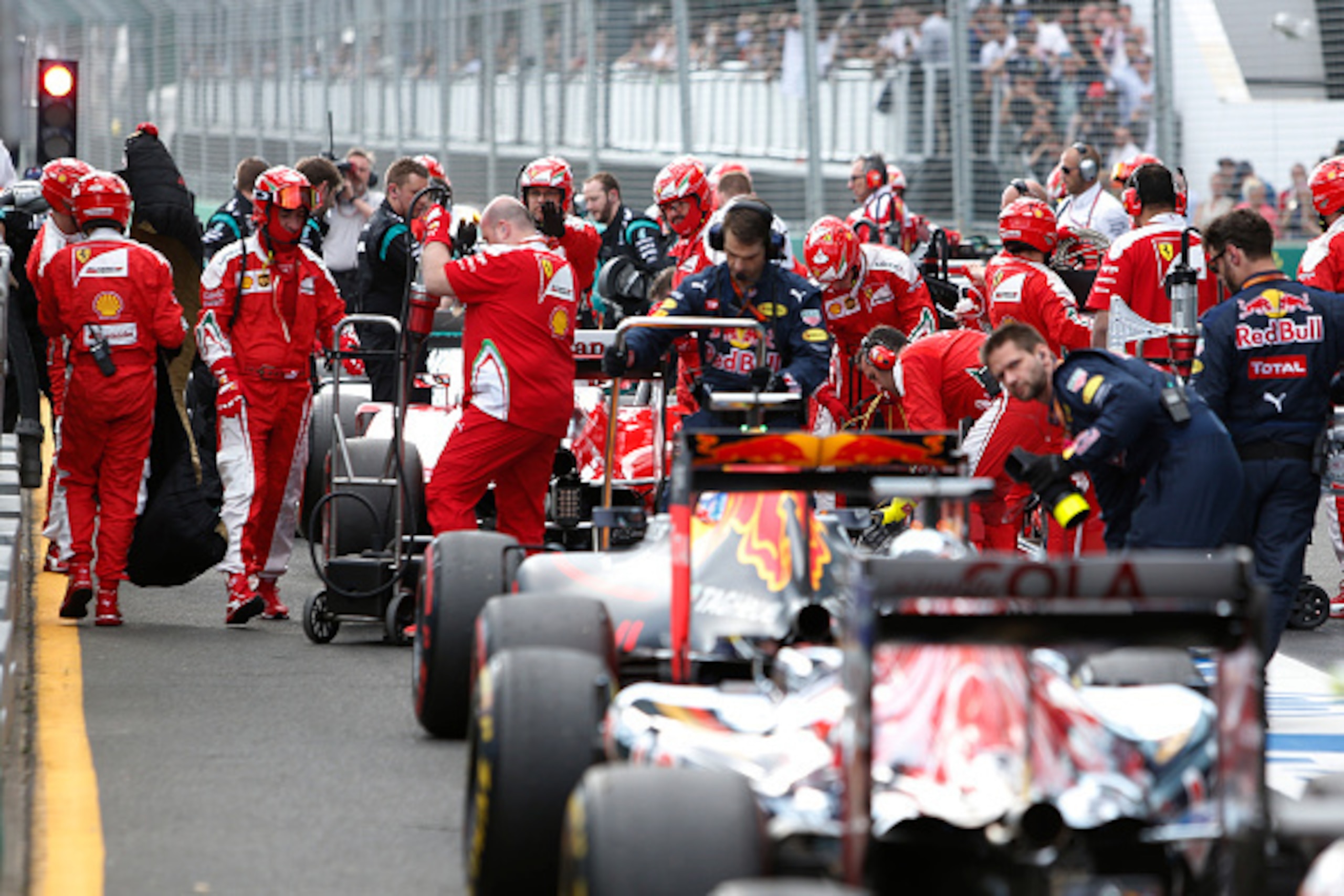
In the red corner were the Ferraris of Vettel and Raikkonen, both of whom were opting for two short runs to the finish using first supersoft, then soft tyres. In the silver corner were the two Mercedes, both of whom would use a single set of mediums for one long stretch to the flag.
It might have been a thriller, and there was definitely a bit of excitement, but the result was all too predictable. Mercedes simply had too much speed, even on the medium tyres, for Ferrari to deal with.
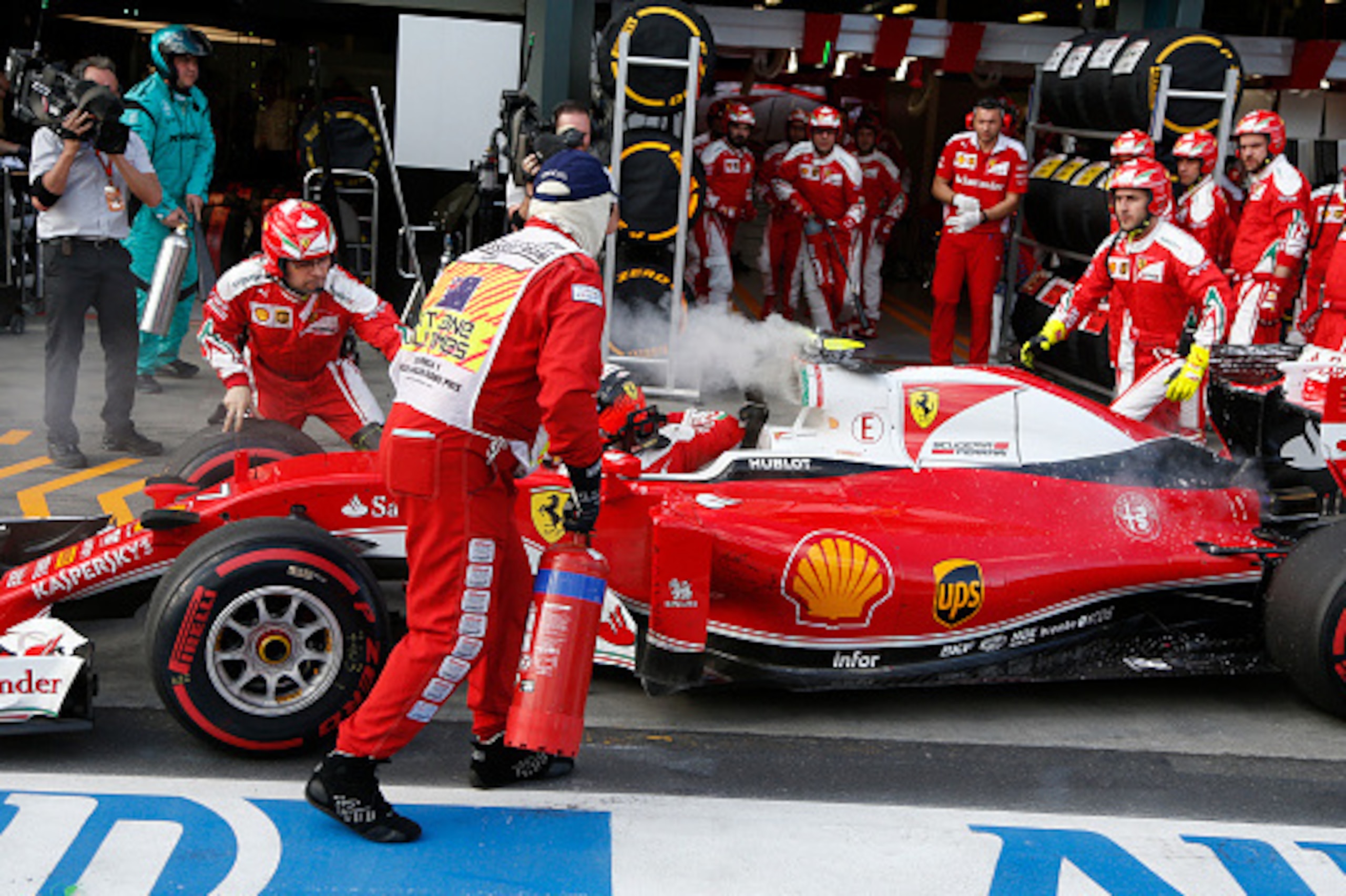
Rosberg cruised to his fourth successive victory, Hamilton recovered to second and Vettel was third. Raikkonen's race ended early, flames leaping from his airbox as he parked in the pit lane at the end of the 22nd lap.
It would be an assumption too far to state with any conviction that because Mercedes were the class of the field in Australia, they will have the best car everywhere else as well.
But it would be even more of a stretch to say that Ferrari will improve throughout the rest of 2016 simply because they are Ferrari. It would be just as logical, perhaps more so, to assume the opposite will happen—data published on the official F1 website shows Ferrari lost ground to Mercedes over the course of 2015.
The Scuderia have also spent more development tokens on their power unit than Mercedes—and its reliability remains suspect.
Those of us who'd rather see some variety at the head of the field will certainly hope Ferrari can close the gap, and by the halfway point of the year, Vettel may indeed have become the top challenger to Hamilton.
But at this stage, Mercedes still look to be the best team by a large enough margin to make the title race a two-horse affair—so Rosberg has to be considered the No. 1 contender.
.jpg?w=2560 "Cowboys Texans Football")
.jpg?w=2560 "5 NFL Players Getting Trade Buzz")

.jpg?w=2560 "Vikings HC Called OBJ Before Release ☎️")