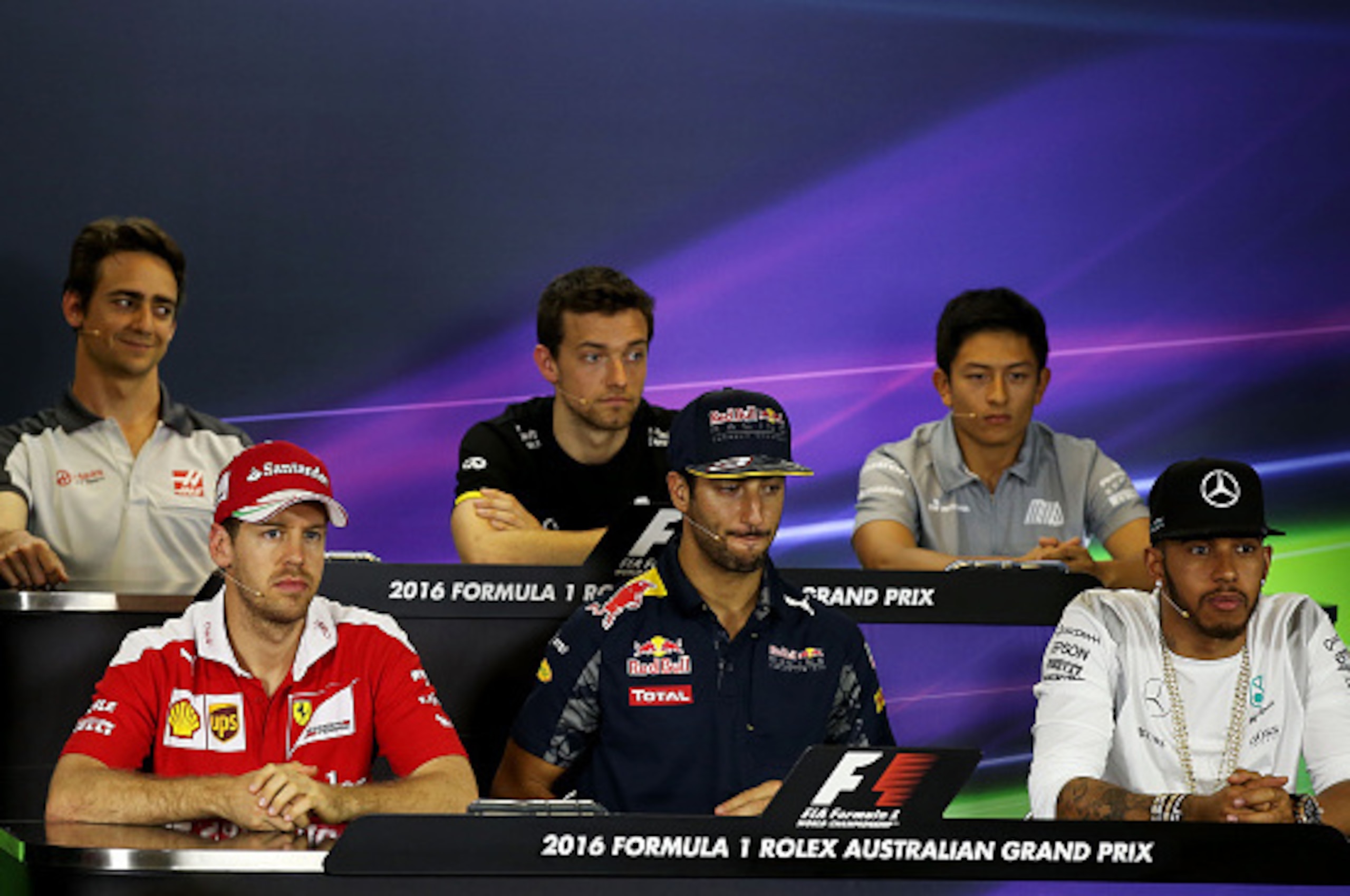

Australian Grand Prix 2016 Preview: Start Time, TV Info, Weather, Schedule, Odds
The 2016 Formula One Australian Grand Prix will be the first race of what is set to be a record-breaking year for the sport.
The teams and drivers will contest 21 races, more than ever before, giving the front-runners a golden opportunity to smash the records for the most wins, points, podiums and poles in a single season.
Lewis Hamilton heads into the weekend looking to get his title defence off to the best possible start. The reigning champion won here in 2015 on his way to a third world crown, and he starts as favourite, but team-mate Nico Rosberg and Ferrari's Sebastian Vettel are also expected to be in the hunt.
Kimi Raikkonen may have a part to play in the fight over the podium spots, too, while the likes of Williams, Force India, Red Bull and Toro Rosso could also have an outside shot at some sort of glory.
McLaren, Renault, Sauber, Haas and Manor look set to be mere observers of the battle closer to the front, but nothing is certain in the first race of a new season.
Surprises have happened before, and they'll almost certainly happen again. Are we set for a shock when the lights go out in Melbourne—or will everything go just as we expect?
Read on for a full preview of the race weekend including TV times, a circuit map and guide, tyre and DRS information, weather forecast, odds and session times.
Albert Park (Melbourne Grand Prix Circuit)
1 of 5
The Melbourne Grand Prix Circuit, more commonly known as Albert Park, lies close to the heart of Australia's second-largest city.
This flat, semi-permanent venue is an unusual blend between two types of circuit; though officially a street circuit, as the track is made up of public roads, the layout and most of the corners more closely resemble a traditional road course.
However, while run-off is plentiful around most of the lap, certain corners—Turns 2, 5 and 10, for example—give the drivers very little room for error.
Albert Park is not especially conducive to close racing or overtaking, and if it held a mid-season race, it's likely the spectacle would be poor.
But placed as it is right at the start of the schedule, the circuit normally does a more than adequate job of kicking off the season—and having seas of passionate fans in attendance always makes it that little bit more special.
Turns 1 and 2
A lap begins on the pit straight with a 380-metre run down to Turn 1. This medium-speed right-hander looks quite tight but the cars get through it at around 140 kilometres an hour.
Mistakes here are quite common—you'll often see a driver go skating over the run-off area on the outside after snatching a brake or carrying too much speed. This is also the best place to overtake.
The exit of the corner leads straight into the entry of Turn 2, a more open left. The drivers pick up the throttle on the inside kerbs and accelerate as hard as they dare, running up close to the wall on the outside as they head out onto a relatively modest straight.
Turns 3, 4 and 5
The cars reach speeds of a little over 300 kilometres an hour before the drivers hit the brakes hard for one of Albert Park's slowest corners, the tight right-hander of Turn 3. Overtaking is possible here with a good run out of Turn 2, but the defending car can usually cover its line with little difficulty and stay ahead.
A short straight follows before more braking for the medium-speed Turn 4. This piece of tarmac is a car park when the racing isn't in town—the marked bays are easily visible if you look out for them.
The drivers get back on the power at the exit and drift across to the left-hand side of the track in preparation for the next corner. Right-hand Turn 5 is taken at close to full throttle, and it's always looked like one of the best corners on the track.
Turns 6, 7 and 8
A short straight comes next, then the cars head under the trees and into the tricky braking zone for the slow- to medium-speed right-hander of Turn 6. The kerbs on the exit become the inside kerbs of Turn 7, a near-flat-out left.
The throttle stays pinned to the floor through the long, quick right of Turn 8 and out onto another short straight.
Turns 9 and 10
The drivers hit the brakes around 75 metres before the next corner, slowing from around 290 kilometres an hour to 110 for the first part of the right-left chicane comprising Turns 9 and 10.
The right-hander is slower and tighter, and errors are not uncommon, but the left-hander is where the most care is taken. As the drivers get back on the power, there are no kerbs or grass to lean on—just a solid, unforgiving wall.
This is the only section of Albert Park that resembles a true street circuit. Providing they made it through safely, the drivers head off down a medium-length, curving, barrier-lined straight.
Turns 11 and 12
Fast corners are few and far between at Albert Park, and the left-right chicane of Turns 11 and 12 stands out as easily the best sequence the circuit has to offer.
The drivers approach the corners at close to 300 kilometres an hour, scrubbing off only a little of that speed as they hurl their cars into the first part of the chicane. As soon as the apex is clear, they're back on the power, feathering the throttle and carrying as much speed as they dare through the slightly faster, right-hand second part.
The kerbs at the exit here have been known to catch out drivers who run wide, leaving them open to attack on the straight that follows.
Turns 13 and 14
The straight curves gently to the right before the braking zone appears for Turn 13, a relatively straightforward, slow- to medium-speed right. You won't often see overtaking moves completed into here unless the defender got a terrible exit from Turn 12—the straight simply isn't long enough.
The drivers give the throttle a quick squirt and only tap the brakes before they glide through the medium-speed right-hander of Turn 14. The run-off area at the outside here isn't the most forgiving; fortunately, the corner doesn't generate many errors.
Turns 15 and 16
Now approaching the end of the lap, the cars slow to around 80 kilometres an hour for the very tight and tricky left-hander of Turn 15. Of all the corners at Albert Park, this is where you'll see the most errors—especially in practice.
Little lock-ups are incredibly common, and the expanse of grass at the outside appears to have magnetic properties. It's almost a rite of passage for rookies to take at least one harmless trip across it on their first race weekend, and even the old hands get caught out on occasion.
Once they're through Turn 15, the drivers get their cars straightened out and hit the throttle pedal once again as they approach the final corner, Turn 16. Braking isn't essential for this medium-speed right-hander, but good control and feathering of the throttle is needed to get the best possible exit.
Plenty of kerb is taken at the outside, and the cars head out onto the pit straight toward the start of another lap.
Pit Lane
The pit lane entry is on the inside of the final corner, and the exit is on the right-hand side of the pit straight before Turn 1.
Slide Image: Creative Commons
Tyres and DRS
2 of 5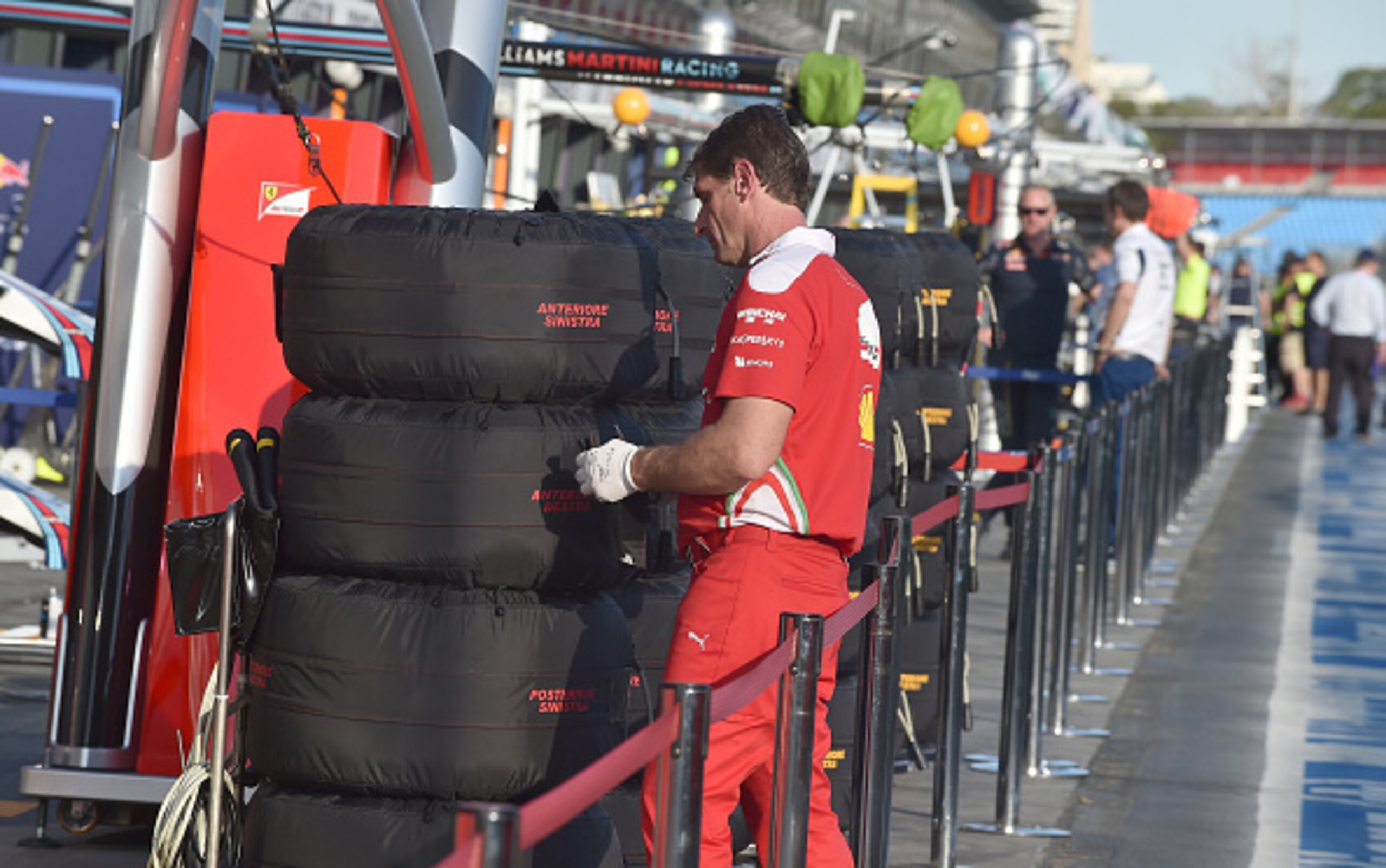
Albert Park is a semi-permanent circuit that sees little racing use throughout the year. Instead, normal road traffic—or, at least, park traffic—passes over the tarmac, dumping a layer of dirt, dust and other assorted detritus that purebred racing tyres do not like driving over.
Fortunately, the cars are good at cleaning up the surface, and as they circulate more and more, the track "rubbers in" and starts to offer up more grip—a process known as track evolution. However, grip will never quite reach the sort of levels offered up by a permanent racing facility.
Pirelli's race preview reveals the left-rear tyre is worked the hardest, but overall degradation is low.
New Tyre System
The tyre supply rules have changed for 2016—a once-straightforward system has become far more complex and potentially confusing.
Three compounds are available for each race weekend, with each driver given a partially free choice of which they will use—a decision they must make well in advance. The official F1 website has a video and text guide.
For Melbourne, the red-marked supersoft, yellow-marked soft and white-marked medium compound tyres will be available. Per Pirelli, most of the drivers have opted for more of the soft and supersofts, with only the Manor drivers taking more than two sets of mediums.
DRS Zones
There will be two DRS zones at the Australian Grand Prix, running from a single detection point located at the entry to Turn 14.
The FIA circuit map reveals the first zone will start 30 metres after the apex of the final corner. It will run the length of the pit straight and end with braking for Turn 1.
The second zone's activation point is 32 metres after the apex of Turn 2, and the zone runs down the relatively short straight that follows, ending with braking for Turn 3.
Australian Grand Prix Weather
3 of 5
Melbourne has a temperate oceanic climate, with warm summers and mild winters. Rainfall occurs all year round, peaking in the winter months of June, July and August.
A typical March sees daytime high temperatures in the mid- to low-20s degrees Celsius, and rain falls approximately one day in every three.
The forecast for the weekend ahead is typical of the city—mixed. Showers and moderate winds are possible on Friday for practice, while Saturday looks likely to be the coolest day with the highest chance of rain. Sunday appears to be the best day of the weekend, with temperatures close to the seasonal average and little chance of precipitation.
However, this may change on a day-to-day basis.
BBC Weather will have the latest.



Australian Grand Prix Odds
4 of 5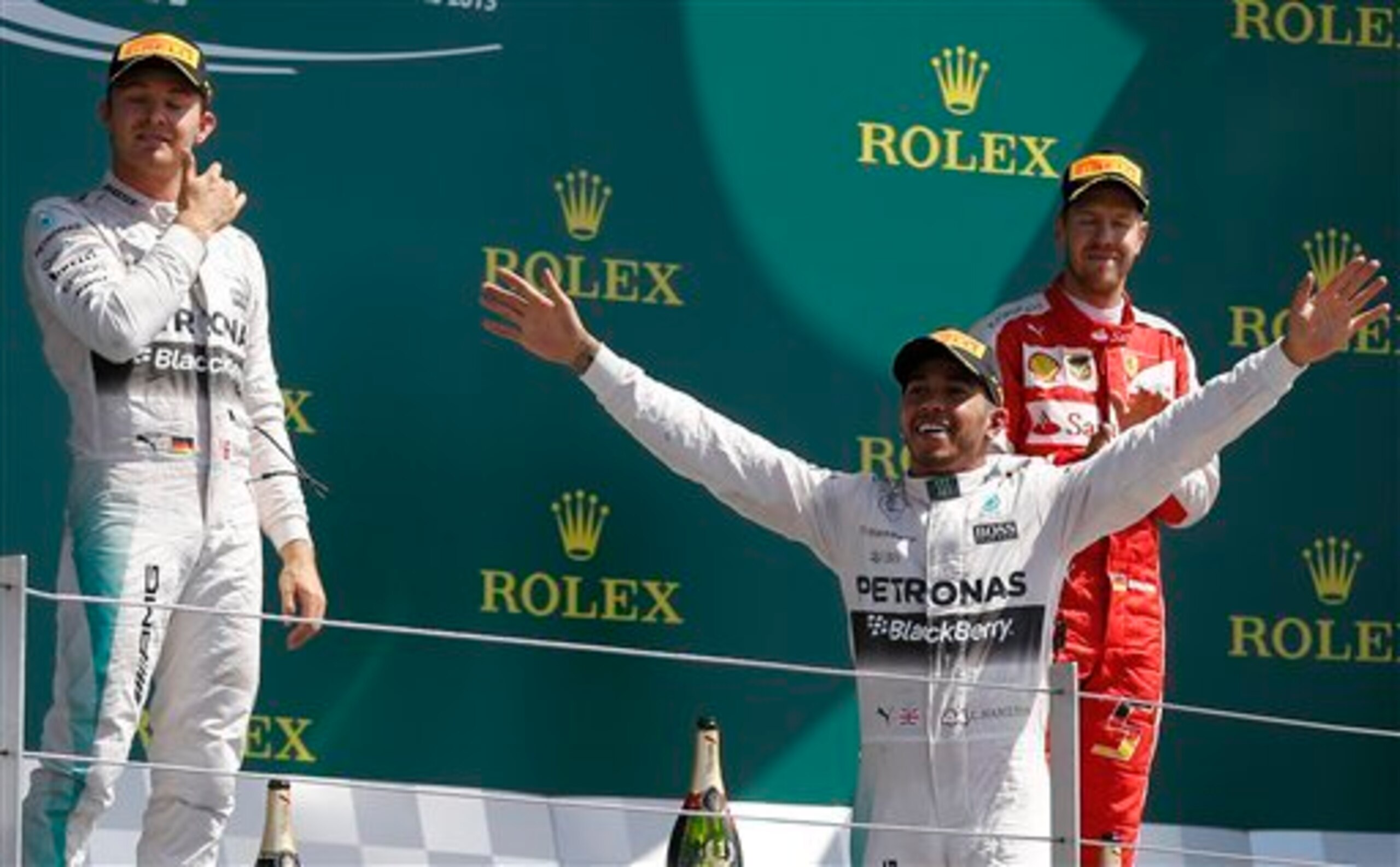
Lewis Hamilton is the pre-qualifying favourite for the 39th consecutive race, but his odds are a little longer than usual. Nico Rosberg is second-favourite (also for the 39th consecutive race), with Sebastian Vettel a slightly closer third-favourite.
The top 10 favourites are:
| Lewis Hamilton | 10-11 |
| Nico Rosberg | 5-2 |
| Sebastian Vettel | 11-2 |
| Kimi Raikkonen | 20-1 |
| Valtteri Bottas | 50-1 |
| Daniel Ricciardo | 60-1 |
| Felipe Massa | 100-1 |
| Daniil Kvyat | 125-1 |
| Max Verstappen | 125-1 |
| Nico Hulkenberg | 125-1 |
Selected Others
The Albert Park circuit has variable amounts of run-off. An accident on one corner could easily be handled with double waved yellow flags, but at some, a safety car would be needed. An appearance by the third Mercedes is heavily favoured with the bookies—it's 2-5 we see it and 2-1 we don't.
The midfield fight looks like it'll be very close if testing is anything to go by, and a whole host of drivers are close in the betting for a top-10 finish. Daniil Kvyat, Nico Hulkenberg, Sergio Perez, Max Verstappen and Carlos Sainz Jr. are all 1-2 to finish in the points.
And Hamilton kicked off his season last year with a hat-trick of pole, fastest lap and the race win. It's 5-2 that any driver repeats his feat this weekend. No hat-trick is 2-7.
Odds sourced from Oddschecker.com and correct at the time of publication.
TV Times and Schedule
5 of 5
As always, the Australian Grand Prix weekend will consist of three free practice sessions, qualifying and the race.
The session times are as follows:
| Practice 1 | Friday | 12:30 p.m. |
| Practice 2 | Friday | 4:30 p.m. |
| Practice 3 | Saturday | 2 p.m. |
| Qualifying | Saturday | 5 p.m. |
| Race | Sunday | 4 p.m. |
All times given are in Melbourne local time (AEDT, UTC+11). The official Formula One website has a useful tool on its homepage to convert them to your own time zone.
TV Times
In the United Kingdom, live coverage of all sessions will be provided by Sky Sports F1. The programming times are as follows (all times GMT):
| Practice 1 | Friday | 1:30 a.m. | 1 a.m. |
| Practice 2 | Friday | 5:30 a.m. | 5:15 a.m. |
| Practice 3 | Saturday | 3 a.m. | 2:45 a.m. |
| Qualifying | Saturday | 6 a.m. | 5 a.m. |
| Race | Sunday | 5 a.m. | 4:30 a.m. |
Free-to-air highlights of qualifying and the race will be shown on Channel 4.
In the United States, live coverage is provided by NBC network on NBCSN and NBC Sports Live Extra (SLE). The times are as follows (all times EDT):
| Practice 1 | Thursday | 9:30 p.m. | 9:30 p.m. (NBCSN) |
| Practice 2 | Friday | 1:30 a.m. | 1:30 a.m. (NBCSN) |
| Practice 3 | Friday | 11 p.m. | 11 p.m. (SLE) |
| Qualifying | Saturday | 2 a.m. | 2 a.m. (NBCSN) |
| Race | Sunday | 1 a.m. | 12 a.m. (NBCSN) |
Enjoy the weekend!
Follow me on Twitter for occasional updates on new articles and thoughts about the F1 world, or if you have any questions or comments.
.jpg?w=2560 "Cowboys Texans Football")
.jpg?w=2560 "Browns Jaguars Football")