

What to Expect in the 2016 NCAA Tournament: Madness or Chalk?
By all accounts, 2015-16 was one of the most wildly unpredictable regular seasons in college basketball history.
Will the NCAA tournament follow suit?
Six different teams were ranked No. 1 in the Associated Press Top 25, suffering a combined seven losses while seated on that throne. And once the calendar flipped to 2016, it was pure chaos. Beginning in Week 9, there were nine consecutive weeks in which at least 10 AP Top 25 teams suffered a loss, including three weeks with at least 15 ranked teams losing at least one game.

Each team in the country entered championship week with a minimum of four losses, as every single road game in conference play was an upset waiting to happen.
"According to the data [on KenPom.com], the gap between Nos. 1 and 20 is as small as it has ever been," wrote Bleacher Report's C.J. Moore in a recent piece about the lack of elite teams this year.
For that to transpire after back-to-back seasons in which one team entered the NCAA tournament without a single loss, it's no surprise everyone was screaming "Parity!" from the mountaintops for the past few months.
As a result, the prevailing sentiment is that this is also going to be the craziest NCAA tournament of all time:
Interestingly enough, though, 31 years of tournament data seems to indicate that if there is any sort of correlation between the regular season and the tournament, it's that crazier seasons produce "normal" tournaments and that sedated regular seasons tend to put the madness in March.
Going back to 1985 (when the field expanded to 64 teams), we looked at every tournament to mathematically determine the wildest and tamest ones. Using a combination of major upsets—defined as an underdog winning a game with a gap of three or more seed lines—and a summation of the seeds that won games in the first four rounds, there were four that stood out on both ends of the spectrum.
In ascending order of insanity, the four craziest tournaments were 2011, 1990, 2002 and 2014, though 2014 kind of beat the system, with No. 8 Kentucky and No. 7 Connecticut each scoring four major upsets in the process of producing the highest combined seed total in the national championship game by a mile.
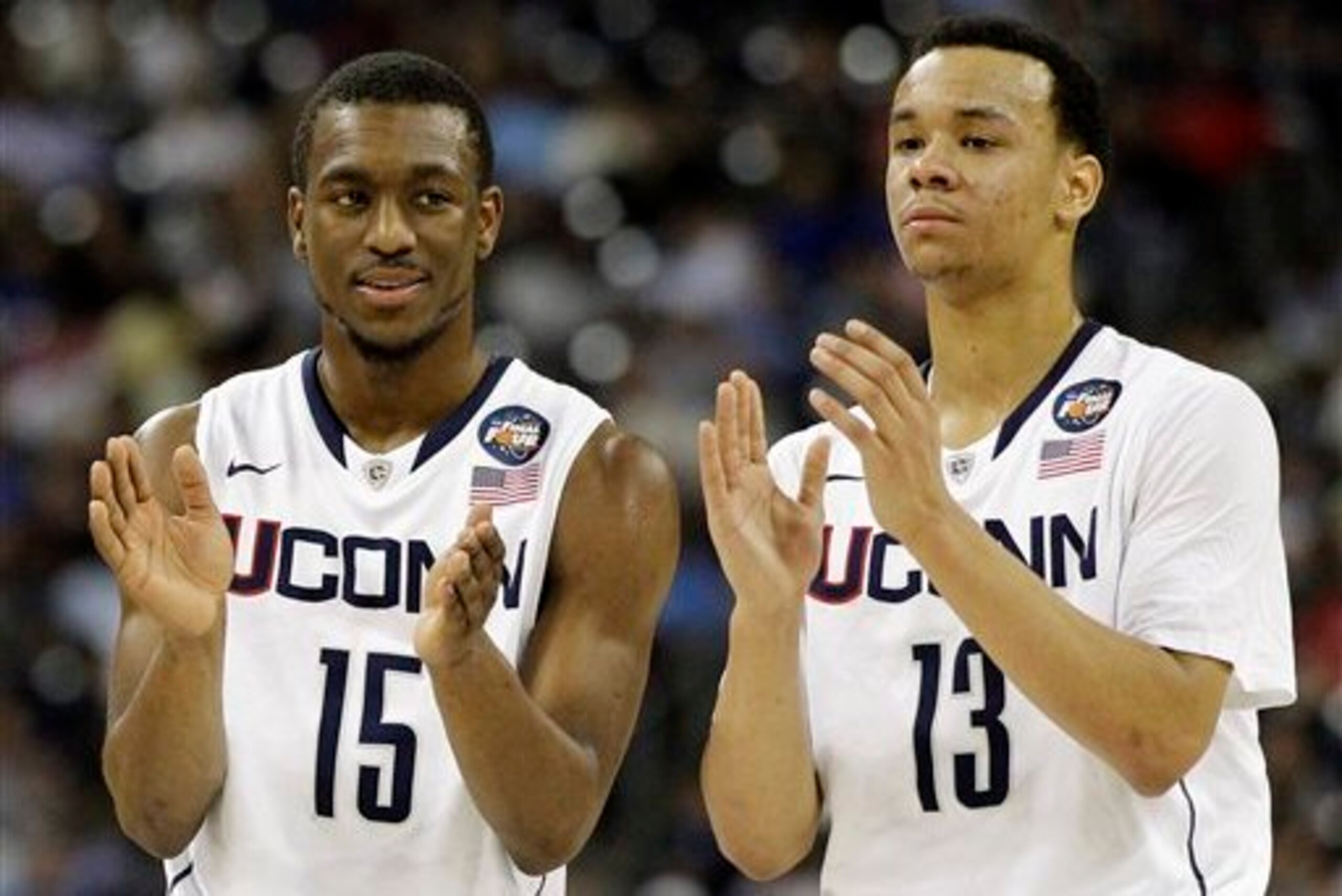
2011 was more "traditionally" crazy with four double-digit seeds in the Sweet 16 and only one No. 1 seed reaching the Elite Eight. The Final Four featured Nos. 3, 4, 8 and 11, and it had the infamous 53-41 title game between Connecticut and Butler.
2002 was the year No. 10 Kent State and No. 12 Missouri made the Elite Eight and No. 5 Indiana made it to the championship game. And in 1990, the Elite Eight pairings were No. 1 vs. No. 3, No. 1 vs. No. 11, No. 4 vs. No. 6 and No. 4 vs. No. 10.
On the other side of things, 2007 was by far the chalkiest tournament of all time, followed by 2009, 1993 and 2003. There were only four "major" upsets in the entire 2007 NCAA tournament, and the Elite Eight consisted of four No. 1 seeds, three No. 2 seeds and a No. 3 seed. No. 1 Florida won its second straight title.
2009 was the perfect blend of craziness, as there were eight major upsets in the first round followed by zero major upsets the rest of the way. We all want madness on the first two days of the tournament but not so much madness that the Final Four becomes a dumpster fire. And in 2009, we saw three No. 12 seeds and three No. 10 seeds pull off first-round upsets before eventually seeing only Nos. 1, 2 and 3 seeds in the Elite Eight.
1993 did have a little bit of craziness with No. 12 seed George Washington and No. 7 seed Western Kentucky reaching the Sweet 16 and No. 7 seed Temple reaching the Elite Eight, but it was otherwise quite chalky, with No. 1 North Carolina winning it all. And though 2003 gave us No. 3 Syracuse over No. 2 Kansas in the national championship, major upsets were few and far between.
But here's the interesting thing about the regular seasons before those tournaments:
| Average in years of the four craziest tournaments | 3.75 | 9.75 | 15.25 |
| Average in years of the four chalkiest tournaments | 5.5 | 11.0 | 16.0 |
| 2015-16 | 6 | 11 | TBD |
*Conference sweeps are when the team that wins the conference tournament also earned at least a share of the regular-season championship.
The theory behind looking into the sweeps data was that more of them would mean stronger Nos. 12-14 seeds, thus producing more early-round upsets. In actuality, the chalkiest tournament (2007) had 18 sweeps, while the craziest one (2014) only had 14 sweeps. The difference between the average number of sweeps is so marginal that the lack of No. 1 seeds winning minor conference tournaments this week doesn't necessarily tell us anything.
The data on No. 1 teams is of particular interest, as it flies in the face of what many want you to believe about what's going to happen this March. Everyone points to the changing of the guard atop the AP Top 25 as the primary shred of evidence that there are no elite teams this season, but more No. 1 teams has traditionally meant more chalk.
And if years of experience matter as much in March as we have been made to believe for decades, it's hard to argue with this year's crop of veterans. Denzel Valentine, Buddy Hield, Malcolm Brogdon, Brice Johnson, Yogi Ferrell and the immortal Perry Ellis are all seniors who are potential Wooden Award finalists on title contenders.
Yet if there's one thing we've learned from the madness, it's that data—past or present—doesn't mean a darn thing in March.
In the round of 64 in 2013, Syracuse was playing the Thursday night late game in San Jose, California. Historically speaking, East Coast teams playing in that last batch of games Thursday had struggled, and Jim Boeheim's 2-3 zone was facing a Montana team that entered the tournament shooting 40.3 percent from three-point range.
The data was too much to ignore. I picked the Grizzlies to pull off the upset.
They shot 4-of-31 from beyond the arc and lost 81-34.
"Do not go by the experts, guys, because we don't know, either," said ESPN's Fran Fraschilla on an edition of SportsCenter this past Thursday morning.
So, sure, seasons with more No. 1 teams in the polls have resulted in tournaments where No. 1 seeds last longer, but does that really mean anything for this year?
It was a lot of information to compile, but it all boils down to just a handful of Boolean results. On four occasions, a crazy season produced a rational tournament. You also might get heads on four straight coin flips, and that doesn't mean you're any more or less likely to get heads on flip No. 5.
And let's not kid ourselves: The 2015-16 regular season made some of those "crazy" seasons look downright comatose.
For example, 2007 was the chalkiest tournament and was the product of a season that was crazy...from a bird's-eye view. In actuality, there were four different teams that season—Florida, Ohio State, UCLA and North Carolina—that were ranked No. 8 or higher in the AP Top 25 every single week. The Gators, Buckeyes and Bruins all reached the Final Four, and the Tar Heels were eliminated in overtime in the Elite Eight. There was a good deal of shuffling in the polls throughout the season, but there was never any doubt who the best teams were.
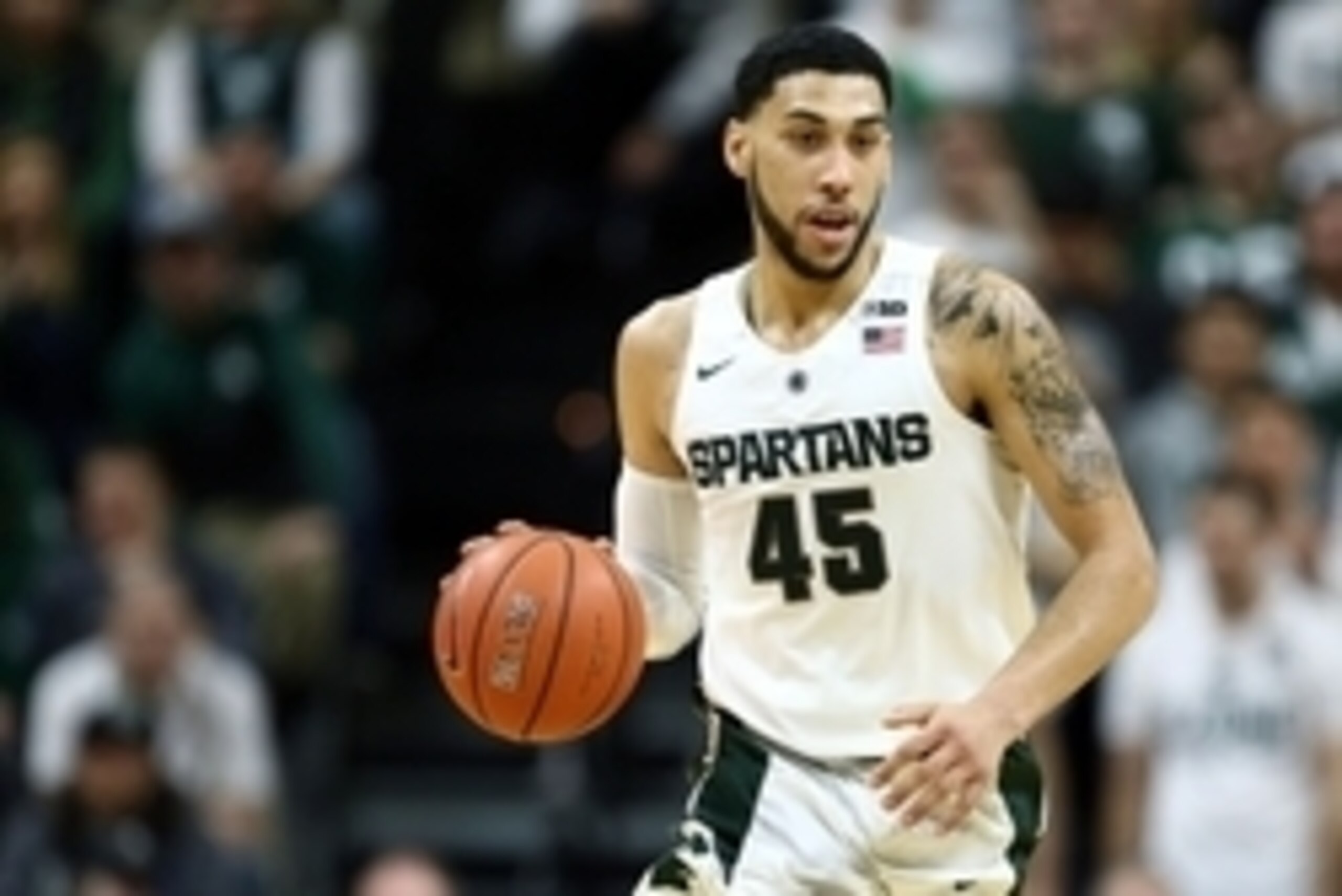
This year, we have no bleeping clue who the best teams are. Rather, we opened the season with no clue, and now we have less of one.
Kansas and Michigan State feel like the two best teams in the country, but popular opinion is that the Big 12 always underwhelms in the tournament and that the Spartans always overperform—but how can one outdo its seed if it gets a No. 1?
Villanova and Virginia aren't far behind that duo in terms of 2015-16 dominance, but if you can trust either of those teams after the past few seasons, you're braver than us.
Long story short, if you feel confident about picking anyone to the Final Four, you haven't been paying much attention for the past four months.
What we do know is that whether it's chock-full of upsets or just plain chalk, it's going to be a fun tournament in which we all fail to pick the perfect bracket. The only question is whether we'll be treated to another moment as magical as Ron Hunter falling off his stool.
Kerry Miller covers college basketball for Bleacher Report. You can follow him on Twitter @kerrancejames.


.jpg?w=2560 "Dak to Stroud: Get Some Wins 💯")
.jpg?w=2560 "5 NFL Players Getting Trade Buzz")


.jpg?w=2560 "NFL Won't Fine 'Beverage' Celebrations 🍻")