

Realistic Expectations for Williams in 2016 Formula 1 Season
The logic at Williams was as reasoned and sensible as ever.
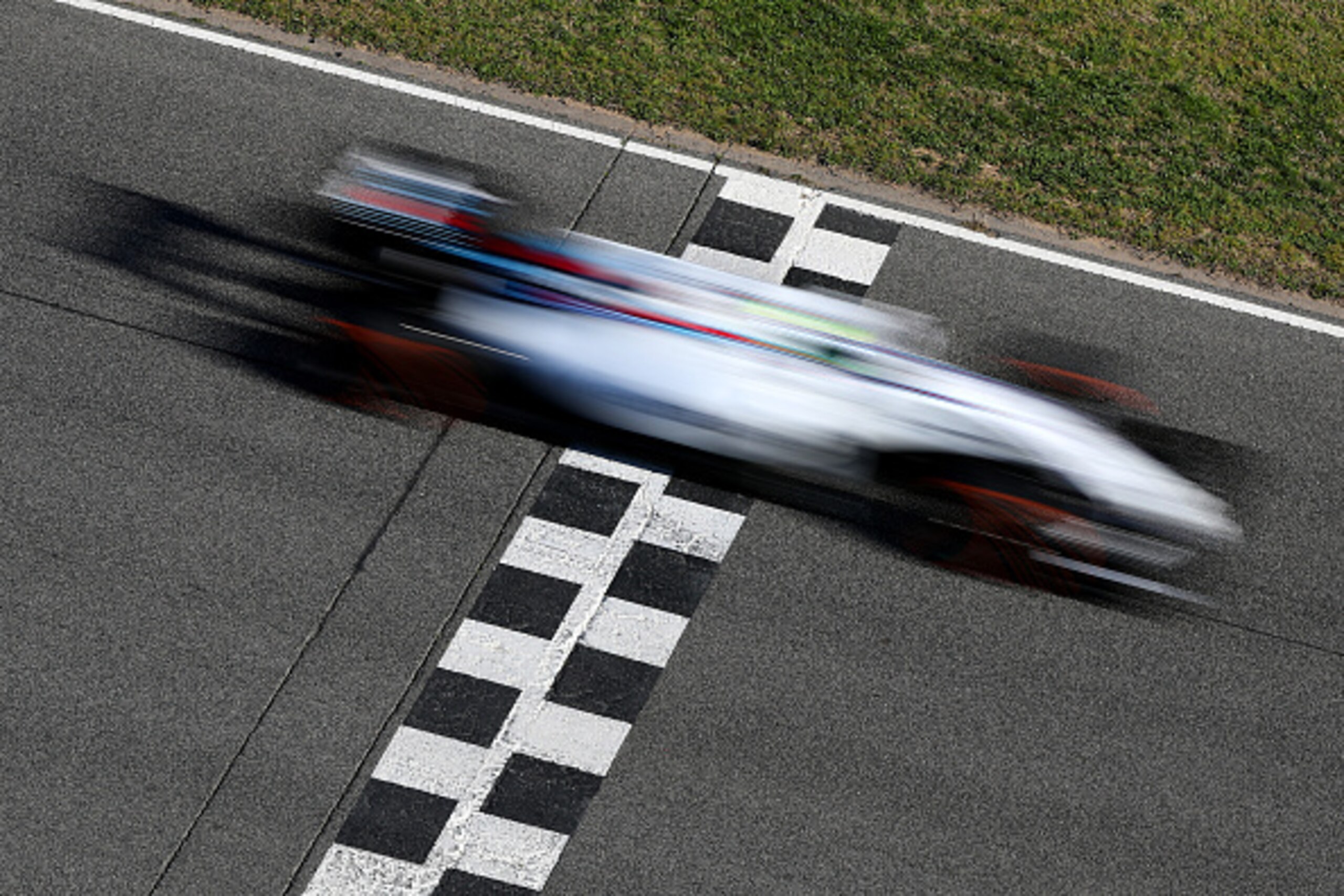
As they became the first team to launch their 2016 Formula One car ahead of the first of two pre-season tests at the Circuit de Barcelona-Catalunya in February, Pat Symonds revealed the thinking that resulted in the birth of the new FW38.
Rather than discussing anything from the revised suspension geometry to the new, curved sidepod inlets, however, the chief technical officer explained that behind the new car—this highly complex, state-of-the-art piece of engineering—lay a disarmingly simple idea.
TOP NEWS
Broadcaster sorry for false LeBron rumor

Stephen A. Apologizes After Lane Johnson Comments
Ravens Trade for Eagles Pro Bowl OL 🚨
As Symonds told the team's official website, the target was to concentrate on "understanding the areas where we could improve" the 2015 car "without losing the attributes which made it effective."
To do so, Williams, as reported by Autosport's Lawrence Barretto, took the unusual and very modern step of forming a "working group" dedicated to solving the team's issues with understeer at low-speed circuits and in wet conditions, in which the third-fastest car in Formula One would often become completely unworkable.
And, on the evidence of the opening test at least, the mission has been accomplished.

Following his first two days with the FW38, Valtteri Bottas told Autosport's Barretto that while he was unsure if the team have done enough to stay close to Mercedes and Ferrari, he could "feel" the new car is already superior to its predecessor, confirming Williams have successfully "improved many of the weaknesses of last year."
Yet whether Williams have erased their main weakness of last year is unclear, for—unlike an unresponsive front end on the streets of Monaco—it is not something a working group, a committee or, to give it its proper name, a bunch of engineers sat around a table at the factory can easily resolve.
As, ultimately, a fast, well-balanced car is nothing without a team who can exploit it to its full potential.
Despite comfortably finishing third in the constructors' championship for the second successive season in 2015, Williams were incredibly fortunate to finish as high as they did in the final standings.
Fortunate in the sense that Red Bull were at war with Renault, fortunate that McLaren's renewed partnership with Honda began so terribly and fortunate that Force India's B-specification car did not race until the midseason stage—allowing Williams to finish third almost by default.
After the missed opportunities of 2014—most notably at the Austrian Grand Prix, where Bottas and Felipe Massa locked out the front row in qualifying only to fall to third and fourth respectively in the race—the team continued to be their own worst enemies from an operational perspective last season.

There was, of course, the silliness at Silverstone, where the pit wall panicked as their drivers found themselves in the lead of the race, but more concerning were the mistakes on the days Williams were under relatively little pressure.
Pit-stop blunders in Belgium, where Bottas' car was fitted with two different tyre compounds, and Abu Dhabi, where the Finn was released into the path of Jenson Button and consequently lost his front wing, were the type of clumsy, inexcusable errors you would not associate with a team led by a man of Symonds' experience.
Yet rather ruing what they don't achieve, Williams have often campaigned to celebrate what they do, with Symonds and deputy team principal Claire Williams claiming the team have not been given enough credit for their performances over the last two seasons in a Sky Sports television feature in 2015.
There is an element of truth to that, of course, although the team often appear to be a little too anxious to hide behind their inferiority complex—and their lack of resources compared to the likes of Mercedes, Ferrari, Red Bull and McLaren—in an effort to disguise their shortcomings.
With 2016 set to be the final year of the current regulations, and with no guarantee that their current level of performance will extend beyond this season, the stage seems set for Williams to become more adventurous, more daring, to take the initiative in situations in which they would normally be so frustratingly tentative.
Indeed, Bottas has already spoken of his desire to perform with more aggression, per Autosport's Barretto, suggesting he wants to alter his reputation as "a conservative driver, always bringing the car home" ahead of what could be a crucial season in his career.
But could it be that Williams have already missed their best chance to claim a grand prix victory for the first time since the Spanish GP of 2012?
With Red Bull, Force India and, to a lesser extent, McLaren—not to mention the Ferrari-powered Toro Rosso outfit—all in better shape than at this stage 12 months ago, the team are almost certain to be looking behind, rather than ahead, this season.
And simply clinging onto third place in the championship, their standard position since 2014, will be viewed exactly how Williams want it to be perceived: an outstanding result for a team of their size.
The key, as Symonds declared, is to address their biggest weaknesses while maintaining everything good about Williams up to now.
But that, as is often the case with this team, will be easier said than done.
.jpg?w=2560 "Cowboys Texans Football")


.jpg?w=2560 "5 NFL Players Getting Trade Buzz")


.jpg?w=2560 "NFL Won't Fine 'Beverage' Celebrations 🍻")