Barcelona Must Not Let Play-Acting Antics Detract from Style and Success
Barcelona rode their luck and took their chances in the Champions League round of 16 this week against Arsenal, emerging from the first leg with a 2-0 lead and a great chance of reaching the quarter-finals once again.
They also emerged with accusations aplenty of gamesmanship, play-acting and simulation—and those were just the complaints loud enough to hear.
It wouldn't be a surprise, in the collective online fury after the reigning champions managed to win while playing below their best level, if they were also held at least partly responsible for Arsenal missing their own chances on goal, perhaps through malfeasance or subtle north London climate change.
TOP NEWS

New NFL contenders starting to emerge after Week 4

Deion Playbook Found at Hotel
.jpg?w=2560 "Cardinals Giants Football")
NFL investigating 2 referees for separate viral exchanges
The reasons, and indeed to an extent the accuracy, of the complaints is immaterial; what matters is that after the event, the biggest talking points remain about the downsides to Barcelona's game rather than the fact that they clocked up a 27th win in 33 matches, in all of which they have been unbeaten—yet another club record.
Many are ready to hail this Barcelona team as the greatest of all time, but above all else, football is a game of the romantic notions of the masses. To be as fondly thought of and remembered in years to come as the likes of 1970 Brazil or the great Ajax side from the same decade, they have to stop the on-pitch theatrics and showcase only their technical brilliance.
The double treble
Barcelona began this season chasing a sextuple. They didn't quite manage it, winning the UEFA Super Cup and the FIFA Club World Cup but missing out on the Spanish Supercopa to add to last term's treble success.
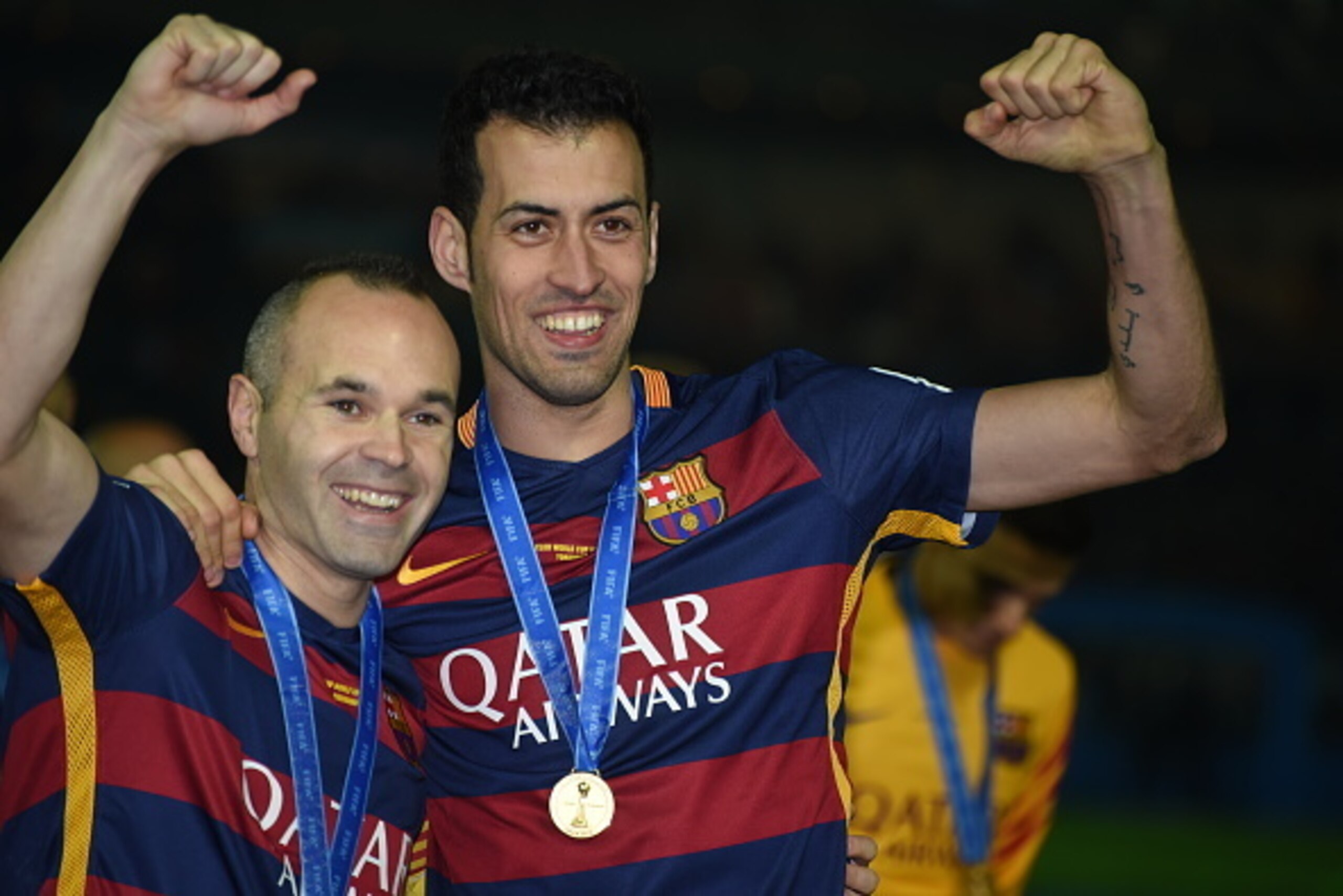
Improbably, they now aim to go even further: a double treble, matching last season's haul of Champions League, La Liga and Copa del Rey. They're well on the way to the latter two, eight points clear in league play and into the final against Sevilla as they bid to retain the domestic double.
Of course, it's worth noting that since the change in name and format, no side has ever retained the Champions League trophy.
Barcelona are still some distance from that—the competition is fierce, and it takes only a single off-day to lose the chance for good—at least for another year. Even so, the mere possibility of their doing so is an indication of the level of talent in the squad and the potential for what they could go on to achieve.
Plaudits and game plans
Every game, it seems at times, records will be broken or hunted down by Barcelona's individuals or the team as a whole. Whether it's the front three scoring goals, the entire side remaining unbeaten or manager Luis Enrique clocking up improbable win percentages, the platitudes come fast and from every angle for the Camp Nou club.
Barcelona have also been lauded for having a commitment to an identifiable style of play, for remaining consistent in their tactical work and merging new players seamlessly into the team, as well as employing head coaches with links to the past of the club more often than not.
Politics means not everybody can or will be happy about Barcelona not being just a football club, while others—neutrals—might think it acceptable and even important that an organisation can align itself with a set of ideals, whether or not those are "good" or "right."
Add in the penchant (somewhat departed in the last four or five seasons due to the cyclical nature of academy football production) for encouraging the progression of youngsters from within the club to move into senior football, and it's easy to see why Barcelona are admired by many.
Then there are the names, the headlines, the stories, the goals, the trophies. It all mounts up, and the greatest clubs in any particular era always (notwithstanding bribery and such) deserve success, regardless of how it is attained. Football is too competitive to allow things to happen any other way.
The other side of the coin
But Barcelona are far from only about plaudits.
There are those who despise the club on a personal level due to geographical proximity or elevation of rivalry with a different club. In this argument, those supporters are largely irrelevant: Real Madrid fans would hate Barcelona if they donated every penny of gate receipts to a fund for blind nuns and only employed footballers who were also humanitarians, philanthropists or scientists tasked with ending every illness in the world.
And that's perfectly right—football is born of, and grows because of, rivalries. Sport needs that, and it would remain exactly the same in a role reversal of Real and Barca.

No, the problem the Catalan club faces now is on account of far more unsavoury issues than a mere rivalry, and that's what is causing the headlines, the discontent and the disgust directed at Barcelona at times.
Tony Evans of the Evening Standard hammered the points home with a series of comments covering aspects such as Neymar's and Leo Messi's tax-evasion charges, the association with Qatar and its worker treatment for the 2022 World Cup and the recent transfer ban for breaching regulations on signing minors.
It's a hideous and viciously decried collection of the modern wrongdoings of the club, but regardless of the level of agreement on which offences are worse (or were harshly punished, or not punished enough), the fact that they have all happened and continue going on at the club is certainly grounds for concern and dislike.
For an organisation which lauds itself as being a socially moral one and has obvious commercial designs on attracting supporters from all over the world, it's not quite the standard one might expect them to set.
In-game wrongs
For many, many supporters, though, of Barcelona or other clubs, only what goes on on the pitch matters. In that area also, Barcelona let themselves down far too often.
If Opta measured a "complaints to the officials against times actually fouled" ratio, Sergio Busquets would be top of the league. For a percentage of "rolls along the ground completed," Dani Alves would have a more impressive number than his cross-completion rate. Jordi Alba would have better stats on "face clutched after no contact" than on "dribbles completed," and so on.
And it's not exaggerating, especially where the Spanish left-back is concerned, a hilarious (or disgraceful, to put it another way) over-actor who inevitably proceeds to become petulantly aggressive when decisions don't go his way.
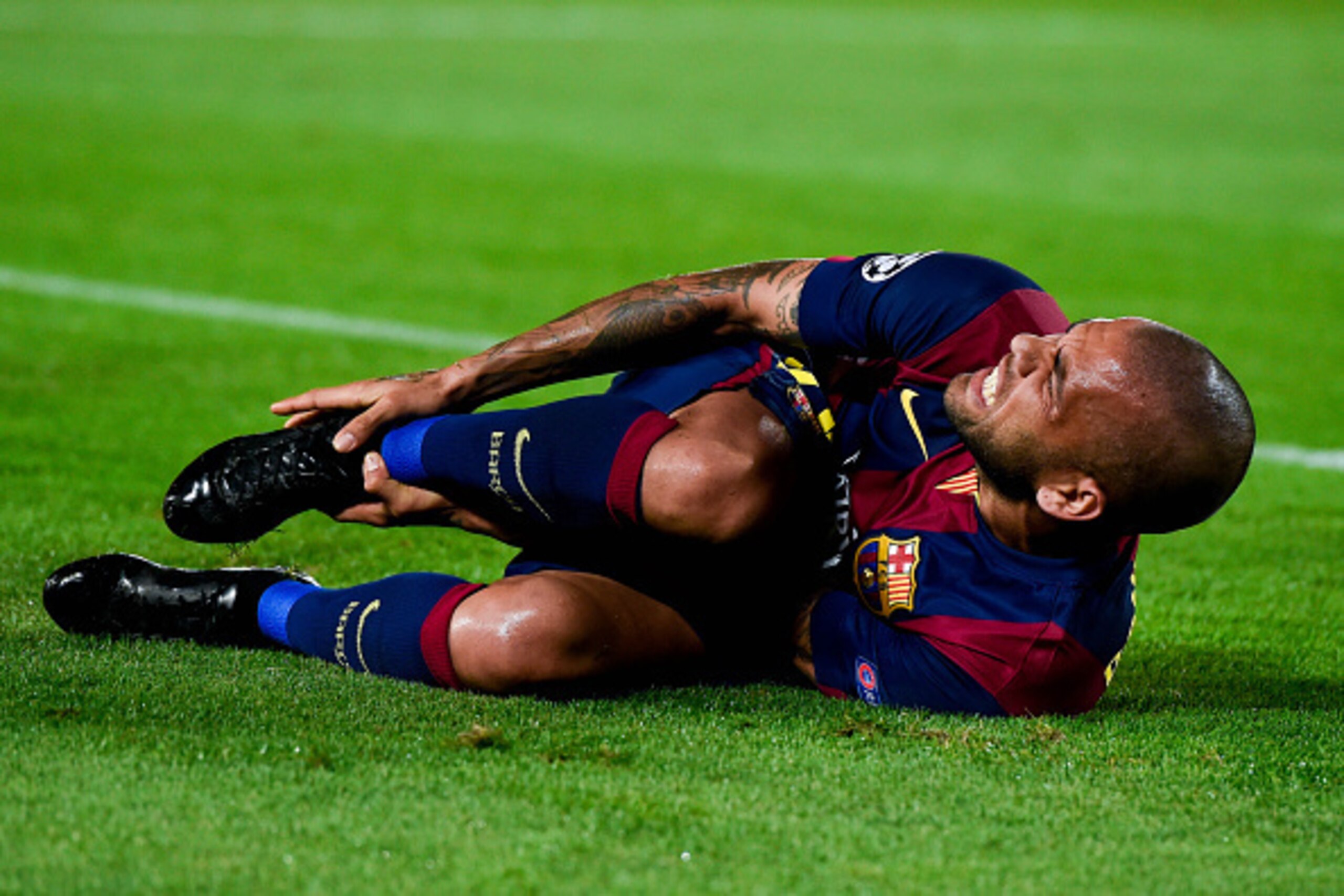
Even Messi got in on the "waving imaginary cards" act, asking for bookings for the Arsenal players, something he and his team mates usually restrain themselves from doing, despite Neymar being La Liga's most fouled player, according to WhoScored.com. That one is an actual stat.
Dives, attempts to con the referee and theatrics impress nobody.
Quite why players, Barcelona or otherwise, continue to resort to these idiotic tendencies in full knowledge that dozens of cameras and millions of eyes are trained upon them is anyone's guess. It doesn't appear to matter, as they won't be retrospectively challenged and punished for it.
Why? It'd be pretty much a cut-and-dried case, in the matter of Alba vs. Arsenal for example, to suggest he has been blatant in attempts to con the referee into thinking he has been deliberately hit in the face, though he wasn't.
Two-match ban, Jordi. No second leg, and no quarter-final appearance for you. Do it again upon your return, and it's three—two semi-final legs and the final.
It would soon stop. Probably.
Tainted love
So where are the battle lines drawn in football, between success attracting admiring glances—new players, new fans—and a bitter taste being left at the "bad" team emerging victorious, alienating those potential catchment areas?
Does the incessant play-acting and arguing with officials override how good the football is and how intricately the best players on the team can slice apart opponents? Are Barcelona running the risk of not capitalising on their success as much as they should, or do the inherently short-term memories of football fans render it irrelevant?
It can't entirely be the latter. Chelsea might have seen their fanbase grow exponentially since Roman Abramovich's investment, but it's doubtful they snared too many admirers by bus-parking their way to the Champions League title, while Holland would never have been reminisced over had they kicked and stamped their way to the 2014 World Cup instead of Spain's all-conquering tiki-taka stars.
Barcelona, like everyone else, have to strike a balance. They want the success, the admiration and the commercial growth, but it cannot all come with the current face of the club.
Trophies will spawn further dislike just as much as attract new supporters, but for the neutral or even grudging admiration of the football world at large, the unsavoury antics have to stop, at least the controllable aspects on the pitch, if not those of a greyer and shared responsibility off it.
.jpg?w=2560 "Hill Injury Update Football")
.jpg?w=2560 "Titans Giants Football")

.jpg?w=2560 "Tyreek makes another cryptic post amid Chiefs rumors")