CBB Landscape Returning to Normal as Traditional Powerhouses Right the Ship
It's always darkest before the dawn, and January was a pretty dark time for most college basketball fans.
For those of you who either have a selective memory or were too busy with football to pay attention to upset after upset, let's recap some of the January carnage that led to a nationwide resignation to the "fact" that there simply aren't any great teams this year:
- Kansas lost three Big 12 games by a combined margin of 43 points. With the Jayhawks sitting at 5-3, it was the first time they had lost at least three of their first eight conference games since the 1988-89 season—which was the last time they failed to make the NCAA tournament.
- Duke lost three straight games for the first time since 2006-07 and extended the schneid to four losses in five games, dropping out of the AP Top 25 poll for just the second time in the lifetime of its freshman class.
- Kentucky—already in possession of two December losses to unranked foes—was blown out by LSU before losing to Auburn.
- Virginia lost back-to-back games to Virginia Tech and Georgia Tech and lost to Florida State a week later to fall to 2-3 in ACC play. The Cavaliers went 32-4 in conference play over the previous two seasons.


And those are just the teams that opened the season ranked in the Top 6 of the AP Top 25.

We also had Michigan State at 3-4 in Big Ten play after a three-game losing streak capped off by a home loss to Nebraska. Wisconsin was even worse off at 9-9 overall with a 1-4 record in conference play.
The Pac-12 was the epicenter of the chaos with upward of nine teams projected to make the NCAA tournament in late January, even though none of them had much Sweet 16 potential. And Arizona's January consisted of four lost games and one lost scorer, as Allonzo Trier missed nearly a month with a broken hand.
Just about the only teams that weren't dropping games left and right were Iowa, Maryland, Oklahoma, Oregon, Texas A&M, Villanova and Xavier, and considering those seven teams have combined for precisely zero Elite Eight appearances in the past six NCAA tournaments, we were beyond hesitant to put too many eggs in those baskets.
As a result, college basketball experts across the board have been chiming in on Twitter for the past month with their variations of "Trust no one!"
I tried to warn you, though: This kind of thing happens every year.
Maybe it isn't always this widespread. Perhaps it feels even more pronounced than usual in the first year after watching Kentucky (2014-15) and Wichita State (2013-14) flirt with 40-0 seasons. However, it's pretty darn common for even the eventual national champion to go through a bit of a swoon in January.
And now that we're more than halfway into February, things are really beginning to return to normal.

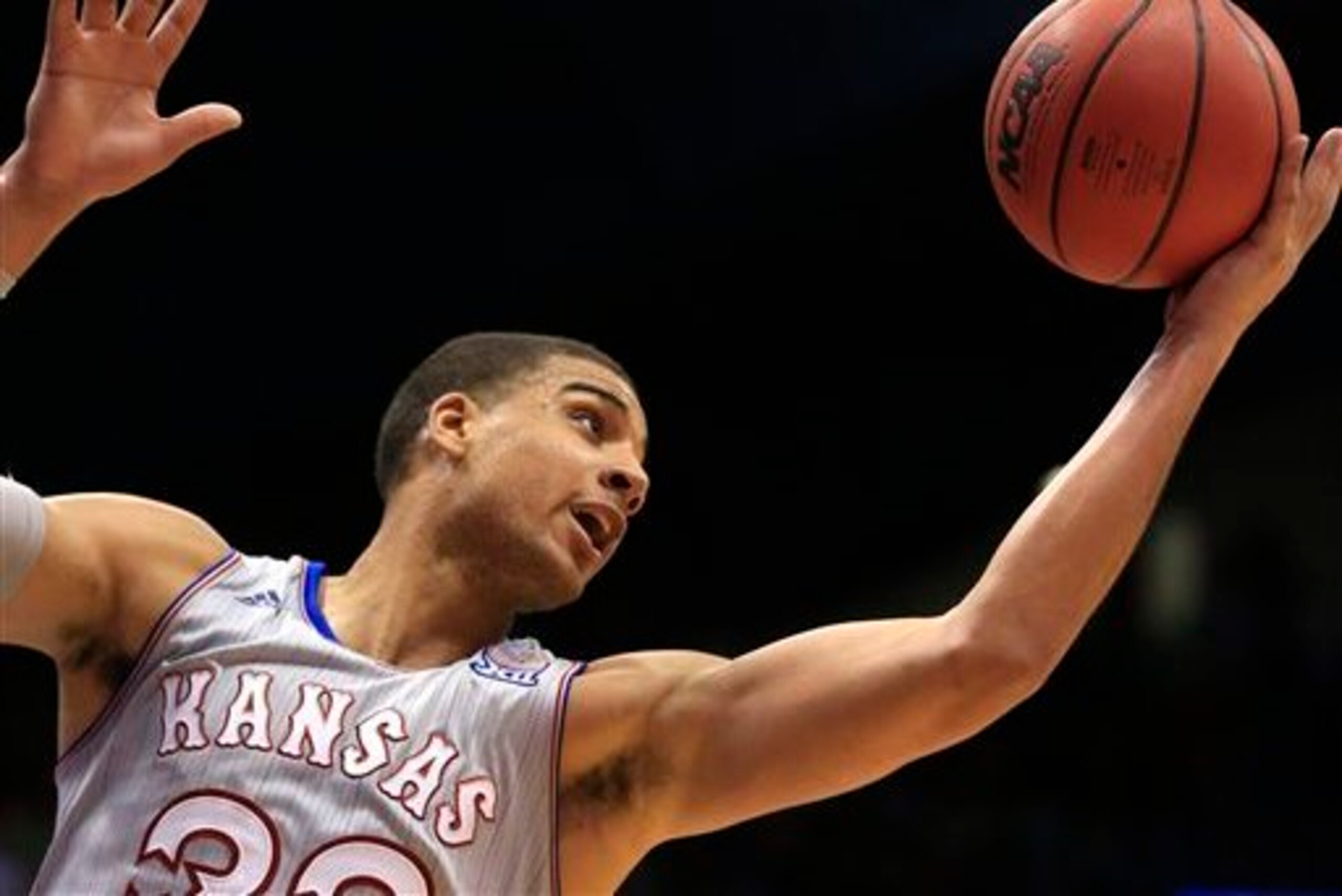
Kansas has won six straight to get back into sole possession of first place in the Big 12 standings, including Monday's 27-point win over Oklahoma State, emphatically avenging the earlier 19-point loss to the Cowboys.
Duke has won five straight games, including the last three against Louisville, Virginia and North Carolina, erasing any cockamamie notions that the Blue Devils might actually miss the NCAA tournament.
With that said, we'll have to wait and see how Matt Jones' sprained ankle responds in the next few days before we can really think about how far Duke can go in the tournament.
Kentucky has won its last four games by a combined margin of 90 points, and the Tyler Ulis-Jamal Murray backcourt duo is playing like one that can win a national championship with or without help from its frontcourt.
Virginia has won eight of its last nine games, and the one loss during that span was a controversial one on the road against the aforementioned red-hot Blue Devils.
Michigan State has won six of its last seven and even erased an 18-point deficit to force overtime at Purdue in the one loss. Arizona has won six in a row. And though Wisconsin lost at Michigan State on Thursday night, the Badgers entered the game with seven straight wins, including victories over Michigan State, Indiana and Maryland.
So, when people—such as Bob Hertzel of the Exponent Telegram—try to perpetuate the idea that there aren't any elite teams this year by noting that the teams in the Week 14 AP Top 25 went a combined 27-23, kindly remind them that 25 teams don't go to the Final Four.
The usual suspects are back, and they mean business.
For a variety of reasons, it took them a while to get here.
Some of these teams needed to figure out the best use of their personnel. Kansas had to wait for junior forward Landen Lucas (9.2 points, 9.0 rebounds per game in February) to emerge as the best option alongside Perry Ellis.
Likewise, Kentucky didn't start to hit its stride until junior forward Derek Willis (12.0 points, 7.2 rebounds over last 10 games) started getting significantly more playing time.
Wisconsin's Jordan Hill averaged 2.3 minutes per game before Bo Ryan's abrupt retirement, but the sophomore glue guy has averaged 20.6 minutes since Greg Gard took the reins.
Some teams needed to refocus their efforts on the defensive end.
Virginia has gotten back to its bread and butter from the past two seasons, allowing a very Tony Bennett-like 51.5 points per slow-paced game over its last six.
Meanwhile, Duke has gotten away from the zone defense that was absolutely shredded in January. As noted by NBCSports.com's Rob Dauster, "Duke has started to make some strides on that end of the floor, and it stems from a subtle tweak that they've made in their defensive philosophy: They're not switching anymore."
Other teams simply needed to get back to full strength. Denzel Valentine missed four games and didn't look quite like himself in the next four, but Michigan State's stud has averaged an insane 22.9 points, 8.9 assists and 8.0 rebounds over his last seven games.
And Arizona is clearly better off with Trier back in the lineup, as the super frosh has averaged 17.3 points over the past three contests.
Regardless of what delayed their arrival—or how badly that delay may have impacted their projected NCAA tournament seed—the preseason favorites to win it all have begun to assert their dominance.
That isn't to say that No. 1 and No. 2 seeds will undoubtedly reign supreme for the first three rounds of the Big Dance. One of the biggest things we love about college basketball is that anything can happen in the tournament, no matter how topsy-turvy the regular season was.
Just don't expect to see half a dozen double-digit seeds in the Sweet 16 of a tournament where parity is crowned our national champion.
Long story short: A Final Four made up of the teams from the Champions Classic doesn't seem anywhere near as unreasonable as it did a few weeks ago.
Kerry Miller covers college basketball for Bleacher Report. You can follow him on Twitter @kerrancejames.


.jpg?w=2560 "Dak to Stroud: Get Some Wins 💯")
.jpg?w=2560 "5 NFL Players Getting Trade Buzz")