Graduate Transfers Will Continue Making Major Impact on College Football
It was like placing a huge ad in the New York Times.
Wanted: Playmaker who covets final season in the most challenging of settings. Must have degree and be willing to relocate no questions asked. All the barbecue he can eat and potential bonus of jewelry.
That was essentially University of Alabama head coach Nick Saban on national signing day when answering a question about the program’s new running backs, delivering a response that was the equivalent of a college football personal.


_0.png?w=2560)
“I'm pleased, but we're always looking for good players, and it seems with these graduate transfers, just looking at the history of it, there seems like there are more skill guys, receivers, running backs that do that type of things,” he said. “So we'll probably be on the lookout for the next best player we can find, whether it's somebody that didn't sign on signing day or someone who is out there looking for an opportunity."
That opening was apparently filled over the weekend when Bowling Green wide receiver Gehrig Dieter announced his intention to move on to Alabama as a graduate transfer. He’ll miss spring practice while finishing up his degree in sports management.
"— Gehrig Dieter4⃣ (@gehrigd4) February 13, 2016"
Dieter is a proven commodity after leading his team with 94 receptions for 1,033 yards in 2015, and at 6’3”, he’s the exact same height as the player he’ll be replacing. Richard Mullaney, a graduate transfer from Oregon State, caught a lot of passes for the Crimson Tide last season from another graduate transfer, Jake Coker.
Coker’s story is well-known. He hails from the Mobile area, initially signed with Florida State, got stuck on the depth chart behind Heisman Trophy winner Jameis Winston, worked to get his degree early and transferred to Alabama. He spent a year backing up Blake Sims, but then finally won the starting job.
“Dream come true,” Coker repeatedly said, even before winning the national championship.
When looking around college football, it’s impossible not to notice the impact that graduate transfers are having on the game, even when focusing on just the quarterback position.
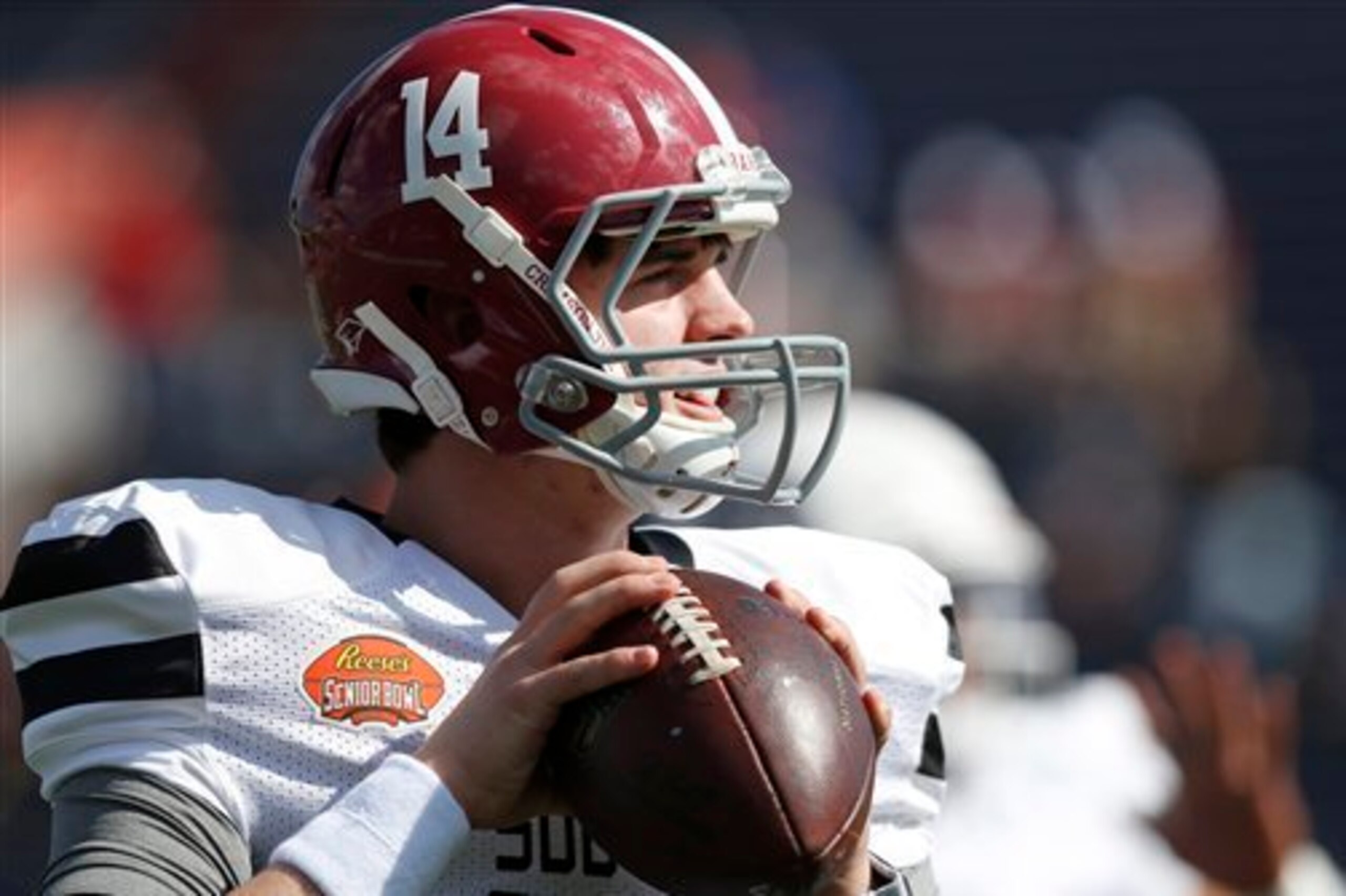
Florida State, Michigan and Oregon all finished in the Top 25 with graduate transfers at quarterback, the most notable being Vernon Adams with the Ducks. He began his career at Eastern Washington, where he won three consecutive Big Sky Conference titles and was twice the runner-up for the Walter Payton Award.
What’s allowed them to do this is a rule that dates back to 2005 which permits student-athletes with a completed degree to transfer and play immediately if the current school doesn't offer his or her preferred graduate program.
Among the first to take advantage was Seattle Seahawks quarterback Russell Wilson, who went from North Carolina State to play his final season for Bret Bielema at Wisconsin. He set the single-season NCAA record for passing efficiency and was named the MVP of the inaugural Big Ten Championship Game.
Among those who hope to follow in his footsteps this year include Trevor Knight, who transferred from Oklahoma to Texas A&M after the Aggies had two high-profile departures (Kyler Murray to Oklahoma and Kyle Allen to Houston). Dakota Prukop is trying to become the next Adams, going from Montana State to Oregon, and Patrick Towles left Kentucky for Boston College.
Elsewhere in the Southeastern Conference, Austin Appleby is transferring from Purdue to Florida (where Will Grier is leaving after being suspended for a whole year), Alec Morris has already left Alabama for a chance to start at North Texas and Faton Bauta said goodbye to Georgia for Colorado State.
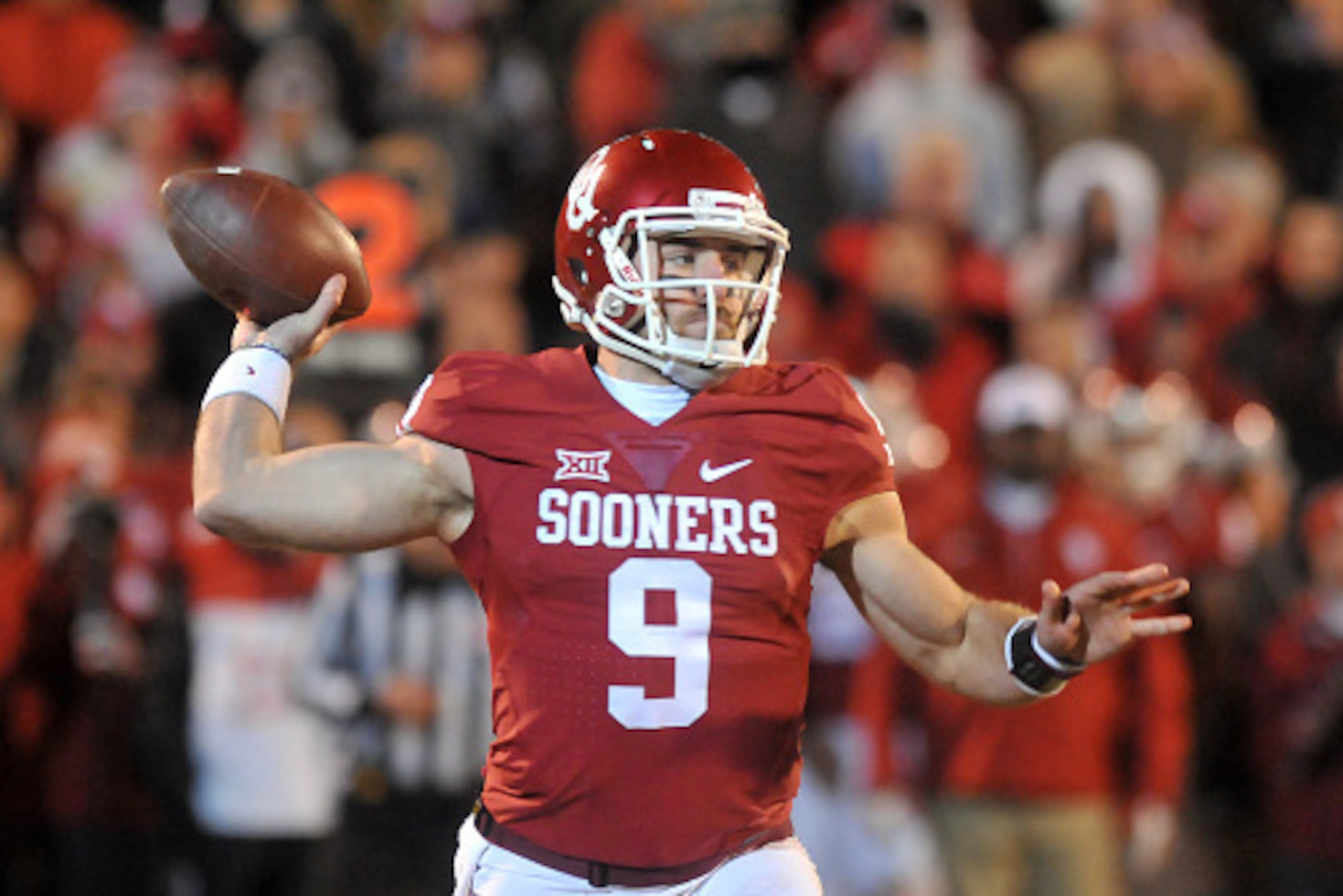
Pure and simple, the rule is a loophole, one that many people want to close. Critics liken it to free agency, stating that the rule doesn’t follow the spirit of the legislation and there are already too many repercussions from transfers as is.
For example, Chad Kelly’s arrival at Ole Miss helped lead to the departure of the two quarterbacks he beat out for the job. Ryan Buchanan decided to give up football, and DeVante Kincade left for Grambling State. Of course, Kelly helped lead Ole Miss to its first Sugar Bowl win since 1970. Meanwhile, Oklahoma made the 2015 playoffs with a transfer taking snaps, as Baker Mayfield began his collegiate career at Texas Tech.
Skeptics also say that these kinds of moves are often another case of the rich getting rich, while schools like Bowling Green take yet another hit. To them, adding a player like Dieter helps Alabama act like the New York Yankees of college football, which is fitting—he was named after legendary player Lou Gehrig.
Dieter was a Parade All-American and the Indiana 4A Player of the Year during his senior year at Washington High School in South Bend, Indiana. He set national records for receiving yards in a game (437), receiving yards in a 4A state playoff contest (168) and career touchdown receptions (49).
Moreover, this will be Dieter’s second transfer. He originally played 10 games and made three starts at Southern Methodist, where he caught 10 passes for 168 yards and a touchdown during the 2012 season.
| Name | Recruited | Stars/Ranking |
| Calvin Ridley | 2015 | 5/11 |
| Robert Foster | 2013 | 5/23 |
| Cameron Sims | 2014 | 4/84 |
| ArDarius Stewart | 2013 | 4/87 |
| Daylon Charlot | 2015 | 4/90 |
| Trevon Diggs | 2016 | 4/113 |
| Derek Kief | 2014 | 4/221 |
| Raheem Falkins | 2013 | 3/364 |
| Gehrig Dieter | 2012 | 3/877 |
In that respect, the critics are correct. He’s taking advantage of a loophole in the system. But look at his situation.
Since winning its second Mid-American Conference championship in three years, Bowling Green has lost its coaching staff, quarterback, running back and other top receiver.
Specifically, Dino Babers and his staff were hired away by Syracuse. Quarterback Matt Johnson, who suffered a broken hip in 2015, chose not to pursue a sixth year of eligibility. Travis Greene, the Falcons' all-time leading rusher, had his eligibility expire, while wide receiver Roger Lewis left early for the NFL draft.
Like Mullaney, the idea of starting over during his final season took a backseat to getting a shot on the sport’s biggest stage. It could also help his chances of eventually landing a job in the NFL.
In addition to players having a better opportunity to improve their status, there are numerous other reasons why the NCAA shouldn’t close the loophole. Among them:
- Transfers have become part of the college experience. A 2012 study by the National Student Clearinghouse Research Center found that roughly one in three college students transfers at some point, and over one-quarter of all transfers cross state lines. That’s in general, not just with athletes.
- Colleges are climbing over each other to give student-athletes stipends and improve their living conditions. Schools can’t say they have their best interest at heart in one respect, but not another. Besides, graduate transfers have to acquire a release, so the colleges can already unfairly direct where they go.
- Finally—and this is the kicker—by acquiring their degrees, scholarship student-athletes have fulfilled their contracts with their respective schools.
Isn’t that why they’re there in the first place, to earn a degree?
Coaches leave all the time with half-filled contracts, whatever is convenient for them, and colleges seem to have no problem adding games to the schedule without considering if they’re in the best interest of the players.
The NCAA needs to try to avoid yet another double standard when it comes to the graduate-transfer rule—leave it alone.
After all, conference championship games and all the millions they make each year originally came from a loophole. However, you don’t hear anyone claiming they should go away because they weren’t the legislation’s original intent.
Quotes were obtained firsthand unless otherwise noted.
Christopher Walsh is a lead SEC college football writer. Follow Christopher on Twitter @WritingWalsh.

.jpg?w=2560 "NFL investigating 2 referees for separate viral exchanges")
.jpg?w=2560 "Report: Chiefs Contact Hill's Agent")
.jpg?w=2560 "OBJ Calls Out Giants 😳")
.jpg?w=2560 "Tyreek makes another cryptic post amid Chiefs rumors")