Real Madrid Unlikely to Ever Get Barcelona's Neymar—Club Needs Own Equivalent
The one who got away. The haunting near miss. Now one of them.
To Real Madrid, Neymar is all of those things.
A decade has passed since the 13-year-old Neymar turned down an opportunity to sign with Real Madrid from Santos in 2006, a decision that now stands as one of football's great sliding-doors moments.
TOP NEWS

New NFL contenders starting to emerge after Week 4
Deion Playbook Found at Hotel
.jpg?w=2560 "Cardinals Giants Football")
NFL investigating 2 referees for separate viral exchanges
Represented by Wagner Ribeiro, the agent who helped take Robinho from Santos to the Spanish capital in 2005, Neymar was introduced to Real Madrid and a deal began to take shape. The Brazilian spent 19 days in Madrid, taking part in training sessions at Real and attending games at the Santiago Bernabeu. He shone. Everything was set to go; a contract only needed to be signed.
But the trigger was never pulled.
As explained by the player's father, Neymar Sr., in Neymar: My Story—Conversations with my Father (h/t the Guardian), it was too much too soon. Homesickness set in for the teenager and his father; the pull of family and friends was strong, and Spain just wasn't Brazil. Europe would always be there, but this wasn't the time.
Fast forward a decade, and the sight of Neymar in a Barcelona shirt taunts Real Madrid. Like everyone else, they want him. Again. "Real Madrid president [Florentino Perez] is prepared to pay €190 million to activate his buy-out clause," said Marca.
Could Perez and Madrid pull it off, then?
It's not unthinkable; the situation is complex. But the chances remain minuscule for Madrid, and protecting their own equivalents would be worth prioritising.
Just as it is for the Premier League's cashed-up giants, the delicate nature of Barcelona's financial position gives Madrid just a hint of encouragement.
As indicated by Barcelona's financial report for 2014-15, the club has reached a fiscal position in which its wage-to-revenue ratio is too high. Of the club's €576 million revenue for last season, €419 million was needed to cover the club's wage bill—a colossal 73 per cent of revenue (for comparison, Madrid's is 50 per cent, according to their annual report) that's unsustainable for a club whose debt increased by €41 million last season and will soon embark on a €600 million revamp of the Camp Nou.
There are other complications too. As explained succinctly by Pete Jenson for MailOnline, Barcelona recorded a financial loss for participation in last season's Champions League despite winning the competition because of bonuses stipulated in the contracts of the club's stars.
There are also the matters of shirt sponsorship, which has yet to be agreed for next season (their deal with Qatar Airways runs out at the end of 2015-16, with Sport reporting Pepsi could be an alternative), the need to establish a number of additional revenue streams and the looming contract negotiations for both Neymar and Lionel Messi, whose respective deals are set to end in 2018.
Both men are in line for significant salary increases, but that could be problematic in such delicate financial circumstances. Former Barcelona president Joan Laporta labelled the club's board under Josep Bartomeu as "incompetent." Other well-connected figures, such as Sky Sports' Guillem Balague and ESPN FC's Graham Hunter, have expressed their concerns over Barcelona's ability to keep Messi, Neymar and Luis Suarez together in the long term.
It's this that will somewhat encourage Real Madrid, one of the few clubs capable of affording Neymar. And yet you sense Neymar would never be the one to leave the Camp Nou while Real Madrid's solutions may already lie within.
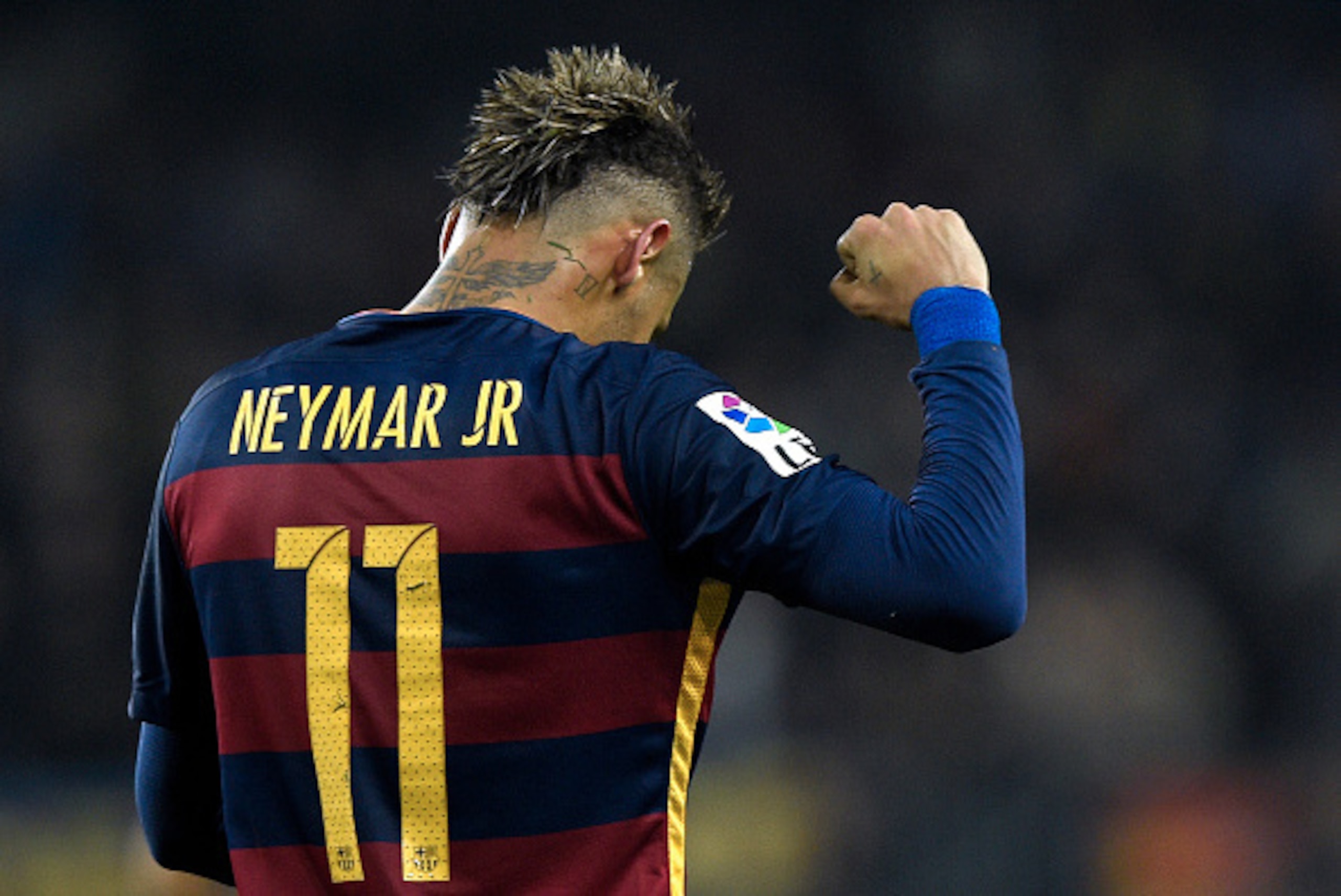
If Barcelona were pushed to a point financially that meant a major name would need to be sold, you suspect Suarez would be the first option. For any board in Catalonia, selling Messi would be a death wish, while Neymar, at 24, stands as the Argentinian's heir. "Neymar is not so much the man who would be king, but the man who will be king," said Bleacher Report's Graham Ruthven neatly.
Everyone is aware: Neymar's moment is coming.
A subtle shift has been evident in the Brazilian this season too. Steelier, hungrier, his focus unrelenting, Neymar has looked like a leader and a standard-bearer. When Messi went down with injury earlier in the season, it was the Brazilian who took the lead role, who shouldered responsibility, no one left in any doubt over the identity of the boss among those who remained.
Even that haircut at the time seemed to say something: I'm here to work.
That heightened maturity is significant here. You sense Neymar, regardless of money, wouldn't risk the extraordinary upheaval and controversy of a move to Madrid. "He will not be another Judas," said Barcelona great Hristo Stoichkov, when asked whether the forward would follow the path of Luis Figo.
So where does this leave Madrid?
At the Bernabeu, perhaps it's not so much Neymar who's needed exactly but an equivalent instead. At the Camp Nou, the Brazilian represents the future cornerstone of the club; in style, in influence, in aura, Neymar will be an obvious reference point, a pillar to build around.
It's this Madrid need.
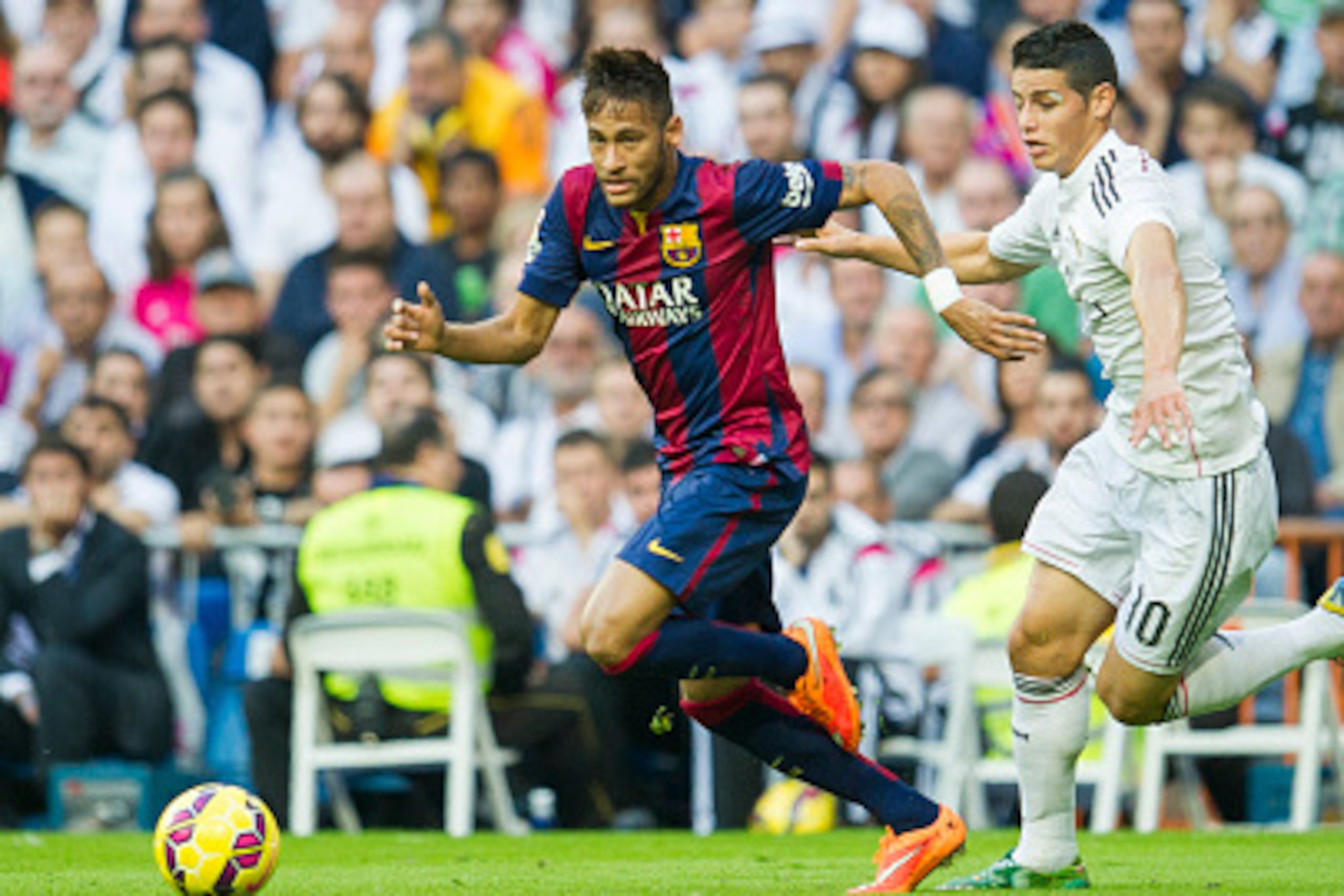
At present, an obvious and unchallenged candidate doesn't quite exist in Chamartin, but Gareth Bale and James Rodriguez do represent possibilities. Right now, the Welshman has his nose in front; six months ago, the Colombian did. Both possess extreme potential, yet it's hard not to feel their own club stands as their biggest obstacle.
Real Madrid is a sporting institution in which self-interest and political turmoil swirls like no other. Stars have seen their Bernabeu careers collapse because of it, and Madrid the club has so often been the architect of its own problems in recent years. Indeed, upheaval is regular; stability is scarce; squad construction is chaotic; players who accumulate power and influence are treated as suspicious.
These are the obstacles to Bale and James. But could it be different if the pair were protected and prioritised, their needs catered for and their virtues promoted? Could Madrid make Bale or James their own equivalent of Neymar—a pillar, a reference point, a future—with a shift in mentality and approach that emboldens them?
Might their solutions lie within?
.jpg?w=2560 "Hill Injury Update Football")
.jpg?w=2560 "Titans Giants Football")

.jpg?w=2560 "Tyreek makes another cryptic post amid Chiefs rumors")