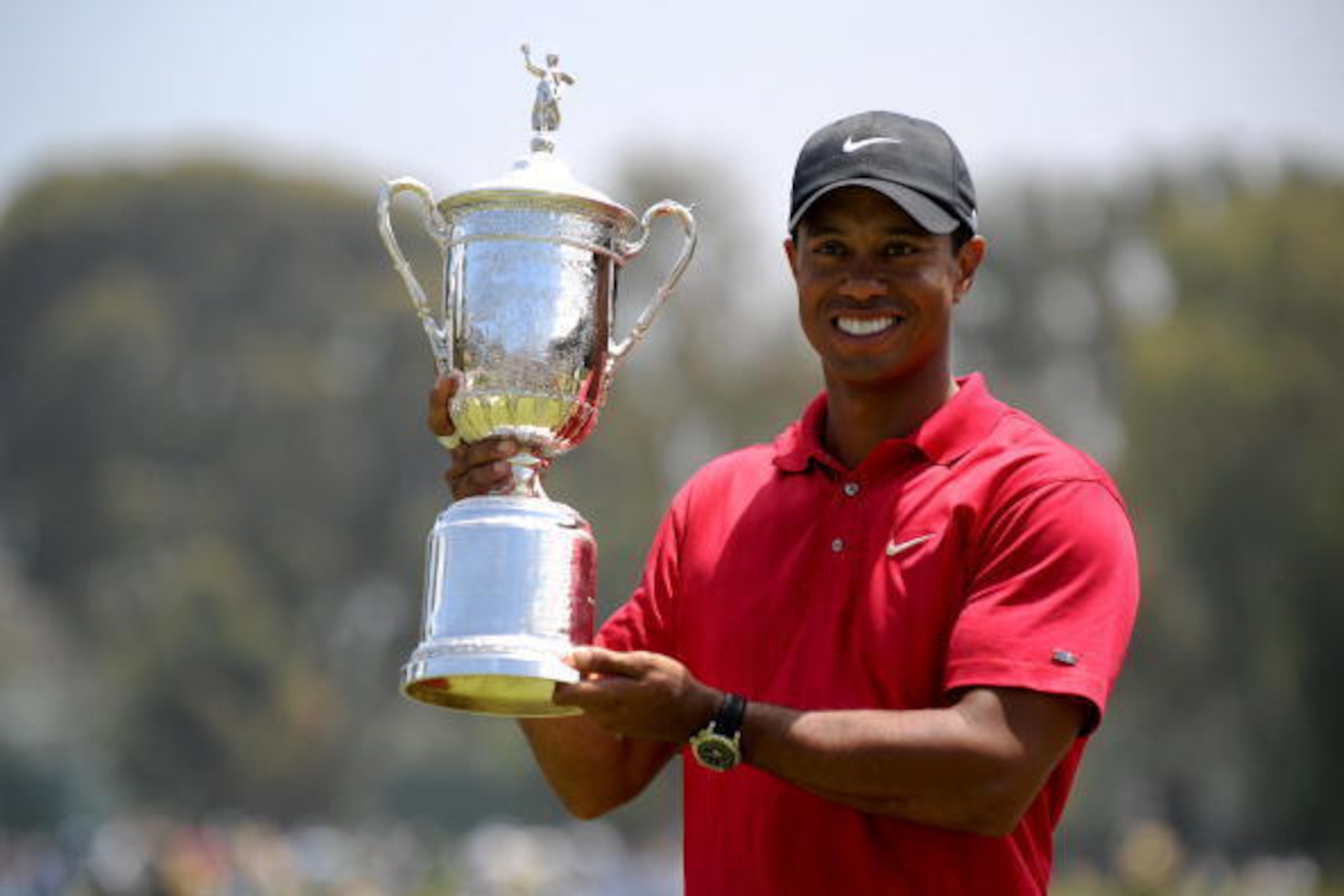

5 Lessons Today's Young Stars Should Learn from Tiger Woods' Up-and-Down Career
The top four players in the world today are all under the age of 28.
While these players have achieved incredible success at very young ages, they all possess the burden of playing in the era immediately following one of the most dominant players in the history of the game.
While comparing today’s top young stars to Tiger Woods may be unfair in a way, it is simply unavoidable. Woods set the bar so high during his career that it is simply impossible not to measure today’s top young players against Woods’ achievements.
However, as amazing as Woods was for more than 25 years as both an amateur and professional, his career did contain numerous peaks and valleys; some injury-inflicted and some self-inflicted.
Here are five things that today’s young stars can learn from the ups and downs of Woods illustrious career.
If It Ain’t Broke, Don’t Fix It
1 of 5
Throughout Tiger Woods’ career, he has undertaken five rather dramatic swing changes.
These swing changes came under the guidance of four different instructors, each of whom possessed very different swing philosophies.
Between the time Woods first turned pro in late 1996 and his 12-stroke victory at the 1997 Masters, he had won 25 percent of all PGA Tour events he entered and 21 percent of all major championships.
Woods was well on his way to completely dominating the professional game when he decided that a swing change was necessary in order to gain more consistency. So between late 1997 and early 1999, Woods underwent his first swing overhaul under the tutelage of world-renowned instructor Butch Harmon.
During that year-and-a-half Woods was transitioning to his new golf swing, he won just one PGA Tour event and did not win a major. Had he continued winning at the same rate he had prior to the 1997 swing change, he would have added three more PGA Tour wins (82) and one major (15) to his career totals.
Woods would of course go on one of the greatest runs the game had ever seen between 1999 and mid-2002, which to some validates his decision. But Woods was already headed toward that dominant state by late 1997. Heck, the guy won the Masters by 12 strokes and forced Augusta National to redesign almost the entire golf course to contain his power. Woods was going to dominate with any swing imaginable early on in his career; he was simply that talented.
During the five seasons between 1999 and 2002, Woods won 35 percent of PGA Tour events and 44 percent of the majors he entered.
Woods had just won his second consecutive major of the 2002 season when he again decided it was time for a change. So he parted ways with Harmon and brought in Hank Haney. Woods’ swing reconstruction under Haney took almost two years to set in, and he didn’t win another major title until the 2005 Masters.
Had Woods continued along the same path he was traveling by mid-2002, he would have added an additional five PGA Tour wins (87) and three majors (18).
Woods parted ways with Haney in 2010 and would eventually find some success with Sean Foley in 2012-2013, when he won eight times but did not come particularly close to winning a major. By the time Woods split with Foley in 2014, it was clear that both his mind and body were on the decline.
Woods would later say that many of his swing decisions were based on preserving his health, but the ironic thing is that during these swing overhauls he transitioned from a silky-smooth, effortless swing to a flat, herky-jerky one that put significantly more strain on his body and ultimately played a role in the complete physical breakdown he suffered during the late 2000s.
Essentially, Woods lost more than three-and-a-half years right smack in the middle of his prime due to his decision to tinker with his golf swing. Those three lost years were very likely the difference between Woods' breaking both Sam Snead’s record of 82 PGA Tour wins and Jack Nicklaus’ record of 18 majors.
So the moral of the story is: If it ain’t broke, don’t fix it.
Luckily, most of today’s top young stars don’t seem quite as obsessed with the golf swing as Woods had become during his prime. Perhaps having grown up watching Woods play has made players such as Rory McIlroy, Jordan Spieth and Jason Day more aware of the risks associated with changing a golf swing that got them to where they are today.
Don’t Make Your Entire Career About a Single Goal
2 of 5
From a very early age Woods had a single goal set out for his golfing career: breaking Nicklaus’ record of 18 career major championship wins.
Everything else was secondary to that sole career goal.
This also meant that no matter what Woods accomplished during his career, his work as a whole would be considered a disappointment if he did not win those 18 majors.
This goal Woods had set out for himself and made very public certainly served as a driving force behind his incredible major championship run. But it also set him up for failure because no one knows what the future may hold, and Woods didn’t count on crippling injuries popping up from 2008 onward.
Woods also should have realized that he was playing professional golf during a much different era than Nicklaus.
The game had gone global by 1997, the fields were much deeper, equipment advances had leveled the playing field and Woods had to deal with a 24/7 golf media that scrutinized his every move. Right from the get-go, Woods’ quest for 18 majors was going to be far more difficult than Nicklaus’ because the game had changed so dramatically.
So despite a phenomenal level of success that included six consecutive USGA titles, 72 PGA Tour wins and 14 majors, many now look at Woods’ career as something of a letdown due to his inability able to achieve the ultimate goal he set out for himself.
Had Woods not made his quest for 18 majors so public at a very young age, we’d likely be looking at his career in a much different light today. Instead of looking at his career through the lens of disappointment, we’d be looking back in awe and marveling at what he was able to accomplish within both the amateur and professional games.
We’d also more than likely be engaged in a much deeper debate as to who the greatest golfer of all time is. Woods had a better amateur career than Nicklaus, won not only 14 majors but 18 World Golf Championship events and completely dominated the pro game for 15 years against deeper, more global fields in a manner Nicklaus was never able to achieve during his career.
But because Woods’ had taken an "18 majors or bust" stance on greatness for most of his career, all of those other accomplishments become almost meaningless in any discussion about the greatest golfer of all time.
Players such as McIlroy and Spieth have already made it clear that they do not have a specific number in mind when it comes to major championship wins. Their goal right now is to simply play as well as they can and win as often as they can.
But as they begin to rack up more major championship titles through the years, let’s hope they have learned a lesson from Woods and will not set out a solitary goal that would signify a failed career if not realized.
Power Matters
3 of 5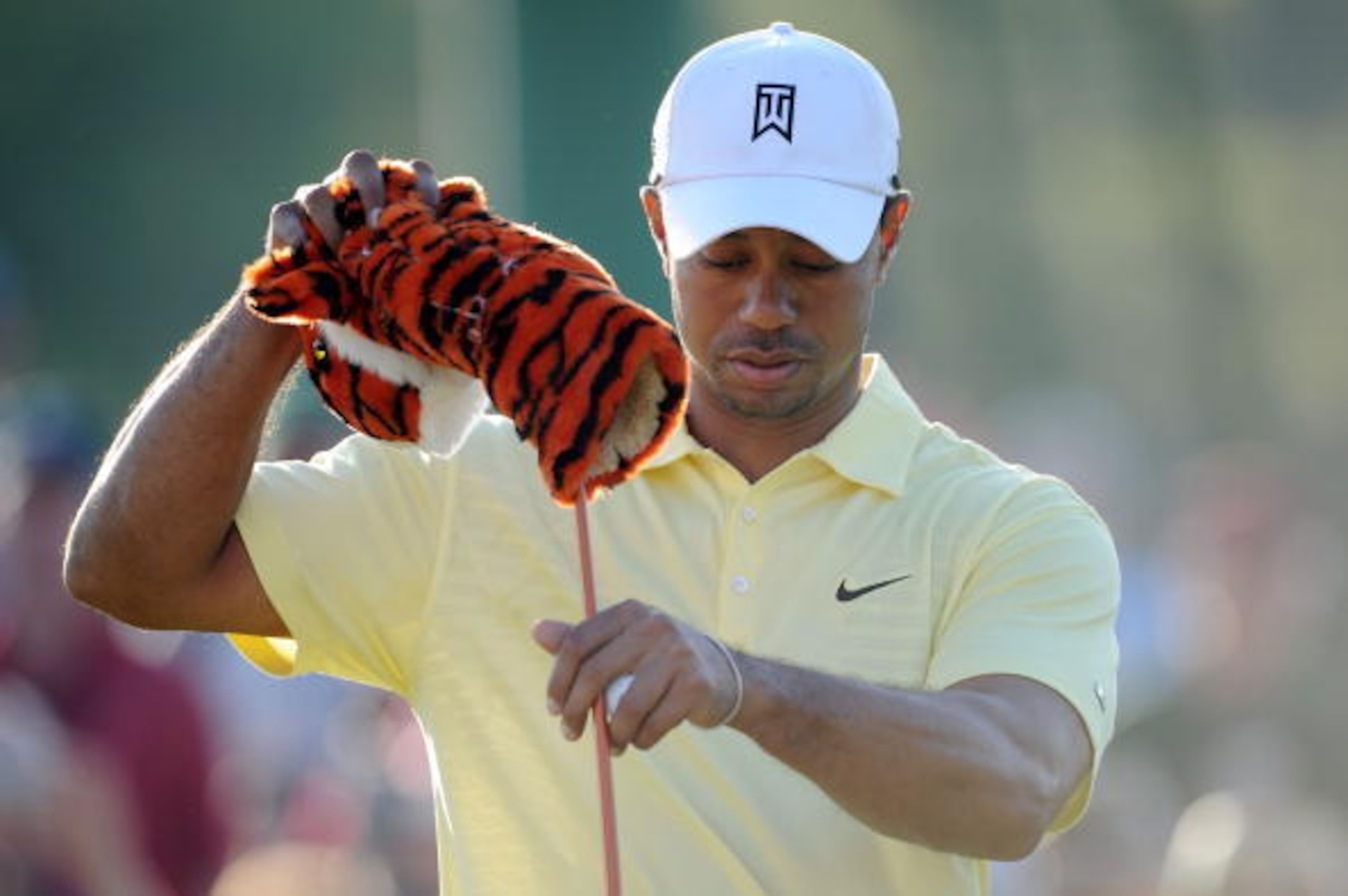
Over the past 12 months, Spieth has not only shocked the golf world with his major championship success at the young age of 22 but has made waves through the manner in which he has achieved this level of success.
Spieth’s distance is about average in a modern-day game dominated by power, but he has managed to win majors through smart course management and leaning heavily on his solid short game and putter.
However, while Spieth has all but perfected his style of play, one cannot deny the advantage a player gains through distance.
What made Woods so exceptional during his prime was that he had both the power game and a Houdini-like ability to get the ball up and down from around the greens. Woods’ raw power allowed him to completely decimate major championship landmarks such as Augusta National and Pebble Beach.
Following his 12 stroke victory at the 1997 Masters while hitting nothing more than an 8-iron into most par fives, Augusta National Golf Club was forced to redesign the entire golf course. This redesign later became known to many as “Tiger Proofing.”
Woods’ power was also a huge advantage at majors such as the U.S. Open and PGA Championship, where he was able to use his strength and club-head speed to muscle shots out of thick rough that would have had most other players simply chipping back out onto the fairway.
A perfectly example of this was the par-five sixth hole at the 2000 U.S. Open at Pebble Beach. Woods was able to pound a 7-iron approach shot from over 200 yards out of thick rough, uphill across Stillwater Cove and right onto the green.
NBC on-course commentator Roger Maltbie, who is not often at a loss for words, could only remark, “It just isn’t a fair fight” (h/t Seattle Times).
At the 2014 PGA Championship, Spieth himself got a taste of the advantage a player can gain through power. Despite being at (or at least very near to) his best at Whistling Straits last August, Spieth lost out to the far more powerful Day by three strokes.
It was clear that through the course of 72 holes, Spieth had become overmatched by a far more powerful player who was consistently hitting two-to-three clubs less into every green.
There is certainly more to the game than power, but Woods was a perfectly example of how the advantage of distance can take a player’s game to an entirely different level.
A player such as Spieth can win and win often through smart course management and a strong short game and putter but will likely need to add some power in order to reach a truly dominant level in the game.


.jpg?w=2560 "Rams Eagles Football")
But It’s All About the Putter
4 of 5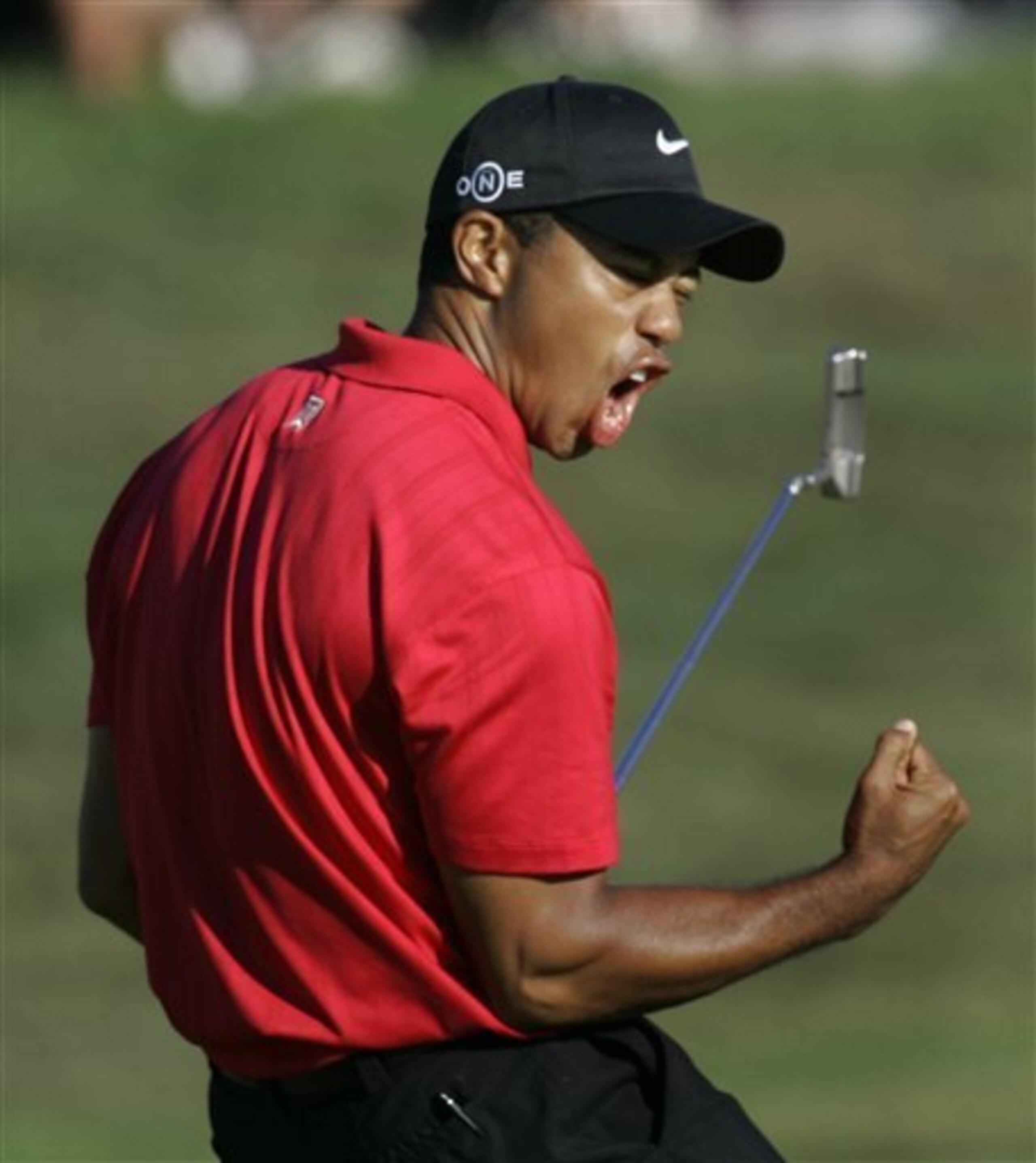
While power certainly gave Woods a huge advantage over his competition from tee to green, the putter was by far the most important club in the bag throughout his career.
Whether it was the 1999 PGA Championship, the 2002 Masters, the 2002 U.S. Open, the 2008 U.S. Open or many of his other major championship titles, Woods made significantly more big putts than any other player in his generation and, some would argue, any other player in the history of the game.
Like many power players, Woods’ long game was rather inconsistent throughout much of his career. The 14-time major champion never even cracked the top 50 on Tour in driving accuracy during any single season.
Typically, when a power player is off with his long game, he will have very little chance of winning, as power players are nearly always weaker on and around the greens.
But Woods was different.
Woods’ short game and putter were so strong that he when his power game was on he was able to completely demolish his competition, as was the case at majors such as the 1997 Masters, 2000 U.S. Open and 2000 Open Championship.
But the strength of his short game and putter also allowed Woods to put himself in contention, and often win, while spraying drives all over the golf course, as was evident at events such as the 2008 U.S. Open at Torrey Pines, where he was able to beat 156 of the best players in the world despite hitting just 53 percent of greens in regulation.
During Woods’ 2000 season, which is widely considered one of the best single seasons in the history of the game, he ranked second on tour in putting average, first in birdie-or-better conversion on the greens and third in scrambling. Combine Woods’ distance advantage with his remarkable short game and putter, and his ranking of 54th on Tour in driving accuracy was of little consequence.
In 2005, Woods won six times including two majors while ranking nearly last on Tour in driving accuracy. He was able to achieve this level of success while being incredibly inaccurate off the tee by ranking second in putting average, first in birdie-or-better percentage on the greens and third in scrambling.
When many golf fans think back to Woods’ top career moments, they will often gravitate toward events such as the 1997 Masters and 2000 U.S. Open, where he was able to use raw power to turn courses such as Augusta National and Pebble Beach into his own personal pitch-and-putt contest.
But if you dig a little deeper into Woods’ stats through the years, it will become clear that the short game and putter were the true foundation of his success, particularly during the second half of his career. Between 2005 and 2009, Woods won six majors and 31 PGA Tour events while ranking within the top 10 in driving distance just twice and cracking the top 100 in driving accuracy just once.
He simply became a master at taking a poor ball-striking round that would have led most Tour professionals to a 74 and using his Houdini-like short game and putter to somehow post a 67.
Players such as McIlroy, Day and Dustin Johnson possess power similar to what Woods displayed during his prime. But these players lack Woods’ touch on and around the greens.
The one lesson that power players can learn from Woods is that if they have any aspiration of contending week in and week out on tour, they better start paying more attention to their true scoring clubs on and around the greens.
A solid short game and putter may not be as sexy as 360-yard drives…but this writer would venture to guess that most players would trade in sexy for 14 majors and 79 PGA Tour wins.
Keep the Joy in the Game
5 of 5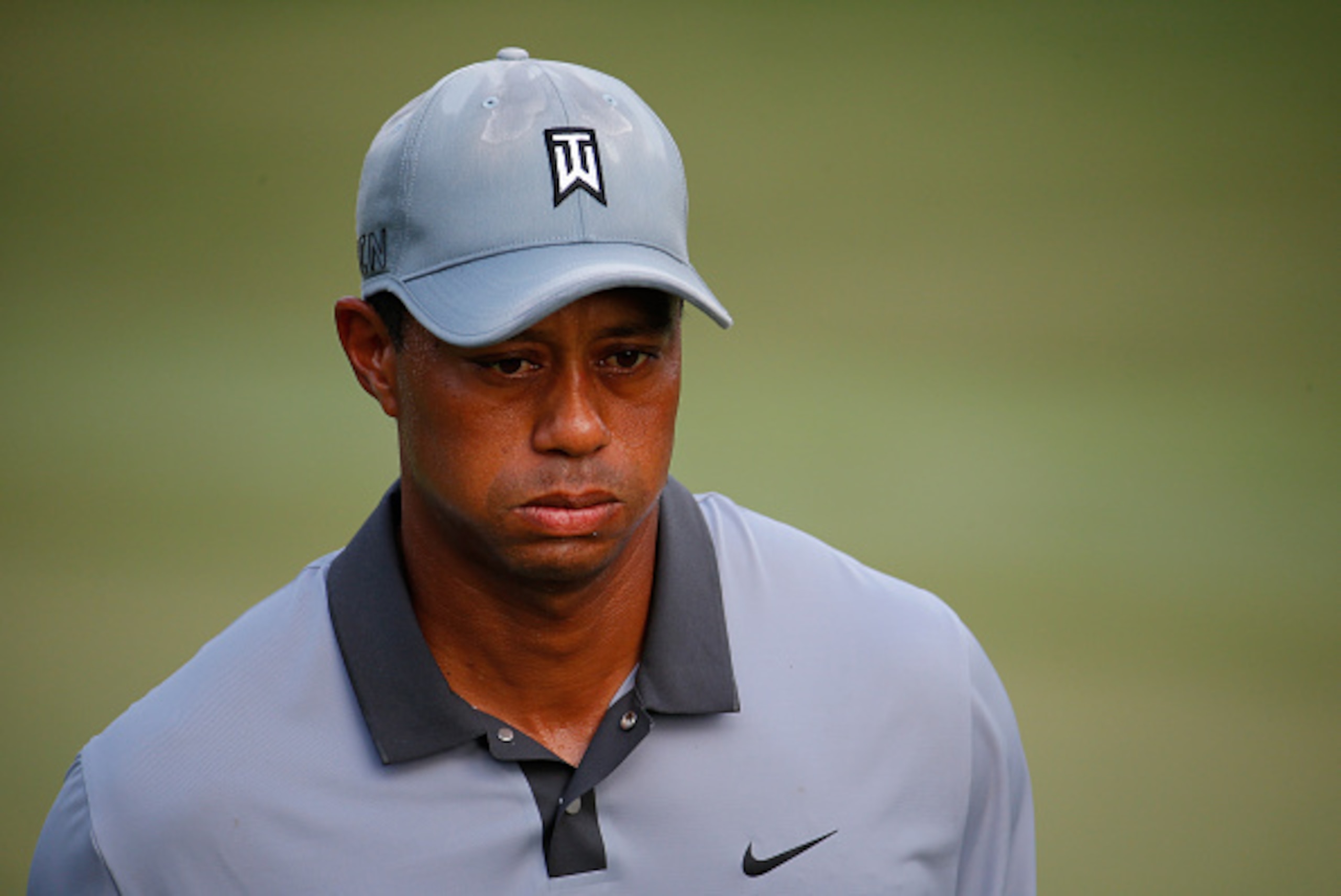
The first six years of Woods’ career were defined as much by his electric smile as his otherworldly performance on the golf course. Between 1997 and 2002, Woods was a happy-go-lucky kid whose joy for the game was infectious to anyone in his presence.
But things began to change for Woods around the mid-2000s.
Somewhere between 2002 and 2005, Woods’ entire demeanor on the course changed, and golf had clearly become a job for Woods.
And by the late 2000s, golf appeared more of a burden than anything else for the 14-time major champion. Even while Woods was still winning at an incredible rate, he seemed to have a desire to be just about anywhere else on earth rather than posing for pictures with yet another championship trophy in hand.
Of course, we all have an expiration date on the goofball stage of our lives and eventually grow up, but the change in Woods’ demeanor appeared to be more than just maturation.
While Woods was clearly having problems in his personal life by the late 2000s, much of this change can also be attributed to that single goal of 18 major championship wins Woods had set out at an early age.
By the late 2000s, it was evident that Woods viewed getting to 18 majors as a job that he must complete or risk having his entire career be seen as a failure.
Prior to the 1930 season, Bobby Jones laid out a rather lofty goal for himself: to win all four major championships, which at the time were considered to be the U.S. Amateur, the U.S. Open, the British Amateur and the British Open.
Jones would of course achieve this goal in 1930, but if you’ve ever seen a picture of Jones from late in the 1930 season, what you will see will be sure to horrify you. By late 1930, Jones was the oldest, most run-down looking 28-year-old you will ever see in your life. He had lost a significant amount of weight, and the bags under his eyes had become permanent fixtures.
Jones’ only carried this burden for a single year, and it had made him physically ill along the way.
By the late 2000s, Woods had been carrying the burden of his goal for more than a decade and was still four majors short of Nicklaus. That is a long time to carry that kind of pressure on one’s shoulders, so it is quite understandable that by the late 2000s Woods simply wanted to complete the job and move on.
Perhaps it was all just a coincidence, but Woods’ health, his golf swing and his personal life all began to decline around the same time that his smile had disappeared out on the golf course. Or perhaps it was more of a cause-and-effect issue where Woods’ struggles with his health, golf swing and personal life were the ultimate cause of the deterioration in his joy for the game.
Whatever the reason may be, today’s young players should take a lesson from Woods’ career and do anything possible to keep the game fun. Because once the enjoyment begins to depart, the golf game is not far behind.
.jpg?w=2560 "Texans-Mixon Released Football")
.jpg?w=2560 "Commanders Eagles Football")


.jpg?w=2560 "Mahomes' Wife Trolls Kubiak 💀")

.jpg?w=2560 "Grading WWE Raw 🔠")